


Login
Get Instant Pricing On 23,000+ Aircraft

>
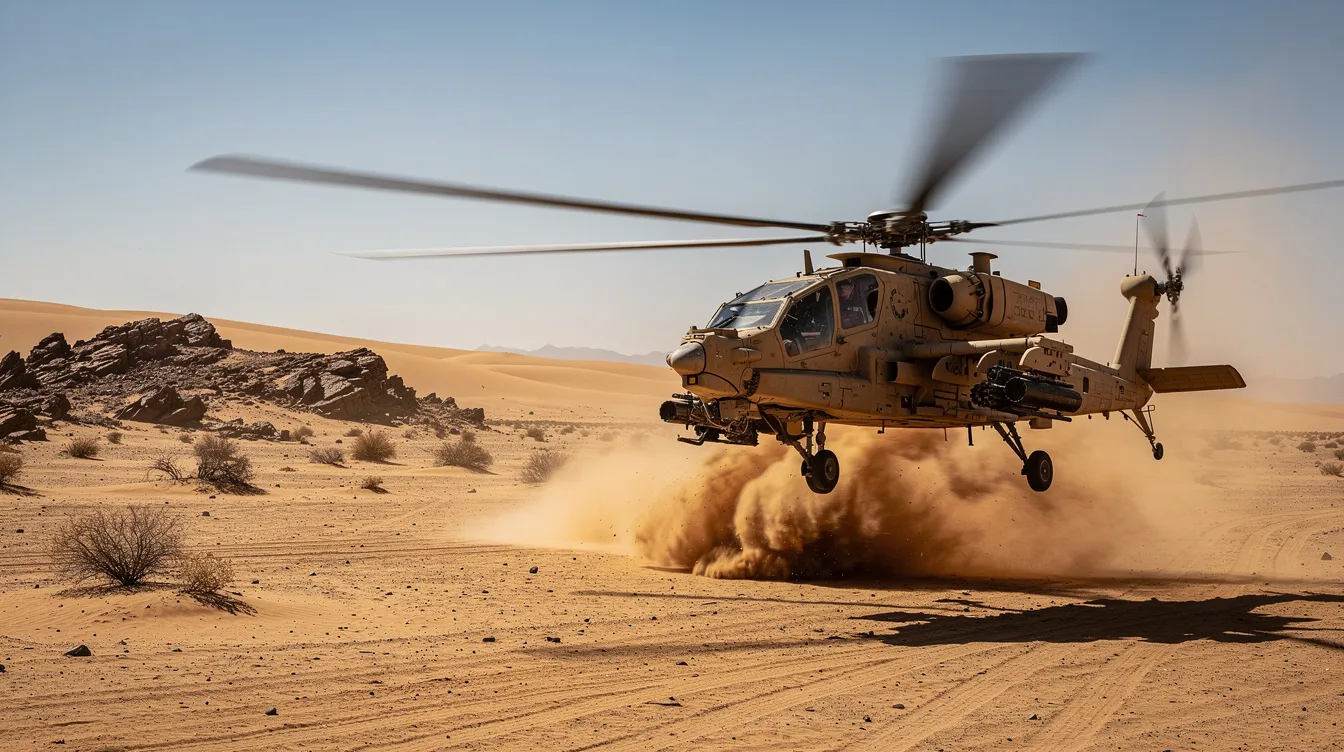
The AH-64 Apache helicopter is renowned as one of the most advanced and capable attack helicopters in the world. Its price reflects a combination of cutting-edge technology, robust survivability features, and extensive combat-proven systems that have evolved over decades. Understanding the price of the Apache helicopter in 2026 involves examining factors such as its flyaway cost, weapons integration, avionics, and ongoing modernization efforts. This article explores what drives the cost of the AH-64 Apache, how it compares across variants, and the broader context of military rotorcraft economics.
The flyaway cost of a new AH-64E Apache Guardian ranges from $35 million to $50 million per airframe in mid-2020s contracts. Full military packages that include weapons, training, simulators, spare parts, and long-term support can exceed $100 million per unit, depending on the air force customer and contract scope.
The historical Apache helicopter cost has risen significantly. The AH-64A had a flyaway cost of about $7 million in 1986 and an average unit cost of roughly $13.9 million. The current unit cost of the AH-64E is approximately $52 million in recent U.S. Foreign Military Sales contracts.
The Apache remains the world's leading advanced attack helicopter, with more than 1,300 aircraft in active service across approximately 19 countries. Globally, Apache fleets have logged over 5.3 million flight hours, including more than 1.3 million in combat.
Although Jettly focuses on private jet and helicopter charter rather than military procurement, understanding Apache helicopter cost helps readers contextualize high-end rotorcraft pricing and operating economics across the aviation industry.
The AH-64 Apache is more than a helicopter. It is a fully integrated combat system designed for survivability, lethality, and all-weather operations. Its cost draws public attention because it dwarfs the price of civilian rotorcraft of comparable size - and for good reason.
Complex military avionics, multi-mode sensors, weapons systems, and survivability features make an Apache helicopter far more costly than any civilian helicopter of similar dimensions.
Advanced systems include:
Armor capable of withstanding 23 mm rounds
Redundant flight control systems
Infrared countermeasures
All these add layers of engineering and manufacturing expense.
The Apache is equipped with armor and survivability features that protect against battlefield threats.
These include:
Crashworthy crew compartments
Self-sealing fuel tanks
Redundant hydraulic and electrical systems
As of 2026, the Apache helicopter cost is influenced by inflation, continuous upgrades across the AH-64D and AH-64E Apache Guardian variants, and export-specific requirements that vary by country.
Factors influencing the cost of Apache helicopters include variant selection, weaponry configuration, and the scope of support packages negotiated in each deal. A variant refers to a specific model or version of the Apache, weaponry includes the types of arms and munitions equipped, and support packages cover training, maintenance, and spare parts. (Fact References: 1. Factors influencing the cost of Apache helicopters include variant, weaponry, and support packages.)
Over 2,400 AH-64 helicopters (across AH-64A, D, and E variants) have been built since 1983, keeping production and modernization active at Boeing's Mesa, Arizona, facility. That sustained production base helps manage per-unit costs but doesn't eliminate the upward pressure from increasingly sophisticated technology.
The typical flyaway cost of a new AH-64E Apache in mid-2020s contracts sits around $35–50 million per aircraft. Once support elements are factored in - weapons, simulators, initial spares, and training - the "program unit cost" often climbs to $52–60 million or higher.
A country's Apache procurement cost often reflects a complete package including support and training, not just the helicopter itself. Consider two recent examples:
In November 2025, the U.S. Army awarded Boeing a contract valued at $4.685 billion for new-build AH-64E helicopters plus trainers, accessories, spares, and support items for customers including Poland, Egypt, and Kuwait. Dividing that contract by airframe count doesn't yield a clean per-helicopter figure because non-airframe elements make up a significant share (armyrecognition.com).
Poland's landmark acquisition of 96 AH-64E helicopters - including engines, Longbow radars, weapons, simulators, maintenance, and training - carries an estimated total cost of $10–12 billion. Simple division puts that at roughly $125 million per helicopter, but much of that total funds infrastructure, munitions stockpiles, and decades of support rather than the aircraft alone.
Flyaway cost: The production cost of the aircraft itself - airframe, engines, and essential installed systems - ready to fly away from the factory.
Unit procurement cost: The cost that adds initial support elements such as spare parts, ground support equipment, initial training, and test gear to the flyaway cost.
Total cost (total program cost): The comprehensive cost including everything from R&D allocation and long-term sustainment to weapons, infrastructure, and sometimes export-specific modifications.
These categories reflect the main factors influencing Apache helicopter cost: variant, weaponry, and support packages. (Fact References: 1. Factors influencing the cost of Apache helicopters include variant, weaponry, and support packages.)
|
Cost Category |
Approximate Range (AH-64E) |
|---|---|
|
Flyaway (airframe only) |
$35–50 million |
|
With weapons, radar, and initial support |
$52–80 million |
|
Full program package (per unit, averaged) |
$60–125+ million |
Older military Apaches are often upgraded instead of being replaced with new units, a cost-effective strategy that keeps proven airframes flying while integrating modern electronics and sensors.
Tracing the Apache helicopter cost from the first production variant to the latest model reveals how technology and inflation have reshaped the numbers over four decades.
The Advanced Attack Helicopter program, launched by the U.S. Army in 1972, sought a platform that needed replacement of the aging AH-1 Cobra fleet. After a competitive fly-off, the Hughes YAH-64A was selected in 1976. Hughes Helicopters later became part of McDonnell Douglas and eventually Boeing. The AH-64 Apache first entered service in April 1986.
The AH-64A cost $7 million in 1986 as a flyaway figure. The average unit cost of the AH-64A was $13.9 million in 1986, factoring in development, support, and initial accessories. Adjusting for inflation, those figures would roughly triple in 2026 dollars - placing the equivalent flyaway around $21–22 million and the full unit cost near $42–45 million.
The Apache was first used in combat during Operation Just Cause in 1989, validating its combat role early on.
During Operation Desert Storm in 1991, Apaches destroyed 278 tanks, demonstrating battlefield effectiveness.
AH-64s were deployed in Iraq during Operation Iraqi Freedom in 2003, further proving their operational value.
The name "Apache" follows a U.S. military tradition of naming helicopters after Native American tribes, a convention that extends to other Army aircraft like the Black Hawk and Chinook.
Full-scale production of the first production AH-64A variant ramped through the late 1980s, with early learning curves keeping costs relatively low compared to what would come next.
The AH-64D Apache Longbow, approved in the 1990s and entering production mid-decade, introduced the longbow system - specifically the AN/APG-78 Longbow radar - along with improved avionics, structural upgrades, and expanded sensor suites. These additions pushed unit costs into the $30–40+ million range by the 2000s.
The AH-64E Apache Guardian was first fielded in 2013, featuring more powerful engines, advanced digital connectivity, UAV control capability, and improved composite rotor blades. These revolutionary features further raised costs but dramatically improved combat effectiveness and lifecycle value. The current unit cost of the AH-64E is approximately $52 million.
Apache helicopter cost is driven primarily by its mission systems rather than the basic airframe structure. The AH-64 Apache has a fuselage length of 58 feet 3 inches and a maximum takeoff weight of 23,000 lbs - dimensions comparable to some civilian medium helicopters that cost a fraction of the price. The difference is what goes inside and on top of that airframe.
Mission computers, digital flight controls, secure communications, and multi-mode sensors tailored for the combat environment represent some of the highest-value components.
Each piece must be ruggedized, tested, and certified for extreme conditions.
Armor protection rated against 23 mm rounds
Crashworthy crew compartment
Self-sealing fuel tanks
Redundant hydraulic and electrical systems
Infrared countermeasures
All add weight, complexity, and manufacturing time.
The AH-64 carries a 30 mm M230 chain gun, AGM-114 Hellfire missiles, Hydra 70 rockets, and Stinger missiles on certain configurations.
Integrating these weapons systems with fire control, targeting sensors, and onboard software requires extensive testing and certification - each adding to the price.
The AH-64E variant has T700-GE-701D engines rated at 2,000 shp each.
High-output turboshaft engines demand advanced materials, precise manufacturing tolerances, and frequent overhaul cycles.
The main rotor system and reinforced drivetrain add further cost, especially in newer variants with redesigned rotor blades for improved lift and durability.
The three main Apache variants - A, D, and E - represent a technology evolution from analog instruments to networked digital warfare capability. Each step brought a higher cost but significantly expanded what the aircraft could do.
|
Feature |
AH-64A |
AH-64D Apache Longbow |
AH-64E Apache Guardian |
|---|---|---|---|
|
Avionics |
Analog |
Digital cockpit, improved sensors |
Advanced digital connectivity, UAV teaming |
|
Radar |
None |
AN/APG-78 Longbow radar |
Extended-range targeting radar |
|
Engines |
Early model |
Upgraded |
T700-GE-701D, 2,000 shp each |
|
Rotor Blades |
Steel composite |
Improved |
Advanced composite, improved lift/durability |
|
Weapons Integration |
Basic |
Enhanced |
Most advanced, expanded compatibility |
|
Unit Cost (2026 adj.) |
$42–45 million |
$30–40+ million (2000s) |
$52 million (current) |
|
Service Status |
Mostly retired/converted |
Still in service with some operators |
Current production, U.S. Army, and global fleets |
|
Operator |
Primary Variant |
Direction |
|---|---|---|
|
U.S. Army |
AH-64E |
Phasing out D models |
|
United Kingdom |
AH-64E (upgraded from WAH-64D) |
Completed upgrade |
|
India |
AH-64E |
Expanding fleet |
|
Poland |
AH-64E (new procurement) |
Building a fleet from scratch |
|
Australia |
AH-64E (retired ARH Tiger) |
Transition underway |
Older military Apaches are often upgraded instead of being replaced with new units, a cost-effective strategy that keeps proven airframes flying while integrating modern electronics and sensors.
The image depicts several military helicopters, specifically Apache helicopters, lined up on a tarmac at an airbase during a vibrant sunset. The silhouettes of the advanced attack helicopters are contrasted against the colorful sky, highlighting their role in combat operations and air cover for the US Armed Forces.
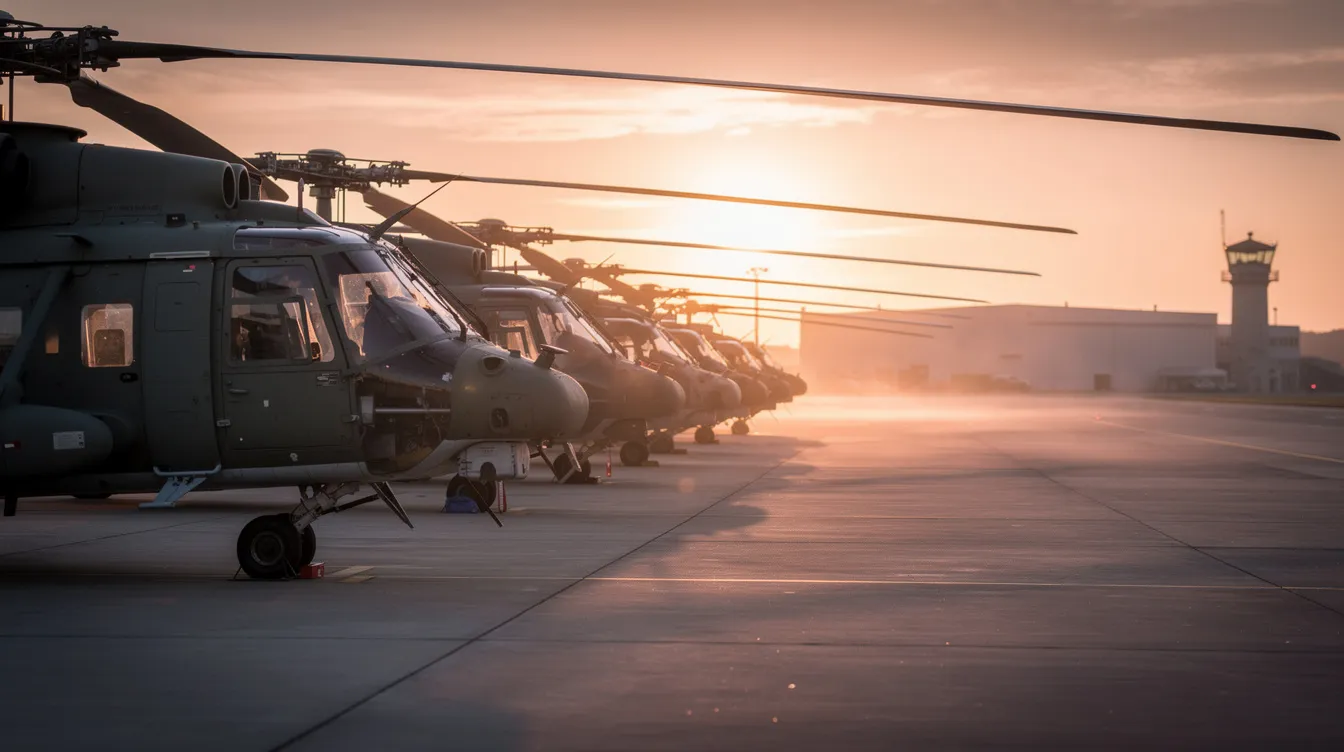
The AH-64 Apache occupies a central role in global attack helicopter fleets. Many air force and army aviation branches choose it despite the high cost because no other platform matches its combination of combat record, interoperability, and systems depth.
Core roles include:
Anti-armor strikes
Close air support for ground units
Armed reconnaissance
Deep attack missions behind enemy lines
Providing air cover for convoys and troop movements
The Apache excels in each because of its sensor-weapon integration and crew training standards.
Digital connectivity and networked sensors allow AH-64D and AH-64E helicopters to share targeting data with other aircraft and ground units in real time, increasing the tactical value of each airframe far beyond its individual weapons load. This network effect is a major reason armed forces invest heavily in the platform.
Typical operators in 2026 include the U.S. Army, Israel, the United Kingdom, the Netherlands, Saudi Arabia, India, the UAE, Poland, Australia, and several other nations. Wide adoption creates standardized training and logistics benefits, and used Apache helicopters are not available on the open commercial market - they remain military aircraft transferred only through government-to-government channels, requiring state department approval.
Acquisition is only the beginning. Lifetime operating expenses for an AH-64 often exceed the original purchase price several times over.
Operating the AH-64 Apache costs roughly $5,000 to $10,000 per flight hour, depending on the variant and the accounting method used. Recent U.S. military data shows the AH-64D running at approximately $10,228 per flight hour, while the newer AH-64E comes in at about $5,494 per hour - a significant improvement reflecting better reliability and updated support infrastructure (defense-industry.eu).
Maintenance intensity: Scheduled inspections, rotor and engine overhauls, and the complexity of keeping advanced avionics and weapons systems mission-ready drive a large share of hourly cost. Maintenance alone can account for roughly 50% of annual operating and support expenses.
Training: Both crew members - pilot and co-pilot/gunner - must qualify across weapons, night operations, sensors, and survivability procedures. Simulator time supplements live flight hours, but simulators themselves cost millions. Crew proficiency requirements are continuous, adding to the annual training budget.
Performance envelope costs: The AH-64 Apache has a maximum speed of 188.7 mph and a service ceiling of 21,000 feet (6,400 m). Operating at altitude and in hot climates increases fuel burn and engine wear, further driving per-hour cost.
For context, a typical civilian twin-engine helicopter might cost $1,000–2,500 per flight hour. Readers interested in broader private aviation economics can compare this with how much a private jet costs to own and operate, as the same categories of acquisition and operating expenses apply at different scales. The Apache's military systems roughly double to quadruple that figure.
Many air forces purchase Apache helicopters expecting multi-decade service lifespans of 30 years or more, with planned upgrades and mid-life overhauls built into the budget from day one.
Mid-life upgrades from AH-64A to AH-64D, and then from D to AH-64E, represent cost-effective alternatives to buying entirely new airframes. These programs still involve billions of dollars across a fleet but extend the operational relevance of existing helicopters by decades.
Modernization packages can include:
New rotor blades (extending rotor blade life and performance)
Strengthened airframes
Better defensive suites
Advanced targeting pods
Improved digital connectivity, such as Link 16 data-links and UAV control interfaces
Addressing such problems as component fatigue, obsolete electronics, and emerging threats keeps the Apache competitive.
AH-64E production is planned until 2028, anchoring long-term sustainment infrastructure at the Mesa facility. Beyond that date, upgrade and remanufacture programs are expected to continue, ensuring the platform serves well into the 2050s and 2060s. The U.S. Army's current modernization timeline envisions the AH-64E as the backbone attack helicopter for Army service through at least the next three decades, given that no immediate successor has entered full development.
Global industrial partnerships play a significant role in shaping Apache helicopter cost and distributing economic benefits across participating nations.
Boeing's Mesa, Arizona, facility remains the core assembly site for all AH-64 Apache helicopters, handling both new-build AH-64E production and remanufacture work. The Arizona facility employs thousands of workers and anchors a supply chain stretching across multiple states and countries.
The Boeing–Tata Advanced Systems joint venture in India manufactures Apache's fuselage components. Starting production in 2015 with the first delivery in 2018, the joint venture delivered its 300th Apache fuselage by 2025. This local supplier ecosystem supports Indian employment and offsets some import costs.
Licensed production and local content requirements can raise or lower unit prices depending on labor costs, technology transfer scope, and offset agreements. Poland's contract, for instance, includes commitments to establish local maintenance capabilities and involve the Polish defense industry, adding to the overall program cost but building long-term sustainment capacity in-country.
Some components are sourced from multiple countries, spreading economic impact but adding complexity to the supply chain. Export contracts often require state department approval for sensitive technologies, and country-specific modifications (communications, weapons compatibility, identification systems) introduce additional engineering and certification costs.
Digital connectivity is both a major cost driver and a decisive capability advantage in modern AH-64D and AH-64E Apache helicopters.
The longbow radar (AN/APG-78) is a millimeter-wave targeting radar mounted atop the main rotor. It can detect, classify, and prioritize targets detected in clutter, adverse weather, and battlefield obscurants. The Longbow radar can track up to 128 targets simultaneously, feeding prioritized threat data to either the pilot or the co-pilot/gunner for rapid engagement of multiple targets.
The Integrated Helmet and Display Sighting System (IHADSS) is the integrated helmet display sighting system that allows head-tracking targeting. The 30 mm chain gun follows crew members' head movements, enabling rapid target acquisition without repositioning the aircraft. This system requires precision optical engineering, helmet-mounted sensors, and real-time computing - none of which comes cheap.
AH-64s can control unmanned aerial vehicles for reconnaissance and targeting, a capability known as manned-unmanned teaming. The AH-64E's digital architecture enables crew members to task, receive video from, and direct UAV sensors in real time, extending the helicopter's situational awareness to longer ranges without exposing the aircraft to direct threat.
Maintaining and upgrading these digital systems over decades of army service requires continuous software updates, cybersecurity hardening, and hardware refreshes. These recurring costs, while less visible than upfront acquisition, are substantial over a 30-year lifecycle.
Apache helicopter cost figures sometimes exclude the full weapon load, which can add millions per aircraft in initial procurement and ongoing sustainment.
The AH-64E carries up to 16 AGM-114 Hellfire missiles on its four hardpoints, but actual inventory requirements far exceed what a single helicopter carries at any time. Poland's purchase, for example, includes 1,844 Hellfire missiles and 460 Joint Air-to-Ground Missiles (JAGMs), indicating the scale of munitions investment beyond the airframes (theaviationist.com).
The Apache also carries guided and unguided Hydra 70 rockets (with APKWS precision guidance kits), Stinger missiles for air-to-air self-defense, and the M230 chain gun with 1,200 rounds. Each helicopter-launched anti-armor missile or guided rocket requires integration testing, software certification, and safe-separation analysis - costs that accumulate across fleets.
Export variants sometimes integrate region-specific weapons such as Spike NLOS or MBDA Brimstone for extended-range engagement at close range or beyond line-of-sight. Each integration requires separate development and testing budgets, often funded by the purchasing nation.
Training and test munitions, weapon stockpiles, and life-extension programs for missiles represent a significant share of the total Apache program cost beyond the airframes themselves. A single AH-64E's full missile complement - 16 Hellfires plus rockets and gun ammunition - can represent over $1 million in ordnance cost alone, before accounting for stockpile depth.
Positioning the Apache among other military aircraft and rotorcraft helps clarify where it sits in the 2026 cost hierarchy.
|
Aircraft |
Type |
Approx. Flyaway Cost (2026) |
Approx. Cost/Flight Hour |
|---|---|---|---|
|
AH-64E Apache |
Attack helicopter |
$35–50M |
~$5,500 |
|
AH-1Z Viper |
Attack helicopter |
$30–31M |
~$4,500 |
|
UH-60 Black Hawk |
Utility helicopter |
$20–25M |
~$3,500 |
|
Eurocopter Tiger |
Attack helicopter |
$40M+ |
~$7,000+ |
|
CH-53K King Stallion |
Heavy lift |
$90M+ |
~$9,000+ |
|
V-22 Osprey |
Tilt-rotor |
$70–90M |
~$11,000–12,000 |
The Apache is expensive but not the costliest rotorcraft in military inventories. Heavy-lift platforms and tilt-rotor aircraft command higher prices due to their size, engine count, and unique engineering requirements. Among dedicated attack helicopters, however, the AH-64E sits near the top - a position justified by its sensor suite, weapons integration, and combat record relative to other aircraft in the same category.
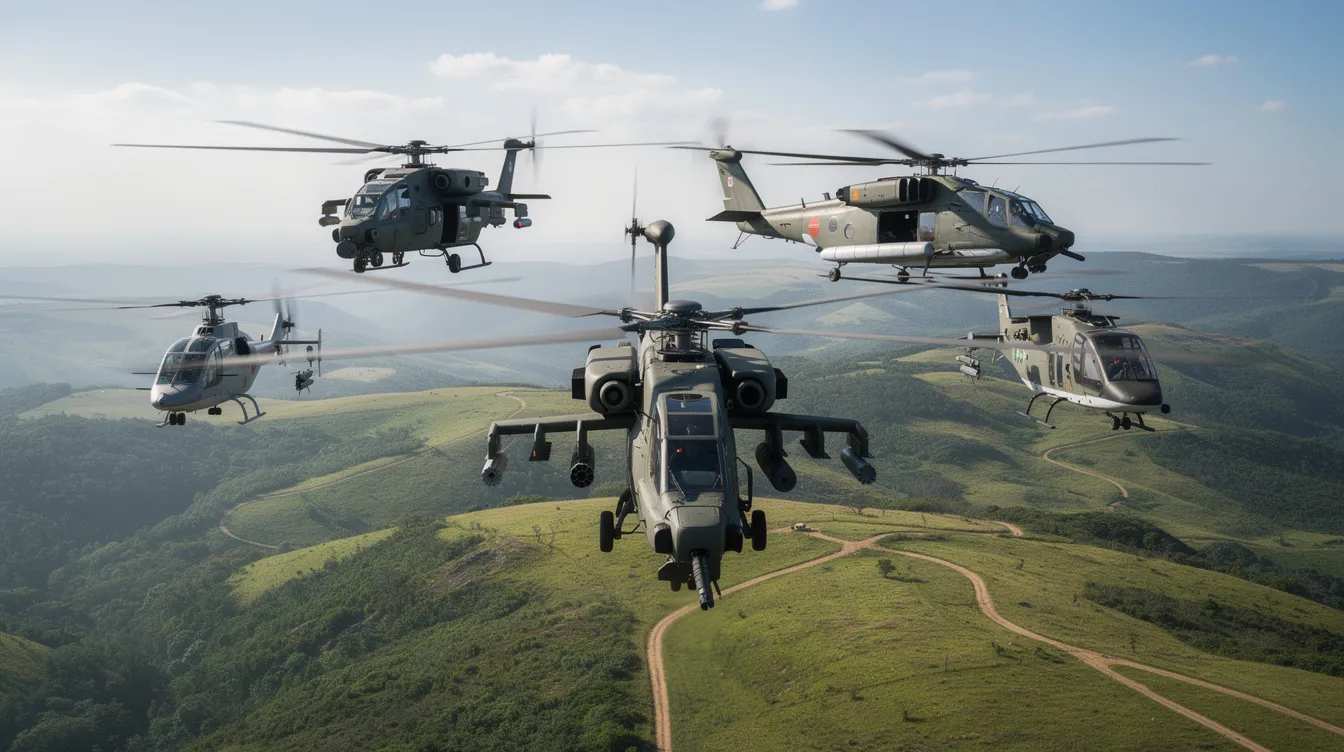
A formation of various military helicopters, including the AH-64 Apache, is flying over lush green hills, showcasing their advanced attack capabilities and air cover potential. The scene highlights the impressive design of these military aircraft as they maneuver in a combat environment, representing the strength of the US Armed Forces.
The Apache's combat history directly influences willingness to pay high acquisition and sustainment costs. Few military platforms can point to a comparable track record of continuous operational deployment across multiple decades and theaters.
The Apache was first used in combat during Operation Just Cause in Panama in 1989, providing air cover and precision strikes during the U.S. intervention. This initial deployment validated core design concepts under fire.
In Operation Desert Storm during the 1991 Gulf War, Apaches destroyed 278 tanks along with hundreds of additional armored vehicles and positions. The aircraft's ability to operate day and night, in poor weather, using Hellfire missiles and guns, transformed how the US military and allied armed forces approached combined arms warfare.
AH-64s participated in the War in Afghanistan from 2001 to 2021 and saw extensive use in Iraq during Operation Iraqi Freedom in 2003. Night operations, precision targeting, and manned-unmanned teaming validated the AH-64D and E variants in sustained combat missions against irregular and conventional threats.
Across all operators, Apache helicopters have accumulated over 5.3 million total flight hours, including more than 1.3 million in combat. That operational track record reduces procurement risk for new buyers, as the platform's reliability and lethality are well-documented across the US Armed Forces and allied militaries.
This battlefield record encourages nations to accept higher costs in exchange for reduced operational risk and seamless interoperability with U.S. and NATO forces during coalition operations.
While the Apache is a military platform, comparing its price to civilian aircraft or referencing a guide on how much it costs to rent a private jet helps private flyers understand the upper end of rotorcraft economics.
A large civilian twin-engine helicopter - such as an executive transport or offshore support model - might cost $10–20 million new. Travelers evaluating high-end rotorcraft can benefit from a broader guide to affordable airplane rental costs and options. The Apache's weapons, armor, sensors, and survivability systems roughly double or triple that price for an airframe of similar physical dimensions.
Drawing a parallel with business jets: a new large-cabin private jet can cost $50–70 million, placing it in the same dollar range as a fully equipped AH-64E Apache with weapons and support. For travelers focused on individual trip budgeting rather than ownership, understanding the cost structure of a single private flight helps put those fleet-level figures in perspective. One is optimized for passenger comfort and range; the other for combat survivability.
Unlike owning an Apache - or even a private jet - Jettly's private jet and helicopter charter model lets clients access high-end aircraft on demand without taking on acquisition, maintenance, insurance, or long-term operating costs, and tools like Jettly's private jet charter cost estimator make those trip-level expenses transparent up front.
The economics of military aviation provide details about why even civilian aircraft cost what they do. Airframe engineering, engine development, avionics integration, and regulatory certification all contribute to high price tags - though civilian platforms avoid the weapons, armor, and classified technology that drive military costs far higher.
Jettly does not broker Apache helicopter combat missions. But the platform operates in the same aviation ecosystem where acquisition and operating costs shape market pricing for every aircraft type, and where travelers can use resources on affordable private jet charter options to benchmark civilian flight pricing.
Jettly's digital platform gives customers access to thousands of civilian helicopters and fixed-wing aircraft globally on an on-demand basis. Its catalog of private charter aircraft across every category helps match mission profile and budget. This avoids the capital expense, regulatory burden, and ongoing maintenance costs that come with aircraft ownership - whether that aircraft is a $5 million light helicopter or a $50 million business jet.
Transparent, instant pricing on Jettly allows users to see per-flight costs rather than committing to multi-million-dollar purchases, supported by tools like its airport locator and on-demand quote platform. The contrast with military procurement - where costs are bundled across years, weapons, simulators, and infrastructure - could not be starker.
Readers who are curious about high-end aircraft economics after learning about Apache helicopter cost can explore more practical travel options such as light jets, midsize jets, or charterable helicopters through the platform, including Jettly's range of private jet membership plans designed to lower per-hour charter costs.
Learn more about Jettly's charter options at https://www.jettly.com.
The missions that justify a $50+ million attack helicopter and the flights that justify a private charter occupy entirely different worlds - and their cost structures reflect that gap, with dedicated charter operators such as Dexter Air Taxi’s private jet services focusing on comfort and efficiency rather than survivability and weapons.
Apache missions:
Close air support for ground units under fire
Anti-armor engagements against armored formations
Convoy escort in hostile territory
Armed reconnaissance in high-threat combat environments
Each demands heavy survivability, precision weapons, and all-weather capability.
Jettly charter missions:
Business trips between major cities
Family vacations to resort destinations
Urgent same-day travel for executives
Air taxi services to remote locations using civilian helicopters
Cost-conscious travelers can even use Jettly's flight-sharing and empty-seat crowdsourcing platform to reduce per-passenger charter prices.
The priorities are safety, comfort, speed, and time savings.
An attack helicopter is designed for lethality and crew protection. A private charter aircraft is designed for passenger experience and operational flexibility. These vastly different mission profiles justify vastly different cost structures - and explain why comparing attack helicopter pricing to private aviation rates requires careful context.
An AH-64 Apache's fuel consumption and noise footprint are accepted trade-offs for combat capability. With high-power turboshaft engines operating at near-maximum output during combat missions, fuel burn per hour significantly exceeds what comparable-weight civilian helicopters consume.
Private aviation platforms available via Jettly increasingly focus on efficient routing, modern engines, and carbon offsetting options aligned with customer expectations. A broad overview of charter airlines and private aviation options shows how different operators address efficiency and sustainability. While no civilian operator matches the fuel intensity of a military attack helicopter, the industry acknowledges that high-performance aviation carries an environmental cost.
Apache helicopters are unlikely candidates for civilian carbon programs. But understanding their fuel intensity offers perspective on the environmental cost of high-performance military aviation - and why civilian operators actively work to improve efficiency.
While the basic aircraft might run $35–50 million as a flyaway cost, adding hellfire missiles, guided rockets, spare parts, ground support equipment, simulators, and initial training packages can raise the per-aircraft program cost to roughly $60–100 million. In large export deals like Poland's 96-helicopter package, the average per-unit figure can exceed $120 million when all infrastructure and munitions are included. Exact figures vary by country, negotiated terms, and the size of the overall purchase.
Flyaway cost covers the production cost of the aircraft itself - airframe, engines, and essential systems - ready to fly from the factory. Total program cost includes R&D allocation, training programs, simulators, infrastructure, long-term maintenance contracts, and sometimes munitions. This distinction explains why published figures for the same helicopter can vary by tens of millions of dollars depending on which cost definition is being cited.
AH-64 Apaches are combat aircraft operated exclusively by military forces. They cannot be used for civilian commercial transport or private charter missions. While a small number of demilitarized former military helicopters exist in private hands for display or limited flight, the Apache's weapons systems, armor, and classified avionics make it effectively a military-only platform. Civilian travelers looking for helicopter access can explore options through platforms like Jettly or learn how to buy a seat on a private jet through shared and semi-private options.
Most air forces plan on 30 to 40 years of service for each Apache airframe. Periodic upgrades - from AH-64A to D to E - and major overhauls extend operational life well into the 2050s and 2060s under current U.S. Army modernization plans. This long-planned service life justifies the large up-front investment and recurring modernization spending, much as long-term users of private aviation evaluate options like jet card flight cost estimators to forecast and manage multi-year travel budgets.
Yes. While the Apache is far more complex and heavily weaponized than any private charter aircraft, its cost breakdowns - airframe versus systems versus support versus training - provide details on what contributes to high aircraft costs in general. Private aviation is simpler in many respects (no weapons, less extreme survivability requirements, different regulatory frameworks), but the same categories apply at a smaller scale. Travelers evaluating long-range options can compare this with guidance on choosing the best cross-country plane for their trips. Travelers who want high-performance aviation without ownership burdens can use platforms like Jettly to access private jets and helicopters on demand, paying only for flights they actually take, or enroll in structured jet card programs offering fixed hourly rates as an intermediate step between ad hoc charter and full ownership.
A modern AH-64E Apache typically costs in the mid-teens of millions of dollars per airframe. Full program cost per aircraft - once weapons, spare parts, simulators, and training are included - often reaches $60–100 million or more, depending on the customer and contract scope.
Costs are driven by advanced attack helicopter systems: longbow radar, digital connectivity, survivability features, powerful engines, and decades of combat-proven upgrades.
The Apache remains a backbone attack helicopter for many air forces worldwide, justifying its price through battlefield performance, interoperability with allied militaries, and a track record spanning from the Gulf War to ongoing operations.
This level of cost and complexity contrasts sharply with flexible, pay-per-flight private jet and helicopter access offered by platforms like Jettly - where passengers fly without taking on the financial burden of ownership, maintenance, or procurement negotiations.
Ready to experience private travel on your terms? Explore flight options or request a quote at https://www.jettly.com.
Share this post:
Jay Franco Serevilla
Jul 7, 2026
|
5
min read
Discover tips and trends in the industry.
5
min read
Private Flight Club Membership Cost: What You Really Pay For
Private flight club memberships offer a range of costs influenced by initiation fees, monthly dues, and hourly rates. Understanding these components helps travelers make informed decisions between membership and on-demand charter options. With costs varying significantly based on aircraft type and usage, it's essential to evaluate personal travel needs and frequency before committing.
Read More
5
min read
Taneja Aerospace Share Price: Live Updates, Fundamentals & Investor Guide
Taneja Aerospace & Aviation Ltd's current share price is ₹344.20, reflecting a 1.7% decrease. With a P/E ratio of approximately 47, the stock indicates strong growth expectations in the aerospace sector, making it an intriguing option for investors. This guide provides essential trading data, valuation metrics, and insights into the company's fundamentals and market trends.
Read MoreStay updated with our latest insights and tips to elevate your journey with us.
MEMBERSHIPS AND ASSOCIATIONS



Disclaimer: Jettly operates as a charter broker, offering access to a global digital jet charter marketplace. Jettly is not a direct air carrier and does not own or operate aircraft. All advertised flights are conducted by third-party air carriers that are fully licensed and hold the appropriate Part 135 or Part 121 certifications issued by the Federal Aviation Administration (FAA) or equivalent regulatory authorities under U.S. or foreign law. Jettly complies fully with the U.S. Department of Transportation's Part 295 and Part 298 Charter Broker regulations. Jettly does not carry additional liability insurance. Passengers are covered by aircraft operator insurance. TICO: 50023770


