



Login
Get Instant Pricing On 23,000+ Aircraft

>
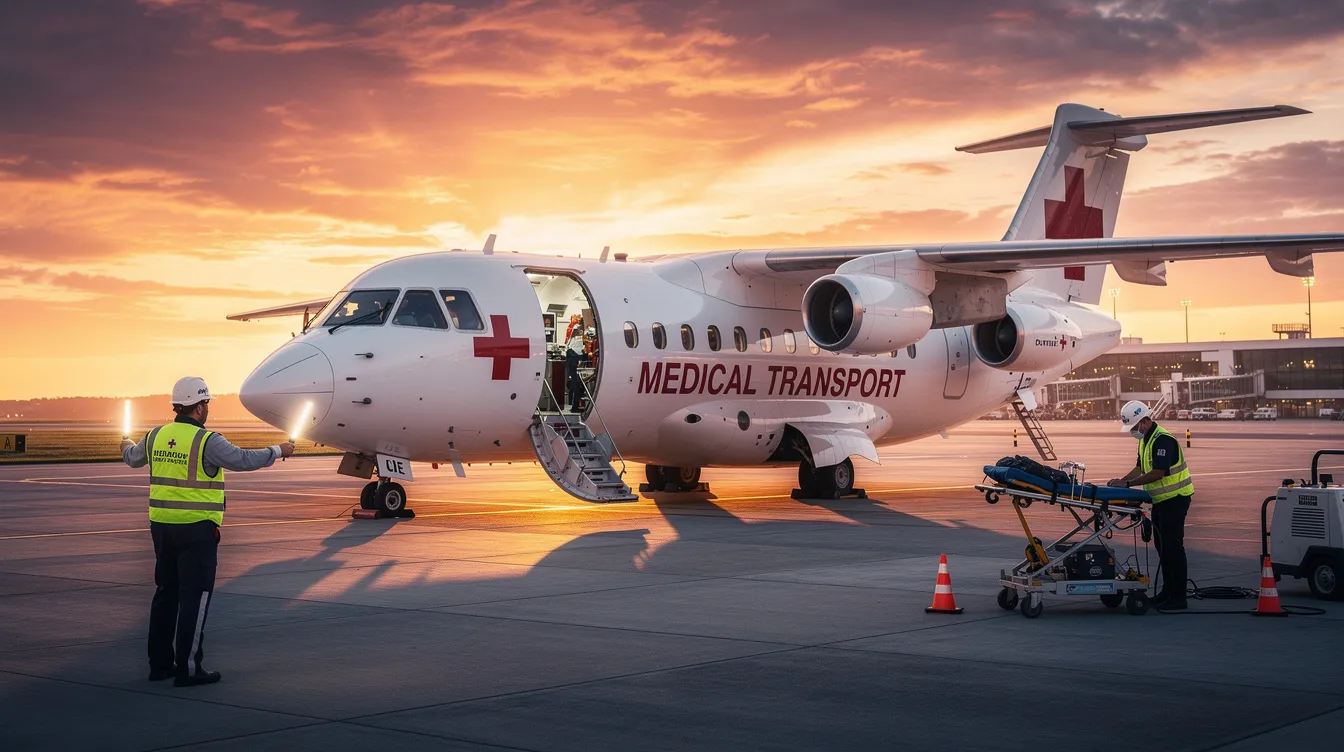
Medical evacuation - commonly called medevac - is the full-chain transport of a patient from one location to an appropriate medical facility, using air medical transport, ground ambulance, and a dedicated medical team. In 2026, medevac flight costs typically run from about $25,000 for a short domestic helicopter transfer to more than $200,000 for a complex international ICU-level evacuation, and the final price depends on the patient’s medical condition, pickup location, destination, and transport requirements rather than any standard rate card.
Decisions about emergency medical transport are usually made within hours of a crisis, long before anyone has processed the financial impact. A single international medical evacuation from Cancún to New York or Dubai to London can exceed $120,000 once ground ambulance legs and medical escort services are included, which is why families and individuals facing urgent transport decisions, frequent travelers, and trip planners need a clear view of what drives the bill before they have to act.
Jettly is a digital private aviation platform that can assist with non-emergency, medically supported private air transport - even though it is not an air ambulance provider- drawing on a large network of private charter aircraft to match routes and budgets. This article breaks down medevac flight cost ranges, the biggest pricing drivers, insurance and membership program effects, hidden fees, ground ambulance integration, and when a private charter may be a practical alternative for non-emergency medical transport; if costs are unclear, the next step is to request a personalized quote after a medical consultation to match the right transport option to the patient’s needs.
A typical medevac flight cost in 2026 ranges from about $25,000 for short domestic helicopter transfers to over $200,000 for complex international medical evacuation missions involving ICU-level care.
Medevac pricing is "bedside to bedside"; it includes the aircraft, medical crew, ground ambulance at both ends, permits, medical equipment, and coordination, not just air transport.
The main cost drivers are flight distance, aircraft type (helicopter vs. fixed-wing), medical necessity and patient acuity, international logistics, and whether the air ambulance provider is in-network or out-of-network with the patient's insurance company.
Jettly is a private jet charter platform, not an emergency air ambulance provider. However, its transparent pricing and access to 20,000+ aircraft can support non-emergency medical transport and repatriation planning for stable patients.
Later sections explain how to read quotes, spot hidden fees, and use health insurance, travel insurance, Medicare Part B, and membership programs to manage medevac expenses.
A medevac is a full medical evacuation chain, not just "a flight with a doctor." Dedicated medevac jets provide continuous medical monitoring during transport, and the logistics behind each mission involve far more moving parts than most people expect.
Here's what a typical bedside-to-bedside mission includes:
Bedside pickup at the sending hospital or local hospital
Ground ambulance transfer to the departure airport
Airport handling and stretcher loading
Air transport on a dedicated aircraft with a pressurized cabin
Onboard medical team (flight nurse, paramedic, or physician) with monitoring and specialized equipment
Arrival handling at the destination airport
Ground ambulance from the airport to the receiving facility
A full-service air ambulance is different from a commercial medical escort on an airline or a private jet medical transport arranged through a broker like Jettly. Simple "per-mile" prices rarely include all these moving parts, which is why quotes can look confusing. Any serious quote request should explicitly ask for "bed-to-bed" pricing and confirmation of what is excluded.

Costs vary by region and case, but most U.S. and international medevac bills fall into broad bands. Medevac flights cost between $12,000 and $200,000+ depending on factors like distance, acuity, and aircraft type. Medical evacuation pricing is rarely a flat rate.
Domestic ranges:
|
Scenario |
Aircraft Type |
Typical Cost Range |
|---|---|---|
|
Short helicopter mission (under 100 miles) |
Rotary-wing |
$15,000–$60,000 |
|
A 50-mile helicopter flight |
Rotary-wing |
$15,000–$30,000 depending on geographic location |
|
Regional transfer (300–1,000 miles) |
Fixed wing |
$20,000–$75,000 |
|
Long-distance or ICU-level domestic |
Fixed-wing aircraft |
$50,000–$90,000+ |
Average helicopter medevac costs range from $12,000 to $25,000 for shorter missions. Helicopter emergency transports generally range from $15,000 to $50,000. These figures broadly align with typical helicopter rental pricing in the charter market. Fixed-wing medevac flights can exceed $50,000 for longer distances. On non-emergency private flights at similar ranges, travelers may also factor in extras like in-flight catering services for private jets, which do not apply to most clinical medevac missions.
Base fees for medevac flights range from $12,000 to $20,000 before mileage is added. The average cost for a dedicated medevac jet ranges from $12,000 to $80,000 depending on distance and care level, numbers that can be compared with overall private jet cost benchmarks and guides to affordable private jet charter pricing for non-medical travel.
International ranges:
Transatlantic (e.g., Lisbon–New York): $80,000–$150,000
Long-haul critical care (e.g., Bangkok–Los Angeles): $120,000–$250,000+
Medevac flights can exceed $200,000 for international or long-haul missions
For stable patients, a commercial medical escort on an airline often brings the total to $25,000–$40,000 plus underlying airline seats. Private medical transport on a chartered business jet through a marketplace like Jettly can sometimes fall between commercial escort and full air ambulance costs for non-critical cases.
Medevac pricing is customized to the mission. No two quotes are identical, even on similar routes. Prices also reflect fixed costs such as 24/7 readiness, aircraft availability, and staffing that providers must cover even when flight volume is low. Costs can vary based on distance, medical requirements, and logistical hurdles specific to each case.
Major key factors include:
Flight distance and routing complexity
Aircraft type and configuration (helicopter, turboprop, jet)
Patient's condition and medical necessity level
Size and skill mix of the medical crew and medical staff
Ground ambulance needs at both ends
Whether the trip is domestic or international
Specialized equipment, which increases operational overhead
Non-obvious variables also shift pricing: airport availability at night, landing fees, hangar access for stretcher loading, and flight crew duty limits can all change the final number.
Readers planning to request quotes should collect basic data - origin, destination, diagnosis, required care level, and approximate timing - before reaching out to multiple providers. This gets faster, more accurate numbers and mirrors best practices for comparing private charter and on-demand airlines on the non-medical side of aviation.
Distance matters, but matching the aircraft type to the mission often matters more for both cost and safety. Distance and route affect fuel burn, flight time, and potential refueling stops. Aircraft type influences costs - fixed-wing flights are cheaper for long distances compared to helicopters, and many leading private jet charter companies build their pricing around these same aircraft and route dynamics.
Typical aircraft use-cases:
Helicopters: short regional hops (under 150 miles) and scene pickups without runways. Learn more about helicopter ambulance costs.
Turboprops: 200–600 mile transfers, cost-effective for regional routes
Light/midsize jets: 500–1,500 mile missions
Long-range jets: transoceanic medical evacuation requiring pressurized cabins and extended range
Mileage charges typically range from $150 to $300 per mile for helicopter medevac, with fixed-wing air ambulance transport often billed at $50–$150 per mile. Distance significantly affects medevac costs, averaging $350 per mile for international missions. A base fee is layered on top of all mileage-based charges, and operational limits like helicopter range and endurance can also influence routing and pricing.
Complex routings - island pickups in the Caribbean or crossing controlled airspace in the Middle East - add overflight permits, alternates, and extra fuel stops. Tools like Jettly's airport locator and charter platform let planners compare multiple aircraft types and routings for non-emergency medical transport to control cost without compromising timing.
Medical necessity and patient acuity are primary cost drivers and central to insurance approval. Patient acuity affects staffing and costs during medical transport, and medical staffing varies based on the patient's acuity.
Typical tiers of care:
Basic monitoring: Stable post-surgical or orthopedic patients. One flight nurse, standard monitoring. Minimal cost uplift.
Advanced life support: Cardiac monitoring, IV medications, oxygen management. Requires additional medical professionals and equipment.
Critical care / ICU level: Ventilators, multiple drips, invasive monitoring. Medevac jets are necessary for ICU-level care during transport.
Medical complexity can add $2,000 to $15,000 to medevac bills. Specialized medical staffing can increase costs by $2,000 to $15,000 as well. Bariatric patients, neonatal transports, or ECMO cases may need specially configured aircraft and highly specialized care teams, often doubling or tripling baseline cost.
Insurers, including Medicare Part B, look for documented medical necessity before agreeing to reimburse air transport. The key questions: Was this a medical emergency that made ground ambulance unsafe or impractical? Was the nearest appropriate medical facility unavailable? Medical records supporting these answers are critical to claims approval.
Domestic medevac within one country is simpler and cheaper than cross-border or intercontinental medical evacuation. The differences go well beyond flight distance.
Less complex permits and fewer regulatory hurdles
Shorter crew duty days
Easier ground ambulance coordination
More predictable pricing bands and regional cost differences
International flights require overflight permits and landing clearances
Customs and immigration handling at both ends
Language and documentation services (translation of medical records)
Positioning empty aircraft across borders
Added crew days, hotel costs, and rapid transport logistics
International medical evacuations can cost between $50,000 and $200,000. International medevac flights typically cost between $120,000 and $180,000 for most standard missions. For example, an Amsterdam-to-U.S. stroke repatriation ran about $81,500 all-in, while a Bangkok-to-Los Angeles severe trauma mission topped $189,000. These prices sit alongside what high-net-worth travelers might pay when arranging international private jet flights for non-medical or non-emergency purposes. Families comparing these figures with non-emergency options often benefit from understanding affordable aircraft rental costs and structures on the private aviation side.
For stable patients abroad, a hybrid plan using a scheduled airline leg with a medical escort, or a private charter via Jettly from a major hub can sometimes reduce international medevac flight cost compared with a dedicated ICU jet for the entire route, especially when the patient can tolerate commercial conditions for part of the journey.

There are three main modes of air medical transport, each with its own cost and clinical profile.
Air ambulances function as flying intensive care units. Choose a medevac jet for urgent timing and specialized care needs. Air ambulance costs typically run $25,000–$80,000 domestically and $100,000–$200,000+ internationally. Air ambulance services are best for patients needing stretcher access, continuous monitoring, or intensive support. Air ambulance companies operating in the U.S. number around 701 businesses as of recent data. Pricing and network practices vary across the air ambulance industry, especially among private operators.
Commercial medical escorts are cheaper for stable patients. A nurse or doctor travels with the patient on a commercial flight. Typical ranges run $25,000–$40,000 plus multiple airline seats and airport fees. Medical escorts are suitable for patients who can tolerate airline conditions, meaning they can sit partially upright, don't require continuous IV medication, and don't need emergency services during transit.
Chartering through a platform like Jettly and arranging a separate medical escort offers a middle ground, especially for travelers already considering NetJets alternatives such as flexible on-demand charter. This option works well for stable but fragile patients, elderly travelers who cannot tolerate long commercial layovers, or cases where a family member needs to accompany the patient, and may even leverage shared and crowdsourced private jet flights to reduce costs further. It often costs less than a full air ambulance when ICU-level care isn't required.
Patient safety always trumps cost savings. A qualified physician must approve any transport plan.
Who ultimately pays for a medical evacuation depends on a tangle of health insurance, travel insurance, and optional membership programs. Over 50% of air ambulance trips are out of network, which makes understanding coverage essential.
Most plans cover emergency air ambulance transport but apply in-network vs. out-of-network distinctions. In-network providers can reduce medevac bills by $20,000–$40,000 compared to out-of-network alternatives. Out-of-network medevac bills can exceed $30,000 for patients even after insurance pays its share. The No Surprises Act aims to protect against surprise medical bills from air ambulance providers, though it applies primarily to emergency situations.
Medicare covers 80% of eligible air ambulance costs after the deductible, leaving the patient responsible for 20% coinsurance on the approved amount. Coverage requires that ground ambulance was unsafe or impractical, or that geographic constraints made air transport necessary. Transport must be to the nearest appropriate medical facility.
Travel insurance evacuation benefits typically range from $100,000 to $1,000,000 for emergency medical evacuation and repatriation. Most policies transport to the nearest appropriate facility, not automatically back to the patient's home country. Pairing strong travel insurance with flexible private jet membership options can give frequent travelers both coverage and predictable access to aircraft if non-emergency transport is needed.
Medevac membership programs (like Medjet-style services) commit to moving members to a home hospital once stable, for a modest annual fee. These complement rather than replace medical insurance and can dramatically reduce personal cost risk for frequent travelers, similar in concept to how structured jet card programs with fixed hourly rates help frequent private fliers control aviation costs.
Many "low" quotes exclude critical items, leading to large surprise bills and a higher patient bill after the fact. Understanding what's missing from a headline number is just as important as the number itself.
Typical hidden fees include:
Ground ambulance at either end (billed by separate providers)
Airport handling after hours or on weekends
Fuel surcharges of 5–15% during periods of high fuel costs
Oxygen, ventilator, and specialized equipment surcharges
Waiting time charges when hospitals delay discharge
Administrative fees ranging from $500 to $2,000 for case management, documentation, and arranging receiving physician acceptance
Documentation and coordination charges - including medical records handling and translation - may appear as separate administrative line items that raise the patient's bill beyond the original quote.
The fix: request itemized sample invoices and insist on a written all-inclusive or "bed-to-bed" quote that clearly lists exclusions. Private charter platforms like Jettly present transparent, upfront aircraft pricing, making it easier to see what goes toward air transport versus medical services supplied by a partner provider.
Ground ambulance segments are often the most misunderstood part of medical evacuation pricing. Ground transport and medical coordination can significantly inflate costs beyond what families expect.
Typical domestic ground ambulance fees:
$500–$2,000 per leg for short urban transfers
Costs rise with distance, level of care (basic vs. advanced life support), and after-hours activation
Ground transport fees can add $500 to $2,000 per leg on each side of the air segment
Ground ambulance transfers may be bundled or billed separately depending on the air ambulance provider. In many cases, the ground ambulance is operated by a different company than the air operator, resulting in multiple bills from multiple providers for what the family experienced as a single episode of care.
International ground ambulance is more complex: limited availability in certain countries, required prepayment, language barriers at foreign airports, and pickups from a remote location can limit vehicle availability and increase coordination costs. A genuine bedside-to-bedside quote must name each ground provider, specify whether basic or advanced life support is included, and confirm whether the patient's insurer or insurance coverage will be billed directly.
Medevac quotes cannot be compared like simple airline fares. Scope and inclusions matter more than headline price. Medevac costs are structured as a comprehensive, mission-specific quote, and a standard medevac quote typically includes the aircraft and flight crew but not necessarily everything else.
Every quote should clearly show:
Aircraft type and configuration
Care level and size of medical team
All legs of ground ambulance
Fuel, airport handling, and landing fees
Estimated flight time
Conditional fees (weather holds, reroutes, waiting time)
Ask each provider the same core question: "What exactly is included in this all-in price from bedside pickup to bedside arrival, and what might generate additional charges?
Jettly is not an emergency air ambulance operator. It's a private jet charter platform that can be part of a planned medical transport strategy for cases that don't require ICU-level intervention in the air.
Scenarios where chartering through Jettly makes sense, whether for major hubs or specific markets like private jet charter in Kolkata, West Bengal:
Stable patients needing extra space, privacy, or flexible departure times
A family member wanting to accompany the patient without the restrictions of a dedicated air ambulance
Repatriation to a home hospital after stabilization, when no intensive in-flight interventions are needed
Time-sensitive non-emergency transfers where commercial flight schedules don't align
Jettly's access to 20,000+ aircraft worldwide allows matching aircraft type - turboprop, light jet, midsize, or heavy jet - to distance and budget. This often lowers per-hour air transport cost versus a dedicated air ambulance when specialized care isn't required. Case managers can coordinate separately with a medical escort provider to ride along, turning a standard charter into a tailored medical transport solution.
For common routes like New York–Miami, Los Angeles–Phoenix, or Toronto–Calgary, starting with Jettly's jet card flight cost estimator or general charter cost estimator and comparing against air ambulance quotes can reveal meaningful savings.

In true emergencies, medical decisions come first. But families can still influence financial outcomes before, during, and after transport.
Review health and travel insurance policies before every trip, especially to remote or international destinations
Consider membership programs if you live in the rural Midwest or travel frequently to areas far from specialized care
Confirm whether your medical insurance covers air ambulance transport and under what conditions
Ask whether ground transport is a safe option (it's far cheaper)
Confirm that transport meets medical necessity standards for insurance purposes
If time allows, request confirmation of network status and an estimated range of total medevac cost
Verify that the patient will be taken to the nearest appropriate medical facility unless a specific reason justifies going farther
Request an itemized bill to identify errors; billing mistakes are common across multiple providers
Negotiate for cash discounts of 20–40% for immediate payment
Many air ambulance providers offer payment plans for large bills, so ask about options to arrange payment over time
Financial assistance programs may reduce medevac costs significantly, especially for families near or below the federal poverty level
Negotiate based on financial hardship to lower bills by 30–70% - air ambulance companies often have policies for this
Frequent flyers and corporate travelers should integrate medical evacuation planning with their private jet strategy, using a platform like Jettly or partner operators such as Dexter Air Taxi private charter services for predictable operating costs on the air transport side while relying on robust travel medical insurance for emergency medical evacuation coverage.
Below are answers to common questions not fully covered in the main sections above.
Many policies only promise transport to the nearest appropriate medical facility, not necessarily to a home hospital. Look for policies with explicit "repatriation" wording and high coverage limits, ideally $250,000 to $1,000,000 or more. Before travel, call the insurer's assistance line to confirm exactly what type of medical evacuation and medical transport is covered. Fine print matters: some policies exclude pre-existing conditions, adventure sports, or certain countries.
For unstable or ICU-level patients, self-organization is unsafe and usually impossible due to equipment and crew needs. But for stable patients, a private jet charter through Jettly plus a separate medical escort can sometimes be more cost-effective than a full air ambulance, particularly when you can choose aircraft type and timing. A qualified physician must approve any plan that uses non-ambulance air transport to ensure the patient's condition supports it. Two patients with similar diagnoses might require very different solutions based on medical complexity.
Many air ambulance services can launch within a few hours once medical records, aircraft, flight crew, and receiving facility acceptance are secured. However, last-minute activation often triggers higher crew and positioning costs. Where clinically safe, planning 12–24 hours ahead opens more aircraft type options and can reduce the final price. A heart attack requiring immediate rapid transport to specialized care obviously won't allow this flexibility, but a post-surgical repatriation usually can.
Space, weight, and infection-control rules determine whether companions and personal items are allowed. A dedicated aircraft configured as an air ambulance may allow one relative and limited luggage, but medical professionals and medical equipment take priority. Private charter flights via Jettly offer more flexibility for companions, baggage, and in some cases pets, provided it does not interfere with any onboard medical escort's work. This is one reason stable patients sometimes prefer a hybrid pricing model: charter jet plus medical escort.
Gather key details: origin, destination, dates, number of passengers, mobility needs, and whether a medical escort is required. Then use Jettly's online platform to see instant pricing for suitable aircraft options. Coordinate with your clinician or a medical escort provider for the clinical side of the trip.
Ready to explore your options? Request a tailored quote at https://www.jettly.com.
Understanding medevac flight costs in 2026 is essential for patients, families, and medical planners facing urgent or planned medical transport. Costs vary widely—from $25,000 for short domestic helicopter transfers to over $200,000 for complex international ICU-level evacuations—driven by distance, aircraft type, patient condition, and logistical complexity. Medevac pricing is comprehensive, including bedside-to-bedside coordination with ground ambulances, medical crews, equipment, and permits.
Insurance coverage, network status, and membership programs significantly impact out-of-pocket expenses, making informed preparation and clear communication vital. While Jettly is not an emergency air ambulance provider, its transparent private jet charter platform offers a practical alternative for stable patients needing non-emergency medical transport, combining flexibility, access to a global fleet, and upfront pricing.
Ready to experience private travel on your terms? Explore flight options or request a quote at https://www.jettly.com.
Share this post:
Jay Franco Serevilla
Oct 21, 2026
|
5
min read
Discover tips and trends in the industry.

5
min read
Aircraft Pilot: Career Path, Training, and Opportunities in 2026
The career of an aircraft pilot encompasses various roles, from commercial and airline pilots to military and private pilots. Aspiring pilots must navigate a structured training path, including obtaining necessary certifications and flight hours. With a growing demand for qualified pilots, especially in 2026, this guide outlines the essential steps, costs, and opportunities in the aviation industry.
Read More
5
min read
Bell 407 Operating Cost Per Hour: Complete Owner and Charter Guide
The Bell 407 is a versatile light helicopter known for its reliability and efficiency. Understanding its operating cost per hour is crucial for potential owners and charter operators, as it varies based on fixed and variable expenses. This guide provides a comprehensive breakdown of costs, helping you make informed decisions about ownership or chartering.
Read MoreStay updated with our latest insights and tips to elevate your journey with us.
MEMBERSHIPS AND ASSOCIATIONS



Disclaimer: Jettly operates as a charter broker, offering access to a global digital jet charter marketplace. Jettly is not a direct air carrier and does not own or operate aircraft. All advertised flights are conducted by third-party air carriers that are fully licensed and hold the appropriate Part 135 or Part 121 certifications issued by the Federal Aviation Administration (FAA) or equivalent regulatory authorities under U.S. or foreign law. Jettly complies fully with the U.S. Department of Transportation's Part 295 and Part 298 Charter Broker regulations. Jettly does not carry additional liability insurance. Passengers are covered by aircraft operator insurance. TICO: 50023770


