



Login
Get Instant Pricing On 23,000+ Aircraft

>
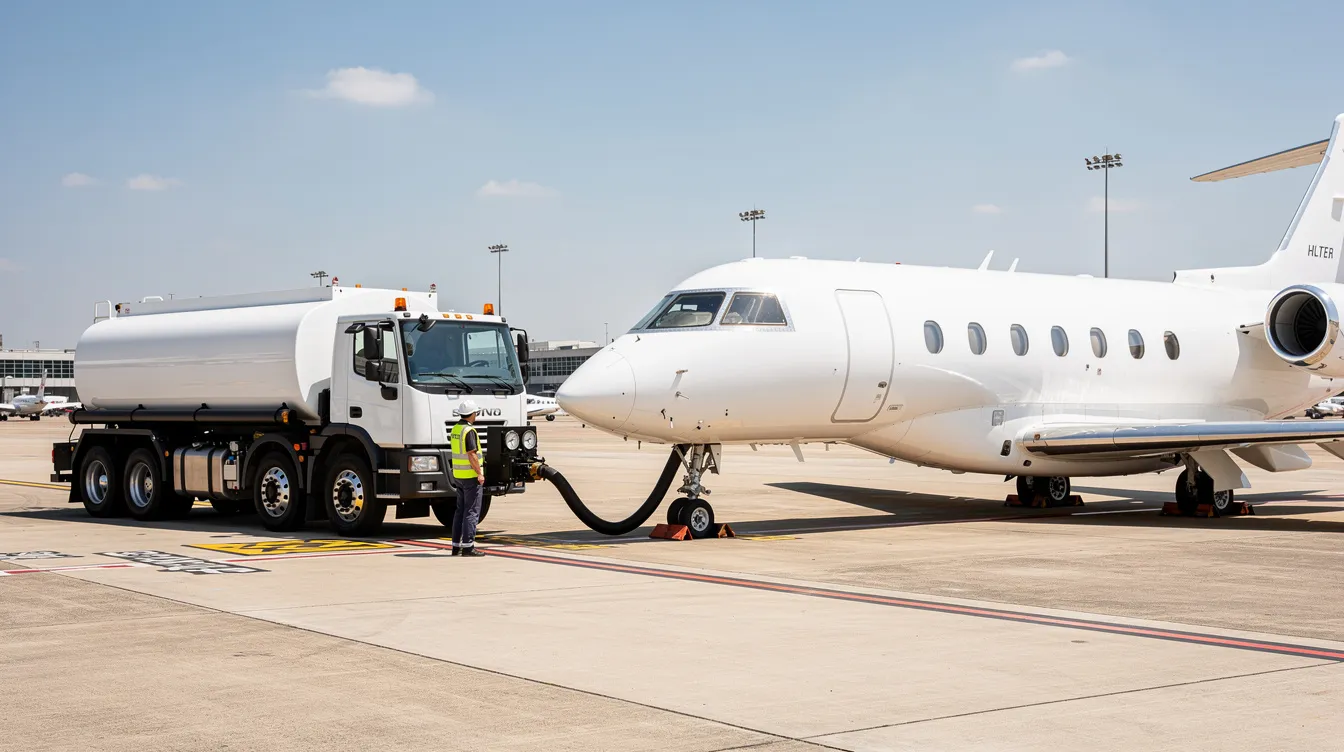
Is jet fuel flammable? The short answer is yes - but not in the way most people assume. Jet fuel is a combustible liquid that behaves very differently from gasoline, and understanding those differences matters for aviation safety, fuel handling, and private jet travel.
This article is intended for private jet travelers, aviation enthusiasts, and anyone interested in aviation safety. Understanding jet fuel flammability is crucial for appreciating the safety measures in place during private jet operations and for making informed decisions about air travel.
Jet A and Jet A-1, the most common aviation turbine fuels, are classified as combustible liquids with a flash point above 38 °C (100 °F). They are not highly flammable like gasoline or aviation gasoline.
Standard jet fuel does not release enough vapor to ignite at room temperature, making it significantly harder to light under normal conditions than car fuel or avgas.
Jet fuel can absolutely undergo combustion and sustain fire inside a jet engine, where compressed air, atomized fuel, and high temperatures create ideal conditions for burning.
Flash point is the lowest temperature at which fuel forms an ignitable vapor-air mixture near an ignition source. Autoignition temperature (210–250 °C) is when fuel ignites without any spark. Flammability limits define the vapor concentration range in air where combustion is possible.
Understanding jet fuel flammability is critical for safe handling, storage, and private jet charter operations on platforms like Jettly.
Regulators classify liquid fuels based on flash point. Flammable liquids have a flash point below 38 °C, while combustible liquids have a flash point at or above 38 °C. Jet fuel is classified as a combustible liquid under transport regulations because Jet A and Jet A-1 sit right at or above that 38 °C threshold.
In practical aviation terms, flammability describes the ability of fuel vapor above a liquid to ignite in air when exposed to an ignition source. Flammability is determined by the physical and chemical properties of jet fuel - primarily its flash point and volatility. The key properties affecting jet fuel flammability are flash point and volatility, which together control how much vapor a fuel produces at a given temperature and how easily that vapor can catch fire.
Aviation fuels sit on a spectrum. At one end, aviation gasoline is highly flammable. At the other, kerosene-type jet fuels like Jet A and Jet A-1 are relatively less volatile. In daily airport practice, however, all aviation fuel is treated as a hazardous material requiring strict controls - regardless of where it falls on that spectrum.
Avgas and jet fuel serve different aircraft engines, and their flammability profiles are dramatically different.
Aviation gasoline has a flash point well below −40 °C, similar to automotive gasoline. That means avgas produces ignitable fuel vapor even in very cold climates. A small spark on a cool morning can light it. This higher volatility is why avgas-powered piston engine aircraft need careful handling around ignition sources at virtually any temperature, and it plays a major role in the overall cost of operating or owning a private jet.
Jet A and Jet A-1, by contrast, have a minimum flash point of 38 °C (100 °F). At typical ramp temperatures of 20–30 °C, these fuels produce far fewer vapors. Jet fuel must be heated or atomized to create a proper ignition hazard. Vapor pressure - which measures the volatility of fuel at a standardized temperature - is much lower for kerosene-type fuels than for gasoline.
There are sensory differences too. Avgas evaporates quickly and is typically dyed blue for identification. Jet fuel is oily, straw colored, and evaporates slowly. If you spill jet fuel on pavement on a cool day, it sits there like diesel rather than flashing off like gasoline.
Avgas powers small aircraft with spark ignition, while turbine engines compress air to high pressure and temperature before injecting atomized jet fuel, relying on continuous combustion rather than individual sparks for each power stroke.
Global aviation runs primarily on three civil jet fuels, each a complex mixture of hydrocarbons primarily containing 8 to 16 carbon atoms- long-chain hydrocarbons refined from crude oil.
Jet A is primarily used in the United States. It has a flash point above 38 °C and a maximum freezing point of −40 °C. Jet fuels must meet ASTM specification D1655, and Jet A conforms to this standard for fuel properties, energy content, and thermal stability.
Jet A-1 is the dominant international fuel type. Jet A-1 has a minimum flash point of 38 °C (100 °F) and a lower freezing point of −47 °C, making it better suited for long-haul and polar routes. Jet A-1 fuel must meet ASTM specification D1655 as well as DEF STAN 91-091 for international operations. Both Jet A and Jet A-1 have flash points above 38 °C.
Jet B is a wide-cut fuel blending kerosene with lighter naphtha-range fractions. Jet B has a much lower flash point around −18 °C and a freezing point of −60 °C (−76 °F). Its higher volatility makes it useful in very cold climates like northern Canada, but that same volatility creates significant handling risk. Jet B has a lower flash point of −18 °C compared to standard aviation kerosene, so it is rarely used in mainstream commercial or private jet operations.
It is also worth noting that TS-1 jet fuel, used under Russian specifications, has a flash point of 28 °C (82 °F) minimum - lower than Jet A but still classified as a combustible liquid in most regulatory frameworks. TS-1 jet fuel has a minimum flash point of 28 °C.
For most Jettly charter flights on business jets and airliners, the relevant fuels are Jet A in the U.S. and Jet A-1 elsewhere, powering a significant share of the global fleet of private jets.
|
Jet Fuel Type |
Flash Point (°C) |
Freezing Point (°C) |
Typical Use |
Volatility & Handling Risk |
|---|---|---|---|---|
|
Jet A |
>38 |
-40 |
US domestic and international flights |
Lower volatility, safer handling |
|
Jet A-1 |
>38 |
-47 |
International flights and long-haul |
Lower volatility, safer handling |
|
Jet B |
~-18 |
-60 |
Very cold climates (e.g., northern Canada) |
Higher volatility, higher handling risk |
|
TS-1 |
>28 |
<-50 |
Russian and CIS states |
Moderate volatility |
Three parameters define how easily jet fuels ignite: flash point, autoignition temperature, and flammability limits.
Flash point is the lowest temperature at which a liquid like Jet A produces enough vapor to form an ignitable mixture with air when exposed to sparks or a flame. Jet fuel must have a flash point above 38 °C - this is the regulatory floor that separates combustible liquids from flammable liquids.
Autoignition temperature is the point where a fuel-air mixture will ignite without any external spark or flame. Autoignition temperature for jet fuel is typically around 210 °C to 250 °C. Inside a jet engine, where compressed air reaches extreme temperatures and the pressure is high, this threshold is easily crossed.
Flammability limits describe the range of fuel vapor concentration in air - roughly 0.7% (lower limit) to 5.0% (upper limit) by volume for Jet A at sea level - within which combustion can occur. Outside these limits, there is either too little fuel vapor or too little oxygen for fire to sustain. Higher volatility increases the risk of explosive vapor mixtures in fuel tanks, which is why fuel tank design and venting standards are so stringent.
These characteristics are engineered intentionally. Jet fuels have a high flash point for safer ground handling but remain reliably ignitable inside hot, pressurized combustion chambers.
Inside a modern jet engine, air enters the intake and is compressed to several times atmospheric pressure. Jet fuel requires 3-5 atmospheres for optimal combustion at ground level, and compression ratios climb even higher at altitude.
Fuel nozzles atomize the liquid fuel into a fine mist, dramatically increasing surface area. This allows rapid vaporization - even though the liquid itself has a high flash point, the atomized droplets behave like a gas and mix efficiently with hot compressed air. Combustion temperatures for jet fuel typically range from 300 to 400 °C in the combustion chamber, where jet fuel combustion occurs.
During engine start, igniter plugs supply the initial ignition energy. Once combustion stabilizes, the flame sustains itself continuously as long as fuel and air flow remain steady. There is no need for repeated sparks the way a piston engine needs them.
Jet fuel has high energy density suitable for aircraft turbine engines, and the net heat of combustion affects jet engine efficiency directly. This is why jet aircraft can carry enough fuel for transcontinental flights while keeping weight manageable. Engine designers tune flame stability so jet fuels burn efficiently across a wide range of altitudes, power settings, humidity levels, and ambient temperatures.
Fischer–Tropsch synthetic fuels can be blended up to 50% with jet fuel, meeting the same combustion and performance requirements - an approach that supports future sustainability without compromising engine reliability.
Jet fuel can burn vigorously once ignited, but at typical ramp temperatures it is significantly harder to light than gasoline or avgas.
At temperatures below 38 °C, Jet A and Jet A-1 may not produce enough fuel vapor to ignite from a small spark. The liquid just sits there. However, jet fuel can ignite from hot engine components or open flames, even below its flash point, if conditions concentrate enough vapor. Jet fuel becomes hazardous when heated or atomized into a mist state - a fuel leak spraying against a hot surface, for example, creates very different conditions than a cold puddle on concrete.
Jet B, with its lower flash point, behaves more like a volatile fuel and will ignite more readily at low temperatures. This is precisely why it demands extra caution during handling.
Several factors influence real-world flammability around aircraft: fuel temperature, surface area (a thin puddle versus a pressurized spray), air movement, and the presence of ignition sources. Airports ban smoking near fuel operations, control static discharge, and require grounding of all equipment - all based on managing these risks even with a fuel that is technically harder to ignite than gasoline.
International standards govern every step of jet fuel's journey from refinery to fuel tank. ASTM specification D1655 defines composition, flash point minimums, freeze point maximums, and acceptable additives for Jet A and Jet A-1. Jet fuel handling requires strict safety protocols to minimize accidents at every point in the supply chain.
Storage tanks, refueler trucks, and hydrant systems are designed to minimize ignition risk. Ground crews use grounding and bonding cables to dissipate static electricity during fueling. Controlled pumping rates prevent static buildup, and temperature and contamination monitoring are continuous. Proper storage and handling of jet fuel are crucial to prevent hazards.
Jet fuel must exhibit thermal stability during temperature extremes - from hot tarmac in summer to sub-zero conditions at altitude. It must also be free from water contamination to prevent freezing in fuel lines and filters. Additives like static dissipater agents, corrosion inhibitors, and icing inhibitors improve safety without fundamentally changing the fuel's flash point classification.
Regulatory agencies including the FAA, EASA, and Transport Canada require regular fuel sampling, water detection checks, and tank inspections. Military fuels are engineered with higher flash points exceeding 60 °C for even greater safety margins in combat and carrier operations aboard aircraft carriers.
Jettly works only with certified operators who follow these standards, ensuring charter customers board aircraft fueled and handled according to rigorous safety rules, similar to the vetted providers highlighted in comprehensive guides to charter airlines and private flights.

Private jets - from light jets to long-range heavy aircraft - almost universally rely on kerosene-based liquid fuels such as Jet A and Jet A-1. The fuel type affects range, performance in cold climates, and operating cost, but has no impact on the cabin experience or on the wide selection of private charter aircraft available to travelers.
For a typical Jettly customer flying popular routes like New York–Miami or Toronto–Vancouver, the main practical difference is price. Fuel costs vary by region, and accurate fuel burn estimates are essential for instant pricing on a digital charter platform. Understanding whether an airport stocks Jet A or Jet A-1 - and at what price - helps explain cost differences between aircraft categories and routes.
Professional charter operators manage fueling by coordinating with FBOs, calculating reserves, and verifying fuel quality at smaller regional airports, much like established providers such as JET-A, LLC, in the private jet marketplace. While jet fuel is a combustible substance, charter passengers are protected by strict fueling procedures, fire protection systems, and highly trained ground crews—key safety practices to look for when comparing the best private jet charter companies.
Learn more about Jettly's flight options, private jet memberships, and safety-focused charter model at jettly.com.
Jet fuel generates persistent myths. Here are a few that deserve correction.
"Jet fuel is barely flammable." While it is less volatile than gasoline, it still poses serious fire risks. A spill near a hot surface, a mist from a ruptured line, or a tank at elevated temperature can absolutely catch fire. Treating any aviation fuel as harmless is dangerous.
"Jet fuel can melt steel beams." Jet fuel flame temperatures are limited by basic combustion physics. While combustion products are hot enough to weaken steel under prolonged exposure, the melting point of structural steel (around 1,400–1,540 °C) is far above typical jet fuel burn temperatures. The distinction matters.
"Jet fuel works like diesel fuel in everyday vehicles." Though jet fuel and diesel share some characteristics as kerosene-range hydrocarbons, they differ in composition, octane rating equivalents, ignition behavior, and additive packages. Aircraft engines and diesel engines are designed for different fuel properties.
"All aviation fuels are interchangeable." Avgas powers piston-engine aircraft with spark ignition. Jet A and Jet B power turbine engines. Mixing them up can cause engine failure. Professionals and platforms like Jettly rely on engineering data and regulations - not assumptions - when planning flights and managing fuel.
While this article focuses on flammability, combustion of jet fuel has broader consequences worth noting.
When jet fuel burns in an engine, it emits CO₂, NOx, particulates, and water vapor. These combustion products contribute to aviation's share of global greenhouse gas emissions. The well-to-wake carbon intensity for conventional jet fuel is roughly 88.7 gCO₂e per MJ, though this varies by refinery and feedstock.
Operators and manufacturers are working to reduce impact through more energy-efficient engines, sustainable aviation fuels (SAF), and carbon offset programs. SAF blends must meet the same ASTM standards as conventional fuel, including flash point and thermal stability requirements.
Chronic exposure to jet fuel vapors containing carbon and hydrogen atoms, along with aromatic compounds, can pose health risks for ground staff if safety protocols and protective equipment are not used properly. Proper ventilation and monitoring are standard practice at professional FBOs.
Private jet charter customers can ask about more efficient aircraft types, routing, and offset options, and explore the broader topic of private jet emissions and cleaner ways to fly when booking flights through platforms such as Jettly.
These frequently asked questions cover practical concerns about jet fuel safety that passengers and aviation enthusiasts commonly raise.
Jet A has a higher flash point than gasoline, so a small spark at cool ambient temperatures may not produce ignition if vapor concentration is low. However, open flames, hot surfaces, or concentrated sparks can still ignite vapors under the right conditions - especially if fuel is warm or misted. This is exactly why smoking and uncontrolled ignition sources are strictly banned near all fueling operations, and ground crews enforce these rules without exception.
Many operators allow passengers to remain onboard during refueling under strict procedures, including keeping the cabin door open and having fire safety equipment staged nearby, which is an important consideration for travelers learning how to get a seat on a private jet and what to expect on board. Some airports or companies prefer passengers to wait in the FBO for added precaution. Ground crews follow rigid safety checklists to manage the flammability risk of jet fuels during every refueling operation—standard practice among leading providers and NetJets alternatives like Jettly.
Piston engines are designed for high-volatility aviation gasoline and spark ignition. Jet A lacks the volatility and ignition characteristics needed for proper combustion in these engines, and using it can lead to poor power output or engine failure. Only specially designed or converted piston diesel engines can safely run on jet fuels, and these require specific certification from appropriately regulated Part 135 charter companies.
At high altitude, lower ambient temperatures actually reduce fuel vapor formation inside the tank, working against flammability. Modern aircraft also use venting systems, and many larger jets use nitrogen inerting to keep the oxygen concentration in the fuel tank below levels that support combustion. These design features keep vapor concentration outside flammability limits throughout the flight.
Most private flights today use conventional Jet A or Jet A-1. However, some operators blend in sustainable aviation fuels where available, which can reduce lifecycle emissions by up to 80% compared to conventional fuel derived from natural gas or crude oil processing. Travelers can ask platforms like Jettly or the operating carrier about efficient aircraft choices and carbon offset options, which often deliver more impact than fuel switching alone.
Jet fuel is a combustible, flammable aviation fuel with a higher flash point than gasoline. It is engineered for safe handling on the ground and reliable burning inside jet engines under pressure and high temperature. The key distinctions matter: aviation gasoline ignites readily at ambient temperatures, while Jet A and Jet A-1 require heating or atomization to produce enough vapor for ignition.
Jet B sits between the two, with a much lower flash point suited to very cold climates. Each fuel type serves a specific purpose, powering everything from small aircraft to long-range business jets. Understanding these fuel properties helps travelers appreciate the engineering behind every charter flight. Ready to experience private travel on your terms?
You can explore flight options, use a jet card flight cost estimator, review how Jettly offers affordable private jet charter, or request a quote at jettly.com.
Share this post:
Jay Franco Serevilla
Nov 2, 2026
|
5
min read
Discover tips and trends in the industry.

5
min read
MSP to Key West: How to Get from Minneapolis–St. Paul to Key West (EYW) with Commercial and Private Flights
Traveling from Minneapolis–St. Paul (MSP) to Key West (EYW) requires planning, as there are no year-round nonstop commercial flights. Travelers can choose between connecting flights through major hubs or opt for a private jet charter for a quicker, more direct route. This guide provides insights on flight options, pricing, and tips for a smooth journey to the sunny shores of Key West.
Read More
5
min read
How Long of a Runway Does a 777 Need? (Runway Length, Takeoff and Landing Explained)
The Boeing 777 requires approximately 9,000 to 11,000 feet of runway for takeoff at maximum weight under standard conditions. Landing distances are shorter, typically ranging from 5,500 to 7,000 feet. Factors such as aircraft weight, temperature, and runway conditions significantly influence these requirements.
Read MoreStay updated with our latest insights and tips to elevate your journey with us.
MEMBERSHIPS AND ASSOCIATIONS



Disclaimer: Jettly operates as a charter broker, offering access to a global digital jet charter marketplace. Jettly is not a direct air carrier and does not own or operate aircraft. All advertised flights are conducted by third-party air carriers that are fully licensed and hold the appropriate Part 135 or Part 121 certifications issued by the Federal Aviation Administration (FAA) or equivalent regulatory authorities under U.S. or foreign law. Jettly complies fully with the U.S. Department of Transportation's Part 295 and Part 298 Charter Broker regulations. Jettly does not carry additional liability insurance. Passengers are covered by aircraft operator insurance. TICO: 50023770


