


Login
Get Instant Pricing On 23,000+ Aircraft

>
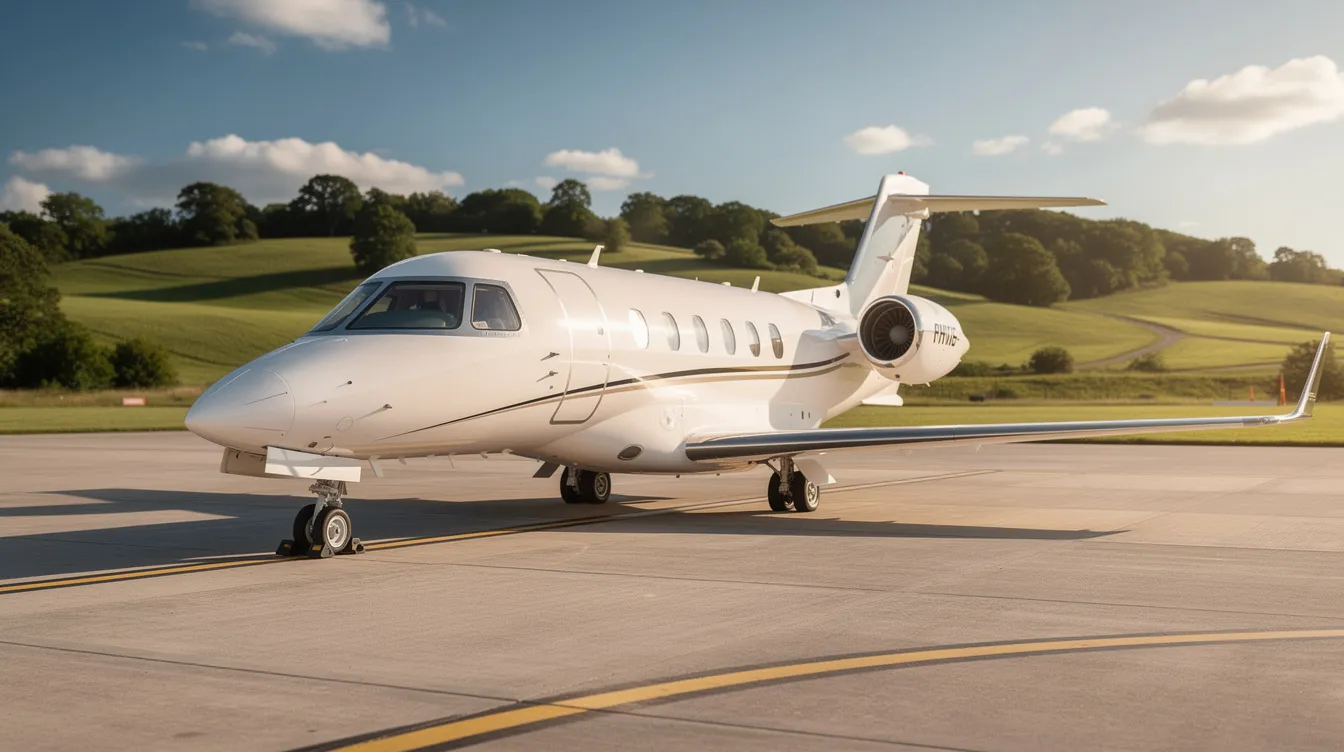
Private jet charter costs are almost always quoted as an hourly rate, and in 2026 that rate typically ranges from about $2,300 per hour for turboprops to $23,000 per hour for VIP airliners. That single number drives most of the budgeting conversation, yet it rarely tells the full story. For corporate executives, high-net-worth travelers, and families who want the flexibility of private flying without the burden of ownership, this guide breaks down the hourly rate for private jet travel by aircraft category, explains what is and is not included in the price, shows which factors push the total up or down, and outlines practical ways to control what you actually pay. It also shows how Jettly helps compare aircraft, get instant pricing, and book with more clarity—so you can match the right jet to the trip, avoid hidden costs, and budget luxury travel with confidence.
Private jet hourly rates range from $2,300 to $23,000 depending on aircraft category, route, and season. Before booking, it helps to understand where those numbers come from and what sits on top of them.
2026 hourly rate ranges by aircraft category: Turboprops start around $2,300 per hour, light jets run $3,000–$5,500, midsize jets fall between $4,700–$7,500, heavy jets cost $8,000–$15,000, and ultra-long-range jets reach $12,000–$20,000 or more. VIP airliners charge $18,000 to $23,000 per hour.
The hourly rate is not the total cost. Most private jet prices per hour include aircraft, crew, and baseline fuel, but taxes, airport fees, and repositioning can add 20–40% to the final cost of a trip.
Platforms like Jettly provide instant, route-specific hourly rates drawn from live charter market data across 20,000+ aircraft rather than static rate cards, so quotes reflect real aircraft availability and demand.
Right-sizing the aircraft category is the fastest way to control private jet cost. Choosing a light jet instead of a super midsize jet for a 2-hour domestic hop can save thousands per flight hour without sacrificing comfort for a small group.
Booking off-peak, using private airports, and considering empty leg flights are practical ways to reduce what you actually pay on your private jet flight—sometimes by 25–75%.
Private jet charters are usually priced by the billable flight hour for the entire aircraft, not per passenger. A billable flight hour is the time for which the entire aircraft is charged, regardless of the number of passengers. Private jet charters are priced per flight hour for the entire aircraft, not per passenger. An operator takes the aircraft's total annual operating costs—both fixed and variable—and divides them by projected flight hours to arrive at a base hourly rate. That rate is then adjusted for aircraft age, regional market conditions, and demand.
Here is a simple example to ground the math. A light jet quoted at $4,000 per hour on a 3-hour leg produces a base charge of $12,000 before taxes and fees. That base number is the starting point for the total private jet rental cost, not the finish line.
The main cost components baked into a standard hourly rate include:
Aircraft ownership or lease payments – the cost to acquire or finance the jet, spread across expected annual hours.
Maintenance reserves – airframe inspections, engine overhauls, and component replacement set aside per hour flown.
Crew salaries and training – two pilots minimum; larger aircraft may require a flight attendant.
Insurance – hull and liability coverage for the aircraft.
Baseline fuel – calculated at a reference jet fuel price. When fuel price fluctuations push retail costs above that reference, fuel surcharges appear as a separate line item.
Chartering a private jet involves various operational and market variables beyond these baseline elements. Hourly rates are influenced by aircraft capabilities and operational logistics, including positioning, route complexity, and the operator's schedule on that specific day.
Jettly's marketplace shows real hourly rates from hundreds of aircraft operators, reflecting current 2026 market conditions rather than theoretical averages.
Aircraft category is the single biggest driver of private jet prices per hour. Hourly costs are influenced by aircraft size and category-a turboprop and a heavy jet occupy entirely different cost universes. Below are realistic 2026 planning ranges for each category.
|
Aircraft Category |
Example Models |
Hourly Rate (2026) |
|---|---|---|
|
Turboprops |
King Air 350, Pilatus PC-12 |
$2,300–$3,500 |
|
Very Light Jets |
HondaJet, Citation Mustang |
$2,750–$4,600 |
|
Light Jets |
Citation CJ3+, Phenom 300 |
$3,000–$5,500 |
|
Super Light Jets |
Learjet 75, Phenom 300E |
$4,500–$6,500 |
|
Midsize Jets |
Citation Latitude, Hawker 900XP |
$4,700–$7,500 |
|
Super Midsize Jets |
Challenger 350, Citation Longitude |
$6,000–$9,000 |
|
Heavy Jets |
Falcon 900LX, Gulfstream G550 |
$8,000–$15,000 |
|
Ultra Long Range Jets |
Gulfstream G650ER, Global 7500 |
$12,000–$20,000 |
|
VIP Airliners |
Boeing BBJ, Airbus ACJ |
$18,000–$23,000 |
These hourly rates typically include the aircraft, crew, fuel at reference pricing, insurance, and maintenance reserves. What is usually extra: landing fees, handling fees, taxes, repositioning, overnight crew expenses, catering, and de-icing.
Private jet rental costs range from $2,300 to $23,000 per hour across these categories. Actual quotes on Jettly may land at the high or low end depending on route, dates, passenger count, and operator. For a broader overview of factors that influence pricing, Jettly's guide on how much to rent a private jet costs complements these ranges, and you can explore specific numbers using Jettly's charter cost estimator.
Turboprops and very light jets are the most economical way to access private jet charters for short regional trips, and they are often highlighted among the cheapest private aircraft options. They make sense when the mission is under 1,000 miles, the group is small, and the departure airport has a short runway that larger jets cannot use.
Turboprops like the Pilatus PC-12 or King Air 350 cost $2,300 to $3,500 per hour in 2026. Very light jets—think the HondaJet or Citation Mustang—run roughly $2,750 to $4,600 per hour.
Ideal missions for these aircraft:
Flights under 1,000 nautical miles (range nm is limited on both types)
2–6 passengers
Access to shorter runways and remote private airports
Regional hops where ground transportation to a major hub would eat hours
These aircraft categories offer the lowest total private jet cost but come with trade-offs: limited cabin space, fewer in-flight amenities, and smaller baggage compartments. Travelers comparing choices can also look at Jettly's guide to affordable aeroplane rental costs and options. Jettly users who prioritize value and access over nonstop coast-to-coast range should consider turboprops or VLJs first, using resources on affordable aeroplane rental options to benchmark costs.
Light jets and super light jets are the workhorses of private jet rental for business and family trips. They balance hourly cost, speed, and access to smaller airports in a way that makes them the default for routes under three hours.
Light jets such as the Citation CJ3+ and Phenom 300 typically cost $3,000 to $5,500 per hour. Light jets generally cost between $4,000 and $6,000 per hour and are suited for short domestic flights. Super light jets sit slightly higher, roughly $4,500–$6,500 per hour in 2026.
Both categories usually seat 6–8 passengers, cruise at 400–480 knots, and handle routes like New York–Miami or London–Ibiza nonstop; they fit neatly within typical private jet passenger capacity ranges for small groups. Per hour, these jets cost more than turboprops, but they often reduce total trip time significantly, and the cabin experience is meaningfully better for frequent flyers.
Light jets are often the best balance between hourly rate, speed, and access to smaller private airports. Travelers comparing small jet aircraft on Jettly can filter by cabin configuration and range to find the most efficient aircraft for their specific route.
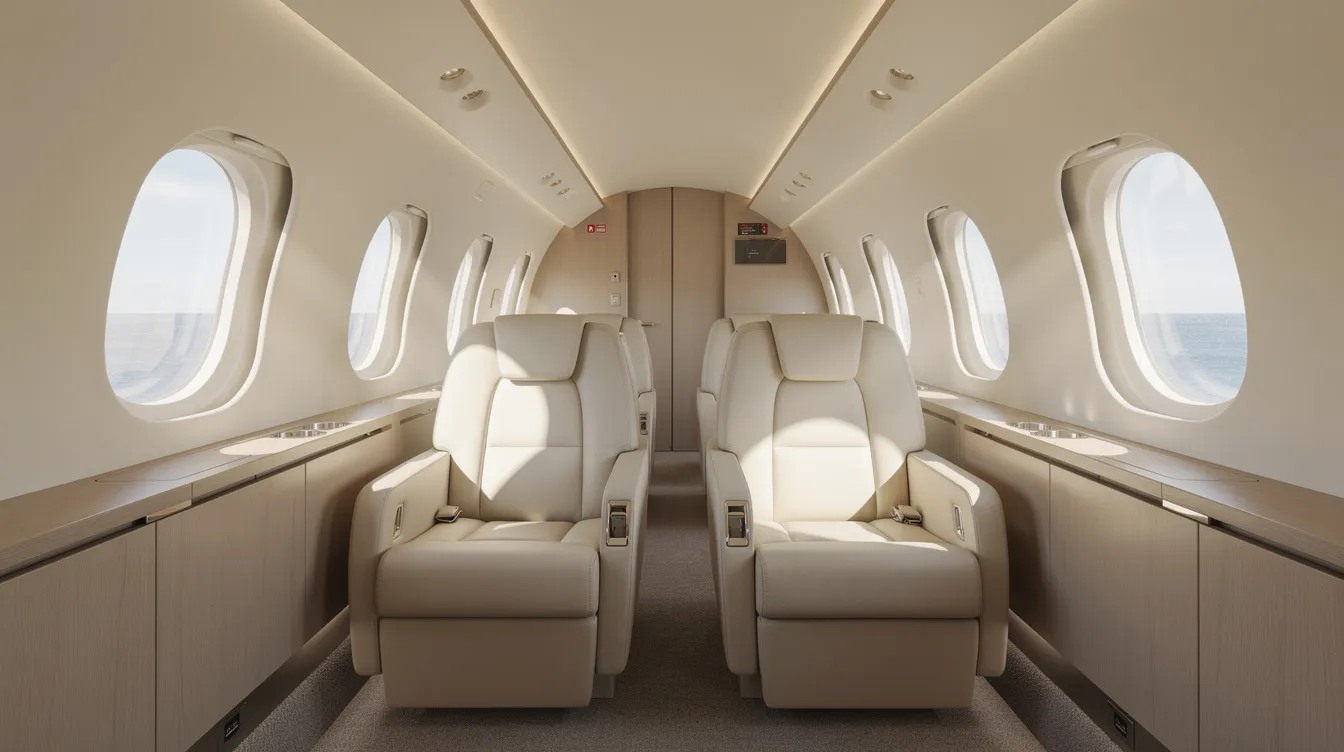
Midsize and super midsize jets suit travelers who need stand-up cabins, coast-to-coast capability, and room for 7–10 passengers with luggage.
Midsize jets like the Citation Latitude or Hawker 900XP range from $4,700 to $7,500 per hour. Super midsize jets—the Challenger 350, Praetor 600, Citation Longitude—charge $6,000 to $9,000 per hour in 2026.
What you gain at this price point:
Stand-up cabin height in most models
Enclosed lavatories and a full galley
Greater luggage capacity
Reliable Wi-Fi and flat work surfaces
Transcontinental U.S. nonstop capability (super midsize)
Consider a multi-city business trip—Los Angeles to Denver to Chicago. A super midsize jet's speed and range allow nonstop legs on both segments, eliminating fuel stops and cutting a full day off the itinerary. The higher hourly rate is offset by fewer billable hours and reduced crew overnight costs.
Jettly's quote engine can display midsize vs. super midsize options side by side so travelers can weigh private jet hourly rates against total time saved on longer missions, drawing from its global inventory of private charter aircraft.
Large cabin and ultra long range jets represent the top tier of private jet charter pricing, but they unlock nonstop intercontinental flights that no other aircraft category can deliver.
Heavy jets like the Falcon 900LX and Gulfstream G550 run $8,000 to $15,000 per hour. Ultra-long-range jets — the Gulfstream G650ER and Bombardier Global7500—typically cost $12,000 to $20,000 per hour. VIP airliners charge $18,000 to $23,000 per hour.
Typical missions include New York–London, Los Angeles–Tokyo, or Dubai–Singapore. Fuel burn on these larger aircraft is substantial. A G550 flying New York to London (roughly 7 hours) burns approximately 1,600–1,700 gallons of jet fuel. At around $6.50 per gallon, that is more than $10,000 in fuel alone for a single sector.
Passenger counts range from 10 to 16+ for large cabin jets. Amenities at this level often include lie-flat seating, private suites, full galleys, and a dedicated flight attendant. Jettly customers often choose these aircraft for international flights when traveling with larger teams, VIP clients, or for time-critical itineraries where eliminating fuel stops justifies the premium hourly cost.
Most private jet charter rates are quoted as "wet rates," meaning they bundle several cost categories into one per-hour figure. But "all-in" is rarely truly all-inclusive. Understanding what your hourly rate covers is critical to avoiding hidden costs.
Core inclusions in most hourly rates:
Aircraft usage
Two pilots (and crew for larger aircraft)
Fuel at contracted or reference pricing
Hull and liability insurance
Routine maintenance reserves
Standard cabin amenities
Common exclusions that appear as separate line items:
Government taxes (e.g., 7.5 federal excise tax on U.S. domestic legs)
Airport landing and handling fees
De-icing at winter destinations
Special catering beyond basic snacks and beverages
Ground transportation
Crew expenses, including overnight stays and travel logistics if the crew is away from base (typically $200 to $600 per crew member per night)
Aircraft positioning (ferry flights) to your departure point
Here is what a sample 2-hour light jet charter invoice might look like in practice:
Base hourly rate: 2 hours × $4,500 = $9,000
Federal excise tax (7.5%): $675
Landing and handling fees: $450
Segment fees (4 passengers × $5.30): $21.20
Catering: $350
Total: $10,496.20
Newer aircraft can also command a premium of $100 to $1,000 per hour compared to the same aircraft type of older vintage, reflecting better interiors, updated avionics, and lower maintenance risk.
Jettly emphasizes transparent quoting so travelers can see clearly what their per-hour rate covers before booking.
The final private jet cost is the hourly rate multiplied by billable flight time, and operators invoice by the billable flight hour rather than only wheels-up time, so billable time is almost always longer than the time you spend in the air.
Billable flight time typically includes:
Taxi time before takeoff and after landing
Climb and descent overhead built into block time calculations
Repositioning legs if the aircraft must fly empty to reach your departure airport or return to base
Minimum daily flight hours that most operators require, often 2 hours per day for smaller jets and up to 3–4 hours for larger aircraft
Minimum billable hours often apply to chartered flights, even if the flight duration is shorter. Here is how that works in practice: a nominal 1.2-hour hop in a light jet might be billed as 2.0 hours because of the operator's daily minimum. If there is also a 0.6-hour repositioning leg, total billable time climbs to 2.6 hours, and the effective hourly cost per passenger-hour changes dramatically.
Positioning fees can add $2,000 to $8,000 to charter costs depending on how far the aircraft must travel to reach you. Aircraft positioning is one of the most overlooked cost drivers in private aviation.
Jettly's quotes disclose assumed billable flight time, helping clients compare private jet prices on a consistent basis. Always ask how many billable hours are included in any quote rather than focusing on the advertised per-hour figure alone.
Taxes and surcharges can add 10–25% or more to the total private jet cost depending on your route and jurisdiction. These charges sit on top of the hourly rate and are unavoidable on most flights.
U.S.-specific charges in 2026:
A 7.5% federal excise tax (FET) applies to all U.S. domestic flights
Domestic segment fees of $5.30 per passenger, per leg
International departures may trigger head taxes, customs fees, and overflight permits
Airport and ground fees:
Landing fees range from $150 to $1,500 depending on the airport and aircraft weight
Landing, handling, parking, and deicing fees can vary significantly based on the airport used
Landing and handling fees vary among Fixed-Base Operators and airports—a larger aircraft at a busy hub pays far more than a light jet at a regional field
Hangar fees apply if the aircraft requires overnight shelter
Variable surcharges:
Fuel surcharges are added based on fluctuations in retail jet fuel prices. During price spikes, these surcharges may add $600 to $1,200 per hour to the base rate.
De-icing charges can range from $1,500 to $12,000 depending on aircraft size and conditions
Crew overnight expenses apply on multi-day trips or international flights
Jettly encourages itemized quotes so travelers see these line items up front rather than being surprised by hidden fees after their private jet flight, complementing broader guidance on how much a private jet costs across different usage models.
The same hourly rate can produce very different total bills depending on flight distance, route complexity, and air traffic constraints.
Longer flights tend to be more cost-efficient per mile. A 4-hour nonstop leg eliminates short-leg fees, reduces the number of landing and handling fees, and avoids minimum-hour penalties that inflate costs on quick hops.
Route comparison examples:
New York–Boston (light jet, ~1 hour flight time): Often billed at the 2-hour daily minimum, so the effective hourly cost doubles. Total before fees: ~$8,000–$11,000.
New York–Miami (light jet, ~2.8 hours): Billable time closely matches actual flight time, making the effective rate more efficient. Total before fees: ~$12,000–$16,000.
New York–London (ultra long-range jet, ~7 hours): High total spend, but the per-mile cost is competitive given the elimination of fuel stops and the time saved.
International overflight permits, slot-restricted airports, or mountain destinations (like Aspen) can increase both billable flight time and airport fees. Altitude restrictions and approach complexity may require more fuel or longer routing.
Jettly's instant pricing takes routing into account automatically, using real flight time estimates rather than simple straight-line distances.
One of the key advantages of private jet travel is access to thousands of private airports and FBOs that commercial airlines cannot serve. This often reduces total travel time by avoiding congested terminals and lengthy security lines.
Smaller private airports can offer lower landing and handling fees than large commercial hubs, reducing overall cost. However, in dense markets like the New York area, choosing Teterboro (a popular private airport) might carry higher ramp fees than a less well-known field—but it saves hours of ground transportation compared to JFK or Newark.
Quick comparison:
Flying into a regional private airport with a light jet: landing fee ~$200, handling fee ~$300, minimal taxi wait.
Same aircraft at a major commercial hub: landing fee ~$800+, handling fee ~$500+, potential slot delays.
The net result is that a slightly higher hourly rate at a convenient private airport often delivers better door-to-door value for time-sensitive travelers. Jettly's search tools surface multiple departure and arrival airport options so users can weigh convenience against fee differences.
On-demand private jet rental means pay-per-trip pricing with no long-term commitment. Jet cards and memberships take a different approach by pre-setting the hourly rate for a fixed number of hours.
On-demand hourly rates can be lower or higher than jet card rates depending on season and aircraft availability. During peak periods, on-demand pricing often spikes, while jet card holders fly at their contracted rate.
How jet cards typically work:
Prepay for a block of hours (commonly 25, 50, or 100)
Lock in a fixed hourly rate per aircraft category
Some programs include fuel surcharges, catering, or de-icing in the price
Daily minimums and repositioning policies vary by provider
Jettly offers both on-demand access and membership options such as its range of private jet memberships, allowing frequent flyers to lock in more predictable private jet prices per hour without requiring fractional ownership or long-term jet card commitments.
A useful rule of thumb: if you fly more than 50–75 hours per year, membership pricing structures often make financial sense. Below that threshold, on-demand booking usually offers better flexibility per dollar.
Empty leg flights—also known as "deadhead" flights—are discounted repositioning segments that can dramatically lower the effective hourly rate. These flights occur when jets reposition without passengers after dropping off a charter client or traveling to pick one up. Operators offer empty leg flights to offset costs of repositioning.
Empty leg flights can save up to 75% off standard one-way charter rates. Typical savings fall between 25–75%, depending on route and aircraft type. The catch: flexibility is required for scheduling empty leg flights. Departure times, dates, and sometimes even destinations can shift if the underlying charter changes.
Sample savings comparison:
Standard 2-hour light jet charter one-way: ~$9,000–$11,000
Same aircraft, same route as an empty leg: ~$3,000–$5,500
Shared charters on popular routes can also reduce per-person cost, especially when using platforms that let travelers crowdsource private jet flights and share empty seats. When six passengers split the cost to rent a private jet, the per-seat price can approach last-minute business-class fares on commercial airlines.
Jettly lists real-time empty leg opportunities across its global inventory and offers guidance on how to get a seat on a private jet easily, making it easier to match flexible trips with lower private jet prices.
The hourly rate for the same aircraft model can differ by 10–30% or more between North America, Europe, and regions like the Middle East or Asia-Pacific.
Key drivers of regional variation:
Fuel prices – jet fuel costs more in some regions, directly raising the variable cost component
Infrastructure – hangar fees, maintenance facilities, and parts availability vary widely
Regulatory overhead – environmental surcharges, noise penalties, and overflight permit costs differ by jurisdiction
Fleet density – more aircraft based in North America means more competition and generally lower rates
As a concrete example, a Challenger 350 might cost roughly $8,000 per hour in the U.S. versus closer to $9,500 per hour on some European routes in 2026. Asia-Pacific and Middle East operations typically run 15–25% higher than equivalent aircraft in the U.S. or Western Europe.
Currency fluctuations in 2026 can also affect dollar-denominated hourly rates, particularly on longer international flights. Jettly users traveling internationally can compare quotes from different nearby bases or neighboring countries when flexible, as cross-border repositioning may sometimes be cheaper—an approach that aligns with broader guidance on understanding one private jet flight cost.
Abstract hourly ranges only become useful when translated into real trip budgets. Here are four scenarios using realistic 2026 estimates.
Scenario 1: New York–Boston (Light Jet)
Aircraft: Phenom 300
Flight time: ~1 hour
Billable hours: 2.0 (daily minimum)
Hourly rate: $4,500
Base cost: $9,000
Taxes, fees, handling: ~$1,200
Estimated total: ~$10,200
Scenario 2: Los Angeles–Las Vegas (Super Light Jet)
Aircraft: Learjet 75
Flight time: ~1.1 hours
Billable hours: 2.0
Hourly rate: $5,000
Base cost: $10,000
Taxes, fees: ~$1,100
Estimated total: ~$11,100
Scenario 3: London–Nice (Midsize Jet)
Aircraft: Citation Latitude
Flight time: ~2.2 hours
Billable hours: 2.5 (including taxi/positioning)
Hourly rate: $6,500
Base cost: $16,250
Overflight, handling, fees: ~$2,800
Estimated total: ~$19,050
Scenario 4: New York–London (Ultra Long Range Jet)
Aircraft: Gulfstream G650ER
Flight time: ~7 hours
Billable hours: 7.5
Hourly rate: $16,000
Base cost: $120,000
Fuel surcharges, overflight, customs, handling: ~$18,000
Estimated total: ~$138,000
In each scenario, switching to a smaller aircraft category, adjusting departure time, or flying from a different private airport could shift the total cost by thousands of dollars. Jettly can instantly replicate these scenarios with live pricing specific to your dates, passenger count, and preferred aircraft type.

Jettly operates as a digital private aviation platform focused on transparent private jet charter pricing and easy comparison across more than 20,000 aircraft worldwide, standing alongside other top private jet charter companies in the market. Rather than relying on phone calls and static rate cards, Jettly brings private jet charter rates into a real-time digital marketplace.
Users enter their route, dates, and passenger count to see live hourly rates by aircraft category-from turboprops and very light jets through heavy and ultra long range jets. The platform surfaces side-by-side quote comparisons, with filters for aircraft age, cabin size, and operator safety credentials. Taxes, airport fees, and repositioning costs are displayed as separate line items, so the final cost is clear before booking.
For frequent flyers, Jettly's membership options can lower effective aircraft hourly rates without requiring fractional ownership or rigid jet card contracts; resources comparing the best jet card programs today can also help refine the right structure. Private aviation advisors are available to help match travelers with the most suitable aircraft for their mission.
Learn more about Jettly's charter options at https://www.jettly.com, or explore partnering through Jettly's ULTRA High Ticket Affiliate Program if you refer clients who book private flights.
A lower hourly rate should never come at the expense of safety or regulatory compliance. In private aviation, the operator behind the aircraft matters as much as the aircraft itself.
Standard safety frameworks include:
FAA Part 135 certification in the U.S.
EASA Air Operator Certificates in Europe
Third-party audits from organizations like ARGUS and Wyvern
Ongoing pilot training, recurrent checks, and maintenance tracking
Aircraft operated to higher safety and service standards—with more experienced flight crew members, newer avionics, and well-maintained cabins—may understandably command higher hourly rates. The premium reflects investment in safety infrastructure, not just comfort.
Service elements also factor into all-in hourly rate differences between aircraft operators. Inflight catering quality, Wi-Fi reliability, ground transportation coordination, and concierge support vary widely. A same aircraft type operated by two different companies can carry meaningfully different price tags based on these service layers.
Jettly only lists vetted operators that meet strict safety and maintenance criteria, helping clients compare private jet costs without compromising on safety, an important consideration alongside understanding how much a private jet costs across ownership and charter options.
Sustainability is an emerging factor in private jet costs as more travelers in 2026 ask about the environmental impact of their flights.
Sustainable aviation fuel (SAF) and carbon offset programs can add modest surcharges to the baseline hourly rate but significantly reduce net emissions per flight. SAF availability is growing but remains limited at many airports, which can affect routing and fueling decisions.
Newer, more fuel-efficient aircraft may carry slightly higher hourly rates, but they burn less fuel per mile, making them the most efficient aircraft option for both carbon footprint and long-term operating costs. Choosing a more efficient aircraft over an older model of the same category can reduce fuel burn by 15–20% on some routes.
Jettly supports efficiency-focused routing and can surface newer fleet options when travelers prioritize lower emissions during their booking process, while also emphasizing strategies for affordable private jet charter that balance cost with sustainability. Environmental policies evolving through the late2020s—including potential carbon pricing and SAF blend mandates—may gradually influence how private jet hourly rates are structured and disclosed across the private aviation market.
These frequently asked questions address common scenarios not fully covered in the sections above.
Private jet rental cost depends heavily on aircraft category. A 2-hour turboprop charter might start around $4,600–$7,000 plus fees. A 2-hour light jet could range from $7,000 to $11,000 all-in. A 2-hour flight on an ultra-long-range jet can exceed $30,000 once taxes and airport charges are included.
Keep in mind that minimum billable hours—often 2 hours per day for smaller jets and 3+ for larger jets—mean a very short flight may still be billed at the full minimum. Jettly's instant pricing tool and its guide on how much to rent a private jet can show real 2-hour estimates for specific routes and aircraft rather than generic averages.
One-way pricing can sometimes approach round trip costs because operators must reposition the aircraft back to base, and that repositioning may be built into the total billable hours. A round trip can be more efficient when the aircraft waits at the destination for the return leg, avoiding a separate ferry flight.
That said, empty leg opportunities sometimes make one-way trips significantly cheaper. The best approach is to request both options — standard round-trip pricing and any available empty legs—to see which produces the better effective hourly rate for your private jet charter flight, and to compare them with shared charter flights vs. full charters when flexibility allows.
In most cases, clients are responsible for repositioning if the jet must travel from its base to the chosen departure airport or from the destination back to base. However, if an aircraft is already near the requested route—perhaps returning from another charter or based at a busy hub—repositioning charges may be minimal or built into a competitive hourly rate.
Jettly's marketplace searches across many based aircraft to minimize aircraft positioning whenever possible and highlights repositioning assumptions clearly in quotes.
Charter contracts are typically for the entire aircraft, so clients are free to divide costs among colleagues, friends, or family as they choose. For example, an $8,000 light jet charter split between six passengers brings the per-person cost to roughly $1,333—close to or below last-minute business-class commercial fares on many routes.
Some routes may also offer seat-sharing or semi-private options through platforms like Jettly, depending on demand and operator policies, as highlighted in broader overviews of the charter airlines and private flight market. You can learn more about seat options on private jets and use tools like Jettly's jet card flight cost estimator for additional ways to reduce per-person costs.
Booking 2–4 weeks in advance for domestic flights and 4–6 weeks for peak holiday or major-event periods generally provides the widest choice of aircraft and more favorable hourly rates. Same-day or next-day departures are possible but often priced at a premium, especially for popular categories like light jets and super midsize jets when aircraft availability is tight.
Setting up alerts or checking the platform early for busy dates—Christmas through New Year, major sporting events, or large trade shows—helps avoid surge pricing on private jet charters. Jettly users can monitor pricing trends and lock in favorable rates before peak demand drives costs higher, especially when evaluating jet card costs and pricing structures for frequent travel.
Private jet hourly rates in 2026 vary widely—from around $2,300 per hour for a turboprop to more than $20,000 for an ultra-long-range jet. The biggest variables are aircraft category, route, season, and how much it costs beyond the base rate in taxes, handling fees, and repositioning.
Travelers who look beyond the headline hourly rate to billable flight time, airport fees, and optional services will have a much clearer picture of true private jet cost. Right-sizing the aircraft, choosing flexible dates, and using efficient private airports can meaningfully reduce both hourly rates and total spend without sacrificing comfort or safety.
When you understand how the hourly rate for a private jet is built, you can match the right aircraft to your budget and itinerary. The difference between a well-planned charter and an expensive surprise often comes down to asking the right questions before you book.
Ready to see what your next private flight costs? Explore flight options or request an instant quote at https://www.jettly.com.
Share this post:
Jay Franco Serevilla
Oct 11, 2026
|
5
min read
Discover tips and trends in the industry.
5
min read
Fighter Jet Ride Along Price: What It Really Costs to Fly Like a Fighter Pilot
Discover the true costs of a fighter jet ride-along, ranging from $400 for aerobatic flights to over $35,000 for supersonic experiences. This guide helps you understand pricing factors, including aircraft type, flight duration, and location, ensuring you get the best value for your thrilling adventure. Whether you're an aviation enthusiast or looking for a unique gift, this information is essential for planning your unforgettable flight.
Read More
5
min read
Modern Jet Fighter Aircraft: Technology, Roles, and Their Impact on Private Aviation
Modern jet fighter aircraft have revolutionized air combat with advancements in stealth, sensors, and technology. These innovations not only enhance military capabilities but also significantly influence the design and safety of private jets, offering travelers a superior flying experience. This article explores the connection between military aviation technology and its impact on private aviation.
Read MoreStay updated with our latest insights and tips to elevate your journey with us.
MEMBERSHIPS AND ASSOCIATIONS



Disclaimer: Jettly operates as a charter broker, offering access to a global digital jet charter marketplace. Jettly is not a direct air carrier and does not own or operate aircraft. All advertised flights are conducted by third-party air carriers that are fully licensed and hold the appropriate Part 135 or Part 121 certifications issued by the Federal Aviation Administration (FAA) or equivalent regulatory authorities under U.S. or foreign law. Jettly complies fully with the U.S. Department of Transportation's Part 295 and Part 298 Charter Broker regulations. Jettly does not carry additional liability insurance. Passengers are covered by aircraft operator insurance. TICO: 50023770


