



Login
Get Instant Pricing On 23,000+ Aircraft

>
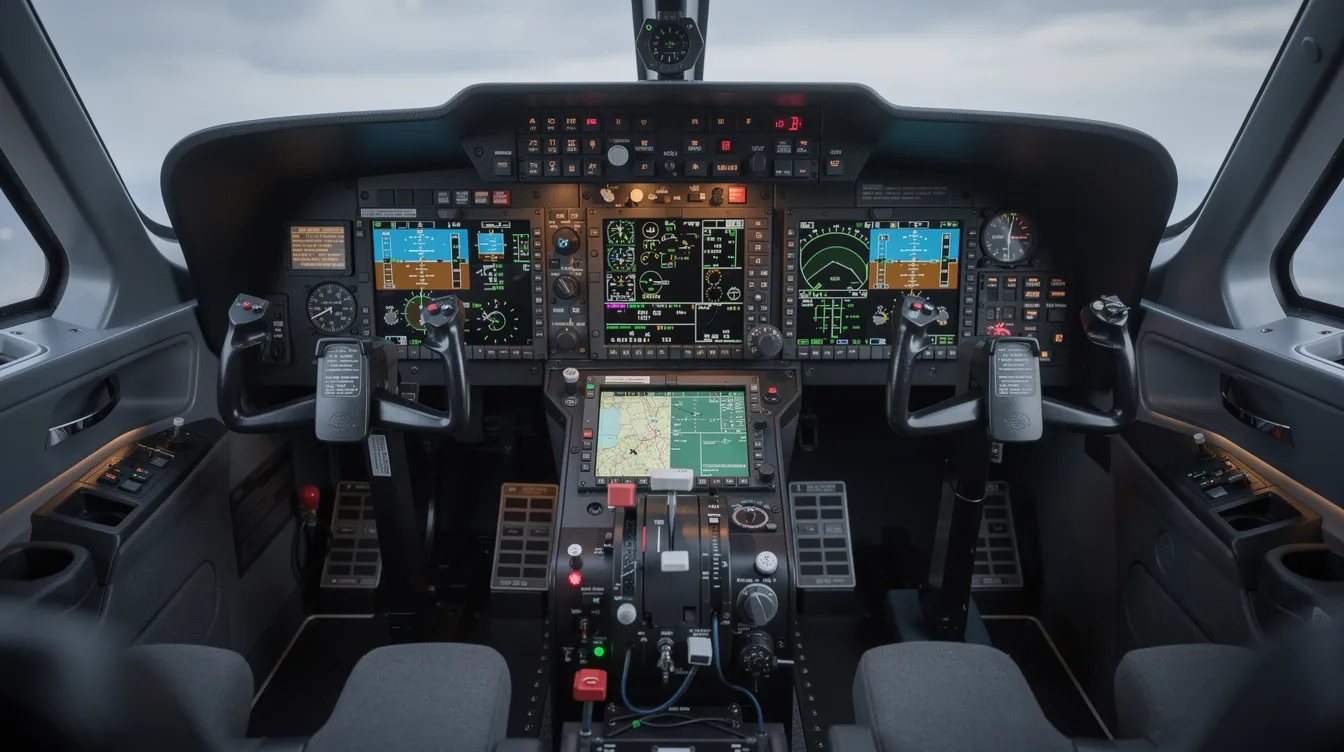
A helicopter cockpit is built around rotor control through cyclic and collective controls, engine and transmission monitoring, and all-round visibility that fixed-wing aircraft simply don't require.
Helicopter pilots manage lift and direction mainly through the main rotor system rather than fixed wings, making cockpit workload fundamentally different from other aircraft.
Modern glass cockpits replace dozens of analog gauges with a few large LCD screens, improving situational awareness and reducing pilot workload.
Helicopters used for private charter, VIP transport, and shuttle operations often feature upgraded avionics, soundproofing, and passenger comfort systems.
Platforms like Jettly connect travelers with helicopters and other aircraft globally for on-demand charter, making it easy to match mission needs with the right airframe.
A helicopter cockpit is the front compartment where the pilot operates the aircraft, managing everything from rotor blades and engine power to navigation and communication. Unlike the cockpit of a business jet or turboprop, it's designed around low-speed maneuvering, vertical flight, and near-360-degree visibility.
The typical layout includes adjustable seats, a central instrument panel, an overhead panel in many models, and a center pedestal with radios and navigation controls; a cockpit picture can make these areas easier to identify at a glance. Well-known airframes like the Airbus H125, Bell 407, and Leonardo AW109 each present a slightly different cockpit design, but all share the same core focus: giving the pilot precision control over rotor-driven flight, a layout approach that also reflects broader aviation practice. Many modern turbine helicopters flying today use either traditional analog "steam gauges" or integrated glass cockpit systems like the Garmin G1000H NXi.
There are three primary flight controls in a helicopter cockpit: the cyclic, the collective lever, and the anti-torque pedals.
The cyclic and collective controls are the heart of helicopter handling — more central to flight than the yoke is in most airplanes. There are three primary flight controls in a helicopter cockpit, and each one demands continuous pilot attention.
A typical helicopter cockpit features a cyclic, collective lever, and anti-torque pedals. Here's how each functions:
Cyclic stick: Located between the pilot's knees, the cyclic control changes pitch and roll by tilting the rotor disk. Fore-and-aft movement controls pitch (nose up or down), while lateral movement controls roll (bank left or right). The cyclic stick controls the helicopter's horizontal direction and airspeed, and tiny inputs are what make hovering and precise low-speed flying possible.
Collective lever: Positioned to the pilot's left, the collective lever changes the pitch of all main rotor blades simultaneously to control vertical climb or descent. Raising it increases lift; lowering it reduces it. The collective control changes the helicopter's altitude by adjusting rotor pitch.
Anti-torque pedals: These foot pedals manage the nose direction and counteract engine torque. They adjust tail rotor thrust (or Fenestron output) to control yaw, which means the helicopter pivots left or right, especially critical during hover when torque changes are constant.
On light piston helicopters like the Robinson R44, a twist-grip throttle on the collective adjusts engine power and keeps rotor speed steady. Larger turbine models such as the Bell 429 use a FADEC governor that automatically balances power and blade pitch, reducing pilot skill demands during changing flight conditions.
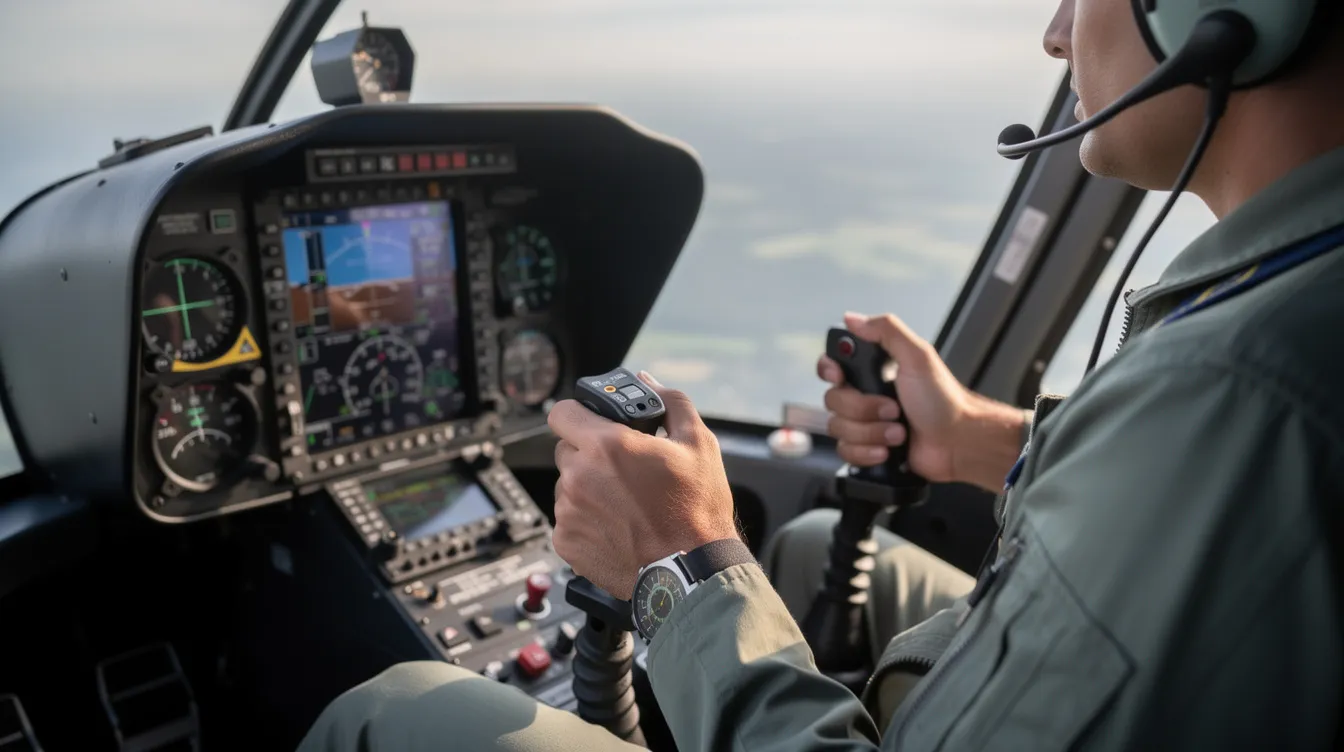
The instrument panel is the pilot's primary information hub. It includes flight tracking tools and specialized rotor metrics that you won't find in fixed-wing aircraft. Cockpit configurations vary between different helicopter models, but the core instruments remain consistent.
Primary flight instruments mirror those in other aircraft:
An altimeter displays height above sea level.
An airspeed indicator shows forward speed relative to the air.
Attitude indicator, vertical speed indicator, heading indicator/HSI, and turn coordinator round out the standard set.
Engine and drive-train gauges are where helicopters diverge completely. Critical instruments include:
RPM gauges that indicate main rotor RPM and engine turbine RPM — helicopter rotors operate in a specific RPM range for lift, so this reading demands constant attention.
A torque meter that measures power output being sent to the transmission. The torque indicator is crucial for helicopter flight safety, especially during hover, takeoff, and high-weight operations. Green, yellow, and red arcs on the gauge show safe and limit ranges at a glance.
Main gearbox (MGB) pressure and temperature, intermediate gearbox (IGB) and tail gear box (TGB) temperature, and turbine outlet temperature (TOT/ITT).
Traditional cockpits have many separate instruments - the UH-1H is an example of a traditional cockpit with rows of individual dials. By contrast, the AS532 features a modern glass cockpit design. Glass cockpits use large LCD screens for displays, consolidating dozens of gauges into multi-function displays (MFDs) and primary flight displays (PFDs). Modern helicopter cockpits feature digital flight instrument displays, as seen in the AW139's four-LCD Honeywell Primus EPIC suite. Luxury charter helicopters often add moving-map navigation, traffic displays, and weather overlays for enhanced situational awareness.
Helicopter pilots rely on robust navigation and communication tools to operate safely in busy terminal areas, remote sites, and low-level routes.
Navigation equipment on modern charter-capable helicopters typically includes:
GPS units (including IFR-capable Garmin GTN series) that provide real-time data on position, speed, and altitude
VOR/ILS receivers and DME for instrument approaches
Synthetic vision, terrain awareness and warning systems (TAWS), and obstacle databases — particularly useful to avoid obstacles when operating close to terrain or into rooftop helipads
FMS in larger twin-engine helicopters used for offshore or corporate transport
Common helicopter avionics include GPS, radio transceivers, and engine gauges, all integrated into the panel, and operators often pair these capabilities with tools like an airport locator platform for planning routes and helipad access.
Communication systems ensure coordination during flight operations. Pilots manage multiple radio frequencies in helicopter cockpits, monitoring air traffic control, ground handling teams, and other aircraft simultaneously. Communication systems include VHF and UHF frequencies for clarity across different operations. Active noise-reduction headsets and noise-canceling technology enhance message clarity in helicopters, overcoming the rotor noise that would otherwise make radio work difficult.
Unlike many fixed-wing aircraft, helicopter safety depends on continuous monitoring of engine and transmission parameters under high, variable loading. The throttle, FADEC mode selectors, and fuel control levers give the pilot direct or automated control over power delivery.
Key monitored values include:
Engine speeds: Gas generator speed (N1) and power turbine speed (N2)
Rotor RPM (NR): The RPM indicator shows main rotor RPM and engine turbine RPM. Helicopter rotors operate within a specific RPM range for lift, and excursions outside that range trigger immediate warnings.
Torque percentage and fuel flow
Oil pressure, temperature, and transmission oil indications
Dedicated annunciator panels alert pilots to issues like low rotor RPM, high transmission temperature, or chip detector faults (metal particles in gearbox oil). These warnings use color-coding and audio alerts to ensure nothing is missed.
High-end charter helicopters often include integrated health and usage monitoring systems (HUMS) that log vibration, exceedances, and component cycles. HUMS support predictive maintenance, enhancing safety and reducing unplanned downtime - a quality that matters for operators and passengers alike.
Helicopter cockpit design prioritizes visibility. Large bubble windows and a sloping nose deliver downward and lateral sightlines that fixed-wing pilots rarely enjoy. The Airbus H125, for instance, offers a near-unobstructed forward-down view through its curved glazing - ideal for aerial work, sightseeing, and precision approaches, much like other modern light utility models such as the Eurocopter EC30 with its advanced avionics and payload capabilities.
Seating varies: many light helicopters use single-pilot right-seat operation, while IFR twins feature dual-pilot configurations with duplicated controls. Adjustable pedals, anti-glare panels, and color-coded switches keep everything within easy reach, ensuring safe and efficient operation.
For helicopter passengers, the cockpit's design connects directly to cabin comfort. VIP or charter layouts may include forward-facing club seating, improved soundproofing, climate control, and entertainment systems. Charter customers booking through platforms like Jettly can book helicopter types that offer specific features — twin-engine IFR capability, sliding doors for aerial filming, or panoramic windows for scenic tours.
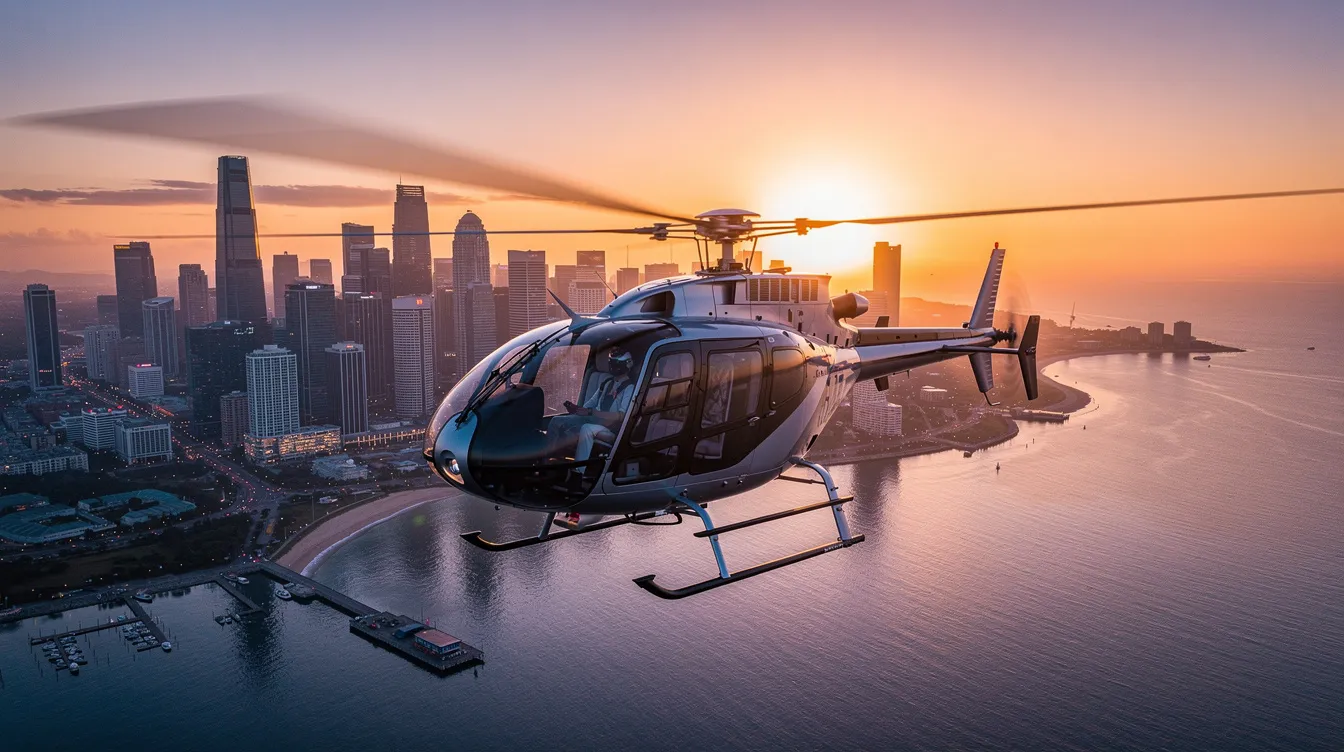
The helicopter cockpit enables vertical takeoff and landing, hovering, and point-to-point access that other aircraft like light jets and turboprops cannot match. A helicopter can begin a flight from a rooftop helipad and deliver passengers to a yacht deck - no runway needed.
Cockpit workload differs too. Helicopters require more continuous hands-on control at low speed, while many fixed-wing aircraft rely on autopilot during longer cruise segments. Helicopters excel for short-range city-to-city hops, resort transfers, and remote site visits. Private jet cockpits, by contrast, prioritize high-altitude, high-speed IFR cruise with advanced FMS and autothrottles, while helicopter operators focus more on helicopter range and the factors that limit how far they can fly.
Jettly offers both helicopters and other aircraft on the same digital platform, allowing customers to match their mission - whether a quick city transfer or a cross-country flight — with the optimal aircraft type by browsing private charter aircraft across multiple categories and sizes, and some also compare the time savings against a car journey for short point-to-point transfers. Explore options and compare at the Jettly helicopter charter page.
Modern avionics and cockpit layouts have expanded where and when helicopters can safely operate for charter. Night operations, IFR routes, and complex urban environments are now accessible thanks to dual-channel FADEC, 3- or 4-axis autopilots, digital engine instruments, traffic and terrain alerting, and flight-data monitoring. The UH-60V Black Hawk modernization program demonstrates how even legacy military airframes benefit from glass cockpit integration — the same trend driving improvements across civilian charter fleets.
Jettly helps travelers filter and compare helicopter options by aircraft type, engine configuration, passenger capacity across different helicopter classes, and operational capabilities, even if the user never sees the cockpit firsthand. The result: shorter door-to-door travel times, better reliability in changing weather, and smoother, quieter rides in advanced airframes. Understanding the helicopter cockpit helps travelers choose the right aircraft for their mission.
|
Feature |
Helicopter Cockpit |
Fixed-Wing Aircraft Cockpit |
|---|---|---|
|
Primary Flight Controls |
Cyclic, collective, anti-torque pedals |
Yoke or side-stick, rudder pedals |
|
Flight Dynamics |
Vertical takeoff/landing, hovering, low-speed control |
High-speed cruise, fixed-wing lift |
|
Instrumentation |
Rotor RPM, torque meter, engine/transmission gauges |
Airspeed, altitude, attitude, engine gauges |
|
Visibility |
Near-360-degree, bubble windows |
Forward and side windows, less downward visibility |
|
Pilot Workload |
Continuous manual control at low speed |
Autopilot used extensively during cruise |
|
Navigation Systems |
GPS, VOR/ILS, TAWS, synthetic vision |
GPS, VOR/ILS, FMS, autopilot |
|
Communication Systems |
VHF/UHF radios, noise-canceling headsets |
VHF/UHF radios, intercom |
|
Passenger Experience |
Soundproofing, climate control, VIP seating options |
Cabin pressurization, in-flight entertainment |
Below are common questions that go beyond the main sections above, especially for travelers new to helicopter charter.
In single-pilot operations, the front left seat is often available for a passenger. However, regulatory limits and weight-and-balance requirements apply. The operator will confirm whether front-seat access is permitted based on the specific aircraft and loading conditions.
IFR-equipped helicopters with autopilot, terrain avoidance, and synthetic vision can operate safely at night and in reduced visibility. That said, some routes and operators remain VFR-only. Always confirm the aircraft's certification and the pilot's instrument rating when booking.
Older airframes can be quite loud, but newer models feature improved soundproofing and vibration-dampening systems. Active noise-reduction headsets are standard for everyone on board, making conversation and radio communication clear during flight.
Jettly provides access to single-engine light helicopters for short hops, twin-engine IFR helicopters for corporate or medical use, and VIP-configured models for high-end travel, and travelers can plan budgets in advance using a private jet charter cost estimator that highlights key pricing factors. Learn more about available types in the helicopter rental cost guide.
Consider distance, time, helipad or airport access, and pricing, especially if you’re also weighing overall private jet costs including ownership and charter options. Helicopters work best for short-range, point-to-point trips where runways are unavailable, while fixed-wing aircraft shine for cross-country travel where range, cruise speed, and efficiency matter more. Private jets are better suited for longer distances at higher speeds, and some travelers compare the most affordable private aircraft options across jets and turboprops before deciding how to fly. Ready to compare? Explore flight options, review affordable private jet charter pricing and ways to reduce your trip cost, or request a quote at https://www.jettly.com.
The helicopter cockpit is a unique and complex environment tailored to the demands of rotorcraft flight. It combines precise manual controls like the cyclic, collective, and anti-torque pedals with advanced flight instruments, engine monitoring, and modern glass cockpit technology. This design enables pilots to manage vertical takeoff, hovering, and low-speed maneuvering with accuracy and safety. Compared to fixed-wing aircraft, helicopters require more continuous pilot input and specialized instrumentation focused on rotor dynamics. Platforms like Jettly make it easy for travelers to access a wide range of helicopters equipped with the latest cockpit technologies, ensuring flexible, efficient, and comfortable private charter experiences. Understanding the helicopter cockpit helps travelers appreciate the skill involved and select the right aircraft for their mission.
Ready to experience private travel on your terms? Explore flight options or request a quote at https://www.jettly.com. Learn more about helicopter charter options and compare private charter aircraft to find the best fit for your trip.
Share this post:
Jay Franco Serevilla
Sep 4, 2026
|
5
min read
Discover tips and trends in the industry.

5
min read
Jet Agency-Style Private Jet Membership: Own the Experience, Not the Jet
Jet Agency-style private jet membership allows travelers to enjoy the benefits of private aviation without the burdens of ownership. By connecting clients with certified air carriers, this model offers flexibility, speed, and privacy for those who fly frequently. Jettly exemplifies this approach, providing access to over 20,000 aircraft with transparent pricing and concierge support.
Read More
5
min read
Safest Private Jet in the World: Why the Dassault Falcon 8X Leads (and What It Means for Your Next Charter Flight)
The Dassault Falcon 8X is recognized as the safest private jet in the world, boasting zero hull loss accidents as of 2024. Its advanced safety features, including a triple-engine layout and a digital flight control system derived from military technology, set it apart from competitors. This aircraft not only prioritizes safety but also enhances passenger comfort and operational efficiency.
Read MoreStay updated with our latest insights and tips to elevate your journey with us.
MEMBERSHIPS AND ASSOCIATIONS



Disclaimer: Jettly operates as a charter broker, offering access to a global digital jet charter marketplace. Jettly is not a direct air carrier and does not own or operate aircraft. All advertised flights are conducted by third-party air carriers that are fully licensed and hold the appropriate Part 135 or Part 121 certifications issued by the Federal Aviation Administration (FAA) or equivalent regulatory authorities under U.S. or foreign law. Jettly complies fully with the U.S. Department of Transportation's Part 295 and Part 298 Charter Broker regulations. Jettly does not carry additional liability insurance. Passengers are covered by aircraft operator insurance. TICO: 50023770


