


Login
Get Instant Pricing On 23,000+ Aircraft

>
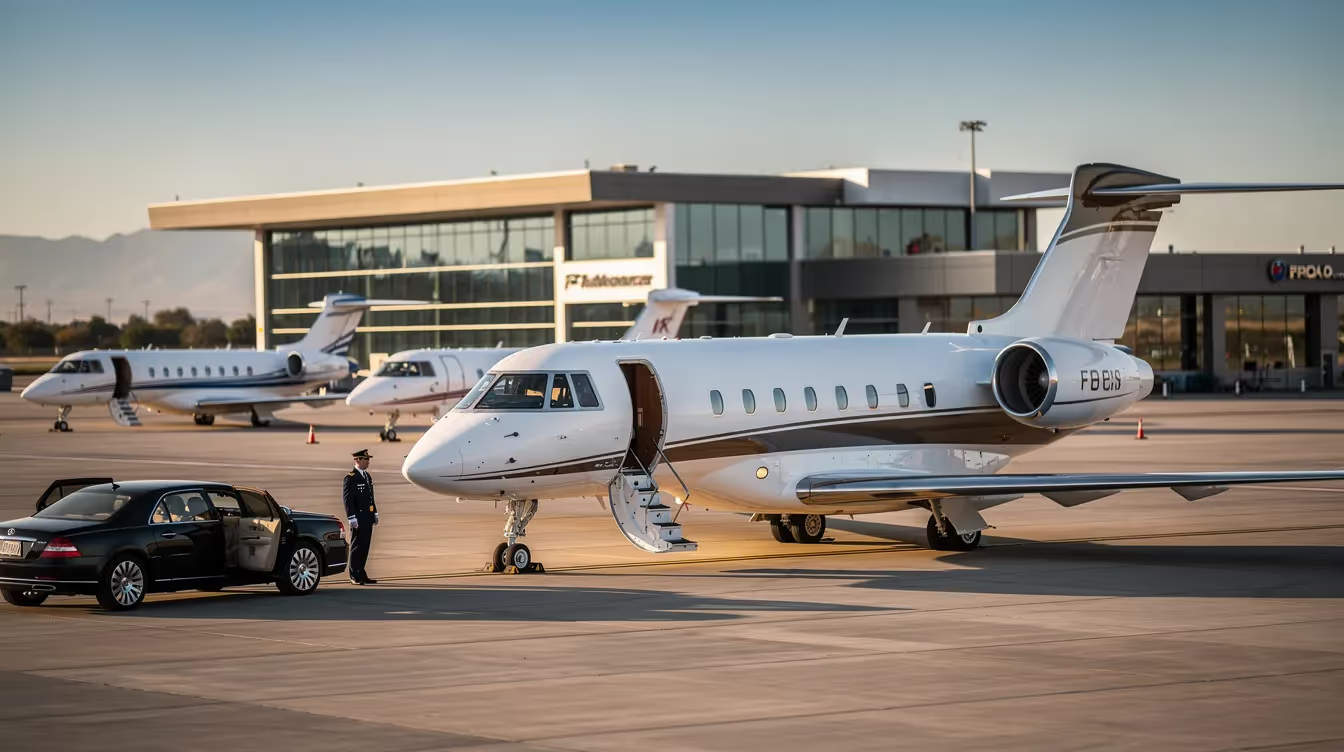
The Gulfstream V stands as a landmark ultra-long-range business jet, first flying in 1995 and certified in 1997, with production spanning from 1995 to 2002. It offers a maximum range of approximately 6,250-6,500 nautical miles and comfortably accommodates 12–16 passengers, though it can transport up to 13 passengers in some configurations. The aircraft features a wide cabin and a total internal baggage capacity of 226 cubic feet. It also boasts a maximum operating altitude of 51,000 feet and a maximum speed of 585 mph, with a normal cruise speed of 488 knots (562 mph). Understanding Gulfstream V operating costs is essential for flight departments, owners, and frequent charter users evaluating this aircraft.
This guide uses approximate 2024–2025 estimates based on typical US and European operating assumptions, including Jet-A fuel at contemporary prices and salaried crew. Jettly, a technology-driven private jet charter platform, offers transparent pricing and access to private charter aircraft worldwide.
The total annual budget for a Gulfstream GV scales with the number of flight hours. Fixed costs remain constant while variable expenses increase with utilization.
Flight Hours and Total Annual Budget Estimates:
200 hours: $1.66M–$1.9M (around $1,832,861 based on detailed estimates)
400 hours: $3.0M–$3.8M (approximately $3,013,048)
450+ hours: $3.8M–$4.5M (up to $4,517,426 including total variable costs of $3,500,753 and fixed costs of $1,016,673)
These figures exclude capital costs like purchase price and depreciation but include crew, maintenance, hangar, insurance, and management fees, which typically run around $78,000 annually. Cost per mile decreases with higher utilization due to fixed-cost dilution, dropping from about $19.58 per mile at 200 hours to $16.10 per mile at 400 hours annually. Placing the aircraft on charter can offset some expenses but increases maintenance demands; tools like Jettly’s private jet charter cost estimator help benchmark these hourly economics against on-demand flying.
Total fixed costs for a Gulfstream V typically range from $650,000 to over $900,000 annually, regardless of flight hours.
Captain salary + co-pilot: $400,000–$600,000
Crew training: $50,000–$100,000
Hangar fees: $140,000+ per year
Insurance: $100,000–$250,000
Management fees: around $78,000 annually
Crew salaries and benefits often exceed $800,000 annually, covering two pilots and frequently a flight attendant. Annual fixed costs are estimated at $695,000 to $750,000, while operating costs range from $895,000 to $965,000, aligning with broader private jet charter cost guidance for large-cabin, long-range aircraft.
Variable costs are incurred when the aircraft flies, including fuel, maintenance reserves, and trip fees.
Fuel (roughly 500–550 gallons per hour at $6–$8 per gallon): $2,850–$3,800 per hour, with annual fuel budgets for 200 hours often totaling around $723,000
Rolls-Royce engine reserves: $1,600–$3,000 per hour
Airframe maintenance: $500–$1,000 per hour, with annual maintenance costs averaging $146,000 to $292,000, including routine inspections and parts
Landing and handling fees: $200–$500 per hour
Estimated variable costs for a Gulfstream V range from approximately $4,486 to $7,200 per flight hour. Total direct operating costs run approximately $4,000–$5,000 per hour for owner-operators, with fully allocated costs—including fixed expenses—approaching $9,000–$10,000 per hour. Accurate budgeting requires reviewing maintenance history and whether the aircraft is enrolled in Rolls-Royce engine programs.

Acquisition cost is separate from operating costs but critical for total cost of ownership calculations.
Pre-owned Gulfstream V prices in 2024–2025:
Older, higher-time examples: $4M–$6M
Well-maintained, later production: $8,995,000–$12,490,000 (average around $9,240,000)
There are currently 23 Gulfstream V jets advertised for sale. Original MSRP exceeded $40M in early 2000s dollars. Key factors influencing prices include total time on airframe, engine program enrollment, avionics upgrades, and cabin condition. Buyers should conduct thorough pre-buy inspections and review logbooks with independent advisors.
Chartering offers access to long-range capability without capital commitment. Typical hourly charter rates run $9,000–$10,000+ per hour, excluding fuel surcharges and crew overnight expenses. Gulfstream V charter services offer competitive rates and exact pricing based on trip details, often using an airport locator tool to optimize routing and airport selection. Travelers can review specific Gulfstream V charter options, such as N150WJ, to understand cabin layouts and amenities.
Charter economics:
Flying 50–100 hours/year: charter through Jettly typically costs less than ownership, especially when leveraging private jet memberships to access wholesale rates
Above 300–400 hours/year: ownership or fractional programs become more cost-effective per hour
Jettly’s platform shows charter options for comparable jets, including the Gulfstream G550 long-range charter option N65KL, Bombardier Global Express, and Dassault Falcon 7X, helping travelers balance fuel cost, range, and cabin volume while positioning Jettly as a NetJets alternative for private flyers. Air Charter Advisors also arranges private jet charter services on the Gulfstream V, with several GVs available worldwide.
Performance directly impacts operating costs through fuel burn and maintenance requirements.
Production years: 1995–2002
Passenger capacity: 12–16 typical, up to 13 passengers in some configurations, with a total baggage capacity of 226 cubic feet (all internal)
Cabin length: 50 ft
Cabin width: 7 ft 3 in
Cabin height: 6 ft 2 in
Max takeoff weight: approximately 90,500 lb
Maximum landing weight: approximately 75,300 lb
Wing span: 93 ft 6 in
Service ceiling: 51,000 ft
Landing distance: 2,864 ft
Balanced field length: 6,045 ft
Range: 6,250–6,500 nautical miles, far beyond narrow-body airliners like the Boeing 737-800
Cruise speeds: 488 knots (562 mph) normal cruise, max speed up to 585 mph
The ability to fly nonstop intercontinental routes reduces the need for tech stops and handling fees. High-altitude cruise improves fuel efficiency and passenger comfort during long-duration missions. Gulfstream Aerospace built approximately 193 units during the production run.
While the Gulfstream V is a proven ultra-long-range business jet, its successor, the Gulfstream G550, offers enhanced capabilities:
Passenger capacity: up to 19 passengers (compared to 12–16 or 13 in the GV)
Range: 6,750 nautical miles (longer than the GV’s 6,250–6,500 nm)
Maximum takeoff weight: greater than the GV, providing improved takeoff performance
Cruise speed: average 536 mph, faster than the GV’s 488 knots (562 mph)
Annual operating costs: $1.6 million to $2.6 million, depending on usage, generally higher than the GV due to increased size and performance
Choosing between the Gulfstream V and G550 depends on mission profiles, passenger requirements, and budget considerations; frequent long-range travelers may also compare these options with structured jet card programs that offer fixed hourly pricing.
Consider these factors when deciding between ownership and charter:
Annual flight hours: Under 100 hours favors charter; over 300 hours may justify owning
Mission profile: Domestic hops vs. nonstop intercontinental routes
Preference: Dedicated aircraft with custom interior vs. flexible availability
Jettly’s platform provides transparent charter pricing, instant quotes, and the ability to compare aircraft categories, while some travelers explore how to buy a seat on a private jet through shared charters or empty legs for added flexibility. For a broader context on providers and service models, many travelers review the best private jet charter companies and detailed guides to NetJets as a leading private aviation provider before committing to a long-term strategy. For company flight departments and families flying fewer than 200 hours annually, charter often avoids the complexity of crew management, hangar decisions, and maintenance oversight.
Explore options at https://www.jettly.com, or consider joining Jettly’s ULTRA high-ticket affiliate program if you frequently refer clients to private aviation services.
Enrolling the Rolls-Royce engines in hourly programs adds $800–$1,500 per engine hour but protects against $1.5M+ overhaul surprises. These programs stabilize budgeting and enhance resale value. Verify program status and transferability during pre-buy evaluation.
With fuel burn around 500 gallons per hour, a $1 change per gallon increases hourly fuel cost by approximately $500. This adds significantly to intercontinental flights. Charter quotes from platforms like Jettly factor in current pricing, so rates adjust with the market.
Some jurisdictions offer depreciation benefits and business use deductions that lower after-tax ownership costs. Financing spreads the capital cost but adds interest expenses. Consult aviation tax professionals to structure ownership compliantly.
The variant fleet is now 20–30 years old, making maintenance planning critical. Older aircraft may have lower sale prices but a higher risk of unscheduled maintenance. Prioritize examples with strong maintenance records, recent inspections, and modern avionics—factors such as catering equipment condition, availability of tailored in-flight catering services like Jettly Eats, and insurance history also matter.
On-demand charter handles urgent trips well, though ultra-long-range jets may have more limited immediate availability than smaller aircraft. Jettly searches a broad network for the nearest suitable plane. For very short-notice, shorter routes, a super midsize jet may offer better consideration for cost and availability.
Gulfstream V operating costs are substantial but predictable with proper planning, generally ranging from $1.66M to over $4.5M per year. Charter rates typically range from $9,000 to $10,000+ per hour. Actual figures depend on fuel prices, maintenance status, crew structure, and base location.
Model your travel patterns—hours per year, typical routes—before committing to a purchase. Ready to experience private travel on your terms? Explore flight options or request a quote at https://www.jettly.com.
Share this post:
Jay Franco Serevilla
Mar 31, 2026
|
5
min read
Discover tips and trends in the industry.

5
min read
Luxury Airlines: The Ultimate Guide to First Class Comfort and Business Class Travel
Luxury airlines have transformed air travel with private suites, gourmet dining, and exceptional service, setting a new standard for first and business class experiences. This guide explores top luxury carriers for 2025-2026, comparing their offerings and highlighting private jet alternatives like Jettly for maximum comfort and flexibility.
Read More5
min read
Luxury Airlines: The Ultimate Guide to First Class Comfort and Business Class Travel
Luxury airlines have transformed air travel with private suites, gourmet dining, and exceptional service, setting a new standard for first and business class experiences. This guide explores top luxury carriers for 2025-2026, comparing their offerings and highlighting private jet alternatives like Jettly for maximum comfort and flexibility.
Read MoreStay updated with our latest insights and tips to elevate your journey with us.
MEMBERSHIPS AND ASSOCIATIONS



Disclaimer: Jettly operates as a charter broker, offering access to a global digital jet charter marketplace. Jettly is not a direct air carrier and does not own or operate aircraft. All advertised flights are conducted by third-party air carriers that are fully licensed and hold the appropriate Part 135 or Part 121 certifications issued by the Federal Aviation Administration (FAA) or equivalent regulatory authorities under U.S. or foreign law. Jettly complies fully with the U.S. Department of Transportation's Part 295 and Part 298 Charter Broker regulations. Jettly does not carry additional liability insurance. Passengers are covered by aircraft operator insurance. TICO: 50023770


