


Login
Get Instant Pricing On 23,000+ Aircraft

>

If you fly frequently and you are tired of the stress and hassle of commercial airlines, private flying can be a great way forward.
Owning your own plane gives you a lot of freedom. If private jet ownership is something you are interested in, there are multiple paths you can take.
While some people choose to purchase a plane outright, many others choose fractional private jet ownership. This is where you purchase a “share” of a jet with other individual buyers.
In this blog, we will explore some of the pros and cons of each type of ownership to help you choose the best option for your lifestyle.
Whole aircraft ownership means you personally own a private jet. Owning your own jet comes with a lot of prestige, but also a lot of challenges. You have complete control over your jet including when and where you fly, any amenities you want, and your in-flight experience.
While you may have full control of your jet, you also take on the full responsibility of ownership, including all costs and risks. A single private jet can cost at least $1 million. From there, you will also be responsible for any maintenance and logistical costs.
Imagine the freedom of being able to fly whenever you want. Whole aircraft ownership gives you versatility and distinction.
If you are considering whole aircraft ownership, here are some of the benefits you can expect:
In addition to these benefits, there are some downsides to owning your own jet:
Fractional jet ownership can be compared to a timeshare. You buy a portion of an aircraft, and you share it with other individuals. This can make private jet ownership more affordable. However, the initial cost of fractional jet ownership will still be at least $100,000. From there, you must navigate “sharing” your aircraft with others including heavy-flying times, usage times, and dates.
To join a fractional ownership program, you must sign a contract. While the contract lengths will vary, a typical contract lasts for 3-7 years.
The fractional jet ownership cost can be more manageable than complete ownership for some people. However, the lower costs also come with less freedom.
Here are some of the benefits of a fractional ownership program:
There are some significant drawbacks to fractional ownership that make it less appealing:
If jet ownership of any kind seems like too much of a commitment, you can try on-demand private jet chartering with Jettly. We give you access to over 20,000 private aircraft around the world through easy online booking and accessible pricing.
To enjoy even more benefits of private flying, we also offer a membership program. Depending on the level you choose, it gives you access to food credits, a personal flight coordinator, and special pricing.
Ready to hit the skies? Contact us or start your first online quote request today.
Share this post:
Justin Crabbe
May 7, 2025
|
5 minutes
min read
Discover tips and trends in the industry.
5
min read
Longest Range Single Engine Aircraft: 2025 Guide for Range-Focused Private Flyers
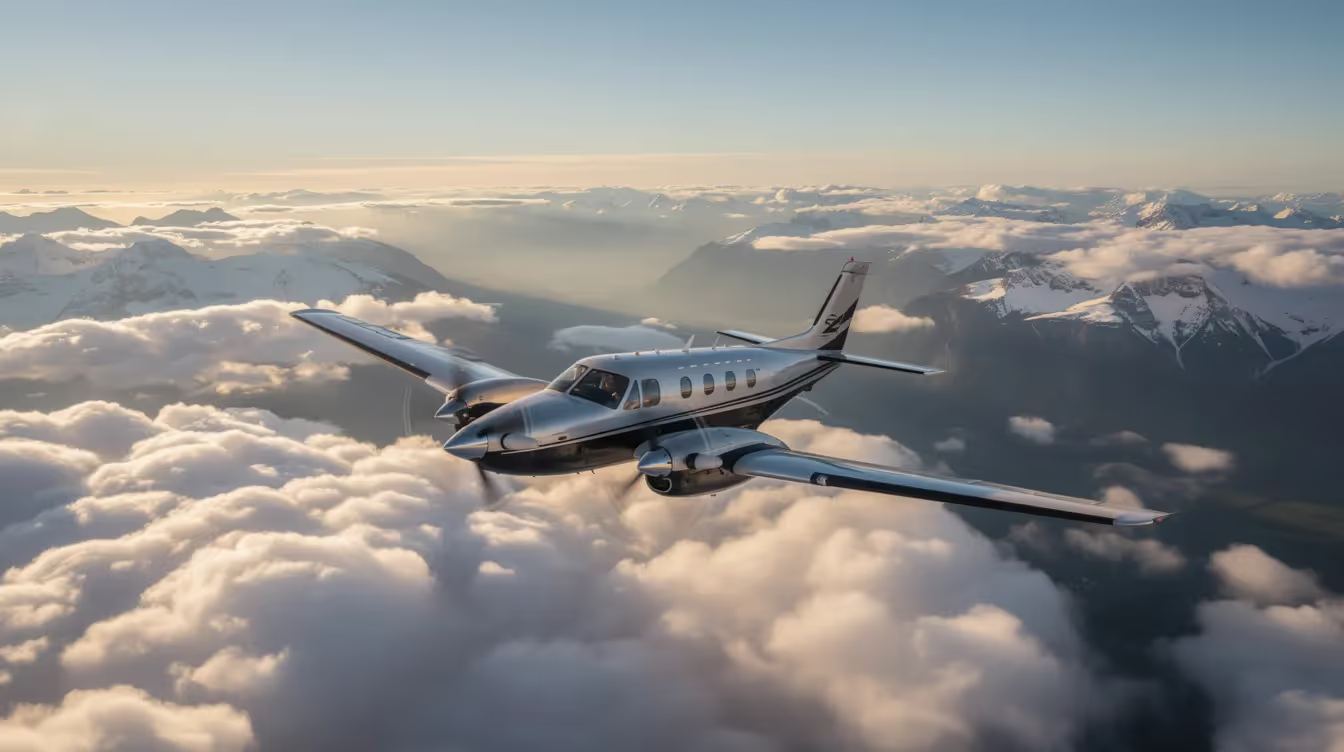
The 2025 guide on long-range single-engine aircraft highlights key models for nonstop travel, emphasizing the efficiency of turboprops like the Daher TBM 960 and Piper M600, which can achieve ranges of approximately 1,400–1,700 nautical miles. Understanding factors that affect real-world range, such as fuel load and weather, is crucial for effective flight planning. Jettly's digital charter platform connects travelers with these aircraft, offering transparent pricing and flexible booking options tailored to individual mission needs. Overall, single-engine turboprops provide a balance of range, efficiency, and access to smaller airports, making them suitable for both business and leisure travel.
Read More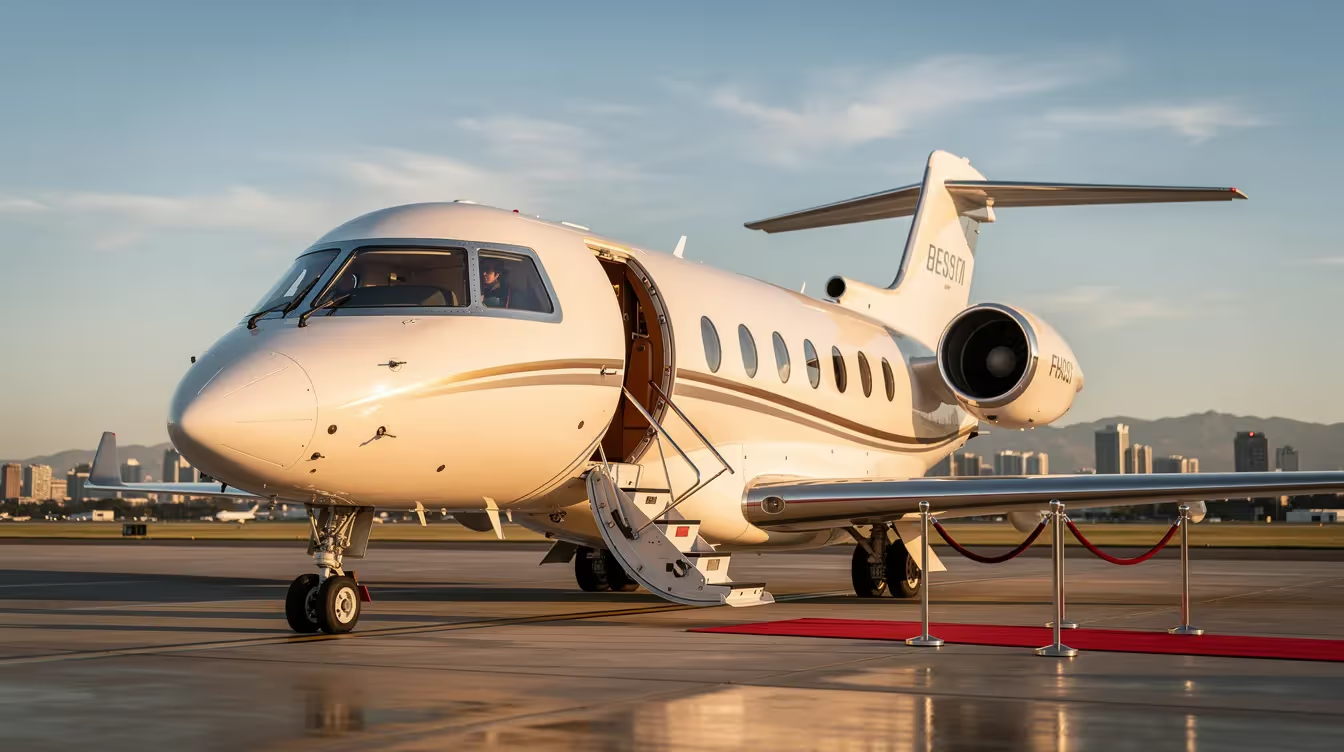
5
min read
15 Million Dollar Private Jet: What You Really Get (And Why Many Travelers Now Charter Instead)
A $15 million private jet typically includes new light or super-light jets, or late-model midsize and super-midsize aircraft, suitable for transcontinental travel with luxurious amenities for 8-12 passengers. Many travelers are opting for charter services like Jettly instead of ownership due to lower financial commitments and flexibility, especially for those flying under 200-250 hours annually. Operating costs can reach $800,000 to $1.5 million per year, significantly exceeding the initial purchase price, making chartering a more economical choice for infrequent flyers. Additionally, sustainability initiatives, such as Sustainable Aviation Fuel and carbon offset programs, are increasingly integrated into private aviation, allowing travelers to reduce their carbon footprint while enjoying the benefits of private jet travel.
Read MoreStay updated with our latest insights and tips to elevate your journey with us.
MEMBERSHIPS AND ASSOCIATIONS



Disclaimer: Jettly operates as a charter broker, offering access to a global digital jet charter marketplace. Jettly is not a direct air carrier and does not own or operate aircraft. All advertised flights are conducted by third-party air carriers that are fully licensed and hold the appropriate Part 135 or Part 121 certifications issued by the Federal Aviation Administration (FAA) or equivalent regulatory authorities under U.S. or foreign law. Jettly complies fully with the U.S. Department of Transportation's Part 295 and Part 298 Charter Broker regulations. Jettly does not carry additional liability insurance. Passengers are covered by aircraft operator insurance. TICO: 50023770


