



Login
Get Instant Pricing On 23,000+ Aircraft

>
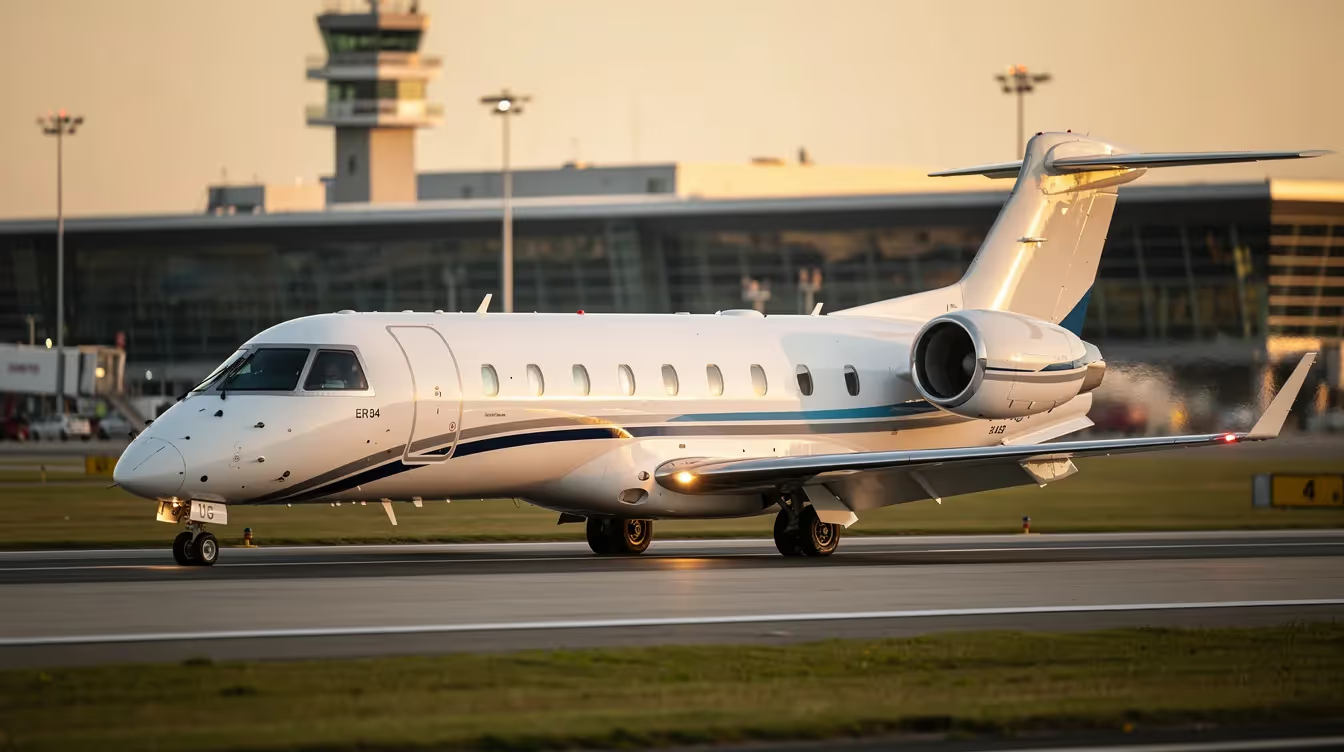
The Embraer RJ145 seating chart reveals a compact 50-seat regional jet that serves routes across North America and Europe. Understanding this aircraft’s layout helps travelers find comfortable seats on commercial flights and evaluate when chartering makes more sense for groups.
Configuration: The Embraer RJ145 features a 1-2 configuration with 50 seats in a single main cabin—no First or Business Class on typical airlines.
Bulkhead & Exit Rows: Bulkhead seats and emergency exit rows, often rows 10-12, offer extra legroom but may restrict storage options; seats directly in front of these exits (often row 11) typically have zero recline to keep the exit path clear.
Seat Dimensions & Storage: Standard seat pitch is 31 inches with 17-inch seat width; overhead bin space is limited on the single-seat A side, often requiring larger carry-on bags to be valet-checked at the boarding gate due to the narrow fuselage.
Popular Exit Row Seats: Exit row seats like 3B and 3C are popular for their extra legroom, but do not recline and lack under-seat storage during takeoff and landing.
Charter Flexibility: Jettly can arrange regional jet charters for groups of 30-50 passengers, providing flexible scheduling and custom cabin use.
Seat Map Review: Reviewing the seat map before booking helps travelers avoid problem seats and plan efficient group travel.
The ERJ 145 is a tiny plane designed for regional flights under two hours. American Airlines Embraer and other carriers operate this aircraft on short-haul routes, connecting hubs with smaller cities.
|
Feature |
Measurement |
|---|---|
|
Total Seats |
50 passengers |
|
Configuration |
1-2 (one seat left, two right) |
|
Seat Pitch |
~31 inches |
|
Seat Width |
~17 inches |
|
Range |
~1,783 miles |
Different airlines may show this aircraft as ERJ145, RJ145, or ER4 in booking systems. Overhead bin space is tight—especially above the A seats—so many passengers must gate-check larger carry-on bags.
The cabin layout runs front to back: cockpit, forward galley, single economy cabin (rows 1-18 typically), and rear lavatories. The chart shows A seats on the left side with B and C seats forming pairs on the right, fitting neatly into the broader landscape of charter airlines and private flight options.
The Embraer ERJ 145 is popular because it eliminates middle seats entirely, ensuring every passenger has either a window or an aisle seat. Solo travelers often prefer the single A seats for direct aisle access without a seatmate, while similar regional jets like the Canadair CRJ-200 offer comparable layouts on other routes.
The narrow aisle means standard rollaboard bags often won’t fit in many overhead bins, reinforcing the need for early boarding or gate-checking larger items. Check your airline’s current configurations before booking, as row counts and amenities vary by operator.
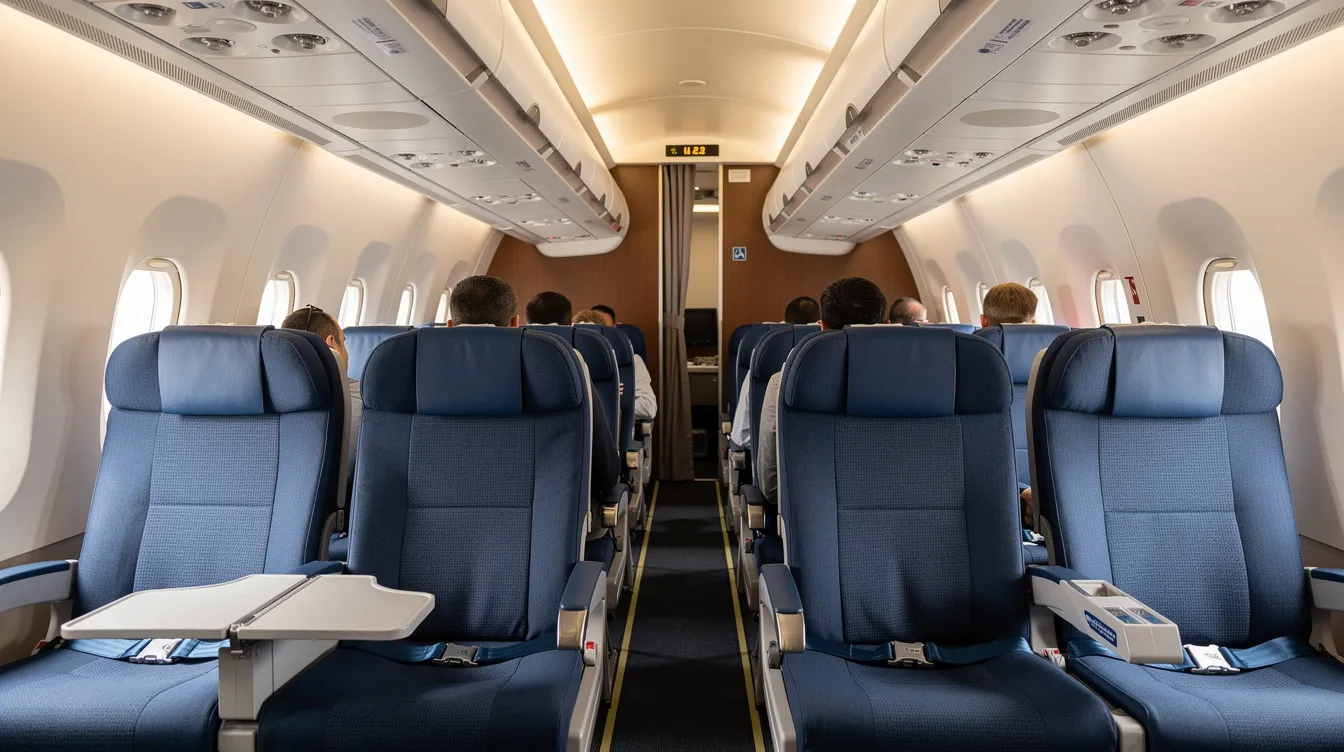
The best seats depend on your priorities. Bulkhead seats (row 1) provide generous legroom but may have narrower seats because tray tables are tucked into fixed armrests, limiting comfort. Emergency exit rows, often rows 10-12, offer the most spacious legroom at approximately 38 inches but usually restrict under-seat storage and do not recline to keep the exit path clear. Seats directly in front of the exits, such as row 11, typically have zero recline to ensure safety.
Popular exit row seats like 3B and 3C are favored for extra legroom but lack reclining ability and under-seat storage during takeoff and landing. Seat 1A is often recommended to avoid due to limited recline and proximity to the galley, which can cause noise and traffic disturbances.
Avoid these problem areas:
Last rows: Heavy traffic near lavatories, potential odors, limited recline, and noise issues. Seat 18B is noted for having extra legroom, but it is also close to the lavatory, which can be a drawback due to noise and traffic issues.
Row 11: Often has zero recline because it is directly in front of emergency exits, ensuring the exit path remains clear, which may reduce comfort.
Aisle B/C seats: Expect service cart bump and passenger traffic, leading to potential convenience issues.
Tall passengers should remember that not all exit rows provide equal room. Check user reviews for your specific route before selecting.

At a 31-inch pitch with armrests at 17 inches wide, the Embraer RJ145 feels comfortable for flights under 90 minutes. Recline is minimal—about 3 inches—and some back rows have upright-only positions.
The Embraer RJ145 operates with low noise levels, contributing to a more comfortable flying experience for passengers. Most aircraft lack Wi-Fi, entertainment systems, and power outlets. Passengers should charge devices beforehand and bring personal entertainment. Typically, basic amenities are provided, such as in-flight beverages and assistance from flight attendants, but premium services or extensive catering are not provided on most RJ145 flights unless you arrange dedicated in-flight catering for private jets.
Passenger comment sections typically describe the ride as smoother than older turboprops. The cabin feels cozy but functional. Boarding is fast with only 50 passengers, reducing total door-to-door time.
User feedback emphasizes that the seat selection strategy makes the difference between a good flight and a cramped one, much like choosing the right option when buying a seat on a private jet can define the overall travel experience.
On commercial flights, you’re aware of the fixed layout and can only select from available seats. Private charter changes this dynamic entirely.
Through Jettly, groups can secure the whole aircraft with flexible seating by chartering an Embraer ERJ 145 regional jet. You control who sits where, customize catering, and set departure times. No unknown seatmates, no competition for overhead bins.
Charter an Embraer RJ145-type aircraft when you understand the different ways to get a seat on a private jet easily, such as charters, group bookings, or shared options:
Moving 30-50 people between multiple cities (corporate roadshows)
Sports team travel requires coordinated schedules
Shuttle operations between events or offices, where you may compare shared charter flights vs full charters to balance privacy and cost
Per-seat cost competes with multiple business class tickets
A company flying teams between ORD and smaller Midwest cities, for example, saves hours by avoiding hub connections, and can use a private jet charter cost estimator to compare charter pricing with commercial fares.
Seat maps use color coding: standard seats, extra-legroom positions, blocked seats, and icons for galley and lavatories. Evaluate each row’s distance from exits and restrooms based on your priorities and use an airport locator tool for private charters to confirm which terminals and facilities you’ll use.
Combine official airline seat maps with user photos when available. For charter flights via Jettly, organizers assign seats ahead of time or allow free seating, choosing from a broad range of private charter aircraft to match group size and route.
|
Traveler Type |
Recommended Seats |
|---|---|
|
Solo business |
Front A seats |
|
Couples |
B-C pairs over the wing |
|
Tall passengers |
Exit row or bulkhead |
|
Nervous flyers |
Over-wing window seats |
Passengers with large carry-ons should board early or email to continue checking bin availability.
Passengers with large carry-ons should board early or email to continue checking bin availability.
Solo business travelers: Choose front A seats for direct aisle access and privacy.
Couples: Opt for B-C seat pairs over the wing for side-by-side seating.
Tall passengers: Select exit row or bulkhead seats for extra legroom.
Nervous flyers: Pick over-wing window seats for a smoother ride.
Passengers with large carry-ons: Board early or check with the airline to ensure overhead bin availability.
Jettly connects travelers with over 20,000 aircraft worldwide, including regional jets similar to the Embraer RJ145. The platform offers transparent pricing and instant booking for groups needing 30-50 seats, along with guidance on affordable private jet charter costs.
All operators meet regulatory safety standards in line with Part 135 charter company requirements. Compare routes like DFW to regional destinations using Jettly’s tools to find when regional jets are most efficient.
Even with standard seating, having known travelers on board transforms the experience. Groups can leave empty rows, designate quiet work zones, and arrange custom catering or even crowdsource private jet flights and share empty seats to optimize costs.
Jettly coordinates ground transportation at both ends and optimizes multi-leg itineraries. Skip security lines and sign into your aircraft within minutes of arrival.

Ready to experience private travel on your terms? Explore flight options or request a quote at https://www.jettly.com.
At a 31-inch pitch, passengers over 6 feet will find standard seats tight on flights exceeding 90 minutes. Exit rows provide approximately 38 inches—a meaningful upgrade. Book early and post your head toward the view of user reviews for specific aircraft. On private charters, organizers can leave adjacent seats open for extra space.
Many Embraer RJ145 aircraft lack individual power outlets and onboard connectivity. Some refreshed cabins include USB ports in select rows, but travelers should not assume availability. Charge devices fully before boarding. Jettly can source charter aircraft with specific connectivity features when required.
Overhead bins are small, particularly above A seats, where some bins are narrow or absent. Standard 22-inch rollaboards often require gate-checking. I recommend bringing soft-sided bags or backpacks as primary cabin items. Due to the narrow fuselage, larger carry-on bags frequently need to be valet-checked at the boarding gate. For private charters, coordinate luggage plans through Jettly to ensure smooth loading.
Encounter this aircraft on regional routes through major airlines—select seats during booking or check-in. For charter options, use Jettly’s platform to request quotes, compare aircraft, and view estimated costs. Provide group size, route, dates, and any special requirements for accurate options. Explore charter possibilities at https://www.jettly.com.
The Embraer RJ145 seating chart highlights a practical regional jet ideal for short to medium-haul flights with up to 50 passengers. While commercial flights offer fixed seating layouts and limited flexibility, private charters through platforms like Jettly provide customizable experiences, flexible scheduling, and enhanced comfort. Whether traveling for business or leisure, understanding the seating configuration and selecting the right seats can improve the journey significantly. Many travelers are glad to avoid middle seats and appreciate the convenience and comfort offered by the Embraer RJ145 seating arrangement. For those seeking convenience, time savings, and personalized service, booking an Embraer RJ145 charter via Jettly is a smart choice. Ready to experience private travel on your terms? Explore flight options or request a quote at https://www.jettly.com.
Share this post:
Jay Franco Serevilla
Apr 16, 2026
|
5
min read
Discover tips and trends in the industry.

5
min read
Zimex Aviation: Specialist Missions, Fleet, and Career Opportunities
Zimex Aviation, established in 1969, specializes in flying to remote and challenging environments where conventional airlines often cannot operate. With a diverse fleet of turboprop aircraft, Zimex provides essential services such as oil and gas logistics, humanitarian airlift, and express cargo. The company emphasizes safety and operational excellence, making it a key player in the global logistics and humanitarian support sectors.
Read More
5
min read
Air X: Private Aviation, Diversified Fleets, and Jet Support Explained
Air X represents a category of private jet charter operators known for their diversified fleets and integrated jet support, ensuring flexibility and safety. With over 7,050 flights in 2023, AirX Charter exemplifies excellence in private aviation, catering to corporate executives and high-net-worth individuals. Digital platforms like Jettly enhance access to these services, allowing travelers to book tailored flights effortlessly.
Read MoreStay updated with our latest insights and tips to elevate your journey with us.
MEMBERSHIPS AND ASSOCIATIONS



Disclaimer: Jettly operates as a charter broker, offering access to a global digital jet charter marketplace. Jettly is not a direct air carrier and does not own or operate aircraft. All advertised flights are conducted by third-party air carriers that are fully licensed and hold the appropriate Part 135 or Part 121 certifications issued by the Federal Aviation Administration (FAA) or equivalent regulatory authorities under U.S. or foreign law. Jettly complies fully with the U.S. Department of Transportation's Part 295 and Part 298 Charter Broker regulations. Jettly does not carry additional liability insurance. Passengers are covered by aircraft operator insurance. TICO: 50023770


