



Login
Get Instant Pricing On 23,000+ Aircraft

>
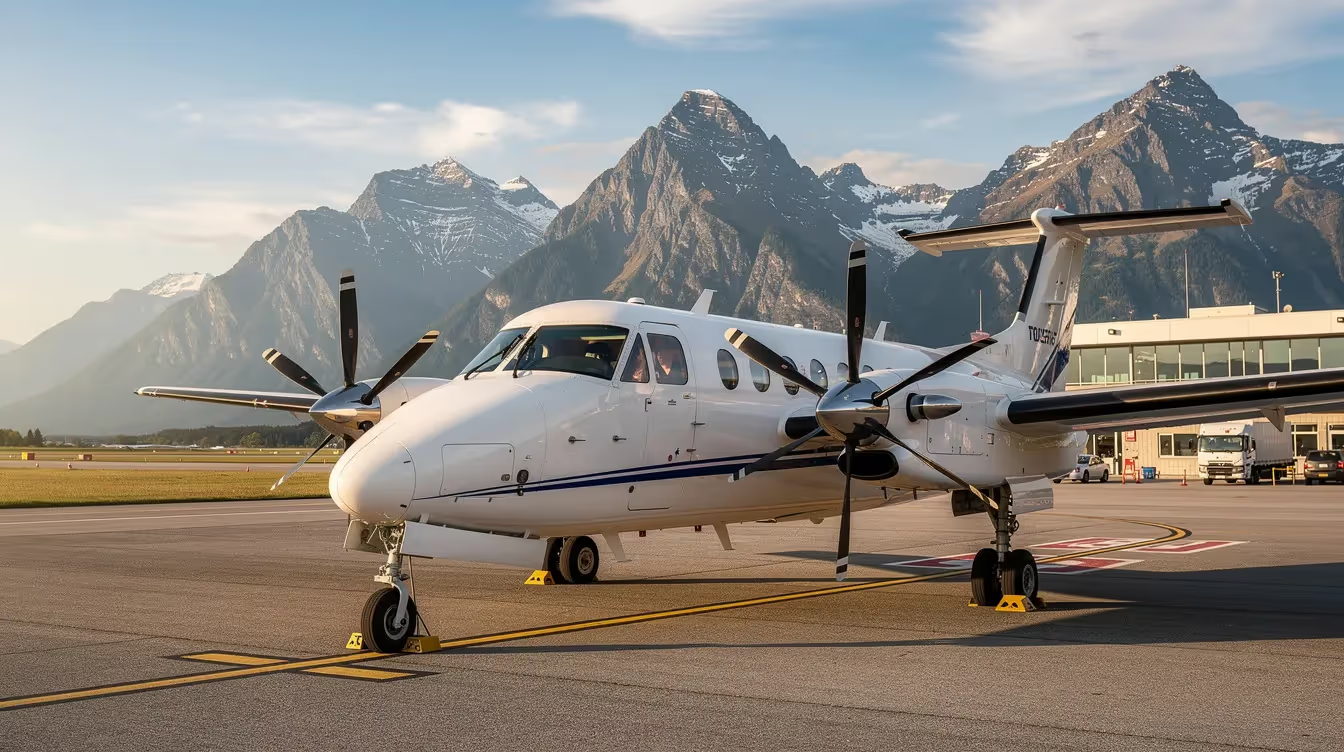
Private jet travel offers unmatched convenience, flexibility, and comfort compared to commercial flights. However, many travelers assume that private jet charter costs are prohibitively expensive. In reality, affordable options exist for a wide range of budgets, especially when you understand the factors influencing pricing and use smart booking strategies.
This guide explores how cheap private jet charter prices are determined, what to expect in 2026, and how platforms like Jettly make it easier than ever to find value without compromising safety or service. Whether you’re planning a short business trip or a family vacation, learning how to navigate private jet charter costs can unlock a new level of travel freedom.
From aircraft categories and hourly rates to additional fees and popular routes, this article covers everything you need to know to secure affordable private flights tailored to your needs. Use these insights to save time, reduce costs, and enjoy the benefits of private aviation on your terms.
Cheap private jet charter prices typically range from $1,200 to $4,000 per flight hour when booking turboprops and light jets strategically—not commercial-level pricing, but accessible for many travelers.
The factors that make charters expensive or affordable include aircraft type, route length, seasonal demand, aircraft positioning fees, and operational fees such as fuel surcharges.
Travelers can consistently lower costs using empty leg flights, flexible dates and airports, seat-sharing with groups, and membership programs like those offered by Jettly.
Popular 2026 routes such as New York–Miami or Los Angeles–Las Vegas can be flown privately for under $8,000 all-in when selecting the right aircraft and timing.
Jettly’s tech-driven platform provides instant quotes and transparent fee breakdowns, making it easier to compare options and find the best-value charter for any trip.
Cheap private jet charter prices are relative to what you’re comparing against—but with the right strategy, private aviation becomes surprisingly accessible. The key is understanding what drives costs and knowing where to look for value, including how the hourly rate turboprop compares to other aircraft categories.
Turboprops and Very Light Jets (VLJs): Turboprops and VLJs are the most affordable entry point into private aviation, with hourly rates ranging from $1,200 to $2,500 and seating capacities of 4 to 9 passengers. These aircraft are ideal for short hops under 1,000 nautical miles and offer a cost-effective solution for small groups or families, including those comparing the best private planes for family travel with charter alternatives.
Light Jets: Light jets, which can accommodate 6 to 8 passengers, are popular for domestic trips under three hours, with hourly rates ranging from $2,600 to $3,500. They provide a balance of speed, comfort, and affordability for most domestic routes.
Midsize Jets: Midsize jets typically seat 8 to 10 passengers and have hourly rates between $3,500 and $5,500. These jets are suitable for longer flights with greater comfort and increased luggage capacity.
Super-Midsize Jets: Super-midsize jets offer seating for 8 to 10 passengers, with hourly rates from $5,500 to $7,500. They are designed for transcontinental trips and provide larger cabins and an extended range.
Heavy Jets: Heavy jets, which can carry 10 to 16 passengers, have hourly rates ranging from $8,000 to $14,000 and are ideal for long-haul flights, reaching distances of 4,500 to 6,500 nautical miles.
VIP Airliners: VIP airliners, such as the Boeing Business Jet (BBJ), Airbus Corporate Jet (ACJ), and long-range configurations like the Boeing 767-300ER private jet, can accommodate 30 to 50+ passengers and have hourly rates starting at $15,000, often exceeding $25,000. These are typically reserved for large groups or corporate travel requiring maximum space and luxury.
Generally, as aircraft size and passenger capacity increase, so does the hourly rate. Smaller aircraft like turboprops and VLJs are the most budget-friendly, while heavy jets and VIP airliners command the highest rates due to their size, range, and amenities.
Here’s a snapshot of typical 2026 hourly rates by aircraft category:
|
Aircraft Category |
Hourly Rate (USD) |
Passengers |
Best For |
|---|---|---|---|
|
Turboprop |
$1,200–$2,200 |
6–9 |
Short hops under 1,000 nm |
|
Very Light Jet |
$1,800–$2,800 |
4–5 |
Quick regional trips |
|
Light Jet |
$2,600–$3,800 |
6–7 |
Most domestic routes |
|
Midsize Jet |
$3,500–$5,500 |
7–9 |
Cross-country flights |
|
Super-Midsize |
$5,500–$7,500 |
8–10 |
Transcontinental trips |
|
Heavy Jet |
$8,000–$14,000+ |
12–16 |
International/long-range |
|
VIP Airliner |
$15,000+ |
30–50+ |
Large group/corporate |
To put these numbers in context, here are three concrete trip examples with realistic one-way totals:
New York (TEB) – Miami (OPF) on a light jet: ~$12,000–$16,000
Los Angeles (VNY) – Las Vegas (LAS) on a turboprop: ~$4,000–$6,000
Toronto (YYZ) – Vancouver (YVR) on a midsize jet: ~$24,000–$32,000
These figures assume off-peak dates, efficient aircraft choice, and minimal repositioning. They provide a clear overview of the private jet cost for different trip types. The rest of this article explains how to achieve these conditions consistently, and tools like Jettly’s private jet charter cost estimator and its comprehensive guide on how much it costs to rent a private jet make it easier to model different scenarios in real time.
Charter quotes involve more than multiplying an hourly rate by flight time. Understanding the pricing formula is essential for finding cheaper deals and avoiding unexpected costs.
The basic calculation works like this: billable flight hours (including any positioning legs) multiplied by the aircraft’s hourly rate, plus taxes, airport fees, crew costs, operational costs such as maintenance and fuel, and optional services. For those comparing charter with longer-term commitments, similar cost drivers appear in private jet lease pricing and structures. The total cost often runs 20–40% higher than the base hourly calculation alone due to additional fees, much like the variables that shape helicopter rental costs across different missions.
For example, a 3-hour charter on a light jet at $3,000 per hour seems like $9,000. But if the aircraft needs to fly 1 hour empty to reach your departure airport, billable time becomes 4 hours—bringing the base to $12,000. Add Federal Excise Tax (7.5%), landing fees, handling charges, and fuel surcharges—which can add $600 to $900+ per hour due to market fluctuations and the dynamics explained in detail when looking at how much it costs to fuel a private jet—and the final invoice could reach $15,000–$17,000.
For short flights, operators may apply short leg fees to offset increased operational costs, especially when the flight duration falls below their minimum billable flight time, which is commonly set at 30 to 60 minutes.
Knowing these mechanics helps you negotiate smarter and choose options that minimize hidden costs, making it easier to manage your overall private jet cost—especially when you understand broader questions like how much a private jet really costs to own and operate and how ongoing private jet operating costs influence pricing, or even how renting a plane works from end to end when you’re comparing different access models.
Aircraft type is typically the biggest lever on price. Smaller, more efficient aircraft form the foundation of cheap private jet charter prices.
Here are specific 2026 examples across categories:
Pilatus PC-12 (turboprop): 8–9 passengers, ~1,500–1,800 nm range, $1,500–$2,200/hour
Embraer Phenom 100 (very light jet): 4 passengers, ~1,000–1,200 nm range, $1,800–$2,800/hour
Citation CJ3+ (light jet): 6–7 passengers, ~2,000 nm range, $2,800–$3,800/hour
Matching your passenger count and luggage to the smallest suitable aircraft reduces hourly costs and often lowers fees for fuel, landing charges, and handling. Flying private doesn’t require a heavy jet unless your route or group size demands it.
For longer flights, super midsize jets and long-range jets are popular options, offering increased range and larger, full-stand-up cabins for enhanced comfort—often mirroring the layouts and amenities showcased in guides to the best private airplanes and luxury aircraft. Heavy jets like the Gulfstream G650 or Bombardier Global 6500 exceed $12,000–$14,000 per hour and are similar to the high-profile aircraft featured among the best celebrity private jets and their luxury features. They rarely qualify as “cheap” even when efficiently used.
High-demand periods can raise private jet pricing by 20–40%. Key dates to watch include U.S. Thanksgiving week, Christmas–New Year, March 2026 spring break, the 2026 Super Bowl in Santa Clara, and major international events like the Cannes Film Festival.
Fridays, Sundays, and Monday mornings typically cost more due to overlapping business travel and leisure traffic.
The simple fix: fly a day earlier or later, or choose midday departures instead of peak early-morning or evening slots. This flexibility often unlocks cheaper availability on identical routes.
For example, a light jet from New York to Miami in mid-February might run $12,000–$14,000. During Christmas week, the same route could hit $18,000–$22,000 or more.
Several mandatory costs add to every charter flight, including:
Federal Excise Tax: 7.5% on domestic U.S. charters
Segment fees: Approximately $4–$5 per passenger per leg
State sales tax: Varies by jurisdiction (6–10% in some states)
Landing fees and handling fees: Vary significantly by airport and aircraft weight. Major hubs like JFK, LAX, and Miami International sit at the upper end.
Ramp and handling fees from fixed base operators: Usually run $100–$500 per stop. These can sometimes be reduced or waived with minimum fuel purchases.
Crew expenses: Overnight charges if the jet stays with you, daily minimum flight hours (often 2 hours/day), and hangar fees for aircraft protection in winter climates.
Combined, additional fees such as airport landing fees, crew overnight costs, and fuel surcharges can add 20–40% to the base rate of a private jet charter, significantly impacting the total cost.
What “cheap” means varies by aircraft category. Here’s how current 2026 market rates break down, and what they translate to on real routes, and how they compare with the cheapest private aircraft options available to buyers and frequent flyers, as well as broader guides to affordable planes and budget-friendly aircraft choices, and more specific rundowns of the best cheap plane options for budget-conscious buyers.
|
Category |
Hourly Rate |
Typical Capacity |
Best Use Case |
|---|---|---|---|
|
Turboprop |
$1,200–$2,200 |
6–9 pax |
Sub-500 nm hops |
|
Very Light Jet |
$1,800–$2,800 |
4–5 pax |
Regional day trips |
|
Light Jet |
$2,600–$3,800 |
6–7 pax |
Domestic routes to 2,000 nm |
|
Midsize Jet |
$3,500–$5,500 |
7–9 pax |
Cross-country, Canada |
|
Super-Midsize |
$5,500–$7,500 |
8–10 pax |
Coast-to-coast, international |
|
Heavy Jet |
$8,000–$14,000+ |
12–16 pax |
Transatlantic, long-haul |
|
VIP Airliner |
$15,000+ |
30–50+ pax |
Large group/corporate |
On popular routes, these translate to real-world trip totals that mirror many of the factors explained in Jettly’s guide to understanding the cost of a single private jet flight, and they align with pricing you’ll see in city-specific overviews such as private jet charter in Bangalore, Karnataka:
Los Angeles–San Francisco (VLJ): $5,000–$8,000 one-way
New York–Chicago (light jet): $9,000–$13,000 one-way
Toronto–Montreal (turboprop): $4,500–$7,000 one-way
The cheapest scenarios combine short-to-medium routes, efficient aircraft, non-peak days, and minimal repositioning—conditions Jettly’s platform surfaces quickly, whether you opt for shared charter flights or full private charters.
Turboprops and very light jets represent the most budget-friendly entry point into private aviation. They still operate from private terminals with the same safety standards as larger aircraft, yet they share many characteristics with cross-country planes optimized for range, speed, and efficiency that owners and frequent travelers often consider for long-distance missions, especially those evaluating the best personal plane for their own use.
Popular turboprop options like the Pilatus PC-12 and King Air 200 work well for hops like Dallas–Houston or London–Paris. Very light jets such as the Embraer Phenom 100 or HondaJet suit routes like Los Angeles–Las Vegas or New York–Boston.
Typical 2026 rates run $1,200–$2,200 per hour for turboprops and $1,800–$2,800 per hour for VLJs. Daily minimums can make very short segments appear pricier per mile, but overall charter cost stays accessible.
These smaller aircraft can use shorter runways and regional airports, which often reduces landing fees and handling fees compared to larger jets requiring major hubs, while still giving you access to a wide variety of private charter aircraft types when you need to scale up.
Light jets and midsize jets hit the sweet spot for cost versus comfort on trips between 400 and 2,500 nautical miles. They’re ideal for groups of 4–8 passengers.
Light jets like the Citation CJ3+ and Learjet 75 Liberty serve routes like New York–Miami, Chicago–Denver, or Toronto–Fort Lauderdale efficiently. Midsize options, including the Cessna Citation XLS+ and Hawker 800XP, offer more cabin space and range.
Rate guidance for 2026:
Light jets: $2,600–$3,800/hour
Midsize jets: $3,500–$5,500/hour
When the cabin is full, per-passenger cost can approach business class fares on commercial flights. Upgrading from light to midsize makes sense for longer flights like New York–Dallas, when you need extra luggage capacity, or when flying 7–8 passengers.
Super-midsize and heavy jets are rarely “cheap” in absolute terms. However, they become cost-efficient per passenger on long-range routes or for large groups traveling together.
Super-midsize options include the Bombardier Challenger 350, Gulfstream G280, and Praetor 600, while ultra-long-range jets capable of transatlantic missions are detailed in guides to private jets that can fly to Europe. Heavy jets like the Gulfstream G450/G550, Bombardier Global 6000, and Dassault Falcon 7X, as well as other long-range jets from leading private plane manufacturers, are designed for transatlantic and ultra-long routes, offering extended range, luxury amenities, and higher passenger capacity—exactly the types of aircraft profiled when exploring how private jets fly internationally and what regulations apply or when looking at global private jet fleet numbers and market trends. Longer flights require more fuel and larger, more expensive aircraft, so flight distance plays a crucial role in determining the cost of a private jet charter.
Rates for 2026:
Super-midsize: $5,500–$7,500/hour
Heavy jets: $8,000–$14,000+/hour
Here’s where group math becomes compelling: a full 12–14 passenger group flying New York–London on a heavy jet might pay $80,000–$120,000 total. Split among the group, that’s $6,000–$10,000 per person—potentially comparable to or below a first-class ticket on commercial airlines.
Many first-time flyers focus on hourly rates but overlook fees that can add 20–40% to the base price. Understanding these charges is essential for managing total cost.
The main fee categories include:
Airport and government charges
Crew and overnight costs
Winter-related expenses
Optional extras like Wi-Fi and catering
Jettly emphasizes transparent, itemized quotes so travelers can see and control these added costs before booking, similar to the guidance in its overview on affordable private jet charter and its broader guide to affordable airplane rental costs and options for keeping trip budgets under control.
Landing fees in the U.S. typically range from $100–$1,500 depending on airport and aircraft size. Major hubs like JFK, Miami International, and LAX sit at the upper end.
Ramp and handling fees from fixed base operators usually run $100–$500 per stop. These can sometimes be reduced or waived with minimum fuel purchases.
Government charges include:
U.S. segment fees (~$4–$5 per passenger per leg)
Federal excise tax (7.5% on domestic charters)
International overflight permits and customs fees ($500–$5,000+ on overseas trips)
Operators often apply daily minimum flight hours (frequently 2 hours/day) for itineraries with long idle periods between legs.
Crew expenses add up on multi-day trips. Typical overnight stays cost $200–$600 per crew member per night. A two-night trip with two pilots adds $800–$2,000 to the invoice.
Winter-specific costs include:
Hangar storage: $500–$1,500/day
Deicing: $1,500 for light jets, up to $15,000+ for heavy jets in severe conditions
Planning tip: Compressing round-trips into 24 hours when possible and choosing milder-weather hubs helps keep private jet flight costs down, especially when you understand how Part 135 charter companies operate and are regulated, since their safety and compliance requirements also influence pricing structures.
Standard quotes may or may not include Wi-Fi and light refreshments. Always check line items rather than assuming what’s included.
Wi-Fi charges on some jets run $2–$9 per megabyte for certain international plans. Many domestic aircraft now offer flat-rate or complimentary connectivity, and pairing connectivity with tailored catering through services like Jettly Eats in-flight catering can create a premium experience while staying within budget.
Other common extras:
Custom catering: $230–$2,000 per leg, depending on menu and group size
Ground transportation: $180–$1,000+ per vehicle
Pet-related or deep-cleaning fees: Often $250+ after flights with animals
On larger private jets or longer flights, a flight attendant may be included as part of the service, providing hospitality and ensuring passenger safety, and dedicated in-flight catering solutions like Jettly Eats can further enhance the onboard experience without significantly affecting total trip cost when planned in advance.
Cost-conscious travelers should clarify these policies before finalizing bookings.
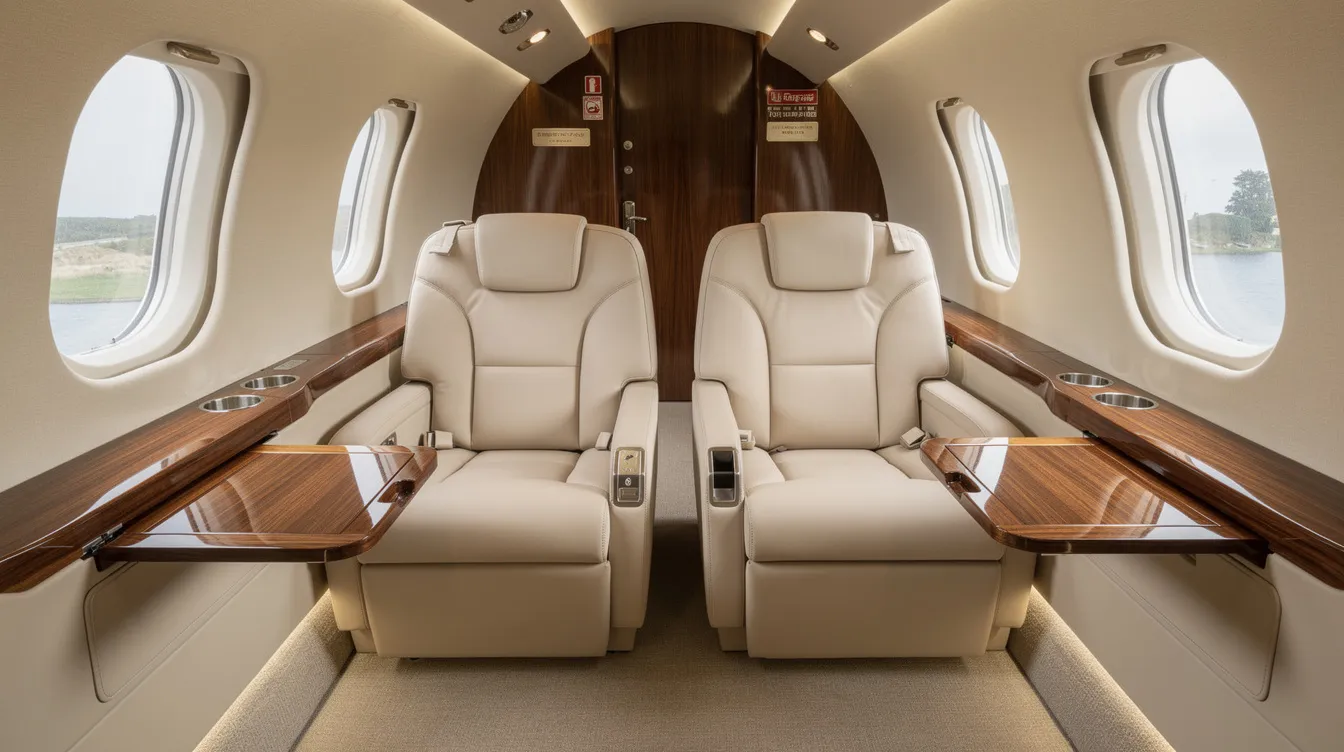
This section provides a practical playbook of tactics that consistently reduce jet charter costs while keeping safety non-negotiable, echoing many of the strategies covered in Jettly’s guide to booking the cheapest private jet flights and its broader overview of affordable airplane rental options and costs, as well as its deep dive into the safest private jets and top safety-focused models.
Jettly’s platform is built around these efficiencies: smart aircraft matching, empty leg access, alternative airport options, and transparent quoting, supported by instant-book partners like ZENFLIGHT, a global private jet operator marketplace. Stratos Jets is another trusted provider of luxury private jet charters and customer support, offering similar cost-saving strategies within the broader context of the global private jet fleet and its growth trends. Here’s how to apply each strategy.
Using a platform with smart search tools and an airport locator for private jet charters helps you see which nearby fields and regions offer the best pricing before you commit to a quote, and these same tools often integrate advanced private jet tracking solutions so you can monitor aircraft movements and availability in real time.
Shift departure by 12–24 hours or move from a prime Friday–Sunday window to midweek to shave 10–30% off quotes on busy leisure routes like New York–Palm Beach or Los Angeles–Aspen.
Use nearby secondary airports to reduce landing fees and handling fees significantly:
Teterboro (TEB) instead of JFK
Fort Lauderdale (FLL) instead of Miami International
Van Nuys (VNY) instead of LAX
A family flying New York–Orlando could save several thousand dollars by using a turboprop into Orlando Executive Airport at off-peak times rather than a jet into MCO.
Jettly’s search tools display multiple nearby airports, allowing travelers to compare and choose cheaper options at a glance.
Empty leg flights are repositioning legs flown without paying passengers. Operators often discount these by 25–75% off standard private jet rental cost, and specialized tools for finding empty leg flights can surface these discounted opportunities quickly.
Example: A last-minute Los Angeles–Las Vegas empty leg charter flight on a light jet might cost $3,000–$5,000 total instead of $8,000–$10,000.
Trade-offs: Schedules may change, routes are fixed, and availability is unpredictable. Empty legs work best for flexible leisure travelers rather than tight business travel agendas.
Platforms like Jettly aggregate and publish real-time leg flights and one-way specials, allowing users to track and book quickly, much as you would when comparing XO charter flights, their costs, and possible alternatives.
Two strategies work here, both of which can be streamlined through platforms that crowdsource private jet flights and share empty seats or help you compare shared charter flights versus full charter options:
Book semi-private seat-share services on set routes.
Charter the entire plane and split costs among your group.
A $12,000 light-jet charter from New York to Miami becomes $2,000 per person when shared among six travelers—approaching premium economy or business-class fares.
Some operators offer per-seat models on popular routes like the West Coast city pairs or the New York–South Florida corridor. These options suit solo travelers seeking private charters without chartering a private jet alone and mirror many of the approaches described in Jettly’s guide on how to buy a seat on a private jet.
Understanding the broader landscape of operators and aircraft types—such as those outlined in an ultimate list of charter airlines and private jets—helps you compare options and avoid overpaying for capacity you don’t need.
Over-sizing the aircraft is one of the fastest ways to destroy a “cheap” charter. Light jets or turboprops almost always prove more cost-effective for 2–4 passengers on sub-1,000 nm routes.
Side-by-side comparison for 4 passengers, Los Angeles–San Francisco:
Turboprop: ~$4,000–$6,000
Midsize jet: ~$9,000–$12,000
Travel times are similar over such a short flight distance. The turboprop saves thousands without meaningful sacrifice.
Consider larger aircraft only when luggage needs, cabin height requirements (stand-up cabins matter on longer flights), or nonstop range clearly demand it. Jettly’s quoting engine suggests multiple aircraft options per route so users can weigh cost versus comfort.
Jet cards and membership programs provide fixed or capped hourly rates, priority access, and reduced fees in exchange for upfront commitment, and resources such as Jettly’s jet card flight cost estimator and its detailed guide to private jet card costs can help you model whether a card makes financial sense for your typical routes.
For travelers who fly frequently (25+ hours per year), programs like Jettly’s private jet memberships or its jet card programs for corporate and frequent flyers, alongside broader comparisons of the best jet card programs today and in-depth explainers on what a jet card is, how it works, and typical costs as well as focused breakdowns of NetJets jet card prices and options, can lower average hourly costs, remove peak surcharges on many dates, and simplify budgeting.
Membership isn’t mandatory—occasional travelers can still access on-demand charter flights. But heavy users who fly frequently can significantly reduce the cost per flight hour over time.
Transparent, itemized pricing is essential. Platforms should show hourly rate, estimated taxes, airport fees, and additional services in a single view to prevent hidden fees and surprise charges, mirroring the breakdowns you’d expect when analyzing the cost of a single private jet flight.
Jettly’s approach—on-demand quotes, a global aircraft network, and clear breakdowns—supports cost-conscious clients looking for genuinely cheap private jet charter prices, while its high-ticket affiliate program enables partners to earn commissions by referring new flyers to these solutions.

Certain routes offer better pricing due to high competition among operators, proximity of smaller airports, and strong aircraft density. Here are practical examples for 2026.
|
Route |
Aircraft Type |
Estimated Price Range |
|---|---|---|
|
Los Ángeles–Las Vegas |
Turboprop/VLJ |
$4,000–$7,000 |
|
New York–Boston |
VLJ |
$5,000–$8,000 |
|
Miami–Nassau |
Light Jet |
$7,000–$10,000 |
|
New York–Miami |
Light Jet |
$12,000–$16,000 |
|
Toronto–Vancouver |
Midsize |
$24,000–$32,000 |
|
London–Nice |
Light Jet |
$15,000–$22,000 |
**Los Ángeles (VNY) – Las Vegas (LAS): $4,000–$7,000 en un turboprop o VLJ, with some routes occasionally served by efficient single-pilot budget-friendly jets or semi-private flights to Vegas that lower per-seat costs. Perfect for weekend leisure trips or day-trip business meetings. Flight time is under an hour.
New York (TEB) – Boston (BED): $5,000–$8,000 on a VLJ. Popular for business travel and avoiding congested commercial airports. Using Bedford instead of Logan saves on airport fees.
Miami (OPF) – Nassau (MYNN): $7,000–$10,000 on a light jet. Ideal for family getaways to the Bahamas without dealing with commercial connections.
Jettly’s network provides access to multiple charter operators on each corridor, including instant-book aggregators like ZENFLIGHT’s global private jet marketplace, allowing clients to quickly compare and pick cheaper alternatives, similar to the comparisons you’d make when reviewing the best private jet charter companies or evaluating the top private jets in the world by luxury and performance in the market.
Longer segments become cost-effective when 8–14 passengers share a midsize, super-midsize, or heavy jet.
New York (TEB) – Los Angeles (VNY): Super-midsize jet at $30,000–$45,000. With a full cabin of 8–10 passengers, the per-person cost approaches transcontinental business class.
London (Luton) – Dubai (DWC): Heavy jet at $70,000–$110,000. Competitive per seat for executive groups when commercial options require connections or don’t align with schedules.
Seasonal factors matter: winter traffic to Colorado ski resorts and summer flows to Mediterranean destinations create demand spikes. Flexible dates remain critical to finding cheaper inventory and to getting a seat on a private jet easily without paying peak premiums.
Jettly operates as a tech-first charter platform focused on value, transparency, and convenience rather than purely luxury branding, positioning itself as a cost-effective NetJets alternative for travelers who want flexibility without long-term ownership commitments, especially after understanding how NetJets itself structures its services and pricing.
Core differentiators include:
Instant online quotes
Wide global aircraft access
Transparent fee breakdowns showing all costs upfront
Membership options designed to reduce average hourly costs
The platform helps users quickly see the cost impact of switching aircraft type, dates, or airports—enabling smarter decisions when hunting for cheaper private flight options, whether you’re flying with a major operator or a regional partner like Dexter Air Taxi.
Jettly provides clear, upfront quotes that itemize hourly rate, estimated taxes, airport fees, and common extras. This helps clients avoid surprise surcharges that inflate final bills.
Users can compare multiple aircraft categories side-by-side for the same route. See how a turboprop, light jet, and midsize jet change both comfort and total private jet charter prices.
This transparency proves especially valuable for first-time private flyers searching for authentically affordable options.
View live charter options and instant estimates at Jettly.
Jettly offers membership plans for clients who fly multiple times per year. Benefits may include lower service fees, preferred access, and more predictable pricing.
Locking in or capping hourly rates through membership shields travelers from peak-season spikes and fuel surcharges throughout 2026 and beyond.
Membership isn’t mandatory—occasional travelers can still access on-demand charter flights. But heavy users who fly frequently can significantly reduce the cost per flight hour over time.
These FAQs address common questions for first-time private flyers focused on saving money while still flying private.
On a per-seat basis, commercial economy is almost always cheaper. However, private can approach or undercut business or first class ticket fares when you leverage competitive regional markets—such as private jet charter services in Kolkata, West Bengal, or New Delhi, Delhi—and when:
A full group (6–14 passengers) shares the charter
The route is poorly served by commercial airlines (remote airports, no nonstops)
Time savings and schedule control hold real monetary value
Consider a remote business destination requiring multiple airline connections versus tapping into focused services like private jet charter in Abuja, Nigeria’s Federal Capital Territory, on-demand private jet flights in Atlanta, Georgia, premium charter services in Chennai, Tamil Nadu, flexible jet charter options in Houston, Texas, tailored private flights to Hyderabad, Telangana, bespoke jet travel to Jaipur, Rajasthan, luxury private jet solutions in Lagos, Nigeria, or comprehensive private jet charter services in Mumbai, Maharashtra, where direct access to secondary airports can dramatically reduce total travel time even if per-hour charter prices are higher than commercial fares.
Finding cheap private jet charter prices in 2026 comes down to matching the right aircraft to your route, avoiding unnecessary fees, staying flexible on timing, and leveraging tools like empty legs and memberships.
The main cost levers remain consistent: hourly rates by aircraft type, repositioning charges, taxes and airport fees, seasonal demand spikes, fuel surcharges, and optional concierge services. Master these variables, and private jet travel becomes far more accessible than most assume.
Jettly helps travelers reliably find the lowest viable private jet charter prices without sacrificing safety or service quality. The platform’s transparent quotes, multiple aircraft comparisons, and membership options put control in the traveler’s hands.
Ready to experience private travel on your terms? Explore flight options or request a quote at Jettly.
Share this post:
Jay Franco Serevilla
Apr 23, 2026
|
5
min read
Discover tips and trends in the industry.

5
min read
Delta Boarding Zones: How Delta Air Lines Boarding Works (and What It Means for Private Flyers)
Delta Air Lines utilizes a structured boarding system with eight numbered zones plus pre-boarding, determining the order in which passengers board based on cabin class, fare type, and loyalty status. Understanding this system is crucial for travelers considering commercial flights versus private jet charters, as it impacts overhead bin space and wait times. For those seeking a more streamlined experience, private jet options like Jettly eliminate the complexities of boarding zones altogether.
Read More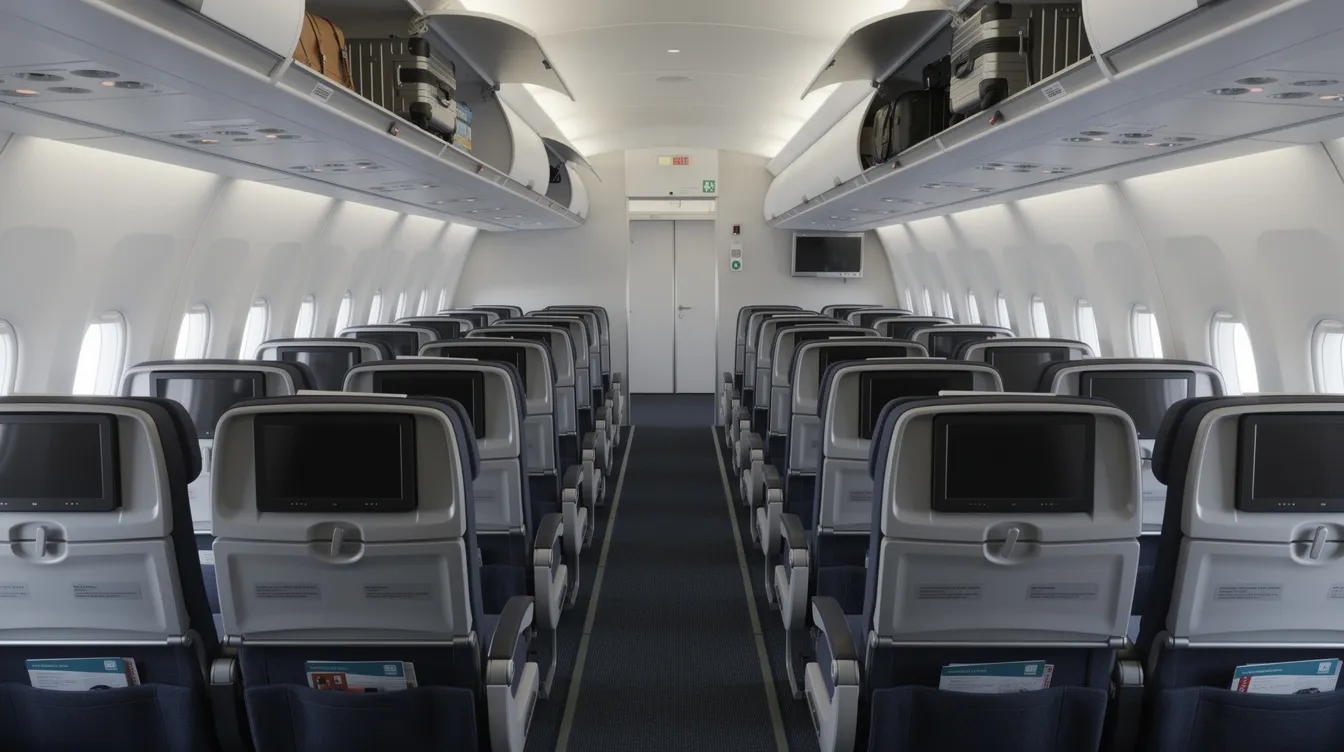
5
min read
Delta Basic Economy: What Changed, What It Includes, and When to Avoid It
Delta Air Lines has rebranded its Basic Economy fare to Delta Main Basic as of October 1, 2025, maintaining its core restrictions while altering the booking experience. This fare class is the most restrictive in Delta's lineup, making it suitable primarily for solo travelers on short flights who prioritize low prices over flexibility. For most travelers, considering higher fare options like Delta Main Classic or private jet charters may provide better value.
Read MoreStay updated with our latest insights and tips to elevate your journey with us.
MEMBERSHIPS AND ASSOCIATIONS



Disclaimer: Jettly operates as a charter broker, offering access to a global digital jet charter marketplace. Jettly is not a direct air carrier and does not own or operate aircraft. All advertised flights are conducted by third-party air carriers that are fully licensed and hold the appropriate Part 135 or Part 121 certifications issued by the Federal Aviation Administration (FAA) or equivalent regulatory authorities under U.S. or foreign law. Jettly complies fully with the U.S. Department of Transportation's Part 295 and Part 298 Charter Broker regulations. Jettly does not carry additional liability insurance. Passengers are covered by aircraft operator insurance. TICO: 50023770


