



Login
Get Instant Pricing On 23,000+ Aircraft

>
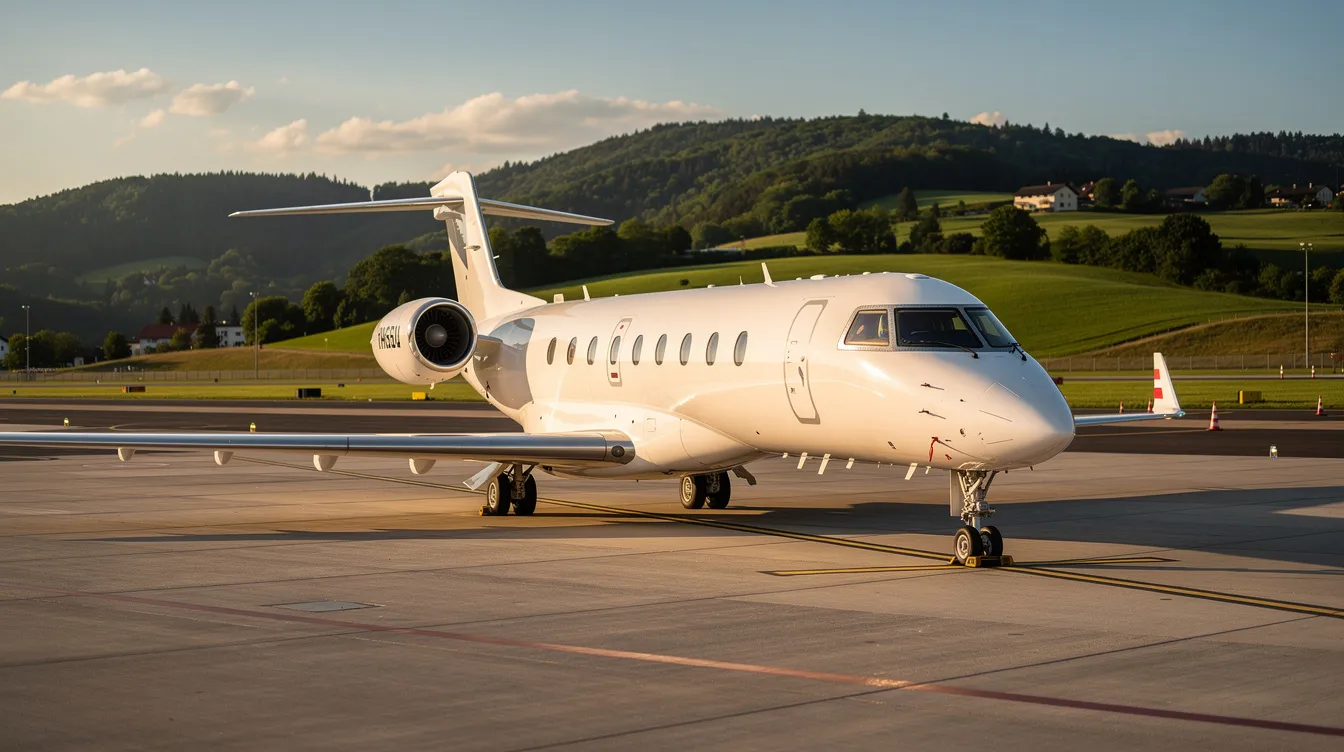
The Bombardier Challenger 300 is a super-midsize business jet manufactured by Bombardier Aerospace. A super-midsize jet offers more cabin space and range than a traditional midsize jet while remaining smaller and more flexible to operate than a heavy jet. Since entering service in 2004, the Challenger 300 has earned its place as one of the most popular aircraft in private aviation.
It combines high cruising speeds with transcontinental range, a stand-up cabin, and operating economics that sit well below larger heavy jets. For business travelers, charter clients, and aviation enthusiasts, the Challenger 300 is relevant because it can make coast-to-coast travel practical while offering cabin space for productive meetings. This guide covers its performance and range, cabin and technology, operating economics, airport access, safety record, and how to charter one through Jettly.
The Bombardier Challenger 300 is a super-midsize business jet manufactured by Bombardier Aerospace. It remains a go-to choice for business travel thanks to its balance of range, speed, and cabin comfort. Its high cruising speeds and transcontinental range work together to make long-distance nonstop flights, including coast-to-coast missions, practical.
The Challenger 300 can fly up to 3,100 nautical miles nonstop at a maximum cruise speed of approximately 470 knots, making true transcontinental flights routine.
Its cabin design seats 8 to 10 passengers comfortably with a stand-up height of over six feet, a flat floor, and 106 cubic feet of in-flight accessible baggage space.
The aircraft is equipped with Rockwell Collins Pro Line 21 avionics and a synthetic vision system, supporting safe, efficient flight operations.
Operating costs are competitive for the super midsize class - fuel burn can be as low as 178 gallons per hour, with total variable costs around $2,784 per hour.
Travelers can charter a Challenger 300 on-demand through Jettly's digital platform, with instant pricing and access to certified third-party operators.
The Challenger family from Bombardier spans several decades and multiple airframe sizes, reflecting Bombardier's role among the best private plane manufacturers for business aviation. The Challenger 300 sits between the smaller Learjet lineup and the larger Challenger 600 series, filling a gap that corporate flight departments and charter operators had long wanted addressed.
Bombardier launched the Challenger 300 program in 1999 - originally under the "Continental" designation - to deliver large-jet range with midsize operating flexibility. The Bombardier Challenger 300 entered commercial service in early 2004 and quickly became a leading aircraft for both the Challenger 300's corporate and charter roles. It helped redefine what the super midsize class could offer: nonstop coast-to-coast capability, a wide stand-up cabin, and lower operating costs than stepping up to a heavy jet or moving into larger legacy platforms such as the Challenger 601.
The Challenger 300 entered service in 2004 and was succeeded by the Challenger 350 in 2014, while larger derivatives like the Challenger 850 expanded the family’s capacity and range at the upper end of the market. But the original model remains a fixture in charter fleets worldwide. For travelers evaluating which business jets best fit their needs or researching the best private airplanes available in 2025, this article covers what matters most: comfort, performance, range, economics, and how to book through Jettly.
These headline numbers matter when deciding whether the Challenger 300 fits your route, your group size, and your budget. Here are the specifications charter clients ask about most often.
|
Specification |
Value |
|---|---|
|
Maximum passenger capacity |
8–10 (typically 8–9 in charter layout) |
|
Crew |
2 pilots; optional flight attendant |
|
Engines |
2x Honeywell HTF7000 turbofan (6,826 lb thrust each) |
|
Maximum cruise speed |
~470 knots / Mach 0.82 |
|
Long-range cruise speed |
~459 knots / Mach 0.80 |
|
Maximum range (NBAA IFR) |
~3,100 nautical miles |
|
Maximum altitude |
45,000 feet |
|
Initial cruise altitude climb |
FL 410 in 18 minutes |
|
Takeoff distance |
4,810 feet |
|
Landing distance |
~2,600 feet |
|
Cabin length |
25 feet 2 inches |
|
Cabin width |
~7 ft 2 in |
|
Cabin height |
~6 ft 1 in |
|
Baggage compartment |
106 cubic feet (in-flight accessible) |
For a deeper breakdown of these specifications, see Jettly's Challenger 300 aircraft page and compare them with larger Bombardier options like the Challenger 850 business jet.
Range and cruise speed determine which routes are practical without a fuel stop. The Challenger 300 offers a range around 3,100 nm under standard business jet payload and NBAA IFR reserves, paired with a long-range cruise speed near Mach 0.80.
That translates into real itineraries like these:
New York → Los Angeles (~2,450 nm): Nonstop in roughly 5–5.5 hours. Fly from Teterboro and arrive at Van Nuys, skipping both major hubs entirely.
Toronto → Vancouver (~2,100 nm): Comfortable nonstop crossing with ample fuel reserves.
London → Moscow (~1,500 nm): Under 3.5 hours, efficient for cross-border business.
Chicago → Miami (~1,200 nm): A shorter leg where the Challenger 300's speed means same-day round trips are feasible, even when compared with efficient light twins such as the Cessna 340.
Higher cruise speed compared with smaller midsize jets can shave 30–60 minutes off longer legs. For corporate travelers trying to arrive, attend a meeting, and return the same day, that difference matters. Jettly's private jet charter cost estimator can estimate flight times and costs for specific routes in a Challenger 300.
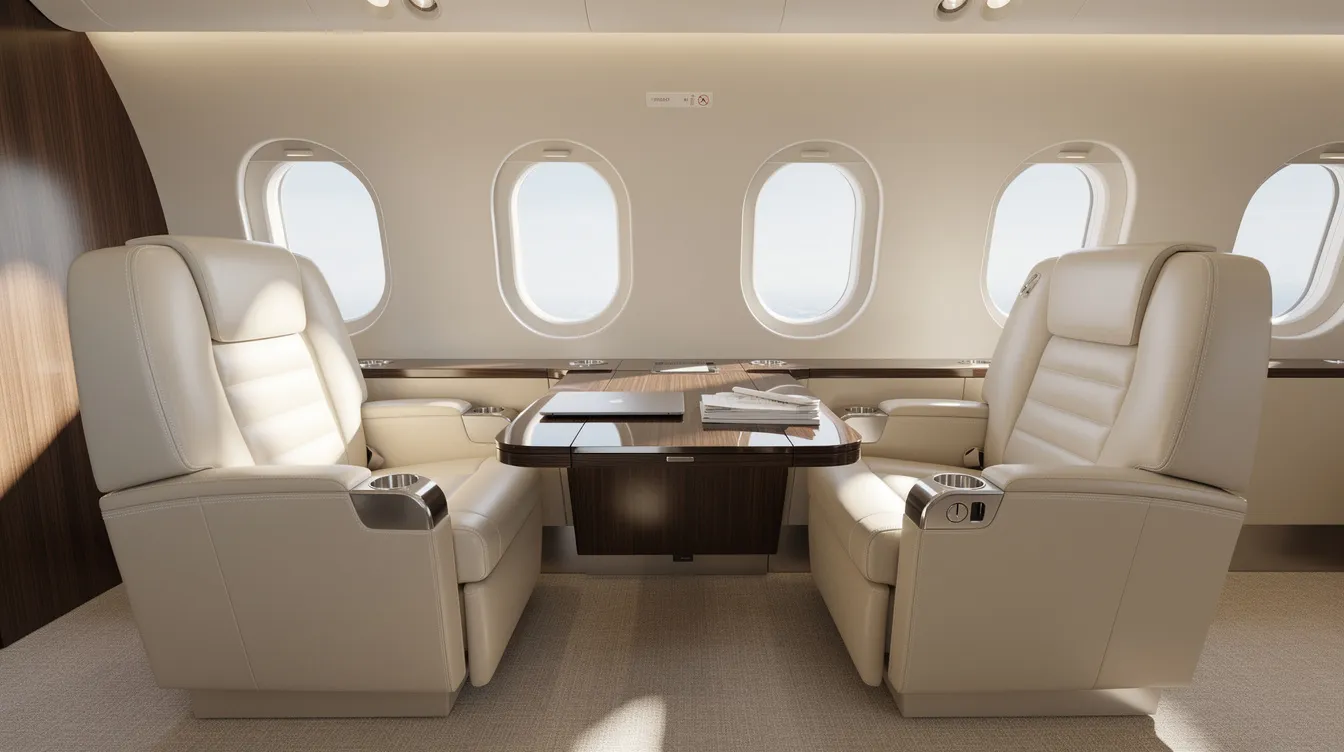
The Challenger 300 cabin is built for productive, comfortable travel over longer sectors. With a cabin length of 25 feet 2 inches, a cabin width of over 7 feet, and a stand-up height exceeding six feet, it offers space that light and midsize business jets simply cannot match.
Common charter layouts include:
Double-club seating (four forward-facing, four aft-facing) for meetings or group travel
Three-place divan replacing rear seats for rest on longer flights
Forward wardrobe and forward galley for catering and coat storage
Cockpit divider separating the flight deck from the passenger cabin
The cabin has a flat floor design for unrestricted movement between seats and the fully enclosed aft lavatory, which includes a stocked sink area. The baggage compartment is accessible during flight, with 106 cubic feet of internal space - enough for several large roller bags per passenger.
The cabin design allows for comfortable in-flight meetings, with fold-out worktables, power outlets, and lighting optimized for both productivity and rest. The aircraft is designed to be the quietest in its class, which makes a real difference on flights stretching past four hours. Many charter-configured Challenger 300 aircraft also include Wi-Fi and entertainment systems, though amenities vary by operator.
The Challenger 300's flight deck is built around the Rockwell Collins Pro Line 21 avionics suite, which provides pilots with four large LCD displays integrating flight management, engine monitoring, navigation, and system data. This setup reduces pilot workload and supports safer operations in complex airspace.
Common technology options on both the Challenger 300 and current Challenger models include a synthetic vision system, advanced terrain awareness and warning systems, and traffic collision avoidance - all of which improve situational awareness during poor weather and high-density operations.
The airframe itself contributes to efficiency. The Challenger 300's supercritical wing design reduces drag by around 17%, helping the aircraft maintain efficient fuel burn at higher cruise altitudes. For passengers, these technologies translate into smoother flights, more direct routings, and fewer weather-related delays.
Jettly sources Challenger 300 charters only from certified air carriers operating under appropriate regulatory approvals such as FAA Part 135 or equivalent from Transport Canada and other authorities, and educates travelers on how Part 135 charter companies operate and why they matter. These operators maintain the avionics and safety systems to required standards.
The Challenger 300 is known for its good runway performance relative to its size class, and this expands where you can fly.
Key short field performance numbers:
Takeoff distance: 4,810 feet at standard sea-level conditions
Landing distance: approximately 2,600 feet under standard conditions
Can operate from runways as short as 4,810 feet, which many larger commercial aircraft and heavy jets cannot
The Challenger 300 can access smaller airports than many competitors in the super midsize class. That means:
Teterboro (TEB) instead of JFK for the New York metro area
Van Nuys (VNY) instead of LAX for Los Angeles, while long-haul groups might opt for widebody options like the Airbus A330-300 when mission requirements call for airline-class capacity
Centennial (APA) instead of Denver International
Using these closer-in airports reduces total door-to-door travel time by an hour or more compared with flying into major hubs. Jettly customers can use the airport locator tool to search for flights into regional and secondary airports directly on the platform, matching the Challenger 300's capabilities with the destination that saves the most time.

Operating costs are where the Challenger 300 shows clear advantages over larger business jets like the Challenger 605 while remaining more capable than smaller midsize models.
Direct operating costs: approximately $770 per hour for fixed operational items
Fuel burn: as low as 178 gallons per hour at typical cruise settings
Total variable cost: around $2,784 per hour, covering fuel, maintenance reserves, and crew
Charter rates: generally in the $7,500–$9,000 per hour range in the current market, depending on operator and amenities
The Challenger 300 requires multiple inspections at intervals ranging from 12 to 144 months, which is standard for business jets of this class. Efficient Honeywell HTF7000 engines and modular engine maintenance help keep unscheduled downtime low, contributing to its reputation among fleet operators.
For charter clients on Jettly, the economics are simpler: no capital cost, no hangar fees, no crew salaries, and tools that explain how private jet charter costs are structured. Travelers pay for the aircraft only when they fly, with transparent, up-front pricing. For a detailed look at current rates, see Jettly's Challenger 300 charter rate guide.
The Bombardier Challenger 300 has logged over two decades since its first flight, with hundreds of aircraft in service worldwide across corporate flight departments, fractional ownership programs, and charter fleets, mirroring broader trends across the charter airline and private aviation market.
The numbers tell the story: the Challenger 300 has a 99.79% dispatch reliability rate, one of the strongest figures in business aviation for its class. High dispatch reliability and modular engine maintenance make it a dependable choice for operators who need consistent availability. The aircraft meets FAA FAR 25 safety standards, and it has accumulated a long, well-documented service record.
As with any mature airframe operating over five years, regulatory authorities periodically issue additional directives. The FAA ordered additional safety checks for the Challenger 300 in 2022, reinforcing the ongoing oversight that keeps these jets operating safely. This kind of proactive maintenance scrutiny is normal in business aviation.
Jettly, as a charter broker, works exclusively with third-party operators that comply with all applicable maintenance requirements and safety regulations for aircraft such as the Challenger 300. Companies operating these jets maintain airworthiness programs that meet or exceed regulatory standards.
Jettly is a digital private aviation marketplace - not an aircraft operator - that partners with vetted providers such as Dexter Air Taxi. The platform provides on-demand access to Challenger 300 aircraft through certified third-party carriers, making it straightforward to book a private jet charter.
Ideal use cases for chartering a Challenger 300 include:
Executive business travel with five to eight passengers
Cross-country board meetings or multi-city roadshows
Longer family trips where baggage space and cabin comfort matter
Time-sensitive travel where same-day departures are needed
The booking workflow is simple: search routes and dates on Jettly, compare aircraft options including the Bombardier Challenger 300, receive instant or rapid pricing, and confirm directly through the platform. Jettly offers both on-demand charter and private jet membership programs for frequent flyers seeking more predictable pricing. Travelers can also check for empty-leg flights or join crowdsourced private jet flights that share empty seats to reduce costs on popular routes.
Ready to fly on your terms? Explore Challenger 300 charter options, browse Jettly's private charter aircraft, or request a quote at https://www.jettly.com.
These questions address common practical concerns for travelers considering a Challenger 300 through Jettly's platform, including how tools like Jettly's jet card flight cost estimator can help budget frequent travel.
Most charter-configured Challenger 300 aircraft accommodate eight passengers in a double-club layout, with some configurations seating up to nine or ten using a three-place divan. The maximum passenger capacity depends on the specific interior and operator. For group size guidance across jet categories, see Jettly's passenger capacity guide.
With six to eight passengers and standard baggage, the Challenger 300 can usually fly between about 2,800 and 3,100 nautical miles nonstop. Headwinds, high-altitude departure airports, and heavier loads can reduce effective range. Jettly's pricing tool accounts for these variables when generating route-specific estimates.
Many Challenger 300 aircraft in the charter market are equipped with Wi-Fi systems such as Gogo AVANCE and basic entertainment displays. However, equipment varies by operator and specific aircraft. Confirm connectivity options with Jettly during the quote process.
The Challenger 300 typically costs more per hour than a new model in the midsize category but offers a larger stand-up cabin, more baggage capacity, longer range, and faster cruise speed. For groups of six or more on legs over 1,500 nm, the Challenger 300 often delivers better value per seat-mile. For a side-by-side look at options, visit Jettly's private jets comparison or review this guide on how to buy a seat on a private jet.
Owners and operators typically see the highest availability when travelers book one to two weeks ahead. However, Jettly can often source a Challenger 300 on shorter notice for urgent trips, depending on route, season, and market demand. The platform also supports same-day private jet charter when aircraft are positioned nearby.
The Challenger 300 business jet is a practical fit for travelers who need transcontinental range, a spacious cabin for up to eight passengers, and access to more regional airports than many larger aircraft. Its performance, in-flight accessible baggage space, and ability to support work or rest make it a versatile option for business trips, family travel, and multi-city itineraries.
Compare its features with other private jet options or review the Challenger 300 aircraft details. Route distance, passenger load, weather, and aircraft configuration can affect actual performance and availability, so confirm the details for each flight. Jettly is a charter broker, not an aircraft operator.
The platform helps travelers compare Challenger 300 options, review pricing, and book flights operated by properly certified third-party carriers. Learn more about how private jet charter works and explore private jet membership options for more predictable pricing.
Explore Jettly’s charter options to compare aircraft, request an instant quote, or learn about membership options for more predictable pricing.
Share this post:
Jay Franco Serevilla
Nov 11, 2026
|
5
min read
Discover tips and trends in the industry.
5
min read
737 MAX 10 Range: What It Really Means For Your Trip
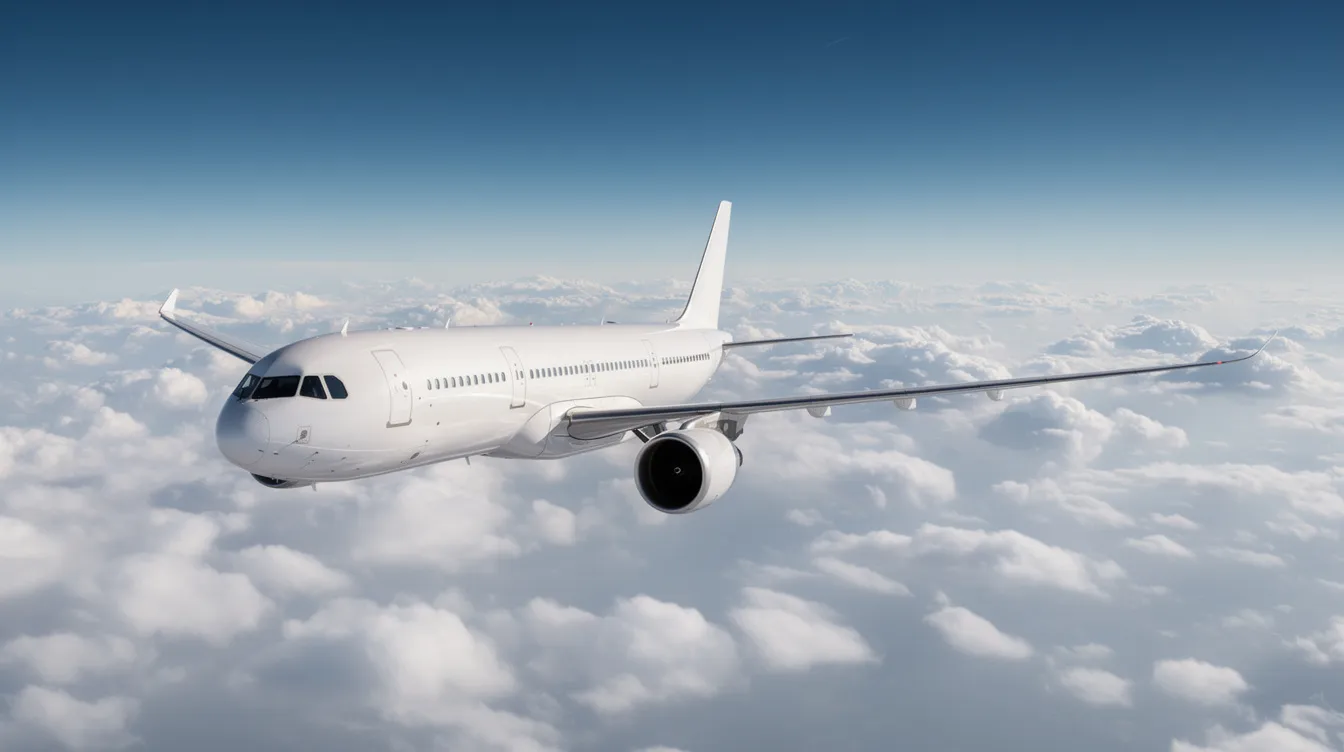
The Boeing 737 MAX 10 has an advertised range of approximately 3,100 nautical miles, making it the shortest-range variant in the MAX family. However, real-world conditions often reduce this range to about 2,800 to 3,000 nautical miles, impacting airline route planning and passenger choices. For travelers, private jets can offer comparable or greater range with added convenience and flexibility.
Read More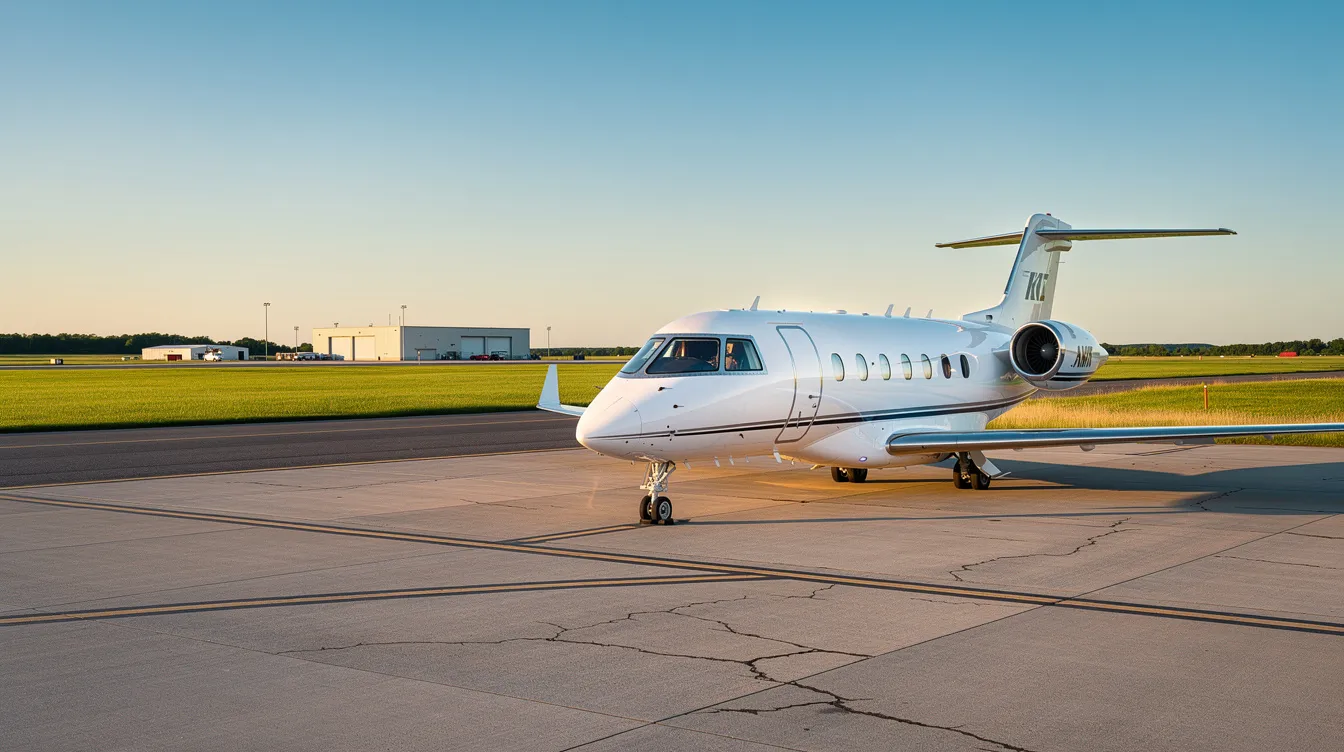
5
min read
How to Charter a Private Flight: Step-by-Step Guide to Flying Private with Jettly
Chartering a private flight has never been easier with Jettly, allowing travelers to book online in just minutes. This step-by-step guide covers everything from selecting aircraft types to understanding pricing and safety, ensuring a smooth and efficient travel experience. Whether for business or leisure, Jettly connects clients with over 20,000 aircraft worldwide, making private flying accessible and convenient.
Read MoreStay updated with our latest insights and tips to elevate your journey with us.
MEMBERSHIPS AND ASSOCIATIONS



© 2026 Jettly Inc. All rights reserved.
Disclaimer: Jettly operates as a charter broker, offering access to a global digital jet charter marketplace. Jettly is not a direct air carrier and does not own or operate aircraft. All advertised flights are conducted by third-party air carriers that are fully licensed and hold the appropriate Part 135 or Part 121 certifications issued by the Federal Aviation Administration (FAA) or equivalent regulatory authorities under U.S. or foreign law. Jettly complies fully with the U.S. Department of Transportation's Part 295 and Part 298 Charter Broker regulations. Jettly does not carry additional liability insurance. Passengers are covered by aircraft operator insurance. TICO: 50023770


