



Login
Get Instant Pricing On 23,000+ Aircraft

>
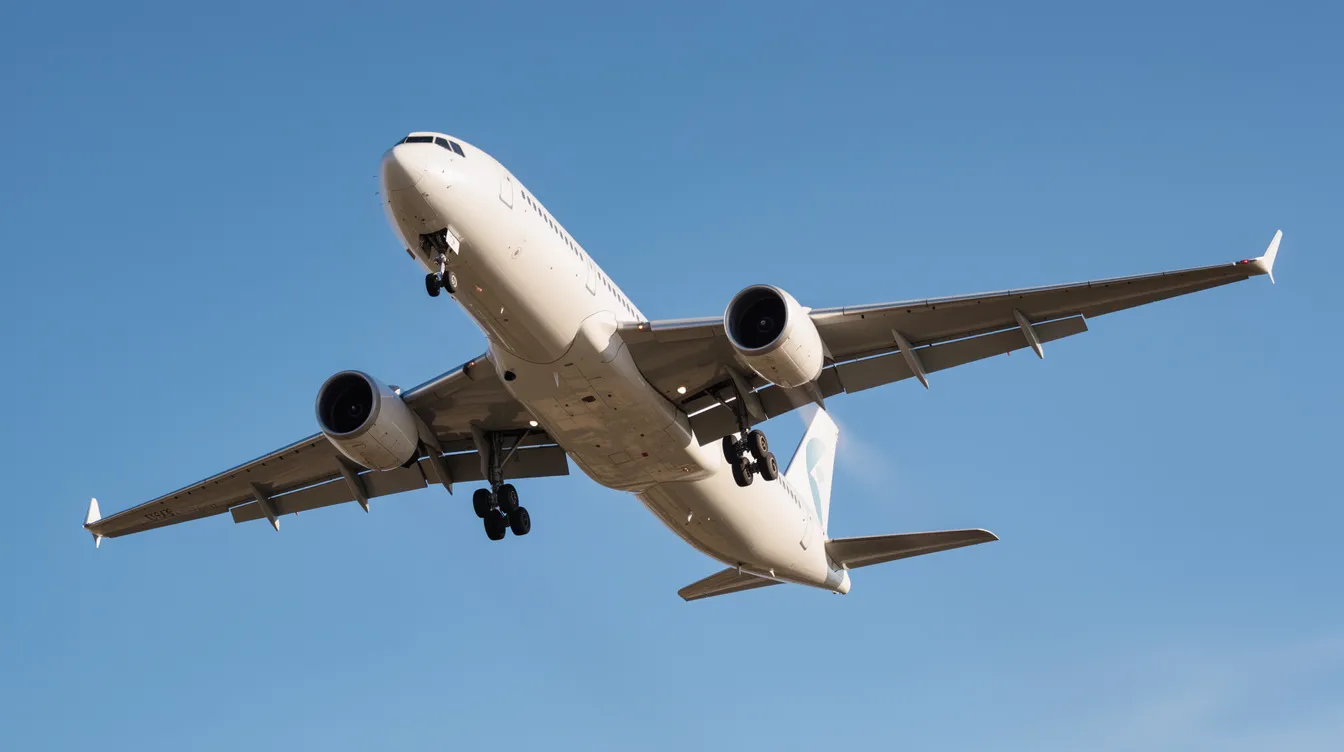
Boeing planes sit at the center of global aviation. This guide is for travelers, aviation enthusiasts, and anyone comparing Boeing commercial aircraft, business jets, and private jet options. Understanding Boeing planes helps travelers make smarter choices about air travel, whether flying commercial, chartering an airliner, or booking a private jet. Boeing aircraft are categorized into commercial passenger, commercial cargo, military, transport, and surveillance types. Whether someone boards a short domestic hop on a 737 or crosses an ocean on a 787 Dreamliner, chances are high the aircraft carries a Boeing nameplate. Boeing commercial airplanes and Boeing commercial aircraft cover everything from narrow-body single-aisle jets to wide-body aircraft capable of nonstop intercontinental flights. Boeing Business Jets take those same airframes and turn them into customized private versions for VIP and corporate travel.
The Boeing company produces aircraft categorized into commercial passenger, commercial cargo, military, transport, and surveillance types. Boeing is also a key supplier of military aircraft for combat, reconnaissance, and training. But for most travelers, what matters is the commercial and business jet lineup - from the 737 MAX on medium-haul routes to larger aircraft like the 777 and 787 that handle long-haul travel across the world.
For anyone weighing a scheduled airline seat against chartering an entire Boeing airliner or booking a smaller private jet, tools like Jettly’s private jet charter cost estimator help compare cabin experience, route options, and budget across all these categories.
Boeing's naming convention dates to 1958 and the Boeing 707, the jet that launched the company's commercial airplanes division into the mainstream. Every airliner since has followed the "7X7" pattern: 727, 737, 747, 757, 767, 777, 787. The middle digit identifies the family, while three-digit suffixes indicate specific variants and generations.
On older types, suffixes like "-400" or "-300ER" denoted sub-models. ER means extended range (e.g., the 777-300ER), LR stands for long range, and F marks a freighter variant like the 767-300F. Combi versions carried both passengers and cargo on the same deck.
Newer Boeing designs use simplified designators. The 787 family runs 787-8, 787-9, and 787-10. The 747-8 dropped the old "-400" style numbering. And the 737 MAX family brands its variants as MAX 7, MAX 8, MAX 9, and MAX 10 rather than following the Next-Generation (NG) convention.
Historic customer codes - like 737-824, where "24" identified the original airline buyer - once appeared on older models. Boeing phased this practice out on the 737 MAX and 787, simplifying identification for airlines and customers alike.
As of mid-2026, Boeing commercial airplanes in active production or development include the 737 MAX family, 767 (primarily cargo and military tanker), 777 and 777X, 787 Dreamliner, and 747-8F freighter operations. Boeing's commercial aircraft lineup includes both narrow-body and wide-body planes, covering everything from short domestic routes to ultra-long-haul international service.
Here is a snapshot of each family:
737 MAX (narrow-body): MAX 7, 8, 9, and 10 variants. Typical two-class capacity ranges from about 138 seats (MAX 7) to 204–230 seats (MAX 10). The Boeing 737 MAX has a range of 3,500–3,800 nautical miles. MAX aircraft returned to global service between 2020 and 2021 after EASA and FAA recertification. The MAX 10 received FAA certification in October 2026.
787 Dreamliner (wide body): The 787-8, -9, and -10 serve long routes across the globe. Boeing commercial aircraft in this family can carry 160–330 passengers depending on variant and layout.
777 / 777X (wide body): The current 777-300ER handles high-capacity international demand. The 777X (777-8 and 777-9) is expected to enter service later in the 2020s with new composite wings and GE9X engines.
767: Production continues mainly for freighters and the KC-46 military tanker at roughly three aircraft per month.
747-8F: Passenger 747-8 production ended in early 2023 with the final delivery to Atlas Air on January 31, 2023. Freighters remain in heavy cargo service.
Corporations, sports teams, and tour operators sometimes charter entire Boeing airliners through platforms like Jettly when they need to move large groups, equipment, or both, including options like a Boeing 737-800 for private charter on short- and medium-haul routes. Boeing commercial aircraft are more cost-effective for large groups compared to booking multiple smaller private jets.
Commercial aircraft size determines where a plane can land, how far it can fly, how many passengers it seats, and what the cabin experience feels like. For anyone evaluating whether to fly commercial, charter an entire airliner, or book a private jet, these dimensions matter.
Key benchmarks across Boeing's current lineup help frame how many passengers different aircraft can carry compared with various types and sizes of private jets:
737 MAX 8: Length roughly 39.5 m, wingspan about 35.9 m, cabin width approximately 3.54 m. Six-abreast seating in a single-aisle layout seats 162–178 passengers in a two-class configuration.
777-300ER: Length about 73.9 m, wingspan roughly 64.8 m, cabin width approximately 5.86 m. Twin-aisle layout seats 300–396 passengers. This is a true wide-body aircraft built for high-volume international route demand.
787-10: Length about 68.3 m, wingspan roughly 60.1 m, cabin width approximately 5.49 m. Two-class seating fits 300–375 passengers.
To put floor area in context: a large Boeing wide-body like the 777X offers up to roughly 3,690 square feet of cabin space - equivalent to combining several large private jets. That scale explains why BBJ variants can provide thousands of square feet of floor area and why chartering a single wide-body Boeing airliner often beats booking multiple business jets for large group moves.
The Boeing 737 first flew in 1967 and has grown through four generations: Original, Classic, Next-Generation (NG), and the current 737 MAX era. It is the world's most-produced jet airliner family. The Boeing 737 family serves short- to medium-haul routes, and the Boeing 737 is widely used for short- and medium-haul flights across airlines worldwide. The 737 family has accumulated 529 aviation accidents since 1968 - a figure that reflects the sheer volume of operations across millions of departures over nearly six decades.
The core cabin layout remains a single aisle with six-abreast seating. Cabin width measures about 3.54 m internally. Typical two-class capacity runs from about 130 seats on smaller variants to 210+ on the MAX 10, with the widely used Boeing 737-800 specifications and charter profiles illustrating this balance of capacity and range.
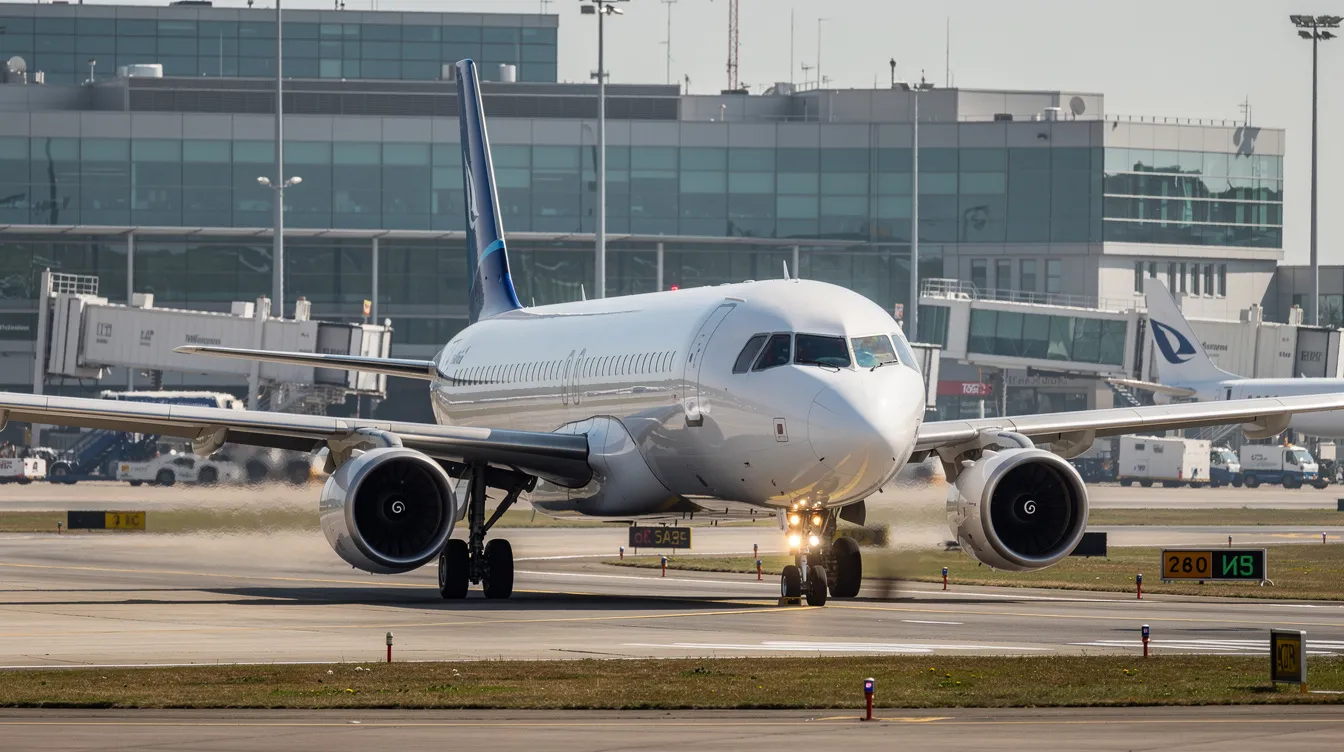
The 737 MAX variants break down as follows:
MAX 7: ~35.6 m length, ~138 seats (two class), range up to 3,800 nmi
MAX 8: ~39.5 m length, ~162–178 seats, range ~3,500 nmi
MAX 9: ~42.1 m length, ~178–193 seats, range ~3,300 nmi
MAX 10: ~43.8 m length, ~204–230 seats, range ~3,100 nmi
The 737 MAX's LEAP-1B engines reduce fuel consumption by 14% compared to the previous generation NG models, and total fuel burn and carbon emissions improvements reach roughly 20% when accounting for aerodynamic refinements and Advanced Technology winglets. The Sky Interior improves passenger comfort with better lighting and overhead bins.
On safety: two fatal accidents in 2018 (Lion Air Flight 610) and 2019 (Ethiopian Airlines Flight 302) involving the MCAS system led to a global grounding. Recertification required software and hardware changes - MCAS now uses two angle-of-attack sensors, activates only once, and pilots retain full override. The Boeing 737 MAX has a hull loss rate of 1.48 per million departures. MAX aircraft now operate under enhanced regulatory oversight.
Some 737s are configured as Boeing Business Jets for private and VIP use, and Jettly can arrange charter of a full 737 for corporate or group missions.
Wide-body Boeing airliners- twin-aisle, long-range, and high-capacity- form the backbone of international airline networks. They enable nonstop flights between continents, carry hundreds of passengers per trip, and support massive cargo operations.
Boeing 747. The 747 entered service in 1970 and earned the title "Queen of the Skies." The Boeing 747-8 is the longest passenger aircraft at 76.3 m. Typical 747-8 passenger capacity sits around 410–467 seats. The Boeing 747 is known for high-capacity, long-distance travel and cargo operations. Passenger production ended in 2023, but Boeing's 747 remains significant in global logistics after passenger production ended, with 747-8F freighters still serving cargo carriers worldwide. The 747 has also served as the platform for heads of state aircraft and VIP conversions for royal families and ultra-luxury use.
Boeing 767. Boeing's 767 is used for medium- to long-range routes and cargo operations. The Boeing 767 accommodates 200–300 passengers in a 2-3-2 seating layout. It continues in production for freighter and military roles - notably the KC-46 tanker. Boeing aircraft support various military operations, including transport and aerial refueling, through the 767-based KC-46 program. Commercial passenger deliveries are winding down, though dedicated VIP and charter operators still field long-range Boeing 767-300ER aircraft for high-end group travel.
Boeing 777 and 777X. Boeing's 777 program pioneered the use of computer-aided design in commercial aircraft manufacturing. Current variants like the 777-200ER and 777-300ER seat 300–396 passengers and handle high-volume international route demand. Boeing's 777 and 777X are designed for ultra-long-haul international passenger travel. The 777X (777-8 and 777-9) introduces composite wings with folding wingtips for better aerodynamics and space efficiency at airports, plus GE9X engines. The Boeing 777-9 has a length of 76.7 m and a capacity of 350–426. The 777-8 offers a range of up to roughly 9,500 nmi. Japan Airlines is among the carriers that have ordered 777X variants for their long-haul networks.
Boeing 787 Dreamliner. The 787 features composite construction that cuts emissions significantly compared to aluminum predecessors. Lower cabin altitude (about 6,000 ft), higher humidity, and larger windows improve the cabin experience and reduce jet lag on long-haul travel. The Boeing 787-8 typically seats 242 passengers with a range of 7,305 nmi. The 787-9 extends range to roughly 7,500 nmi with about 290 seats, and the 787-10 seats up to 330 in two-class layouts. Boeing designs emphasize long-range aircraft capable of nonstop flights, and the 787 embodies that philosophy. Boeing's design allows for direct city-pair routes without requiring large hub airports, making the 787 a favorite for airlines opening new point-to-point services.
Several iconic Boeing airplanes are no longer in production but still shape how we think about commercial airplanes and influence modern aircraft design.
Boeing 707. Entered airline service in 1958, effectively launching the jet age. It served transatlantic routes and established the basic fuselage cross-section and design language that later Boeing airliners inherited.
Boeing 727. First flew in 1963 with a tri-jet layout and rear airstairs that allowed operations at smaller airfields lacking jet bridges. Typical capacity ran 140–180 passengers. It dominated U.S. domestic routes through the 1980s and early 1990s before being replaced by more fuel-efficient twins.
Boeing 757. First flight in 1982. A narrow-body with strong runway performance and enough range for "thin" transatlantic routes and hot-and-high airports. Typical capacity ran 200–228 passengers. A few 757s still operate in VIP aircraft and charter roles today.
Boeing 717. A short-haul regional jet seating about 100–120 passengers, operated by carriers on dense short domestic routes. It sees limited use in the premium charter space, though occasional VIP shuttle configurations exist.
Understanding these legacy types helps travelers recognize why newer Boeing aircraft offer such improvements in fuel consumption, range, and passenger comfort over the previous generation, just as buyers comparing ownership options can benefit from guides to affordable, budget-friendly aircraft choices.
Boeing Business Jets are private and VIP-configured versions of Boeing commercial airplanes. They combine airliner range and structural strength with low density, customized cabin layouts designed for far fewer passengers than a standard airline configuration. Boeing Business Jets offer customized versions of airliners, and Boeing Business Jets leverage commercial aircraft size for luxury use.
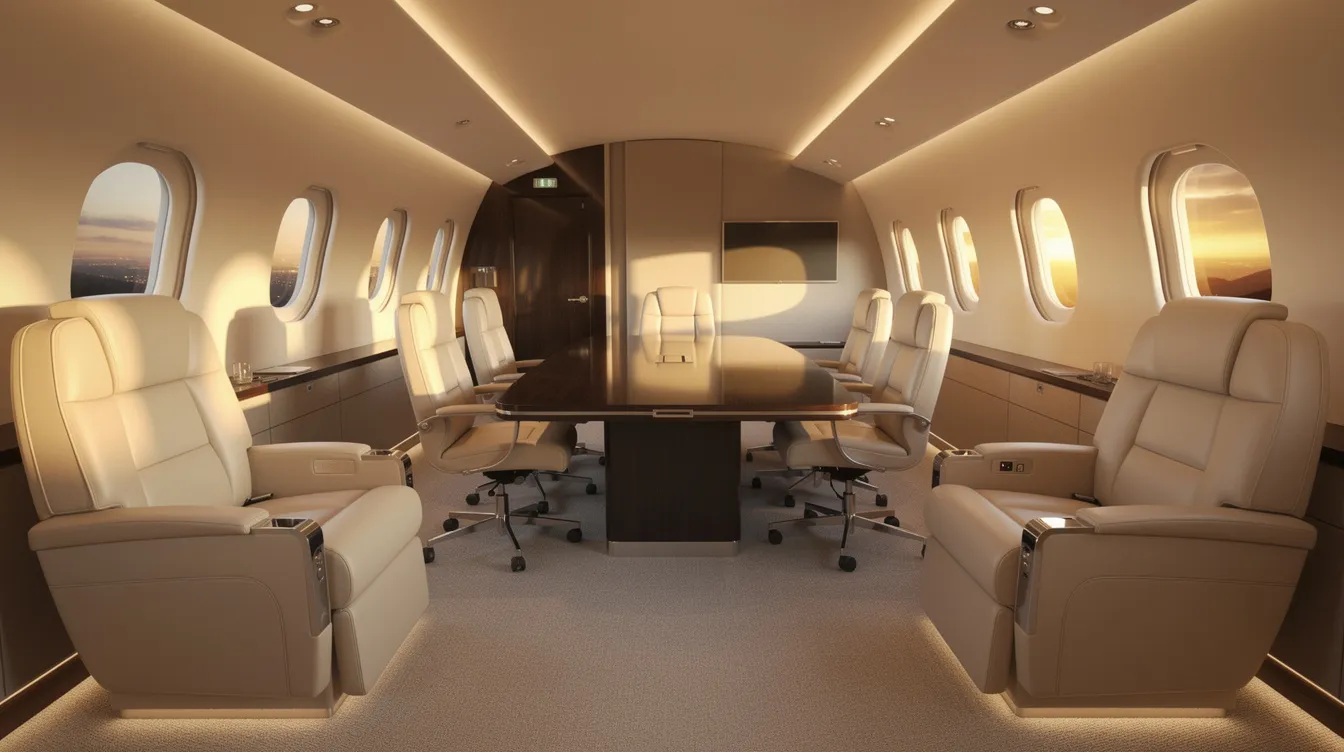
Narrow-body BBJs are based on the 737 and 737 MAX. Core models include the BBJ (737-700 base), BBJ2 (737-800), BBJ3 (737-900), and BBJ MAX variants. A 737-based BBJ typically accommodates 15–25 passengers comfortably, reconfiguring what would be roughly 180 economy seats into private bedrooms, showers, conference tables, and lounges. BBJ aircraft can include master bedrooms and lounges as standard features in most configurations. With auxiliary fuel tanks, ranges exceed 6,000 nmi - enough for nonstop flights like New York–London or Los Angeles–Tokyo.
Wide-body BBJ variants based on the 787 and 777X offer enormous cabin floor area. A BBJ 787-8 provides roughly 2,300 square feet of cabin space, while the BBJ 777X stretches that to about 3,690 square feet - room for multiple suites, offices, dining rooms, and staff quarters. These aircraft often serve heads of state, royal families, and ultra-luxury use cases requiring maximum personal space and security. Operating costs for wide-body BBJ variants run roughly $10,300–$11,500 per hour.
Operationally, BBJs need longer runways and large international airports. Boeing aircraft require longer runways and full-service terminals compared to typical private jets. Charter lead times are longer, and availability is far more limited than for light jets or super midsize jets.
Jettly can source BBJ and large Boeing airliner charters for special events, government delegations, and corporate roadshows, while often recommending smaller private jets for routine business travel.
The gap between sitting in a standard Boeing airliner seat and flying on a private jet comes down to density, privacy, and control over the experience.
On a commercial Boeing flight, economy cabins pack passengers into six-abreast seating on a 737 or up to ten-abreast on a 777. Seat pitch runs 30–32 inches, and personal space is limited. Premium cabins on wide-bodies offer lie-flat seats, better catering, and more privacy - but still within a mass-market framework. Most travelers experience Boeing aircraft this way.
Private jets typically seat 12–19 passengers depending on category, from light jets to large cabin models. Fewer people means quieter cabins, bespoke catering, flexible departure times, and access to thousands of airports that airliners cannot reach, especially when using an airport locator tool for private aviation to match aircraft with suitable airfields. Even though a Boeing airliner has far more total cabin width and floor area, a private jet feels more spacious per person because of low-density interiors.
Boeing Business Jets sit in between as a hybrid. A 737 BBJ outfitted with a master bedroom, shower, meeting room, and lounge delivers a radically different feel from a standard 737 cabin. Wide-body BBJ variants rival luxury residences for groups of 25–50 passengers, offering an ultra-luxury cabin experience at airliner scale, while private jet membership programs can make accessing these and smaller jets more predictable from a budgeting and planning standpoint.
Practical examples: a corporate group moving 80–200 employees to a conference might charter a 737 or 777 to keep costs manageable, while smaller groups may weigh shared charter flights versus full charters to balance privacy and cost. A small leadership team of five might choose a super midsize or large private jet through Jettly for flexible city pairs and shorter total travel time. The answer depends on group size, budget, and how much the cabin experience matters.
All Boeing commercial aircraft must meet strict regulatory standards set by the FAA and EASA. Boeing aircraft must meet strict FAA regulatory standards covering structural integrity, system redundancy, fire suppression, and evacuation performance. Boeing commercial aircraft support multiple evacuation exits for safety, particularly on larger aircraft where full evacuation must be completed within 90 seconds.
Larger aircraft like Boeing require rigorous maintenance schedules, with airworthiness directives, recurring inspections, and pilot training requirements that airlines and charter operators must follow. Boeing's flight-deck commonality reduces training needs for pilots transitioning between different aircraft families - a practical benefit for operators running mixed fleets. Boeing's control yokes provide pilots with a tactile flying experience distinct from sidestick designs used by some competitors, and these same safety and training expectations apply when comparing leading private jet charter companies for supplemental lift.
Technology has evolved significantly across generations. The 777 and 787 introduced fly-by-wire and advanced flight decks. Efficiency improvements from new engines - LEAP-1B on the 737 MAX, GEnx and Trent 1000 on the 787, GE9X on the 777X - have reduced fuel consumption and carbon emissions substantially. The 787 Dreamliner's composite construction cuts emissions significantly compared to all-aluminum predecessors, and many travelers pair these advances with modern private charter aircraft options when missions call for smaller jets.
Boeing aims for a 50% reduction in carbon emissions by 2050. Sustainable aviation fuel can reduce lifecycle emissions by 80%. Boeing's ecoDemonstrator program tests sustainable aviation technologies in real flight conditions, accelerating adoption of cleaner fuels and operational practices. Industry-wide efforts around sustainable aviation fuel and route optimization continue to push commercial and private aviation toward lower environmental impact, while travelers can use guides to affordable private jet charter costs to align budgets with more efficient aircraft choices.
Private jet operators and platforms like Jettly increasingly use offset programs, modern aircraft selection, and route optimization to reduce carbon emissions while maintaining the flexibility and time savings that private aviation delivers, and some also enable crowdsourced and shared private flights to improve aircraft utilization.
Choosing the right aircraft depends on group size, route distance, schedule flexibility, airport access, and desired cabin experience. There is no single right answer - only the best fit for a given mission.
Boeing commercial airplanes work best when travelers prioritize per-seat cost on busy routes or compare full-airliner charter against the flexible options offered by a wide range of private and charter airlines.
Flying scheduled routes where per-seat cost matters most
Chartering a full 737, 767, or 777 for 80–300+ passengers - sports teams, film crews, tour groups, or corporate events
Route demand is high, and the destination has full-service airports
Boeing Business Jets fit where: flyers want airliner-sized cabins but prefer the predictable pricing and perks of programs such as jet cards and corporate jet card solutions.
Groups of 15–50 need long-range, secure, private travel with on-board meeting and sleeping facilities.
VIP aircraft requirements call for nonstop intercontinental capability and large cabin layouts
Smaller private jets win when travelers compare fractional programs with NetJets alternatives like Jettly and decide that on-demand flexibility and lower overhead suit their flying patterns better.
Small teams of 2–12 passengers need time-sensitive travel
Private jets operate from thousands of smaller airfields that Boeing airliners cannot access due to runway length
Avoiding hubs, security lines, and fixed schedules delivers increased capacity, productivity, and real-time time savings
Real-world examples:
A European football club charters a 737 or 767 for an away match - moving 100+ people plus equipment on a single aircraft.
A CEO and four executives choose a midsize jet for a multi-city U.S. roadshow, accessing smaller airfields near each meeting, and may use strategies for getting a seat on a private jet easily if they don’t need the whole aircraft.
A music tour books a wide-body Boeing for crew and equipment on major legs, plus smaller private jets for lead talent - all arranged through Jettly, with some team members opting to buy individual seats on private jets on select segments.
Jettly is a digital private aviation marketplace with access to more than 20,000 aircraft worldwide - from turboprops and light jets to large Boeing airliners and Boeing Business Jets, effectively giving travelers on-demand access to a broad catalog of private charter aircraft.
Customers enter route, dates, passenger count, and preferences. The platform returns instant or rapid pricing across multiple aircraft categories, letting users see trade-offs between cost, aircraft size, range, and cabin experience side by side. Transparent pricing models include on-demand charter and membership options.
Jettly covers major hubs used by Boeing commercial aircraft and thousands of smaller airports better suited to business jets. The platform works only with certified operators meeting FAA, EASA, or equivalent national standards - ensuring maintenance, crew training, and operational safety whether customers book a light jet or a full Boeing aircraft charter, similar to how featured operators like Dexter Air Taxi private jet services are positioned within its network.
Ready to explore your options? Browse aircraft, explore region-specific services such as private jet charter in Kolkata, West Bengal, or request a quote at Jettly.
Yes, entire Boeing commercial airplanes such as the 737, 767, or 777 can be chartered for private use, typically by corporations, sports teams, or large groups. Platforms like Jettly facilitate these charters, providing access to certified operators and handling logistics.
Boeing Business Jets (BBJs) are customized versions of commercial Boeing airliners, offering much larger cabins with amenities like bedrooms, lounges, and conference rooms. They accommodate 15–50 passengers, compared to 12–19 on typical private jets, and require larger airports and budgets.
Both Boeing commercial aircraft and private jets operate under strict regulatory standards with rigorous maintenance and crew training. Larger Boeing aircraft have multiple evacuation exits and advanced safety systems, but well-maintained private jets meet equally high safety benchmarks.
Boeing commercial planes are cost-effective for large groups and long-haul routes, offering high capacity and extensive range. Private jets provide greater flexibility, privacy, access to smaller airports, and time savings for smaller groups.
Jettly’s platform offers instant pricing and availability across a wide range of aircraft, from light jets to Boeing airliners and BBJs. Travelers can compare cost, capacity, range, and cabin experience side by side to choose the best option for their mission.
Boeing aims to reduce carbon emissions by 50% by 2050 and uses technologies like LEAP-1B engines and composite materials to improve fuel efficiency. The ecoDemonstrator program tests sustainable aviation fuels and cleaner technologies.
Yes, BBJs equipped with auxiliary fuel tanks can fly nonstop for over 6,000 nautical miles, enabling nonstop intercontinental travel such as New York to London or Los Angeles to Tokyo.
Boeing currently produces the 737 MAX family, 767 (mainly cargo and military tanker), 777 and 777X, 787 Dreamliner, and the 747-8 freighter. Passenger 747-8 production ended in 2023.
BBJs offer significantly more cabin space, often thousands of square feet, allowing for multiple suites, offices, and lounges. Traditional private jets prioritize fewer passengers with more personalized space but have smaller overall cabins.
Boeing commercial aircraft capacities range from about 160 passengers on smaller models like the 737 MAX to over 400 on wide-body jets like the 747-8 and 777X.
Boeing commercial airplanes - from the 737 MAX to the 787 Dreamliner and wide-body BBJ variants - continue to define modern air travel. They keep evolving in commercial aircraft size, sustainable aviation technologies, and cabin experience. Boeing aircraft remain central to how airlines, cargo operators, and private aviation customers move across the world.
The key takeaway: larger aircraft and Boeing airliners are ideal for high-capacity or long-haul missions, while typical private jets and BBJs provide superior privacy, flexibility, and personalized cabin experience for smaller groups. Matching the right aircraft to the mission - whether that means a chartered Boeing airliner for 200 people or a midsize jet for five - saves time, money, and stress.
Ready to experience private travel on your terms? Compare Boeing aircraft options with private jets or request a quote at https://www.jettly.com.
Share this post:
Jeff Ryan Serevilla
Oct 31, 2026
|
5
min read
Discover tips and trends in the industry.
5
min read
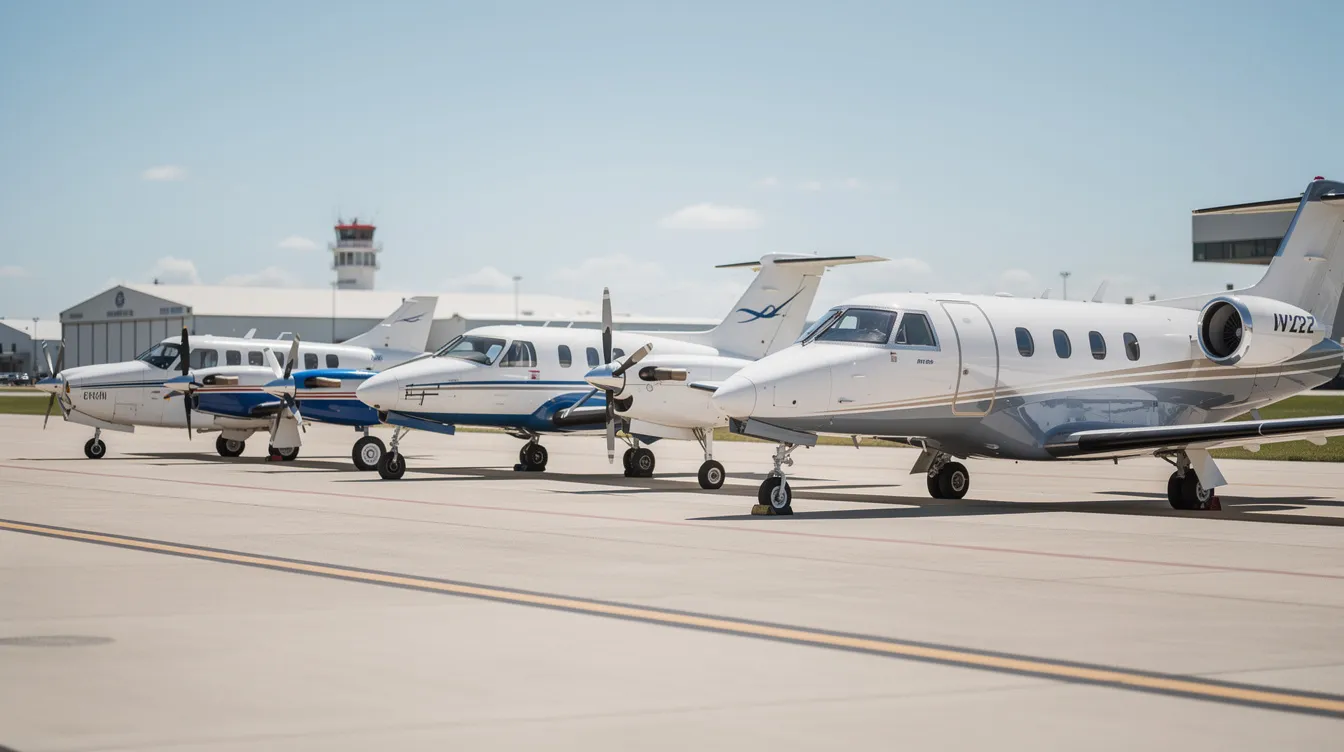
Best Small Aircraft In 2026: Top Choices For Pilots And Private Travelers
Choosing the best small aircraft in 2026 involves evaluating speed, range, safety, and cost across various categories, including piston singles, turboprops, and light jets. Notable models like the Cessna 172 Skyhawk and Cirrus SR22T cater to different needs, from training to personal travel. With advancements in technology and fuel efficiency, modern small aircraft offer enhanced safety and comfort for pilots and passengers alike.
Read More
5
min read
Cessna 150 Insurance Cost Guide for 2026
This guide provides an overview of Cessna 150 insurance costs for 2026, detailing typical premiums, coverage types, and influencing factors. With annual costs ranging from $500 to $1,000, the Cessna 150 is noted for its affordability and favorable claims history, making it a popular choice among private aircraft owners.
Read MoreStay updated with our latest insights and tips to elevate your journey with us.
MEMBERSHIPS AND ASSOCIATIONS



Disclaimer: Jettly operates as a charter broker, offering access to a global digital jet charter marketplace. Jettly is not a direct air carrier and does not own or operate aircraft. All advertised flights are conducted by third-party air carriers that are fully licensed and hold the appropriate Part 135 or Part 121 certifications issued by the Federal Aviation Administration (FAA) or equivalent regulatory authorities under U.S. or foreign law. Jettly complies fully with the U.S. Department of Transportation's Part 295 and Part 298 Charter Broker regulations. Jettly does not carry additional liability insurance. Passengers are covered by aircraft operator insurance. TICO: 50023770


