



Login
Get Instant Pricing On 23,000+ Aircraft

>
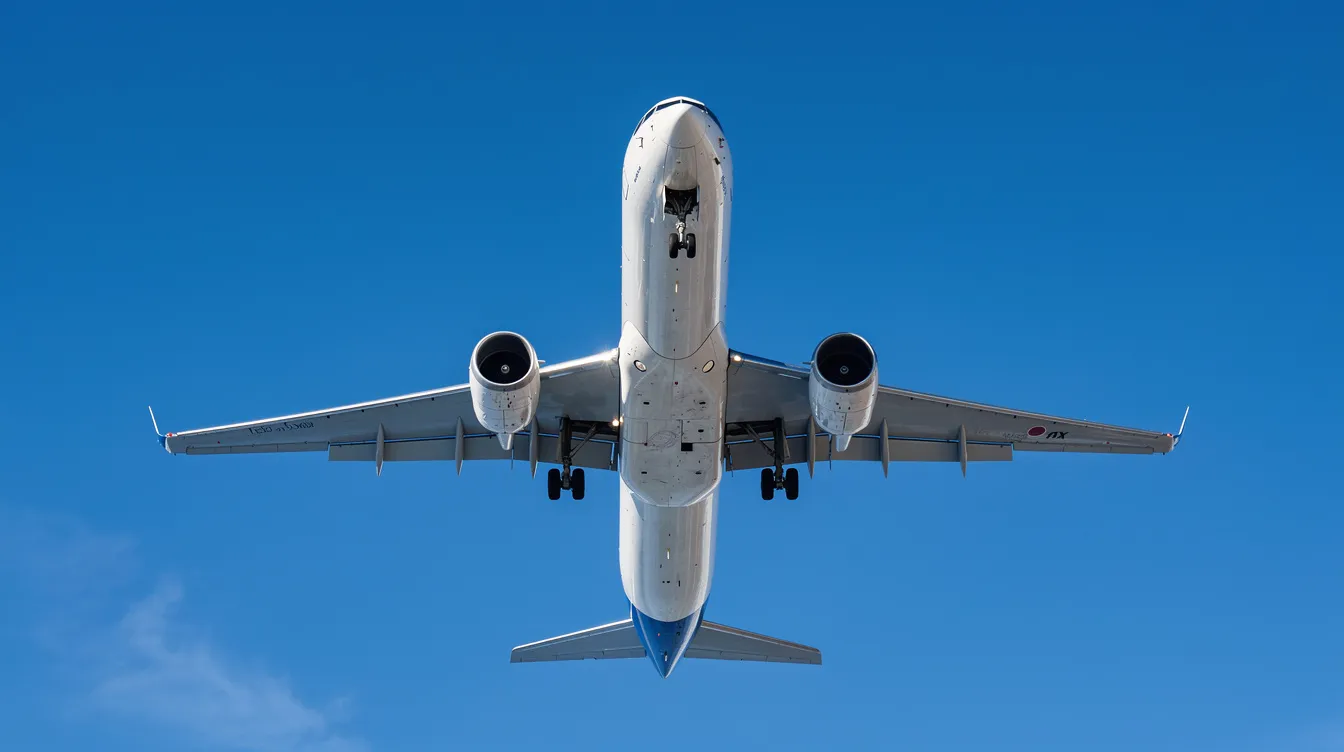
The Boeing 757 top speed is defined by a maximum operating Mach number (MMO) of about Mach 0.86, which translates to roughly 568–570 knots true airspeed - or over 650 mph - at cruise altitude. In everyday airline and charter operations, the aircraft typically cruises near Mach 0.80–0.82, corresponding to about 461 knots (531 mph).
The Boeing 757-200 and 757-300 share the same MMO of Mach 0.86. Real-world speed differences between the two aircraft come down to weight, mission profile, and operator procedures rather than airframe limits.
Powered by two high-bypass turbofans, the 757 climbs faster and accelerates more aggressively than most narrow-body peers like the Boeing 737 and Airbus A320, contributing to its "rocket ship" reputation among pilots and frequent flyers.
Strong runway performance allows the aircraft to operate from smaller airports and challenging runways, supporting both commercial service and cargo operations around the world, including busy hubs where private jet charter in Atlanta and similar markets connect with scheduled airline traffic.
The Boeing 757-200 has a maximum range of 3,900 nautical miles, enabling it to fly intercontinental routes, including transatlantic services from the U.S. East Coast to Europe.
Platforms like Jettly can arrange Boeing 757 charter flights for large groups that need both high cruising speed and strong field performance on a single aircraft, offering a level of service comparable to leading private jet charter companies.
The Boeing 757 is a narrow-body twin-engine jet that entered commercial service on January 1, 1983. Originally designed for short-haul domestic flights and medium-haul routes, it quickly proved capable enough for transatlantic routes - a role few single-aisle aircraft have ever filled.
When people search for "Boeing 757 top speed," they're usually asking about two numbers: the maximum Mach operating limit (MMO) around Mach 0.86, and the typical cruising speed near Mach 0.80–0.82. The maximum service ceiling of the Boeing 757 is up to 42,000 feet.
This article covers the performance specifications behind those figures, how the 757 compares to other aircraft, which airlines still fly it, and what its speed profile means for group charter travelers.
Boeing developed the 757 in the late 1970s as a direct replacement for the aging Boeing 727 tri-jet. Rising fuel costs, stringent noise regulations, and airline demand for lower operating costs drove the program from day one.
The program launched in 1978. Boeing built the prototype at its Renton, Washington facility, rolling it out on 13 January 1982. The maiden flight took place on 19 February 1982, with the aircraft demonstrating the handling characteristics and speed margins Boeing had promised.
One core design priority was improved fuel efficiency over older tri-jets without sacrificing cruise speed. The 757 was developed alongside the Boeing 767, sharing a common flight deck philosophy. The 757's flight deck uses six Rockwell Collins CRT screens - a major leap in avionics systems for the era. But while the 767 targeted wide-body aircraft missions, Boeing optimized the 757 as a narrow-body performer for dense domestic routes and, eventually, transatlantic services.
Over 1,050 Boeing 757s were built from 1981 to 2004. The aircraft entered service with Eastern Air Lines as the launch customer, and it quickly earned a reputation among many airlines for punching above its weight in both speed and range capabilities.
The performance specifications that matter most for speed center on Mach limits, engine thrust, and altitude capability. Here are the key numbers for the Boeing 757-200 and 757-300.
The maximum operating Mach number is about Mach 0.86. Most conventional commercial jetliners cruise at Mach 0.78 to Mach 0.85 for fuel efficiency, and the 757 sits comfortably in the upper half of that range. Its typical cruise speed is 461 knots (531 mph) at altitudes between FL350 and FL390.
The Boeing 757-200 has a maximum range of approximately 3,900 nautical miles in passenger service. ETOPS certification allows the 757 to fly over oceans, which opened up the transatlantic routes that became a signature part of the aircraft's versatility. The maximum takeoff weight for the 757-200 is 255,000 pounds, and the aircraft's wingspan is 124 feet 10 inches.
The service ceiling sits around 42,000 feet, with climb rates that regularly exceed 5,000 feet per minute under favorable conditions. That combination of altitude capability and climb speed means the 757 reaches efficient cruise altitude faster than most competitors, an advantage that matters on long domestic legs where travelers might otherwise compare different cross-country aircraft options.
Two engine options power the type: the Rolls-Royce RB211-535E4 series and the Pratt & Whitney PW2000 family. Thrust ratings range from approximately 37,000 to 43,000 pounds per engine depending on variant. Both engine options deliver similar cruise performance. The choice between them affects maintenance costs, dispatch reliability, and noise output - but not the published MMO.
MMO stands for maximum operating Mach number. It represents the fastest Mach the aircraft is certified to fly in clean configuration (gear up, flaps retracted). For the Boeing 757, that limit is Mach 0.86. Airlines rarely fly continuously at this limit because doing so would spike fuel burn, accelerate engine and airframe wear, and leave no margin for turbulence encounters.
In practice, the typical cruising speed of the Boeing 757 is around Mach 0.80. Many operators schedule cruise between Mach 0.80 and Mach 0.82, depending on route length, wind conditions, and airline cost-index settings. Pilots on forums and industry channels confirm that domestic sectors often see Mach 0.78–0.80, while longer routes may push toward Mach 0.82–0.83.
Weight, cruise altitude, and outside air temperature all influence whether a 757 flies at the lower or upper end of its cruise range. A lighter load at higher altitude allows the aircraft to cruise faster for the same fuel burn. Cold air at altitude raises the local speed of sound, changing the true airspeed for a given Mach number.
For most passengers, the difference between Mach 0.80 and Mach 0.86 is imperceptible in the cabin. But for airline schedulers and fuel planners, even Mach 0.01 can shift block times and fuel costs across a full day of operations.
Real-world 757 speeds depend more on airline policy and ATC instructions than on what the airframe can theoretically achieve.
On domestic U.S. routes, carriers like Delta Air Lines and American Airlines have typically flown the 757 at Mach 0.80–0.82 at cruise altitudes between FL350 and FL390. These speeds balance schedule needs against fuel burn and arrive at a sweet spot that dispatchers and pilots agree on before every flight.
On longer routes - transcontinental legs or transatlantic crossings - commercial operators may push closer to Mach 0.82–0.83 to maintain schedule integrity or recover from minor departure delays. United Airlines, for instance, used 757s on demanding East Coast-to-Europe sectors where even small speed adjustments could protect connections at the destination.
During descent and approach, indicated airspeed limits, noise abatement procedures, and ATC spacing control the speed profile. The aircraft's capability is not the limiting factor; regulatory and procedural constraints are. VMO (maximum operating indicated airspeed) is 350 knots calibrated, and with landing gear extended, the limit drops to 270 knots or Mach 0.82.
Many passengers who have flown the 757 describe the takeoff as noticeably more aggressive than on types like the 737 or Airbus A320. There's a reason for that perception.
The Boeing 757 has powerful engines relative to its weight, especially on shorter domestic routes where fuel load and passenger count are well below maximum capacity. Under those conditions, the thrust-to-weight ratio is high enough to produce climb rates exceeding 5,000 feet per minute - a figure more commonly associated with business jets than narrow-body airliners.
Most airlines use reduced-thrust takeoff settings to extend engine service life and cut maintenance costs. The aircraft only shows its full performance from short runways or hot and high conditions - airports like Denver, Mexico City, or those at elevation where thinner air demands more from the engines. In those environments, the 757's surplus thrust provides real operational margin that smaller aircraft simply do not have.
Faster climb to cruise altitude also delivers a secondary benefit: the aircraft spends less time in denser, drag-heavy lower altitudes. That translates directly to improved fuel efficiency and better schedule reliability, especially on routes where ATC congestion below FL300 can slow competing types.
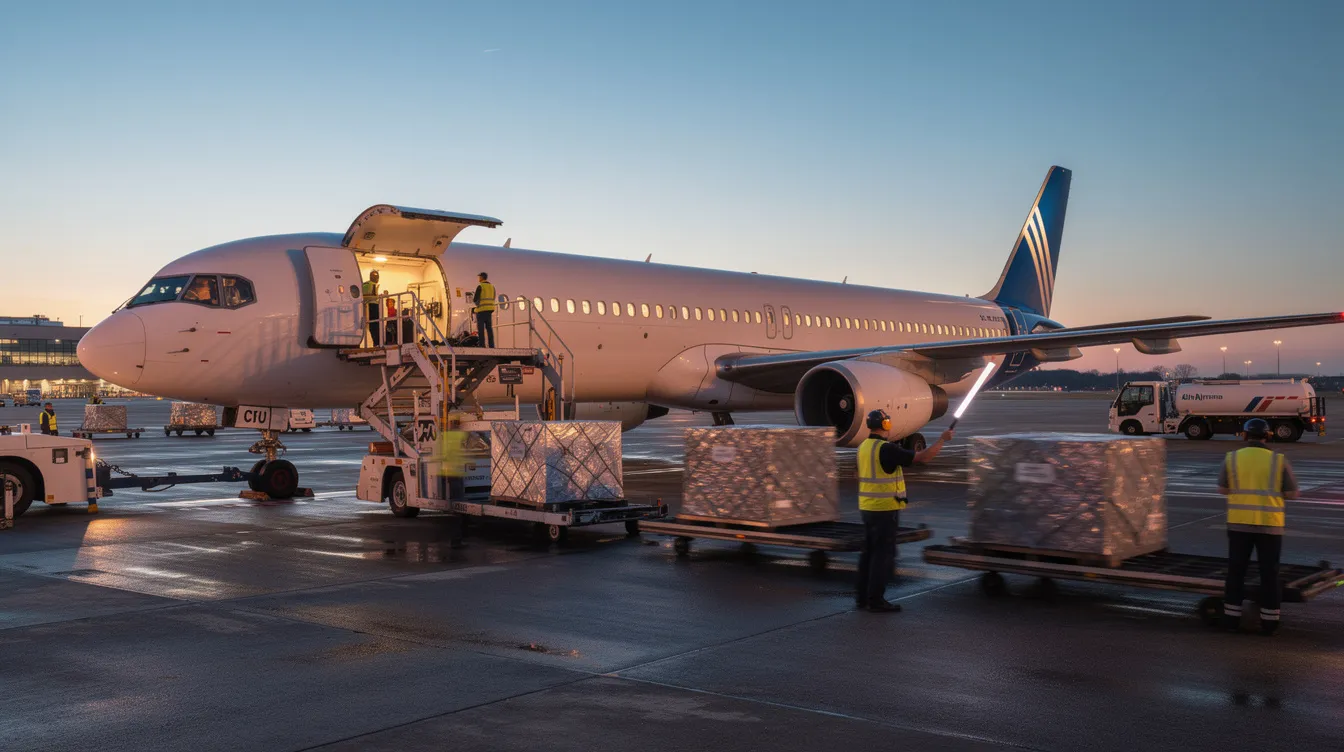
The Boeing 757 is a workhorse in cargo operations, especially among express freight networks that depend on overnight delivery schedules, sitting alongside larger wide-body freighters such as the Boeing 767-300ER on trunk routes.
UPS Airlines, FedEx Express, and DHL all operate substantial fleets of 757 freighters and converted passenger-to-freighter aircraft. For cargo carriers, the combination of cruise speed, payload capacity, and the ability to serve secondary airports near population centers makes the 757 hard to replace.
Freighter variants typically cruise at the same Mach numbers as passenger versions - around Mach 0.80–0.82. That consistency allows cargo operators to synchronize 757 schedules with larger aircraft on time-critical sorting networks. When a package needs to move from a regional hub to a main sorting facility by 2 AM, the 757's speed and payload make it the right tool.
The 757-200PF freighter carries a maximum payload with a range of approximately 3,150 nautical miles at full load. Strong performance from smaller or secondary airports means operators can place sorting hubs closer to customers while still maintaining high cruise speeds on trunk routes.
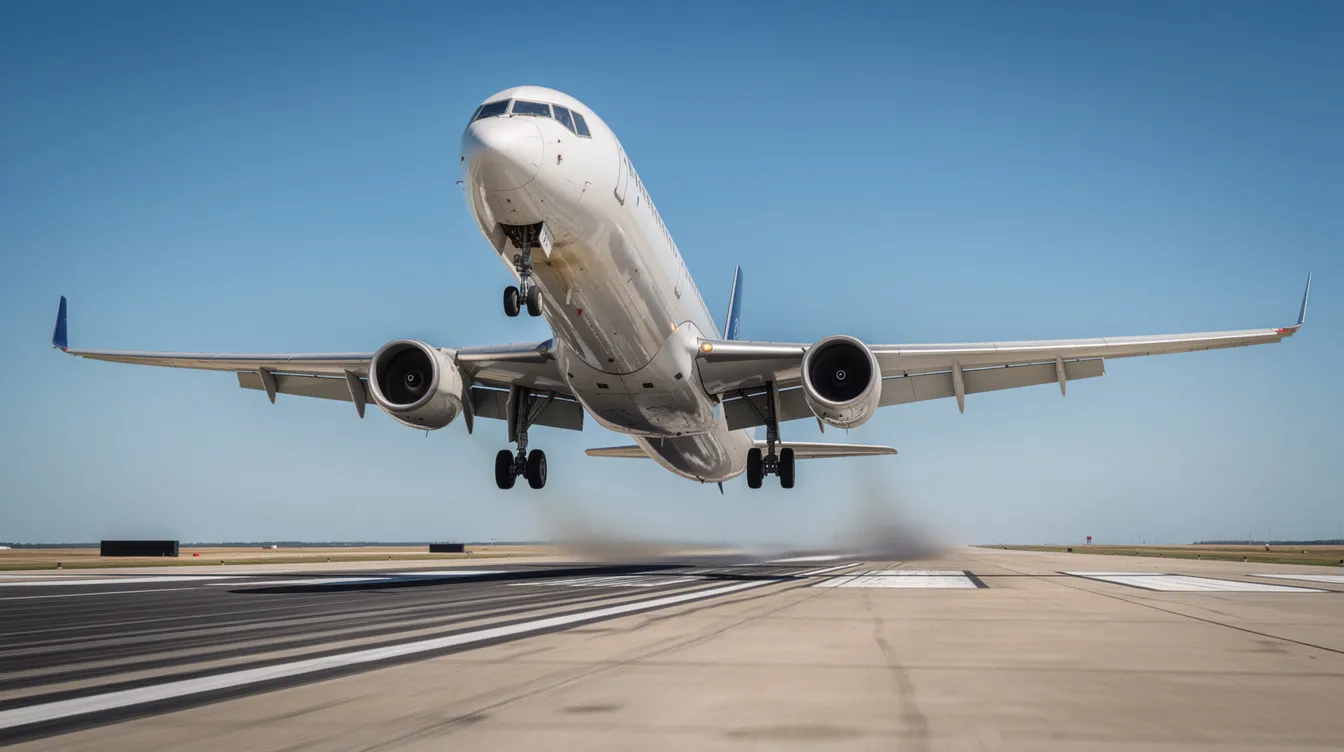
Both the Boeing 757-200 and the 757-300 share the same MMO of Mach 0.86. The differences between the two aircraft are about capacity and payload-range trade-offs, not raw top speed.
The 757-200 is shorter, generally lighter for a given mission, and feels more agile in climb and acceleration. Pilots sometimes describe it as "sporty" compared to other narrow-body types. The 757-200 can carry up to 239 passengers in a single-class layout and reaches a maximum range of 3,900 nautical miles.
The 757-300 variant is 23.4 feet longer than the 757-200. That stretch adds room for more passengers - up to about 280–295 in high-density layouts - and increases cargo volume. However, the added weight can moderate climb performance when the aircraft is fully loaded, and the 757-300 variant has a maximum range of 3,395 nautical miles.
In terms of cruising speed, both variants operate at the same Mach numbers. The differences that pilots and dispatchers notice show up in climb rate, takeoff field length, and how far the aircraft can fly with a full cabin - not in how fast it goes once it reaches cruise altitude.
The 757 has long held a reputation as a fast narrow-body, and the numbers back it up.
Single-aisle aircraft like the Boeing 737 typically cruise at Mach 0.78 to Mach 0.80. The Airbus A320 family operates in a similar range. By contrast, airlines often schedule the 757 at Mach 0.80–0.82, giving it a small but consistent speed edge on hub-to-hub routes where every minute counts.
Modern wide-body jets typically cruise at Mach 0.85, but they operate in a completely different weight and capacity class, often built by leading private plane manufacturers that also dominate the business aviation market. At the other end of the spectrum, the Concorde cruised at Mach 2.04 - a record no current commercial aircraft approaches. The 757 sits firmly in the practical sweet spot for subsonic commercial aviation.
Newer designs like the A321neo and 737 MAX can reach similar indicated Mach numbers (the 737 MAX has an MMO around Mach 0.84). But the 757 still stands out for its combination of cruise speed with strong takeoff performance from constrained or high-altitude fields - a pairing that newer narrow-body types have not fully replicated, even when compared to long-range wide-bodies like the Boeing 777-200 LR.
The Boeing 757 features a supercritical wing design, a technology that was relatively advanced when the aircraft was conceived in the late 1970s. This wing profile delays the onset of shock waves at high subsonic speeds, allowing the aircraft to cruise efficiently near Mach 0.80 without the steep drag penalties that older straight or moderately swept wings incurred.
The wing sweep angle is approximately 25 degrees. Combined with the supercritical airfoil shape, this helps reduce drag near Mach 0.8 and above. The fuselage width was kept narrow - consistent with six-abreast seating - to minimize frontal area and further reduce drag.
Boeing used improved aluminum alloys and limited composite materials for the era, which helped keep structural weight down. These aerodynamic improvements and material choices gave the 757 a lower drag profile than the 727 it replaced, directly supporting both higher cruise speed and better fuel efficiency.
Later additions like blended winglets, certified in 2005, further helped reduce drag and improve fuel burn. Winglets do not raise the published MMO, but they extend range and cut emissions at the same cruise Mach. Many operators retrofitted winglets specifically to extract more efficiency from aging airframes.
The 757's speed capability is closely linked to its strong runway performance. The aircraft's high-lift devices and powerful engines allow operations from smaller airports with shorter runways - fields where larger aircraft simply cannot operate safely at full weight, while newer narrow-body types like the Boeing 737-800 offer a more modern benchmark for short- to medium-haul performance.
Takeoff field length for the 757-200 at maximum takeoff weight is approximately 1,980 meters (about 6,500 feet) at sea level under standard conditions. That figure is shorter than what many wide-body jets require and competitive with newer narrow-body types, even though the 757 carries substantially more thrust per unit of weight.
The aircraft can operate from short runways and high-altitude airports - a fact that has made it popular at challenging airports in mountainous regions and warm climates, as well as major energy and business centers that offer extensive private jet charter in Houston. Operators have used the 757 at fields with aircraft size restrictions that would exclude wide-body jets, while still needing an aircraft capable of flying longer routes after departure.
Runway accelerate-stop distances and local noise rules often dictate takeoff speed profiles more than the aircraft's theoretical capability. At noise-sensitive secondary airports, operators may accept reduced takeoff weights and shorter stage lengths in exchange for community access - a trade-off the 757 handles well thanks to its range flexibility.
|
Specification |
Boeing 757-200 |
Boeing 757-300 |
|---|---|---|
|
Maximum Operating Mach (MMO) |
Mach 0.86 |
Mach 0.86 |
|
Typical Cruise Speed |
Mach 0.80–0.82 (approx. 461 kt) |
Mach 0.80–0.82 (approx. 461 kt) |
|
Maximum Range |
3,900 nautical miles |
3,395 nautical miles |
|
Maximum Takeoff Weight (MTOW) |
255,000 pounds (115,666 kg) |
272,500 pounds (123,600 kg) |
|
Passenger Capacity (max) |
Up to 239 (single-class) |
Up to 295 (high-density) |
|
Length |
155 feet 3 inches (47.3 m) |
178 feet 7 inches (54.5 m) |
|
Wingspan |
124 feet 10 inches (38 m) |
124 feet 10 inches (38 m) |
|
Climb Rate |
Over 5,000 feet per minute |
Slightly lower when fully loaded |
|
Takeoff Field Length |
Approx. 6,500 feet (1,980 m) |
Longer due to weight and size |
This comparison highlights the similar top speed capabilities of both variants, while illustrating differences in range, capacity, and operational performance that affect mission planning and charter suitability.
More than 1,050 Boeing 757s were produced during the program's run. Several hundred remain active in the mid-2020s across passenger, cargo, and charter roles, often flying alongside other high-capacity narrow bodies such as the Boeing 737-800 private charter option.
Delta Air Lines operates approximately 98 Boeing 757s as of 2023, making it one of the largest remaining 757 operators. Delta uses the type on dense domestic legs - New York to Los Angeles, Atlanta to San Francisco - and on select transatlantic routes where the 757's range and speed fill a gap between narrow-body and wide-body jets.
American Airlines was another historic major operator, flying more than 140 aircraft at peak. The airline retired its 757 fleet by 2020 as new aircraft like the A321neo and 737 MAX took over many domestic missions. Continental Airlines and Northwest Airlines also flew large fleets before merging with other carriers.
British Airways used the 757 on shorter European routes, and Shanghai Airlines operated the Boeing 757-200 on domestic and regional routes across China, leveraging the aircraft's speed and hot-and-high capability in challenging environments. The Mexican Air Force also operates 757 variants for government transport - a reminder of the aircraft's versatility beyond airline service.
The longest commercial route flown by a 757 was Newark to Berlin at over 4,000 nautical miles. That sector stretched the aircraft's range capabilities to their practical limit and demonstrated that it could fly intercontinental routes typically reserved for wide-body aircraft - a remarkable feat for a narrow-body.
Eastern Air Lines was the first carrier and launch customer to operate the type, while United Airlines and British Airways were among the early adopters that proved the 757 on both domestic and international networks. The aircraft's service life has exceeded what many expected, with some airframes passing 35 years of active duty.
Higher performance brings specific operational considerations. The most notable for the 757 involves wake turbulence.
The Boeing 757 generates stronger wake vortices than its "Large" weight category would suggest. The FAA and other regulators require increased separation behind a 757, treating it more cautiously than similarly sized aircraft during approach and departure. This affects trailing aircraft spacing but does not impose additional speed limits on the 757 itself.
Approach speed, flap configuration, and atmospheric conditions all influence wake intensity. Pilots of smaller aircraft following a 757 are trained to maintain awareness of these vortices and adjust their flight paths accordingly.
Modern ATC procedures, improved pilot training, and standardized separation minima have made wake-related incidents extremely rare. The 757's strong handling characteristics and responsive flight controls also give its own crew excellent authority during approach and landing phases.
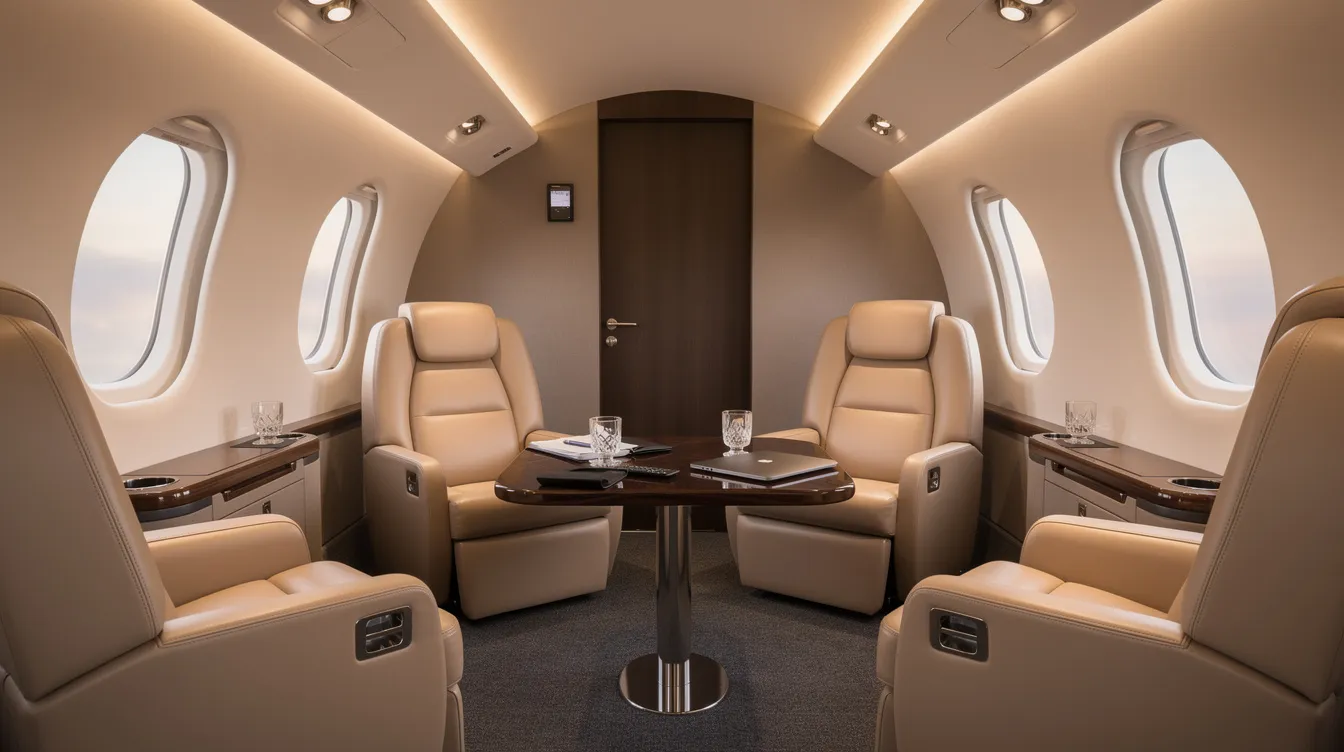
While Boeing designed the 757 for airline use, a growing number of aircraft now fly in VIP, corporate, and charter configurations. The Boeing 757 can carry 50 to 100 passengers in VIP configurations - far more than any conventional business jet.
Typical VIP charter layouts replace the standard 180–239 airline seats with 50–100 wider seats, meeting areas, lounges, and custom galleys, often paired with premium services such as in-flight catering for private jets. Chartered 757s often feature bespoke interiors and catering tailored to the client's preferences, creating a flying conference room or lounge rather than an airliner cabin.
For sports teams, touring artists, and corporate roadshows, the 757's speed, range, and cargo hold space make it ideal for multi-city schedules with tight turnarounds, especially when combined with flexible private jet memberships that streamline frequent charter use. The aircraft is suitable for large group travel and special missions where keeping an entire party on one aircraft simplifies logistics and saves hours of coordination.
Jettly's platform can source 757s for specific large-group missions where traveling together on a single aircraft adds real value compared to splitting across multiple smaller jets, especially for travelers comparing it to a NetJets alternative for flying private.
The decision between a 757-class charter and smaller aircraft depends on group size, route, and total door-to-door travel time.
Light and midsize jets carry 4–8 passengers. Large-cabin jets handle 10–16, and travelers choosing an aircraft for long domestic legs can apply many of the same range and speed considerations found in guides to the best cross-country planes. For groups of 40–100+ travelers, the 757 is one of few single-aircraft options that delivers both speed and capacity, often compared with offerings from top private jet charter companies in terms of service and flexibility. A 757 eliminates the need to coordinate arrival times across multiple smaller aircraft.
In pure cruise speed terms, many long-range business jets can match or slightly exceed the 757's Mach 0.80–0.82. A Gulfstream G700 or Bombardier Global 7500, for example, cruises near Mach 0.85. But these larger aircraft carry only 13–19 passengers. The 757 wins decisively on capacity, baggage volume, and per-seat cost when groups are large enough to fill it.
The trade-offs are real. The 757 needs longer runways and larger airports than a midsize business jet. A Citation Latitude can land at airfields the 757 will never visit, reducing ground transportation time for passengers headed to remote destinations.
Jettly can present side-by-side options - one aircraft versus several - so clients can compare total travel time, per-seat cost, and airport access before committing, similar to how businesses weigh jet rentals vs. first-class tickets for corporate travel. For a 50-passenger corporate retreat, one 757 is almost always faster and more cost-effective than chartering five midsize jets.
The 757 is an older design, but it remains competitive on fuel burn per seat when operated properly. Flying near optimal cruise Mach and altitude - typically Mach 0.80 at FL370 or above - minimizes fuel burn per passenger, especially when the aircraft is well filled on busy routes.
Blended winglets and modern flight management systems have helped operators reduce drag and cut emissions while maintaining cruise speeds. Airlines and cargo carriers that invested in these upgrades report measurable improvements in fuel efficiency per sector.
For charter operations, fuel burn is a direct cost driver. Platforms like Jettly can factor in routing efficiency, aircraft configuration, and even carbon offset options when planning high-speed missions. Choosing the right-sized aircraft for the group from its extensive private charter aircraft network - rather than flying a half-empty 757 - is often the single biggest lever for reducing environmental impact.
This FAQ addresses common questions not fully covered in the main sections, focusing on practical details for travelers and aviation enthusiasts.
The Boeing 757 has a maximum operating speed of Mach 0.86, which equates to roughly 568–570 knots true airspeed at cruise altitude under standard atmospheric conditions. At approximately 30,000–35,000 feet, this corresponds to about 580 mph (935 km/h) in level flight. Structural and regulatory limits prevent airlines and charter operators from routinely exceeding this MMO. Flight crews typically cruise below this limit - usually around Mach 0.80 - to maintain a safety margin and optimize fuel efficiency. Aerospaceweb confirms these figures in its performance database.
Many long-range business jets - such as large-cabin Gulfstream or Bombardier models - cruise at Mach 0.80–0.85, which matches or slightly exceeds the 757's typical cruise Mach. The 757's advantage is not raw speed but the ability to carry a much larger group (50–100+ passengers in VIP layouts, or up to maximum capacity of 239 in single-class airline configuration) plus substantial cargo at competitive speeds. For small groups of 8–16 travelers, modern business jets often provide equal or better point-to-point times because they can use airports closer to the final destination. Jettly's charter cost estimator and jet card flight cost estimator can help compare options for any group size.
Strong jet-stream tailwinds on west-to-east transatlantic flights can push groundspeed well above 600 knots, even though airspeed and Mach stay within published limits. Headwinds do the opposite, reducing groundspeed and extending flight times despite the same indicated Mach. Dispatchers and pilots use forecast winds to select altitudes and routings that optimize overall time and fuel burn for each sector. This is why eastbound transatlantic flights are often 60–90 minutes shorter than the westbound return.
Flight crews must adhere to performance limits, air traffic control instructions, and fuel planning regardless of who is paying for the flight. They cannot simply fly at MMO on request. However, within safe and efficient margins, charter operators may adjust speed slightly to meet connection times or event schedules when fuel reserves allow. Clients booking through Jettly can discuss schedule priorities in advance so the operator can plan suitable cruise speeds and altitudes that balance time savings against fuel burn.
Only a limited number of Boeing 757s are available on the private charter market, typically through specialized brokers or digital platforms, and frequent flyers often pair these on-demand bookings with private jet memberships for predictable access and pricing. Jettly can search its global network to locate 757s configured for VIP, corporate shuttle, or high-density charter, providing instant or rapid pricing on request and guidance on affordable private jet charter options. Prospective clients should provide group size, route, date flexibility, and baggage or cargo needs so Jettly can confirm whether a 757 or a different aircraft category is the best match for the mission.
The Boeing 757's top speed of Mach 0.86, combined with typical cruise operations near Mach 0.80–0.82, places it among the fastest narrow-body jets ever produced. Its climb performance, runway flexibility, and range capabilities have kept it relevant for over four decades - a remarkable service life by any standard.
The aircraft's ability to serve smaller airports, support both commercial service and cargo operations, and carry large groups efficiently explains why several hundred 757s remain in active duty well into the 2020s. For charter users, the 757 is a compelling option when speed, capacity, and range all matter on complex itineraries - one aircraft doing the work that would otherwise require multiple new aircraft or compromises on schedule, while still fitting within broader private jet cost strategies for large groups.
Ready to explore your options for high-speed group travel? Learn more about Jettly's Boeing 757 and other charter aircraft, or request a quote at https://www.jettly.com.
Share this post:
Jay Franco Serevilla
Oct 27, 2026
|
5
min read
Discover tips and trends in the industry.
5
min read
Cleveland Hopkins International Airport (CLE) Guide
Cleveland Hopkins International Airport (CLE) is the primary airport for Northeast Ohio, located just nine miles from downtown Cleveland. With ongoing modernization efforts and a variety of airlines, CLE serves millions of passengers annually, offering both commercial and private jet charter options. This guide provides essential information on terminals, parking, security, and transportation to enhance your travel experience.
Read More
5
min read
Boeing 787 Dreamliner: Technology, Comfort, and Routes Redefined
The Boeing 787 Dreamliner revolutionizes long-haul travel with its advanced technology, fuel efficiency, and passenger comfort. With features like lower cabin altitude, higher humidity, and larger windows, it enhances the flying experience while opening over 550 new nonstop routes. The aircraft's innovative design and operational flexibility make it a game-changer in the aviation industry.
Read MoreStay updated with our latest insights and tips to elevate your journey with us.
MEMBERSHIPS AND ASSOCIATIONS



Disclaimer: Jettly operates as a charter broker, offering access to a global digital jet charter marketplace. Jettly is not a direct air carrier and does not own or operate aircraft. All advertised flights are conducted by third-party air carriers that are fully licensed and hold the appropriate Part 135 or Part 121 certifications issued by the Federal Aviation Administration (FAA) or equivalent regulatory authorities under U.S. or foreign law. Jettly complies fully with the U.S. Department of Transportation's Part 295 and Part 298 Charter Broker regulations. Jettly does not carry additional liability insurance. Passengers are covered by aircraft operator insurance. TICO: 50023770


