



Login
Get Instant Pricing On 23,000+ Aircraft

>
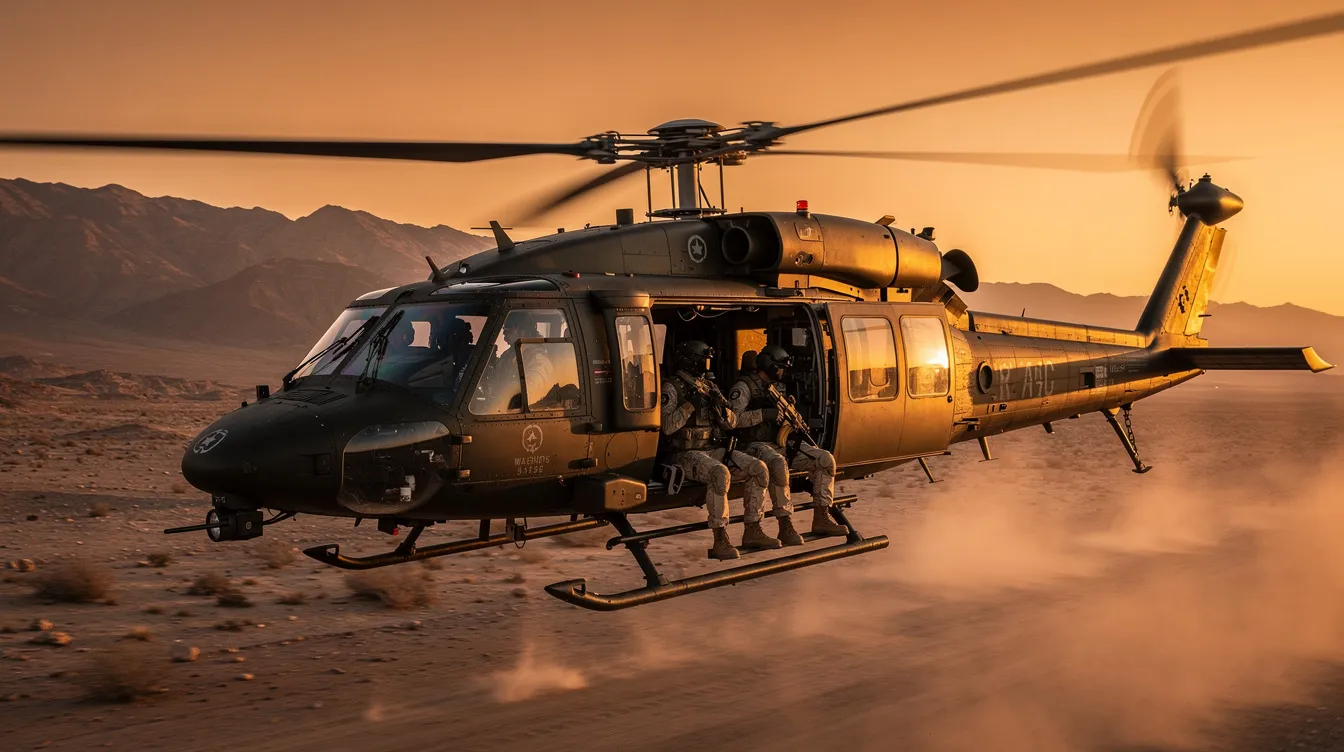
The UH-60 Black Hawk is a four-bladed, twin-engine, medium-lift military utility helicopter developed by Sikorsky and widely regarded as one of the most versatile helicopters ever built. Since entering service in June 1979, this multi-role aircraft has carried soldiers into combat, evacuated casualties under fire, and inserted special operations teams behind enemy lines.
For aviation enthusiasts, military historians, and private aviation travellers comparing rotary-wing capabilities, the Black Hawk is a useful reference point because its mix of range, lift, survivability, and mission flexibility helps explain both modern military helicopter design and the limits of civilian alternatives. Here is a detailed look at its origins, design, variants, operational roles, international use, performance, survivability features, special operations adaptations, and the way its capabilities connect to civilian aviation thinking and private charter decisions.
The UH-60 Black Hawk, built by Sikorsky Aircraft, evolved from the baseline UH-60A to the modern UH-60M, which features T700-GE-701D engines, a four-screen glass cockpit, and composite rotor blades for better performance in hot and high conditions.
The helicopter's four-bladed main rotor and tail rotor system, crashworthy external fuel system, energy-absorbing landing gear, and armoured crew seats make the platform both survivable and adaptable across combat zones.
The Black Hawk helicopter has served in every major US conflict since Grenada in 1983; over 300 UH-60 helicopters participated in the Gulf War in 1991. The airframe is in service with 35 countries as of 2024.
Variants cover a wide mission spectrum: air assault, medical evacuation, command and control, electronic warfare support, and special operations insertion, making it a true multi-role helicopter.
While the Black Hawk itself is a military platform, similar twin-engine utility helicopters serve civilian roles (VIP transport, medical flights, offshore support). A brokered platform like Jettly can help travellers compare rotary-wing and fixed-wing options for point-to-point trips.
The UH-60 Black Hawk is a four-bladed, twin-engine, medium-lift utility helicopter developed by Sikorsky Aircraft for the US Army's Utility Tactical Transport Aircraft System (UTTAS) program. Its first flight took place in October 1974. The US Army selected Sikorsky's design in December 1976, and the first UH-60A Black Hawk entered service in June 1979, replacing the UH-1 Iroquois "Huey" as the Army's primary tactical transport helicopter.
"Black Hawk" is the Army-designated name for the UH-60 family. Export and derivative versions carry designations such as S-70, S-70i, and various international model numbers. The VIP VH-60N uses the call sign Marine One when carrying the U.S. president. The helicopter also inspired the Seahawk family for naval operations.
The helicopter's name traces back to Black Hawk, a prominent war leader of the Sauk Nation who fiercely defended the ancestral lands of the Sauk and Meskwaki peoples in the early 19th century. The Black Hawk War occurred in 1832 after Black Hawk led a group to reclaim land in present-day Illinois. Black Hawk's resistance illustrates themes of Indigenous sovereignty and cultural preservation, and his name appears in contemporary culture, including sports teams like the Chicago Blackhawks, plus numerous towns, counties, and rivers across the Midwest. Black Hawk's autobiography became the first as-told-to Native American autobiography published in the U.S., and his historical perception shifted from being demonised to being seen as a principled patriot.
Core mission categories for the UH-60 include air assault, troop transport, medical evacuation, command and control, search and rescue, and logistics support.
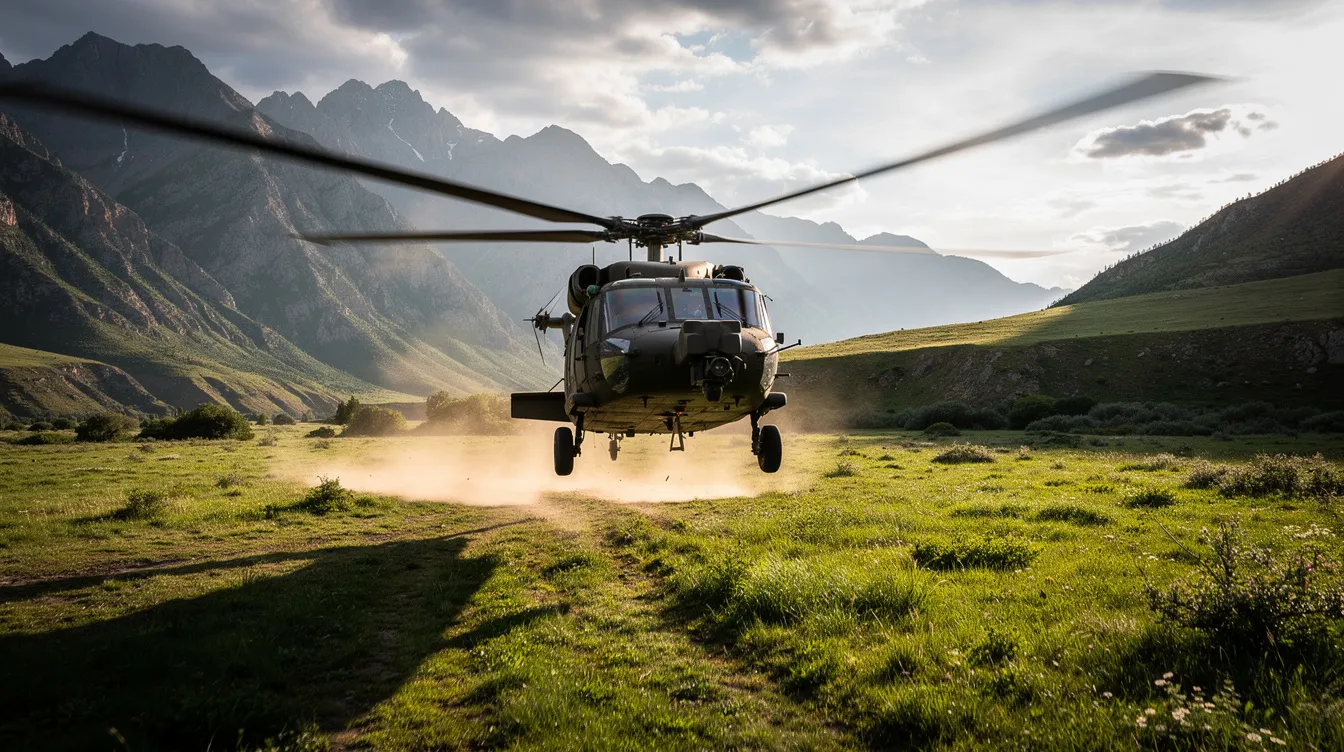
By the late 1960s, the US Army recognised that the UH-1 Huey fleet was reaching its performance limits. The Army's requirement called for a more survivable, twin-engine platform capable of operating in hot-and-high environments while fitting inside a C-130 transport aircraft for strategic deployment. These UTTAS requirements specified crashworthiness, dual engines, modular design, and compatibility with field maintenance standards.
Sikorsky submitted the YUH-60A design; Boeing-Vertol competed with the YUH-61A. Sikorsky built four prototype evaluation aircraft for the competition, and three were delivered to the Army for evaluation in March 1976. The fly-off competition tested both aircraft across thousands of flight hours. In December 1976, Sikorsky received the production contract.
Production deliveries began in October 1978. The first units equipped with the UH-60A were the 101st Airborne Division and 82nd Airborne Division. About 1,050 UH-60A airframes were built through 1989.
The initial production UH-60A standardised the basic airframe, four-bladed main rotor, tail rotor, and utility cabin layout. This architecture set the foundation that later variants would refine over the next four decades.
The Black Hawk helicopter was designed from day one as a military utility platform, not a civilian airframe adapted to military use. Every structural decision reflected UTTAS requirements for survivability and operational flexibility.
Key design features include:
A semi-monocoque fuselage with energy-absorbing (stroking) landing gear and crashworthy seating designed to protect crew and soldiers during hard landings
Armoured crew seats, a ballistic-tolerant fuel system, redundant hydraulics and flight controls, and physical separation of critical systems to prevent a single hit from disabling the aircraft
Cabin space dimensioned to carry an infantry squad of 11 fully equipped soldiers, with large sliding side doors and flexibility for rear cargo loading
External stores support systems (stub wings) that can carry auxiliary fuel tanks, electronic pods, rockets, or weapons depending on mission configuration
The crashworthy external fuel system was a specific UTTAS requirement. Fuel tanks are self-sealing and designed to resist rupture and post-crash fire, a feature that has saved crew lives in dozens of documented incidents.
Twin General Electric T700-series turboshaft engines, coupled to a robust transmission, drive the four-bladed fully articulated main rotor and four-bladed tail rotor. This propulsion architecture gives the Black Hawk redundancy: the helicopter can fly on a single engine if one is damaged or fails.
The T700 engine family evolved across variants:
UH-60A: T700-GE-700 engines, the baseline powerplant
UH-60L: More powerful engines in the T700-GE-701C configuration, improving the improved turbine engine output for heavier loads
UH-60M: T700-GE-701D engines, delivering the best hot-and-high performance of any production Black Hawk
The main rotor generates lift and provides maneuverability. Later variants introduced composite wide-chord blades; the UH-60M's rotor blades are made of high-lift composite materials, improving lift at altitude and increasing durability against sand, rain, and debris erosion.
The tail rotor counters main-rotor torque, provides yaw control, and maintains stability during hover and low-speed flight. Its four-bladed configuration reduces vibration compared with earlier two-blade designs.
The UH-60 family has evolved through several production blocks to meet increasing payload, range, and avionics requirements. Here are the three principal utility variants:
UH-60A: Introduced in 1979 with a basic analog cockpit and T700-GE-700 engines. It served as the baseline model for early Army aviation assault units. Empty weight was approximately 11,284 lb, and useful internal load reached about 5,710 lb. Cruise speed at a gross weight of roughly 16,800 lb sat around 140 knots.
UH-60L: Entered production in 1989 with T700-GE-701C engines and an upgraded gearbox. The UH-60L model increased external lift capacity to 9,000 lb, making it capable of sling-loading vehicles like the HMMWV. Cruise speed rose to about 155 knots, and the rate of climb at 16,800 lb jumped to approximately 1,315 ft/min.
UH-60M: Approved in 2001 and entering full production by 2006. The UH-60M features upgraded T700-GE-701D engines, wide-chord composite main rotor blades, and a digital glass cockpit. The UH-60M has a four-screen glass cockpit for improved navigation. It incorporates fly-by-wire flight controls for enhanced handling. By the end of 2020, over 830 UH-60M utility and 280 HH-60M MEDEVAC units had been delivered. The UH-60M is expected to remain in frontline service until gradually replaced by the Future Long-Range Assault Aircraft (FLRAA) around the 2030s.
|
Metric |
UH-60A |
UH-60L |
UH-60M |
|---|---|---|---|
|
Empty weight |
~11,284 lb |
~11,782 lb |
~12,500 lb |
|
Useful internal load |
~5,710 lb |
~5,924 lb |
~6,882 lb |
|
External lift capacity |
N/A (limited) |
9,000 lb |
10,000 lb (high altitude) |
|
Cruise speed (at ~16,800 lb GW) |
~140 knots |
~155 knots |
~153 knots |
|
Rate of climb (at ~16,800 lb GW) |
~377 ft/min |
~1,315 ft/min |
~1,646 ft/min |
Many UH-60 utility variants adapt the same airframe to specialised support missions while sharing common logistics and training pipelines.
Troop transport: Standard configuration seats up to 11 soldiers. Fast-rope and rappel fittings allow rapid air assault insertion. Door-mounted M240 machine guns provide self-defence during approach and extraction.
Cargo and logistics: Internal cargo pallets or external sling loads (artillery pieces, vehicles, supplies) resupply forward operating bases. The UH-60M can lift 10,000 lb externally at high altitudes, a capability that proved critical in Afghanistan's mountainous terrain.
Command and control: Versions with additional radios, data links, mission consoles, and the common avionics architecture system allow ground force coordination from the air.
These utility variants share the same airframe and power section, so pilots and mechanics trained on one configuration can transition to another with minimal retraining.
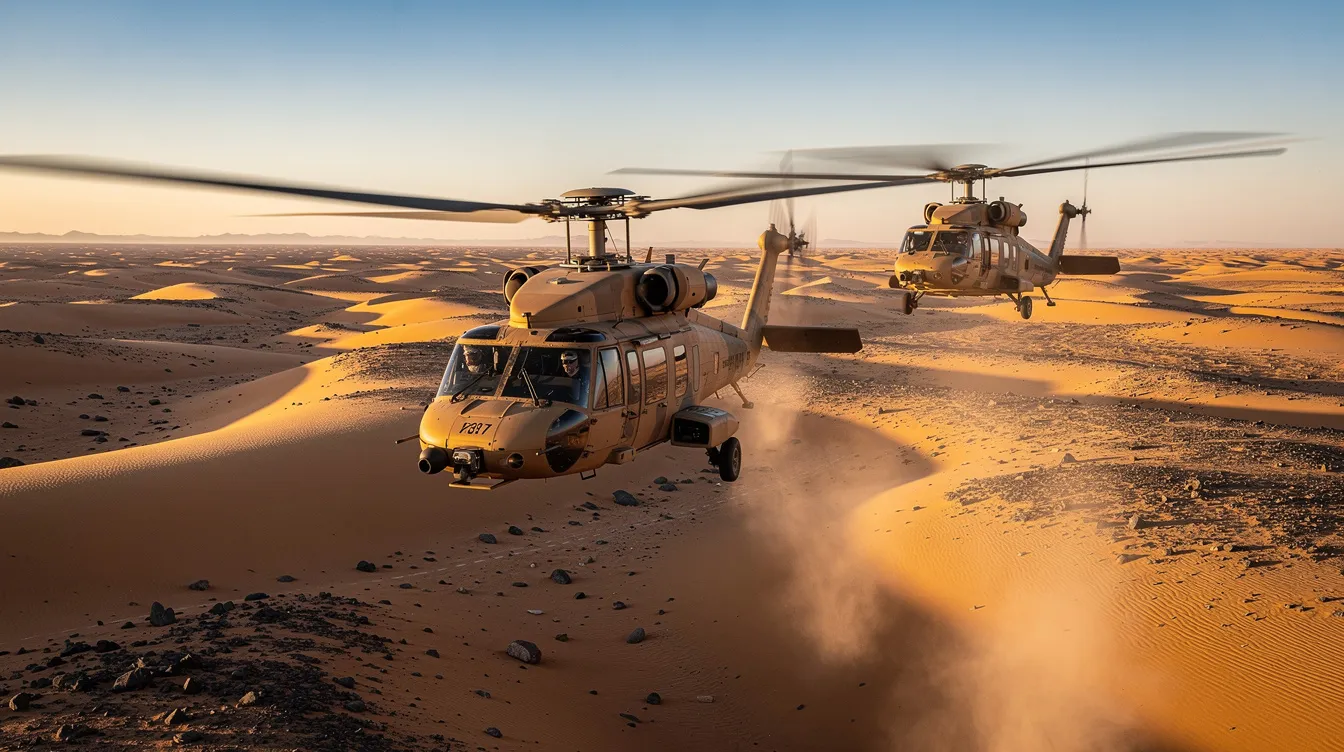
Dedicated medical evacuation variants such as the HH-60M adapt the utility cabin into an airborne intensive-care unit. The HH-60M carries a MEDEVAC Mission Equipment Package that includes litter racks for multiple patients, medical oxygen, physiological monitoring equipment, and workspace for flight medics to provide care in transit.
The helicopter's ability to land in confined areas near front lines or accident sites enables rapid casualty evacuation. In Iraq and Afghanistan, Black Hawk MEDEVAC crews routinely flew into active firefights to extract wounded soldiers. The Black Hawk fleet was central to meeting the military's "golden hour" goal: getting a wounded soldier to a surgical facility within 60 minutes of injury.
While military MEDEVAC is not available through commercial booking, civilian helicopter ambulance services operate twin-engine aircraft with similar medical interiors. For non-combat medical transport, fixed-wing air ambulance flights can be compared through platforms like Jettly. Readers interested in understanding costs can review Jettly's guide on medevac flight costs.
Special operations Black Hawks include the MH-60K, MH-60L, and MH-60M, optimised for special operations forces with advanced avionics, sensors, and in-flight refuelling capability. The Night Stalkers of the 160th Special Operations Aviation Regiment fly these aircraft on missions where conventional helicopters cannot operate.
Typical MH-60 upgrades include:
Terrain-following radar and forward-looking infrared (FLIR) sensors for night and adverse-weather navigation
Refuelling probes for long-range infiltration without landing
Precision navigation systems beyond standard Army configurations
Additional armour and electronic warfare countermeasures
Armed mission profiles add door guns, rocket pods, and precision-guided weapons for direct action and close air support. These aircraft carry rockets and other munitions that standard utility variants do not.
The most widely reported use of a stealth-modified MH-60 variant occurred during the 2011 Abbottabad raid against Osama bin Laden. Wreckage from one aircraft revealed clear radar-signature modifications, though most details about the airframe remain classified.
These special operations variants maintain core UH-60 design elements; the crew, pilots, and maintenance team can still draw on standard Black Hawk training and parts, even while operating classified or restricted technologies for low-observable and long-range missions.
The Black Hawk helicopter has been a frontline asset for the US Army and allied forces in nearly every major operation since the early 1980s. The U.S. military first used the UH-60 in combat in 1983 during the invasion of Grenada. Since then, the helicopter has seen action in every theatre the Army has entered.
Key operations:
Grenada (1983): First combat deployment; UH-60s transported troops under fire during Operation Urgent Fury.
Panama (1989): Air assault missions during Operation Just Cause.
Gulf War (1991): Over 300 UH-60 helicopters participated in the Gulf War, supporting the largest air assault in history when the 101st Airborne Division pushed deep into Iraq.
Somalia (1993): The Black Hawk was used in the Battle of Mogadishu, where two Black Hawk helicopters were shot down; the incident shaped Army aviation doctrine for years afterwards.
Balkans (1990s): Peacekeeping and support operations.
Iraq (2003-2011) and Afghanistan (2001-2021): Sustained combat, MEDEVAC, logistics, and special operations across two decades of war.
The Black Hawk fleet has also supported humanitarian assistance and disaster relief, including hurricane response, earthquake evacuations, and search and rescue.
As of 2024, the UH-60 family is in service with 35 countries worldwide, including Australia, Brazil, Colombia, Israel, Mexico, Poland, South Korea, and others.
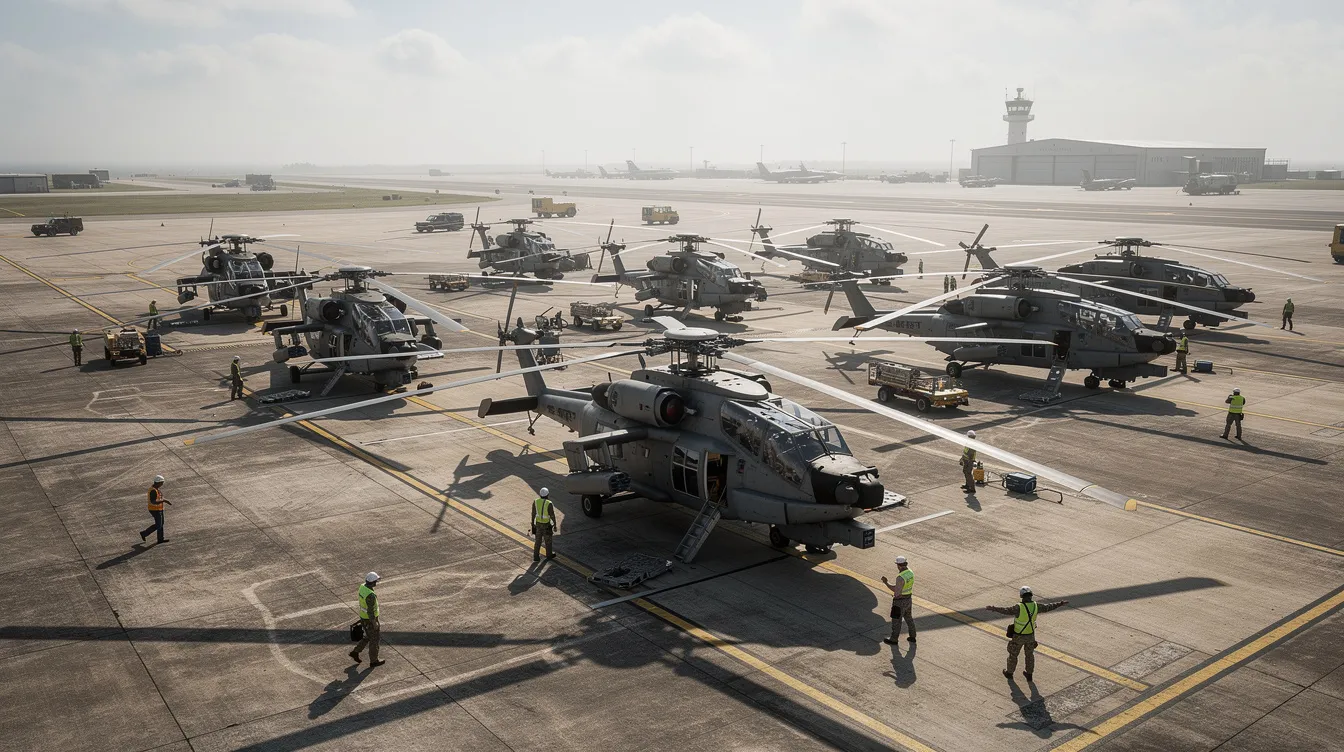
Sikorsky, now part of Lockheed Martin, markets export variants such as the S-70i and S-70M. Several nations assemble or co-produce Black Hawks locally; Poland, for example, has manufactured S-70i airframes at the PZL Mielec facility.
Differences between US Army UH-60 models and export S-70 variants include customer-specific avionics packages, mission equipment for roles like firefighting and offshore transport, and navalized Seahawk derivatives for maritime operations. Colombia received its first UH-60s from the U.S. in 1987 for counter-narcotics missions, making it one of the earliest export customers in the Americas.
Notable international roles include:
Firefighting in countries prone to wildfires (Australia, Greece)
Border security operations (Saudi Arabia, Jordan)
Offshore oil and gas transport
Special forces insertion and counterterrorism
Emerging customers continue to evaluate the S-70M for security modernization. The common Black Hawk and S-70 platform simplifies training and logistics among allied forces operating in joint missions, which is why NATO and partner nations often choose it over competing designs. Readers curious about how government charter flights work in civilian contexts can explore Jettly's overview.
This section focuses on UH-60M performance using approximate figures from public Army fact sheets and Sikorsky data.
Key metrics:
Cruise speed: Approximately 150-155 knots at mission weight
Maximum range (internal fuel): Several hundred nautical miles, typically 300-400 nm depending on payload and altitude
Long-range capability: Auxiliary fuel tanks extend range for ferry flights or extended missions
Service ceiling: Approximately 19,000 ft
Hot-and-high performance: The UH-60M can hover at 23,500 lb gross weight with external loads, a capability that makes it effective in mountainous environments like Afghanistan's Hindu Kush
External lift: The UH-60M can lift 10,000 lb externally at high altitudes
Pilots describe the UH-60M as stable in hover, responsive in low-level flight, and predictable under load. Power management matters when the aircraft is at maximum gross weight; the upgraded T700-GE-701D engines give crews more margin than earlier variants provided.
The flight demonstration profile of the UH-60M also highlights its improved rate of climb: at 18,000 lb gross weight, the UH-60M produces approximately 994 ft/min compared with 592 ft/min for the UH-60L and near zero for the UH-60A.
Decades of combat experience have driven steady improvements in Black Hawk survivability. The airframe was developed for a war environment, and each conflict has produced engineering refinements.
Structural crashworthiness: Energy-absorbing seats, stroking landing gear, and airframe reinforcement reduce vertical impact forces during hard landings or crashes. Soldiers and crew have survived impacts that would have been fatal in earlier helicopter designs.
Ballistic protection: Armoured plating around the cockpit, transmission, and engines. Self-sealing, crashworthy fuel tanks reduce post-impact fire risk.
System redundancy: Dual hydraulic systems, redundant flight controls, and separated electrical buses keep the helicopter controllable after sustaining battle damage. Run-dry gearboxes continue to function briefly even after losing lubricant.
Incremental upgrades: Stronger gearboxes, more durable composite rotor blades, and updated digital avionics with terrain-avoidance tools have been added over the helicopter's production history.
The program has logged over 15 million flight hours across all variants, providing a data set that continuously informs design improvements.
Surplus military Black Hawks and directly produced S-70 variants have been adapted for civilian roles. Firefighting operators use them with water buckets and foam systems. Offshore companies transport crews to oil platforms. Some governments operate VIP-configured S-70s for head-of-state transport.
Modifications for civilian certification typically include:
Upgraded interiors with noise reduction, corporate seating, and climate control
Modern communication and cabin-management systems
Removal of military-specific equipment (weapons mounts, armour)
Compliance with FAA or EASA certification standards
Medium-lift helicopters like the Black Hawk carry more passengers and cargo than smaller twin-engine corporate helicopters (such as the Sikorsky S-76 or AgustaWestland AW139) but also cost more per hour to operate and require larger landing areas.
Jettly, as a digital charter broker, primarily lists certified civil helicopter charter types alongside a large range of jets and turboprops. The platform can help travelers decide when a helicopter's point-to-point flexibility beats a fixed-wing jet's speed and range for short-distance or remote-area trips. For more on helicopter rental costs, Jettly's pricing guides break down what to expect.
The UH-60 competes in the same mission space as the NH90 (NHIndustries), AW149 (Leonardo), and Mi-17 (Russia). Each aircraft offers different trade-offs in payload, range, acquisition cost, and industrial partnerships.
|
Feature |
UH-60M |
NH90 TTH |
Mi-17 |
|---|---|---|---|
|
Troop capacity |
11 |
14-20 |
24-30 |
|
Max gross weight |
~22,000 lb |
~23,369 lb |
~28,660 lb |
|
Engines |
2x T700-GE-701D |
2x RTM322 or T700 |
2x TV3-117 |
|
Digital cockpit |
Yes (glass cockpit) |
Yes |
Varies by variant |
The Mi-17 carries more troops but lacks the crashworthiness standards and digital architecture of the UH-60M. The NH90 offers a larger cabin and composite airframe but has faced availability and reliability issues with several European operators.
Many NATO and partner nations choose the Black Hawk to align with US Army logistics, training pipelines, and interoperability in coalition operations. This commonality matters during joint exercises and deployments, where spare parts, ground support equipment, and maintenance procedures can be shared across participating forces.
The US Army's Future Long-Range Assault Aircraft (FLRAA) program, awarded to Bell's V-280 Valour tiltrotor, intends to begin replacing the UH-60 fleet around 2030. The FLRAA promises roughly double the speed and range of the Black Hawk.
Despite this, many UH-60 airframes will receive life-extension and upgrade packages. The UH-60V program recapitalises older UH-60L airframes with digital cockpits and modern avionics. As of December 2025, the Army issued a Request for Information on a "Black Hawk Modernisation and Sustainment Program" intended to keep UH-60M aircraft relevant beyond 2050. Proposed integrations include autonomy, artificial intelligence, and launched effects for reconnaissance and electronic warfare.
Export demand for UH-60M and S-70 variants continues. Shephard Media estimated the export market at roughly $13 billion in the mid-2020s. Countries are modernising or expanding medium-lift fleets rather than jumping immediately to next-generation platforms.
The Black Hawk airframe, like iconic fixed-wing transports such as the C-130, is on track for 60-plus years of continuous frontline service worldwide.
The Black Hawk is a military and government platform, but it illustrates what medium helicopters can do for point-to-point access, remote landings, and rapid deployment. The mission logic transfers directly to civilian thinking: getting people and cargo to places where runways do not exist.
Private travellers charter civil-certified helicopter types rather than military Black Hawks, but the use cases overlap. Short-range hops, city-to-yacht transfers, access to ski resorts, remote lodges, and island destinations all benefit from a helicopter's ability to land on a pad rather than a 5,000-foot runway.
Jettly's marketplace allows users to compare aircraft types side by side based on range, passenger count, baggage space, and airport or helipad access. The platform offers instant pricing, on-demand booking, and private jet membership options. Actual flights are operated by certified third-party carriers.
Readers interested in the capabilities of helicopters like the Black Hawk can apply similar thinking when choosing the right aircraft for their own missions. Whether a half-hour helicopter hop or a long-range jet flight fits the trip best depends on distance, passenger count, ground infrastructure, and budget. Understanding what makes a helicopter capable in military service helps frame the same questions for civilian travel.
Ready to explore private helicopter or jet charter options? You can use Jettly's airport locator tool to see which airfields or helipads fit your mission profile, run a private jet charter cost estimator for quick pricing, or even crowdsource private jet flights and share empty seats when flexibility allows. Frequent flyers might compare jet card flight cost estimates and broader jet card programs, or choose between different private jet memberships depending on trip frequency. If you're still researching, Jettly's guides cover affordable aeroplane rental costs and options, how to pick the best personal plane for your needs, and what to look for in the best private jet charter companies. You can also dive deeper into helicopter rental pricing, understand how much a private jet really costs, browse a comprehensive list of charter airlines, or explore Jettly as a NetJets alternative for flexible private flying. Travellers deciding between crowd-sharing and full aircraft hire can review shared charter flights vs. full charters, and enhance their trip with Jettly Eats in-flight catering. When you're ready to book, Jettly offers affordable private jet charters through vetted operators, including partners like DEXTER Air Taxi and ZENFLIGHT, and provides access to a wide range of private charter aircraft. Those with an audience can even join Jettly's high-ticket affiliate program to earn by referring new flyers. Request a quote at https://www.jettly.com.
The UH-60 Black Hawk serves as the Army's standard utility and assault helicopter. Its primary missions include moving troops, equipment, and casualties across the battlefield. Dedicated variants handle medical evacuation (HH-60M), command and control, and special operations support (MH-60M). The UH-60M is the current production standard, with over 830 utility airframes delivered as of late 2020.
The UH-60M features more powerful T700-GE-701D engines (versus the T700-GE-700 in the UH-60A), composite wide-chord main rotor blades, a four-screen digital glass cockpit, fly-by-wire flight controls, and improved navigation and communication systems. Its rate of climb at 16,800 lb gross weight is approximately 1,646 ft/min, compared with the UH-60A's 377 ft/min. The UH-60M also carries roughly 1,170 lb more useful internal load than the UH-60A.
Operational UH-60 Black Hawks are restricted to military and government users. Some civil-certified S-70 derivatives and ex-military conversions exist under specific aviation regulations, but they are rare on the open charter market. Most private travellers charter other twin-engine civil helicopters. Platforms like Jettly list a wide range of civil-certified helicopters, and readers can explore options through the helicopter ride price guide.
With standard internal fuel, the UH-60M has a range of approximately 300-400 nautical miles, depending on payload and altitude. Auxiliary fuel tanks or aerial refuelling (on MH-60 special operations variants) extend that range for ferry flights and long-range infiltration missions.
Jettly's platform lets travellers compare aircraft types by route length, required landing area, passenger count, and budget. A helicopter's point-to-point flexibility works best for short distances (under 150 miles) or when landing at a helipad rather than an airport. A jet's speed and range make it the better choice for distances above 200 miles. Jettly shows both options with instant pricing so travellers can decide based on their specific trip. Explore flight options or request a quote at https://www.jettly.com.
The UH-60 Black Hawk remains a cornerstone of medium-lift manufactured military utility helicopters worldwide. Its blend of durability, versatility, and advanced technology has ensured its relevance for over four decades and counting. The Black Hawk's continuous upgrades, especially the UH-60M model with its enhanced engines, composite rotor blades, and digital cockpit, exemplify how medium-lift manufactured helicopters can adapt to evolving mission demands and operational environments.
For private aviation travellers and operators, understanding the Black Hawk's capabilities provides valuable context when comparing rotary-wing options for point-to-point access, especially in challenging or remote locations. While the Black Hawk itself is a military platform, the principles of medium-lift manufactured helicopter design—balancing payload, range, and survivability—translate directly to civilian and charter helicopter choices. Platforms like Jettly offer transparent, on-demand access to a wide range of civil-certified helicopters, enabling travellers to match the right aircraft to their mission needs with ease.
Ready to explore private helicopter or jet charter options? You can use Jettly's airport locator tool to see which airfields or helipads fit your mission profile, run a private jet charter cost estimator for quick pricing, or even crowdsource private jet flights and share empty seats when flexibility allows. Frequent flyers might compare jet card flight cost estimates and broader jet card programs, or choose between different private jet memberships depending on trip frequency. If you're still researching, Jettly's guides cover affordable aeroplane rental costs and options, how to pick the best personal plane for your needs, and what to look for in the best private jet charter companies. You can also dive deeper into helicopter rental pricing, understand how much a private jet really costs, browse a comprehensive list of charter airlines, or explore Jettly as a NetJets alternative for flexible private flying. Travellers deciding between crowd-sharing and full aircraft hire can review shared charter flights vs. full charters, and enhance their trip with Jettly Eats in-flight catering. Actual flights are operated by certified third-party carriers, ensuring safety and reliability.
Explore flight options or request a quote at https://www.jettly.com.
Share this post:
Jay Franco Serevilla
Oct 31, 2026
|
5
min read
Discover tips and trends in the industry.
5
min read
Best Small Aircraft In 2026: Top Choices For Pilots And Private Travelers
Choosing the best small aircraft in 2026 involves evaluating speed, range, safety, and cost across various categories, including piston singles, turboprops, and light jets. Notable models like the Cessna 172 Skyhawk and Cirrus SR22T cater to different needs, from training to personal travel. With advancements in technology and fuel efficiency, modern small aircraft offer enhanced safety and comfort for pilots and passengers alike.
Read More
5
min read
Cessna 150 Insurance Cost Guide for 2026
This guide provides an overview of Cessna 150 insurance costs for 2026, detailing typical premiums, coverage types, and influencing factors. With annual costs ranging from $500 to $1,000, the Cessna 150 is noted for its affordability and favorable claims history, making it a popular choice among private aircraft owners.
Read MoreStay updated with our latest insights and tips to elevate your journey with us.
MEMBERSHIPS AND ASSOCIATIONS



Disclaimer: Jettly operates as a charter broker, offering access to a global digital jet charter marketplace. Jettly is not a direct air carrier and does not own or operate aircraft. All advertised flights are conducted by third-party air carriers that are fully licensed and hold the appropriate Part 135 or Part 121 certifications issued by the Federal Aviation Administration (FAA) or equivalent regulatory authorities under U.S. or foreign law. Jettly complies fully with the U.S. Department of Transportation's Part 295 and Part 298 Charter Broker regulations. Jettly does not carry additional liability insurance. Passengers are covered by aircraft operator insurance. TICO: 50023770


