


Login
Get Instant Pricing On 23,000+ Aircraft

>
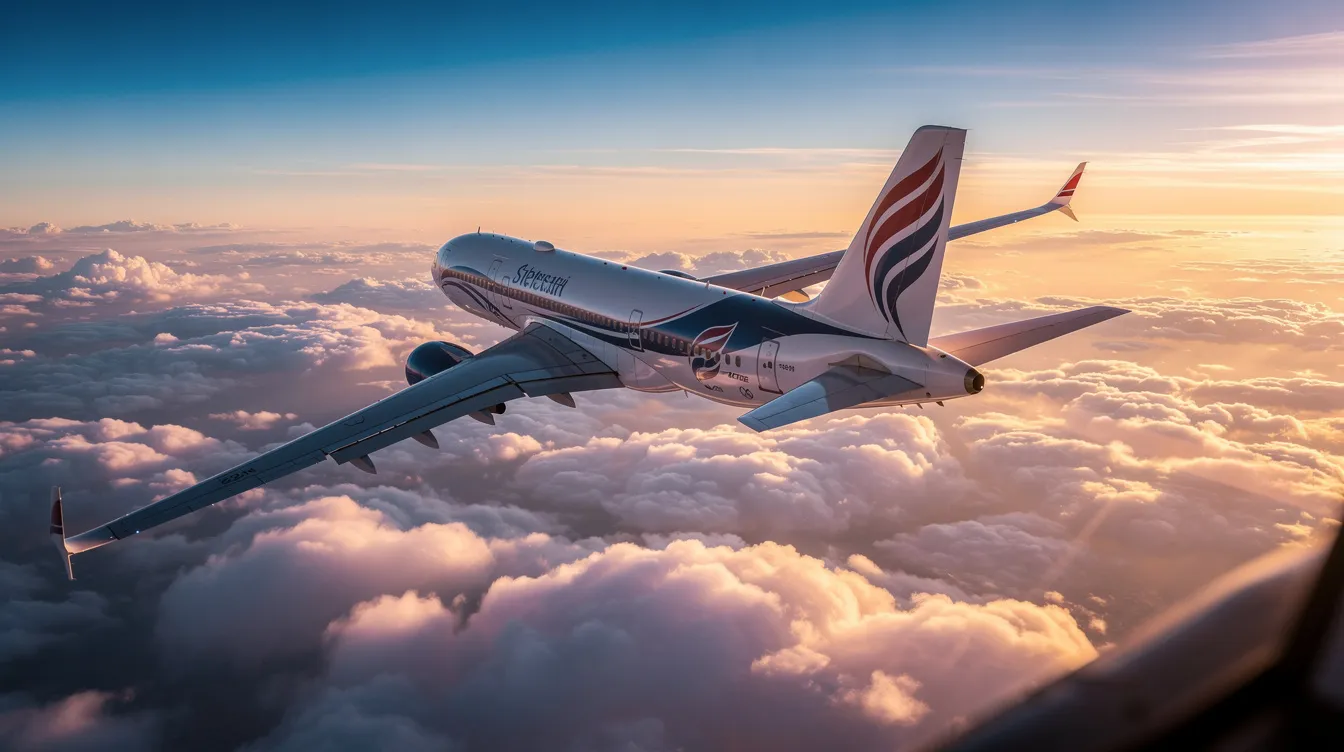
Cruising speeds are generally maintained around Mach 0.82 for fuel efficiency, with airlines occasionally pushing to Mach 0.84 under schedule pressure. The typical cruise speed of the Airbus A330 is Mach 0.82 to 0.84.
A330neo variants (A330-800 and A330-900) share a similar speed envelope but deliver significantly improved fuel burn and range thanks to the new engine option.
The A330 family includes multiple variations like the A330-200, A330-300, and newer A330neo models, each optimized for different route profiles.
While Jettly focuses on private jets rather than widebody airliners, understanding A330 performance helps travelers compare commercial and private flight options. See the conclusion for how this compares with private jet charter on Jettly.
The Airbus A330 has a maximum operating Mach number of 0.86. The maximum speed of the A330 can reach up to 913 km/h. The typical cruise speed of the Airbus A330 is Mach 0.82 to 0.84. This guide is for travelers, aviation enthusiasts, and flight planners interested in understanding the speed capabilities of the Airbus A330. Understanding the A330's top speed helps travelers estimate flight durations and compare commercial and private flight options.
The Airbus A330 top speed is defined by a maximum operating Mach number of Mach 0.86, which works out to roughly 1,020 to 1,040 km/h at typical cruise altitude rather than a single fixed ground-speed figure. For travelers, pilots, aviation enthusiasts, corporate flight planners, and private flyers comparing airline trips with charter options, that number only becomes useful when viewed alongside normal cruise speed, fuel burn, range, and real-world travel time.
The A330 family is a medium- to long-range, wide-body aircraft powered by twin engines. Airbus launched the program alongside the four-engine A340 in the late 1980s. The A330-300's first flight took place in November 1992, and the first aircraft entered commercial service in January 1994. From the beginning, the family expanded from an initial range of around 4,000 nautical miles to later longer-range variants such as the A330-200, A330-800, and A330-900, which now serve airlines across Europe, Asia, Australia, and beyond.
This article breaks down the A330's certified maximum speed limits, typical cruise speeds, differences between variants, and how speed affects fuel burn, range, and passenger capacity, with most A330 configurations seating about 220 to 300 passengers depending on the model. For anyone weighing a long-haul commercial flight against a private alternative, these performance details shape decisions about trip duration, efficiency, and convenience, which is why we also compare the A330's operating profile with private charter aircraft options through Jettly and provide broader guidance on finding the best cross-country plane for your travel journey.
For airliners, "top speed" is formally defined as:
VMO (Maximum Operating Speed): The highest speed permitted in knots indicated airspeed (KIAS, a measure of airspeed as shown by the aircraft's instruments).
MMO (Maximum Mach Number): The highest speed permitted as a fraction of the speed of sound (MMO, Maximum Mach Number, the highest speed allowed as a fraction of the speed of sound).
The operational limits for the A330 prohibit exceeding Mach 0.86 or 330 KIAS.
VMO and MMO are regulatory speed limits, while TAS (True Airspeed) is the actual speed of the aircraft through the air, which varies with altitude and temperature. Cruising altitude for the Airbus A330 typically ranges from 35,000 to 41,000 feet, and the A330 typically cruises at an altitude of 35,000 feet on many sectors. At these flight levels, Mach 0.86 corresponds to roughly 1,020–1,040 km/h, depending on ambient conditions.
Commercial A330 operations rarely sit continuously at absolute MMO. Instead, airlines use economical cruise speeds like Mach 0.82–0.83 to manage fuel burn and long-range performance.
Why do pilots care about Mach limits at high flight levels? As an aircraft approaches the speed of sound, compressibility effects cause localized shock waves on the wings, which dramatically increase drag and can affect handling. At lower altitudes, the limiting factor shifts to indicated airspeed (structural load limits on the airframe and wings). The VMO/MMO combination balances both regimes.
The sections that follow break down certified speeds, typical cruise profiles, and how they differ by variant and mission.
The A330 has a maximum operating Mach number of 0.86. This certified limit applies across most Airbus A330 passenger variants—the A330 200, A330 300, and both A330neo models. The corresponding VMO is 330 knots indicated airspeed (KIAS).
These limits are set by airframe design, flutter margins, and certification standards from EASA and the FAA. It is not simply a matter of engine thrust. Even if the engines could push the plane faster, the structure and aerodynamics of the wings define the safe boundary. Beyond the MMO, design dive limits (VD/MD) exist at approximately 365 knots IAS and Mach 0.93, but these are engineering margins—not for sustained operation.
Unlike smaller aircraft that reference a "never-exceed speed" (VNE), airline operations routinely stay below MMO by a comfortable margin. Pilots rely on systems that warn well before reaching the limit.
In practice, brief excursions near MMO can occur during descents or while avoiding weather, but sustained cruise at the absolute maximum is rare. The reason is straightforward: higher fuel burn and tighter ride margins in turbulence. Even at their top certified speeds, A330s are optimized for efficiency rather than raw velocity. Subsonic cruise is chosen deliberately to minimize fuel burn and emissions on long-haul routes that may stretch 10 hours or more.
Now that we've established the certified speed limits, let's look at how these translate into real-world cruise speeds during typical airline operations.
What speed do A330s actually fly at day-to-day? Pilot reports and airline data consistently point to a long-haul cruise of Mach 0.82–0.83. When the aircraft is heavy early in a flight, speeds may dip to Mach 0.81. Under schedule pressure—say, after a ground delay—some crews push to Mach 0.84, but this comes with a noticeable fuel burn penalty.
Airlines choose between "long-range cruise" (LRC) and "high-speed cruise" profiles. On flights of 7–13 hours, selecting LRC at Mach 0.82 instead of Mach 0.84 trades a slightly longer block time for meaningful fuel savings. Over a 10-hour sector, even a 2–3% reduction in fuel flow translates to hundreds of kilograms saved.
Typical flight levels for A330 operations range from FL330 to FL390. As fuel burns off and the aircraft gets lighter, crews request step climbs, moving to higher altitudes where the same Mach number yields better fuel economy. This is a standard technique on long-range sectors.
Here is a practical illustration: on a Europe-to-Asia sector of roughly 10 hours, flying at Mach 0.82 versus Mach 0.84 could add around 10–15 minutes to block time but save several hundred kilograms of jet fuel. For most airlines, that tradeoff is worth it.
With an understanding of typical cruise speeds, let's explore how speed, range, and fuel burn interact in A330 operations.
Flying close to the Airbus A330's top speed increases drag exponentially. In the high-subsonic regime, wave drag rises sharply as localized airflow over the wings approaches and exceeds the speed of sound. This forces higher thrust settings and higher fuel flow, which can cut into usable range—especially on ultra-long routes where every kilogram of fuel counts.
Airlines manage this tradeoff through the "cost index," a numerical setting in the flight management systems that balances fuel cost against time-related costs such as crew pay, schedule penalties, and aircraft utilization. A high cost index pushes cruise Mach closer to MMO; a low cost index favors fuel saving. The result is a recommended cruise Mach tailored to each flight's economics.
On a 10-hour sector, a 2–3% increase in fuel burn from flying faster adds up quickly—both in direct operating costs and in emissions. Airlines operating A330 fleets increasingly prioritize fuel-efficient profiles and lower CO₂ per passenger-km, aligning with ICAO standards and EU emissions reduction goals, and travelers weighing commercial versus private options often study how much a private jet costs in total ownership and charter terms alongside a detailed breakdown of private jet operating costs and budgeting considerations.
For the crew planning a typical long-haul rotation, the "sweet spot" is a cruise speed just below maximum efficiency Mach, not at the absolute top speed. This approach lets the aircraft carry more cargo, accommodate more passengers without fuel-related payload restrictions and fly routes that stretch closer to the aircraft's maximum range capability.
With these operational considerations in mind, let's review the A330 family variants and their development history.
The A330 family has a rich history within the Airbus aircraft lineup. Here is a compact overview: the A330 program was launched alongside the A340 in June 1987. The first flight of the A330-300 took place in November 1992, and the A330-300 entered commercial service on 16 January 1994. The introduction of the shorter fuselage, longer-range A330 200 followed in 1997–1998. Airbus launched the A330neo (new engine option) in July 2014. The first A330-900 flight occurred in October 2017, and it entered service in 2018. The A330 800 made its first flight in November 2018, with the variant expected to enter service in the early 2020s.
While structural and engine changes across these variants affect range and fuel burn, they do not radically change the certified top speed. Most variants retain a similar MMO around Mach 0.86.
The main passenger variants relevant to speed are: the A330 200 (long range, smaller fuselage), the A330 300 (baseline, higher capacity), the A330 800 (neo, very long range), and the A330 900 (neo, larger capacity, long range). The A330 family also includes the A330-200F freighter, which can carry 65 tonnes over 7,400 km, and the A330 MRTT military tanker/transport, which shares a similar speed envelope but is optimized for different missions. In the private sector, travelers can make a similar choice between shared charter flights and full charters, trading cost against privacy and flexibility, often starting by learning how to buy a seat on a private jet through shared and semi-private options.
The Airbus A330 family page notes that more than 1,600 aircraft have been delivered by mid-2020s, making it one of the most widely operated widebody families in the world. The final assembly line for the A330 operates in Toulouse, France, where all variants are built before delivery to customers worldwide.
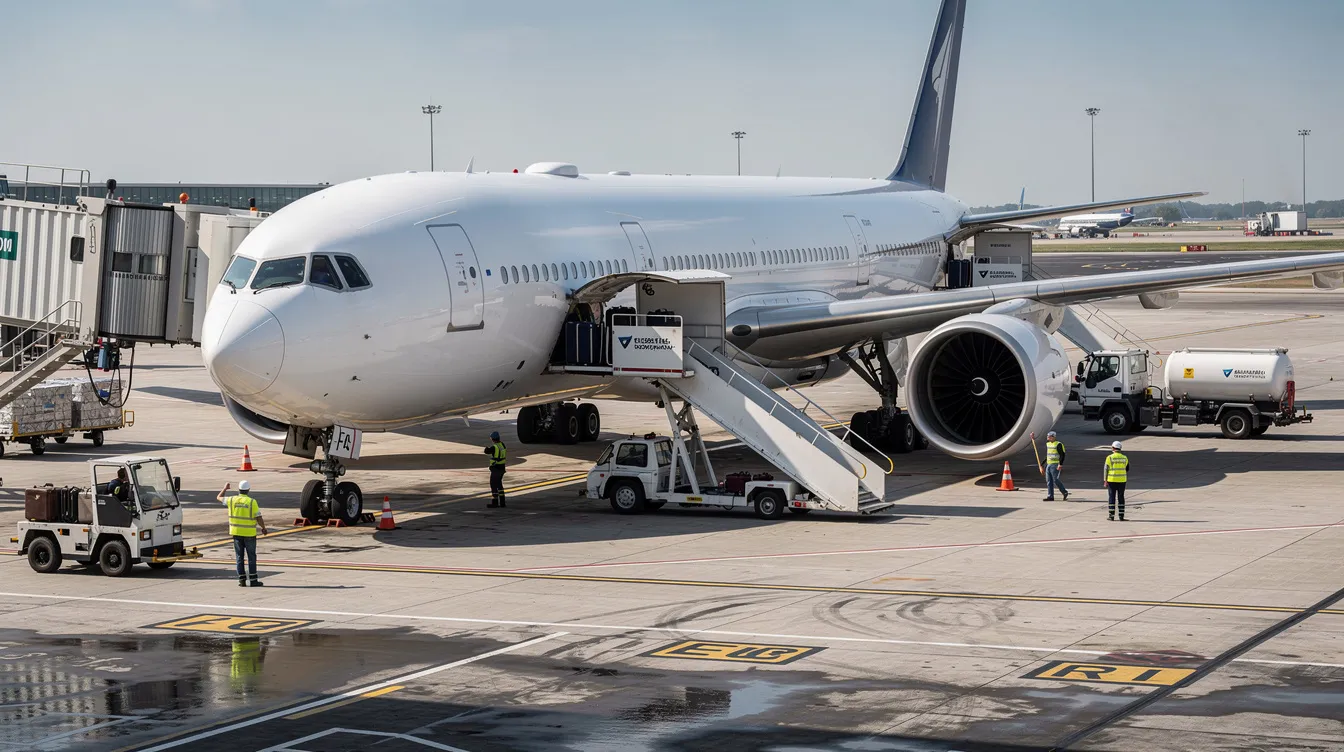
With the family overview in place, let's examine how the A330's cabin design and passenger capacity affect the travel experience.
As a twin-aisle aircraft with a cabin width of approximately 5.28 meters, the A330 offers more seats per row (typically 2-4-2 in economy) than narrowbody jets, with each window seat providing a view for passengers who prefer it.
Here is how many passengers each A330 variant can carry in typical airline configurations:
|
Variant |
Typical 3-Class Seating |
High-Density Max |
|---|---|---|
|
A330-200 |
253 passengers |
~406 |
|
A330-300 |
277 passengers |
~440 |
|
A330-800 |
257 passengers |
~406 |
|
A330-900 |
287 passengers |
~460+ |
The A330-300 typically carries 277 passengers in a standard configuration, while in high-density configurations the A330 can carry up to 440 passengers.
The A330-800 can carry up to 257 passengers and can accommodate up to 406 passengers in a maximum-density layout.
The A330-200 typically seats 253 passengers in three classes, spread across an economy cabin, business class, and sometimes a premium economy section.
Passenger-per-seat-mile economics interact with cruise speed. At higher speeds, extra fuel burn per seat might be offset if an airline can schedule more daily rotations with the same plane. Cabin comfort at cruise speed is managed through systems that adjust for turbulence: pilots may reduce to a lower turbulence penetration speed for ride quality.
From inside the cabin, passengers rarely notice whether the aircraft is flying at Mach 0.80 or Mach 0.84. Only gate-to-gate time and on-time performance are obvious. For premium travelers comparing A330 business class to private jets, the key differences are not raw top speed but direct routing, reduced ground time, and customized schedules, often evaluated alongside the best private jet charter companies and how they operate, and an understanding of Part 135 charter companies and their safety and regulatory framework.
With a clear picture of passenger capacity and cabin experience, let's compare the two main original A330 variants and see if size affects speed.
The A330-200 is the shorter, longer-range member of the original A330 family, entering service in 1998. It serves as a workhorse on thinner, long-range routes—think Europe to South America or Europe to Southern Africa. The A330-200 has a range of 13,400 km, and it offers 9% lower operating costs than the Boeing 767-300ER on comparable missions.
The A330-300 is the earlier, larger-capacity baseline model, more common on high-density routes across Asia and on transatlantic sectors where range demands can be slightly lower. The A330-300 has a maximum range of 6,100 nautical miles.
Both share a largely similar aerodynamic design and the same maximum operating Mach number of around 0.86, so their certified top speed is effectively identical.
Where they differ is in typical cruise profiles driven by mission. The A330 200 frequently uses long-range cruise speeds (Mach 0.82 or slightly lower) to maximize range, while the A330 300 on medium-haul missions may cruise closer to Mach 0.83–0.84 when range is not the limiting factor. Under the current engine option designation, both variants were offered with engines from General Electric (CF6-80E1), Pratt & Whitney (PW4000), and Rolls-Royce Trent 700. These engine option choices give airlines flexibility in maintenance strategies but do not significantly change MMO, and travelers curious about a specific model can review Airbus A330-300 specs, range, and typical charter roles or compare it with Boeing 737-800 specs, range, and charter rates.
With the ceo variants compared, let's move to the latest generation: the A330neo.
The A330neo is the new engine option variant of the A330 family, launched in 2014. It pairs the Rolls-Royce Trent 7000—the latest-generation turbofan—with redesigned wings featuring a higher wingspan and sharklet wingtips. The result is a step-change in efficiency: the A330neo reduces fuel consumption by 25% compared to previous models on a per-seat basis.
Despite these aerodynamic upgrades, the certified maximum operating Mach number remains broadly in the same range at around Mach 0.86. The Airbus A330 top speed, in certification terms, does not dramatically change between ceo and the NEO.
The efficiency gains allow airlines to choose between flying at similar cruise speeds with lower fuel burn or flying slightly faster at the same fuel burn as the older generation, depending on cost index and route strategy.
The two neo variants serve different market segments:
A330-800: a smaller, ultra-long-range variant. The A330-800 can fly up to 8,100 nautical miles (about 15,000 km), making it ideal for longer routes. Fewer passengers aboard—up to 257 in typical layouts—suit routes where demand doesn't justify a larger airliner.
A330-900: the larger, high-capacity long-range aircraft. The A330-900 has a maximum range of 7,350 nautical miles (about 13,300 km) and a maximum capacity of 287 passengers in a typical configuration.
A330neo aircraft can sustain efficient cruise at Mach 0.82–0.83 over very long sectors, making them competitive with the Boeing 787 and other modern widebodies. For airlines looking to fly from hub cities in Europe or Asia to destinations in Australia or the Americas, the neo's combination of range and efficiency is compelling.

With the neo's efficiency in mind, let's examine how engine options influence speed and fuel burn.
Historical engine options for the A330ceo included the General Electric CF6-80E1, Pratt & Whitney PW4000, and Rolls-Royce Trent 700. Each was tailored for different airline preferences and maintenance ecosystems, and all three engines met the performance requirements of the airframe.
The A330neo family standardizes on the Rolls-Royce Trent 7000, derived from the Trent 1000/TEN program. This latest-generation turbofan is optimized for lower fuel burn, reduced noise, and better emissions. The A330 900 burns 14% less fuel per seat than the A330 300, a figure that reflects both engine and airframe improvements working together.
While engine thrust and efficiency affect climb performance, takeoff field length, and fuel burn at a given cruise speed, the structural MMO limit of the airframe defines maximum speed—not installed thrust alone. Unlike aircraft with three or four engines, the twin-engine A330's certification was shaped around its specific wing and fuselage aerodynamics.
How does engine choice interact with cost index? More efficient engines slightly reduce the fuel-per-minute penalty of flying faster. Some operators may adopt slightly higher cruise Mach on neo aircraft because the per-seat economics remain favorable even at Mach 0.83–0.84. Newer engines on the A330neo also contribute to lower CO₂ and NOx emissions per passenger, supporting airline sustainability goals, a consideration that also appears when analyzing affordable private jet charter pricing and cost-saving strategies and broader guidance on how much it costs to rent a private jet by the hour.
With engine options covered, let's look at how speed impacts long-range missions for each A330 variant.
The A330 family has a maximum range of 8,100 nautical miles, achieved by the A330-800. Here is a summary of each variant's range capability:
|
Variant |
Approximate Range |
|---|---|
|
A330-200 |
~7,250 nm (13,400 km) |
|
A330-300 |
~6,100 nm |
|
A330-800 |
~8,100 nm (~15,000 km) |
|
A330-900 |
~7,350 nm (~13,300 km) |
|
These are among the longest ranges available in the widebody category. |
Airline flight planners compute optimal cruise Mach by factoring in headwinds and tailwinds. On westbound transatlantic flights with strong headwinds, a higher cruise Mach may minimize block time. On eastbound flights, crews may slow down to save fuel while still arriving on schedule. Ground speed can exceed the aircraft's airspeed with strong tailwinds—a common occurrence on eastbound North Atlantic tracks.
A concrete example: an A330 900 flying Lisbon to São Paulo or Dubai to London may cruise at Mach 0.82–0.83, meeting schedule needs while preserving fuel capacity for reserves and contingencies, similar to how long-range private jets flying internationally balance speed, fuel, and regulatory requirements on global routes, whether serving major hubs or regional centers through private jet charter services in Kolkata, West Bengal.
Ultra-long haul missions—say, a theoretical A330 800 flight above 8,000 nm—demand strict control of cruise Mach and careful step-climb strategy to avoid having to offload cargo or passengers to meet fuel requirements. In these sectors, "top speed" matters far less than average groundspeed over the route, which is influenced heavily by winds aloft and direct routing.
With long-range performance explained, let's compare the A330's speed and routing flexibility with private jets.
While an Airbus A330 cruises around Mach 0.82–0.83, many long-range private jets—such as the Gulfstream G650 or Bombardier Global 7500—cruise at Mach 0.85–0.90 and sometimes carry a higher MMO. For more on how fast jets can go, the pure speed advantage of these private aircraft is modest but real.
However, the real-time advantage of private jets accessible via Jettly comes from factors beyond airborne speed:
Using smaller airports closer to the departure and destination
Avoiding hub-and-spoke connections and long layovers
Drastically shorter check-in, security, and boarding times
Consider a commercial flight vs. private flight comparison: a typical commercial A330 trip might require arriving at the airport 2–3 hours early, plus time for baggage and connections, whereas savvy travelers who know how to get a seat on a private jet easily can often depart from quieter terminals on their own schedule. A similar-length sector on a private jet chartered through Jettly often allows arrival 20–30 minutes before departure with direct routing, frequently cutting total door-to-door time by several hours even if airborne speed is comparable, especially for members using structured jet card programs with fixed hourly rates.
Common use cases include executives shuttling between financial centers, families traveling to resort destinations, or urgent same-day return trips where schedule control outweighs seat capacity, and platforms that crowdsource private jet flights and share empty seats can make these missions more cost-effective, especially when paired with insights into affordable aeroplane rental options and cost structures. For those weighing these options, the benefits of private jet travel often extend well beyond raw speed, including the ability to use a private jet charter cost estimator to understand how factors like distance, aircraft size, and operating costs affect pricing and to break down the total cost of a single private jet flight before booking.
Learn more about Jettly's charter options at https://www.jettly.com.
With the commercial and private options compared, let's see how travelers use A330 performance data in trip planning.
Informed travelers look up A330 cruise speed, range, and passenger capacity to estimate flight duration, comfort level, and likelihood of non-stop service between city pairs. A long-range aircraft like the Airbus A330 can enable non-stop routes—New York to Rome, London to Johannesburg, Doha to Manila—that might otherwise require connections, which can offset any speed advantage other aircraft might have, just as long-range private jets flying internationally open direct city pairs that lack nonstop commercial service.
Corporate travel planners factor in schedule reliability of high-frequency A330 routes, the likelihood of aircraft swaps (to a Boeing 787 or A350 with similar cruise speeds), and total journey time versus cost when deciding between business class on an A330 and a private jet charter, often considering Jettly as a NetJets alternative with more flexible, on-demand options while also reviewing how NetJets itself operates as a leading private aviation provider.
Jettly users often compare published block times of commercial flights, including A330 services, with estimated door-to-door time for a private jet, sometimes using a jet card flight cost estimator to see how prepaid hours might price out those routes and diving deeper into jet card costs, pricing structures, and value considerations. The platform's instant pricing and routing tools, including an airport locator for nearby and alternative airports, let travelers create and test different scenarios quickly.
Speed metrics, while interesting, are only one component of trip planning. Airport choice, ground transport integration, and the ability to fly exactly when needed often change the equation in favor of on-demand charter—especially for travelers whose time carries a high value and who are comparing different charter airlines and private aviation providers, including app-based platforms like XO charter flights and their costs and alternatives.
With these planning tools in mind, let's put the A330's top speed in context.
The A330's maximum operating Mach of around 0.86 is broadly similar to that of the Boeing 787 (MMO ~0.90) and 777 (MMO ~0.87) families. In practice, all three types cruise in the Mach 0.82–0.85 range, depending on airline cost index and route. Time differences on typical long-haul routes between these widebody types are usually measured in a few minutes, not hours, and are often overshadowed by winds aloft and air traffic control constraints. The choice between these types is usually driven by economics, range, and capacity—not raw top speed, much like how buyers compare the best private plane manufacturers for different budgets and mission profiles.
During takeoff and landing, speeds are expressed in knots indicated airspeed and are much lower than at cruise. Typical rotation speeds (Vr) for the A330 might be around 150–170 knots, depending on weight, configuration, and runway conditions. Approach speeds (Vref) are often in the 130–150 knot range, varying with weight and flap setting. These are far below the 330-knot VMO and far below the true airspeed at cruise altitude. These lower speeds ensure controllability, structural safety margins, and comfortable handling close to the ground for both the crew and passengers on board, just as smaller aircraft like the Cessna 340 balance performance and comfort at lower cruise speeds.
Turbulence itself is driven by atmospheric conditions, not by aircraft speed. However, flying near MMO can make the ride feel harsher because there is less margin between the optimal cruise speed and the recommended turbulence penetration speed. In rough air, pilots may reduce speed to improve comfort and reduce structural loads on the airframe and wings. Airbus A330 aircraft are designed and certified with substantial safety margins to handle expected turbulence within the regulated flight envelope, and modern features in the autopilot and flight management systems help maintain a smooth ride, whether flying between global hubs or regional destinations such as those served by private jet charter services in New Delhi, India.
On a transatlantic route like New York to London, a typical A330 block time might be 6–7 hours westbound and 5–6 hours eastbound, mainly driven by winds. Small differences in cruise Mach—say Mach 0.82 versus Mach 0.84—might change this by 5–15 minutes, whereas choosing between shared charter flights and full charters and applying strategies for booking the cheapest private jet flights and empty legs can change the entire travel experience and cost structure. Schedule choices, routing, and air traffic restrictions often have a larger effect on block time. For travelers looking to save meaningful time, private jet charters through platforms like Jettly typically achieve savings through direct routing and reduced ground time rather than dramatically higher top speed in the air.
Maximum operating Mach is a safety and certification limit, not a selectable "boost mode." Airlines use cost index settings and standard operating procedures to set efficient cruise Mach numbers below MMO for each flight. Crews may temporarily approach MMO in specific situations—for example, to avoid weather or to regain schedule after a delay—but sustained operation at the absolute limit is uncommon due to higher fuel burn and narrower safety margins. Passengers have no direct control over selected speed, but they can influence total journey time more effectively by choosing direct flights or exploring private charters with optimized routing through the space of available options, sometimes even comparing these choices with the cheapest private aircraft options across different budgets.
The Airbus A330 top speed is defined by an MMO around Mach 0.86, while most airlines cruise at Mach 0.82–0.83 to balance fuel burn, range, and schedule. This holds across the A330 200, A330 300, A330 800, and A330 900 variants. The A330neo features new engines for improved fuel efficiency, but the speed envelope remains essentially unchanged.
From a traveler's perspective, small differences in cruise Mach between aircraft types or variants rarely change overall journey time as much as route choice, connection patterns, and ground-time efficiency. The predecessor to today's travel decisions isn't just about which airliner is fastest—it’s about how the entire journey is structured.
Commercial A330 flights are excellent for moving hundreds of passengers efficiently on long routes. Private jets accessed through Jettly focus on customizing the entire journey—from departure time to airport selection—often saving hours door-to-door even when the airborne speed is similar, particularly for frequent flyers using jet card flight cost estimators to plan repeat routes and comparing those options with NetJets card costs and pricing tiers.
Ready to experience private travel on your terms? You can start by exploring private jet memberships that unlock wholesale charter rates and added flexibility, reviewing private jet lease costs and long-term access options, or exploring flight options or requesting a quote at https://www.jettly.com.
Share this post:
Jay Franco Serevilla
Jul 19, 2026
|
5
min read
Discover tips and trends in the industry.
5
min read
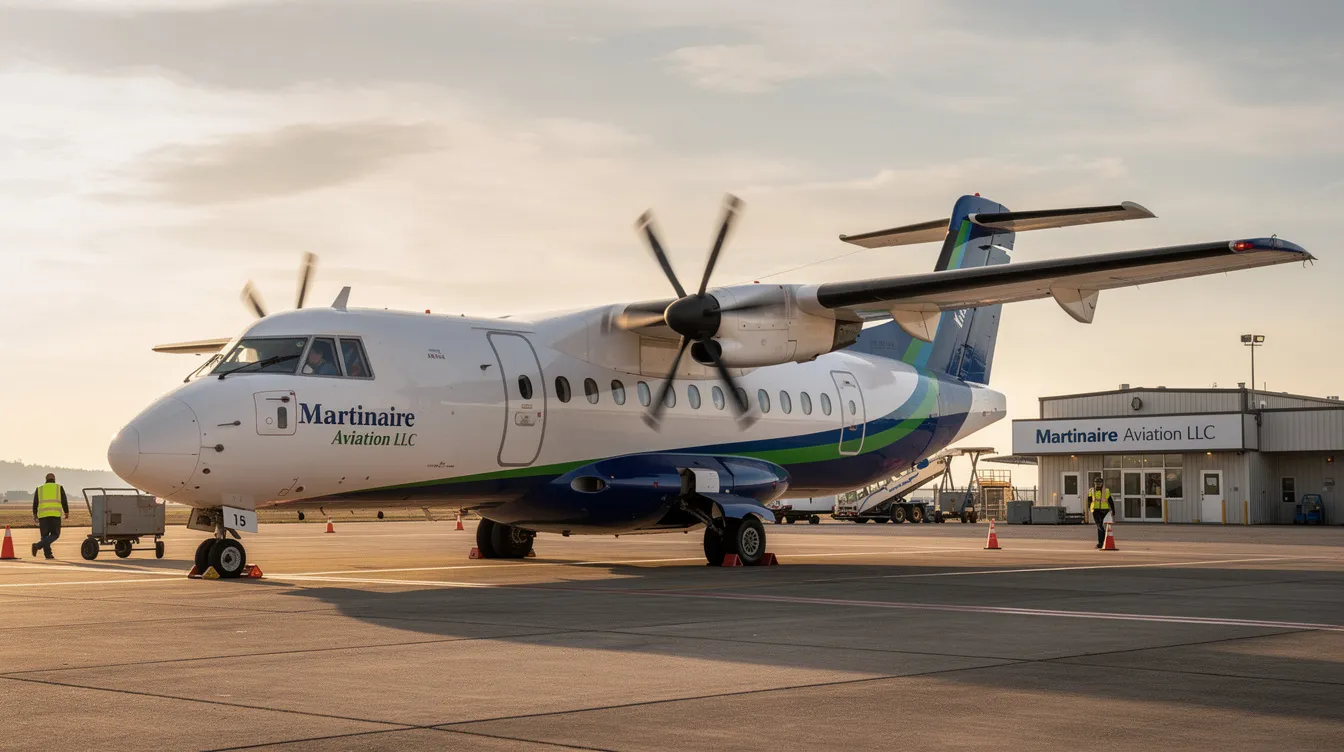
Martinaire Aviation LLC: Cargo Operations, Careers, and How It Compares to Private Charter
Martinaire Aviation LLC, founded in 1978, is a leading cargo feeder carrier in the U.S., specializing in overnight freight operations. With a fleet of turboprop aircraft, it connects regional airports to major sorting hubs, primarily serving integrators like UPS. This article explores Martinaire's operations, career opportunities, and how it contrasts with private charter services like Jettly.
Read More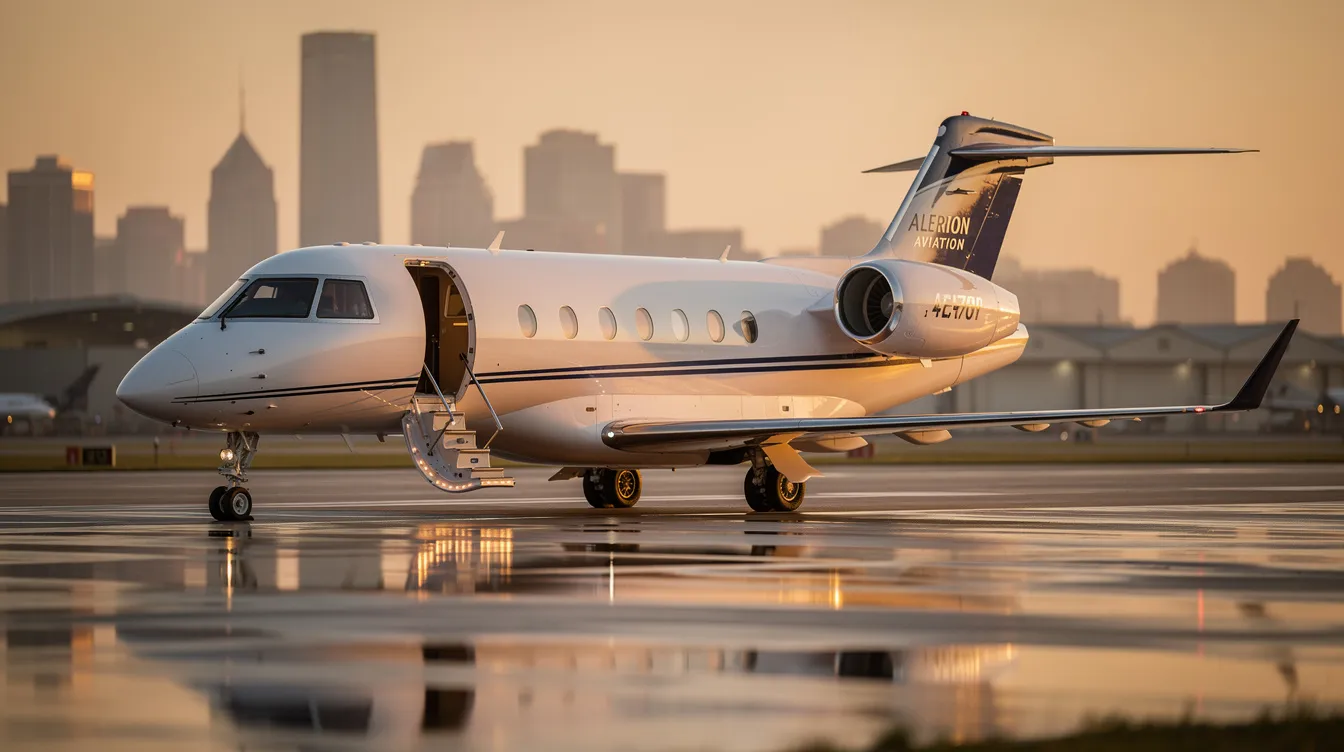
5
min read
Alerion Aviation: Charter, Aircraft Management, and How Jettly Helps You Compare Options
Alerion Aviation is a premier boutique private aviation company specializing in aircraft management, on-demand charter, and in-house maintenance. With a strong safety record and a large fleet operating from key U.S. locations, Alerion offers personalized service for travelers and aircraft owners. Jettly enhances the experience by providing a digital marketplace for comparing charter options, ensuring travelers find the best fit for their needs.
Read MoreStay updated with our latest insights and tips to elevate your journey with us.
MEMBERSHIPS AND ASSOCIATIONS



Disclaimer: Jettly operates as a charter broker, offering access to a global digital jet charter marketplace. Jettly is not a direct air carrier and does not own or operate aircraft. All advertised flights are conducted by third-party air carriers that are fully licensed and hold the appropriate Part 135 or Part 121 certifications issued by the Federal Aviation Administration (FAA) or equivalent regulatory authorities under U.S. or foreign law. Jettly complies fully with the U.S. Department of Transportation's Part 295 and Part 298 Charter Broker regulations. Jettly does not carry additional liability insurance. Passengers are covered by aircraft operator insurance. TICO: 50023770


