



Login
Get Instant Pricing On 23,000+ Aircraft

>
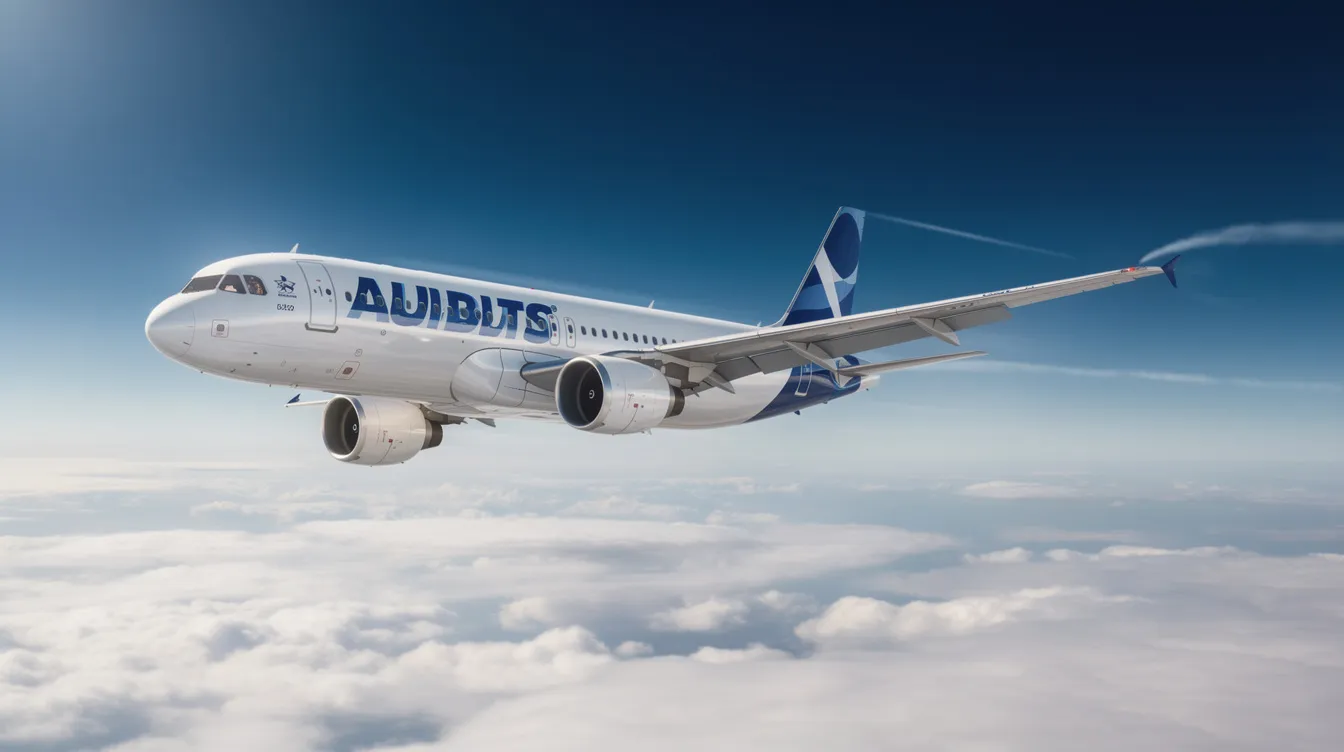
The Airbus A320 is one of the most-flown aircraft in commercial aviation, carrying millions of passengers on short- and medium-haul routes every day. But how fast does it actually fly in cruise? Understanding the A320 cruise speed matters whether you're planning a business trip, estimating arrival times, or evaluating a large-group charter. This post breaks down the real numbers, explains how pilots and dispatchers choose cruise Mach settings, and clarifies common speed-related misconceptions.
The typical A320 cruise speed sits around Mach 0.78–0.80, which translates to roughly 450–470 knots true airspeed (≈830–870 km/h) at altitudes between 30,000 and 39,000 ft.
Indicated airspeed, true airspeed, and ground speed are three different measurements. Seeing 500+ knots on a flight tracker does not mean the plane is in overspeed—it usually reflects a strong tailwind boosting groundspeed.
A320neo versions cruise at nearly identical Mach numbers as older ceo models. The gains come from 15–20% lower fuel burn per seat, thanks to newer engines and aerodynamic refinements, not from higher raw speed.
Cruise speed choices directly affect flight time, fuel burn, ticket pricing, and, for private charter clients, hourly cost and schedule flexibility. A slightly higher Mach setting can save minutes but costs more fuel, while a lower setting does the opposite.
The A320 typically cruises at altitudes between 30,000 and 39,000 feet, with lower altitudes used during climb or when weight and weather conditions dictate.
The aircraft’s maximum takeoff weight is 77,000 kg, influencing cruise performance and speed selection.
Flight crews monitor minimum safe speeds like VLS and other reference speeds to maintain safe operating margins during cruise.
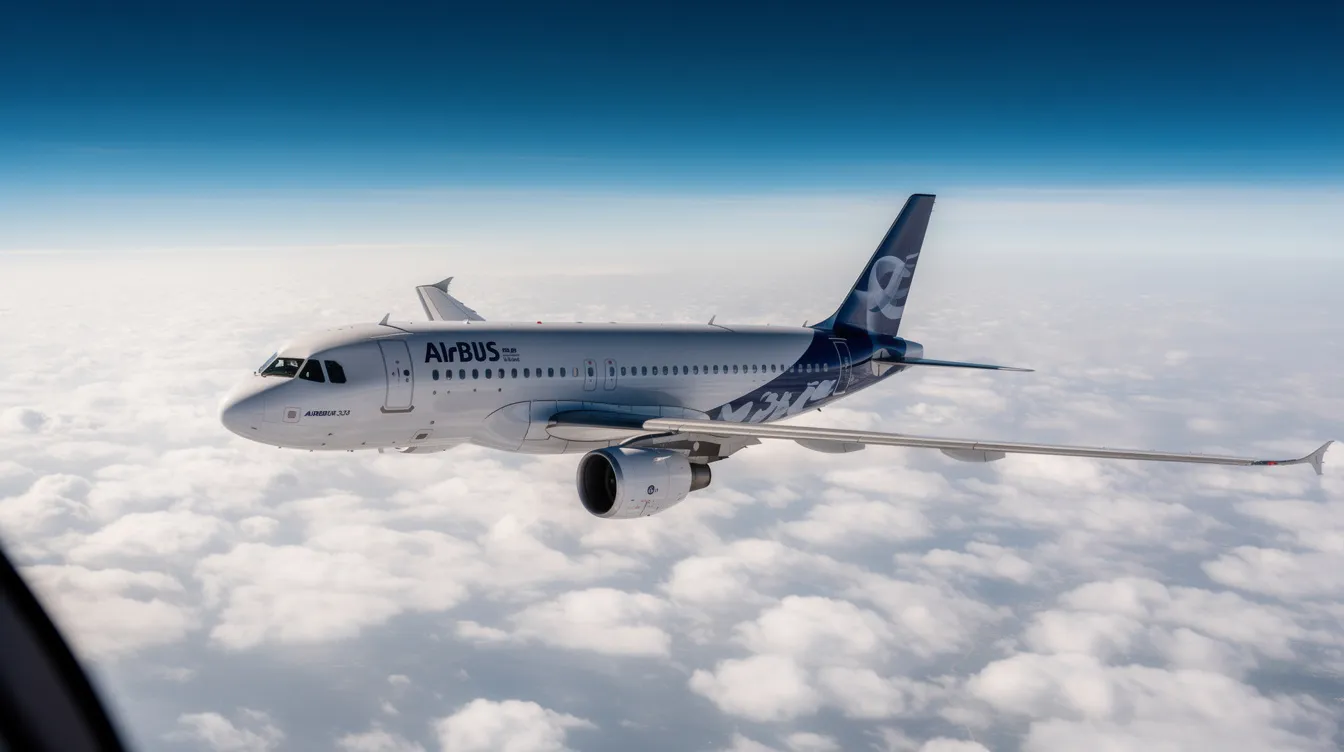
The A320 typically cruises at Mach 0.78 to 0.80. At a standard cruise altitude of 35,000 ft (FL350), that equals roughly 450 knots true airspeed—about 830 km/h or 515 mph. The Airbus A320 usually cruises between 30,000 and 39,000 feet, depending on weight and route length.
For A320ceo models powered by CFM56 or IAE V2500 engines, normal long-range cruise falls around Mach 0.76–0.78. Airlines may push closer to Mach 0.80–0.82 during schedule recovery, though that range is used sparingly. The A320 typically cruises at an altitude of 35,000 feet on most standard sectors.
Pilots rarely fly at the aircraft's certified maximum continuously. Instead, the flight crew programs an economical cruise Mach number into the Flight Management System (FMS), based on the airline's cost index and route conditions.
The A320neo family—including the A319neo, A320neo, and A321neo—uses the same cruise Mach band. The neo's LEAP-1A or PW1100G engines deliver better fuel efficiency and lower noise, but they do not raise the top cruise speed. Both variants share identical aerodynamic limits.
As a concrete example, in still air at FL350, an A320 cruising at Mach 0.78 covers a 500-nautical-mile sector such as London–Berlin in roughly 1 hour and 10 minutes of block time, including climb and descent. For detailed specs and charter rates on this aircraft type, see the Airbus A320 overview on Jettly.
Cruise speed is determined by efficiency targets and kept well below the aircraft's structural and regulatory ceiling. Flying above an aircraft's optimum design speed increases drag, increases fuel consumption, and unnecessarily stresses the airframe.
The A320 family has a VMO (maximum operating indicated airspeed) of 350 knots and an MMO (maximum operating Mach number) of Mach 0.82. The Airbus A320 has a maximum cruising speed of 840 km/h. These are hard limits—exceeding them in routine operations is prohibited.
Airlines set company speed policies within this envelope. A standard cruise of Mach 0.78 is common, with Mach 0.80–0.81 reserved for delay recovery. Pushing to Mach 0.82 would hit the MMO boundary and trigger warnings.
On the A320's Primary Flight Display (PFD), a red-and-black VMAX band is displayed near the top of the speed tape. If a pilot approaches VMO or MMO, aural overspeed alerts sound, and flight control protections in normal law limit further acceleration. The correct response is to reduce thrust, adjust pitch, or climb gently to decrease indicated or Mach speed.
Beyond VMO and MMO, several other reference speeds matter during different flight phases:
V1: Highest speed at which a takeoff can still be safely rejected
V2: Takeoff safety speed is maintained after an engine failure
VREF: Reference speed for normal final approach before landing
VLS: Lowest selectable speed for the autopilot
Green Dot: Engine-out operating speed in clean configuration (no flaps extended)
These speeds are not cruise-related but are critical for the flight crew during takeoff, approach, and abnormal situations.
A lot of confusion about A320 speed appears on forums and in flight simulators. Users see an A320 cruising at 450 or even 530 knots and assume something is wrong. The difference comes down to which type of speed is being measured.
Indicated airspeed (KIAS) is what the pilot primarily uses for aircraft handling. It reflects dynamic air pressure on the pitot tube. As a plane climbs to higher altitudes, air density drops, so IAS decreases even though the aircraft is actually moving faster through the air. At FL350, a typical A320 might show around 250–280 KIAS on its instruments while cruising at Mach 0.78.
True airspeed (KTAS) corrects indicated airspeed for altitude and temperature. It represents the aircraft's real velocity relative to the surrounding air mass. According to Eurocontrol's performance database, a cruising A320 records a TAS of approximately 450 knots at Mach 0.79.
Ground speed is true airspeed adjusted for wind. Wind affects cruising speed because a tailwind increases ground speed while a headwind reduces it. For example, an A320 at Mach 0.78 and FL360 with an 80-knot tailwind can register a ground speed of 530 knots without any overspeed condition at all.
Flight-tracking websites and apps often display groundspeed by default. That is why a viewer might see an A320 apparently "speeding" at 520 knots—it is simply benefiting from favorable winds. In air traffic control contexts, speed restrictions such as "maintain 250 knots below 10,000 ft" refer to indicated airspeed, not ground speed. Understanding this difference helps ignore misleading numbers on a tracking page.
There is no single fixed A320 cruise speed. Cruising speed varies with aircraft weight, altitude, atmospheric conditions, and remaining fuel. The A320 has a maximum takeoff weight of 77,000 kg, and when departing heavy, its aerodynamic margins are tighter.
On longer sectors, pilots use step climbs. A flight from Paris to Dubai, for instance, might begin cruising at FL310 when the aircraft is heavy, then climb to FL370 or FL390 as fuel burns off. The Mach number remains roughly the same throughout, but true airspeed at the higher altitude is slightly higher for the same Mach number, and drag at that altitude is lower, saving fuel.
Cruising speeds vary depending on altitude and atmospheric conditions. Warmer-than-standard days (positive ISA deviation) reduce air density at altitude, which can lower the available cruise ceiling or push pilots to accept a slightly lower Mach to maintain required margins. Cooler-than-standard conditions have the opposite, more favorable effect.
A practical example: an A320 departing New York for Dallas (~1,350 nmi) might climb to FL330 at Mach 0.78 while heavy, then step to FL370 past the midpoint. Using an airport locator tool helps planners evaluate alternatives and slot-constrained fields when mapping out such routes. The result can be a fuel saving of several hundred kilograms over the sector.
Pilots and the FMS constantly monitor margin to VLS, buffet boundaries, and the maximum operating speed when deciding on cruise levels. Cruise speed affects the A320's fuel efficiency and range, so getting this balance right matters on every flight. Travelers comparing aircraft types or charter options can benefit from a guide to affordable airplane rentals, costs, and options, showing how these performance differences influence pricing.
Airlines do not simply fly as fast as possible. They balance time cost against fuel cost for every sector.
Long-range cruise (LRC) is the Mach number that maximizes nautical miles per kilogram of fuel. On the A320, it typically falls slightly below the standard cruise Mach—around Mach 0.76–0.77. LRC is rarely used on short sectors because the time lost outweighs the fuel saved.
The Cost Index determines the balance between speed and fuel efficiency. Entered into the FMS, a lower cost index favors fuel saving and drives a slower cruise Mach, while a higher cost index favors time saving and pushes the aircraft toward Mach 0.80 or slightly above. Airlines adjust this number based on fuel prices, schedule pressure, and crew duty limits, much like travelers compare jet card costs and pricing structures when balancing flexibility against hourly rates.
A concrete numeric comparison: over a 1,000-nautical-mile sector at FL350, cruising at Mach 0.76 versus Mach 0.80 changes flight time by roughly 8–10 minutes. The faster setting burns several hundred kilograms more fuel—a percentage increase of perhaps 2–5% depending on weight and winds.
When fuel prices spike, airlines frequently adopt lower cruise Mach settings to trim operating costs. During congested schedules, they may push toward higher cruise speeds to protect passenger connections. For private users weighing similar trade-offs, understanding how much a private jet really costs helps put fuel and speed decisions into context.
For passengers, the difference between Mach 0.76 and 0.80 is virtually invisible in the cabin. The impact shows up in gate-to-gate time and, occasionally, in slightly higher engine noise at the upper end of the speed band.
The A320neo program was planned around efficiency, not raw speed. The neo shares its predecessor's aerodynamic envelope, and MMO remains at Mach 0.82 for both variants.
The key differences relevant to the cruise are the engines—CFM LEAP-1A or Pratt & Whitney PW1100G-JM—and aerodynamic refinements such as sharklets. These changes reduce fuel burn per seat by roughly 15–20% on medium-haul routes such as Frankfurt–Athens, based on Airbus's published figures.
Typical cruise Mach for the A320neo remains around 0.78–0.80, identical to the ceo in practice. Flying above an aircraft's optimum design speed creates disproportionately more drag due to compressibility effects, so manufacturers tune the airframe for peak efficiency near standard cruise rather than pushing higher Mach.
The A321XLR variant also cruises around Mach 0.78–0.80, even on extended sectors like New York–Dublin. It relies on adding extra fuel capacity and related equipment, along with an optimized flap configuration, rather than on faster cruise, to achieve its range.
For operators choosing between ceo and NEO for charter or ACMI missions, the deciding factors are typically hourly operating cost and range—not top speed. Schedule planning assumes similar cruise Mach numbers for both variants, so the neo's advantage shows up in the fuel bill, not in flight time. For a broader market perspective on operators using these aircraft, see the broader guides to charter airlines and the private aviation ecosystem.

Airline dispatchers and charter brokers treat cruise speed as a planning input that feeds into block time, crew duty limits, and aircraft utilization.
Flight plans filed with ATC specify a planned cruise Mach (typically M0.78) along with a step-climb strategy. On European city pairs like Paris–Rome (~600 nmi) or Madrid–Munich (~850 nmi), en-route cruise time at Mach 0.78 accounts for roughly 50–70 minutes of the total block time that also includes taxi, climb, and descent.
Charter clients usually see a quoted flight duration that already factors in taxi, climb, cruise at the planned speed, descent, and expected winds. Many frequent flyers use jet card programs to lock in hourly rates while relying on these assumptions about cruises. The number displayed on a booking platform is the realistic door-to-door estimate, not raw cruise time.
On high-density routes, ATC slot times and terminal congestion can matter more to total travel time than small adjustments in cruise speed. Waiting for a departure slot at London Heathrow or navigating arrival sequencing into New York's airspace can add more minutes than any cruise Mach choice saves.
For large-group charters—say a corporate team flying Dubai–Istanbul—planners may request a higher cost index so the aircraft cruises near Mach 0.80, tightening schedules to align with meeting times while accepting a modestly higher fuel cost. Shared-capacity options, including crowdsourced private jet flights and empty-seat sharing, can further improve utilization on these routes. Jettly's group charter page outlines how these flights are coordinated.
On longer sectors within the A321XLR's range, predictable cruise speed helps operators schedule quick turnarounds and position the aircraft for next-day charters, keeping utilization high. For more on renting an Airbus for charter flights or browsing a wide range of private charter aircraft, Jettly offers a detailed walkthrough.
Most modern jet-powered aircraft cruise in a surprisingly narrow Mach band. The A320 sits comfortably within that range, but differences do exist across categories.
|
Aircraft Category |
Typical Cruise Mach |
Approx. TAS (knots) |
|---|---|---|
|
Regional jets (e.g., Embraer E175, Canadair CRJ-200, Embraer ERJ 145) |
0.76–0.78 |
430–450 |
|
Airbus A320 / Boeing 737-800 |
0.78–0.80 |
450–470 |
|
Wide-body airliners (A350, 787, Airbus A330-300) |
0.82–0.85 |
480–500 |
|
Long-range business jets (G650, Global 7500, Citation X) |
0.85–0.90 |
500–530 |
The Boeing 737 Family typically operates around Mach 0.78 to 0.80, making it almost equal to the A320 in cruise. Regional jets typically cruise slightly slower than the A320 at Mach 0.76 to 0.78. Wide-body aircraft typically cruise faster than the A320 at Mach 0.82 to 0.85, trimming time on long-haul segments. For the fastest point-to-point travel, long-range business jets like the Gulfstream G650 or ultra-fast models such as the Citation X can reach close to Mach 0.90—see Jettly's overview of heavy jets for more on that category.
For short hops like Los Angeles–Las Vegas (~230 nmi), cruise speed differences between an A320 and a light jet are barely noticeable. Climb, descent, and ground operations dominate total time, whether you’re in a single-engine utility aircraft like the Cessna 207 or a pressurized twin such as the Cessna 340. The A320's cruise performance is optimized for high-capacity, medium-haul routes rather than maximum possible speed.
Cruise speed decisions ripple into things passengers actually notice: total flight duration, cabin noise, and ride comfort.
A slightly lower cruise Mach number—say, 0.76 instead of 0.79—can modestly reduce aerodynamic and engine noise inside the cabin. That said, modern soundproofing means the difference is usually subtle enough that most travelers would not detect it.
In turbulence, crews may temporarily reduce the Mach number to a recommended turbulence-penetration speed below normal cruise speed. This protects the airframe from excessive loads and improves ride quality. For example, crossing a strong jet stream over the North Atlantic, a flight crew might slow from Mach 0.78 to Mach 0.74 until conditions smooth out.
When a cabin announcement says the flight will arrive "ahead of schedule," it almost always means favorable tailwinds have boosted ground speed—not that the pilot is flying faster than normal cruise limits. The Mach number on the flight deck likely stayed at the same backup setting it started with.
Environmental considerations also play a role. Airlines and charter operators are increasingly reluctant to fly at a consistently high cruise speed when a modest reduction saves fuel and CO₂ without materially changing arrival times. For estimating realistic flight times on any route, Jettly's guide covers the key variables.
Reliable, predictable block times at efficient cruise speed can be more valuable to travelers than marginally faster flights with inconsistent schedules.
While the A320 is mainly a commercial workhorse, Airbus Corporate Jet (ACJ) variants use the same cruise envelope for private missions. The ACJ319neo and ACJ320neo typically cruise at Mach 0.78–0.80 on long legs such as London–Dubai or New York–Reykjavik, while offering bespoke interiors for small groups or corporate teams.
Private charter platforms like Jettly incorporate typical A320-family cruise speeds into their digital quoting tools, helping calculate realistic trip times and hourly cost estimates for large-group charters. For private jet memberships, these estimates also inform budgeting for frequent travelers. Because the cruise Mach number is predictable, planners can provide accurate quotes based on route distance and expected winds.
For time-critical corporate shuttles or sports team travel, planners may request a higher cost index to enable the aircraft to cruise near Mach 0.80. This choice modestly tightens the schedule while increasing fuel burn—a trade-off that corporate clients often accept when meetings or events are non-negotiable.
Compared with smaller private jets that can fly faster in cruise, a VIP A320 focuses on capacity and cabin space. On regional sectors under two or three hours, the difference in cruise speed has a limited impact on door-to-door time, especially when using efficient private terminals that eliminate long security lines and boarding queues. Aircraft such as the Challenger 601 emphasize cabin comfort and range over marginal speed gains on these missions.
For those exploring the ACJ320neo as a charter option, Jettly provides detailed information on cabin, range, and pricing. And for a broader view of available aircraft, the platform's charter cost estimator is a practical starting point.
Many modern flight-tracking, booking, and charter platforms protect real-time A320 cruise speed and route data behind a security verification layer. This is standard practice across the aviation website ecosystem.
A typical security service page works like this: before accessing live maps or performance dashboards, users confirm they are human through a simple checkbox, CAPTCHA, or brief browser challenge. While waiting, users often see a message like "performing security verification" alongside a quick progress indicator.
This process helps block automated scraping and detect malicious bot traffic, preserving server performance and protecting sensitive operational data. Some systems respond with a unique ray ID for each session, allowing the platform to trace and resolve issues. Once security verification is complete and successful, travelers can view aircraft type, current cruise speed, altitude, and estimated arrival in order without compromising data integrity.
Aviation-focused platforms, including digital charter marketplaces, use similar layered protections when displaying real-time fleet positioning or pricing tools. Whether a site verifies users via email confirmation or a browser-based challenge, the goal is the same: to protect both commercial and private aviation users interested in tools that explain affordable private jet charter costs and on-demand pricing. These checks typically take only a few seconds and reflect industry best practices.
These FAQs address common queries that go beyond what was covered in the main sections above.
No. Cruise speed varies based on route length, winds, aircraft weight, and the airline's cost index setting. Shorter routes may use a slightly different Mach number than long sectors, and strong headwinds or tailwinds influence the optimal choice. Dispatchers also adjust the Mach target when fuel prices change significantly.
Indicated airspeed stays well below 350 knots at cruise altitude. However, true airspeed regularly reaches 450–470 knots, and groundspeed can exceed 500 knots when strong tailwinds are present. This is normal and within design limits, provided the Mach number remains below MMO.
As a rough rule of thumb, increasing from Mach 0.78 to 0.80 may save around 5–10 minutes on a 1,000-nautical-mile sector. The trade-off is noticeably higher fuel burn—typically a few percentage points more—which is why airlines only use higher Mach settings when schedule recovery justifies the cost.
Yes. In moderate or forecast severe turbulence, crews temporarily slow to a recommended turbulence penetration speed below normal cruise Mach. This reduces structural loads on the wing and fuselage and improves passenger comfort until conditions smooth out.
They generally use similar cruise Mach numbers. Private charters save time through faster boarding, use of less-congested airports, and tailored routing. The door-to-door time advantage comes from ground-side efficiency—not from a higher Mach number.
The A320 normally cruises around Mach 0.78–0.80—a speed chosen to balance fuel efficiency, schedule reliability, and passenger comfort rather than to chase absolute maximum speed. The aircraft can reach Mach 0.82, but continuing to cruise at that limit would waste fuel and stress the airframe for minimal time savings.
Remember the distinction between indicated airspeed, true airspeed, and ground speed. Seeing 500+ knots on a tracking page does not mean a rule violation—it typically reflects favorable winds that increase the aircraft's ground speed.
The practical takeaway for travelers and charter clients is straightforward: a predictable A320 cruise speed enables accurate scheduling, while small adjustments in speed and altitude help operators manage fuel consumption, comfort, and environmental impact. Thanks to this consistency, block time estimates from charter platforms tend to be highly reliable.
Ready to explore private or group travel options? Compare aircraft, review routes, or request an instant quote at https://www.jettly.com.
Share this post:
Jay Franco Serevilla
Jul 19, 2026
|
5
min read
Discover tips and trends in the industry.

5
min read
Havasu Falls Helicopter Price: Costs, Schedule, and How to Book in 2026
Planning a trip to Havasu Falls in 2026? The helicopter service offers a quick alternative to the challenging hike, costing approximately $300 one-way. Flights operate on select days and are first-come, first-served, so early arrival is essential. Remember, a valid permit is required for all visitors to access the falls.
Read More
5
min read
How Long Does It Take to Get a Helicopter License? Timeline, Training, and Costs
Becoming a helicopter pilot can take anywhere from 2 months to 2 years, depending on the type of license and training frequency. A private pilot license typically requires 40 flight hours, while a commercial license demands 150 hours. Factors such as training intensity, weather conditions, and flight school choice significantly influence the timeline and costs involved.
Read MoreStay updated with our latest insights and tips to elevate your journey with us.
MEMBERSHIPS AND ASSOCIATIONS



Disclaimer: Jettly operates as a charter broker, offering access to a global digital jet charter marketplace. Jettly is not a direct air carrier and does not own or operate aircraft. All advertised flights are conducted by third-party air carriers that are fully licensed and hold the appropriate Part 135 or Part 121 certifications issued by the Federal Aviation Administration (FAA) or equivalent regulatory authorities under U.S. or foreign law. Jettly complies fully with the U.S. Department of Transportation's Part 295 and Part 298 Charter Broker regulations. Jettly does not carry additional liability insurance. Passengers are covered by aircraft operator insurance. TICO: 50023770


