


Login
Get Instant Pricing On 23,000+ Aircraft

>
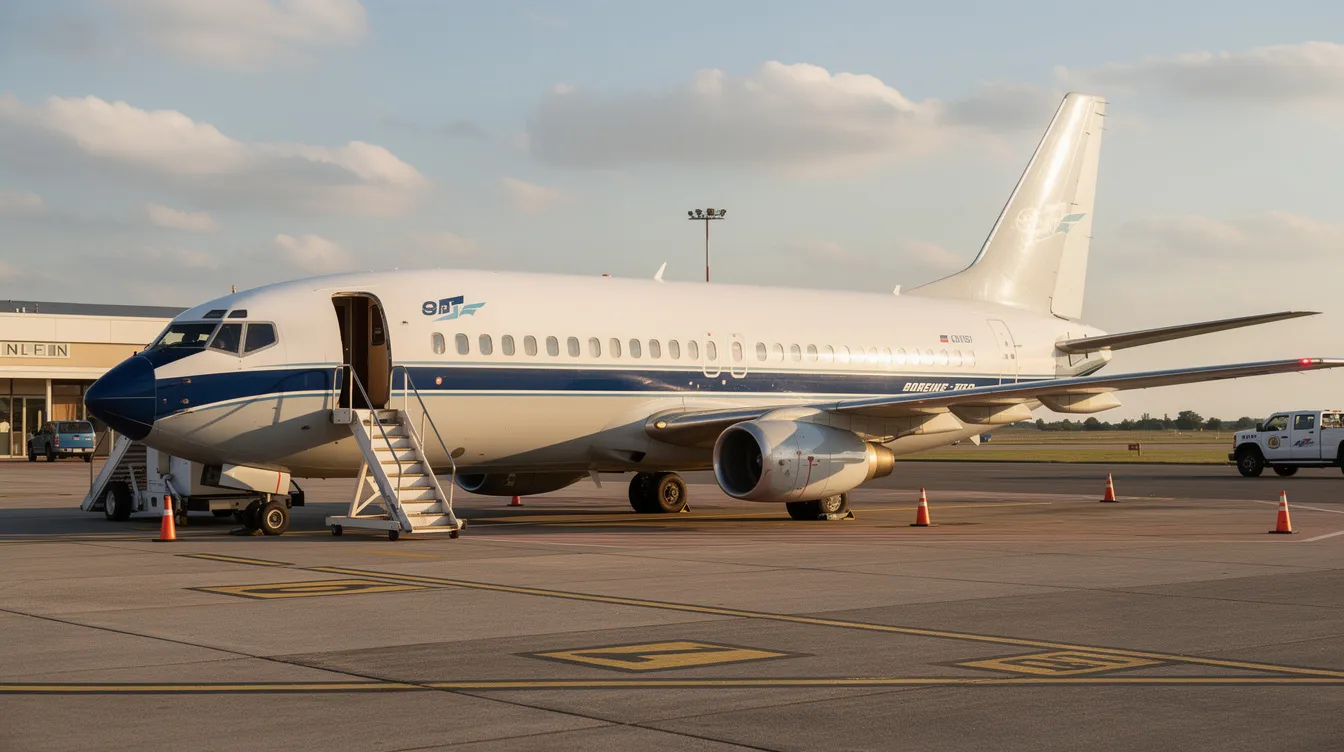
The Boeing 737-200 is an early Boeing 737 twinjet introduced in 1968 as a stretched version of the 737-100, designed to carry more passengers on short and medium-haul routes.
Typical seating ranges from 100 to 136 passengers depending on layout, with three main configurations: two-class, all-economy, and executive. Its rugged airframe and optional gravel kit allow operations from unpaved and remote runways.
The aircraft completed its first flight on 8 August 1967, offers a range of roughly 2,300 nautical miles, cruises near Mach 0.78 (approximately 497 knots), and has a service ceiling of 37,000 feet. Fuel consumption is relatively high by modern standards.
While no longer a mainstream passenger airliner flying routes across major hubs, the Boeing 737-200 and its -200C combi variant still serve remote, cargo, and occasional private charter missions. These can be accessed through Jettly's on-demand marketplace where available.
The Boeing 737-200 is an early, rugged twin-engine, narrow-body jet in the original 737 family, introduced in 1968 as a stretched version of the 737-100. It typically seats about 100 to 136 passengers and earned its reputation by operating from short and even unpaved runways where many newer airliners are less practical, which is why it still appears in specialized charter, cargo, and remote-area missions today.
Boeing built 1,114 units of the 737-200 before production ended in 1988, and the type served airlines on short- and medium-haul routes across every continent. Today, a small number remain active with remote-region airlines, cargo operators, and combi services, keeping the aircraft relevant for corporate executives, project managers, travel planners, high-net-worth travelers, and organizations that need to move large groups or equipment into challenging airports.
This guide examines the 737-200’s history, design, technical specifications, performance, cabin layouts, variants, safety, cargo capability, fuel use, and charter economics, along with how it compares with other charter aircraft and how a brokered platform like Jettly can help locate one for private charter where these jets still operate.
The Boeing 737-200 traces its origin to the mid-1960s, when airlines wanted a larger version of the compact 737-100 that Boeing was already developing. The initial concept for the 737 family took shape when preliminary design work began in the early 1960s, targeting a small jet for short-haul domestic services. Boeing was creating a new aircraft to complement or replace older short-haul types. Lufthansa became the launch customer for the shorter -100 in 1964, and the 737 initially competed with the BAC One-Eleven, Caravelle, and DC-9 in that early market.
United Airlines placed an order in April 1965 for the stretched variant, prompting Boeing to expedite development of the -200. The board had approved the 737 program on 1 February 1965, and United's commitment signaled improved demand for a version with more seats and range than the -100 could offer. Later, african airline orders helped sustain sales momentum for the family in developing markets.
The first 737-200 rolled out on 29 June 1967. Its maiden flight took place on 8 August 1967 from Boeing Field in Seattle. Flight certification followed quickly: the FAA certified the type on December 21, 1967.
The aircraft entered service with United Airlines on April 28, 1968. In 1968, its unit cost was $4.0 million. Its inaugural flight in commercial operation demonstrated that the stretched airframe could handle higher passenger loads on the same routes the -100 served. The -200 rapidly became the production standard for the early 737 line and the widely preferred version over the -100, effectively becoming the primary Original Boeing 737 variant and the template for everything that followed.
The Boeing 737 family spans four generations: Original (-100/-200), Classic (-300/-400/-500), Next Generation or NG (-600 through -900), and the current MAX series. The Boeing 737 was the world's highest selling commercial aircraft for much of its production history before the A320 family later surpassed it in cumulative deliveries. The 737-200 sits at the very beginning of this lineage, and as an earlier entry in the family it holds foundational historical significance before later generations arrived.
Boeing reused around 60 percent of the Boeing 727 structure when designing the 737, particularly the fuselage cross-section.
The cabin retained a 148-inch fuselage width, supporting six abreast seating in a 3-3 single-aisle layout.
Early design studies also considered five abreast seating, but the wider cross-section won out for competitive reasons, while the low-slung fuselage kept the body close to the ground to improve baggage handling and servicing access at smaller airports.
Low-slung fuselage
Underwing Pratt & Whitney JT8D low-bypass turbofan engines mounted close to the ground
Simple hydro-mechanical controls
Absence of modern winglets
Shorter body compared to newer models in the 737 family
Classic and Next Generation variants introduced CFM56 high-bypass turbofans, digital avionics, and improved cabin interiors.
NG and MAX models added features like the Boeing Sky Interior with mood lighting, larger overhead bins, and significantly better fuel consumption.
The 737-200 represents a simpler, more mechanical era of jet design.
Overall fuselage length: approximately 30.5 m (100 ft 2 in)
Wingspan: about 28.35 m (93 ft 2 in)
Height: roughly 11.29 m (37 ft)
Horizontal stabilizer mounted low on the aft fuselage, rather than in a T-tail arrangement
Integrated air-stair options allowed quick boarding at smaller airports without jet bridges.
Streamlined baggage and passenger access at remote strips.
Main landing gear retracts into pods on the lower fuselage, giving the 737-200 its characteristic belly-mounted look.
This arrangement keeps the fuselage close to the ground, simplifying cargo loading and servicing.
Reinforced airframe to handle the stresses of frequent short sectors.
Durable enough for remote and charter operations decades after its original production run.
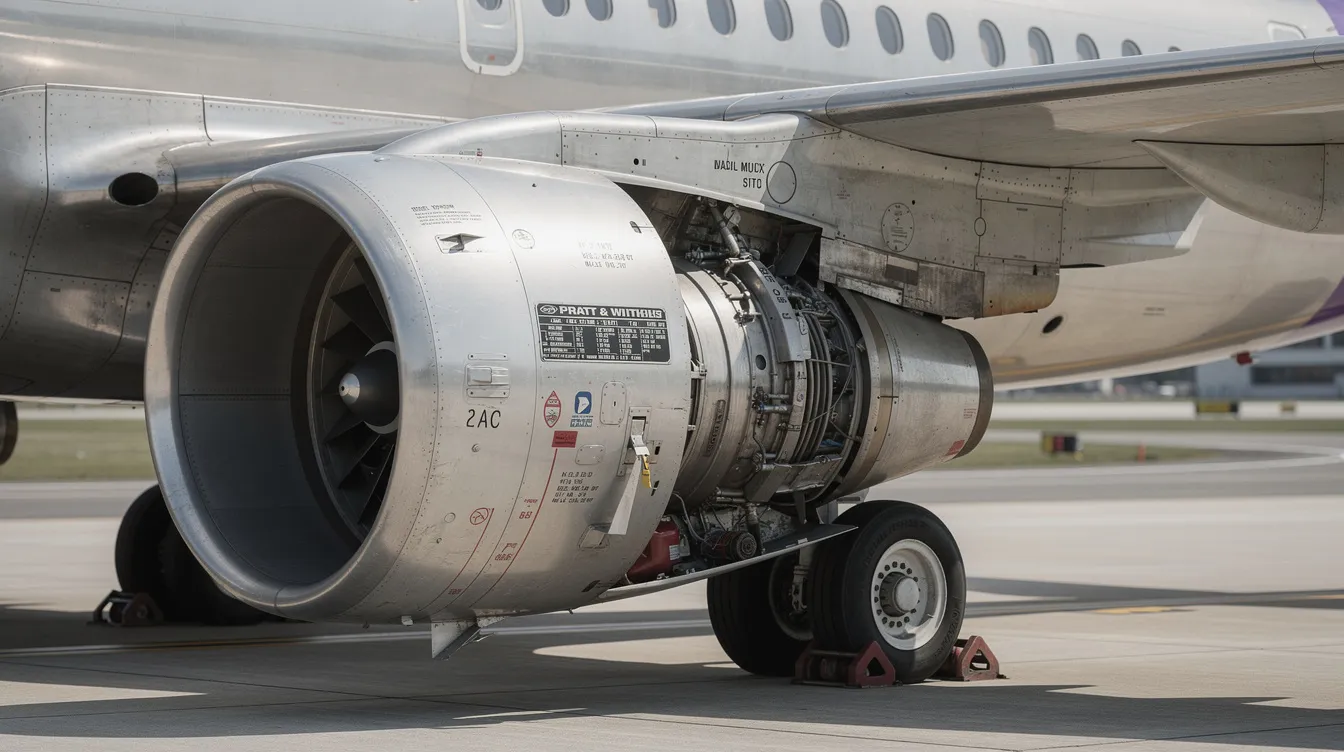
Pratt & Whitney JT8D low-bypass turbofan engines define the Boeing 737-200's performance character.
Two Pratt & Whitney JT8D-9A engines producing 14,500 pounds of thrust each in the base configuration.
Later 737-200 Advanced models used upgraded JT8D-15 and JT8D-17 variants, pushing thrust to approximately 15,500–17,400 lbf per engine.
Maximum cruising speed: approximately 497 knots (Mach 0.78–0.79)
Service ceiling: 37,000 feet
Range: approximately 2,300 nautical miles
Maximum takeoff weight: up to 128,100 pounds depending on variant
Fuel flows in the range of 700–750 US gallons per hour across both engines at cruise.
Loading with full fuel further increases takeoff weight and limits payload.
Higher fuel consumption has pushed the 737-200 away from mainstream scheduled services and toward niche roles.
Fuselage width: 148 inches
Internal cabin width: about 3.54 m (11 ft 7 in)
Cabin height: roughly 2.2 m (7 ft 3 in)
Two-class layout: approximately 100 to 115 seats with a small business or first-class section forward
All-economy (single class layout): 130 to 136 passengers at six per row, with high-density arrangements reaching the maximum
Executive layout: 56 to 97 seats, offering more legroom and upgraded amenities
Early 737-200 cabins offer a vintage feel compared to modern Boeing Sky Interior found on NG and MAX jets.
Overhead bins are smaller, cabin lighting is traditional fluorescent, and engine noise from the JT8Ds is more noticeable.
For private charter or corporate shuttle roles, interiors can be reconfigured with business-style seating, upgraded soft furnishings, dedicated galleys, and improved lavatories.
Maximum takeoff weight:
Standard Advanced variant: 115,500 pounds (52.4 tonnes)
Some later subvariants: up to approximately 128,100 pounds
Maximum payload: up to 30,000 pounds
Underfloor cargo volume: approximately 875 ft³ across forward and aft baggage compartments
Hydro-mechanical systems linked by steel cables
Manual reversion capability in case of hydraulic failure
Classic analog cockpit originally designed for three crew members
Most operators later converted to two-crew operations with updated avionics
Automatic wheel brakes and thrust reversers support safe deceleration on short or slippery surfaces
Can operate from runways over 5,000 feet, with typical takeoff distances around 6,000 feet at sea level and maximum weight
Many aircraft have been retrofitted with modern GPS, FMS, EGPWS, and TCAS systems to meet current regulatory requirements, despite the original analog instrument panel.
For detailed specifications, visit Boeing 737-200 Specs, Range & Charter Rates on Jettly, or compare it with the Boeing 737-800 specs, range, and charter rates if you’re considering newer-generation options.
More powerful engines (JT8D-15 and JT8D-17), making the 737-200 Advanced an improved version of the baseline -200 with better climb rates and higher operating ceilings
Improved aerodynamics including leading edge slats and refined Krueger flaps, reducing takeoff and approach speeds
Increased maximum takeoff weight and more fuel capacity for longer range
Strengthened landing gear and brakes for higher-weight operations
Large main-deck cargo door (approximately 86 × 134 inches)
Reinforced floors and roller tracks
Can fly in all-passenger, all-cargo, or mixed combi configurations
Rapid conversion between cargo and passenger layouts in under an hour
Supports high aircraft utilization for routes with mixed passenger and cargo demand
Competed with the BAC One-Eleven, Sud Aviation Caravelle, and McDonnell Douglas DC-9 for short-haul domestic and regional traffic.
Airlines like Alaska Airlines, Aloha Airlines, and dozens of carriers across Latin America, Africa, and Asia adopted the type for domestic services and regional connections.
Preferred for its combination of payload, runway performance, and simple maintenance requirements.
Gradual retirement from large airline fleets began in the late 1990s and accelerated through the 2000s.
Rising fuel prices, stricter noise regulations, and newer Boeing 737 models with better fuel consumption made the -200 uneconomical for most scheduled services.
Roles include cargo operations, combi services to Arctic and remote communities, charter contracts for mining and energy projects, and occasional air force or government transport use; some 737-400 aircraft also later moved from regular service into freighter or combi roles, reflecting a broader lifecycle seen across older 737 variants.
In northern Canada, operators still rely on the type to connect communities that no other passenger transport aircraft of similar size can reach on gravel airstrips.
In parts of Latin America, the aircraft continues serving thin routes between regional cities with limited infrastructure.
As of September 2023, about 50 Boeing 737-200s remain in service worldwide, mostly in cargo or remote regional roles.
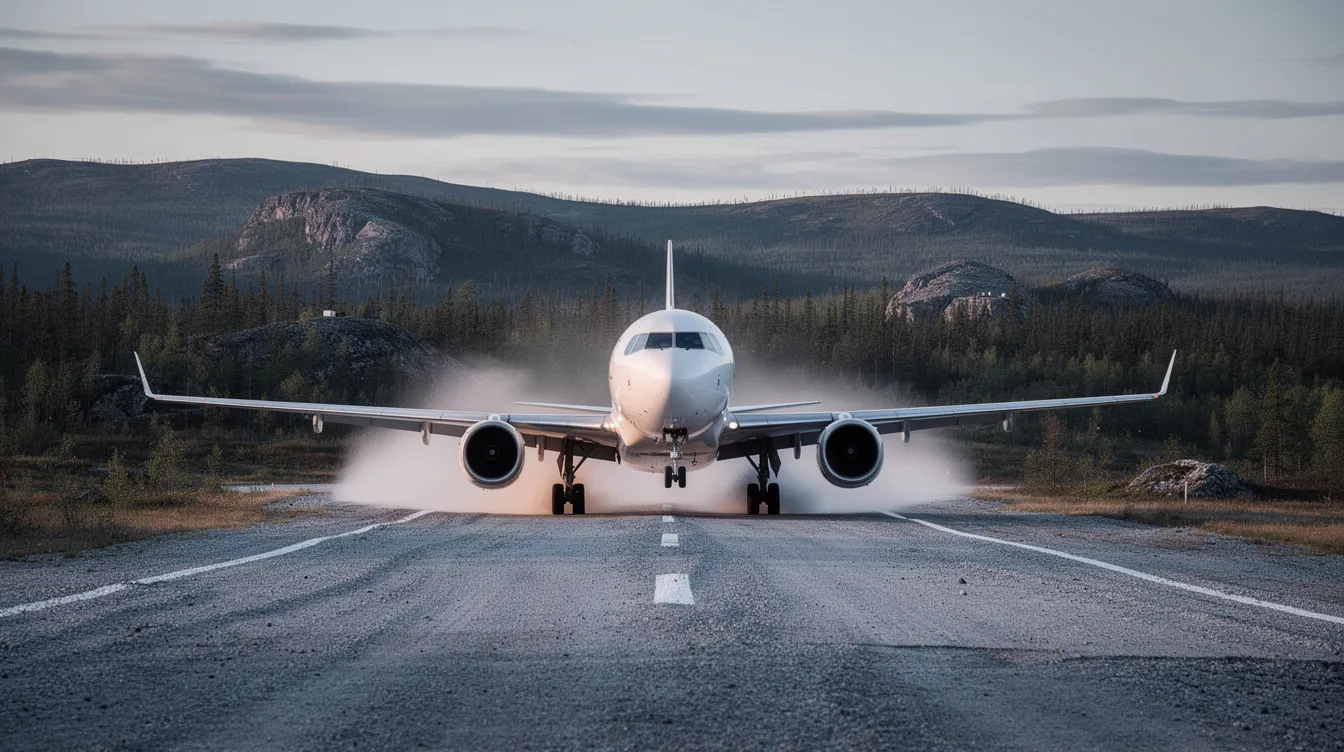
Optional gravel kit includes a nose gear gravel deflector, protective shields on the main landing gear, and inlet screens and leading-edge protectors.
With a gravel kit installed, the 737-200 can land on unimproved runways including dirt, compacted gravel, and even ice surfaces.
Landing distance: just over 5,000 feet under typical conditions
Takeoff distance at sea level and maximum weight: approximately 6,000 feet
Thrust reversers and robust landing gear contribute to safe deceleration on surfaces with lower friction coefficients.
Ability to handle gravel runways and gravel airstrips makes it a practical choice for private flights to remote industrial sites and community supply missions.
At cruise, the two JT8D engines burn approximately 700–750 US gallons per hour combined.
Modern CFM56-powered 737-800 burns significantly less fuel while carrying a similar or larger passenger load.
The 737-200 is not fuel efficient by today's standards.
Older low-bypass engines like the JT8D produce more noise and higher emissions per passenger mile than modern high-bypass turbofans.
Many 737-200s have been retired from noise-sensitive airports and regulatory bodies in North America and Europe restrict their operations at major hubs.
Operators may implement measures such as meticulous engine maintenance, careful flight planning, and voluntary carbon offset programs.
|
Feature |
737-200 |
737-800 (NG) |
737 MAX 8 |
|---|---|---|---|
|
Engines |
JT8D (low-bypass) |
CFM56-7B (high-bypass) |
LEAP-1B |
|
Typical seats |
100–136 |
162–189 |
162–210 |
|
Range (nm) |
2,300 |
~2,935 |
~3,550 |
|
Fuel efficiency |
Lower |
Much better |
Best in family |
|
Cabin interior |
Basic analog-era |
Boeing Sky Interior available |
Boeing Sky Interior standard |
|
Gravel capability |
Yes (with kit) |
No |
No |
The 737-200's cabin is louder, bins are smaller, and lighting is basic compared with the mood lighting and sculpted sidewalls of NG and MAX interiors.
From a charter buyer's perspective, the 737-200 is usually selected for its rugged, remote capability and payload flexibility. Newer Boeing 737 aircraft are chosen for fuel savings, comfort, and regulatory compatibility with major hubs.
A simple comparison: a 737-200 serving a gravel strip in Nunavut versus a Boeing 737-800 NG operating high-frequency shuttle flights between major cities. Each excels in its own environment.
Large groups, corporate shuttles, sports teams, or project charters
Organizations moving 80 to 130 people in a single flight
Operators configure 737-200s with executive or high-comfort interiors—fewer seats, more legroom, upgraded catering galleys—to support VIP group travel
Average hourly rental rate: approximately $18,300
Average purchase price of a pre-owned Boeing 737-200: around $6,500,000
Move a large group plus significant luggage or cargo in one aircraft, often to airfields that larger airliners or newer models cannot serve
Jettly's marketplace matches trip requirements with suitable aircraft, including classic narrow-bodies like the 737-200 where they remain in operation
Supports crowdsourced and shared private jet flights to help fill empty seats and reduce per-passenger costs
|
Aircraft Type |
Typical Passenger Capacity |
|---|---|
|
737-200 |
100–136 |
|
Midsize jet (e.g., Citation XLS, Challenger 350) |
7–12 |
|
Large-cabin jet (e.g., Gulfstream G650) |
13–19 |
|
Private jets for 50 passengers |
Airliner-class aircraft required |
737-200 charter involves higher total fuel costs and hourly rates, but the cost per seat drops sharply for large groups.
Example: 100 passengers at $18,300 per hour = ~$183 per person per hour.
Both categories can reach secondary airports, but a gravel-kit 737-200 may reach certain remote or industrial strips where sleek business jets would risk foreign object damage.
On Jettly, clients can compare these categories side by side, selecting anything from light jets to airliner-class aircraft depending on group size, budget, and runway requirements through its extensive private charter aircraft directory.
Northern Canada: Air Inuit operates multiple 737-200C models serving Arctic communities. Nolinor Aviation and Chrono Aviation maintain the type for remote charters and resource-sector support.
Latin America: Avior Airlines in Venezuela operates the type on regional routes. Operators in Honduras also appear in active registries.
Africa: Air Zimbabwe has maintained 737-200s in its fleet, and scattered operators across the continent rely on the type for domestic or regional connections.
Many of these aircraft fly combi or cargo missions to isolated communities, supporting essential supply chains rather than high-frequency passenger routes.
Some North American charter operators maintain the type specifically for project and resource-sector contracts.
Strict noise and emissions rules in North America and Europe have pushed most 737-200s out of busy hubs, reinforcing their concentration in remote markets.
Some of these aircraft are approaching their last flights as airframes reach structural life limits and replacement parts become scarce.
Availability for on-demand charter varies by country and operator, making a brokered digital platform like Jettly useful for identifying and sourcing these niche aircraft within the wider ecosystem of charter airlines and private aviation providers.
The Boeing 737 family has a long and complex safety history.
The 737-200 has been in service since 1968, accumulating millions of flight hours across thousands of airframes worldwide.
As of November 2023, the Boeing 737 family has been involved in 529 aviation accidents and incidents, spanning all variants across more than five decades.
The 737-200 specifically has a hull loss rate of 1.78 per million departures.
The 737-200 experienced multiple rudder issues in the 1990s, which led to industry-wide investigations and design changes.
The aircraft was involved in two total loss accidents killing 157 people.
The 737-200 Advanced variant improved safety with enhanced aerodynamics.
For operators maintaining aging 737-200 fleets, structural fatigue, corrosion management, and avionics upgrades are key focus areas.
Mandatory inspections and airworthiness directives enforced by regulators ensure that active airframes meet safety standards.
Modern 737-200 operations typically feature enhanced safety systems including GPWS/EGPWS, TCAS, and updated navigation equipment.
Jettly sources aircraft only from licensed operators compliant with local safety regulations and oversight, often working with vetted Part 135 charter companies that meet stringent safety and maintenance standards. Clients can request details about operator certifications and safety records when evaluating charter options.
Maximum payload capacity: approximately 25,000–30,000 pounds depending on configuration
Main-deck cargo door: approximately 86 × 134 inches on the -200C variant
Underfloor cargo holds: roughly 875 ft³ of volume
Rapid conversion between all-passenger, all-cargo, or mixed modes
Heavy, outsized loads like mining equipment, seasonal community supplies, or humanitarian relief cargo
Charter air freight missions where the 737-200C's combination of main-deck and underfloor cargo space rivals dedicated freighters in its size class
Organizations using Jettly may charter a 737-200 combi to transport both workforce and equipment in a single rotation, reducing the need for multiple flights or separate freighter charters.
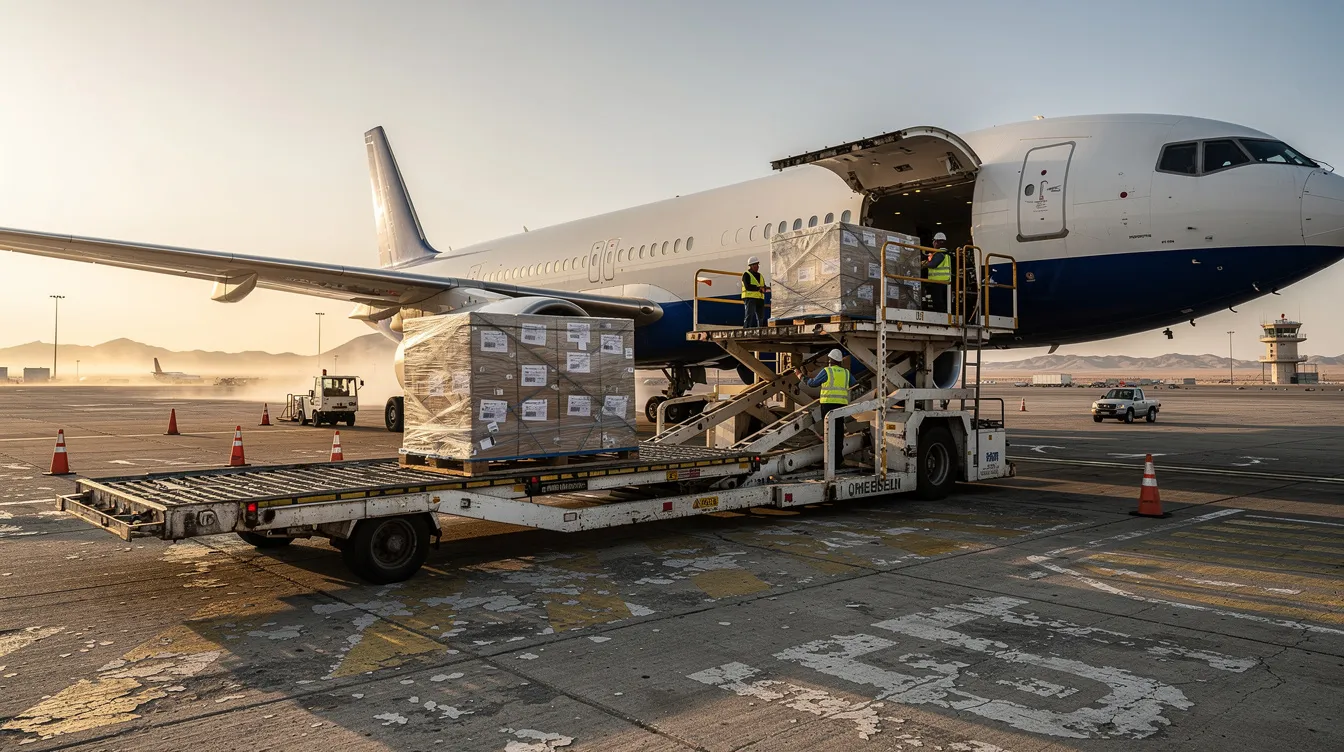
The 737-200 serves best where group size and terrain demand more than a standard private jet can deliver. Here are the mission types where it excels:
Mining or energy project crew movements: A resource company moves 100 workers between a major hub city and a gravel-runway base camp deep in a remote region. The 737-200 combi carries both the crew and critical heavy equipment in one rotation, saving time and logistics costs compared to multiple smaller flights.
Seasonal Arctic resupply: Communities in northern Canada depend on combi flights that bring both passengers and essential supplies. Air Inuit and similar carriers use the 737-200C for exactly this purpose, delivering food, fuel, and building materials alongside travelers.
Sports team or event charters: A professional sports team needs to move 85 players, coaches, and staff plus equipment to a secondary city for an away game. The 737-200's capacity and ability to serve smaller regional airports make it a practical choice.
Humanitarian and government missions: NGOs and government agencies charter 737-200s to deliver personnel and relief cargo into austere locations with limited runway infrastructure, particularly in Africa and Latin America.
Each of these missions leverages the 737-200's core strengths: passenger capacity, freight flexibility, and the ability to operate from challenging airfields. Through Jettly, complex missions can be coordinated across multiple flight legs, including crew positioning and ground transportation integration, while tools like its airport locator help verify runway suitability and available infrastructure at remote fields.
Access to rare types like the 737-200 depends on region, operator availability, and regulatory constraints.
A traveler, corporate travel planner, or project manager can submit route details, group size, cargo requirements, and runway constraints through Jettly's digital interface.
The platform returns instant or near-instant aircraft options tailored to the mission profile.
Where a Boeing 737-200 is not available or optimal, Jettly can propose comparable alternatives such as:
737-400
737-500
Boeing 757
Airbus A320
Large business jets like the Boeing BBJ
Jettly's differentiators align with what charter clients need most: transparent pricing without long-term ownership commitments, access to a global inventory of 20,000+ aircraft, and on-demand or private jet membership-based access. Learn more about Jettly's charter options at https://www.jettly.com.
|
Category |
Passengers |
Best For |
|---|---|---|
|
Turboprops (e.g., ATR 72-500, Saab 340) |
19–72 |
Very short sectors, rough strips, small groups |
|
Light / Midsize jets |
4–10 |
Executive travel, fast point-to-point |
|
Super midsize / Large jets |
10–18 |
Longer range, comfort for small groups |
|
Airliner-class (737-200, 737-800, A320) |
50–190 |
Large groups, cargo+passenger combos, project charters |
A 737-200 makes sense when group size is too large for typical private jets, runway conditions are demanding, or main-deck cargo is essential.
Otherwise, newer jets generally offer better comfort and fuel economics.
Real-world comparison: An executive roadshow with 8 people is a clear fit for a midsize jet. A film crew of 80 people plus production equipment heading to a remote location needs an airliner-class charter, potentially a 30-passenger plane or larger.
Jettly's role is to match the trip to the right category, providing clear options and pricing rather than pushing any single model.
The Boeing 737-200 is a classic early Boeing 737 with a strong legacy in short-haul airline service and a modern niche in remote, combi, and group charter roles. It completed its first flight on 8 August 1967, entered service in April 1968, and went on to sell 1,114 units before production ended in 1988.
Key strengths remain relevant today:
Typical seating for 100–136 passengers across multiple configurations
Range of 2,300 nautical miles
Rugged gravel-kit capability for unpaved runways
Flexibility to carry both passengers and cargo
Its relatively high fuel consumption compared to modern jets limits it to specialized missions, but in those roles, few aircraft can match what it delivers.
While the Boeing 737-200 is no longer common in mainstream fleets, it can still be a valuable solution for specific missions where runway conditions, payload, and group size align with its strengths. Its place in both aviation history and today's niche charter market is secure for as long as operators maintain these durable airframes.
Ready to experience private travel on your terms? Explore flight options or use Jettly’s private jet charter cost estimator to request a quote at https://www.jettly.com.
Availability is limited and region-specific. Most remaining 737-200s operate in remote or specialized markets rather than major hubs. Through a global brokered platform like Jettly, clients can occasionally access a 737-200 or similar airliner-class aircraft where operators make them available for charter. In many cases, Jettly will suggest more modern alternatives with similar capacity if a 737-200 is not practical or permitted on a given route due to noise regulations or operator constraints.
Pricing varies widely based on region, flight length, configuration, positioning legs, and current fuel prices. The average hourly rental rate is approximately $18,300, though actual costs can range higher depending on the mission complexity. Many sources quote airliner-class charter rates in the high five-figure or low six-figure USD range per flight hour, with per-seat costs dropping as group size increases. For the most accurate estimate, use Jettly's private jet charter cost estimator or request a custom quote for a specific itinerary.
The 737-200's fuel consumption is significantly higher than that of newer Boeing 737 NG/MAX or Airbus A320neo aircraft due to its older JT8D engine technology and aerodynamics. This typically makes the 737-200 economical only in niche roles where its unique capabilities—such as gravel runway access and combi configurations—outweigh fuel cost penalties. Environmentally conscious travelers may prefer newer jets or smaller private aircraft. Jettly can present these options and discuss carbon-offset possibilities where available, positioning itself as a flexible NetJets alternative for travelers who prefer on-demand or membership-based access over fractional ownership.
The standard 737-200 is a dedicated passenger airliner. The 737-200C ("Convertible") includes a large main-deck cargo door and reinforced floor for cargo and combi use. The 737-200C and its QC subvariant can switch between passenger and cargo configurations, making them particularly attractive for remote logistics and project work. From a charter customer's perspective, choosing a 737-200C may allow transporting both people and significant cargo in one aircraft, depending on operator configuration.
The aircraft works best for large corporate groups, field project crew rotations, sports teams, film productions, and humanitarian missions to airfields with challenging runways. Its strength lies in combining high passenger counts with freight capability and remote access, rather than offering luxury amenities for a small party. Clients planning complex group or remote travel can consult Jettly's platform for tailored aircraft recommendations, which may include the Boeing 737-200 where it is the right fit.
The Boeing 737-200 remains a significant chapter in aviation history and continues to serve specialized roles in today's market. Its rugged design, flexible configurations, and ability to operate from short or unpaved runways make it uniquely suited for remote, cargo, and large-group charter missions where newer jets may not be practical. While its fuel consumption and noise levels limit widespread use, the 737-200 offers unmatched payload capacity and operational versatility for niche requirements. Through platforms like Jettly, travelers and organizations can access these durable aircraft for tailored private charters, benefiting from transparent pricing and global availability. Whether for resource projects, community supply, or group travel, the 737-200 delivers reliable service where it counts most. Ready to experience private travel on your terms? Explore flight options or request a quote at https://www.jettly.com.
Share this post:
Jay Franco Serevilla
Aug 9, 2026
|
5
min read
Discover tips and trends in the industry.
5
min read
Renta de Jet Privado: Guía Completa para Vuelos Privados con Jettly
Renta de jet privado has transformed into a seamless digital experience, allowing travelers to book flights without ownership or long-term commitments. This comprehensive guide details how private jet rentals work, the types of aircraft available, and how Jettly simplifies the booking process for business and leisure travelers alike.
Read More
5
min read
Cessna 402: History, Performance, and Charter Use
The Cessna 402 is a versatile light twin-engine aircraft known for its reliability and efficiency in regional travel. With a spacious cabin accommodating up to 10 passengers, it serves various roles including commuter service and cargo transport. Its long history and proven performance make it a popular choice among charter operators and aviation enthusiasts alike.
Read MoreStay updated with our latest insights and tips to elevate your journey with us.
MEMBERSHIPS AND ASSOCIATIONS



Disclaimer: Jettly operates as a charter broker, offering access to a global digital jet charter marketplace. Jettly is not a direct air carrier and does not own or operate aircraft. All advertised flights are conducted by third-party air carriers that are fully licensed and hold the appropriate Part 135 or Part 121 certifications issued by the Federal Aviation Administration (FAA) or equivalent regulatory authorities under U.S. or foreign law. Jettly complies fully with the U.S. Department of Transportation's Part 295 and Part 298 Charter Broker regulations. Jettly does not carry additional liability insurance. Passengers are covered by aircraft operator insurance. TICO: 50023770


