


Login
Get Instant Pricing On 23,000+ Aircraft


The Cessna A185F is a highly regarded tailwheel bush aircraft known for its reliability and versatility, especially in backcountry operations across North America. Current market prices range from $214,000 to $385,000, with well-equipped models reaching up to $495,000, and buyers should prioritize aircraft with no damage history and modern avionics. For infrequent flyers, chartering through platforms like Jettly may be more cost-effective than ownership, given the significant annual fixed costs associated with owning an A185F. Potential buyers should conduct thorough inspections and consider their specific mission needs when deciding between purchasing or chartering.
Jay Franco Serevilla
Apr 24, 2026
|
5
min read



View all
Davinci Jets is a premier private aviation company based in Charlotte, NC, offering a diverse fleet and comprehensive services including aircraft management and charter. With a focus on safety and personalized service, Davinci Jets caters to business travelers and jet owners, providing a high-touch experience that contrasts with digital charter platforms like Jettly, which offer instant booking and access to a wider range of aircraft. This guide explores Davinci Jets' offerings and how they compare to digital alternatives.
Jay Franco Serevilla
Sep 6, 2026
|
5
min read

View all
Jet International Company has been a key player in the aviation industry since 1979, providing essential components and solutions to keep commercial aircraft operational. By ensuring reliable parts and efficient repair services, they help reduce delays and cancellations, benefiting both commercial and private travelers. Meanwhile, platforms like Jettly offer seamless access to private jet charters, enhancing travel flexibility and convenience.
Jay Franco Serevilla
Sep 6, 2026
|
5
min read

View all
Travelers seeking the best jets for international travel can benefit from understanding both Best Jets International and Jettly. Best Jets International is a reputable aircraft management company, while Jettly offers a digital marketplace for private jet charters, providing flexibility and access to a wide range of aircraft. This guide helps travelers make informed decisions about their flying needs, ensuring a comfortable and efficient journey.
Jay Franco Serevilla
Sep 6, 2026
|
5
min read
View all
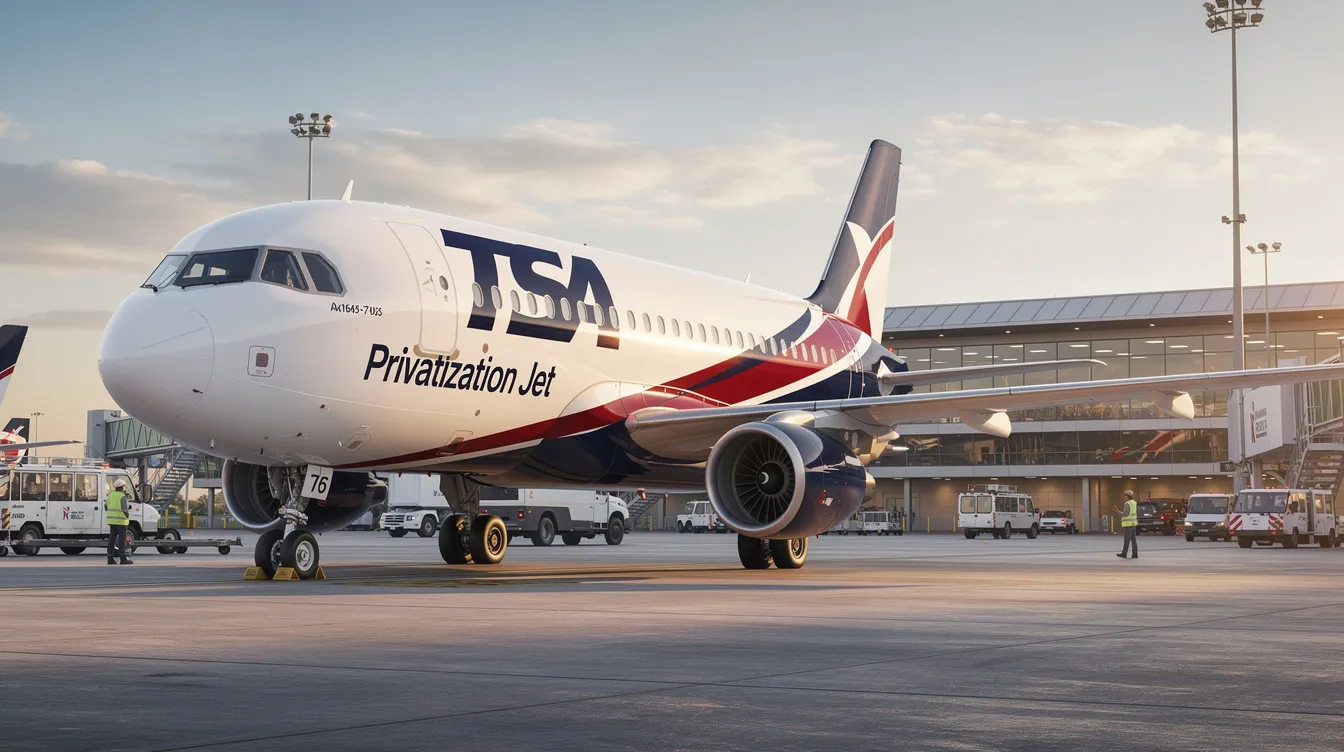
The debate over TSA privatization is intensifying as the government considers expanding contractor-run checkpoints at airports. This shift could significantly impact travelers, TSA employees, and the overall security landscape, raising questions about efficiency, accountability, and labor conditions. Understanding the implications of privatization is essential for anyone navigating the evolving airport security environment.
Jay Franco Serevilla
Sep 6, 2026
|
5
min read

View all
Traveling from Nairobi to Isiolo offers various options, including driving, bus, and private jet charter. The distance is approximately 260 to 280 kilometers by road, taking around 4 to 5 hours by car, while a private flight can reduce travel time to under 2 hours. Jettly provides a convenient platform for booking private flights, making it an ideal choice for those seeking speed and flexibility.
Jay Franco Serevilla
Sep 6, 2026
|
5
min read

View all
Understanding the fuel burn of the King Air 200 is vital for charter planning and ownership evaluation. With typical consumption ranging from 100 to 115 gallons per hour, this turboprop offers an efficient alternative for regional flights under 1,000 nautical miles. Jettly provides instant pricing that reflects real-world fuel costs, making it easier for travelers to compare charter options.
Jay Franco Serevilla
Sep 6, 2026
|
5
min read
Explore our latest articles and updates.
5
min read
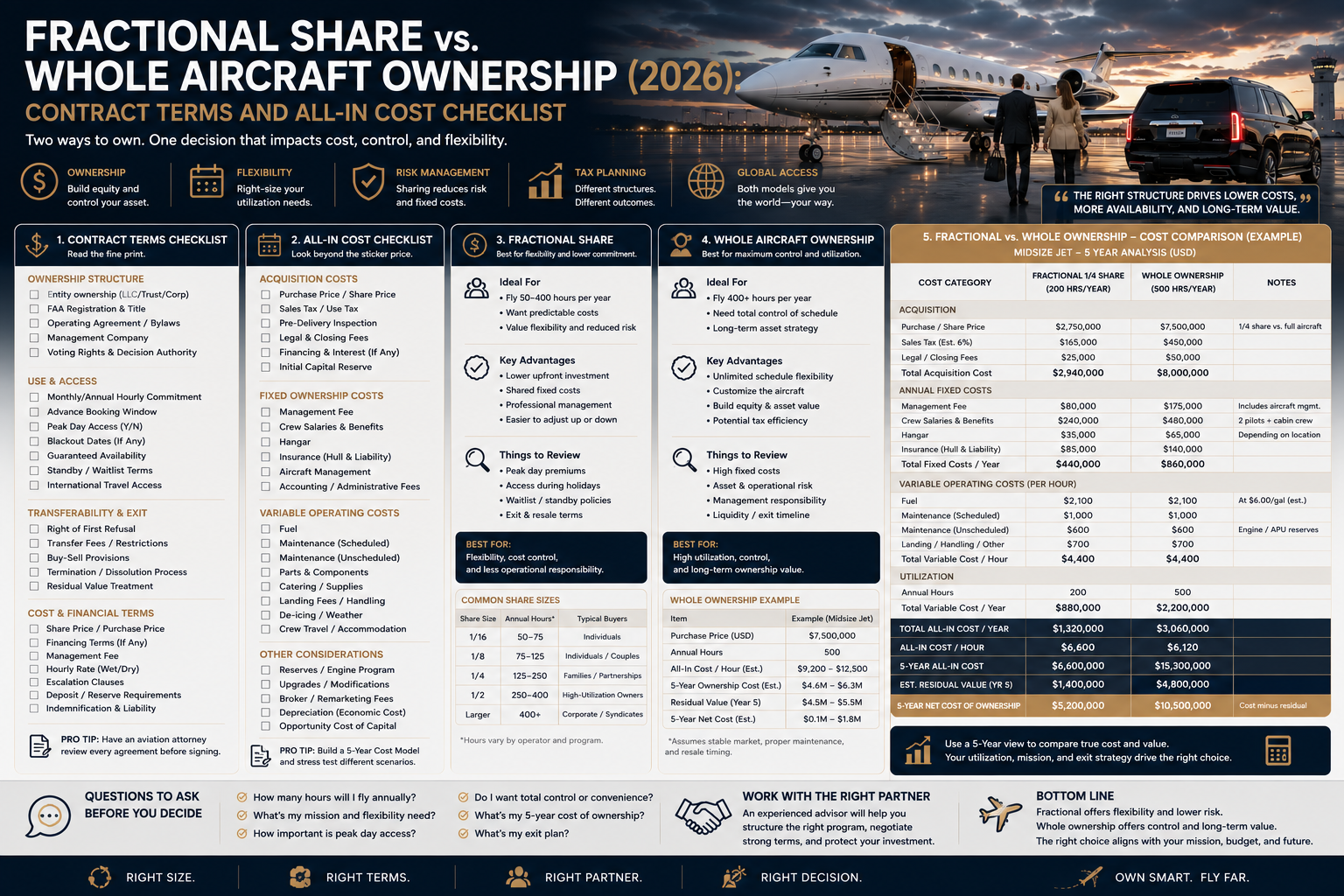
Fractional Share vs Whole Aircraft Ownership (2026): Contract Terms and All-In Cost Checklist
In 2026, buyers of private aviation must weigh fractional share ownership against whole aircraft ownership based on their flying needs, capital commitment, and operational flexibility. This guide provides a comprehensive checklist to evaluate contract terms and all-in costs, emphasizing the importance of understanding effective cost per occupied hour and peak-day reliability. By aligning ownership structures with flight patterns and financial goals, buyers can make informed decisions that suit their unique aviation requirements.
Read More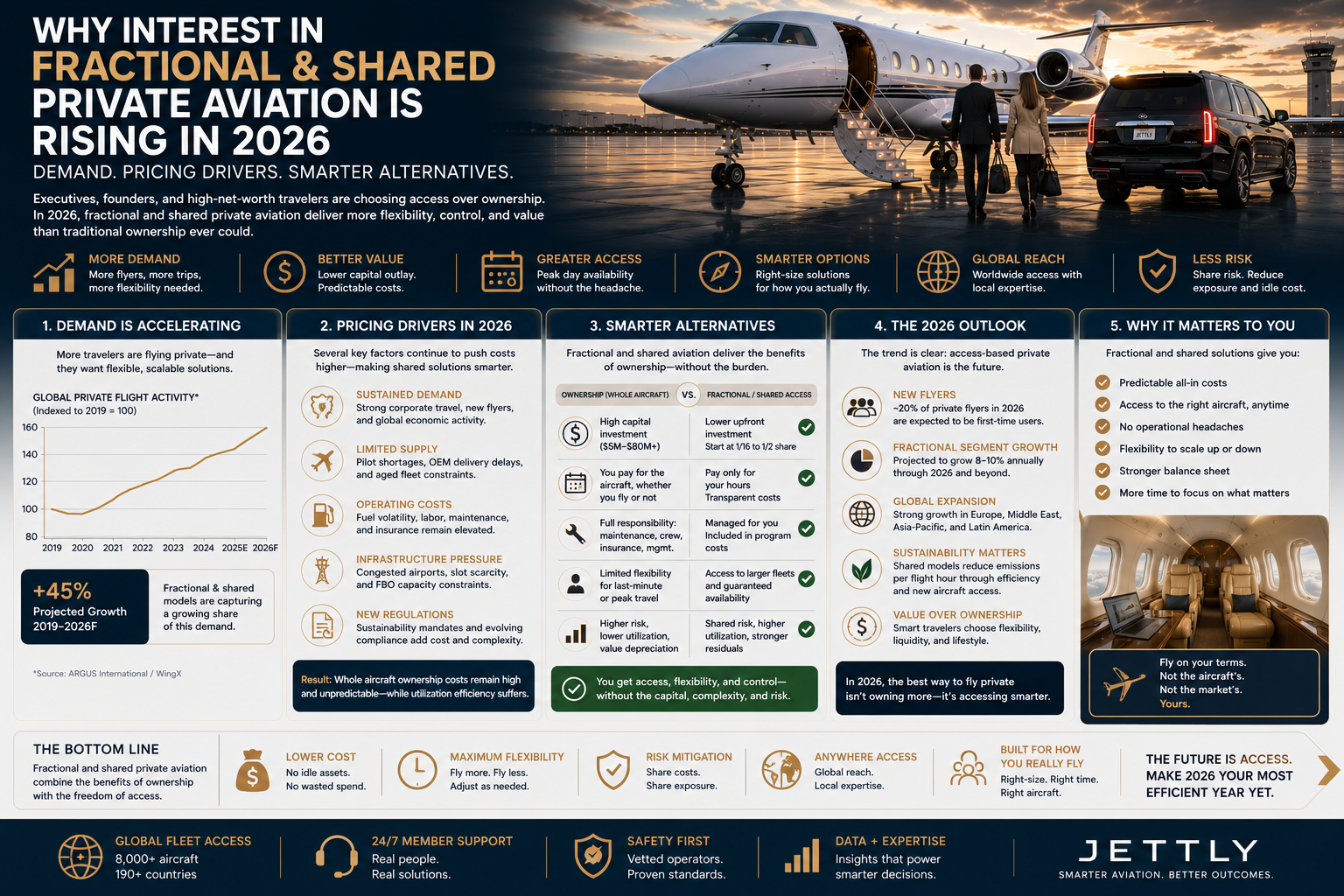
5
min read
Why Interest in Fractional and Shared Private Aviation Is Rising in 2026 (Demand, Pricing Drivers, and Smarter Alternatives)
Interest in fractional and shared private aviation is surging in 2026 due to increased demand and tight availability. Travelers are seeking predictable access and transparent pricing, making fractional ownership and shared flights more appealing alternatives to traditional charter services.
Read MoreJoin our community and receive the latest blog updates directly in your inbox.
MEMBERSHIPS AND ASSOCIATIONS



Disclaimer: Jettly operates as a charter broker, offering access to a global digital jet charter marketplace. Jettly is not a direct air carrier and does not own or operate aircraft. All advertised flights are conducted by third-party air carriers that are fully licensed and hold the appropriate Part 135 or Part 121 certifications issued by the Federal Aviation Administration (FAA) or equivalent regulatory authorities under U.S. or foreign law. Jettly complies fully with the U.S. Department of Transportation's Part 295 and Part 298 Charter Broker regulations. Jettly does not carry additional liability insurance. Passengers are covered by aircraft operator insurance. TICO: 50023770


