



Login
Get Instant Pricing On 23,000+ Aircraft


In 2026, private jet access options include jet cards and fractional shares, each with distinct cost structures. Jet cards offer prepaid flight access without ownership, typically involving lower upfront costs and no monthly fees, while fractional shares require significant upfront capital, monthly management fees, and hourly operating charges tied to a multi-year contract. Cost comparisons should consider four key buckets: upfront funds, recurring fees, hourly charges, and contract terms, as well as factors like peak-day surcharges and minimum billing rules. Ultimately, the choice between these options depends on individual flying frequency, budget, and desired flexibility, with Jettly providing a platform for transparent comparisons and bookings.
Jay Franco Serevilla
Jul 9, 2026
|
5
min read



View all
Jet A fuel is a kerosene-based aviation fuel primarily used for turbine engines in the U.S. It is essential for both commercial airlines and private jet charters, offering specific properties that ensure safety and efficiency during flights. This guide provides insights into its technical specifications, performance in cold weather, and the differences between various aviation fuels.
Jay Franco Serevilla
Nov 2, 2026
|
5
min read

View all
Understanding the types of jet fuel is crucial for private flight operations. Jet A and Jet A-1 are the most common kerosene-based fuels, each with unique properties that affect performance, safety, and costs. Knowledge of these fuels helps travelers make informed decisions when booking private charters.
Jay Franco Serevilla
Nov 2, 2026
|
5
min read

View all
Jet fuel is indeed flammable, but its behavior differs significantly from gasoline. With a flash point above 38 °C, jet fuel requires specific conditions to ignite, making it safer to handle than more volatile fuels. Understanding jet fuel's properties is essential for aviation safety and informed travel decisions.
Jay Franco Serevilla
Nov 2, 2026
|
5
min read
View all
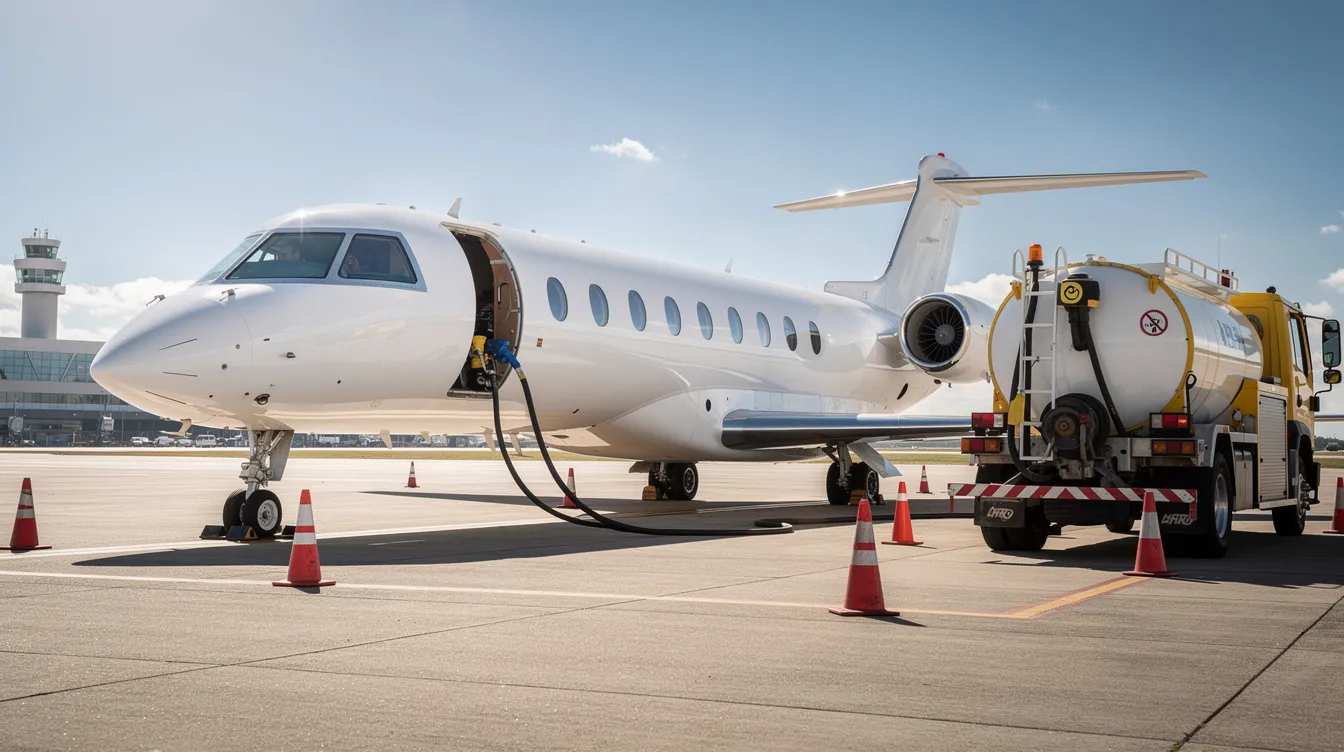
Understanding airplane fuel is essential for private jet travelers, as it directly impacts aircraft range, operational costs, and charter pricing. This guide covers the types of aviation fuel, their capacities, and how they influence the travel experience. With insights into jet fuel and aviation gasoline, travelers can make informed decisions when chartering flights.
Jay Franco Serevilla
Nov 2, 2026
|
5
min read

View all
Understanding private jet pricing can be challenging for first-time charter buyers. An instant quote is merely an estimate that changes until a binding quote is confirmed by the operator and payment is secured. This guide clarifies the differences between estimates and binding quotes, and how to navigate the booking process effectively.
Jay Franco Serevilla
Nov 2, 2026
|
5
min read

View all
Understanding private jet charter costs in 2026 can be complex due to various fees beyond the hourly rate. This guide breaks down the all-in pricing, including examples and factors affecting costs, ensuring travelers can make informed decisions. Learn how to request accurate quotes and avoid hidden charges.
Jay Franco Serevilla
Nov 2, 2026
|
5
min read
Explore our latest articles and updates.

5 minutes
min read
Private Jet Card Programs vs. Private Jet Fractional Ownership – What Makes the Most Sense?
This blog post compares the benefits and commitments of jet card programs and private jet fractional ownership. Jet card programs offer flexibility with short-term commitments and are ideal for those who plan trips in advance. On the other hand, private jet fractional ownership provides more reliable availability with long-term contracts, making it suitable for frequent travelers with unpredictable schedules. Ultimately, the choice depends on one's travel frequency and the need for reliability versus cost savings.
Read More5 minutes
min read
Helicopter Range: How Far Can They Fly? Types & Factors Explained
This blog explores the diverse range capabilities of helicopters, highlighting variations from civilian models to advanced military designs. It discusses the factors that influence a helicopter's effective range, including engine type and operational requirements, while noting recent technological advancements. Innovations in fuel systems and aerodynamics are leading to significant improvements, as exemplified by the Bell V-280 Valor. Ultimately, understanding these range limitations is crucial for safe operations and enhances the appreciation of helicopter versatility in various fields.
Read MoreJoin our community and receive the latest blog updates directly in your inbox.
MEMBERSHIPS AND ASSOCIATIONS



Disclaimer: Jettly operates as a charter broker, offering access to a global digital jet charter marketplace. Jettly is not a direct air carrier and does not own or operate aircraft. All advertised flights are conducted by third-party air carriers that are fully licensed and hold the appropriate Part 135 or Part 121 certifications issued by the Federal Aviation Administration (FAA) or equivalent regulatory authorities under U.S. or foreign law. Jettly complies fully with the U.S. Department of Transportation's Part 295 and Part 298 Charter Broker regulations. Jettly does not carry additional liability insurance. Passengers are covered by aircraft operator insurance. TICO: 50023770


