


Login
Get Instant Pricing On 23,000+ Aircraft


Flying a plane requires skilled, licensed pilots who undergo extensive training. This article explores the various types of pilots, their training processes, and the controls they manage during flights. It also highlights the role of private jet charter services like Jettly in connecting travelers with professional pilots and aircraft.
Jay Franco Serevilla
Oct 1, 2026
|
5
min read



View all
Fractional jet ownership can be a worthwhile investment for high-frequency flyers who travel over 100 hours annually and have a capital commitment of $400,000 or more. It allows owners to share the costs and benefits of private jet travel, providing guaranteed access to a consistent aircraft type and tailored service. However, it is not suitable for those flying less than 50-75 hours per year or with unpredictable travel patterns, as alternatives like jet cards or charter services may offer better flexibility and cost efficiency. Ultimately, understanding your travel habits and financial situation is crucial in determining if fractional ownership aligns with your needs.
Jeff Ryan Serevilla
May 17, 2026
|
5
min read

View all
The leading fractional jet ownership providers in the U.S. are NetJets, Flexjet, PlaneSense, and Airshare, each offering distinct fleet models, pricing structures, and service approaches. NetJets is the largest provider, known for its extensive fleet and global reach, making it ideal for high-utilization travelers, while Flexjet emphasizes premium service and cabin design for those seeking a more personalized experience. PlaneSense focuses on turboprop and light jet efficiency for regional travel, and Airshare offers a day-based model suited for multi-leg itineraries in the central U.S. Prospective owners should carefully evaluate each provider's strengths, limitations, and cost structures to find the best fit for their travel needs.
Jeff Ryan Serevilla
May 17, 2026
|
5
min read

View all
Fractional jet ownership offers guaranteed access to an equivalent aircraft category, but this is subject to specific booking lead times, peak-day restrictions, and operational constraints. Buyers should understand that "guaranteed availability" does not mean access to a specific aircraft at all times, especially during high-demand periods or holidays, where longer notice and potential surcharges may apply. The structure allows for flexibility and cost-sharing among multiple owners, but it also requires careful review of contract terms, including substitution policies and peak calendars. For those seeking more straightforward access without the complexities of ownership, jet cards or on-demand charter services may provide better options.
Jeff Ryan Serevilla
May 17, 2026
|
5
min read

View all
This guide outlines the complexities of fractional jet ownership resale, focusing on resale value, buyback terms, and exit strategies for current and prospective owners. It highlights that fractional ownership is an illiquid asset with significant depreciation, typically retaining 60-70% of its value after three years and 45-60% after five years, influenced by contractual restrictions and provider control. Owners face challenges such as lockup periods, right of first refusal clauses, and ongoing costs until a sale is finalized, which can take several months to over a year. For those seeking flexibility without the burdens of ownership, transitioning to jet cards or charter services may be a viable alternative.
Jeff Ryan Serevilla
May 17, 2026
|
5
min read

View all
Fractional jet ownership can offer significant tax advantages for qualified business operators, primarily through bonus depreciation, Section 179 expensing, and deductions for business-use flight activity. However, these benefits come with complexities, including compliance requirements, limitations on business use, and potential tax consequences such as depreciation recapture upon resale. The tax treatment varies based on ownership structure and individual circumstances, making it essential for buyers to consult with tax professionals to navigate these intricacies. For those prioritizing flexibility and reduced administrative burdens, jet card programs and charter services may provide simpler alternatives without the tax benefits associated with ownership.
Jeff Ryan Serevilla
May 17, 2026
|
5
min read

View all
This guide compares three private aviation options: fractional ownership, jet cards, and on-demand charter, highlighting their distinct trade-offs in cost, commitment, flexibility, and aircraft consistency. Fractional ownership requires a significant upfront investment and long-term commitment, making it suitable for frequent flyers (100-200+ hours/year) who value consistent access to a specific aircraft. Jet cards offer a more flexible, pay-as-you-go model ideal for moderate flyers (25-100 hours/year) seeking predictable pricing without ownership risks. On-demand charter is the most flexible and cost-effective option for occasional flyers (under 25 hours/year), allowing users to pay only for the flights they take without any long-term commitments.
Jeff Ryan Serevilla
May 17, 2026
|
5
min read
Explore our latest articles and updates.

5
min read
Jet Taylor Swift: Inside Her Dassault Falcon 7X, Costs, Controversy, and Charter Alternatives
Taylor Swift owns a Dassault Falcon 7X, a long-range business jet valued between $40 million and $58 million, with annual operating costs exceeding $3 million. The jet has attracted significant attention due to its environmental impact, as it was reported to have emitted 1,200 tonnes of CO2 in 2023, leading to public criticism and discussions about celebrity jet usage and climate responsibility. Swift's extensive touring schedule necessitates private air travel, and while ownership offers benefits like customization and privacy, platforms like Jettly provide flexible charter options that can be more cost-effective for occasional travelers. The article explores the jet's specifications, costs, and the ongoing debate surrounding private aviation's environmental footprint.
Read More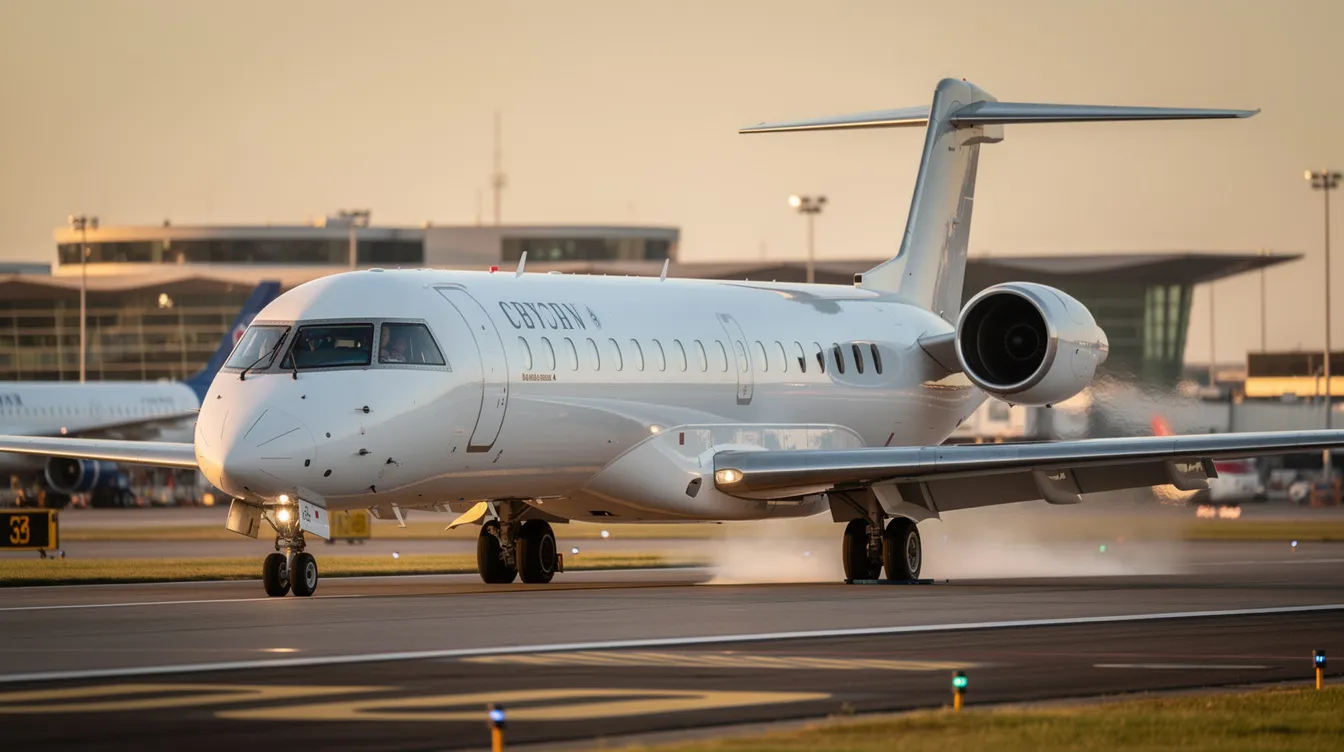
5
min read
Bombardier CRJ 900: Key Facts, Performance & Private Charter Use
The Bombardier CRJ 900 is a regional jet designed for short-to-medium-haul flights, accommodating 76 to 90 passengers and offering a range of approximately 1,784 miles. Since its introduction in 2001, it has become a key player in regional aviation, effectively linking smaller cities to major hubs across North America and Europe. The aircraft is popular for private charters, particularly for groups such as corporate teams and sports organizations, thanks to its efficient operational costs and flexibility in scheduling. Platforms like Jettly facilitate easy booking and tailored services for CRJ 900 charters, enhancing the travel experience for larger groups.
Read MoreJoin our community and receive the latest blog updates directly in your inbox.
MEMBERSHIPS AND ASSOCIATIONS



Disclaimer: Jettly operates as a charter broker, offering access to a global digital jet charter marketplace. Jettly is not a direct air carrier and does not own or operate aircraft. All advertised flights are conducted by third-party air carriers that are fully licensed and hold the appropriate Part 135 or Part 121 certifications issued by the Federal Aviation Administration (FAA) or equivalent regulatory authorities under U.S. or foreign law. Jettly complies fully with the U.S. Department of Transportation's Part 295 and Part 298 Charter Broker regulations. Jettly does not carry additional liability insurance. Passengers are covered by aircraft operator insurance. TICO: 50023770


