


Login
Get Instant Pricing On 23,000+ Aircraft


The Cessna 425 Corsair, introduced in 1980, is a pressurized twin-engine turboprop designed for pilots transitioning from piston aircraft, offering reliability and higher cruise speeds. After upgrades in 1983, it was rebranded as the Cessna 425 Conquest I, enhancing cabin space and maximum takeoff weight. With typical cruise speeds of 250-260 knots and a range of 1,300-1,460 nautical miles, it is well-suited for regional charter missions, accommodating 4-6 passengers comfortably. Jettly's platform facilitates charter bookings for the Cessna 425, providing cost-effective options for private travel compared to light jets.
Jay Franco Serevilla
May 4, 2026
|
5
min read



View all
Nicholas Air is a membership-based private aviation company based in Oxford, Mississippi, offering jet cards, fractional ownership, and aircraft management services with a focus on personalized service and a modern fleet. Founded in 1997, it limits membership to around 1,000 clients to ensure high-quality service, contrasting with digital platforms like Jettly, which provide on-demand access to a vast network of aircraft without long-term commitments. Nicholas Air is ideal for frequent flyers seeking consistent service, while Jettly caters to those needing flexibility and transparent pricing for occasional travel. Evaluating individual flying needs and preferences can help travelers choose between these two distinct private aviation models.
Jay Franco Serevilla
May 13, 2026
|
5
min read

View all
Regional jets are essential for connecting smaller cities to major hubs, typically accommodating 30 to 100 passengers on short- to medium-haul routes. They offer a cost-effective and efficient alternative for private charters, especially for groups, with platforms like Jettly facilitating easy access to these aircraft. The regional jet market is evolving, focusing on larger models for improved efficiency and exploring sustainable technologies to reduce environmental impact. Overall, regional jets enhance regional connectivity and support local economies while providing flexible travel options for both commercial and private needs.
Jay Franco Serevilla
May 13, 2026
|
5
min read

View all
The Boeing Business Jet (BBJ) combines the reliability of commercial airliners with the luxury of private jets, designed for ultra-long-range flights and spacious interiors. Catering to corporate executives, government officials, and high-net-worth individuals, BBJs can be customized for various uses, including offices and residences. Jettly offers a digital platform for chartering these aircraft, providing instant pricing and access to a global fleet. With models like the BBJ 737 MAX and BBJ 777X, the BBJ is ideal for large groups needing comfort and flexibility on long-haul journeys.
Jay Franco Serevilla
May 13, 2026
|
5
min read

View all
The Beechcraft King Air C90GTx is an entry-level twin-engine turboprop ideal for regional private charter travel, offering a range of 800–1,100 nautical miles and seating for 4–6 passengers. It features modern avionics, short-field performance capabilities, and lower operating costs compared to light jets, making it a cost-effective option for travelers using platforms like Jettly. With a maximum cruise speed of approximately 272 knots and the ability to access smaller airports, the C90GTx is particularly suited for missions under 600–700 nautical miles. Overall, it combines reliability, comfort, and efficiency, appealing to both business and leisure travelers.
Jay Franco Serevilla
May 13, 2026
|
5
min read
View all
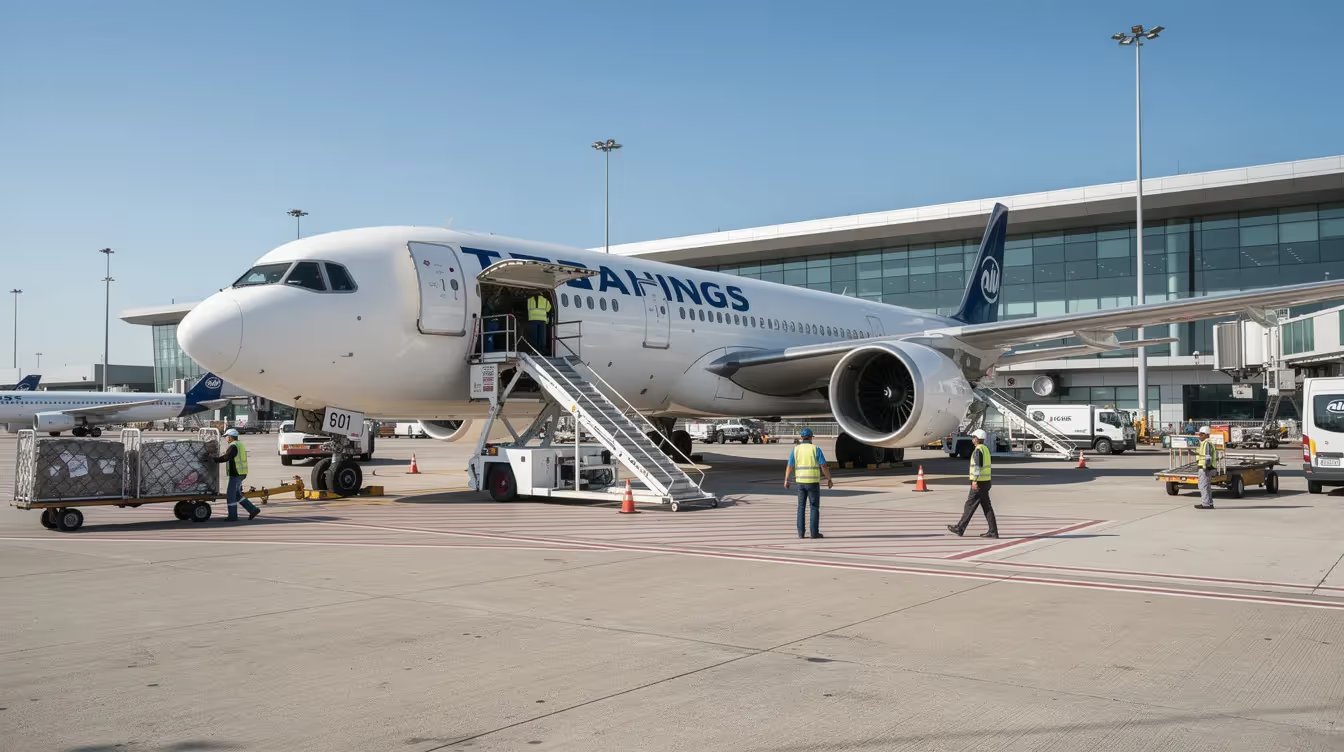
Airplane weights range from under 1,000 lbs for light aircraft to over 1.2 million lbs for jumbo jets, with specific examples like the Cessna 172 weighing about 762 kg and the Airbus A380 reaching a maximum takeoff weight of 1,268,000 lbs. The weight of an aircraft is influenced by its fuel load, passengers, and cargo, affecting safety, runway requirements, and operational costs. Understanding these weight dynamics is crucial for aviation operations, including charter pricing and aircraft selection. Jettly offers a range of private jets, allowing users to match aircraft capabilities with trip requirements while considering weight-related factors.
Jay Franco Serevilla
May 13, 2026
|
5
min read

View all
Choosing the right airline to build a pilot career in 2026 is crucial, as it can significantly impact earnings, work-life balance, and career progression. Major carriers like Delta, United, and American Airlines offer high compensation and stability, while Southwest, Alaska, and JetBlue are noted for their positive culture and faster upgrade opportunities. Pilots should consider factors such as pay, base locations, upgrade times, and company culture when evaluating their options. Additionally, alternative paths in private aviation and cargo flying, facilitated by platforms like Jettly, provide flexibility and diverse flying experiences for those seeking non-traditional careers.
Jay Franco Serevilla
May 13, 2026
|
5
min read
Explore our latest articles and updates.

5
min read
Martinaire Aviation LLC: Cargo Operations, Careers, and How It Compares to Private Charter
Martinaire Aviation LLC, founded in 1978, is a leading cargo feeder carrier in the U.S., specializing in overnight freight operations. With a fleet of turboprop aircraft, it connects regional airports to major sorting hubs, primarily serving integrators like UPS. This article explores Martinaire's operations, career opportunities, and how it contrasts with private charter services like Jettly.
Read More
5
min read
Alerion Aviation: Charter, Aircraft Management, and How Jettly Helps You Compare Options
Alerion Aviation is a premier boutique private aviation company specializing in aircraft management, on-demand charter, and in-house maintenance. With a strong safety record and a large fleet operating from key U.S. locations, Alerion offers personalized service for travelers and aircraft owners. Jettly enhances the experience by providing a digital marketplace for comparing charter options, ensuring travelers find the best fit for their needs.
Read MoreJoin our community and receive the latest blog updates directly in your inbox.
MEMBERSHIPS AND ASSOCIATIONS



Disclaimer: Jettly operates as a charter broker, offering access to a global digital jet charter marketplace. Jettly is not a direct air carrier and does not own or operate aircraft. All advertised flights are conducted by third-party air carriers that are fully licensed and hold the appropriate Part 135 or Part 121 certifications issued by the Federal Aviation Administration (FAA) or equivalent regulatory authorities under U.S. or foreign law. Jettly complies fully with the U.S. Department of Transportation's Part 295 and Part 298 Charter Broker regulations. Jettly does not carry additional liability insurance. Passengers are covered by aircraft operator insurance. TICO: 50023770


