


Login
Get Instant Pricing On 23,000+ Aircraft


Aircraft class:
Midsize Jet
Passenger capacity:
Crew:
2 pilots
Range:
High-speed cruise:
Long-range cruise:
Service ceiling:
Engines:
Two Honeywell TFE731-5R-1H turbofans
Thrust:
Takeoff distance:
Landing distance:
Average fuel burn:
Baggage capacity:
First delivered:
Mid-1980s
The figures below summarize the performance and dimensions that matter most when you are matching an aircraft to a trip. They reflect typical configurations; exact numbers vary with weight, weather, and how a given aircraft is equipped.
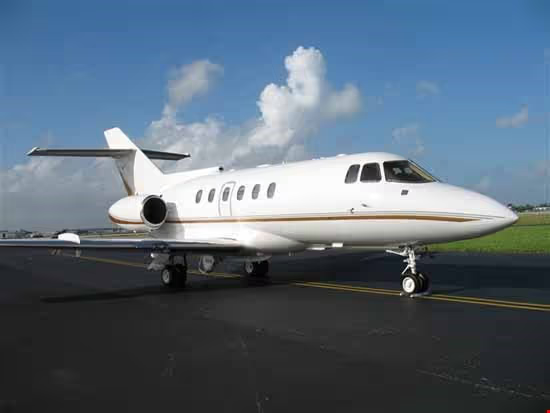
With a range of roughly 2,500 nautical miles, the Hawker 800A comfortably handles the majority of regional and many transcontinental missions without a fuel stop. In practical terms, that covers city pairs such as New York to Las Vegas, Chicago to Los Angeles, Miami to New York, or London to Moscow on a single tank, with reserves intact. | Coast-to-coast routes like New York to Los Angeles are within reach in favorable conditions, though a strong headwind or a full passenger load can occasionally call for a brief technical stop, a normal consideration for any midsize jet on the longest domestic legs. | The 800A's 442-knot high-speed cruise keeps flight times short, while its 41,000-foot ceiling lets crews route above weather and congested airspace for a steadier ride. The twin Honeywell engines deliver dependable climb performance, and a takeoff requirement of around 5,600 feet gives the aircraft access to a wide range of airports, including many secondary fields that sit closer to your final destination than the major hubs. | For most travelers, the result is door-to-door time that a commercial itinerary simply cannot match.
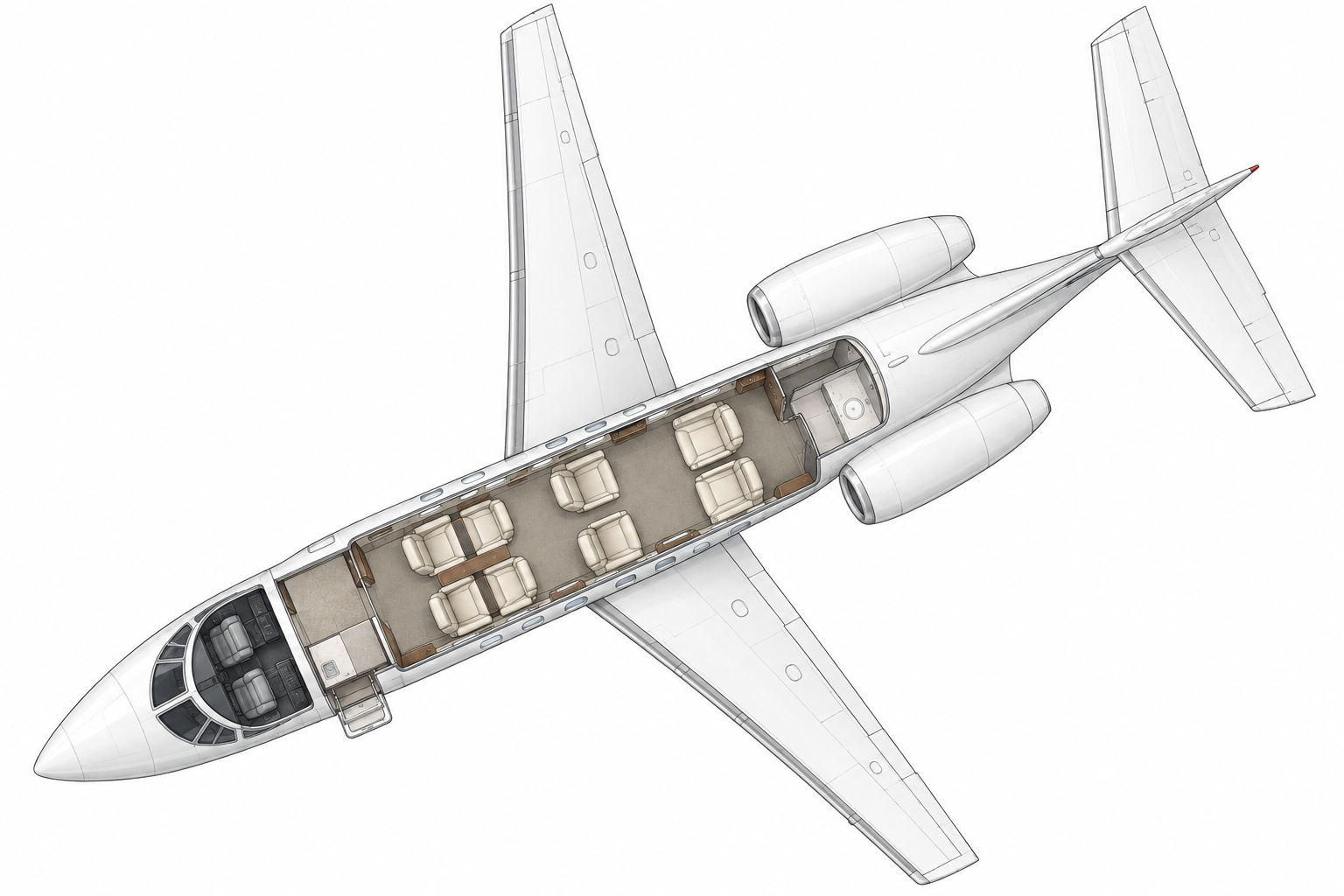
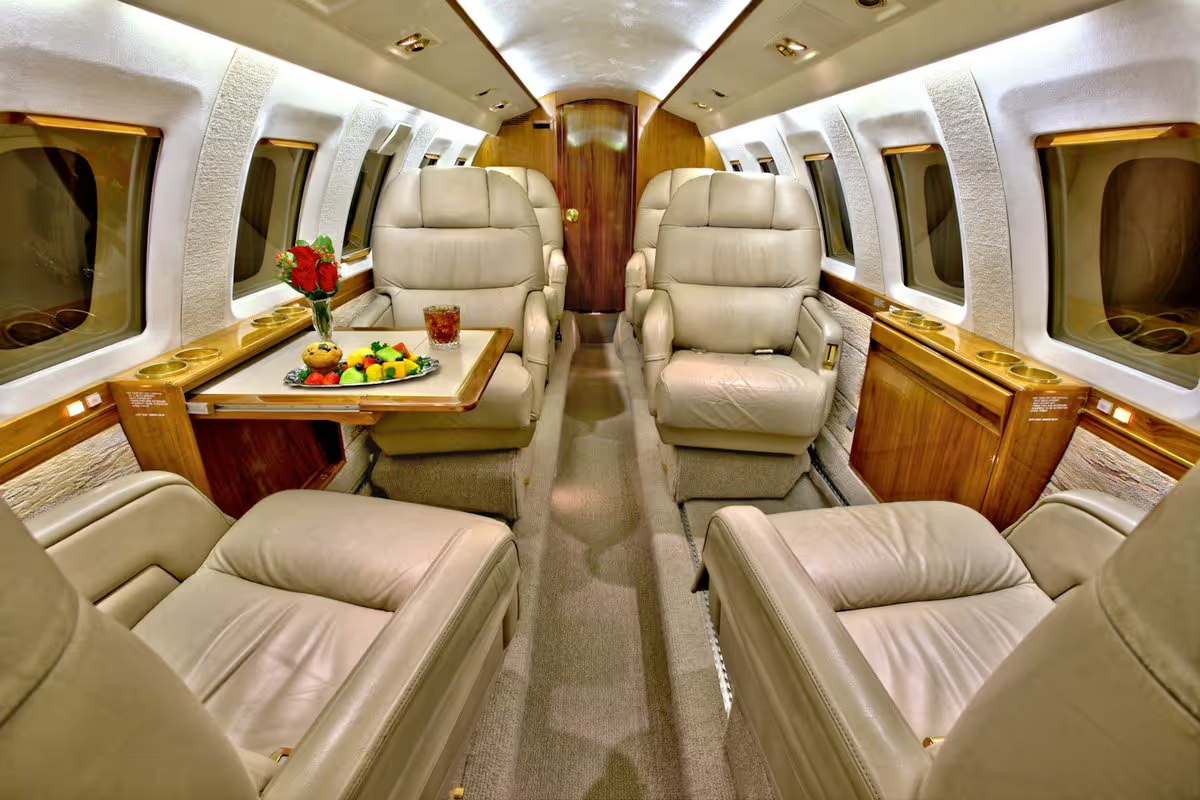
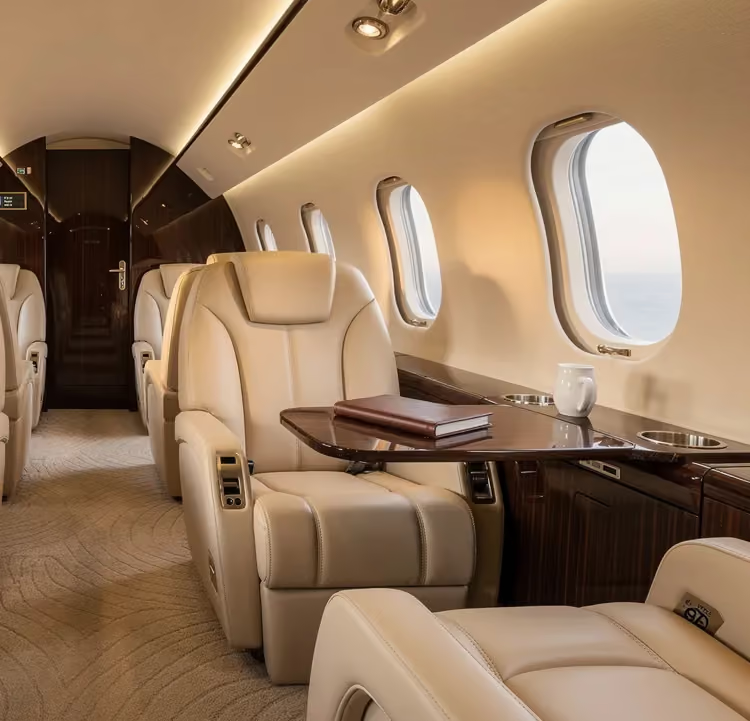
The 800A was one of the first midsize jets to offer a genuine stand-up cabin, and that remains one of its strongest selling points. With a cabin height of about 5 feet 9 inches and a width of about 6 feet, passengers can move about the aircraft rather than staying belted in their seats for the whole trip. | The standard layout seats eight in a double-club arrangement, two facing pairs, often combined with a three-seat divan that gives groups the flexibility to work together or spread out. | The cabin is built for productivity and comfort on flights of several hours. Expect executive seating with fold-out work tables, generous windows that keep the space bright, and a private aft lavatory. Many aircraft in the fleet have been refurbished over the years with updated upholstery, in-flight power, and entertainment options, so finishes vary from one tail to the next. | A baggage hold of roughly 48 cubic feet takes golf bags, skis, or several days' luggage for a full group. For business travelers, the quiet cabin and flat work surfaces make it easy to prepare on the way in; for leisure flyers, the room to stretch out turns travel time into part of the trip rather than an obstacle.


.avif)
.avif)
.avif)
.avif)
.avif)
It is less suited to very long international or transoceanic routes, where a super-midsize or heavy jet with greater range makes more sense, and it is more aircraft than a solo traveler on a short hop typically needs. For the heart of the midsize use case, four to eight people, a few hours in the air, and a need to stay productive or comfortable along the way, the Hawker 800A is hard to beat on value.

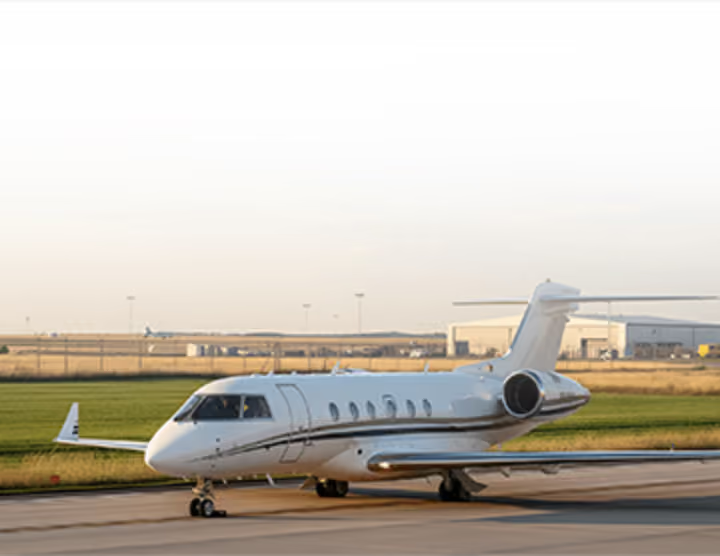

The Hawker 800A typically seats up to eight passengers in an executive configuration, with some aircraft arranged for nine. The standard double-club layout pairs two facing seat groups, often with a three-seat divan, which works well for both business groups and families.
Yes. The 800A offers a true stand-up cabin about 5 feet 9 inches tall and close to 6 feet wide, so passengers can move around in flight. It also includes a private aft lavatory and a baggage hold of around 48 cubic feet.
For most U.S. coast-to-coast trips, yes. The 800A can cover routes like New York to Los Angeles in favorable conditions, though a strong headwind or full cabin may require a short technical stop, which is a routine consideration for midsize jets on the longest domestic legs.
MEMBERSHIPS AND ASSOCIATIONS



Disclaimer: Jettly operates as a charter broker, offering access to a global digital jet charter marketplace. Jettly is not a direct air carrier and does not own or operate aircraft. All advertised flights are conducted by third-party air carriers that are fully licensed and hold the appropriate Part 135 or Part 121 certifications issued by the Federal Aviation Administration (FAA) or equivalent regulatory authorities under U.S. or foreign law. Jettly complies fully with the U.S. Department of Transportation's Part 295 and Part 298 Charter Broker regulations. Jettly does not carry additional liability insurance. Passengers are covered by aircraft operator insurance. TICO: 50023770


