


Login
Get Instant Pricing On 23,000+ Aircraft

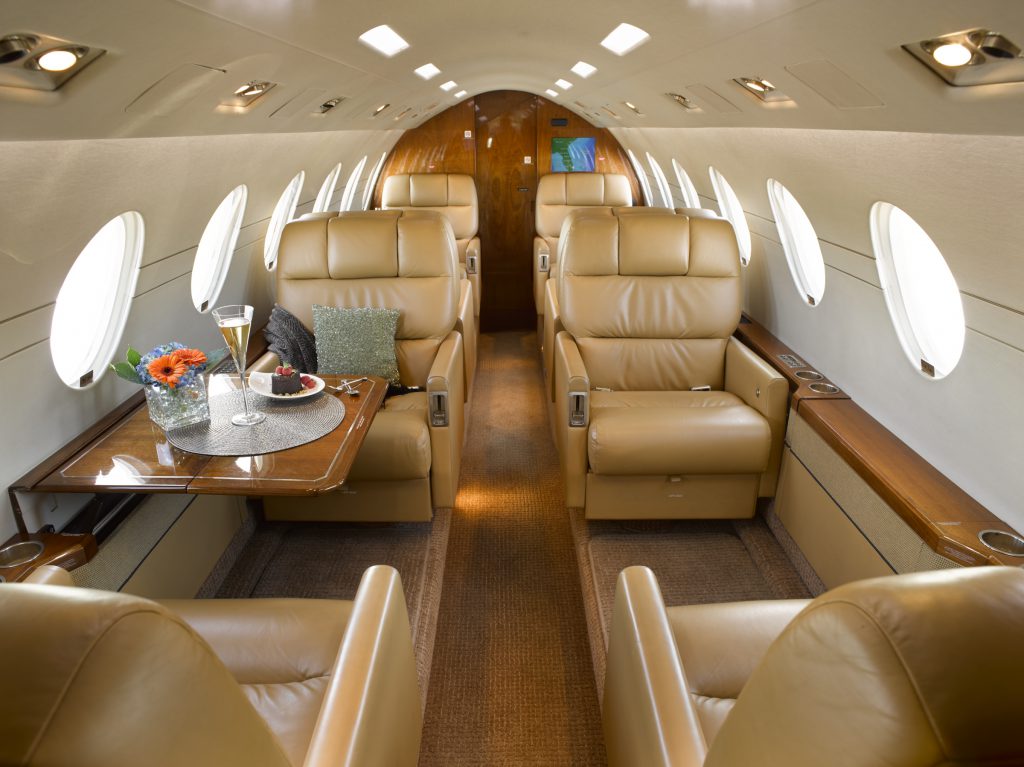

Aircraft class:
Super Midsize Jet
Passenger capacity:
Crew:
2 pilots
Range:
High-speed cruise:
Long-range cruise:
Service ceiling:
Engines:
Three Garrett TFE731-3-1C turbofans
Thrust:
Takeoff distance:
Landing distance:
Average fuel burn:
Baggage capacity:
First delivered:
1976
The figures below summarize the performance and dimensions that matter most when you are matching an aircraft to a trip. They reflect typical configurations; exact numbers vary with weight, weather, and how a given aircraft is equipped.

With a maximum range of approximately 3,500 nautical miles, the Falcon 50 effortlessly connects major city pairs such as New York to Los Angeles, Paris to Dubai, or London to Cairo without refueling. Its impressive reach allows for nonstop transcontinental flights in the U.S. as well as direct routes between many European and Middle Eastern destinations on a single tank. | This aircraft’s high-speed cruise of 480 knots ensures you arrive promptly, and its advanced three-engine configuration provides both performance and peace of mind on any route. With a takeoff distance of just 4,700 feet and short-field landing capability, the Falcon 50 opens up access to airports that are inaccessible to many other jets in its class. | Travelers benefit from consistently fast, efficient journeys and the flexibility to depart from more convenient airports, reducing overall travel time and elevating the private jet experience to new heights.
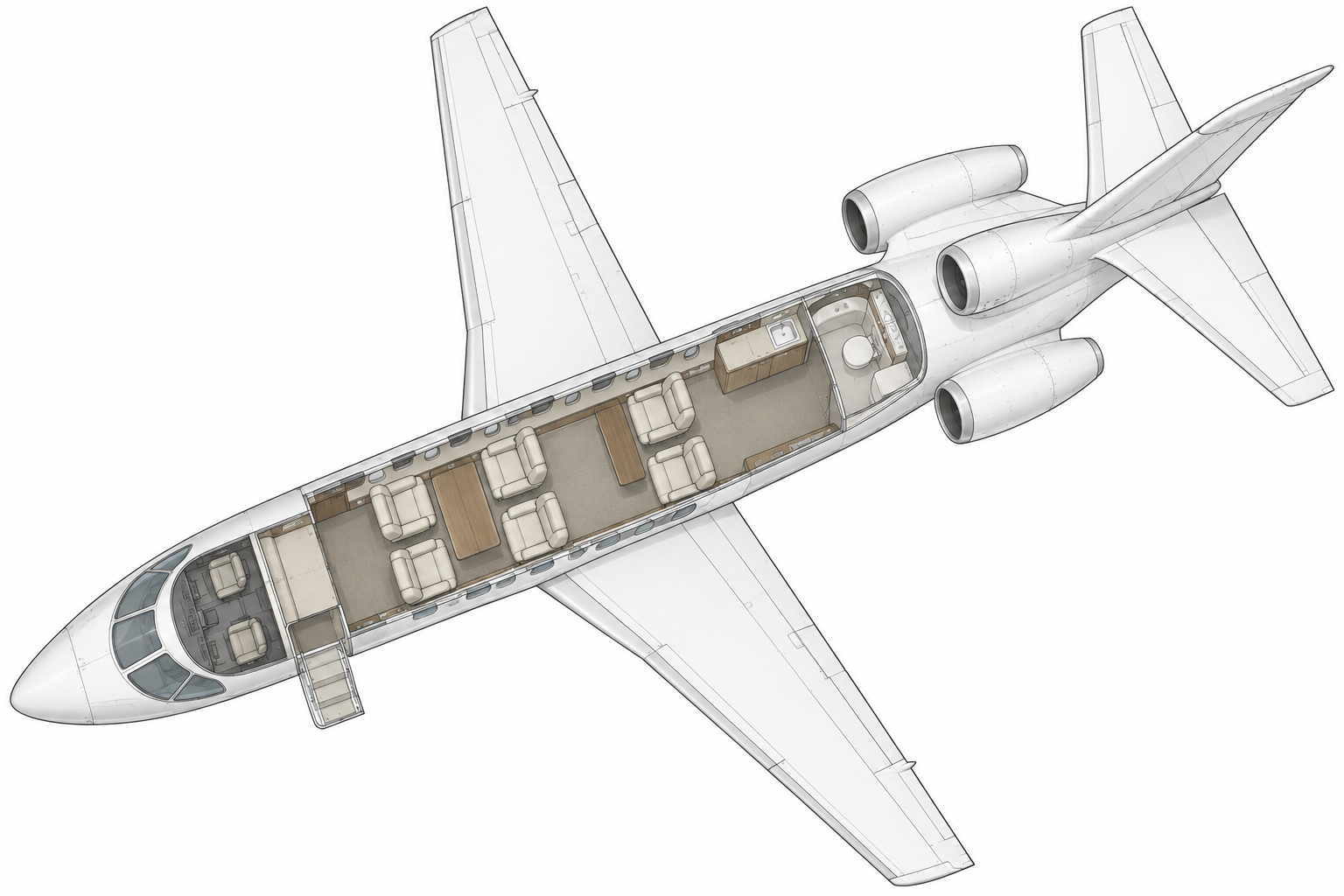
The Falcon 50 features a refined stand-up cabin with a height of 5 feet 9 inches and a width of 6 feet 1 inch, providing exceptional space for movement and comfort. The typical executive arrangement seats eight in a double-club configuration, with an optional three-seat divan for added flexibility and group travel. | The interior is designed for both productivity and leisure, with plush seats, fold-out worktables, and generous windows that fill the cabin with natural light. Amenities include a fully enclosed lavatory, in-flight entertainment, and a well-appointed galley for catering and refreshments. | With 115 cubic feet of baggage capacity, travelers can easily bring golf bags, skis, or several suitcases for extended trips. Whether you’re flying for business or pleasure, the Falcon 50’s quiet, spacious cabin ensures every journey is a seamless blend of luxury, privacy, and convenience.


.avif)
.avif)
.avif)
.avif)
.avif)
While the Falcon 50 is not intended for ultra-long-haul or transoceanic missions requiring nonstop connections from the U.S. to Asia or South America, it excels at high-value regional and intercontinental trips for groups of four to nine passengers. For those seeking a balance of range, speed, and comfort—without stepping up to a heavy jet—the Falcon 50 stands out as a premium choice.
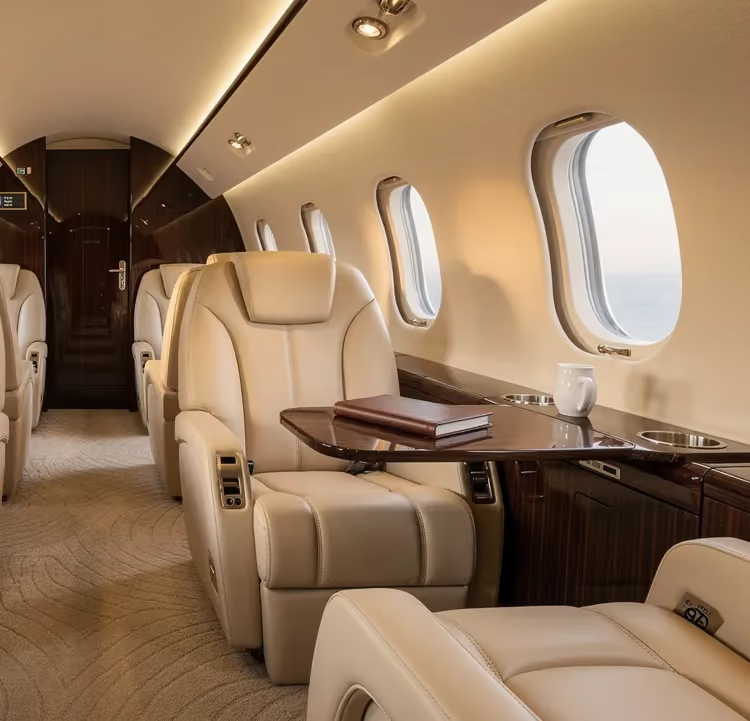

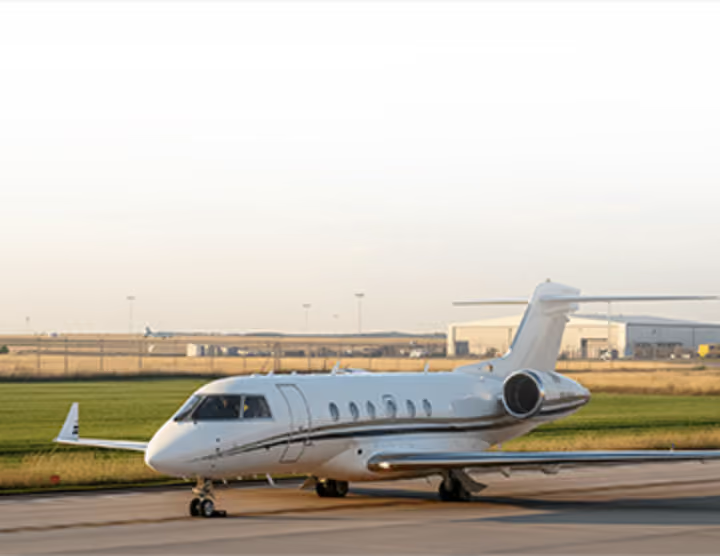

The Falcon 50 is typically configured for eight passengers in a double-club layout, with some aircraft offering seating for up to nine. Its flexible cabin arrangement is ideal for both business travelers and families who value comfort and privacy.
Yes. The Falcon 50’s spacious, stand-up cabin allows passengers to move freely throughout the flight, with a height of nearly 6 feet and a width over 6 feet. The aircraft is equipped with a private lavatory and extensive baggage space for added convenience.
Yes, the Falcon 50 is well suited for most U.S. coast-to-coast and transcontinental missions, such as New York to Los Angeles or Miami to Seattle, without refueling. For the longest routes or when carrying a full cabin, a technical stop may be required, but this is typical for jets in this segment.
MEMBERSHIPS AND ASSOCIATIONS



Disclaimer: Jettly operates as a charter broker, offering access to a global digital jet charter marketplace. Jettly is not a direct air carrier and does not own or operate aircraft. All advertised flights are conducted by third-party air carriers that are fully licensed and hold the appropriate Part 135 or Part 121 certifications issued by the Federal Aviation Administration (FAA) or equivalent regulatory authorities under U.S. or foreign law. Jettly complies fully with the U.S. Department of Transportation's Part 295 and Part 298 Charter Broker regulations. Jettly does not carry additional liability insurance. Passengers are covered by aircraft operator insurance. TICO: 50023770


