


Login
Get Instant Pricing On 23,000+ Aircraft

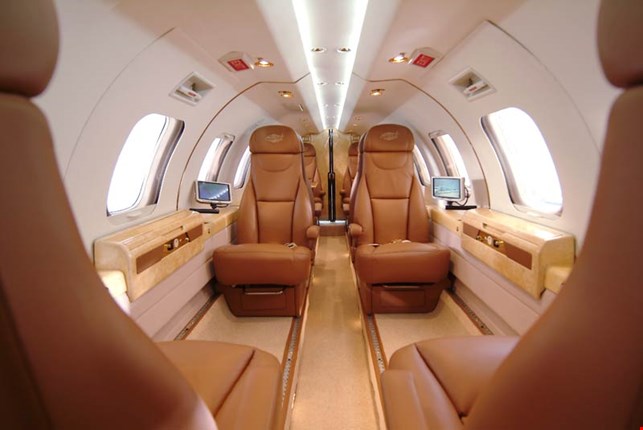

Aircraft class:
Turbo Prop
Passenger capacity:
Crew:
2 pilots
Range:
High-speed cruise:
Long-range cruise:
Service ceiling:
Engines:
Two Garrett TPE331-11U-612G turboprops
Thrust:
Takeoff distance:
Landing distance:
Average fuel burn:
Baggage capacity:
First delivered:
Late 1970s
The figures below summarize the performance and dimensions that matter most when you are matching an aircraft to a trip. They reflect typical configurations; exact numbers vary with weight, weather, and how a given aircraft is equipped.
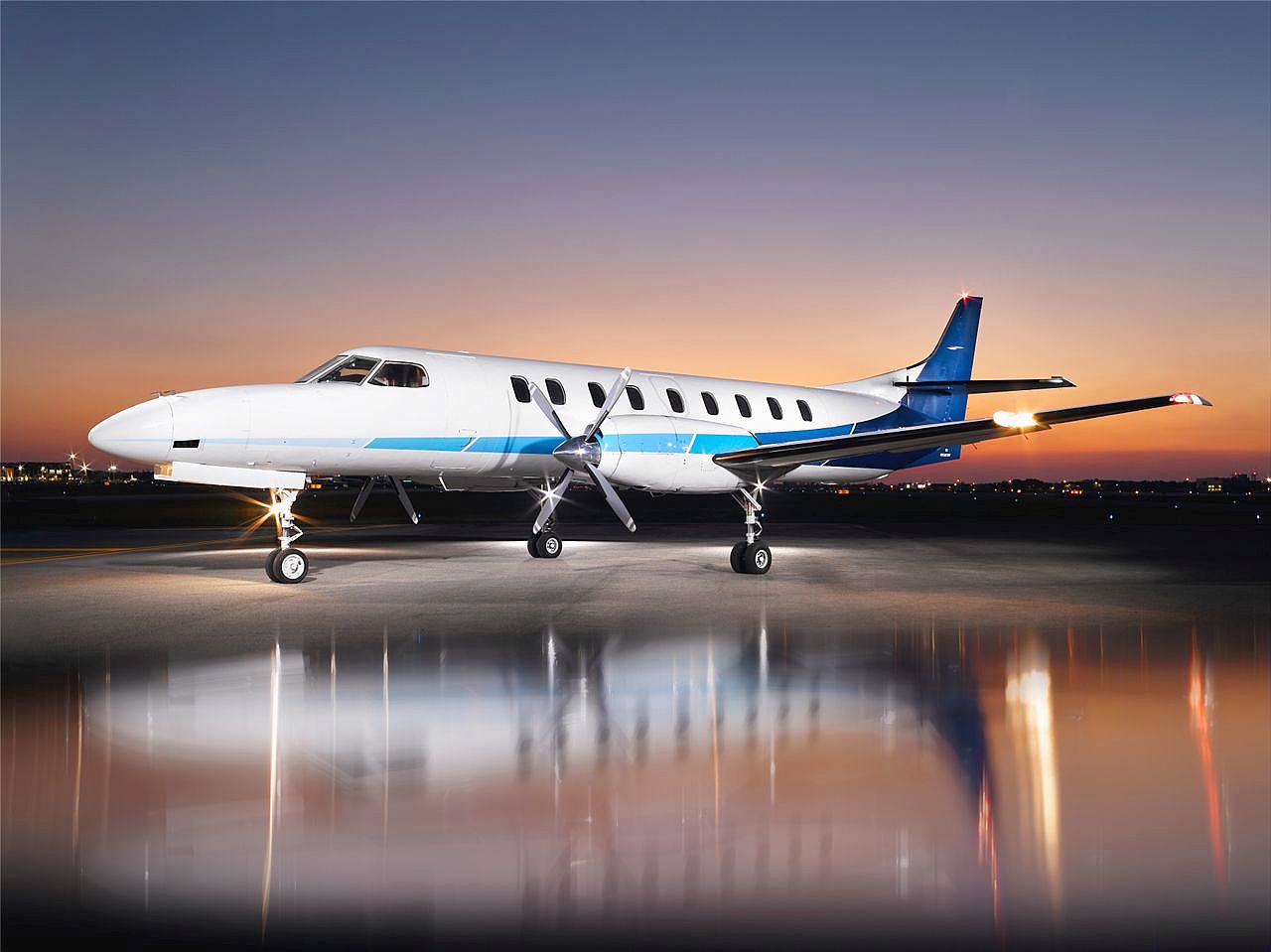
The Metro III offers a range of approximately 1,350 nautical miles, making it ideal for regional and multi-stop flights across states or countries. Its efficient Garrett engines allow for nonstop city pairs such as Dallas to Atlanta, Los Angeles to Denver, or London to Milan, all while maintaining reserves for safety.|Even with a full passenger or cargo load, the Metro III’s short-field capability opens up access to secondary airports and remote strips that are out of reach for many jets in its class.|Cruising at 265 knots and up to 25,000 feet, the aircraft minimizes travel time and ensures comfortable conditions above weather and turbulence. Its takeoff and landing requirements are modest, bringing private aviation convenience to airports closer to your destination.
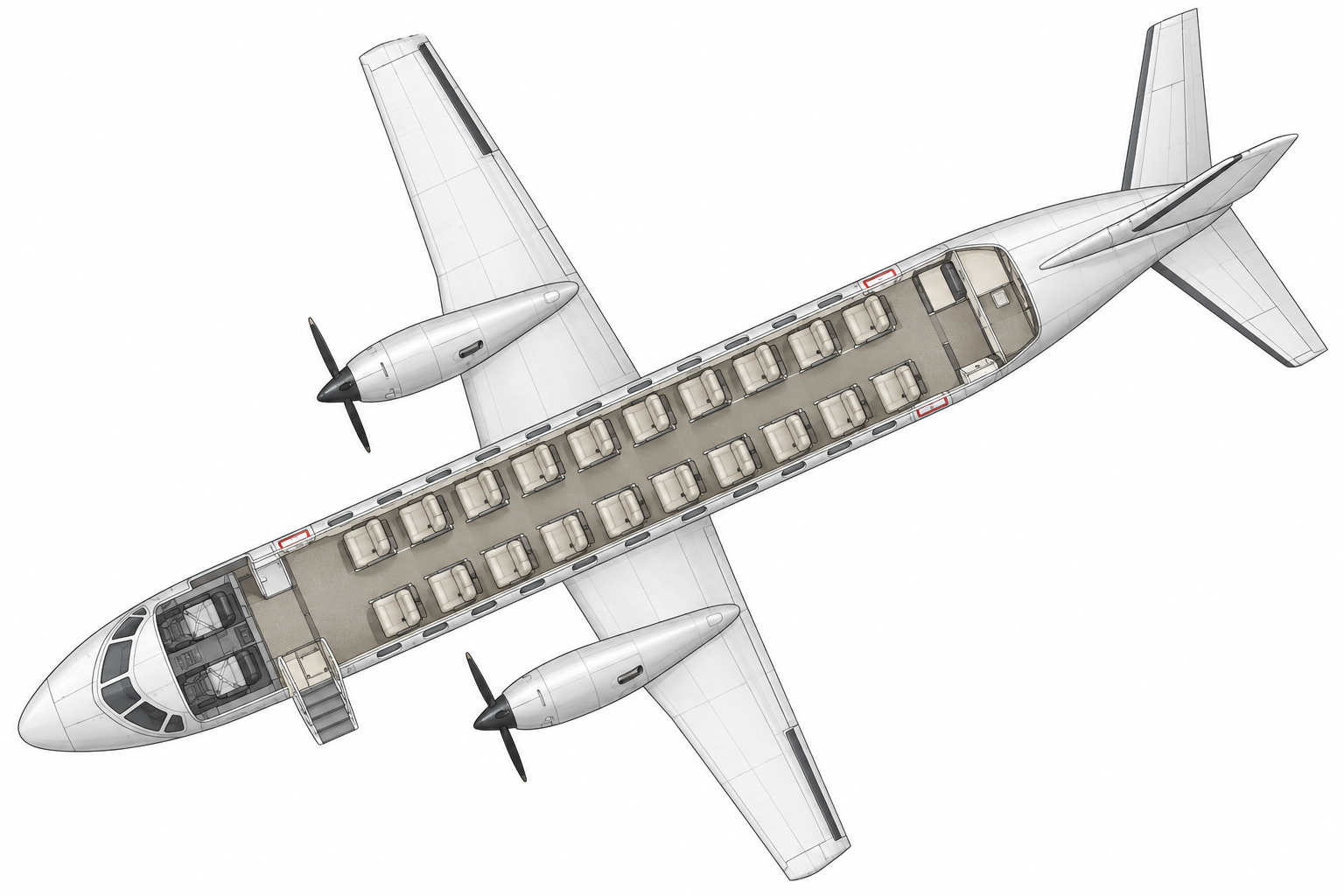
The stand-up cabin of the Metro III stretches nearly 6 feet in height, providing ample headroom and aisle space for passengers to move freely during flight.|Standard seating features a double-club arrangement for up to 17, with options for 19 in commuter layouts or medical stretchers for medevac missions.|Expect generous windows for natural light, fold-out tables for productivity, and a quiet environment tailored for both business and leisure journeys. The aircraft’s large baggage hold—181 cubic feet—accommodates luggage, sporting gear, or even specialized cargo, making it a favorite among groups and operators alike.|Many Metro IIIs have been refitted for VIP or executive comfort, including updated seating, in-flight power, and entertainment upgrades, ensuring every journey is as comfortable as it is practical.


.avif)
.avif)
.avif)
.avif)
.avif)
While not designed for long international routes or luxury transcontinental flights, the Metro III stands out for regional charters, group movements, and specialized cargo or medical missions where reliability, payload flexibility, and cost efficiency are paramount.
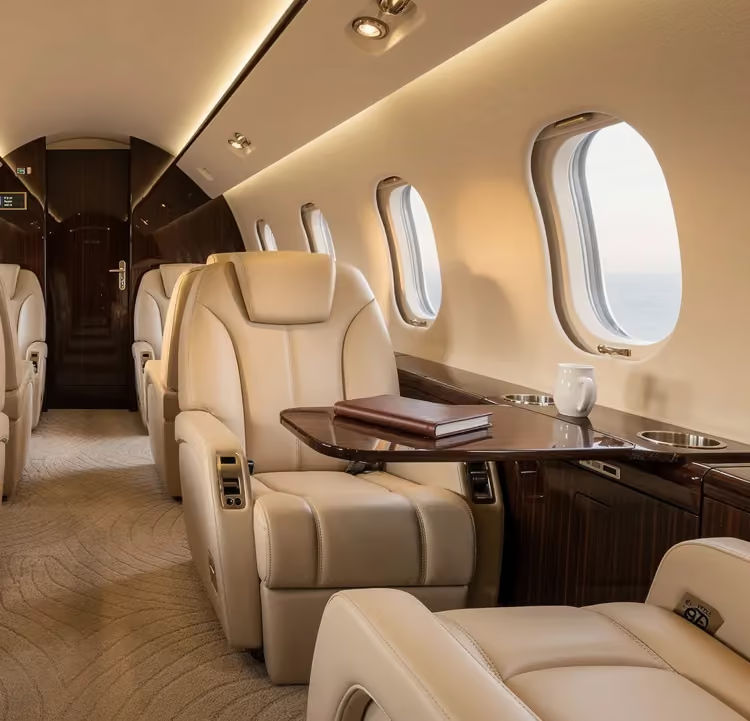

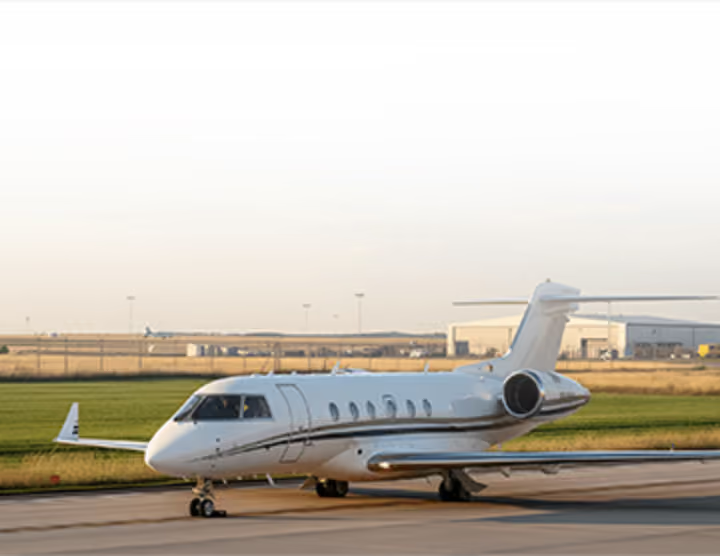

The Metro III typically seats up to 17 passengers in a double-club or commuter configuration, with some arrangements accommodating a maximum of 19. Its flexible interior allows for executive, standard passenger, or medical layouts, suiting a variety of travel needs.
Yes. The Metro III features a stand-up cabin nearly 6 feet high, allowing passengers to move comfortably during flight. It offers a spacious baggage compartment of 181 cubic feet and can be equipped with lavatory facilities for longer journeys.
The Metro III is ideal for regional routes such as Dallas to Atlanta or Los Angeles to Denver, easily covering these city pairs nonstop. For longer ranges or overwater flights, a fuel stop may occasionally be required, but the aircraft is optimized for efficient regional operations.
MEMBERSHIPS AND ASSOCIATIONS



Disclaimer: Jettly operates as a charter broker, offering access to a global digital jet charter marketplace. Jettly is not a direct air carrier and does not own or operate aircraft. All advertised flights are conducted by third-party air carriers that are fully licensed and hold the appropriate Part 135 or Part 121 certifications issued by the Federal Aviation Administration (FAA) or equivalent regulatory authorities under U.S. or foreign law. Jettly complies fully with the U.S. Department of Transportation's Part 295 and Part 298 Charter Broker regulations. Jettly does not carry additional liability insurance. Passengers are covered by aircraft operator insurance. TICO: 50023770


