


Login
Get Instant Pricing On 23,000+ Aircraft

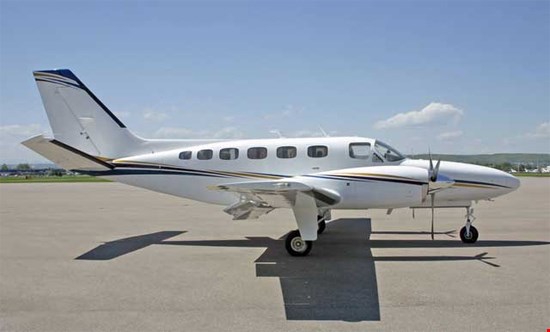

Aircraft class:
Turbo Prop
Passenger capacity:
Crew:
2 pilots
Range:
High-speed cruise:
Long-range cruise:
Service ceiling:
Engines:
Two Garrett TPE331 turboprops
Thrust:
Takeoff distance:
Landing distance:
Average fuel burn:
Baggage capacity:
First delivered:
1981
The figures below summarize the performance and dimensions that matter most when you are matching an aircraft to a trip. They reflect typical configurations; exact numbers vary with weight, weather, and how a given aircraft is equipped.
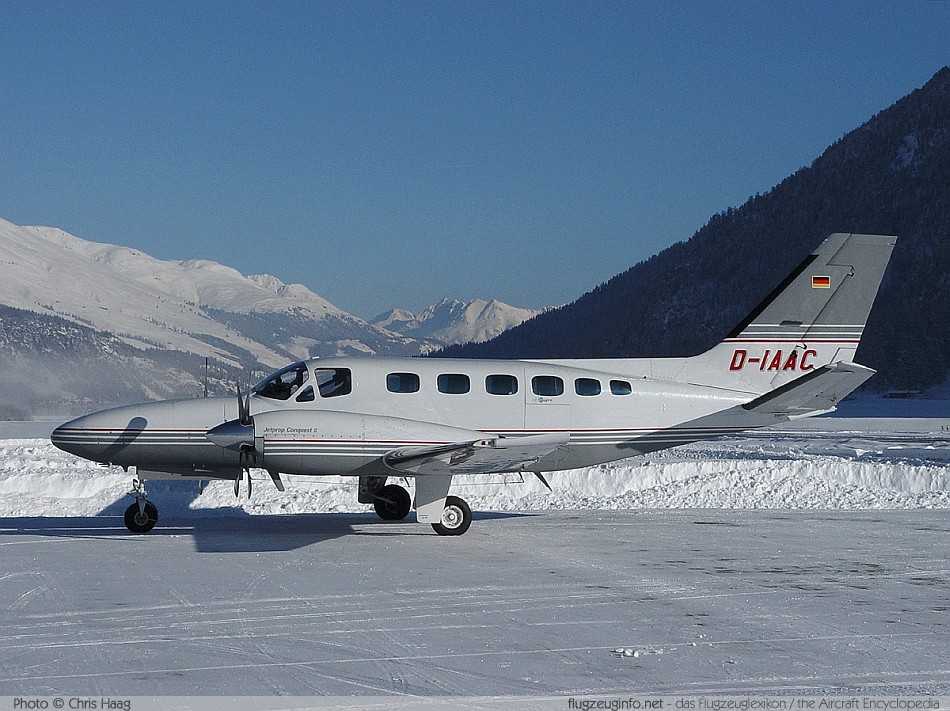
With a maximum range of approximately 2,525 nautical miles, the Cessna Conquest II easily manages nonstop journeys between city pairs such as Dallas to Los Angeles, Chicago to Miami, or London to Rome on a single fueling. Its efficient fuel burn and high-speed cruise allow for quick trips without sacrificing comfort or payload. | For longer regional routes, the Conquest II maintains excellent speed and performance, with only occasional stops required on the farthest legs or in adverse weather. Its capability to operate from shorter runways opens up hundreds of airports that are inaccessible to many jets, giving travelers a true point-to-point advantage. | The 300-knot high-speed cruise ensures that passengers arrive efficiently, while the 35,000-foot ceiling means smoother rides above turbulence and weather. The robust Garrett engines provide reliable performance in a variety of conditions, and a takeoff roll of just under 1,800 feet allows for access to exclusive destinations. For discerning travelers, this means more time spent at your destination and less time in transit.
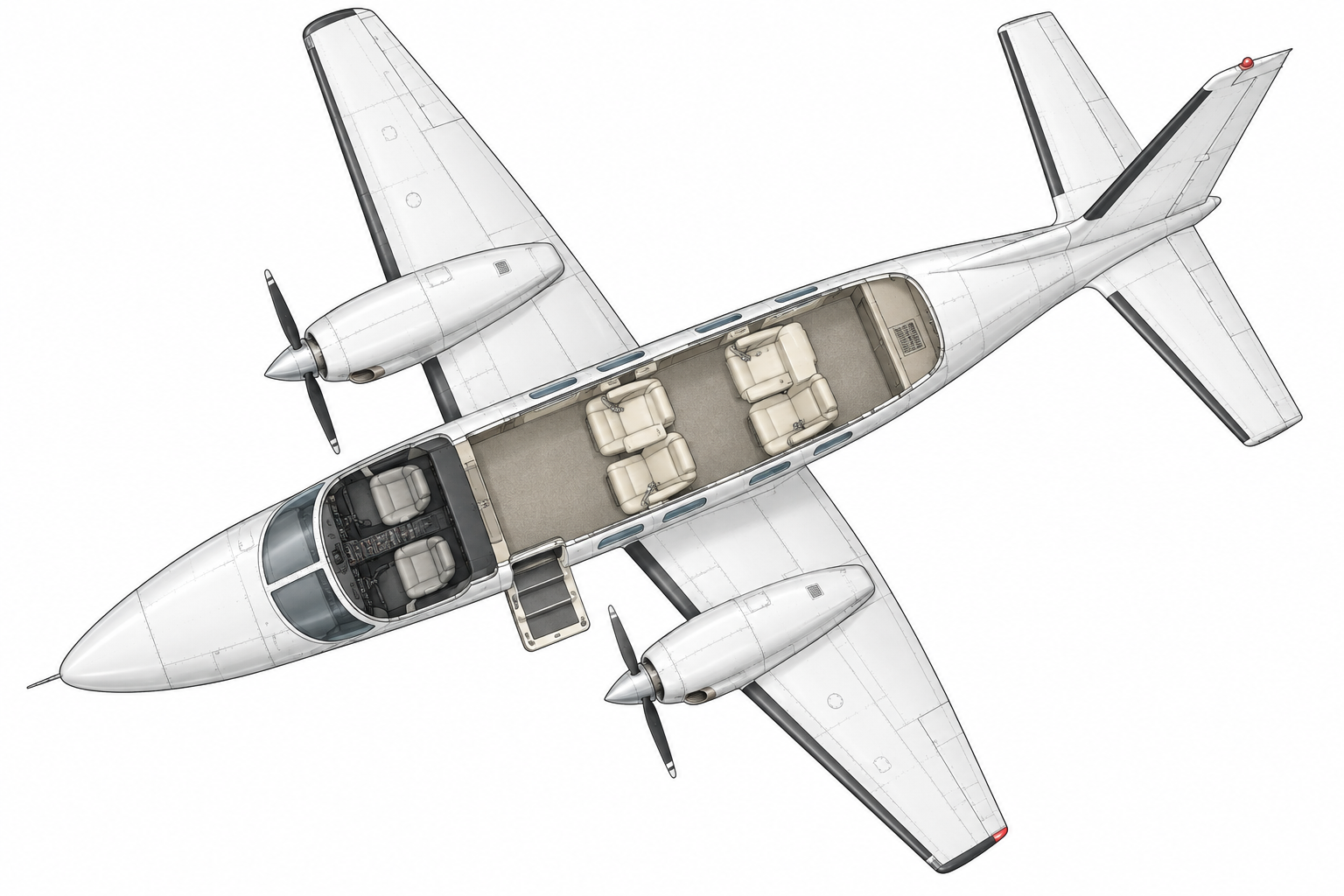
The Cessna Conquest II impresses with a spacious, pressurized cabin that offers a comfortable stand-up environment for up to eight passengers. The flat-floor design and generous headroom make it easy to move about, while the cabin’s insulation ensures a quiet, relaxing atmosphere throughout the journey. | A typical interior features executive seating in a club configuration, with large panoramic windows providing abundant natural light and scenic views. An aft lavatory and refreshment center further enhance the experience, making the aircraft ideal for both business and leisure travelers. | With 77 cubic feet of baggage space, guests enjoy ample room for luggage, sports gear, or business materials. Many Conquest II cabins have been refurbished with modern amenities such as USB charging, Wi-Fi, and updated upholstery, ensuring every trip meets the expectations of today’s private flyers.


.avif)
.avif)
.avif)
.avif)
.avif)
The Conquest II is less suited for long-haul international flights or missions requiring jet-class speeds, where a light or midsize jet may be preferred, and it may be more aircraft than needed for solo travelers or very short hops. For groups seeking a refined, cost-effective means to cover regional distances in comfort and style, the Conquest II stands out as a versatile and value-driven solution.
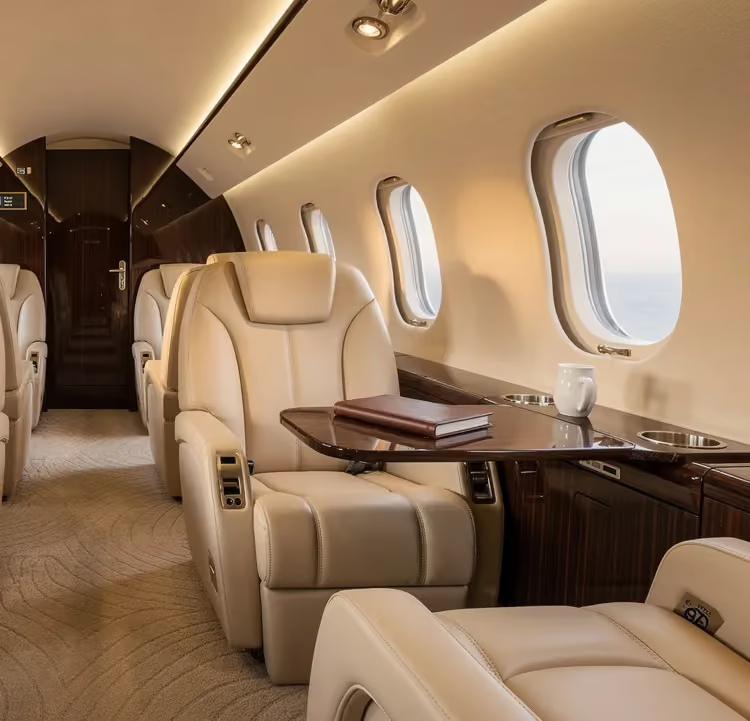

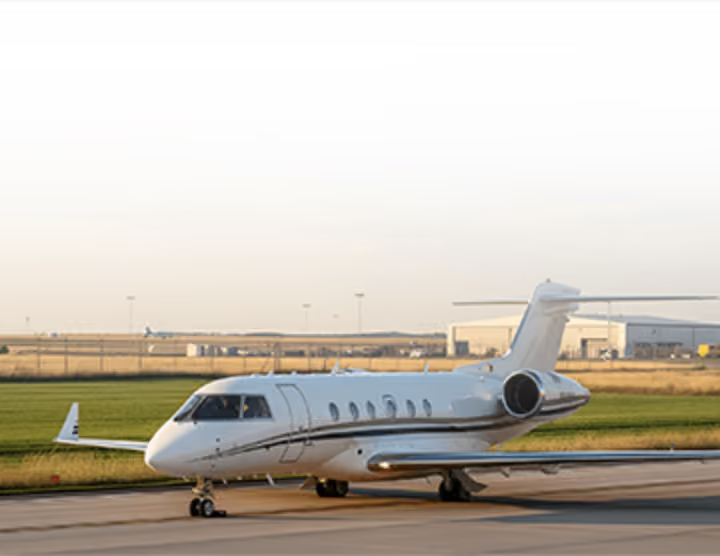

The Cessna Conquest II typically seats up to eight passengers in a club-style executive configuration, with some layouts accommodating a ninth seat. The interior is designed for maximum comfort and productivity, making it ideal for business teams, families, or leisure groups.
Yes. The Conquest II features a pressurized cabin with ample headroom, allowing passengers to stand and move comfortably. It is equipped with a private lavatory and a spacious baggage compartment offering 77 cubic feet of storage, accommodating luggage for the entire group.
For most regional flights across the United States and Europe, yes. The Conquest II’s range covers popular city pairs without refueling, though weather or a full passenger load may require a quick technical stop on the longest routes—common for aircraft in this class.
MEMBERSHIPS AND ASSOCIATIONS



Disclaimer: Jettly operates as a charter broker, offering access to a global digital jet charter marketplace. Jettly is not a direct air carrier and does not own or operate aircraft. All advertised flights are conducted by third-party air carriers that are fully licensed and hold the appropriate Part 135 or Part 121 certifications issued by the Federal Aviation Administration (FAA) or equivalent regulatory authorities under U.S. or foreign law. Jettly complies fully with the U.S. Department of Transportation's Part 295 and Part 298 Charter Broker regulations. Jettly does not carry additional liability insurance. Passengers are covered by aircraft operator insurance. TICO: 50023770


