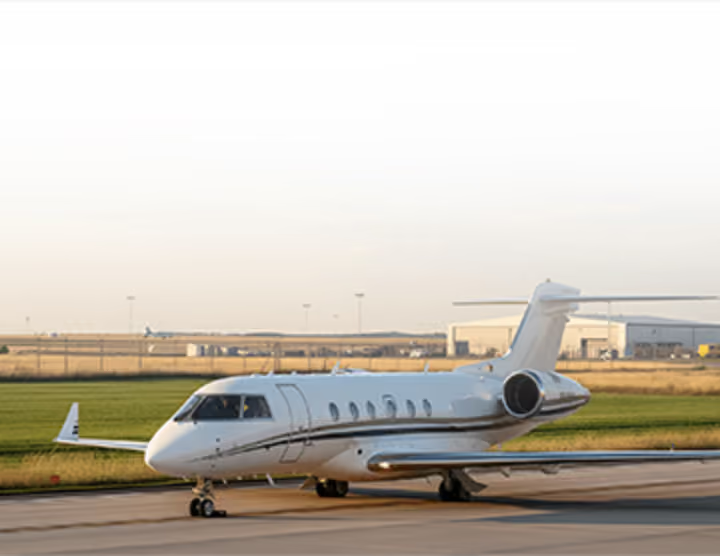
cessna-406

service

Cessna 406 Turbo Prop Specifications and Charter Rates

The Cessna 406 is a robust twin-engine turboprop designed for utility, regional, and executive missions, accommodating up to twelve passengers with ample baggage and impressive field performance. Launched in the late 1980s, it quickly became a mainstay for operators needing a versatile aircraft capable of accessing remote and short runways while maintaining comfort and dependability.


With its combination of rugged construction and advanced avionics, the 406 is a favorite for travelers seeking reliable transport to destinations off the beaten path. This profile covers the Cessna 406’s technical specifications, cabin layout, operational range, estimated charter pricing, and key details that set it apart in the turbo-prop segment.

jettly
service

Cessna 406 Overview

The Cessna 406 stands out in the turboprop class, prized for its ability to connect remote communities and destinations that larger aircraft simply can’t reach. With seating for up to twelve and a spacious interior, it’s equally effective for executive groups, VIP shuttles, or cargo missions. Dual Pratt & Whitney PT6A engines deliver the power for a 26,000-foot ceiling, allowing the 406 to soar efficiently above challenging weather and terrain.


Its ability to operate from short, unimproved runways is a hallmark of the 406, making it a natural fit for regions with minimal infrastructure. The aircraft’s operational efficiency, combined with straightforward maintenance and strong reliability, results in a value proposition that appeals to both operators and charter clients seeking flexibility and economy in a premium package.


For flyers, the Cessna 406 offers both versatility and comfort, transforming remote travel into a seamless, enjoyable experience that few competitors can match at this size and price point.

jettly

Cessna 406 Specifications

The figures below summarize the performance and dimensions that matter most when you are matching an aircraft to a trip. They reflect typical configurations; exact numbers vary with weight, weather, and how a given aircraft is equipped.
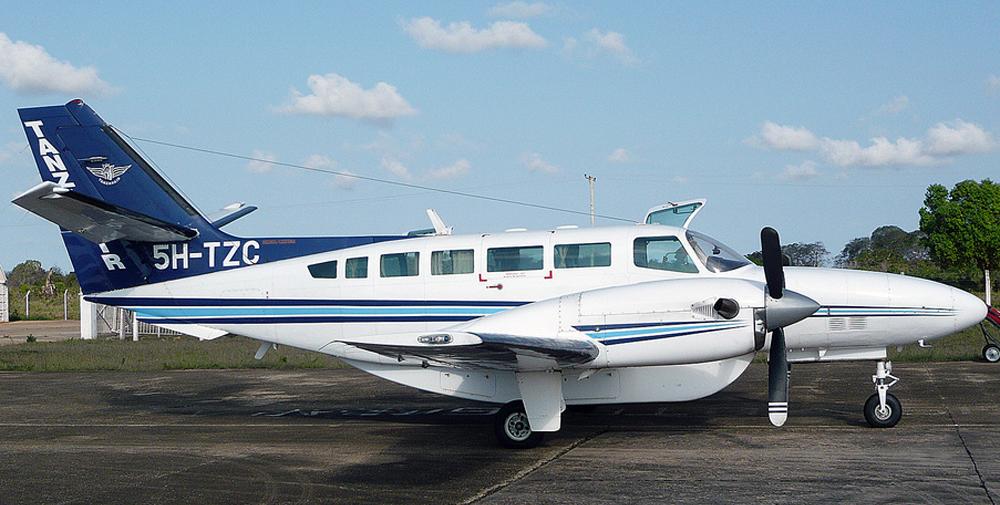
Aircraft class:

Turbo Prop

Passenger capacity:

Up to 9 (typical), 12 maximum

Crew:

2 pilots

Range:

Approximately 1326 nautical miles (around 1526 statute miles)

High-speed cruise:

229 knots (about 263 mph)

Long-range cruise:

Approximately 204 knots

Service ceiling:

26000 fee

Engines:

Two Pratt & Whitney PT6A-112 turboprops

Thrust:

Roughly 500 lbf per engine

Takeoff distance:

About 2624 feet

Landing distance:

About 2624 feet

Average fuel burn:

Around 85 gallons per hour

Baggage capacity:

Approximately 79 cubic feet

First delivered:

Late 1980s

cessna-406

The figures below summarize the performance and dimensions that matter most when you are matching an aircraft to a trip. They reflect typical configurations; exact numbers vary with weight, weather, and how a given aircraft is equipped.

cessna-406

Cessna 406 Range and Performance

With a maximum range of approximately 1,326 nautical miles, the Cessna 406 is designed for regional hops and mid-range missions, comfortably connecting city pairs such as Miami to Nassau, London to Zurich, or Los Angeles to Aspen with fuel reserves to spare. | Its capability to operate from runways as short as 2,600 feet opens up an extraordinary array of airports, letting passengers bypass congested hubs in favor of remote or secondary fields. The 406’s 229-knot cruise speed keeps travel times competitive, while its rugged design and powerful engines ensure reliable performance over challenging terrain and variable weather. | For discerning travelers, the result is a seamless journey from door to door, maximizing convenience and minimizing total travel time—often reaching destinations that are out of reach for jets or commercial flights.
cessna-406

Cessna 406 Cabin Experience and Interior

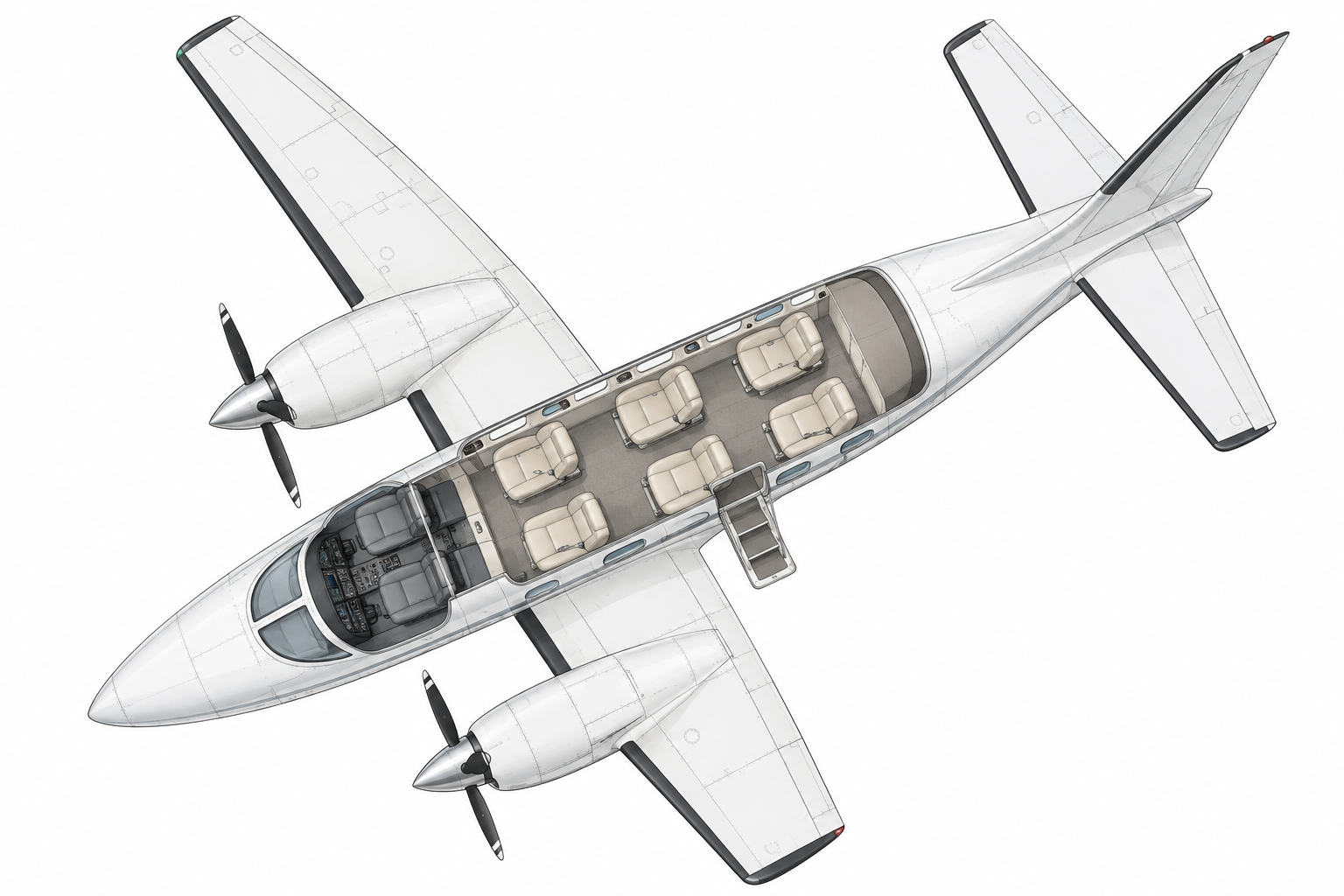
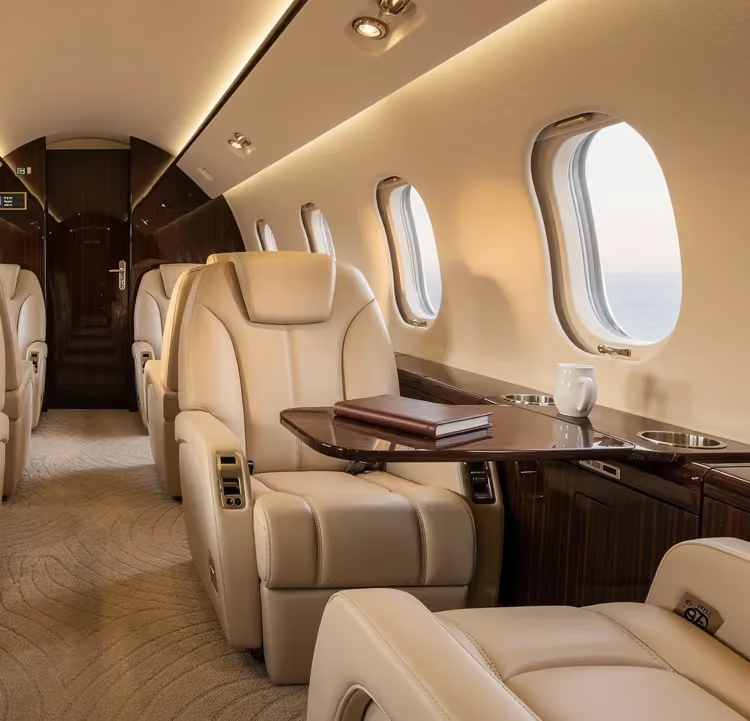
Step inside the Cessna 406 and you’ll find a surprisingly roomy, adaptable cabin. With a height of nearly 4 feet 9 inches and a width of about 5 feet, passengers can move about with ease, while large windows ensure a bright, inviting atmosphere. | Typical seating arrangements range from eight to twelve seats, with flexible layouts that can emphasize executive comfort, family travel, or even medical evacuation. Standard amenities include plush seating, fold-out work tables, ample baggage space, and a private lavatory on select configurations. | The 406’s cabin is designed for both productivity and relaxation, making it an ideal choice for business groups, families, or adventure travelers. Its quiet, pressurized environment and generous baggage capacity transform every trip into an enjoyable experience, no matter the mission.


Cessna 406 Charter Cost and Hourly Rates

laptop
A black and white image of an airplane.

Chartering a Cessna 406 typically runs in the range of $1800 to $2600 per flight hour, though the figure you are quoted depends on several factors. Rates move with the route, the season, repositioning (or ferry) time, airport fees, crew costs, and how a specific aircraft is equipped. Peak travel periods and one-way trips that leave an aircraft far from its base tend to sit at the higher end, while round trips and flights that align with an operator's existing schedule can come in lower.

A black and white image of an airplane.

It also helps to understand how charter pricing is structured. Most quotes are built around occupied flight hours plus those repositioning costs, landing and handling fees, taxes, and crew expenses. Because Jettly is a charter marketplace rather than an aircraft operator, you can compare live quotes from multiple FAA Part 135 and book the option that fits your route and budget.

A black and white image of an airplane.

Empty-leg flights, the discounted repositioning trips that operators are keen to fill, can also bring the cost of a Cessna 406 down significantly when the timing works in your favor. For an exact, current price on your specific trip, request a quote, and you will see real availability rather than an estimate.

Who Should Charter the Cessna 406?

The Cessna 406 fits a wide set of missions, which is part of why it stays busy. It is a strong match for:

icon

Small executive teams traveling together to a meeting, site visit, or conference

icon

Regional and many transcontinental business trips that need to be completed in a single day

icon

Families or groups of up to eight heading to a vacation or event

icon

Travelers carrying bulkier baggage, such as golf clubs or ski gear

icon

Anyone who values flexible airport access and a stand-up cabin over the lowest possible price

While the Cessna 406 isn’t built for long international flights, its ability to operate from remote, short, or unpaved runways makes it unbeatable for regional travel. For groups seeking a cost-effective, comfortable, and versatile aircraft to reach hard-to-access destinations, the 406 is a clear choice.

service

How the Cessna 406 Compares to Other Turbo Prop

The Cessna 406 Caravan II was developed in the mid-1980s as a twin-engine evolution of the legendary Cessna 208 Caravan, targeting the growing need for reliable, rugged aircraft that could serve both passengers and cargo in challenging environments.


Its robust construction, paired with the proven PT6A engines, quickly earned it a reputation for dependability in regions like Africa, South America, and the Australian Outback. Its pressurized cabin and advanced avionics set new standards for the category, while the aircraft’s short takeoff and landing abilities made it indispensable for operators needing access to isolated airfields.


Over the years, the 406 has become a favorite among charter companies, medevac services, and regional airlines, offering flexibility and reliability that few aircraft in this class can rival.


Today, the Cessna 406 remains a respected and sought-after workhorse, capable of connecting communities and enabling journeys far beyond the reach of conventional commercial aviation.

jettly

Cessna 406 History and Background

The Cessna 406 Caravan II was developed in the mid-1980s as a twin-engine evolution of the legendary Cessna 208 Caravan, targeting the growing need for reliable, rugged aircraft that could serve both passengers and cargo in challenging environments.


Its robust construction, paired with the proven PT6A engines, quickly earned it a reputation for dependability in regions like Africa, South America, and the Australian Outback. Its pressurized cabin and advanced avionics set new standards for the category, while the aircraft’s short takeoff and landing abilities made it indispensable for operators needing access to isolated airfields.


Over the years, the 406 has become a favorite among charter companies, medevac services, and regional airlines, offering flexibility and reliability that few aircraft in this class can rival.


Today, the Cessna 406 remains a respected and sought-after workhorse, capable of connecting communities and enabling journeys far beyond the reach of conventional commercial aviation.

plan

Frequently Asked Questions

How Many Passengers Can the Cessna 406 Carry?

The Cessna 406 typically seats nine passengers in a standard configuration, though high-density layouts can accommodate up to twelve. Flexible seating arrangements make it suitable for executive, leisure, or air ambulance missions.

What Is the Range of the Cessna 406?

The Cessna 406 has a range of approximately 1326 nautical miles, or roughly 1526 statute miles. That is enough to fly most regional routes and many transcontinental trips nonstop, with the longest coast-to-coast legs occasionally needing a brief fuel stop depending on winds and load.

How Fast Does the Cessna 406 Fly?

Its high-speed cruise is 229 knots (about 263 mph), with a long-range cruise near 204 knots. The aircraft's 26000-foot service ceiling lets it fly above most weather and traffic for a smoother, more direct trip.

How Much Does It Cost to Charter a Cessna 406?

Charter rates generally fall between roughly $1800 and $2600 per flight hour, depending on the route, season, repositioning, and fees. Because Jettly is a marketplace, you can compare live quotes from multiple Part 135 operators and book the best option for your trip; empty-leg flights can lower the cost further.

Does the Hawker Cessna 406 Have a Stand-up Cabin?

Yes. The 406 features a spacious, pressurized cabin with stand-up room for most passengers, large panoramic windows, and a generous baggage compartment of approximately 79 cubic feet.

Is the Cessna 406 Good for Transcontinental Flights?

For most regional routes, absolutely. The Cessna 406 is ideal for trips between smaller cities or remote airports, and it can fly nonstop for over 1,300 nautical miles—perfect for regional business or leisure travel.

Jettly gives you access to a global marketplace of more than 23,000 aircraft, including Cessna 406 jets operated by vetted FAA Part 135 Part 135 carriers. Compare live quotes, check real availability, and book with full concierge support, whether you are planning a single regional hop or a recurring travel schedule.

Enter your route and dates to get instant pricing on the Cessna 406, or speak with our team about empty-leg deals and membership options that can bring your cost per trip down even further.

MEMBERSHIPS AND ASSOCIATIONS

partner logo
partner logo
partner logo
partner logo
partner logo
partner logo