


Login
Get Instant Pricing On 23,000+ Aircraft

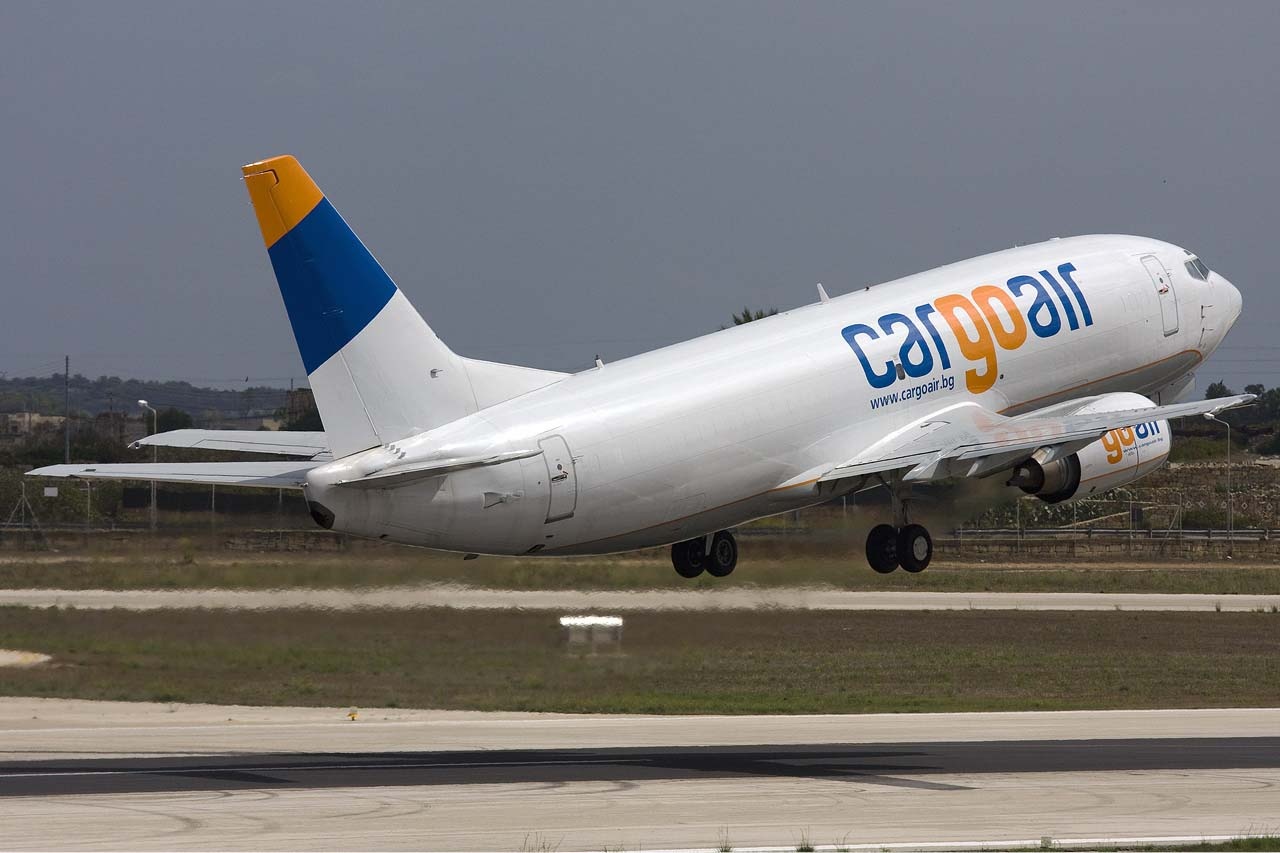

Aircraft class:
Cargo
Passenger capacity:
Crew:
2 pilots
Range:
High-speed cruise:
Long-range cruise:
Service ceiling:
Engines:
Two CFM56-3B1 turbofans
Thrust:
Takeoff distance:
Landing distance:
Average fuel burn:
Baggage capacity:
First delivered:
Late 1990s
The figures below summarize the performance and dimensions that matter most when you are matching an aircraft to a trip. They reflect typical configurations; exact numbers vary with weight, weather, and how a given aircraft is equipped.
With a maximum range of approximately 2,929 nautical miles, the Boeing 737-300F is engineered for extensive regional and medium-haul cargo missions without compromising payload. It links city pairs such as Miami to Los Angeles, Houston to Toronto, or Paris to Athens in a single flight, providing reliable overnight or same-day delivery solutions. | While transcontinental routes are well within reach, payload and range balance is easily managed by experienced operators for optimal logistics planning. With a high-speed cruise of 426 knots, shipments arrive quickly, and the aircraft’s 8,200-foot takeoff requirement enables access to a broad range of airports—including many with shorter runways or limited infrastructure. | The 737-300F’s robust engines and 37,000-foot ceiling allow for efficient routing above weather and commercial congestion. Its proven track record for dependability ensures that critical cargo moves on schedule, outpacing conventional surface transport or less capable aircraft.
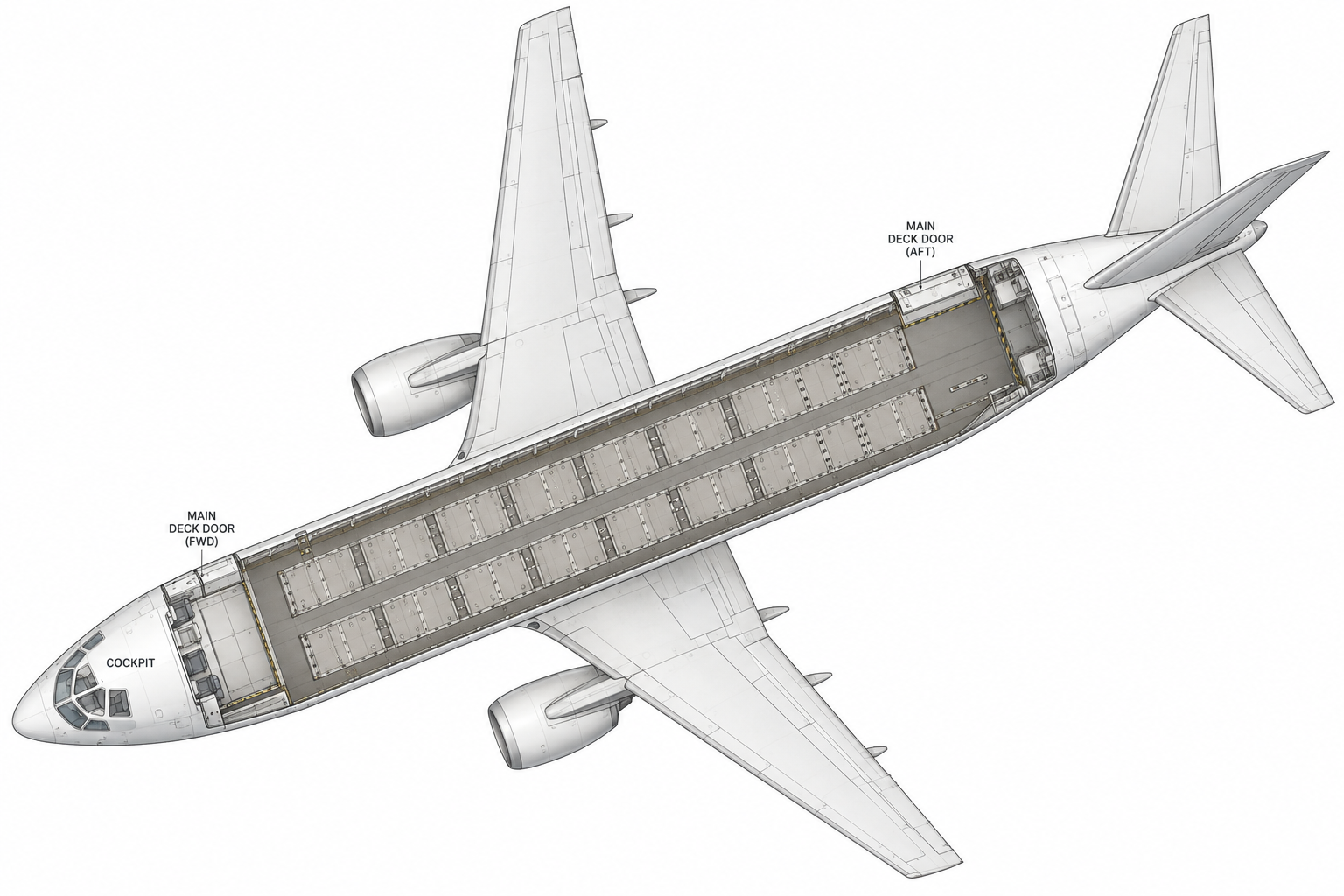
As a pure freighter, the Boeing 737-300F features a spacious, unobstructed main deck designed to handle high-volume cargo loads of varying shapes and sizes. The large cargo door and reinforced floor make it easy to accommodate standard pallets and outsized shipments with maximum efficiency. | The utilitarian interior is optimized for rapid loading and unloading, equipped with roller systems, tie-down points, and climate control to protect sensitive goods. The cockpit provides a modern avionics suite for the crew, ensuring seamless operations and precise navigation on every mission. | With no passenger cabin, the 737-300F is all business: every cubic foot is dedicated to maximizing cargo throughput and operational reliability for demanding logistics schedules.

.avif)
.avif)
.avif)
.avif)
.avif)
The 737-300F is purpose-built for high-volume, time-sensitive freight—not for passenger flights. It’s the optimal choice for logistics providers, express shippers, and corporations moving urgent cargo, from automotive parts and e-commerce goods to pharmaceuticals and high-value electronics. For oversized or palletized shipments on regional or cross-country routes, this freighter delivers unrivaled speed and reliability.

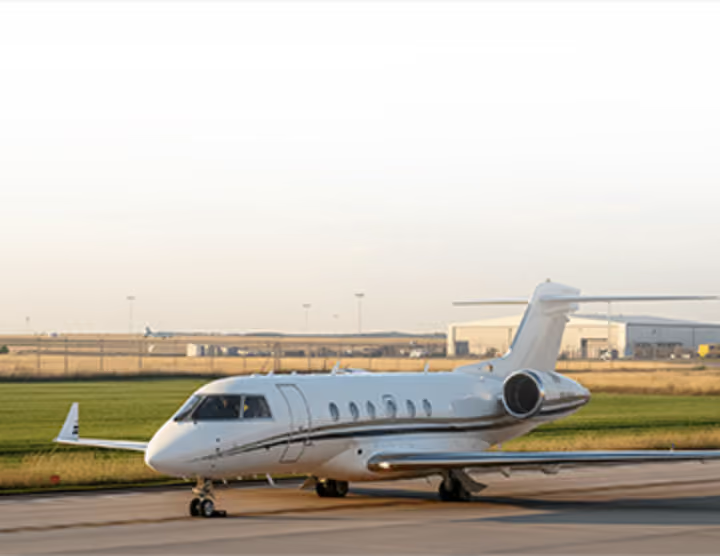

The Boeing 737-300F is configured exclusively for cargo, with a main deck capacity of up to 18.5 metric tons. The spacious interior can handle standard ULD pallets, containers, or outsized shipments, making it a flexible solution for diverse freight needs.
Yes. The 737-300F is equipped with a full-size main deck cargo door, a reinforced floor, and a climate-controlled environment to protect sensitive goods. The cockpit offers a modern workspace for two pilots, and the entire aircraft is optimized for safe, efficient cargo movement.
For most North American and European regional routes, absolutely. The 737-300F efficiently covers distances up to nearly 3,000 nautical miles, supporting overnight and expedited deliveries between major logistics hubs and secondary airports alike.
MEMBERSHIPS AND ASSOCIATIONS



Disclaimer: Jettly operates as a charter broker, offering access to a global digital jet charter marketplace. Jettly is not a direct air carrier and does not own or operate aircraft. All advertised flights are conducted by third-party air carriers that are fully licensed and hold the appropriate Part 135 or Part 121 certifications issued by the Federal Aviation Administration (FAA) or equivalent regulatory authorities under U.S. or foreign law. Jettly complies fully with the U.S. Department of Transportation's Part 295 and Part 298 Charter Broker regulations. Jettly does not carry additional liability insurance. Passengers are covered by aircraft operator insurance. TICO: 50023770


