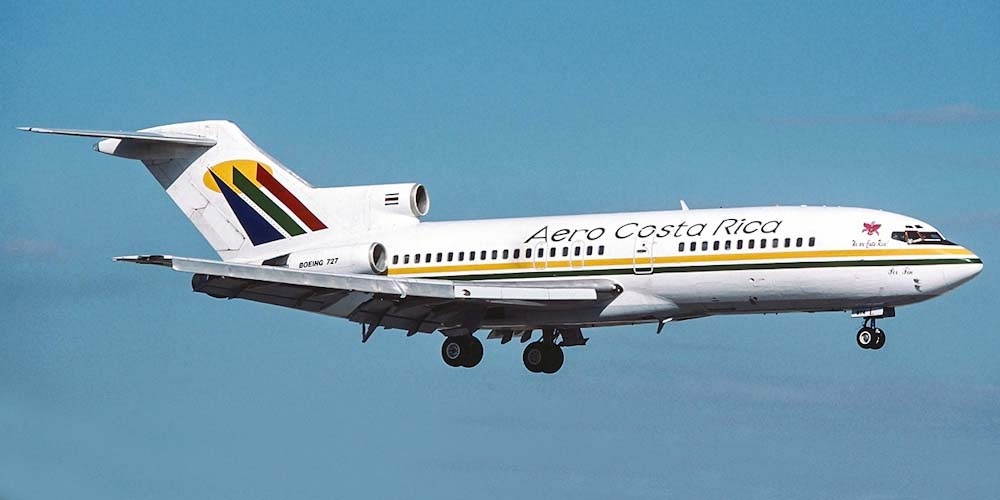
boeing-727-100

service

Boeing 727-100 Cargo Specifications and Charter Rates

The Boeing 727-100 is an iconic trijet originally designed for short and medium-haul routes, with a dedicated cargo variant that has become a staple in air freight operations worldwide. Renowned for its robust payload capacity and ability to operate on shorter runways, the 727-100 offers a cruise speed of 610 mph and a range of approximately 4,170 miles, making it a versatile solution for high-volume shipping across continents.


This aircraft’s reliable performance and large cargo hold have made it a favorite for express logistics, specialized freight, and time-critical shipments. Explore its full technical specifications, operational details, and discover how the Boeing 727-100 continues to deliver value for discerning cargo operators and clients seeking efficiency and reliability.

jettly
service

Boeing 727-100 Overview

The Boeing 727-100 cargo variant is a narrow-body jet equipped with three Pratt & Whitney JT8D engines, tailored specifically for freight operations. Its design allows for rapid loading and unloading, with a main deck that accommodates palletized freight, bulk shipments, and oversized cargo. With a maximum payload capacity upwards of 48,000 pounds, the 727-100 delivers the performance and flexibility demanded by modern logistics providers.


Its unique trijet configuration delivers outstanding thrust and climb performance, ensuring dependable operations even from airports with shorter runways. The 727-100’s combination of range, cargo volume, and operational reliability has secured its place as a workhorse in the air freight sector, capable of meeting the tight schedules and challenging logistics of premium cargo transport.


Operators and clients appreciate the mature platform, well-established maintenance network, and cost-effective performance, making the Boeing 727-100 a preferred solution for urgent shipments, high-value goods, and supply chain continuity across regional and intercontinental routes.

jettly

Boeing 727-100 Specifications

The figures below summarize the performance and dimensions that matter most when you are matching an aircraft to a trip. They reflect typical configurations; exact numbers vary with weight, weather, and how a given aircraft is equipped.

Aircraft class:

Cargo

Passenger capacity:

Up to (typical), maximum

Crew:

2 pilots, 2 loadmasters

Range:

Approximately 4170 nautical miles (around 4800 statute miles)

High-speed cruise:

530 knots (about 610 mph)

Long-range cruise:

Approximately 490 knots

Service ceiling:

39000 fee

Engines:

Three Pratt & Whitney JT8D turbofans

Thrust:

Roughly 14500 lbf per engine

Takeoff distance:

About 8200 feet

Landing distance:

About 5200 feet

Average fuel burn:

Around 1400 gallons per hour

Baggage capacity:

Approximately 85 cubic feet

First delivered:

Early 1960s

boeing-727-100

The figures below summarize the performance and dimensions that matter most when you are matching an aircraft to a trip. They reflect typical configurations; exact numbers vary with weight, weather, and how a given aircraft is equipped.

boeing-727-100

Boeing 727-100 Range and Performance

With a range of approximately 4,170 miles, the Boeing 727-100 cargo variant is adept at handling long-haul and transcontinental freight missions without the need for refueling. This reach covers major shipping lanes such as Miami to Vancouver, New York to Los Angeles, or London to Cairo, all on a single leg. | Its cruise speed of 610 mph ensures fast delivery times, while the trijet’s takeoff and landing performance allows for operations from secondary or regional airports—closer to final destinations and key distribution centers. The 727-100’s large main deck provides the capacity for high-volume and oversized shipments, with a total baggage volume of 85 cubic feet in addition to the primary cargo area. | For logistics operators and clients, this translates into minimized ground time and maximized operational flexibility, ensuring time-sensitive cargo arrives on schedule regardless of origin or destination.
boeing-727-100

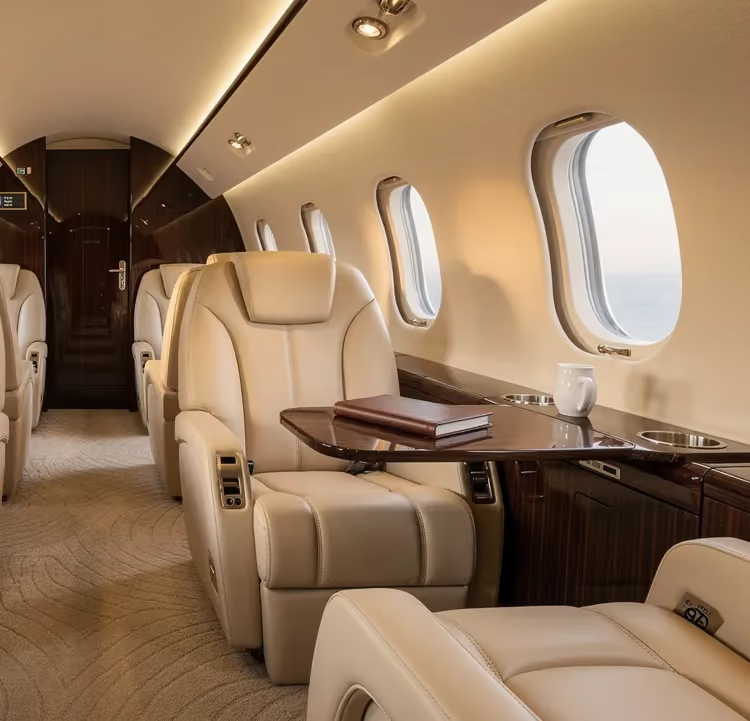
Boeing 727-100 Cabin Experience and Interior

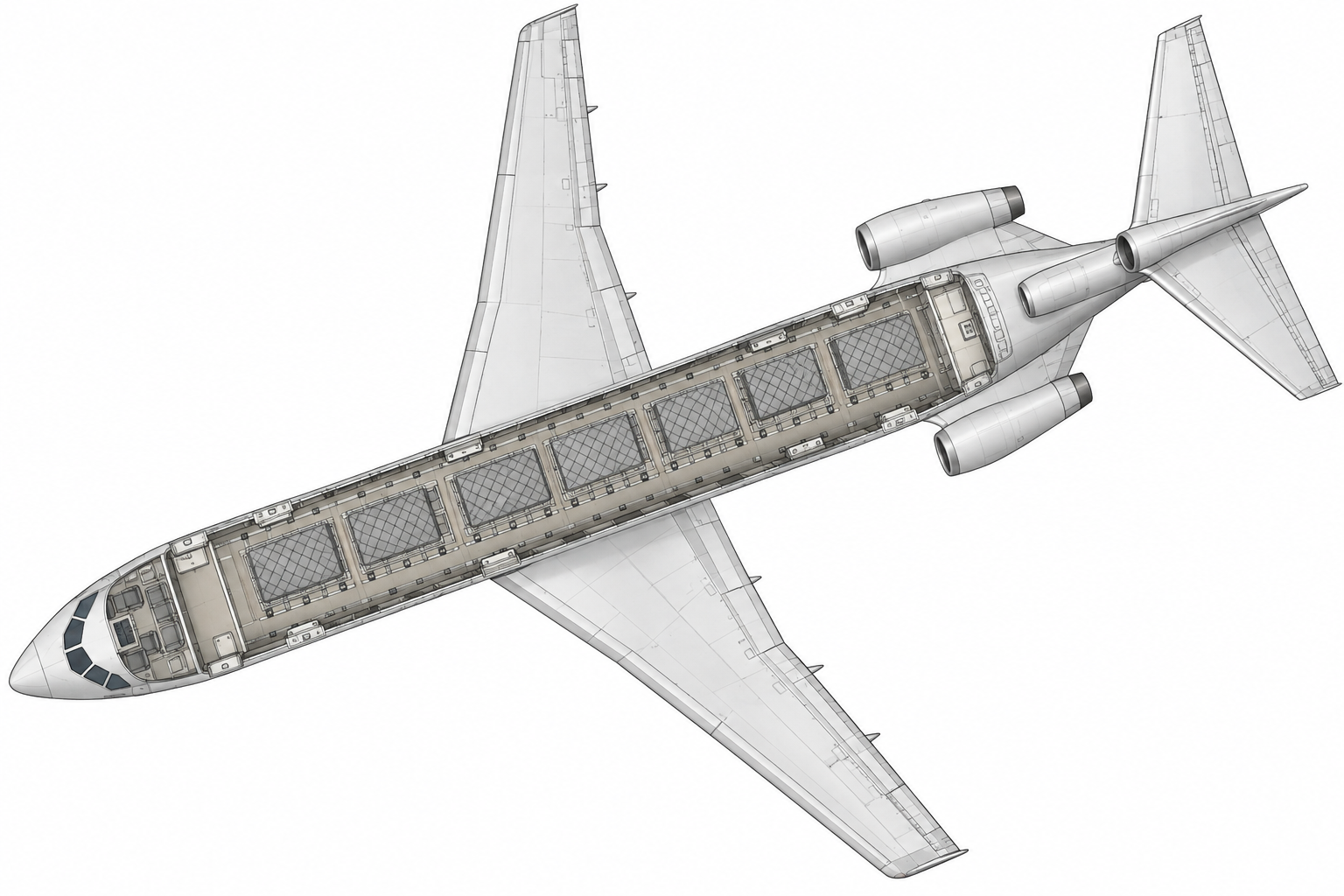
The Boeing 727-100 cargo variant is engineered for efficiency and secure transport, with a spacious main deck that accommodates a wide variety of freight configurations. Reinforced flooring, integrated cargo nets, and customizable pallet systems allow for safe stowage of everything from bulk packages to delicate, high-value goods. | A dedicated crew area at the front of the aircraft offers seating, galley amenities, and rest space for the pilots and loadmasters, ensuring optimal working conditions on lengthy missions. The aircraft's design enables rapid turnaround between flights, keeping logistics chains moving seamlessly and providing the reliability required for premium air freight. | Cargo handlers and operators benefit from wide cargo doors, low main deck height, and versatile loading equipment, making the 727-100 a favorite for specialized, on-demand, and express air cargo operations.

Boeing 727-100 Charter Cost and Hourly Rates

laptop
A black and white image of an airplane.

Chartering a Boeing 727-100 typically runs in the range of $7500 to $9500 per flight hour, though the figure you are quoted depends on several factors. Rates move with the route, the season, repositioning (or ferry) time, airport fees, crew costs, and how a specific aircraft is equipped. Peak travel periods and one-way trips that leave an aircraft far from its base tend to sit at the higher end, while round trips and flights that align with an operator's existing schedule can come in lower.

A black and white image of an airplane.

It also helps to understand how charter pricing is structured. Most quotes are built around occupied flight hours plus those repositioning costs, landing and handling fees, taxes, and crew expenses. Because Jettly is a charter marketplace rather than an aircraft operator, you can compare live quotes from multiple FAA Part 121 and book the option that fits your route and budget.

A black and white image of an airplane.

Empty-leg flights, the discounted repositioning trips that operators are keen to fill, can also bring the cost of a Boeing 727-100 down significantly when the timing works in your favor. For an exact, current price on your specific trip, request a quote, and you will see real availability rather than an estimate.

Who Should Charter the Boeing 727-100?

The Boeing 727-100 fits a wide set of missions, which is part of why it stays busy. It is a strong match for:

icon

Small executive teams traveling together to a meeting, site visit, or conference

icon

Regional and many transcontinental business trips that need to be completed in a single day

icon

Families or groups of up to eight heading to a vacation or event

icon

Travelers carrying bulkier baggage, such as golf clubs or ski gear

icon

Anyone who values flexible airport access and a stand-up cabin over the lowest possible price

The Boeing 727-100 is best suited for heavy, urgent, or specialized cargo requiring rapid point-to-point delivery over long distances. While not designed for small parcel or passenger transport, it excels for freight forwarders, automotive logistics, humanitarian relief, and industrial shipments that demand secure, reliable, and fast airlift.

service

How the Boeing 727-100 Compares to Other Cargo

First introduced in the early 1960s, the Boeing 727-100 was originally conceived as a short- to medium-haul passenger jet, quickly earning a reputation for its innovative trijet configuration and operational flexibility. As air cargo demand grew, Boeing adapted the 727-100 for freight, capitalizing on its range, payload, and ability to serve airports with limited infrastructure.


The cargo variant became a mainstay of global air freight, favored for its robust design and adaptability across diverse markets. Its proven track record led to widespread adoption by major logistics companies, express carriers, and charter operators, cementing its legacy as a foundational aircraft in the evolution of modern air cargo transport.


Today, the 727-100 continues to serve in specialized roles, benefiting from a deep maintenance and support network, as well as a reputation for reliability that keeps it in demand for critical missions worldwide.

jettly

Boeing 727-100 History and Background

First introduced in the early 1960s, the Boeing 727-100 was originally conceived as a short- to medium-haul passenger jet, quickly earning a reputation for its innovative trijet configuration and operational flexibility. As air cargo demand grew, Boeing adapted the 727-100 for freight, capitalizing on its range, payload, and ability to serve airports with limited infrastructure.


The cargo variant became a mainstay of global air freight, favored for its robust design and adaptability across diverse markets. Its proven track record led to widespread adoption by major logistics companies, express carriers, and charter operators, cementing its legacy as a foundational aircraft in the evolution of modern air cargo transport.


Today, the 727-100 continues to serve in specialized roles, benefiting from a deep maintenance and support network, as well as a reputation for reliability that keeps it in demand for critical missions worldwide.

plan

Frequently Asked Questions

How Many Passengers Can the Boeing 727-100 Carry?

The Boeing 727-100 cargo version does not carry passengers; its main deck is configured exclusively for freight, with crew accommodations at the front of the aircraft for pilots and loadmasters supporting each flight.

What Is the Range of the Boeing 727-100?

The Boeing 727-100 has a range of approximately 4170 nautical miles, or roughly 4800 statute miles. That is enough to fly most regional routes and many transcontinental trips nonstop, with the longest coast-to-coast legs occasionally needing a brief fuel stop depending on winds and load.

How Fast Does the Boeing 727-100 Fly?

Its high-speed cruise is 530 knots (about 610 mph), with a long-range cruise near 490 knots. The aircraft's 39000-foot service ceiling lets it fly above most weather and traffic for a smoother, more direct trip.

How Much Does It Cost to Charter a Boeing 727-100?

Charter rates generally fall between roughly $7500 and $9500 per flight hour, depending on the route, season, repositioning, and fees. Because Jettly is a marketplace, you can compare live quotes from multiple Part 135 operators and book the best option for your trip; empty-leg flights can lower the cost further.

Does the Hawker Boeing 727-100 Have a Stand-up Cabin?

Yes. The 727-100 features a reinforced, unobstructed cargo hold with wide doors and a total baggage volume of 85 cubic feet, allowing for efficient loading and secure transport of large or irregular shipments.

Is the Boeing 727-100 Good for Transcontinental Flights?

Absolutely. The 727-100’s range and speed enable nonstop long-haul missions such as New York to Los Angeles or London to Cairo, covering key international routes without the need for refueling.

Jettly gives you access to a global marketplace of more than 23,000 aircraft, including Boeing 727-100 jets operated by vetted FAA Part 121 Part 135 carriers. Compare live quotes, check real availability, and book with full concierge support, whether you are planning a single regional hop or a recurring travel schedule.

Enter your route and dates to get instant pricing on the Boeing 727-100, or speak with our team about empty-leg deals and membership options that can bring your cost per trip down even further.

MEMBERSHIPS AND ASSOCIATIONS

partner logo
partner logo
partner logo
partner logo
partner logo
partner logo