


Login
Get Instant Pricing On 23,000+ Aircraft


Aircraft class:
Airliner
Passenger capacity:
Crew:
2 pilots, 1 flight engineer
Range:
High-speed cruise:
Long-range cruise:
Service ceiling:
Engines:
Two Ivchenko AI-24VT turboprops
Thrust:
Takeoff distance:
Landing distance:
Average fuel burn:
Baggage capacity:
First delivered:
Late 1960s
The figures below summarize the performance and dimensions that matter most when you are matching an aircraft to a trip. They reflect typical configurations; exact numbers vary with weight, weather, and how a given aircraft is equipped.
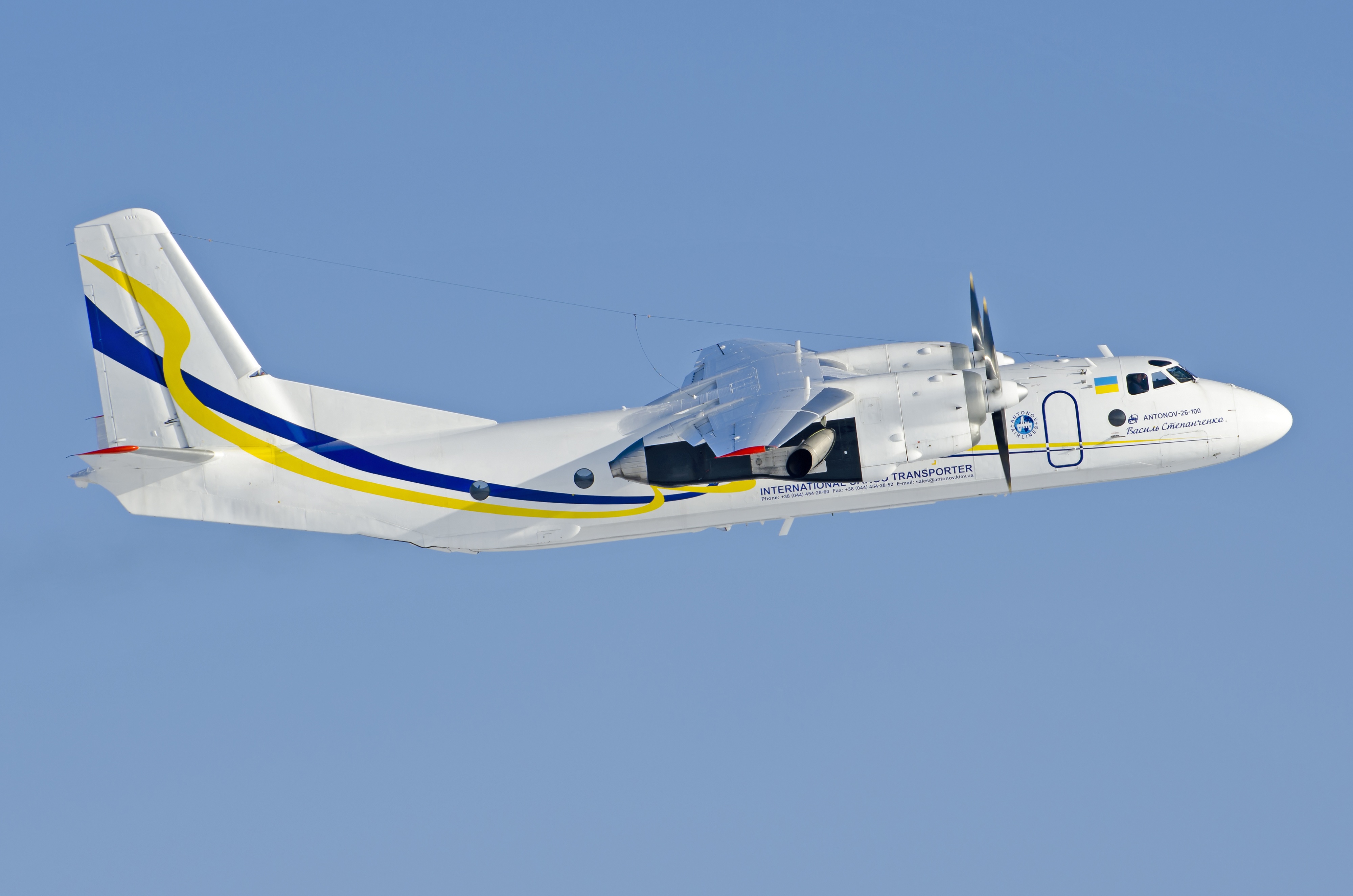
With a typical range of 1,800 miles, the An-26 is built for regional journeys, easily covering city pairs such as Paris to Moscow, Istanbul to Dubai, or Johannesburg to Windhoek non-stop. Its endurance and fuel efficiency make it a preferred choice for extended operations in regions with limited infrastructure. | The aircraft can reach remote destinations thanks to its short-field performance, with takeoff and landing requirements of about 4,200 and 3,600 feet, respectively. Its 235-knot cruise speed keeps group trips efficient, while the ability to operate from rough airstrips opens up unique charter opportunities. | With powerful turboprops and a service ceiling of 27,500 feet, the An-26 provides a smooth ride above much of the weather, ensuring reliable schedules for both passengers and cargo on demanding routes.
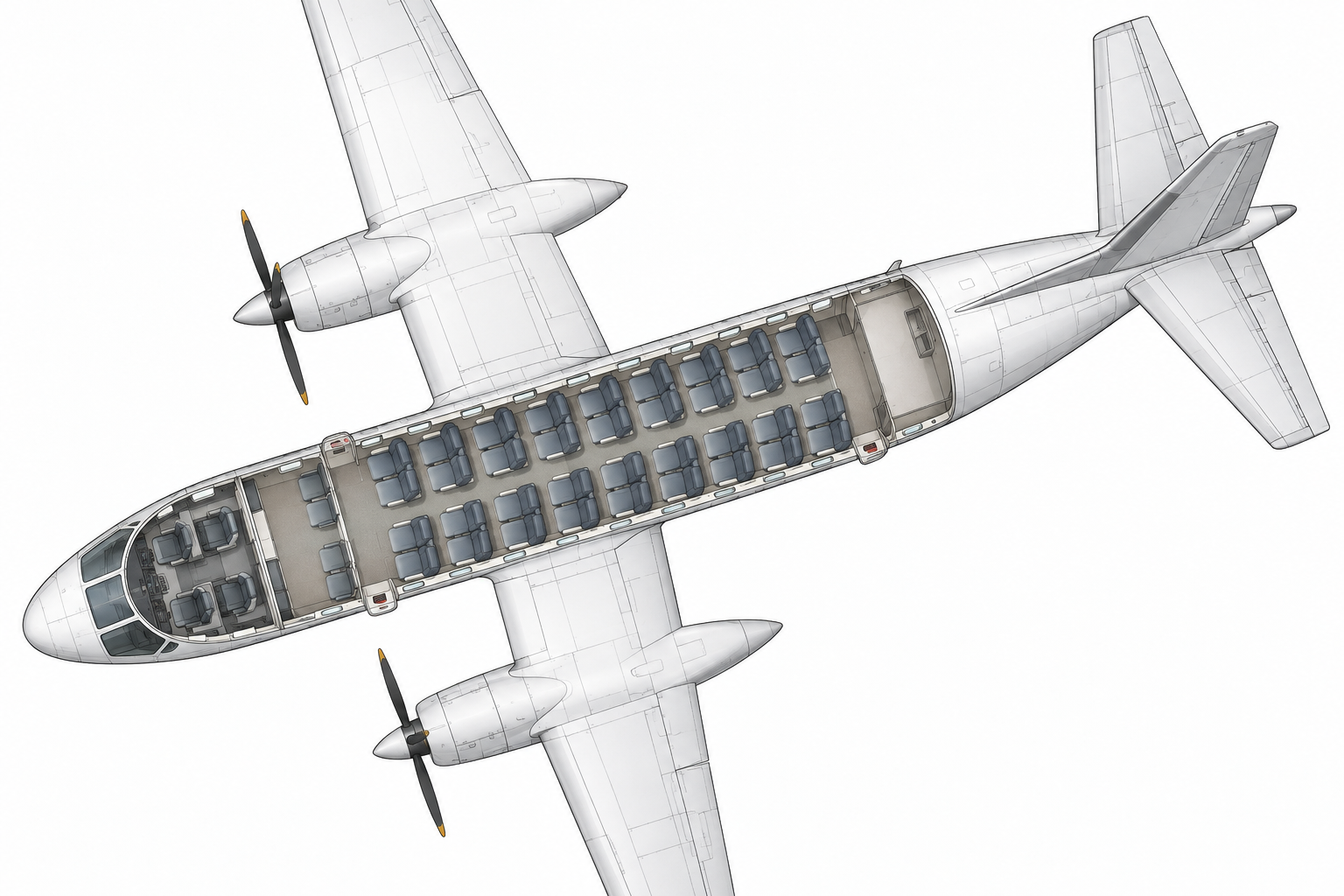
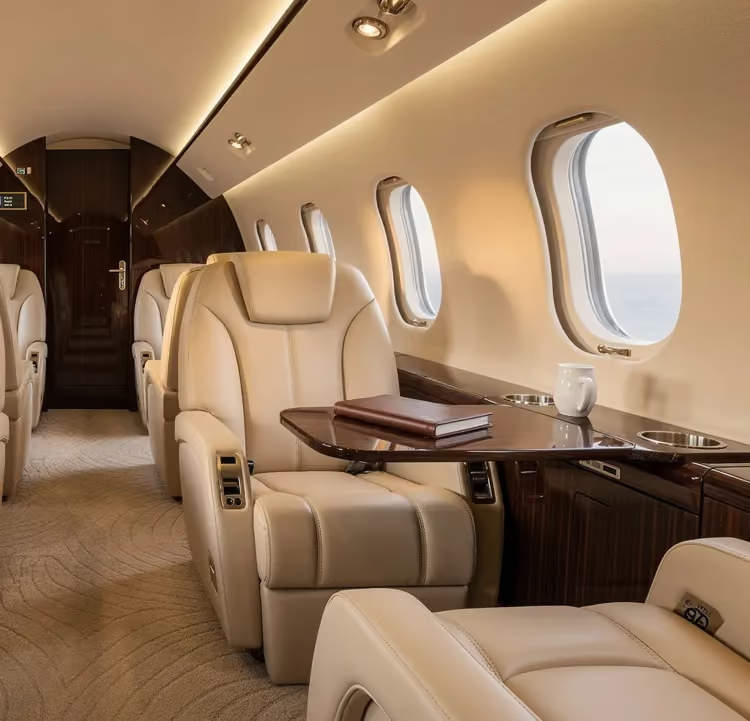
The An-26 features a spacious, utilitarian cabin designed for maximum adaptability. Standard seating accommodates up to 40 passengers in a comfortable arrangement, with options for cargo-only or mixed passenger/freight layouts. | The cabin is equipped with large windows for ample natural light, overhead storage, and a straightforward interior that emphasizes reliability and ease of access. Adjustable seating and robust climate control ensure comfort even in extreme environments. | Though primarily tailored for functional missions, the An-26 offers a practical travel experience for large groups, with sufficient headroom and aisle space to move about during flight. Its 15 cubic feet of baggage capacity is ideal for essential luggage or mission-critical supplies.


.avif)
.avif)
.avif)
.avif)
.avif)
While the An-26 is not designed for long-haul intercontinental travel or luxury executive missions, it dominates the segment for regional group transport, remote access, and cargo operations. For organizations and travelers prioritizing reliability, capacity, and the ability to reach unconventional destinations, the An-26 offers an unmatched value proposition.


The An-26 is typically configured to carry 32 passengers in standard layout, with some versions accommodating up to 40. Flexible seating and cargo arrangements make it ideal for group charters, logistics, or special-purpose flights.
Yes. The An-26 offers a spacious cabin with practical headroom and a utilitarian design that allows passengers to move comfortably. Standard amenities include overhead storage, large windows, and climate control to ensure a pleasant in-flight experience.
The An-26 can cover regional city pairs like Paris to Moscow or Johannesburg to Windhoek without refueling. For longer routes or higher payloads, an intermediate technical stop may be required, which is common for utility airliners operating at maximum capacity.
MEMBERSHIPS AND ASSOCIATIONS



Disclaimer: Jettly operates as a charter broker, offering access to a global digital jet charter marketplace. Jettly is not a direct air carrier and does not own or operate aircraft. All advertised flights are conducted by third-party air carriers that are fully licensed and hold the appropriate Part 135 or Part 121 certifications issued by the Federal Aviation Administration (FAA) or equivalent regulatory authorities under U.S. or foreign law. Jettly complies fully with the U.S. Department of Transportation's Part 295 and Part 298 Charter Broker regulations. Jettly does not carry additional liability insurance. Passengers are covered by aircraft operator insurance. TICO: 50023770


