


Login
Get Instant Pricing On 23,000+ Aircraft

>

Traditional fractional programs were designed when aircraft access was scarce, pricing was opaque, and flexibility didn’t exist.
Share this post:
Jay Franco
Jan 13, 2026
|
5
min read
Discover tips and trends in the industry.

5
min read
Bombardier Challenger 604: A Comprehensive Guide to Performance, Comfort, and Charter Access
The Bombardier Challenger 604 is a heavy private jet known for its long-range capabilities and spacious cabin, accommodating up to 19 passengers, making it ideal for business and family travel. With a range of 3,700–4,000 nautical miles, it is suitable for transcontinental flights and has been a popular choice in private aviation since its introduction in 1995, with over 360 units delivered. Travelers can access this aircraft through Jettly’s charter platform, which offers flexible booking options without the need for ownership or long-term commitments. The Challenger 604 combines performance, comfort, and reliability, making it a strong contender in the large-cabin charter market.
Read More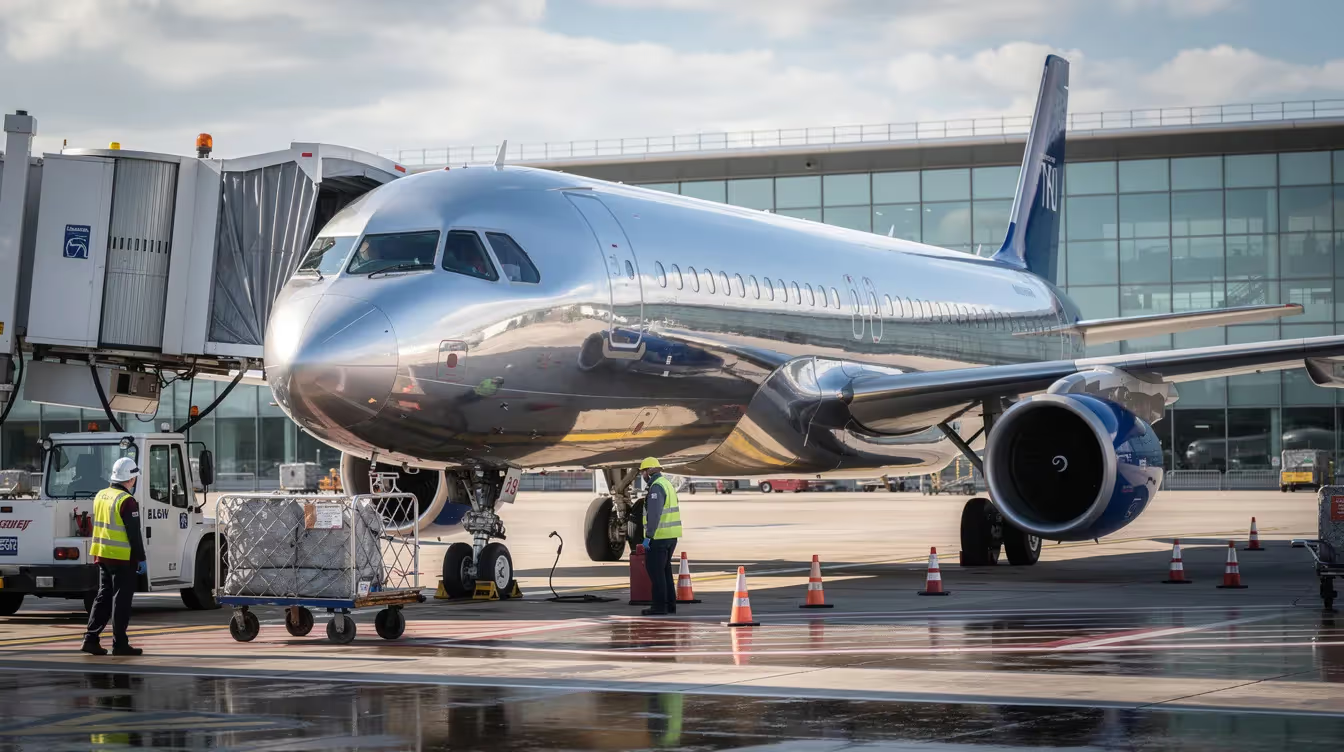
5
min read
Empty Planes: Why Airlines Fly Them, What They Feel Like, and How Travelers Can Benefit
Empty planes, or flights operating with few or no passengers, are common in aviation due to regulatory requirements, aircraft repositioning, and maintenance needs. Airlines often operate these flights to retain valuable airport slots, while private jet operators create "empty legs" that can be booked at discounted rates. Although ghost flights contribute to significant CO₂ emissions, platforms like Jettly help travelers take advantage of empty legs, improving efficiency and reducing waste. Understanding the dynamics of empty flights can enhance travel experiences and offer unique opportunities for passengers.
Read MoreStay updated with our latest insights and tips to elevate your journey with us.
MEMBERSHIPS AND ASSOCIATIONS



Disclaimer: Jettly operates as a charter broker, offering access to a global digital jet charter marketplace. Jettly is not a direct air carrier and does not own or operate aircraft. All advertised flights are conducted by third-party air carriers that are fully licensed and hold the appropriate Part 135 or Part 121 certifications issued by the Federal Aviation Administration (FAA) or equivalent regulatory authorities under U.S. or foreign law. Jettly complies fully with the U.S. Department of Transportation's Part 295 and Part 298 Charter Broker regulations. Jettly does not carry additional liability insurance. Passengers are covered by aircraft operator insurance. TICO: 50023770


