



Login
Get Instant Pricing On 23,000+ Aircraft

>
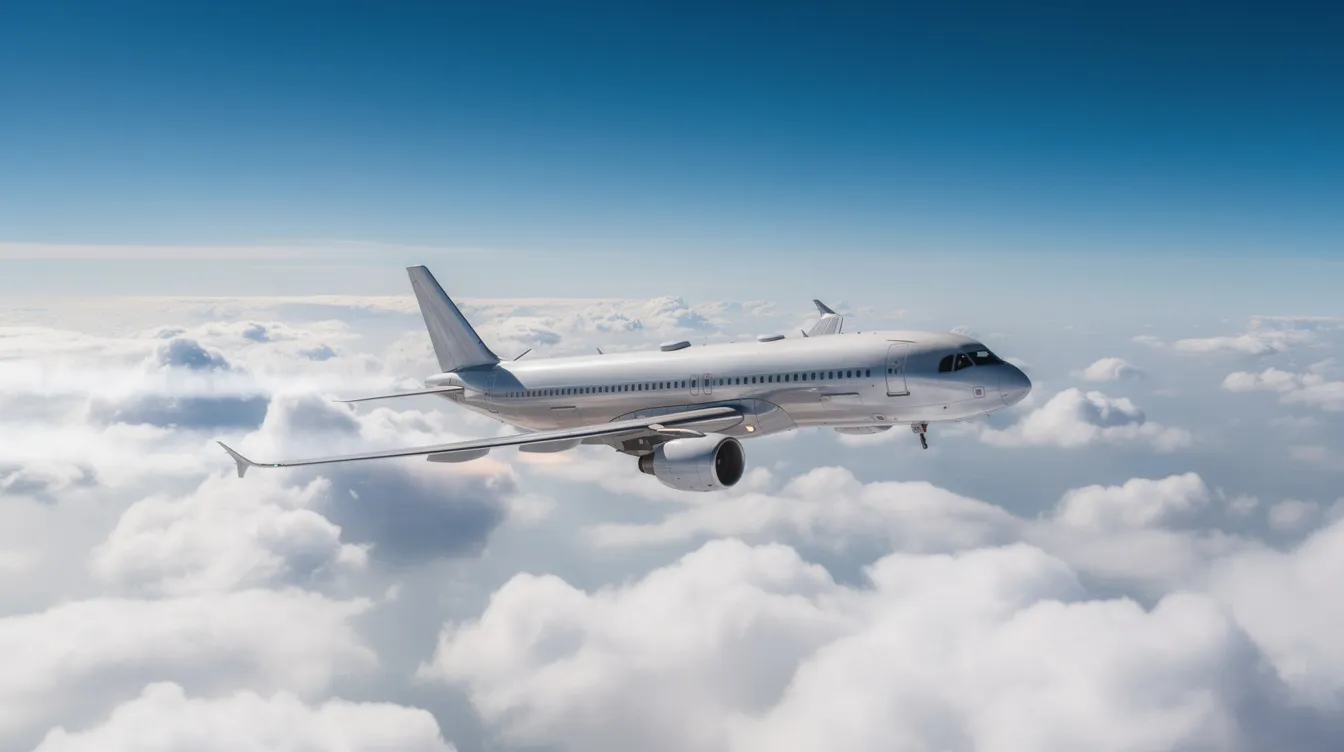
Ever looked out a plane window and wondered why planes fly at 35,000 feet instead of, say, 15,000 or 50,000? In most cases, planes cruise around 35,000 feet because that altitude gives the best balance of lower aerodynamic drag, strong fuel efficiency, reliable engine performance, smoother air above most weather, and practical spacing for air traffic control. For frequent flyers, corporate executives, high-net-worth families, and private jet travelers comparing commercial service with options like Jettly, understanding that balance helps explain flight time, operating cost, comfort, and safety. Here is what actually determines cruising altitude, from the physics of the atmosphere to fuel burn, turbulence avoidance, ATC separation, and the differences between airliners and private jets.
Most commercial aircraft cruise around 35,000 feet because this altitude balances fuel efficiency, engine performance, passenger comfort, and air traffic control needs. It is not a legal requirement but an operational sweet spot that works for most jets.
At high altitude, the air is thin. Thin air means less aerodynamic drag on the fuselage and wings, so fuel burns more slowly and aircraft can fly faster on less power. The result: shorter flight times and lower operating costs.
At 35,000 feet, air density is only about 25% of what it is at sea level, which dramatically cuts air resistance.
Aircraft engines operate more efficiently in thin, cold air, producing reliable thrust without wasting fuel.
Cruising at 35,000 feet allows for faster travel speeds compared to flying at lower altitudes.
Most weather systems sit below 25,000 feet, so flying high reduces turbulence and gives passengers a smooth ride.
Private jet charters booked via Jettly also typically cruise in the 30,000–45,000-foot band, depending on aircraft type.
Pilots do not pick a cruising altitude at random. The choice is shaped by how the atmosphere is structured in distinct layers, each with different temperature, air pressure, and weather characteristics.
Three layers matter most for flight:
Troposphere - the lowest layer, extending from the ground up to roughly 36,000 feet at mid-latitudes. This is where almost all weather happens.
Tropopause - the thin boundary between the troposphere and the layer above, sitting at about 35,000–39,000 feet in temperate regions.
Stratosphere - the layer above the tropopause, where air is stable, dry, and largely free of storms.
Most commercial aircraft cruise near the top of the troposphere, close to the tropopause. This region has cold, relatively stable air that supports efficient cruise and generally smoother flying high above most active weather.
The troposphere is the lowest layer of the atmosphere and contains around 75% of its total mass. Almost all clouds, rain, snow, and thunderstorms live here. Temperature decreases steadily as altitude increases - roughly 2°C per 1,000 feet (3.5°F per 1,000 feet). By 35,000 feet, outside air temperature drops to around −54°C to −56°C (about −65°F to −70°F).
Most weather occurs in the troposphere below 36,000 feet, so cruising near its top keeps aircraft above most weather-related turbulence.
Flying above the troposphere usually results in a smoother flight for passengers.
Less moisture and fewer clouds at the top of this layer mean fewer icing risks and weather deviations.
The tropopause is a thin boundary layer that varies by latitude and season. At mid-latitudes it sits at roughly 36,000–43,000 feet, drops to about 25,000 feet near the poles, and rises to around 52,000 feet near the equator.
Above the tropopause, in the lower stratosphere, air is very stable with little vertical mixing. This reduces convective turbulence and big weather systems. Aircraft typically cruise below or near the tropopause for reduced turbulence while still keeping enough air flowing into engines for efficient thrust. The typical cruise band of 35,000 feet lines up almost perfectly with this atmospheric boundary at mid-latitudes.
Air means resistance. The denser the atmosphere, the more drag it creates and the more thrust an aircraft needs to maintain speed. Think of it like cycling into a strong headwind versus pedaling on a calm day - less drag means less effort.
At 35,000 feet, air density is about 25% of sea level. That reduction in air density slashes aerodynamic drag on wings and fuselage. With less drag, engines need less thrust, so fuel consumption drops significantly. Aircraft also achieve a higher true airspeed for the same indicated airspeed, which means they cover more ground per gallon of fuel.
Thinner air at high altitudes reduces aerodynamic drag significantly, allowing aircraft to maintain speed with less fuel.
Flying at high altitude improves fuel efficiency significantly - a key reason airlines and private operators choose this altitude band.
Less drag allows aircraft to fly faster while burning less fuel per nautical mile.
For private jet charters arranged through Jettly, this efficiency translates into lower operating costs and sometimes enables non-stop routes for business travelers; tools like Jettly's private jet charter cost estimator help travelers understand how aircraft performance and routing affect pricing.
Most commercial jets are designed around a specific cruising altitude band, typically 31,000 to 42,000 feet, with 35,000 feet sitting near the center. Below about 30,000 feet, air is dense enough that drag and fuel consumption rise sharply, making long flights more expensive and slower. Far above 40,000 feet, the air can become too thin for engines and wings to operate efficiently with comfortable safety margins.
Commercial airliners typically cruise between FL330 and FL380 (33,000–38,000 feet). A Boeing 737 or Airbus A320 falls right in this range.
Long-haul jets like the Boeing 777 or Airbus A350 might use FL350–FL400.
Private jets booked via Jettly - especially light and midsize models from its extensive private charter aircraft network - often cruise slightly higher (41,000–45,000 feet) once they burn off fuel and get lighter, but still for the same balance of low drag, engine performance, and comfort.
Jet engines work by compressing incoming air, mixing it with fuel, and igniting it to create thrust. Too little air at higher altitude means not enough air mass flowing into the compressor, which reduces available thrust. Aircraft engines perform best in thin, cold, high-altitude air - but only up to a point.
There is an optimal band where turbofan engines on most commercial aircraft produce efficient thrust without wasting fuel.
Above roughly 42,000–45,000 feet for typical airliners, engine performance, climb rate, and control margins drop off sharply.
Some high-performance business jets like the Gulfstream G650 are certified up to about 51,000 feet, but they are specifically designed for that regime with optimized pressurization systems and wing shapes.
The coffin corner is the altitude where two speed limits converge dangerously. As altitude increases, the stall speed (minimum speed to generate lift) rises because thinner air requires faster movement to produce enough lift. At the same time, the maximum speed is capped by the aircraft's critical Mach number - fly too fast and shock waves form on the wings.
At very high altitudes, these two limits squeeze together, leaving pilots with almost no margin. A slight gust or maneuver could push the aircraft into either a stall or an overspeed situation.
Large airliners have service ceilings around 41,000–43,000 feet - their certified maximum operating altitude.
Staying around 35,000 feet leaves a comfortable buffer below both the service ceiling and the coffin corner.
This trade off between climbing higher for efficiency and maintaining safe speed margins is a key reason higher is not always better.
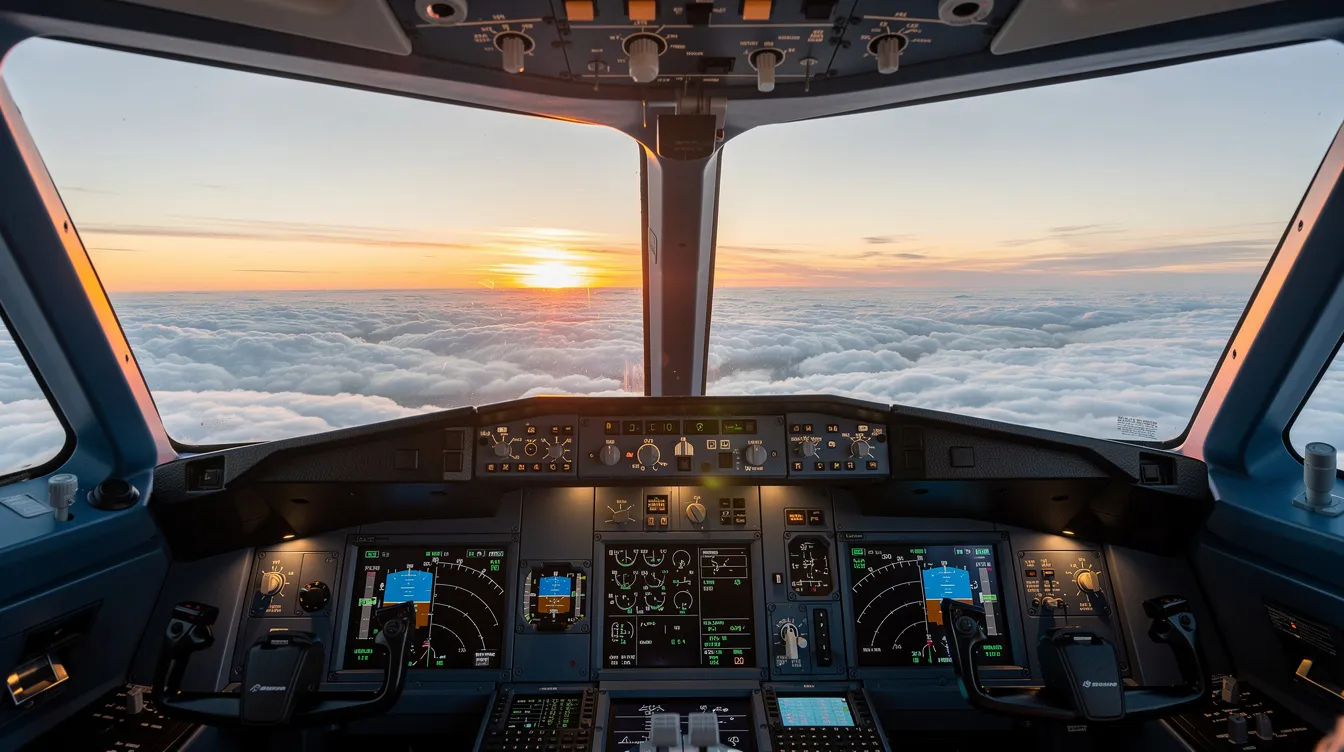
Flying high is not just about fuel - it also helps aircraft avoid most rough weather while taking advantage of high-altitude winds. Above about 25,000 feet, jets can often climb above the tops of most clouds and thunderstorms, though some severe thunderstorm tops can extend above 40,000 feet, which is especially relevant for international private jet flights that cross varied weather systems and oceans.
The jet stream consists of narrow bands of strong west-to-east winds between about 30,000 and 40,000 feet, sometimes exceeding 200 mph in winter. Jet streams can significantly boost ground speed when flying with them - pilots and flight planners adjust altitude and routing to ride tailwinds on eastbound flights or to avoid severe headwinds on westbound routes, a factor savvy travelers consider when looking for cheapest private jet flights that optimize time and fuel. Flying at 35,000 feet avoids most weather-related turbulence, but clear air turbulence can still occur near jet stream boundaries where wind shear is strongest.
Air traffic control assigns aircraft to standardized flight levels - FL350 means 35,000 feet - to separate traffic vertically across busy airspace. Between 29,000 and 41,000 feet, Reduced Vertical Separation Minimum (RVSM) rules allow aircraft to be stacked just 1,000 feet apart instead of 2,000 feet. This lets many more planes share the efficient cruise band on busy routes.
A flight level is not a fixed altitude in absolute terms; it is based on a standard air pressure setting so that all aircraft in the same region use the same reference.
ATC may ask pilots to climb higher, descend, or change altitude to keep safe spacing and avoid conflicts, sometimes rerouting flights to alternate airports that tools like Jettly's airport locator platform can help passengers and operators identify quickly.
On any given route, air traffic control manages which different altitudes are available, balancing safety with efficiency.
At 35,000 feet, the outside air is far too thin and cold to breathe safely. Aircraft rely on cabin pressurization to keep passengers comfortable, an important consideration in the overall cost of operating or owning a private jet. Most modern airliners and many private jets maintain a cabin altitude equivalent of around 6,000–8,000 feet, even while cruising at 35,000–41,000 feet outside.
Regulations typically cap cabin altitude at 8,000 feet for health and safety.
Newer designs like the Boeing 787 use composite materials that allow lower cabin altitude and higher humidity, improving comfort.
Common effects passengers feel - like when ears pop during climb and descent or snack bags puff up - are simple side effects of pressure change.
In the rare event of pressurization loss, oxygen masks deploy and the crew descends quickly to around 10,000 feet, where outside air is breathable.
Higher cruising altitude demands stronger pressurization systems and structural design, which is another reason aircraft are certified only to certain service ceilings.
Passengers on long flights sometimes notice the aircraft gently climbing during cruise. This is not a mistake - it is a deliberate technique called a step climb.
Aircraft may step climb as fuel burns off during flight. A long-haul jet takes off heavy with fuel and initially cruises at a lower altitude that its weight can support. As fuel burns and weight decreases, the crew requests a higher altitude where the aircraft can operate efficiently with even less drag, which also influences how much it costs to rent a private jet for longer routes.
Pilots also request altitude changes to find smoother air, avoid turbulence, or pick up better winds inside or outside the jet stream, all of which shape the experience and pricing for travelers who buy a seat on a private jet.
ATC always has to approve these changes in controlled airspace to maintain safe separation.
On a Jettly-arranged private flight, crews can sometimes climb or descend more flexibly because they are not constrained by a rigid airline schedule or congested cabin, improving comfort for a small group of travelers.
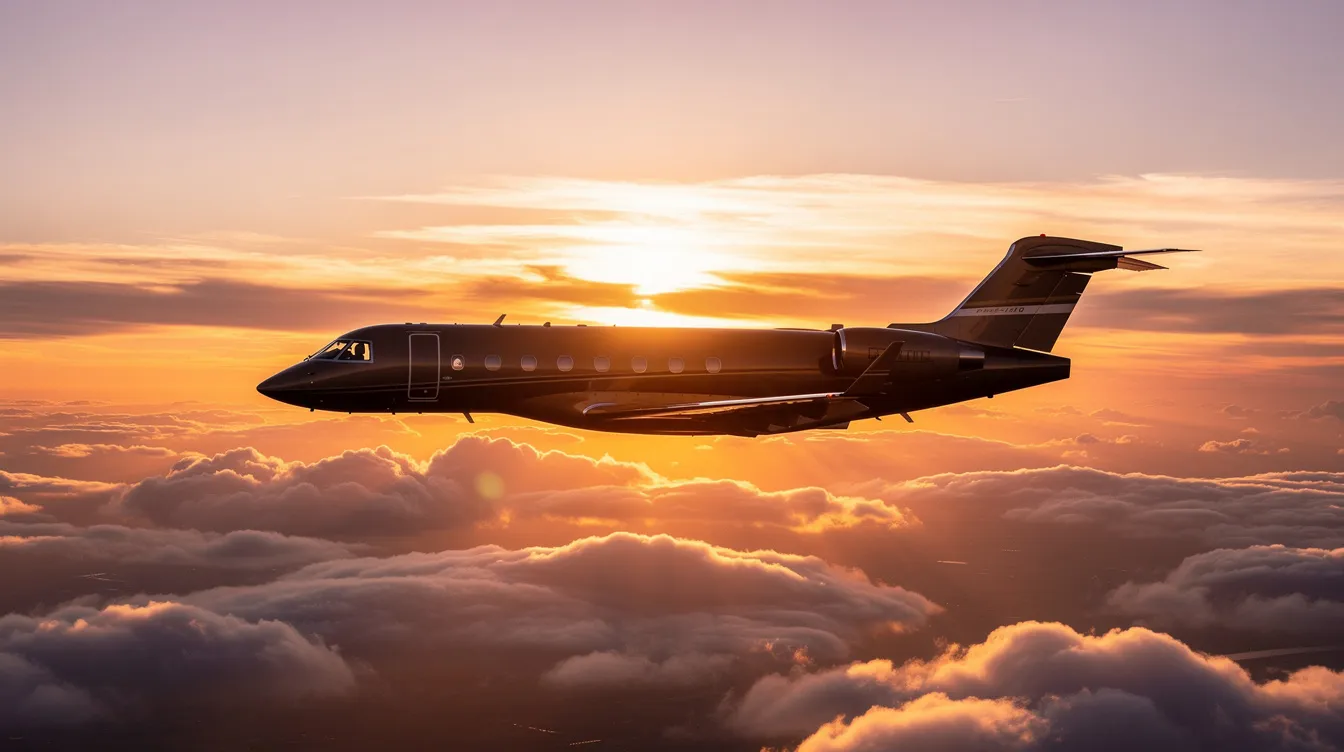
Both commercial airliners and private jets benefit from cruising high, but their optimal altitudes and capabilities differ based on aircraft type and design, as well as on whether you fly with major carriers or specialized charter airlines and private operators.
Commercial airliners like the Airbus A320 and Boeing 737 usually cruise between FL330 and FL390, with service ceilings around FL410 (41,000 feet), and they compete with leading private jet charter companies that offer higher, more flexible cruise profiles.
Many modern business jets - like the Bombardier Global series or Gulfstream models - are certified up to 45,000–51,000 feet, similar to the high-performance fleets operated by leaders like NetJets in private aviation.
Private jets sometimes fly higher than airliners to access less crowded airspace, get above more weather and traffic, and take advantage of aerodynamic designs optimized for higher cruise levels.
Despite these capabilities, private flight crews still select altitudes based on winds, passenger comfort, and operator procedures - not simply "as high as possible."
Jettly is a digital private jet charter marketplace that connects travelers to thousands of aircraft worldwide. The platform's inventory includes turboprops, light jets, midsize jets, and long-range heavy jets, each with different typical cruise levels - turboprops around 20,000–30,000 feet, heavy jets up to 45,000 feet and above - and access is streamlined through flexible private jet memberships.
Jettly's instant pricing and aircraft selection tools make it simple for clients to choose aircraft suited to their route length and cruising altitude needs, whether flying New York–Miami or Toronto–Vancouver, or using a jet card flight cost estimator to plan regular routes. While pilots decide the exact flight level, charter customers benefit from the fuel and time savings that come from operating in the efficient high-altitude band.
Planes fly around 35,000 feet because it offers the best balance between fuel efficiency, engine performance, and passenger comfort. Higher altitudes have thinner air that reduces drag but can limit engine thrust and safety margins. Lower altitudes have denser air but more drag and turbulence.
At 35,000 feet, air density is about 25% of sea level, which reduces aerodynamic drag significantly. Less drag means engines need less thrust to maintain speed, leading to lower fuel consumption and cost savings.
Many private jets cruise between 30,000 and 45,000 feet depending on aircraft type and weight. Higher-performance jets can fly above commercial airliners to avoid traffic and weather.
Most weather systems and turbulence-producing clouds occur below 25,000 feet in the troposphere. Flying near the tropopause around 35,000 feet places aircraft above much of this weather, resulting in a smoother ride.
The coffin corner is the altitude where an aircraft’s stall speed and maximum safe speed converge, leaving very little margin for safe operation. It usually occurs above 41,000 feet for commercial jets, so flying around 35,000 feet provides a safer buffer.
Jet streams are fast winds near cruising altitude that can speed up eastbound flights or slow down westbound ones. Pilots adjust altitude to take advantage of tailwinds or avoid headwinds, improving fuel efficiency and flight time.
Cabins are pressurized to simulate an altitude of 6,000 to 8,000 feet, making breathing comfortable despite the thin outside air. Pressurization systems are highly reliable and include emergency oxygen masks in case of decompression.
Learn more about Jettly’s charter options at https://www.jettly.com
Flying around 35,000 feet gives aircraft the best mix of low drag, good engine performance, manageable weather, and safe separation - the core reasons behind typical cruising altitude choices for most commercial aircraft and many private jets, and a key factor in how providers like Jettly can offer affordable private jet charter on many routes.
Thin air at high altitudes reduces drag and fuel burns per mile, improving fuel efficiency significantly, which is one reason platforms like Jettly position themselves as a cost-effective NetJets alternative.
Engines still have enough air for reliable thrust, and speed margins stay well clear of the coffin corner, leaving operators free to focus on optimizing routes and even sharing empty seats on private jets to reduce per-passenger costs.
Aircraft cruise above most weather while pilots use jet streams intelligently to save time and fuel.
Cabin pressurization keeps passengers comfortable even while flying high at 35,000 feet or above.
Every flight's exact cruise level depends on aircraft type, route, weight, winds, and air traffic control instructions. So 35,000 feet is a guideline - not a rule. The confidence understanding these factors brings can help any traveler appreciate what happens at altitude, whether they access private flying through easy ways to get a seat on a jet, structured jet card programs, or book region-specific charters like private jet flights to New Delhi or private jet charter in Kolkata.
Ready to experience private travel on your terms? Explore flight options or request a quote at jettly.com.
Share this post:
Jeff Ryan Serevilla
Oct 31, 2026
|
5
min read
Discover tips and trends in the industry.
5
min read
When Will Flights Go on Sale? Timing Tips for Cheaper Fares and Smarter Booking
Knowing when flights go on sale can save travelers money, with the best prices typically appearing about two months before departure. Airlines adjust prices frequently based on demand, competition, and remaining seats, making it essential to track fares and use tools like Jettly for private jet options. This guide outlines optimal booking windows, factors affecting airfare, and tips for securing the best deals.
Read More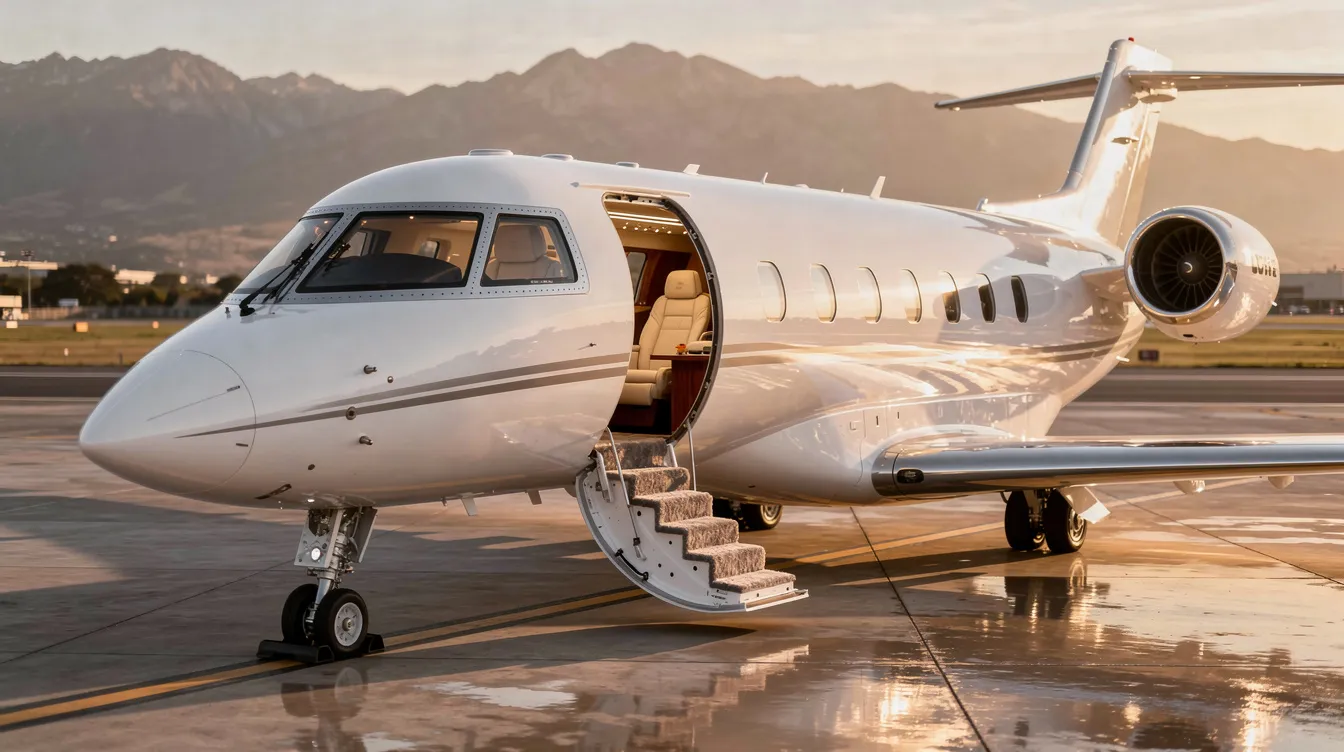
5
min read
Best Days to Book Flights Reddit: According to Real Data
Discover the best days to book flights based on real data and Reddit insights. While Sundays may offer slight savings for domestic and international flights, the timing of your purchase and travel dates play a more significant role in fare prices. Learn effective strategies to track prices and secure the best deals for your next trip.
Read MoreStay updated with our latest insights and tips to elevate your journey with us.
MEMBERSHIPS AND ASSOCIATIONS



Disclaimer: Jettly operates as a charter broker, offering access to a global digital jet charter marketplace. Jettly is not a direct air carrier and does not own or operate aircraft. All advertised flights are conducted by third-party air carriers that are fully licensed and hold the appropriate Part 135 or Part 121 certifications issued by the Federal Aviation Administration (FAA) or equivalent regulatory authorities under U.S. or foreign law. Jettly complies fully with the U.S. Department of Transportation's Part 295 and Part 298 Charter Broker regulations. Jettly does not carry additional liability insurance. Passengers are covered by aircraft operator insurance. TICO: 50023770


