


Login
Get Instant Pricing On 23,000+ Aircraft

>
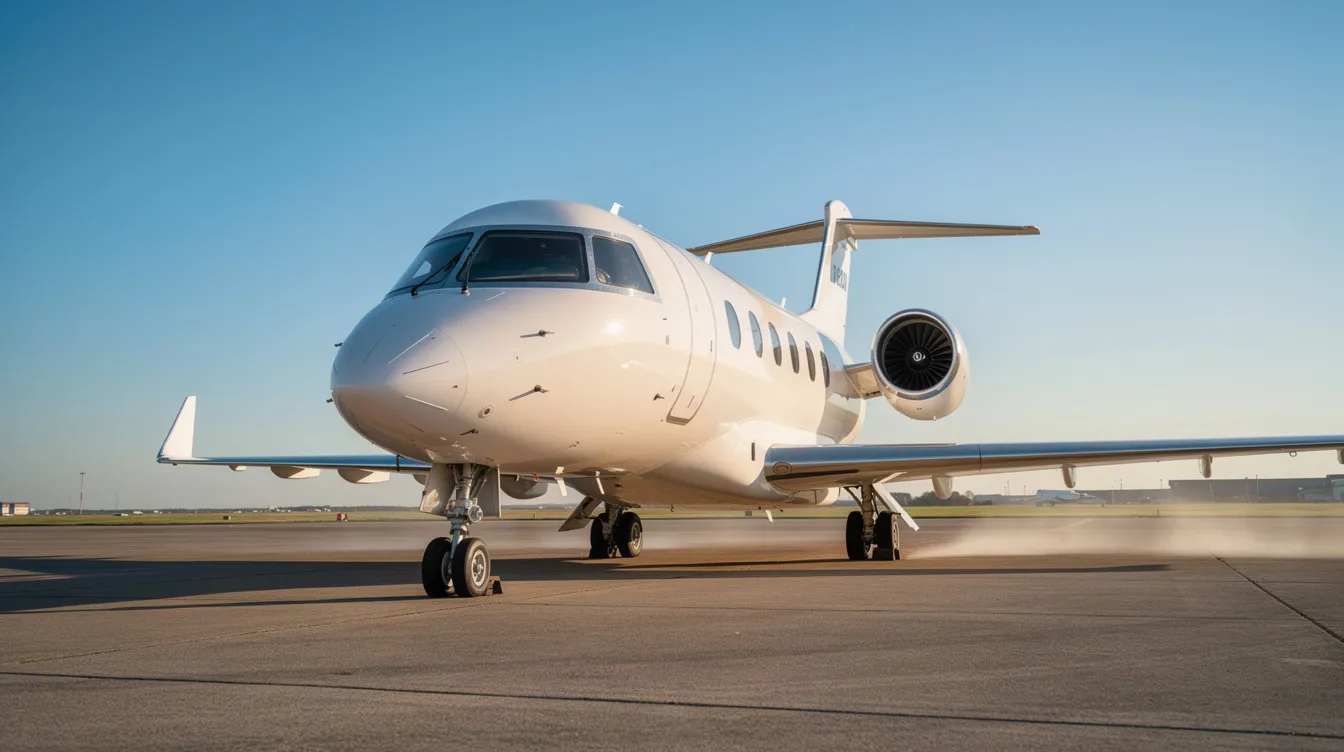
The question of who owns NetJets has a direct answer: Berkshire Hathaway. Warren Buffett’s holding company acquired NetJets in 1998, and today it remains a wholly owned subsidiary. For frequent flyers—especially corporate executives, high-net-worth individuals, and families weighing private jet access—this matters because NetJets operates very differently from on-demand charter platforms like Jettly, with implications for cost, commitment, convenience, and flexibility.
This article breaks down NetJets’ corporate structure, its private aviation history, and the brands operating under its umbrella, then looks at its core business lines, including fractional ownership, jet cards, aircraft management, and charter. It also compares NetJets’ scale and Berkshire-backed financial position with digital booking platforms like Jettly, helping readers evaluate which private aviation model fits their travel needs.
NetJets is a wholly owned subsidiary of Berkshire Hathaway, which acquired the company in 1998 for $711 million. There is no separate NetJets stock.
The company operates through a fractional ownership model, jet card programs, and aircraft management services, serving over 12,500 active customers globally.
Under Berkshire Hathaway's ownership, NetJets has grown the world's largest fleet of privately owned aircraft, with over 1,000 aircraft conducting approximately 300,000 flights annually.
Related brands include Executive Jet Management (aircraft management and charter) and QS Partners (aircraft brokerage and consulting).
Travelers who want private jet access without ownership commitments often choose digital charter platforms like Jettly, which offer per-trip booking across 20,000+ aircraft from vetted operators worldwide.
NetJets is owned 100% by Berkshire Hathaway Inc., Warren Buffett's U.S.-based conglomerate, which purchased the company in 1998.
Within Berkshire's portfolio, NetJets sits alongside brands like GEICO and BNSF Railway as a wholly owned subsidiary. Key facts about the NetJets owner:
NetJets does not have a separate stock ticker or individual market capitalization. Investors seeking exposure to NetJets must buy Berkshire Hathaway shares (BRK.A or BRK.B on the NYSE).
The company is headquartered in Columbus, Ohio, with operations spanning the U.S. and Europe, while also extending its reach across the world.
Warren Buffett has been both a NetJets customer and the executive behind the acquisition decision, reinforcing Berkshire Hathaway's commitment to the brand.
Ownership by Berkshire provides NetJets with massive financial leverage, including access to Berkshire's balance sheet for financing aircraft orders.
Berkshire Hathaway bought NetJets for $711 million in 1998. The deal followed a simple catalyst: Warren Buffett became a NetJets customer in 1995, flew fractional for three years, and decided to acquire the entire company.
Here is a condensed timeline:
Pre-1998: NetJets (then Executive Jet Aviation) had built the first fractional aircraft ownership program in the U.S. and expanded into Europe. The late Charlie Munger, Buffett's long-time partner, also used the company's services.
1998: Berkshire Hathaway closed the acquisition, giving NetJets access to Berkshire's capital and credit strength for fleet expansion.
1999-2009: Losses accumulated. NetJets incurred a pre-tax loss of $157 million by 2010, and the worst single year was 2009, when the company posted a $711 million loss. Debt increased from $102 million at the time of acquisition to $1.9 billion.
2010s-present: Under new leadership, NetJets reduced debt, aligned costs with revenue, and returned to profitability. Buffett told shareholders that the early years were a costly learning experience, but that the turnaround validated Berkshire's patient capital approach.
NetJets operates as a multi-entity private aviation business, with each arm serving a different customer need. All sit under the Berkshire Hathaway company umbrella.
The key internal pillars include:
Fractional jet ownership and leases: The core product. Customers buy shares in specific aircraft types and receive guaranteed flight hours.
Jet cards and aviation programs: Prepaid hour blocks for customers who want access without ownership.
Executive Jet Management (EJM): An aircraft management company that handles operations for whole aircraft owners, from crew hiring to maintenance compliance.
QS Partners: NetJets' in-house brokerage and consulting firm, managing aircraft sales, acquisitions, and fleet dispositions.
NetJets employs its own pilots, cabin crew, and operations teams. Its European arm, NetJets Europe, operates from Lisbon, Portugal. This vertically integrated structure differs from digital-only charter brokers, which aggregate third-party operators rather than owning and staffing aircraft directly.
NetJets utilizes Berkshire's balance sheet for financing aircraft orders, giving it long-term investment capacity that independent operators cannot match.
NetJets was established in 1964 under the name Executive Jet Aviation, becoming one of the earliest companies in the United States to offer executive jet charter and aircraft management services.
The fractional ownership concept took shape in the mid-1980s. Richard Santulli, then leading the company, studied pilot logbooks and aircraft utilization data. He found that most business aircraft sat idle for the majority of each year. His solution: sell fractional shares in each plane, letting multiple owners split the cost and the flight hours.
1964: Executive Jet Aviation founded in Columbus, Ohio.
Mid-1980s: Santulli pioneered the fractional jet ownership model after analyzing how corporate jets were underutilized.
1986: The NetJets brand launched as a fractional ownership program, allowing customers to buy fractions of an executive jet instead of owning a whole aircraft.
1990s: Expansion into Europe and rapid growth made NetJets the market leader in private aviation before the Berkshire deal.
2002: NetJets adopted its current name, replacing the Executive Jet Aviation branding entirely.
NetJets is recognized as the pioneer in fractional aircraft ownership. That private aviation history still shapes how the industry defines shared ownership today.
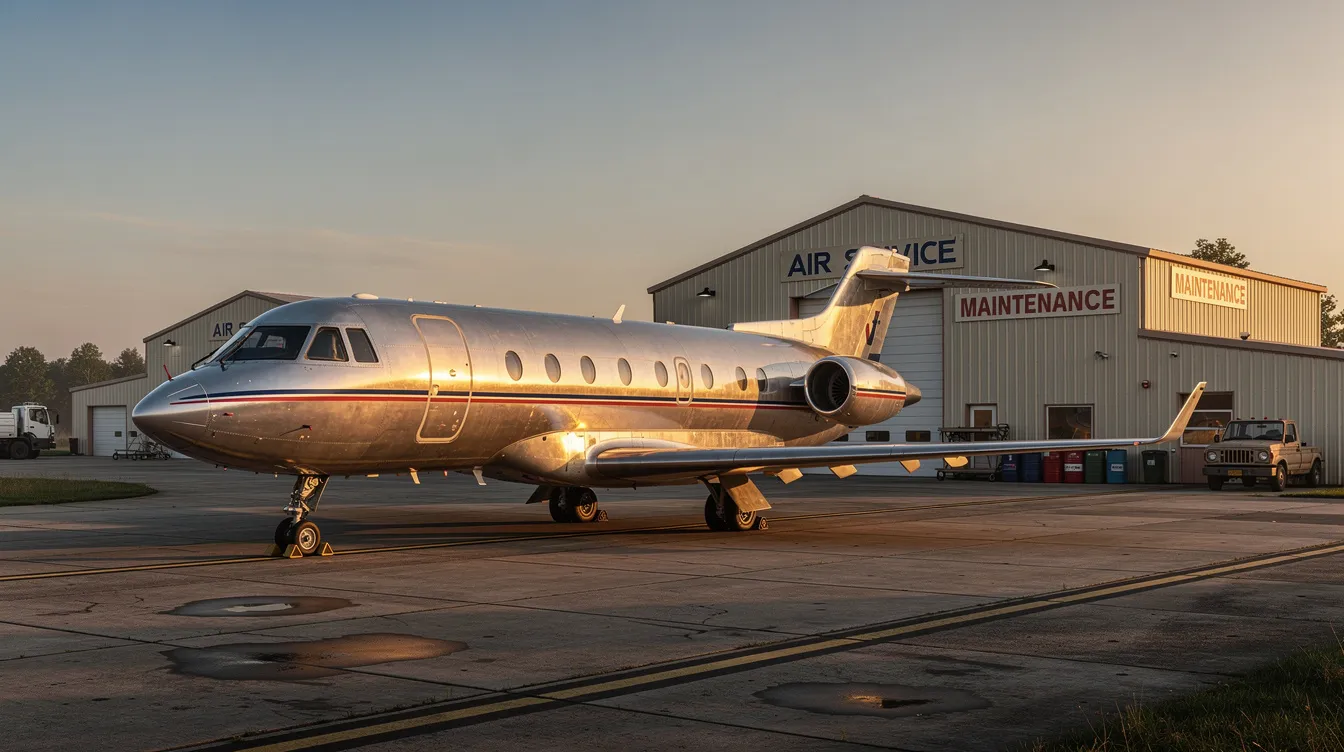
NetJets uses the term "Owners" to refer to customers who purchase fractional interests in its aircraft. This is a marketing term and does not mean that these customers are legal or equity owners of the NetJets company itself.
This is different from chartering a private jet on a per-trip basis with platforms like Jettly as a NetJets alternative.
The fractional shares held by clients range from 1/16th to 1/2 interest in specific aircraft. What each share translates to:
A 1/16th share typically provides around 50 occupied flight hours per year.
A quarter share provides roughly 200 hours.
One half of an aircraft delivers 400+ hours annually.
Fractional owners pay three cost layers:
An upfront acquisition cost for the fractional share or a multi-year lease
A fixed monthly management fee covering aircraft management, crew salaries, and maintenance
An hourly occupied flight fee for actual flight time
Owners gain guaranteed access to a specific aircraft type with defined notice periods, but they also commit to multi-year contracts and accept residual value risk at exit—cost dynamics that differ markedly from trip-based pricing available through tools like a jet card flight cost estimator. Around 40% of NetJets clients are Fortune 500 companies, which speaks to the corporate demand for predictable, high-frequency access.
Travelers who want to avoid those commitments often choose on-demand private aviation platforms like Jettly as a NetJets alternative, paying only per flight with no ownership obligation.
NetJets operates as a vertically integrated private aviation company offering multiple access models. NetJets offers fractional ownership of 12 aircraft models, spanning light jets to long-range cabin classes.
The primary product for frequent flyers needing predictable access. It suits corporations and individuals flying 50 to 400+ flight hours annually. Around 40% of fractional owners also have jet cards, combining guaranteed access with additional flexibility.
NetJets' jet cards provide access to the NetJets fleet in 25-hour blocks at fixed hourly rates within set aircraft categories. The Marquis Jet Card, launched in the early 2000s, was later folded into NetJets' main offerings. NetJets paused certain jet card sales around 2021 when demand outstripped fleet supply, then relaunched with revised terms.
NetJets provides aircraft management and charter services through Executive Jet Management. EJM manages aircraft for whole owners, handling crew, maintenance, and regulatory compliance. Some managed aircraft can be chartered when not in personal use, offsetting ownership costs.
NetJets serves over 12,500 active customers globally across these three business lines, anchoring its role in the broader global fleet of private jets. By contrast, Jettly's on-demand charter approach uses a wide network of private charter aircraft operated by independent providers without requiring clients to buy a share or card.
Executive Jet Management is a NetJets subsidiary specializing in aircraft management and on-demand jet charter, primarily in the U.S. market. EJM manages over 100 executive jets on behalf of whole aircraft owners.
Core services include:
Pilot recruitment, training, and scheduling
Maintenance coordination and compliance with FAA regulations
Insurance, hangar arrangements, and operational logistics
Optional charter revenue programs that allow owners to offset costs when their aircraft would otherwise sit idle
EJM integrates with NetJets' larger ecosystem. Some managed aircraft can support overflow demand from the NetJets program during peak periods. The combined scale gives EJM access to NetJets' purchasing power for parts, fuel, and maintenance contracts, which drives down per-unit costs.
This segment serves aircraft owners who want safety and service without managing day-to-day operations. Digital charter platforms such as Jettly focus on the opposite end: travelers who prefer to book aircraft on demand without owning them at all, tapping into a wider ecosystem of charter airlines and private aviation providers.
QS Partners is NetJets' in-house aircraft brokerage and consulting firm, handling aircraft sales, acquisitions, and fleet dispositions for both NetJets clients and external buyers.
What QS Partners does:
Assists existing NetJets owners and outside clients in buying or selling private jets
Provides market analysis, aircraft valuation, and pre-buy inspection coordination
Manages disposal of legacy aircraft (for example, older Citation XLS models being retired as the Citation Ascend enters service)
Coordinates with manufacturers like Textron, Bombardier, and Embraer when NetJets takes delivery of new aircraft types
This internal brokerage capability is part of NetJets' "full lifecycle" approach to private aviation. Platforms like Jettly focus on flight access rather than asset trading, serving discerning travelers who want to fly without participating in the buy-sell cycle and often compare top private jet charter companies before choosing a solution.
NetJets operates the world's largest fleet of privately owned aircraft, with a diverse private jet fleet of over 1,000 aircraft spanning multiple jet classes: light, midsize, super-midsize, large, and long-range jets.
Key fleet and operational facts:
NetJets aircraft include types such as the Embraer Phenom 300, Cessna Citation Latitude and Longitude, Bombardier Challenger 350/3500, and larger jets like the Bombardier Global 7500, reflecting trends within the broader global fleet of private jets
The company conducts approximately 300,000 flights annually
NetJets flies to over 3,100 airports globally, covering routes from Las Vegas to San Francisco to nonstop flight paths across Europe
NetJets holds a 13.3% market share in U.S. private aviation and accounts for nearly 70% of global private aviation activity
Average fleet age in the U.S. core fleet is around 5 years
This scale supports high availability for fractional owners and jet card holders, plus strong negotiating power with aircraft manufacturers and maintenance providers, reinforcing NetJets' status as the industry leader in private aviation.
Jettly's model works differently. Rather than owning a centralized private jet fleet, Jettly aggregates access to over 20,000 aircraft operated by independent certified operators worldwide, giving customers broader choice across aircraft types and departure points via tools like its airport locator platform without central fleet ownership.

NetJets and Jettly serve the same industry but solve different problems. Here is a direct comparison:
|
Factor |
NetJets |
Jettly |
|---|---|---|
|
Core model |
Fractional ownership, jet cards, aircraft management |
On-demand private jet charter marketplace |
|
Commitment |
Multi-year contracts or prepaid hour blocks |
Trip-by-trip booking, no long-term obligation |
|
Capital outlay |
Upfront share acquisition or card purchase |
Pay only for flights taken |
|
Fleet |
Owns and operates 1,000+ aircraft |
Connects travelers to 20,000+ aircraft from vetted operators |
|
Booking |
Membership-based, owner services teams |
Instant pricing, digital search and booking |
|
Best for |
High-frequency flyers (100+ hours/year) |
Occasional to moderate flyers, or those wanting route flexibility |
Some clients combine both: owning a share with NetJets for routine travel while using on-demand charter via Jettly for overflow trips, special routes, or aircraft types outside their fractional program, taking advantage of a broad list of charter airlines and private operators. The goal for both is global access and seamless access to private aviation on the traveler's schedule.
The financial trajectory has been uneven. Warren Buffett has described NetJets as one of his more challenging investments due to early heavy losses and rising debt.
Key financial milestones and context for evaluating ownership versus charter private jet charter cost estimates:
NetJets incurred a $711 million loss in 2009, its worst single year under Berkshire ownership
Cumulative pre-tax losses through 2010 reached $157 million
Debt grew from $102 million at acquisition to $1.9 billion at its peak
By 2017, NetJets generated $11.249 billion in service revenues, reflecting the scale of its operations
In the 2020s, Berkshire's shareholder communications noted NetJets as strategically valuable, with improved financial performance and strong customer demand
Specific stand-alone profit figures are usually disclosed within Berkshire's "Other businesses" segment in SEC filings, so exact annual margins for NetJets alone are not always publicly broken out.
Patrick Gallagher and other key people in NetJets' leadership have focused on fleet renewal, operational excellence, and cost discipline to sustain profitability. The general trajectory has moved from early losses to consistent value creation for the Berkshire Hathaway company.
Jettly is a tech-driven, on-demand private jet charter platform that gives customers access to a wide range of private charter aircraft globally without becoming a NetJets owner or signing a long-term contract.
Key differentiators, compared with traditional charter operators and marketplaces such as Zenflight private jet services:
Digital search, instant pricing, and online booking through Jettly's platform, along with structured jet card programs for frequent travelers
Access to over 20,000 unique aircraft through certified operators, including options to crowdsource private jet flights and share empty seats
Transparent cost structures without fractional ownership or jet card commitments, supported by tools like Jettly's jet card flight cost estimator
Travelers who fly irregularly, want to compare aircraft types and charter costs on each trip, or prefer paying per flight instead of committing capital often find Jettly's model more flexible, especially when leveraging private jet memberships instead of long-term ownership. The platform still prioritizes core private aviation priorities: safety, operator vetting, route flexibility, and time savings compared to flying with a commercial airline like American Airlines, whether customers choose shared charter flights or full charters or work with specific operators such as Dexter Air Taxi.
From Kitty Hawk to the modern era, aviation has always evolved toward giving travelers more choice. Guides on how to buy a seat on a private jet highlight how platforms like Jettly represent the next step in that evolution for luxury travel and business travel alike.
Ready to explore private travel on your terms or even earn by referring new flyers through an ultra-high-ticket affiliate program? Enhance the experience further with bespoke in-flight catering for private jets. Search flights and request a quote at https://www.jettly.com.
NetJets is not publicly traded. It operates as a wholly owned subsidiary of Berkshire Hathaway, so there is no dedicated NetJets stock ticker. Anyone wanting economic exposure to NetJets aviation would need to purchase Berkshire Hathaway shares (BRK.A or BRK.B), which consolidate NetJets' results alongside dozens of other Berkshire businesses.
Warren Buffett does not personally own NetJets. The company is owned by Berkshire Hathaway, the conglomerate he leads as chairman. Buffett is both a long-time NetJets customer and the executive who approved the 1998 acquisition. The distinction matters: NetJets is a corporate asset of the holding company, not a personal investment.
No. There is no separate NetJets stock. Individuals can only buy shares in Berkshire Hathaway, which owns NetJets along with its other investments. NetJets' financial results are folded into Berkshire's broader reporting segments rather than disclosed as a standalone public company.
No. Becoming a NetJets owner means buying or leasing a fractional share or committing to a long-term jet card, which involves contracts, capital, and ongoing fees. Chartering via platforms like Jettly means paying per trip, choosing aircraft on demand, and carrying no ownership or long-term obligations. The right option depends on annual flight hours, flexibility needs, and appetite for ownership complexity.
Getting a seat on a private jet easily often comes down to choosing the right mix of charter platforms and membership options.
Occasional private fliers taking only a few trips per year typically find on-demand charter via Jettly more practical than entering a fractional ownership or jet card agreement. Jettly allows customers to compare different aircraft, routes, and prices in real time, then book only the flights they need. For travelers exploring flexible alternatives to long-term programs, Jettly offers an easy way to search and book private flights at https://www.jettly.com.
NetJets, owned by Warren Buffett's Berkshire Hathaway, stands as a pioneer and leader in fractional aircraft ownership and private aviation. Its vertically integrated structure, extensive fleet, and financial backing from Berkshire enable it to serve high-frequency travelers with predictable, premium access to private jets. However, the commitment and cost associated with fractional ownership and jet cards make it a distinct choice from on-demand charter platforms like Jettly.
For travelers seeking flexibility, transparency, and pay-per-use convenience, platforms like Jettly offer access to a vast global network of aircraft without ownership obligations. Understanding the differences between NetJets' ownership model and digital charter marketplaces helps private flyers select the best option for their travel frequency, budget, and lifestyle.
Ready to experience private travel on your terms? Explore flight options or request a quote at https://www.jettly.com.
Share this post:
Jay Franco Serevilla
Aug 19, 2026
|
5
min read
Discover tips and trends in the industry.

5
min read
When Do Plane Tickets Get Cheaper? Timing Your Booking for Better Flight Prices
Understanding when plane tickets get cheaper is essential for travelers looking to save on airfare. Generally, booking domestic flights 1 to 3 months in advance and international flights 2 to 8 months ahead yields the best prices. Factors like travel dates, day of the week, and seasonality significantly impact ticket costs, making it crucial to stay flexible and track fare changes.
Read More
5
min read
Day of Cheap Flights: How to Time Your Booking for the Best Flight Deals
Discover the truth behind the elusive 'Day of Cheap Flights' and learn how to consistently find the best flight deals. This guide highlights seasonal patterns, optimal booking windows, and effective search tools to help travelers save money on both commercial and private flights.
Read MoreStay updated with our latest insights and tips to elevate your journey with us.
MEMBERSHIPS AND ASSOCIATIONS



Disclaimer: Jettly operates as a charter broker, offering access to a global digital jet charter marketplace. Jettly is not a direct air carrier and does not own or operate aircraft. All advertised flights are conducted by third-party air carriers that are fully licensed and hold the appropriate Part 135 or Part 121 certifications issued by the Federal Aviation Administration (FAA) or equivalent regulatory authorities under U.S. or foreign law. Jettly complies fully with the U.S. Department of Transportation's Part 295 and Part 298 Charter Broker regulations. Jettly does not carry additional liability insurance. Passengers are covered by aircraft operator insurance. TICO: 50023770


