


Login
Get Instant Pricing On 23,000+ Aircraft

>
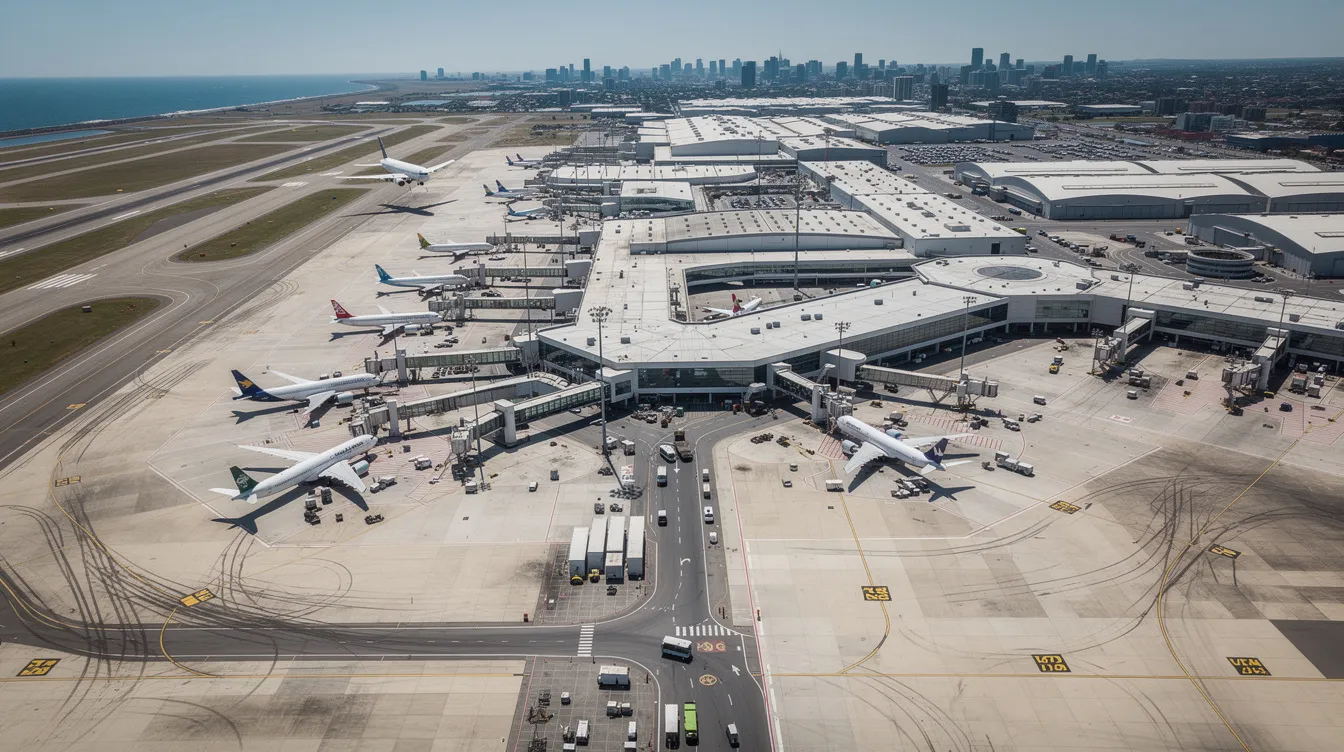
Delta Air Lines is headquartered at 1030 Delta Boulevard, Atlanta, Georgia, on the northern edge of Hartsfield–Jackson Atlanta International Airport. This airport is the busiest in the world by passenger traffic, making it a strategic location for Delta's operations. If you've ever wondered where Delta is based, the answer starts and ends in Atlanta — but the full picture stretches across nine operational hubs as of January 2018, spanning six continents and thousands of daily flights.
For travelers considering Delta's commercial service — especially frequent flyers, business executives, and anyone comparing scheduled airline travel with private jet options — that network affects route choices, connection patterns, and overall travel time. This article breaks down Delta's home base, its Atlanta campus, its nine-hub network, key U.S. and international offices, and how commercial routing compares with private jet charter alternatives through platforms like Jettly.
Delta Air Lines Inc is headquartered at 1030 Delta Boulevard, Atlanta, GA 30354, situated on the northern boundary of Hartsfield-Jackson Atlanta International Airport - the world's busiest airport by passenger traffic.
Atlanta is both Delta's corporate home and its largest global hub, with Delta operating approximately 60–65% of all flights out of the airport and handling over 93 million passengers annually.
Delta also operates major hubs at New York JFK, Los Angeles, Salt Lake City, Minneapolis–Saint Paul, Detroit, Boston, and Seattle, among its nine key operational hubs.
Delta Air Service was incorporated on December 3, 1928, began passenger operations on June 17, 1929, and officially became Delta Air Lines in 1945.
The acquisition of Northwest Airlines on October 29, 2008, expanded Delta's hub network to include Minneapolis–Saint Paul and Detroit.
Delta was the first airline to board over 100 million passengers in 1997, highlighting its extensive reach and operational scale.
The headquarters campus spans hundreds of acres near the airport, combining corporate offices, maintenance, training, and operations.
Understanding Delta's base and hub structure can help travelers choose routes, predict connection patterns, and decide when a private jet alternative through a platform like Jettly might save time.
Delta's main corporate office is located at 1030 Delta Boulevard, Atlanta, GA 30354, inside the Hartsfield–Jackson Atlanta International Airport campus. This location is known as Delta Global Headquarters and occupies the northern boundary of the airport, with direct access to runways, operations facilities, and the airline's massive maintenance complex.
Delta moved its headquarters to Atlanta in 1941, relocating from Monroe, Louisiana, as air travel expanded across the eastern United States. Over eight decades, the campus has grown into a multi-building operation spanning hundreds of acres. The corporate switchboard is reachable at (404) 715-2191, and investor relations are managed from the same address.
Why Atlanta? The city sits at the geographic crossroads of the southeastern United States, making it an ideal anchor for both domestic flights and international flights. Hartsfield–Jackson Atlanta International Airport is the busiest airport globally by passenger volume, and Delta's primary hub handles the majority of traffic there — Delta operates approximately 60–65% of all flights from Atlanta.
Delta's base is not a single office tower. It's a multi-building campus embedded in the Atlanta International Airport property, combining corporate offices, technical operations, training centers, and operations control under one sprawling footprint.
Key campus functions include:
General Office Facilities: Corporate leadership, scheduling, investor relations, and administrative services for the airline recognized as one of the world's largest carriers.
Operations Control Center: Real-time coordination of thousands of daily Delta and Delta Connection flights across the network.
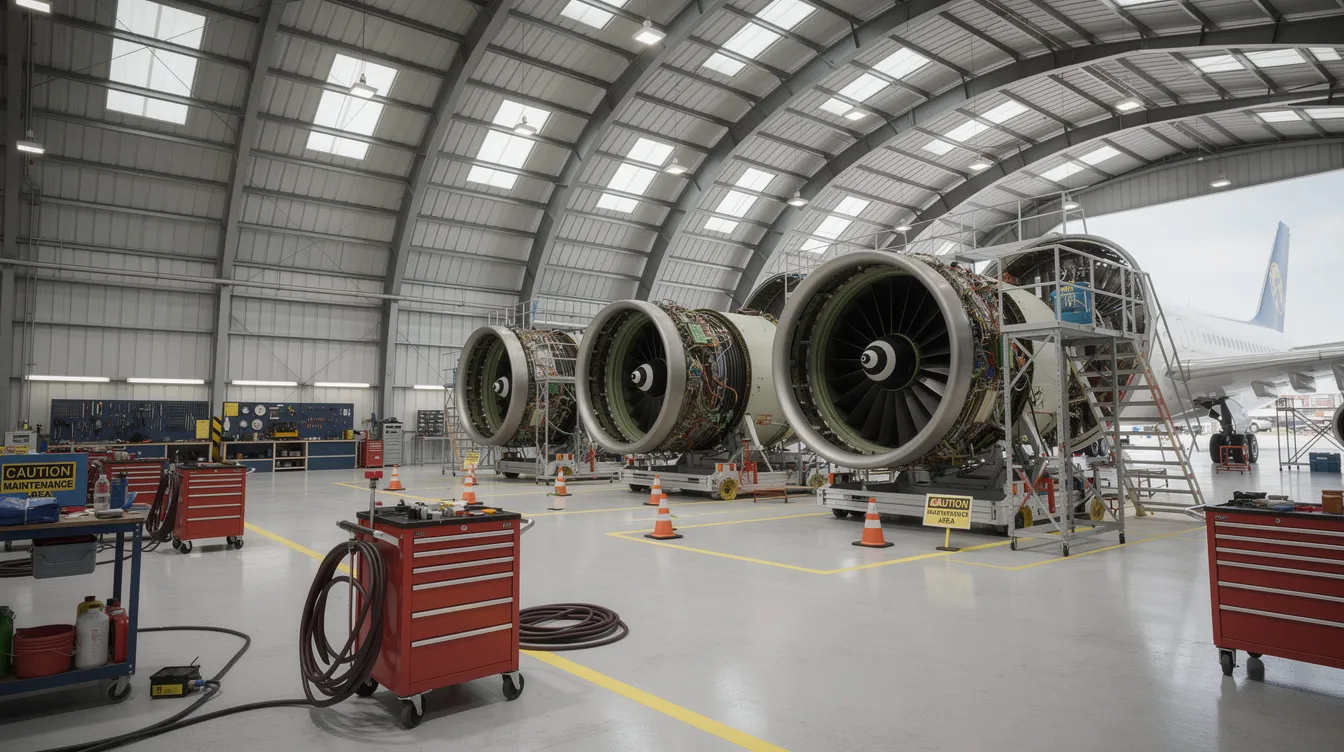
Delta TechOps Complex: A massive maintenance, repair, and overhaul facility covering roughly 200 acres of hangars, component shops, and engine test cells.
Training Centers: Crew training for pilots and flight attendants, including simulator bays and classroom instruction.
Atlanta Station Operations: Day-to-day management of gate assignments, ground handling, and passenger service at the airport.
The campus is highly secure. Public access is limited to designated areas, most notably the Delta Flight Museum on Delta Boulevard.
The Delta Flight Museum sits at 1060 Delta Boulevard, adjacent to the main Atlanta headquarters campus. It's the one part of Delta's base that anyone can visit without a corporate appointment.
The museum preserves Delta's history from its aerial crop-dusting company origins to its current global network, with aircraft on display including a restored Douglas DC-3 and a walk-through Boeing 767.
It hosts special events and educational programs and is a frequent landmark for visitors trying to locate other Delta office buildings near the international airport.
The museum is primarily an educational and heritage site - it is not used for vendor meetings or day-to-day corporate operations.
For anyone curious about Delta's evolution from crop dusting to its first commercial plane operations and beyond, the museum offers a compact and well-organized experience.
Delta TechOps is the airline's maintenance, repair, and overhaul division, headquartered on the same Atlanta campus as Delta Air Lines' corporate offices. It is one of the world's largest airline MRO operations.
Key facts about TechOps:
Employs over 10,000 technicians, engineers, and support staff.
Services Delta's domestic mainline fleet of more than 900 aircraft, plus aircraft for over 150 third-party airline and aviation customers.
Operates roughly 25 in-house component shops covering avionics, hydraulics, wheels, brakes, fuel systems, and more.
Houses jet engine test cells capable of processing approximately 750 engines annually, handling advanced engine types from Rolls-Royce, GE, and Pratt & Whitney.
Recently expanded GTF engine shop capacity through a partnership with Pratt & Whitney, targeting up to 450 GTF engine overhauls per year.
Procurement, vendor relations, and technical leadership for aircraft maintenance are centralized in Atlanta alongside corporate leadership, keeping jet fuel management, parts logistics, and engineering decisions under one roof.
Delta's roots trace back to 1925, when the company began as Huff Daland Dusters - an aerial crop dusting company working fields in the Mississippi Delta region. The crop-dusting division eventually evolved into a passenger carrier with broader ambitions.
Key milestones that anchored Delta in Atlanta:
December 3, 1928: Delta Air Service was incorporated, marking its formal entry into the aviation business.
June 17, 1929: Passenger operations began with early routes serving the southeastern United States; the airline was also the first to fly living vegetable plants by air, reflecting its specialized cargo roots.
1941: Delta moved its headquarters from Monroe, Louisiana, to Atlanta, recognizing the city's growing importance as an air travel crossroads.
1945: The company officially became Delta Air Lines.
1953: Delta launched its first jet service and expanded its hub-and-spoke model through Atlanta.
1972: Delta merged with Northeast Airlines, expanding its reach into the eastern United States.
1997: Delta became the first airline to board over 100 million passengers in a single year, underscoring Atlanta's role as the world's busiest airport by passenger volume.
October 29, 2008: Delta acquired Northwest Airlines, absorbing hubs in Minneapolis–Saint Paul and Detroit, further concentrating leadership in Atlanta.
The growth of Hartsfield–Jackson into the world's busiest airport reinforced Atlanta as the logical center of Delta's operations. Today, Delta operates more than 900 peak-day departures from ATL to over 200 global destinations.

While Delta is based in Atlanta, it operates a hub-and-spoke network with large operational offices at multiple U.S. airports. Delta has nine operational hubs as of January 2018, and its operational hubs include New York, Los Angeles, and Seattle, among others.
Here's a high-level view of the hub network:
|
Hub |
Airport Code |
Primary Role |
|---|---|---|
|
Atlanta |
ATL |
Largest global hub, handling over 93 million passengers annually and 900+ daily departures |
|
New York JFK |
JFK |
Transatlantic and international gateway |
|
New York LaGuardia |
LGA |
Domestic business shuttle |
|
Los Angeles |
LAX |
West coast and transpacific hub |
|
Salt Lake City |
SLC |
Mountain and Pacific Northwest connector |
|
Minneapolis–Saint Paul |
MSP |
Midwest domestic and international hub |
|
Detroit |
DTW |
Midwest hub, McNamara Terminal |
|
Boston |
BOS |
Northeast focus city |
|
Seattle |
SEA |
Transpacific staging point |
Each hub typically has local operations management, regional sales teams, and customer-experience leadership. These hubs coordinate thousands of Delta flights and Delta Connection services, feeding traffic into Atlanta and other long-haul gateways.
New York is Delta's largest coastal market after Atlanta, with operations split between John F. Kennedy International Airport (New York JFK) and LaGuardia Airport.
JFK Terminal 4: Delta operates a major transatlantic gateway here, offering nonstop flights to Europe, Africa, and the Middle East. The terminal also anchors transatlantic service to destinations like Paris Charles de Gaulle and London. Premium offerings include the Delta Sky Club and the upcoming Delta One Club at Kennedy International Airport, featuring direct aisle access in premium class seats.
LaGuardia serves as a key domestic hub focused on high-frequency business routes - think New York to Chicago, Washington, and Toronto. The Pan Am Shuttle legacy lives on through Delta's shuttle service (formerly the Pan Am shuttle operations at LGA).
Delta also provides in-flight amenities like Delta Studio entertainment and free Wi-Fi across most of its JFK and LaGuardia flights, reinforcing its position as a major carrier in the Northeast Corridor.
Los Angeles International Airport is Delta's primary West Coast hub, with operations at LAX Terminals 2 and 3.
The Los Angeles hub supports transpacific service to Asia and Oceania, key domestic links like nonstop flights between Los Angeles and Atlanta, and heavy entertainment-industry travel demand.
Delta maintains regional corporate sales and account management offices in the greater Los Angeles area to support West Coast business operations.
Premium services such as the Delta Sky Club at LAX are strategically positioned to compete for high-yield coastal travelers, including those who might also explore private jet charter options for shorter hops up and down the California coast.
Basic economy through premium cabin options is available on most routes, giving travelers flexibility across price points.
For travelers who regularly fly from Los Angeles to Atlanta or connect through LAX for transpacific routes, understanding Delta's West Coast footprint helps with both scheduling and loyalty planning.
Delta inherited or expanded several critical hubs through mergers and organic growth in the Midwest and Mountain West.
Detroit (DTW): One of Delta's oldest and largest hubs, centered in the McNamara Terminal. The Detroit metro area hosts significant back-office functions and regional leadership. Delta operates extensive domestic and international routes from DTW, including nonstop service to Europe and Asia.
Minneapolis–Saint Paul (MSP): This hub came from the 2008 merger with Northwest Airlines. It remains a major domestic and international connector with nearly 330 peak-day departures to 119 global destinations. Thousands of Delta employees work here, including IT support roles and operations staff.
Salt Lake City (SLC): Delta dominates Salt Lake City International Airport, operating most flights there. The hub focuses on mountain and Pacific Northwest connectivity, serving as a critical link between the western United States and the rest of the network. Delta maintains a strong operational office presence on-site.
These three hubs collectively handle millions of passengers each year and serve as essential spokes in Delta's network beyond Atlanta.
Seattle–Tacoma International Airport and Boston Logan International Airport are fast-growing Delta hubs and competitive battlegrounds for coastal traffic.
Seattle (SEA): Functions as a transpacific staging point with Delta flights to Asia. SkyTeam codeshare agreements and partnerships with carriers like Korean Air extend connectivity beyond Delta's own aircraft. Delta operates 160+ peak-day departures from SEA.
Boston (BOS): A northeast-focused city with growing transatlantic capacity and local corporate sales teams. It serves as an international gateway for New England business travelers.
Other focus cities: Cincinnati, Raleigh–Durham, and Orlando maintain operational offices oriented around regional connectivity. These locations rely heavily on regional jets and Delta Connection services to feed passengers into larger hubs.
Both mainline and Delta Connection flights from these cities keep smaller U.S. markets linked to Delta's global network across six continents.
Delta's worldwide presence is concentrated around joint venture and alliance partners rather than massive standalone international headquarters.
Europe: Delta's commercial and operations teams are closely aligned with Air France-KLM and Virgin Atlantic. Offices near Paris Charles de Gaulle and London Heathrow coordinate transatlantic service, scheduling, and passenger service across the joint venture.
Asia: Delta coordinates with Korean Air and other SkyTeam partners for transpacific service. Regional offices in Seoul and Tokyo support the first international routes into major Asian markets.
Latin America: The LATAM Airlines partnership drives capacity from Atlanta to South America and Mexico City. Delta also built the first international cargo alliance and guaranteed cargo service partnerships through its own air express service - originally launched as Delta Air Express, Delta's own air express service that grew into a broader international cargo alliance offering.
Delta was also a founding member of the first commercial plane cargo network tied to passenger operations, creating early links between air travel and freight that evolved into today's integrated logistics model. The airline's listing on the New York Stock Exchange (ticker: DAL) reflects its scale as a publicly traded international carrier.
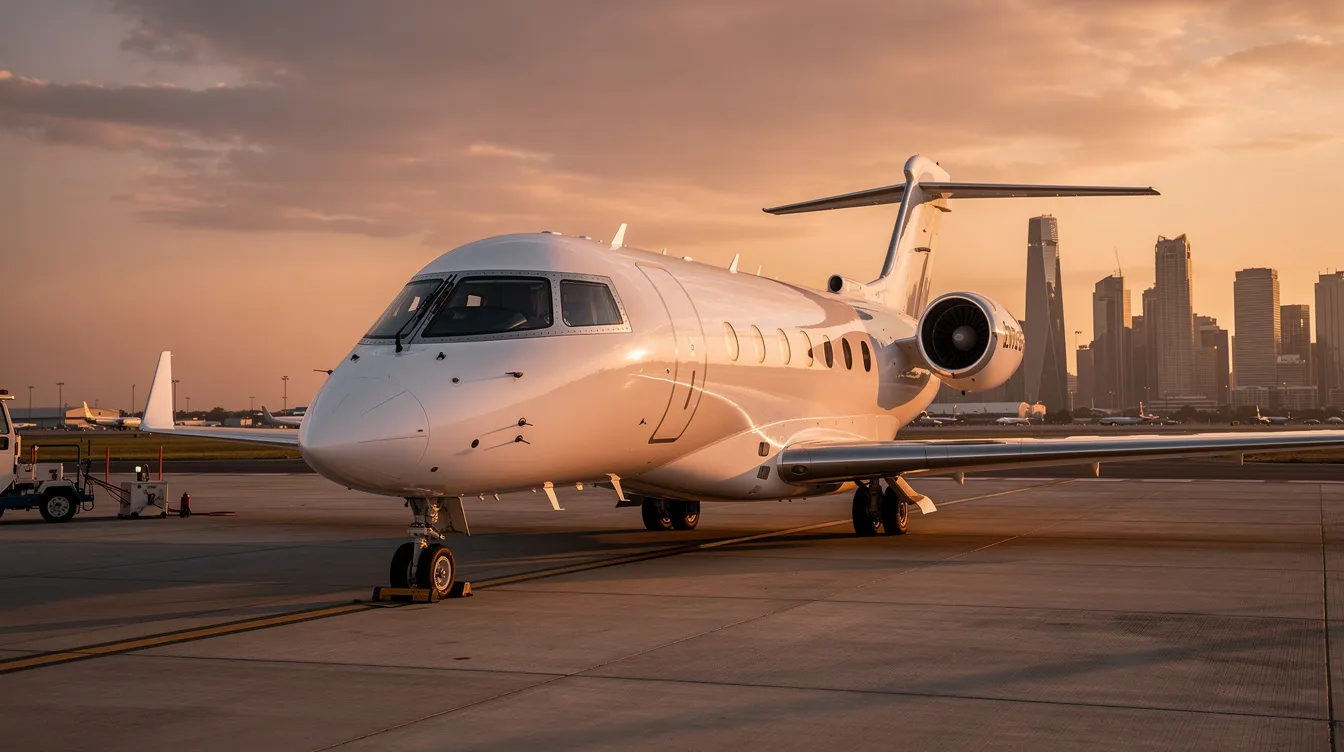
Delta's hub-and-spoke model routes most passengers through bases like Atlanta and New York JFK. This works well for trunk routes but can add hours to itineraries between smaller city pairs.
Private aviation flips this model. Instead of connecting through hubs, private jet charters booked through digital platforms like Jettly can fly directly between regional airports using an airport locator tool for private flights, skipping connections entirely.
Routing: Commercial passengers traveling between, say, Savannah and Boise will almost certainly connect through Atlanta or Salt Lake City. A private charter flies point-to-point.
Time savings: Eliminating hub connections can save 3–6 hours per trip, depending on scheduling and layover length.
Airport access: Private jets can use reliever airports and FBOs closer to final destinations, avoiding the congestion at Hartsfield–Jackson or LAX.
Schedule flexibility: Delta flights run on fixed timetables. On-demand private charters depart when the traveler is ready.
Consider a business executive who uses Delta for long-haul New York–London flights (taking advantage of Delta's transatlantic joint venture) but needs same-day hops between regional U.S. cities that lack nonstop flights. Combining both modes - scheduled airline for the trunk route, private charter for the regional leg - often produces the fastest door-to-door result.
Understanding where Delta is based and where its hubs are helps travelers decide when to use scheduled airlines and when a private jet might be more efficient.
Flying high-capacity trunk routes from Atlanta, New York JFK, or Los Angeles
Taking transatlantic or transpacific flights with joint venture partners
Leveraging loyalty benefits like SkyMiles, the Fly Delta App, airport lounge access, and Delta Sky Club amenities
Booking basic economy or premium fares on competitive, high-frequency routes
Running multi-city business roadshows across secondary markets, especially when you can crowdsource and share private jet flights to reduce per-seat costs
Traveling to remote vacation destinations outside Delta's city limits coverage, where on-demand access to private charter aircraft worldwide can unlock smaller airports
Making late-night returns after meetings when commercial options have ended, using last-minute private jet seat options to maintain flexibility
Short-notice travel makes commercial connections impractical, and buying a single seat on a private jet is more efficient than repositioning through hubs
Flying living vegetable plants, sensitive cargo, or items that require special handling not available on commercial flights, supported by tailored in-flight catering and special handling services
Jettly's platform offers instant pricing, transparent cost comparisons, a dedicated jet card flight cost estimator, and access to aircraft categories from turboprops to long-range jets. For corporate travelers, it can complement or fully replace certain commercial travel legs depending on the route and timing.
These questions address common topics not fully covered above, focusing on Delta's base, operations, and how private travel fits in.
The main Delta headquarters buildings and operations centers are secure and not open for general public tours. Business visitors and vendors need pre-arranged appointments and security clearance to access corporate offices. The Delta Flight Museum at 1060 Delta Boulevard is the primary public-facing facility - it's open to visitors year-round and offers a detailed look at Delta's history, from its days as an aerial crop-dusting company through its growth into a global airline recognized across the industry.
Delta Air Lines refers to the mainline carrier operating larger aircraft on trunk routes. Delta Connection is a brand used for regional flights operated by partner airlines such as Endeavor Air, Republic Airways, and SkyWest Airlines. These regional jets serve smaller and medium U.S. cities, feeding passengers into major hubs like Atlanta, Salt Lake City, and New York. From a traveler's perspective, tickets, loyalty benefits, and passenger service standards are fully integrated with the main Delta network.
Atlanta is Delta's largest international hub, but not its only one. New York JFK, Los Angeles, Seattle, and other hubs also host long-haul international routes, including first nonstop service to various global destinations. Route planning and global network strategy are coordinated from Atlanta, even when flights depart from other U.S. and foreign airports. International partnerships with airlines based in Europe, Asia, and South America extend Delta's reach well beyond its own aircraft and hubs.
Many private jet flights do operate from large international airports like Atlanta, Los Angeles, and New York JFK, often using dedicated general aviation facilities. Private charters booked through Jettly can also use nearby reliever airports, reducing congestion and ground time compared with major hubs. This flexibility allows travelers to connect between Delta flights and private jets in ways that minimize layovers and maximize schedule control.
Hub-based commercial routes may require connections through Atlanta, Salt Lake City, or other Delta hubs, adding layover time for passengers traveling between smaller cities. Private charters can often fly nonstop between regional airports, eliminating connections and enabling same-day multi-stop itineraries. Travelers who regularly pass through Delta hubs for short meetings or site visits may save significant time by using on-demand private flights for certain legs of their journeys.
Delta is based in Atlanta at 1030 Delta Boulevard, with a vast campus integrated into Hartsfield–Jackson Atlanta International Airport—the world's busiest airport. Its network stretches across nine hubs, including major centers in New York, Los Angeles, Salt Lake City, Detroit, and Seattle, connecting passengers to destinations across six continents.
Knowing where Delta is based and how its hub structure works helps travelers predict route options, connection patterns, and service offerings like Delta Sky Club access and Delta Connection flights to smaller markets. It also highlights where hub routing can add unnecessary time to a trip.
For travelers seeking more flexibility, especially on routes without nonstop service or for urgent, multi-stop itineraries, private jet platforms like Jettly offer a convenient alternative. These platforms provide on-demand, point-to-point travel that can save significant time and offer greater convenience compared to traditional commercial flights, particularly when paired with tools like a private jet charter cost estimator or structured jet card programs for frequent flyers.
Ready to experience private travel on your terms? Whether you’re a frequent Delta flyer or a travel professional, Jettly’s ULTRA high-ticket affiliate program also lets you earn by referring clients to private jet solutions. Explore flight options or request a quote at https://www.jettly.com.
Share this post:
Jay Franco Serevilla
Aug 23, 2026
|
5
min read
Discover tips and trends in the industry.

5
min read
Why So Many Plane Crashes? Causes, Trends, and How Modern Aviation Stays Safe
Plane crashes are often the result of a combination of factors, including human error, mechanical failures, and weather conditions. Despite media coverage suggesting otherwise, air travel remains statistically safe, with improvements in aviation safety over the decades. Understanding the causes and trends can help travelers make informed decisions about their flying options.
Read More
5
min read
Cheap Thanksgiving Flights: How to Find Holiday Flight Deals in 2026
Finding cheap Thanksgiving flights in 2026 is all about timing and flexibility. With Thanksgiving on November 26, booking 30 to 45 days in advance and flying on off-peak days can lead to significant savings. Consider private jet options for added convenience and reduced travel stress, especially during peak holiday travel times.
Read MoreStay updated with our latest insights and tips to elevate your journey with us.
MEMBERSHIPS AND ASSOCIATIONS



Disclaimer: Jettly operates as a charter broker, offering access to a global digital jet charter marketplace. Jettly is not a direct air carrier and does not own or operate aircraft. All advertised flights are conducted by third-party air carriers that are fully licensed and hold the appropriate Part 135 or Part 121 certifications issued by the Federal Aviation Administration (FAA) or equivalent regulatory authorities under U.S. or foreign law. Jettly complies fully with the U.S. Department of Transportation's Part 295 and Part 298 Charter Broker regulations. Jettly does not carry additional liability insurance. Passengers are covered by aircraft operator insurance. TICO: 50023770


