


Login
Get Instant Pricing On 23,000+ Aircraft

>
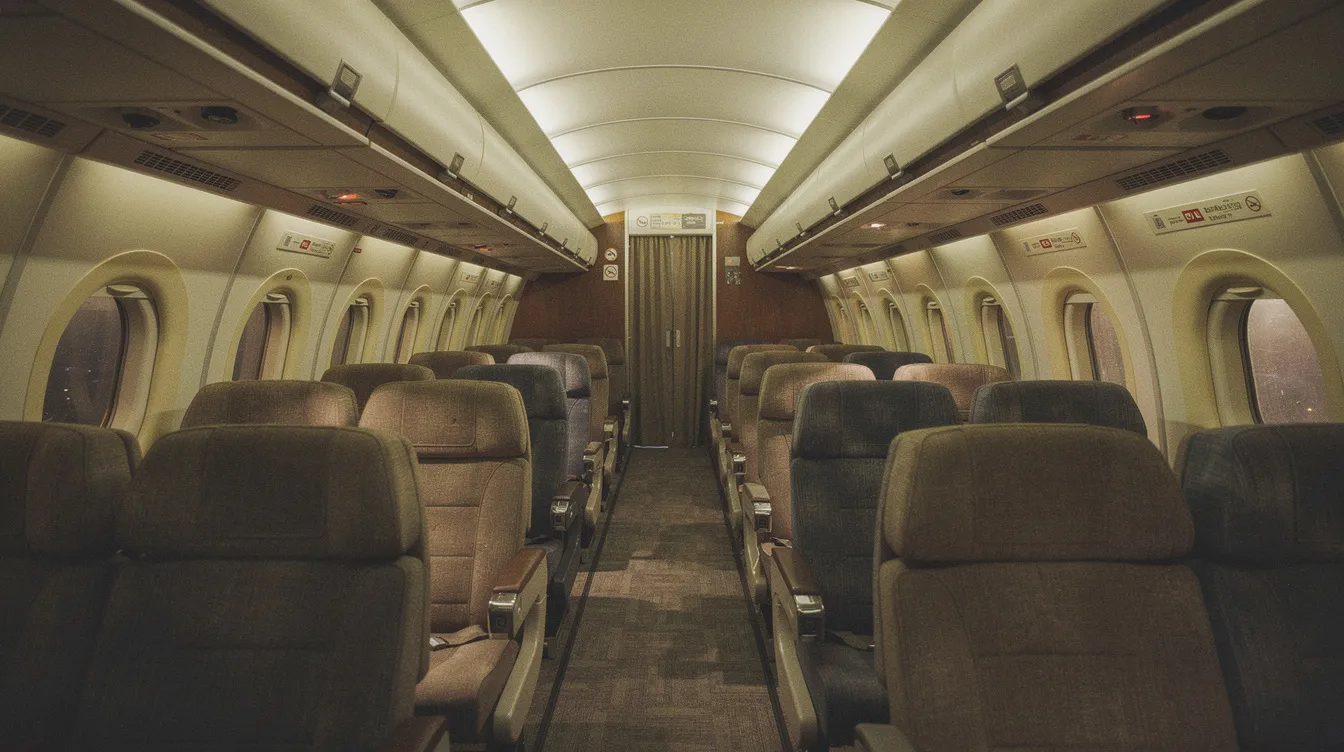
There was a time when lighting up a cigarette at 35,000 feet was as routine as fastening a seatbelt. Smoking on U.S. airplanes was banned in stages beginning in 1988, with a full federal ban on U.S. commercial flights taking effect on June 4, 2000; by the early 2000s, commercial airlines worldwide had largely followed. For frequent flyers, corporate executives, families, and travelers considering private jet charter, that timeline helps explain how modern air travel standards around passenger safety, cabin comfort, and onboard rules took shape.
Understanding when smoking on airplanes was banned means looking at the decades-long rollout across countries, the health and fire risks that pushed regulators to act, the tobacco industry’s role in resisting change, and how those rules evolved into today’s smoking and vaping policies on both commercial aircraft and private jets. It also shows why the ban remains relevant now: the rules that ended in-flight smoking helped define the safety, comfort, and compliance standards travelers still navigate on every flight.
Smoking on U.S. airplanes was phased out in stages, starting with flights under two hours in 1988, expanding to nearly all domestic flights in 1990, and culminating in a complete federal airline smoking ban on U.S. commercial flights by June 2000.
Different regions adopted the smoking ban on airplanes at different times. North America led in the late 1980s and 1990s, Europe followed in the mid-to-late 1990s, and parts of Asia and other regions finalized bans between the late 1990s and 2010s.
Both safety concerns (fire risk from cigarettes in enclosed cabins) and health concerns (secondhand smoke, lung cancer, heart disease) drove most airline smoking bans, despite significant resistance from the tobacco industry and tobacco companies.
Smoking and vaping are now banned on nearly all commercial flights worldwide, and private jet charters must also follow national and international smoking regulations.
Most Jettly-connected operators fly smoke-free for safety, comfort, and aircraft preservation. Travelers can learn more about private charter options and Jettly’s private jet memberships at https://www.jettly.com.
The modern airline smoking ban started in the United States and unfolded through several key pieces of legislation between 1988 and 2000. The path to smoke-free cabins was long, contentious, and hard-won.
The push for regulation began earlier than most people realize. Ralph Nader called for a smoking ban on airplanes as early as 1969, raising the issue of air quality in pressurized cabins. In 1973, the Civil Aeronautics Board required airlines to create a separate smoking section and banned cigar and pipe smoking on flights, even though cigarette smoking elsewhere on the plane remained standard practice for another 15 years.
A turning point came in 1986 when the National Academy of Sciences published a report recommending a total ban on smoking on commercial flights, citing the harmful effects of tobacco smoke in enclosed aircraft cabins. Representative Dick Durbin's 1988 legislation then delivered the first major federal act: a ban on smoking on U.S. domestic flights of less than two hours. This covered roughly 80 percent of domestic flights and took effect on April 23, 1988.
The success of this limited smoking ban quickly shifted public opinion on smoking in enclosed spaces and set the stage for broader smoke-free policies. Congress banned smoking on U.S. domestic flights in 1990, extending protection to most flight attendants and non-smokers traveling on routes of less than six hours, including flights to Alaska and Hawaii.
By June 4, 2000, all domestic and international flights in the U.S. were banned from smoking under the Wendell H. Ford Aviation Investment and Reform Act. This final Department of Transportation smoking rule implemented a statutory ban on smoking aboard nearly all U.S. commercial aircraft, covering cabin areas, lavatories, and closing loopholes for charter flights requiring a flight attendant. The no-smoking rule aligned with Federal Aviation Administration safety regulations, including strict smoke detector requirements and penalties for tampering.
|
Year |
Event Description |
|---|---|
|
1969 |
Ralph Nader calls for a smoking ban on airplanes. |
|
1973 |
Civil Aeronautics Board bans cigar and pipe smoking; requires separate smoking sections. |
|
1986 |
National Academy of Sciences recommends a total smoking ban on commercial flights. |
|
1988 |
Ban on smoking on U.S. domestic flights under two hours takes effect (April 23). |
|
1990 |
Smoking banned on nearly all U.S. domestic flights under six hours. |
|
2000 |
Complete federal ban on smoking on all U.S. commercial flights implemented (June 4). |
Early bans on smoking on domestic flights in the U.S. and Canada inspired similar measures worldwide during the 1990s. Once airlines demonstrated that smoke-free cabins were operationally feasible and commercially viable, the momentum became difficult to stop.
California's 1987 law banning smoking on intrastate flights served as an early model. California's 1987 law led to the federal smoking ban by showing that passengers would accept and even prefer smoke-free cabins. The initial U.S. domestic flight smoking ban - first under two hours, then under six hours - helped normalize the concept and strengthened the case for a complete airline smoking ban.
By the mid-1990s, individual airlines began acting ahead of legislation. Delta banned smoking on all flights in 1994, becoming one of the first major U.S. carriers to go entirely smoke-free. Northwest Airlines and other carriers followed suit shortly after.
By the late 1990s, the vast majority of commercial airlines worldwide had independently banned smoking, even before some governments mandated a full smoking ban.
Smoke-free airline policies contributed to wider acceptance of no-smoking rules in public spaces - restaurants, offices, and public transport - by demonstrating the benefits of a consistent smoking ban.
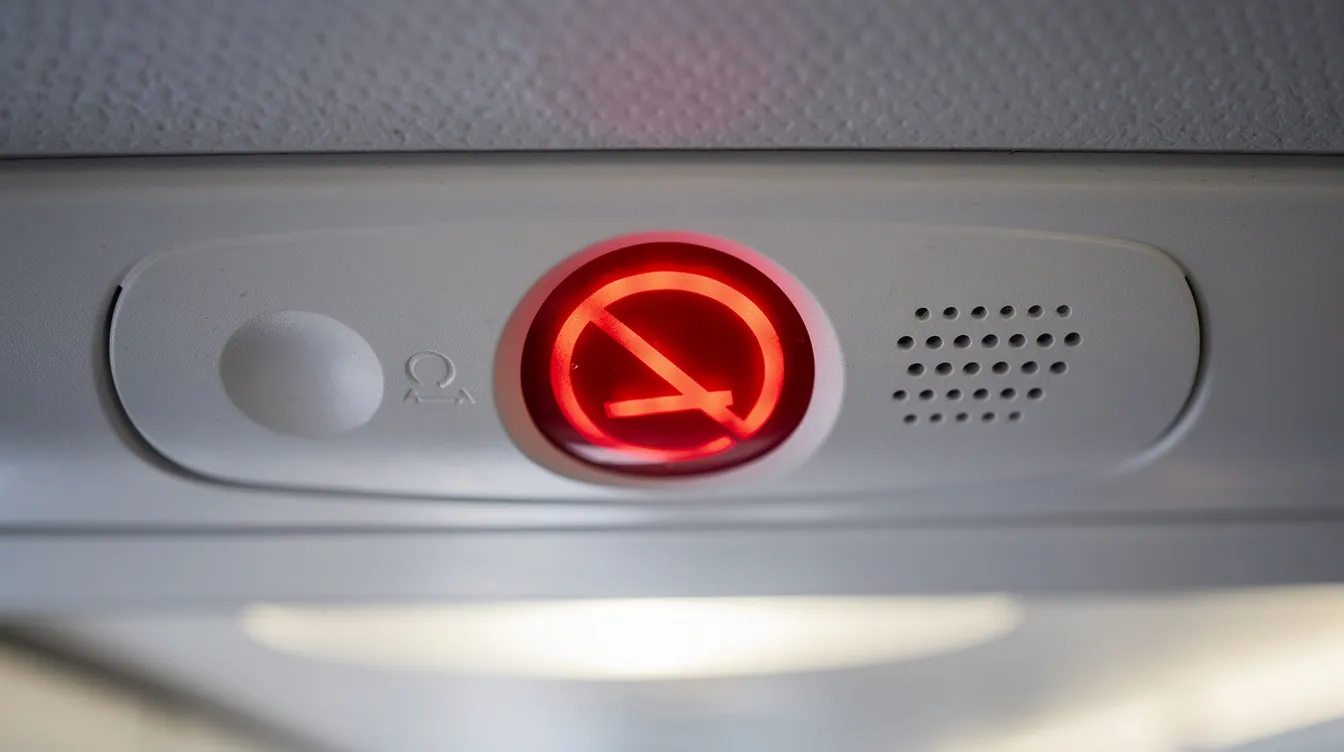
There is no single global date when smoking on airplanes was banned. Instead, regions implemented bans progressively, often following International Civil Aviation Organization (ICAO) guidance. In 1992, ICAO urged member states to restrict smoking progressively on international passenger flights, with a target of complete bans by July 1, 1996.
Here is how major regions moved toward smoke-free skies:
North America. Canada became the first country to ban smoking on all flights operated by Canadian carriers in 1994, covering domestic and international flights. The U.S. phased in bans from 1988 and completed its statutory commercial airline smoking ban by June 2000.
Europe. Scandinavian Airlines (SAS) banned smoking on domestic flights in Sweden and Norway as early as 1988. The European Union moved toward banning smoking on intra-EU flights in the mid-1990s, and broad adoption of smoke-free airline policies across the airline industry was in place by 1997–1998.
Asia-Pacific. Australia banned smoking on domestic flights from December 1, 1987, making it one of the earliest movers globally. Australia banned smoking on all international flights in 1996. Japan Airlines banned smoking on domestic flights in 1988 for routes under one hour, and Japan banned smoking on all domestic flights in 1998. JAL and ANA extended bans on international flights until March 1999.
Other regions. Brazil and Iran adopted bans through the late 1990s and early 2000s. Cuba banned smoking on international flights in 2014. China announced a total ban on inflight smoking in October 2017, including the flight deck, though strict enforcement of cockpit rules did not begin until early 2019.
By the early 2000s, smoking on commercial aircraft had effectively disappeared on major international carriers. The no-smoking sign became a universal expectation for airlines worldwide, and smoking passengers became a thing of the past.
Airline smoking bans were driven by both health science and aviation safety, often against strong pressure from big tobacco and the tobacco industry.
Extensive reports and research showed that secondhand smoke posed serious risks in enclosed cabin environments. Cigarette smoke in a pressurized airplane cabin created concentrated exposure levels far exceeding those in most public places. Studies linked this exposure to lung cancer, heart disease, and chronic respiratory problems. Flight attendants faced health risks from secondhand smoke during years of sustained occupational exposure. Flight attendant unions lobbied Congress for decades to recognize tobacco smoke as an occupational health hazard, and their advocacy was central to the legislation that followed.
Safety incidents reinforced the case. Smoking in the enclosed, high-altitude environment of airplane cabins posed severe risks of in-flight fires. Lavatory trash-bin fires caused by carelessly discarded cigarettes were a recurring concern. The 1983 Air Canada Flight 797 fire, though its cause was never conclusively determined, raised awareness about the need for better aviation safety protocols, including mandatory smoke detectors and fire-resistant cabin materials.
The tobacco industry and some pro-smoking groups lobbied against the ban on smoking, arguing about passenger rights and a competitive disadvantage for airlines on routes where smoking was still permitted. Patty Young and other flight attendant advocates pushed back, supported by public health data that was becoming impossible to ignore. Tobacco products were gradually reframed as a public health and safety risk rather than a normal in-flight amenity. Such regulations helped drive a wider decline in smoking rates and contributed to changing how society viewed smoking in public places.
Smoking cigarettes is banned on almost all commercial flights worldwide, regardless of route, airline, or cabin class. Whether someone is a chain smoker or an occasional smoker, the rule is the same: no traditional cigarettes, no cigars, no pipe tobacco, even on most international private jet flights.
The smoking ban also extends to e-cigarettes and vaping devices. E-cigarettes have been banned on U.S. commercial flights since 2012, and a 2016 DOT rule formalized the classification of vaping as smoking for the purpose of in-flight rules. Many aviation regulators worldwide have adopted the same position.
E-cigarettes cannot be used on board and typically cannot be placed in checked luggage because of fire risk from lithium-ion batteries. They must be carried in hand luggage under specific safety guidelines.
A real-world example underscores why regulators treat these devices cautiously. In July 2018, an Air China pilot reportedly used an e-cigarette in the cockpit, triggering a false smoke alarm and an emergency descent that dropped cabin pressure and oxygen masks. The incident reinforced the rationale behind treating vaping the same as smoking on commercial aircraft.
Practical guidance for passengers:
Check the airline's latest smoking and vaping policy before flying and verify permitted departure or arrival points using an airport locator tool.
Obey the no-smoking sign and any no-vaping announcements, and if you’re considering chartering, use a private jet charter cost estimator to understand pricing before you book.
Expect significant fines or removal from the aircraft for violations - penalties in the U.S. can reach $2,000 or more per incident, as recorded in the Federal Register; when budgeting your trip, tools like Jettly's jet card flight cost estimator can help you compare options.
Private jet travel follows the same overarching national and international smoking ban rules as commercial aviation, but individual operators may have additional restrictions. Understanding the specifics matters before booking.
Even on private jets, many operators maintain smoke-free cabins to protect air quality, avionics, and interior materials. Regulations at certain airports and in specific countries also apply, regardless of whether the aircraft is commercially scheduled or privately chartered. For more details on how private jet smoking policies work in practice, Jettly's guide covers the nuances.
On some privately owned or chartered aircraft, limited smoking policies may exist - for example, cigars on select flights - but only where local law permits and where the operator explicitly allows it. These remain rare exceptions, and most smoking areas on aircraft have been eliminated.
Jettly, as a digital private jet charter marketplace, connects travelers with a wide global aircraft inventory. Most aircraft available through the platform operate under strict smoke-free rules for safety, resale value, and passenger comfort. Travelers can book a private jet through Jettly and confirm the smoking or vaping policy in advance when requesting a quote.
Private aviation can also help frequent smokers manage cravings more practically, especially when paired with tailored services like in-flight catering for private jets. Shorter door-to-door travel times, flexible schedules, and the ability to plan shared or crowdsourced private flights with ground-side breaks make the experience more manageable than a rigid commercial airline itinerary.
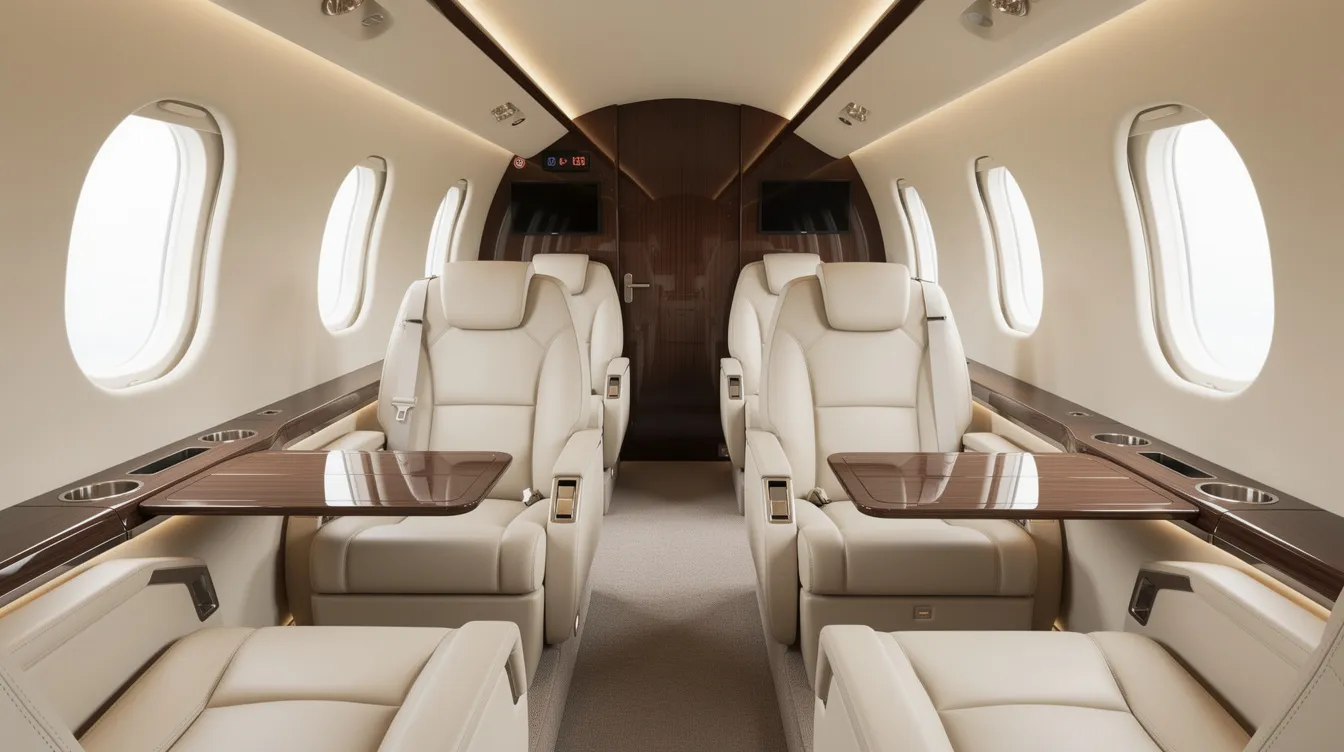
The airline smoking ban became a symbol of broader public health progress and a cultural shift in how society views smoking. What once seemed like a radical idea - banning a legal product in a private commercial space - became one of the most widely accepted regulations in modern aviation.
Smoke-free cabins improved comfort and perceived cleanliness for all passengers, contributing to the modern expectation of clean, filtered cabin air on both commercial and private jets. On the positive side, it was clear: better health outcomes, lower maintenance costs for airlines, and a more pleasant flying experience.
Flight attendants, their unions, and advocacy groups like Americans for Nonsmokers' Rights (ANR) played a central role in campaigning for smoke-free airline policies from the 1960s through the 1980s. Their efforts, often cited by the Chicago Tribune and other outlets at the time, demonstrated that organized advocacy could overcome powerful industry opposition.
Many smoke-free workplace laws for restaurants, bars, and hospitality venues followed soon after the airline smoking ban. The success of banning smoking on airplanes served as evidence that stricter regulations were workable and broadly popular, much like the wider adoption of charter airlines and private aviation services reshaped expectations around air travel choice. Today's standard no-smoking sign, though rarely switched off, serves as a quiet reminder of how far airline safety and passenger expectations have evolved since the era when flight attendants handed out complimentary cigarettes, and someone could smoke two packs on a transatlantic crossing.
The U.S. approached its airline smoking ban in stages. In 1988, smoking was banned on domestic flights of two hours or less. In 1990, Congress extended the smoking ban to almost all domestic flights. On June 4, 2000, the Department of Transportation implemented a complete statutory ban on smoking on nearly all U.S. commercial flights, including most international routes operated by U.S. carriers. This act covered the limit of what earlier legislation had left unaddressed.
No mainstream commercial airlines allow smoking anywhere on board, including in lavatories. Any isolated exceptions would violate international aviation regulations and ICAO guidance. Passengers should assume a universal smoking ban applies on every scheduled airline flight. Smokers looking for flexibility may consider private charter flights, where policies can differ by operator and where it’s often easier to get a seat on a private jet through membership, brokers, or on-demand apps, especially for those monetizing travel audiences through Jettly’s high-ticket affiliate program.
Smoking policies on private jets depend on the operator, the aircraft owner, and local regulations. Many jets are strictly non-smoking. A minority may allow smoking under controlled conditions where legal. Anyone considering this should confirm the policy in advance. Jettly's platform makes it easy to ask about specific policies when exploring charter options or buying a single seat on a private jet through shared or semi-private arrangements.
The FAA requires ashtrays on airplanes to provide a secure place for cigarette disposal in case of violations. Even though smoking is banned, regulators recognize that someone may illegally light a cigarette. An ashtray offers a safe place to extinguish it rather than discarding it into flammable trash, reducing fire risk and supporting secure air charter principles across the industry.
Airlines and regulators generally treat vaping the same as smoking. No use of e-cigarettes or vapes is permitted in the cabin or lavatories. Devices must be carried in hand luggage only due to fire hazards from lithium-ion batteries. The 2016 DOT rule in the U.S. formalized this position, and most countries worldwide have adopted similar regulations.
The ban on smoking on airplanes marked a significant milestone in aviation safety and public health. Driven by mounting evidence of the dangers of secondhand smoke and the risks of in-flight fires, regulators worldwide phased out passengers smoking on flights over several decades. This transition not only improved the comfort and safety of all travelers but also set a precedent for smoke-free environments in other public spaces. Today, the strict no-smoking and no-vaping policies on commercial and private flights reflect a commitment to passenger well-being and operational safety. For travelers seeking the convenience and flexibility of private jet travel, platforms like Jettly offer transparent access to smoke-free flights that prioritize comfort and compliance. Ready to experience private travel on your terms? Explore flight options or request a quote athttps://www.jettly.com
Share this post:
Jay Franco Serevilla
Jun 29, 2026
|
5
min read
Discover tips and trends in the industry.
5
min read
Freight Runners Express, Inc: Charter Options, Routes, and How Jettly Compares
Freight Runners Express, Inc is a Milwaukee-based charter airline specializing in cargo and passenger services across North America. With a fleet of turboprop aircraft, it offers efficient transport solutions for time-sensitive logistics. Jettly, a digital charter marketplace, provides comparable options, allowing users to access a wider range of aircraft and pricing in real time.
Read More
5
min read
Airplane Cost Calculator: Understand, Plan, and Compare Private Aircraft Costs
An airplane cost calculator simplifies the complex financial aspects of private aircraft ownership by estimating costs related to fuel, maintenance, and financing. By comparing these estimates with real charter pricing from platforms like Jettly, users can make informed decisions about whether to own or charter an aircraft. This guide provides insights into how these calculators work and how to effectively use them for better financial planning.
Read MoreStay updated with our latest insights and tips to elevate your journey with us.
MEMBERSHIPS AND ASSOCIATIONS



Disclaimer: Jettly operates as a charter broker, offering access to a global digital jet charter marketplace. Jettly is not a direct air carrier and does not own or operate aircraft. All advertised flights are conducted by third-party air carriers that are fully licensed and hold the appropriate Part 135 or Part 121 certifications issued by the Federal Aviation Administration (FAA) or equivalent regulatory authorities under U.S. or foreign law. Jettly complies fully with the U.S. Department of Transportation's Part 295 and Part 298 Charter Broker regulations. Jettly does not carry additional liability insurance. Passengers are covered by aircraft operator insurance. TICO: 50023770


