



Login
Get Instant Pricing On 23,000+ Aircraft

>
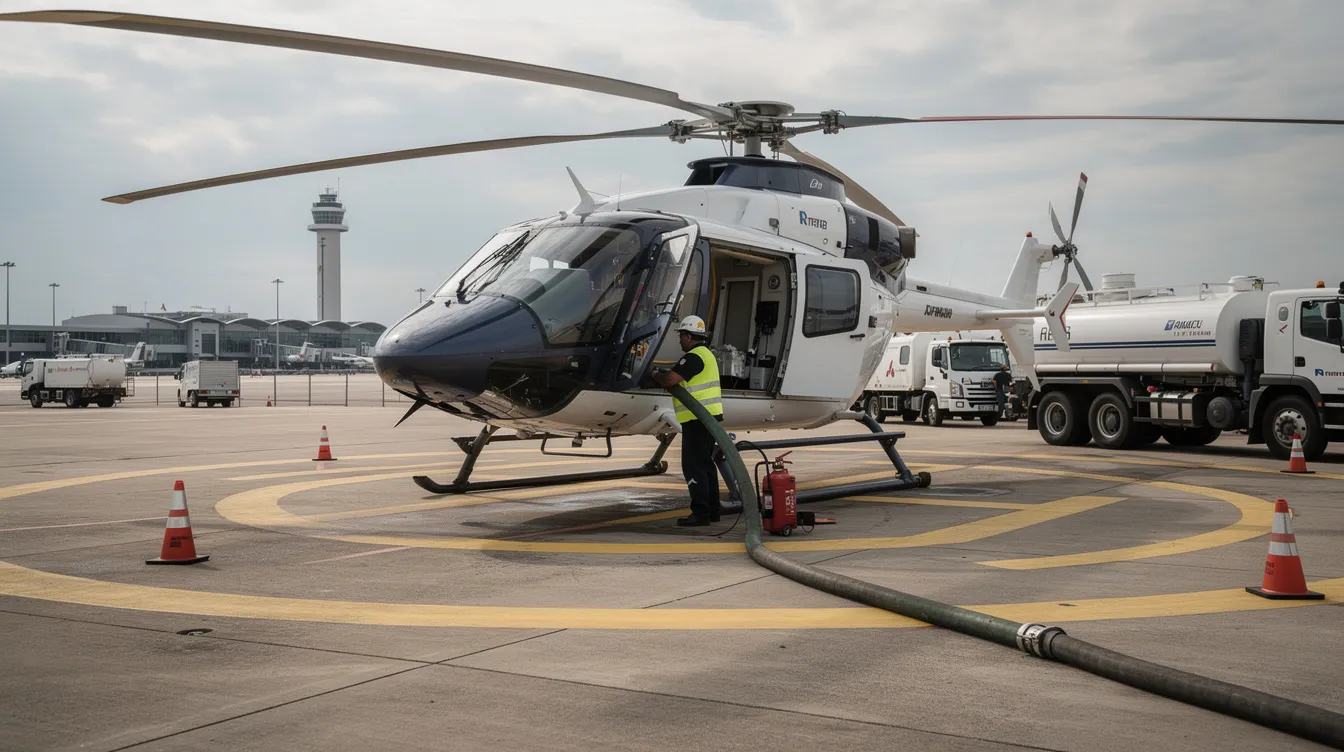
Most charter helicopters today burn kerosene-based jet fuel (Jet A or Jet A-1), while smaller piston-engine models use AvGas 100LL, an aviation gasoline with low lead content.
Helicopter fuel requirements are determined by the engine type rather than the helicopter configuration. Piston engines need AvGas; turboshaft engines need jet fuel.
Fuel type directly affects operating cost, range, and availability at heliports, all of which factor into overall helicopter rental costs and charter pricing on platforms like Jettly.
Sustainable aviation fuel (SAF), blended with conventional jet fuel, is starting to appear in helicopter operations across Europe and North America.
What type of fuel does a helicopter use? The answer depends on its engine. Helicopters do not have a unique helicopter-specific fuel; they typically use either aviation turbine fuel or aviation gasoline, the same categories that power aircraft across the aviation industry and around the world. Most modern charter helicopters burn jet fuel, not automotive gasoline. Fuel cost is one of the largest variable expenses in hourly charter pricing, so understanding the basics helps travelers anticipate what they will pay when using a private jet charter cost estimator or requesting a quote.
Helicopter fuel falls into two main categories: aviation gasoline (AvGas) and kerosene-based jet fuel. Both are regulated aviation fuels designed for safety and reliability in flight, and Jettly offers a broader guide to the different types of jet fuel used across aviation. The main aviation fuel types relevant to helicopters are:
AvGas 100LL: A high-octane, blue-dyed gasoline for piston engines, the most common type of small aircraft engine. Contains a small amount of tetraethyl lead.
Jet A: A kerosene-based fuel common in North America, with a freezing point of -40°C.
Jet A-1: The international standard kerosene jet fuel, with a lower freezing point of -47°C.
Jet B: A wide-cut blend of gasoline and kerosene with a freezing point of -60°C, used in Arctic or extreme cold operations.
SAF blends: Drop-in sustainable aviation fuels mixed with conventional jet fuel, produced from sustainable feedstocks like used cooking oil or waste biomass.
Automotive gasoline is generally not used in commercial charter helicopters due to certification and safety specifications. Proper fuel usage is critical to avoid engine failure and ensure safety in every flight.
The fuel a helicopter burns depends primarily on its engine type. Piston engines and turbine engines require different fuels, and mixing them causes serious damage.
Piston-engine helicopters like the Robinson R22 and R44 Raven II use AvGas 100LL, with piston engines being the common type used in smaller aircraft. This fuel has a blue dye for identification, a low-lead formulation (up to about 0.56 g/L), and a high octane rating (100 lean, 130 rich) that prevents engine knocking under high compression. An R44 burns roughly 15 US gallons per hour, translating to around $30-$120 in fuel cost per hour depending on regional AvGas prices, illustrating on a smaller scale many of the same variables that shape the cost to fuel a private jet.
Turbine (turboshaft) helicopters like the Airbus H125, Bell 407, Leonardo AW109, and Sikorsky S-76 run on kerosene-based jet fuel such as Jet A or Jet A-1 for turbine propulsion. Turbine helicopters generally use Jet A or Jet A-1 kerosene-based fuel, similar to what powers jet engines on commercial airliners. Gas turbine helicopters have higher fuel burn rates; a Bell 407 or H125 consumes 40-60 gallons per hour, pushing fuel cost alone to $200-$400 per hour.
Turbine helicopters dominate helicopter charter operations because they deliver more power, better performance at altitude, and larger cabin capacity, which directly ties into overall helicopter passenger capacity and mission flexibility. That is why most aircraft available through Jettly's marketplace burn jet fuel.
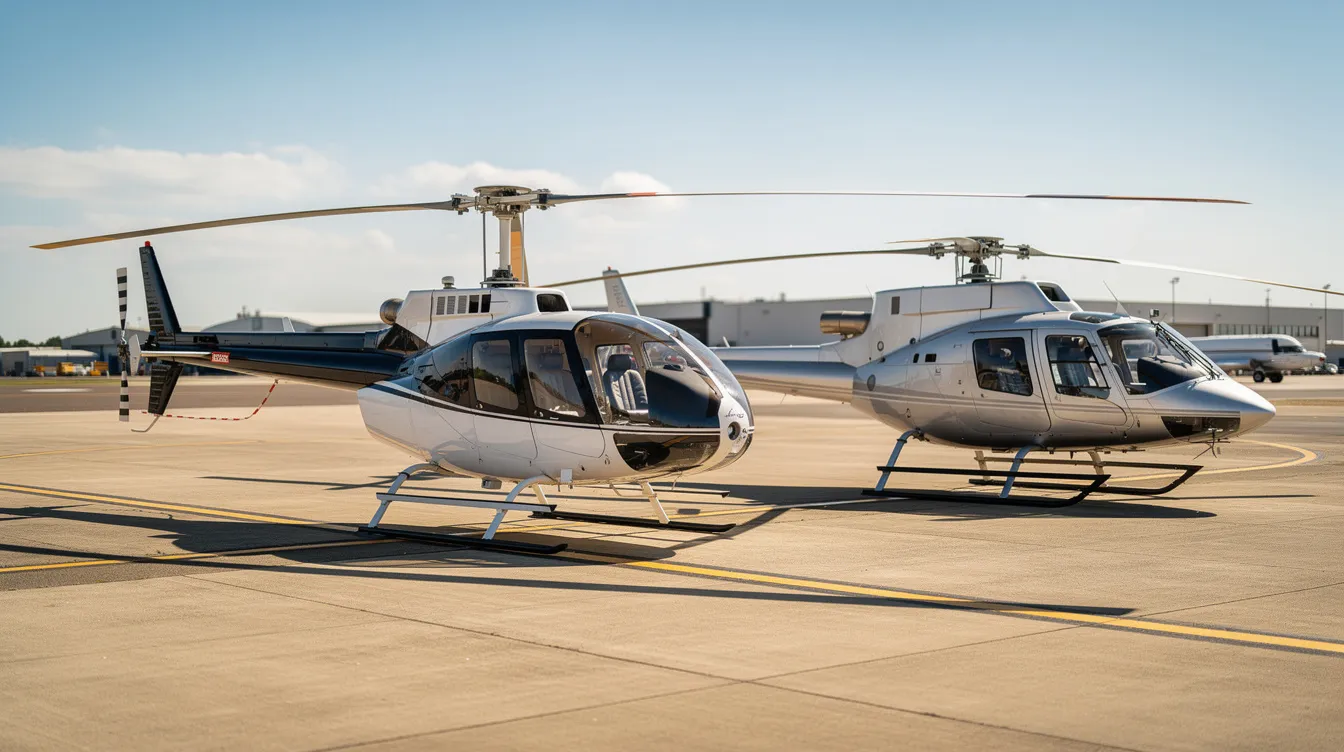
While "jet fuel" is a broad term, gas turbine helicopters use Jet A, Jet A-1, or Jet B, each meeting strict specifications set by standards like ASTM D1655.
Jet A: Standard in the United States and Canada. Freezing point of -40°C. Suitable for most temperate and warm-climate operations, and it is typically clear unlike dyed AvGas.
Jet A-1: The international default. Its freezing point of -47°C makes it better suited for routes crossing mountain ranges or high-latitude regions like Scandinavia. Additives such as anti-static and anti-ice agents are included where required.
Jet B: A wide-cut fuel with a freezing point of -60°C and a lower flash point. Designed for extreme cold (Arctic, Alaska), but its higher volatility makes it more hazardous to handle. Many helicopter flight manuals restrict or prohibit Jet B use.
A specific helicopter model's flight manual dictates which grades are approved. Crews follow the manual before they fill the helicopter, since using the wrong grade risks engine damage and regulatory violations. For travelers comparing helicopters with fixed-wing options for long trips, Jettly also offers guidance on finding the best cross-country plane. For a deeper look at all aviation fuels, see Jettly's guide to aviation fuel types.
Sustainable aviation fuel is an emerging part of the civil aviation industry's effort to reduce lifecycle carbon emissions from fossil fuels. SAF acts as a drop-in replacement, blended with conventional jet fuel at ratios up to 50% without engine modifications, with biofuels also part of this broader sustainable fuel category.
SAF can be produced from renewable sources including used cooking oil, waste biomass, and algae. Its energy content matches standard jet fuel, but its lifecycle carbon footprint is lower because the feedstocks absorb CO during growth. In September 2026, as lower-carbon aviation fuels have developed over time, Skywork Helicopters in New Zealand flew an AS350 B3e with a roughly 35% HEFA-based SAF blend, reporting no performance issues. These blends are also being researched as the industry develops lower-carbon options.
Availability and cost remain the main barriers. SAF currently carries a price premium, and supply at remote heliports is limited. Some operators in Jettly's global network may offer SAF on request for certain routes, particularly for corporate clients with environmental policies who may already use private jet memberships or other structured flying programs. For more on greener flying options, Jettly's platform provides information on fleet choices and efficiency.
Customers rarely choose a helicopter based on fuel grade, but fuel type shapes the hourly rates, range, and operational flexibility reflected in Jettly's instant pricing, alongside broader considerations that also affect affordable private jet charter.
Cost: Piston helicopters (AvGas) offer lower hourly prices, suitable for short scenic flights. Turbine helicopters (jet fuel) cost more per hour but deliver speed and comfort for business or intercity travel, much like how fixed-hour programs use a jet card flight cost estimator to set expectations.
Availability: Jet A and Jet A-1 are stocked at most major airports and regional heliports worldwide, supporting last-minute charters and complex itineraries, which you can verify in practice with tools like Jettly's airport locator. AvGas infrastructure is more limited globally.
Range: Turbine helicopters burning jet fuel generally cover longer distances. A light turbine model can handle city pairs like Los Angeles to Las Vegas non-stop, while small piston types suit shorter segments, which also influences overall helicopter rental costs. See more on helicopter range.
Jettly's platform surfaces suitable aircraft options automatically, so customers do not need to select a fuel type when booking, and can even reduce costs further by using options such as crowdsourced and shared private flights.
Ready to explore private helicopter travel? Those simply looking for practical ways to get a seat on a private jet can apply many of the same strategies- memberships, shared flights, and on-demand apps- when considering helicopters as well. Find flight options or request a quote at jettly.com.
|
Fuel Type |
Engine Type |
Freezing Point |
Typical Use Cases |
Color/Dye |
Notes |
|---|---|---|---|---|---|
|
AvGas 100LL |
Piston engines |
N/A |
Small piston helicopters |
Blue |
Contains low lead, high octane |
|
Jet A |
Turbine engines |
-40°C |
Most North American turbine heli |
Clear |
Standard jet fuel in the US and Canada |
|
Jet A-1 |
Turbine engines |
-47°C |
International turbine heli |
Clear |
Lower freezing point, global standard |
|
Jet B |
Turbine engines |
-60°C |
Extreme cold conditions |
Clear |
More volatile, less common |
|
SAF blends |
Turbine engines |
Similar to Jet A |
Sustainable fuel blend |
Clear |
Reduces carbon footprint |
Below are common questions about helicopter fuels not fully covered above.
No. AvGas and jet fuel are designed for different engine types and must never be mixed. Putting Jet A fuel into a piston helicopter can cause significant engine damage, and using AvGas in a turbine helicopter can lead to catastrophic engine failure. Helicopter misfueling prevention relies on strict color-coding and labeling checks at every fueling point. When booking through a charter platform like Jettly, certified ground crews handle all fueling under regulatory standards, which also helps the engine start reliably after refueling.
Under normal conditions, passengers should not smell strong fuel odors inside a modern helicopter cabin, whether it burns AvGas or Jet A-1. A brief whiff near the aircraft during boarding is common at heliports. Persistent fumes inside the cabin would be treated as a maintenance issue and resolved before the aircraft is dispatched for passenger flights, just as catering services such as Jettly Eats in-flight catering are coordinated to meet strict safety and comfort standards.
Aviation fuels are manufactured, refined, and handled under strict quality and safety procedures. Jet fuel has a higher flash point (around 38°C) than automotive gasoline, which reduces ignition risk during handling. AvGas is more volatile but is stored and dispensed only in controlled airport environments. Passengers on a Jettly-arranged charter are never involved in fueling; all work is carried out by trained, licensed personnel who complete aviation training and licensing, with supervised learning before handling fueling tasks, similar to procedures followed across the broader network of private and charter airlines.
A small number of light, privately owned piston helicopters hold supplemental type certificates allowing specially approved automotive gasoline. This is rare in commercial charter operations, where brokers such as Dexter Air Taxi, a private jet operator, and others arranged through Jettly rely on standardized aviation fuels. Most charter helicopters use standardized aviation fuels because they meet the specifications, grades, and additive requirements listed in each aircraft's flight manual.
Range depends more on aircraft design, fuel tank capacity, and engine efficiency than on whether the helicopter burns Jet A or Jet A-1. Turbine helicopters generally provide longer range than small piston types because they carry more fuel and convert energy more efficiently at cruise speed. Customers can use Jettly's platform to compare estimated range and flight times between helicopter options when planning a trip or even evaluate NetJets alternatives like Jettly for fixed-wing segments of their journey.
Understanding what type of fuel a helicopter uses is essential for appreciating how engine technology impacts operational costs, range, and safety in private aviation. Most helicopters operate on either AvGas 100LL for piston engines or kerosene-based jet fuels like Jet A and Jet A-1 for turbine engines. This distinction influences everything from pricing on platforms like Jettly to availability at heliports worldwide.
As sustainable aviation fuels gain traction, the industry is beginning to improve its environmental footprint without compromising performance. For travelers seeking flexibility, convenience, and transparency in private helicopter travel, knowing these fuel basics helps make informed choices. Ready to experience private helicopter travel tailored to your needs? Explore flight options or request a quote at https://www.jettly.com.
Share this post:
Jay Franco Serevilla
Oct 13, 2026
|
5
min read
Discover tips and trends in the industry.

5
min read
When to Buy a Ticket: How to Time Your Flight Booking for the Best Deals
Knowing when to buy a flight ticket can save you money and enhance your travel experience. This guide provides insights into optimal booking windows for domestic and international flights, as well as tips for using price tracking tools and understanding dynamic pricing. By planning ahead and utilizing available resources, travelers can secure the best deals and enjoy a smoother journey.
Read More
5
min read
Fuel for Jets: Types, Performance, and What Matters for Private Jet Travel
Understanding the types of jet fuel is crucial for private jet travelers. Kerosene-based fuels like Jet A and Jet A-1 are the industry standards, impacting safety, performance, and costs. Specialized fuels cater to extreme conditions, while sustainable aviation fuels are emerging as a greener alternative.
Read MoreStay updated with our latest insights and tips to elevate your journey with us.
MEMBERSHIPS AND ASSOCIATIONS



Disclaimer: Jettly operates as a charter broker, offering access to a global digital jet charter marketplace. Jettly is not a direct air carrier and does not own or operate aircraft. All advertised flights are conducted by third-party air carriers that are fully licensed and hold the appropriate Part 135 or Part 121 certifications issued by the Federal Aviation Administration (FAA) or equivalent regulatory authorities under U.S. or foreign law. Jettly complies fully with the U.S. Department of Transportation's Part 295 and Part 298 Charter Broker regulations. Jettly does not carry additional liability insurance. Passengers are covered by aircraft operator insurance. TICO: 50023770


