


Login
Get Instant Pricing On 23,000+ Aircraft

>

As the popularity of private flights continues to grow, there are more options than ever in choosing the way you travel.
Private jets give you comfort, security, flexibility, and privacy that you cannot get on traditional commercial flights. If you are looking into options for private flying, you have likely considered private jet fractional ownership programs.
These programs let you purchase a portion of an aircraft, which you share with other owners. If you are looking into a fractional jet ownership program, there are a few things you need to consider. here are 4 things you need to watch out for.
Fractional jet ownership was started by Warren Buffet with NetJets in the 1980s. At the time, this was an innovative and more affordable way to enjoy the benefits of private jet flying.
Today, many of the benefits that were previously available in fractional ownership programs are readily available elsewhere without strict contracts or large up-front costs.
When looking at the benefits of fractional private jet ownership, you need to watch out for these 4 concerns.
When you invest in a fractional ownership program, you typically purchase flight hours in increments of 1/16. To fully purchase a private jet costs millions, so even just 1/16 of that cost is going to be significant – at least $100,000. To justify that cost, you need to fly between 100 and 200 hours per year, at a minimum.
Another significant fractional jet ownership cost is depreciation. Because fractionally owned aircraft are used more frequently, they tend to depreciate faster than other types of private jets. A moderately used jet typically depreciates between 6% and 7% each year. A fractionally owned jet will depreciate faster. This means the capital you initially spent will be worth significantly less when your contract ends.
When you sign up for a fractional jet ownership program, you are locked into a contract for a specific amount of time. These contracts typically last between 2-5 years. If you are unhappy about your fractional ownership experience, there is no easy way out.
If you want to break your contract, there are typically expensive penalties for doing so. In addition, many fractional ownership programs charge a reselling fee at the end of your contract. This can be upwards of 7% of the price of the jet.
With a fractional program, you sign a contract for a specific airplane. If your travel needs go beyond what you initially signed up for, you will have to pay more for access to a larger plane.
In addition, if urgent travel needs arise, but your plane is being used, will you be left stranded? Will you have to pay more for access to an alternative plane?
With the advanced engineering inside a jet, mechanical issues are bound to happen. You want to fly on a well-maintained, properly working plane. However, what do you do when your jet is out of commission for sudden mechanical problems, and you need to fly? Will the fractional ownership company you worked with offer you an alternative? Is there a backup plane that you can use?
With the high cost of ownership and long-term commitments, fractional private jet ownership may not be a good fit for you. A more versatile, more affordable alternative is on-demand private jet chartering through Jettly.
We give you access to instant booking online with more than 20,000 private jets and other aircraft around the world. Tell us where you want to go, even if it includes multiple stops, and we make it easy to plan your trip.
Ready to get started? Contact us today for private jet charter pricing and enjoy the benefits of on-demand private flying.
Share this post:
Justin Crabbe
May 7, 2025
|
5 minutes
min read
Discover tips and trends in the industry.
5
min read
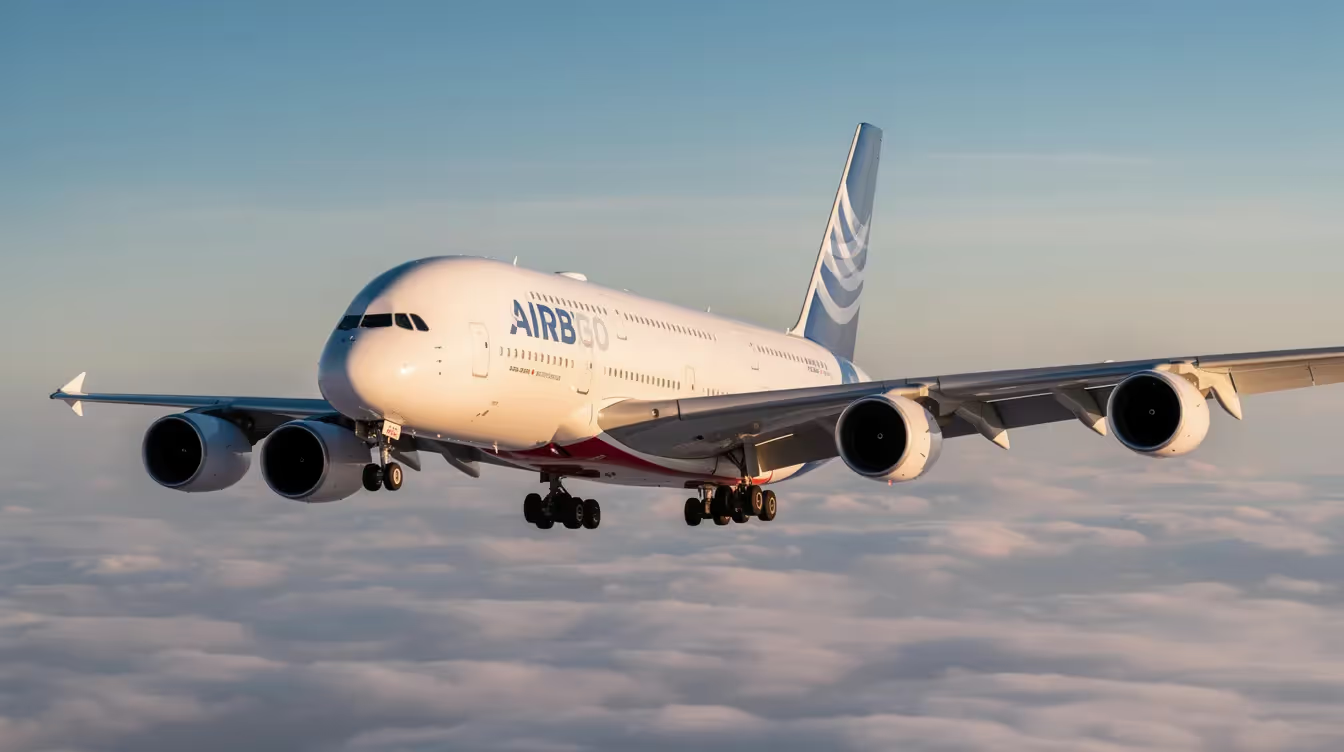
Price of Airbus A380 in 2026: Purchase, Operating Costs & Private Use
The Airbus A380, while no longer in production since 2021, continues to attract interest due to its operational costs and unique capabilities. In 2026, used A380s are priced between $25–$60 million, with operating costs ranging from $40,000 to $55,000 per flight hour, influenced by high fuel consumption and maintenance demands. Major airlines like Emirates and Singapore Airlines still utilize the A380 on high-demand routes, but its large size and operational costs make it less viable for private use compared to more efficient business jets. For high-net-worth travelers, platforms like Jettly offer better alternatives, providing access to a wide range of aircraft that align more closely with specific travel needs and budgets.
Read More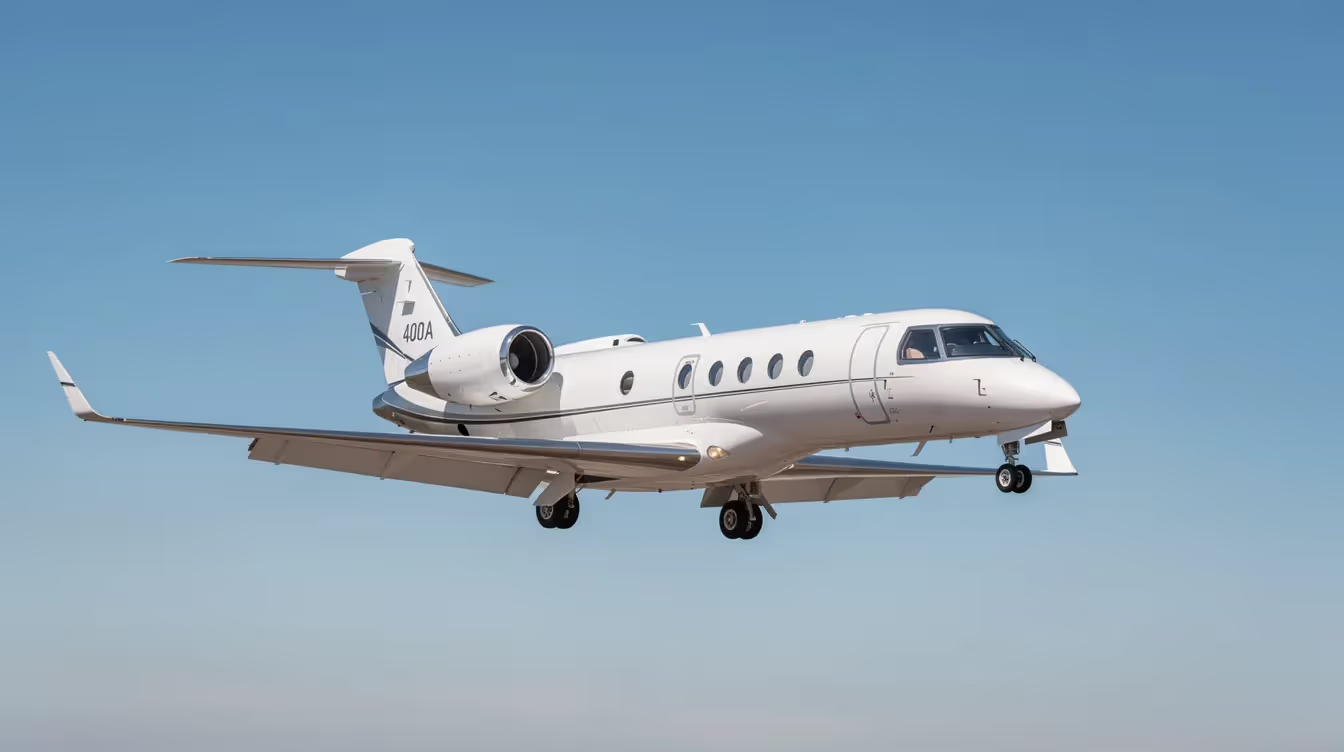
5
min read
Beechjet 400A Operating Costs: Ownership & Charter Cost Breakdown
Understanding the operating costs of the Beechjet 400A is crucial for potential owners and charter users, with estimated hourly costs ranging from $4,262 to $4,985 in 2026, depending on flight hours. Annual operating budgets can vary from approximately $1.38 million to over $2.1 million based on usage, with fixed costs averaging between $336,542 and $493,925 annually. Charter rates typically range from $3,000 to $3,500 per flight hour, allowing users to avoid fixed costs associated with ownership. For those flying less than 250-350 hours annually, chartering through platforms like Jettly may be more economical than ownership.
Read MoreStay updated with our latest insights and tips to elevate your journey with us.
MEMBERSHIPS AND ASSOCIATIONS



Disclaimer: Jettly operates as a charter broker, offering access to a global digital jet charter marketplace. Jettly is not a direct air carrier and does not own or operate aircraft. All advertised flights are conducted by third-party air carriers that are fully licensed and hold the appropriate Part 135 or Part 121 certifications issued by the Federal Aviation Administration (FAA) or equivalent regulatory authorities under U.S. or foreign law. Jettly complies fully with the U.S. Department of Transportation's Part 295 and Part 298 Charter Broker regulations. Jettly does not carry additional liability insurance. Passengers are covered by aircraft operator insurance. TICO: 50023770


