


Login
Get Instant Pricing On 23,000+ Aircraft

>

If you have searched "what airline has the most crashes 2025," you are not alone. The short answer is that no major scheduled airline has been identified by any reputable safety body as having the most crashes in 2026; the most serious accidents reported have largely involved smaller regional, cargo, or general aviation aircraft rather than the large commercial jets that carry most passengers. For worried passengers, frequent flyers, and travelers weighing private jet charter options such as Jettly, that distinction is important because viral rankings and isolated headlines often lump very different types of aviation together and make commercial flying seem less safe than the data shows.
This article breaks down 2026 plane crash statistics, how airline safety is measured, what regulators and accident investigators actually track, and which oversight systems and safety technologies shape real-world risk. It also looks at private jet charter safety standards, including the operator and aircraft vetting travelers should expect when considering services like Jettly, so you can separate fact from fear, assess airline or operator risk more accurately, and make more confident travel decisions.
There have been 61 airplane crashes in 2026, resulting in 397 fatalities. While those numbers command attention, they represent a tiny fraction of the tens of millions of flights completed safely worldwide.
No single major airline is identified as having "the most crashes" in 2026. Major international organizations track overall accident rates globally rather than high crash volumes of individual carriers.
How many plane crashes occurred must be separated by type of operation and severity. Incidents like hard landings or runway excursions are different from fatal accidents, and lumping them together creates misleading rankings.
Aviation safety has improved over the past decade according to the FAA, and flying remains one of the safest modes of transportation, especially on large scheduled airlines and professionally chartered private jets.
Platforms like Jettly work only with properly licensed and audited operators, so private jet charter clients benefit from strict safety standards alongside flexibility and convenience.
There is no credible global ranking that names a single major airline as "the airline with the most crashes" in 2026. Reputable safety databases track accidents by aircraft type and operation category, not for sensational lists. Major commercial airlines operate globally with an exceptionally high degree of safety.
Airlines like Delta, United, and Southwest appear in incident databases simply because they fly enormous numbers of flights daily. Most of those logged events are non-fatal incidents, not crashes. The overall all-accident rate is 1.32 per million flights, indicating improving safety in aviation. Airlines with IOSA registration had an even lower accident rate of 0.98 per million flights in 2026.
Passengers worried about which airline "has the most crashes" should instead evaluate:
Country regulatory oversight quality
Fleet age and maintenance history
International safety audits from ICAO and IATA
Pilot training programs and crew experience
Viral social media lists and outdated reputations are not reliable indicators of how safe an airline actually is.
The answer depends on definitions. There have been 61 aviation incidents classified as airplane crashes in 2026, with 397 fatalities. But that figure covers commercial, cargo, and general aviation operations combined. Separating aviation safety incidents like runway excursions and minor damage from fatal accidents is critical to understanding the real picture.
For perspective on previous years:
|
Year |
Crashes Reported |
Fatalities |
|---|---|---|
|
2015 |
260 |
811 |
|
2023 |
214 |
178 |
|
2024 |
207 |
- |
|
2026 |
61 |
397 |
In 2024, there were 207 aviation incidents reported. In 2023, 214 airplane crashes resulted in 178 people who died, with each person counted in the fatality total. Despite the rise in fatalities, total commercial hull-loss incident numbers actually declined in 2026. U.S. agencies like the National Transportation Safety Board and Federal Aviation Administration collect and publish detailed accident statistics through official reports, though early-year figures are always provisional until investigations conclude.
While no single airline dominates 2026 crash statistics, several high-profile incidents have shaped public perception of air travel risk.
The Air India crash on June 12 killed 241 of the 242 people on board when a Boeing 787-8 went down shortly after takeoff from Ahmedabad, and one person survived.
|
Incident Date |
Airline/Operator |
Aircraft Type |
Fatalities |
Description |
|---|---|---|---|---|
|
June 12, 2026 |
Air India |
Boeing 787-8 |
241 onboard, 19 on the ground |
Crash shortly after takeoff from Ahmedabad; 241 were killed onboard, and 1 survived. |
|
January 2026 |
American Eagle Flight 5342 |
CRJ-700 |
64 passengers and crew, 3 soldiers on helicopter |
Midair collision with a U.S. Army Black Hawk near Washington; one helicopter survivor initially. |
|
2026 |
Various U.S. carriers |
CRJ series |
Injuries, no fatalities |
Landing accident at Toronto Pearson, all passengers survived but were injured. |
|
2026 |
Light Air Services |
Beechcraft |
six people |
Crash in South Sudan in which six people were killed. |
A recent crash near Alaska also shaped headlines and raised concerns about aviation safety, underscoring why understanding the role and oversight of Part 135 charter companies matters when evaluating different types of operators.
Investigations by national safety boards often take months. Early references to human error or mechanical failure frequently change as data emerges from flight recorders and maintenance logs, especially when airlines and manufacturers such as Boeing or Airbus are under scrutiny. Focusing solely on the airline name hides more important factors such as weather, airspace congestion, air traffic control procedures, and aircraft type.

The short answer is no. In 2015, there were 260 airplane crashes with 811 fatalities. By 2026, those raw counts dropped significantly, even as global air travel demand grew.
Accidents per flight continue to decline while aviation remains vulnerable to occasional high-fatality events. Global aviation fatalities hit a 7-year high in 2026 with 548 fatalities across 156 accidents. That makes 2026 a notable statistical inflection point, but catastrophic events skew overall accident metrics even as flying remains statistically safe.
Intense media coverage and videos shared on social media can create the fear that plane crashes are increasing. From a data perspective, the trends tell a different story. A decade ago, fatal accidents happened roughly once per 3.5 million flights. By 2026, that figure improved to about one per 5.6 million flights.
Regulatory oversight from bodies like the Federal Aviation Administration, EASA, and ICAO has steadily tightened pilot training, maintenance, and operational requirements over the past decade, while the growth of private and charter airlines worldwide has expanded options for travelers who still prioritize strong safety cultures.
Flying on a commercial airline or a properly chartered private jet is one of the most heavily regulated transportation activities in the world.
The Federal Aviation Administration certifies aircraft, licenses pilots, sets maintenance standards, and monitors U.S. airspace. Similar responsibilities are handled by EASA in Europe and equivalent authorities elsewhere.
Safety-management systems and auditing are critical in maintaining low accident rates across the aviation industry.
Key safety systems include terrain-avoidance warnings, Traffic Collision Avoidance Systems (TCAS), advanced weather radar, and stabilized approach criteria.
Technological advancements such as fly-by-wire systems contribute to increased safety in aviation by reducing the likelihood of catastrophic technical failures.
Runway incursions and ground safety are prioritized by regulatory bodies to improve overall safety.
Aircraft safety regulations prioritize pilot training and regulatory compliance to improve safety records.
Every significant 2026 accident triggers investigations by agencies like the NTSB, leading to recommendations that airlines, manufacturers, and aviation experts implement worldwide.
Many plane crashes each year occur in unscheduled or lightly regulated segments of aviation. Professionally operated private jet charters, however, are subject to strict commercial standards similar to scheduled airlines.
Jettly functions as a digital private jet charter marketplace, connecting travelers to a vetted global network of more than 20,000 private charter aircraft that range in size and number of seats. The platform works only with licensed operators that comply with national regulations such as FAA Part 135 in the U.S.
Safety checks Jettly prioritizes include:
Operator certification and insurance verification
Captain and crew experience requirements
Documented maintenance programs
Aircraft age and type evaluation
Private jet charter can also improve overall trip safety by reducing exposure to congested hubs, tight connections, and last-minute schedule pressures. A corporate team flying point-to-point between Scottsdale Airport and Marana Regional Airport avoids the complexity of major hub connections entirely, especially when using tools like an airport locator for private jet flights to identify convenient departure and arrival points. A family using a secure air charter to skip overnight layovers gains both convenience and predictability.
Learn more about Jettly's charter options and instant pricing with tools like its private jet charter cost estimator at jettly.com.
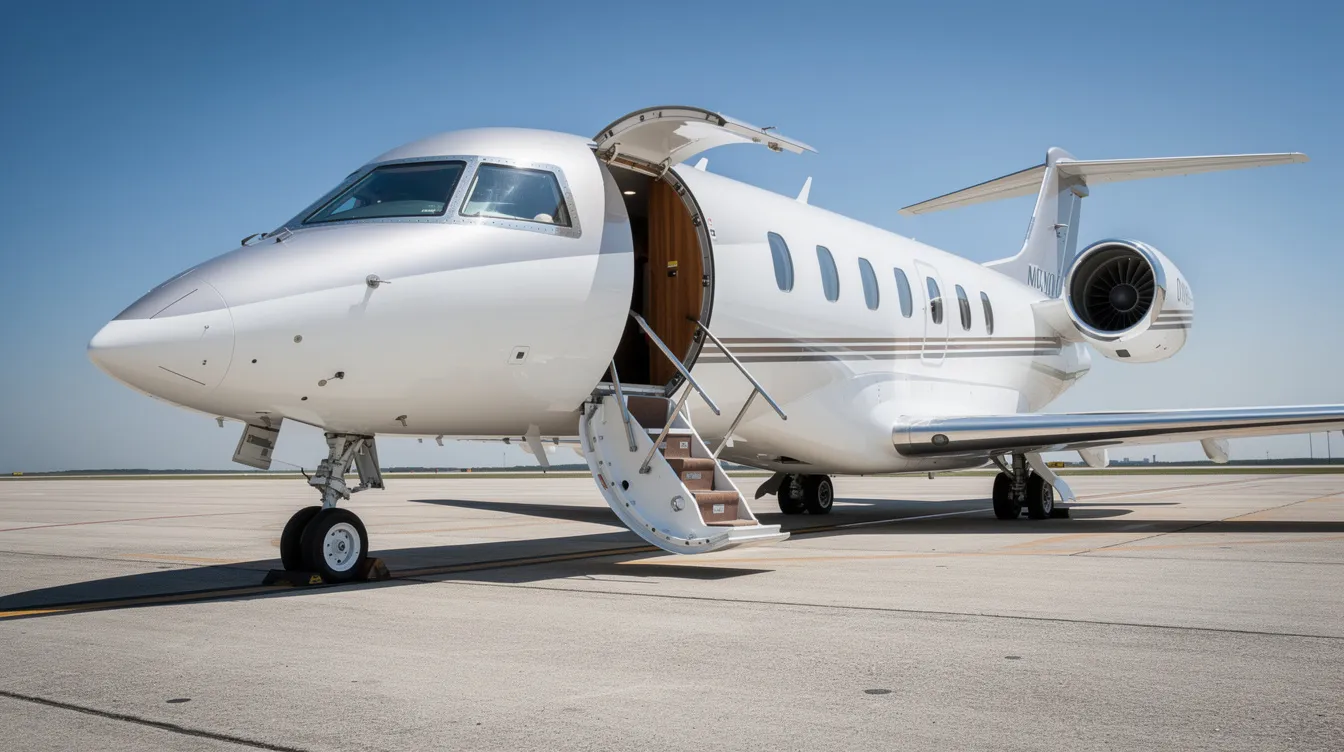
Don't rely on viral rankings claiming to list the most dangerous airlines. Instead, check structured and reliable sources.
Key factors to review, along with understanding how much it costs to rent a private jet:
Country regulatory oversight and ICAO audit results
Fleet age and maintenance history
Safety ratings like ARG/US, WYVERN, and IS-BAO for charter operators and whether they participate in structured private jet membership programs
IOSA membership for scheduled airlines
Transparent communication about safety policies and crew qualifications, which you’ll find emphasized among top private jet charter companies
Look at an operator's accident and incident history over many years. A single event does not determine a safety culture. Patterns and rate matter far more, especially when you’re comparing options and reviewing affordable private jet charter pricing. In 2026, choosing a well-regulated airline or a curated private jet provider like Jettly offers extremely low crash risk, with aviation safety standards higher than ever.
Here are answers to common questions not fully covered above, including issues of cost, safety, and how to find the cheapest private jet flights without compromising standards.
No major scheduled airline is officially identified by regulators or trusted safety databases as having an abnormally high number of crashes in 2026. Most serious accidents involve a mix of smaller regional, cargo, and general aviation operators. Simple league tables by airline name are believed to be unreliable because they ignore fleet size, flight hours, and incident severity. The exact cause of any single accident often takes weeks or months of investigations to determine.
Large commercial airlines have the best overall statistical safety record due to high standardization and massive flight volumes. Properly regulated private jet operators also demonstrate strong aviation safety performance, especially under strict commercial charter rules. Many people dream of private flying but raise concerns about safety or the cost of fractional ownership, leading some to compare NetJets with more flexible NetJets alternatives like Jettly. The data shows that professionally operated charters with two-pilot crews and robust maintenance sit far closer to airline-level safety than unregulated general aviation.
While plane crashes attract global attention and media coverage, the per-trip and per-mile risk of death is far lower for commercial air travel than for driving. Only a tiny fraction of flights experience serious incidents each year. Road transportation accidents claim over a million lives annually worldwide. Air travel remains among the safest modes of transportation from any statistical perspective, even when you’re simply buying a single seat on a shared private jet instead of chartering the whole aircraft.
Verify that the charter operator holds the correct commercial certificate, uses experienced two-pilot crews, follows a documented maintenance program, and carries appropriate insurance. Using a platform like Jettly that screens operators for regulatory compliance simplifies this process. You can also review tips on how to get a seat on a private jet easily and check private plane safety statistics to put your decision in context.
Check official publications from the Federal Aviation Administration, National Transportation Safety Board, ICAO, and IATA. Independent resources like Aviation Safety Network provide historical context behind plane crashes beyond simple airline rankings. These sources offer the data needed to evaluate whether a jump in reported incidents reflects a real trend or a single catastrophic event that happened to skew the statistics for a given year, and they’re equally useful when planning international flights on private jets where regulations and safety oversight vary by country or region. Travelers considering pre-paid flying can also consult tools like a jet card flight cost estimator or guides to world-class jet card programs to balance safety, predictability, and budget.
Ready to experience private travel on your terms? Whether you’re flying solo or with a group, you can crowdsource private jet flights and share empty seats, compare providers like NetJets and other leading private aviation brands, or book dedicated routes such as private jet charter in Kolkata, West Bengal, or private jet charter in New Delhi. Explore flight options or request a quote at jettly.com.
In summary, while 2026 has seen several tragic aviation incidents, no single major airline stands out as having the most crashes. The overall data shows that flying remains one of the safest modes of transportation, with stringent safety regulations, advanced technology, and rigorous operator oversight driving continuous improvements.
For travelers considering private jet charters, platforms like Jettly offer access to thoroughly vetted operators who meet high safety standards, combining convenience with peace of mind. Understanding the broader context of aviation safety statistics helps separate fact from fear, empowering travelers to make informed decisions about their air travel options.
Share this post:
Jay Franco Serevilla
Oct 7, 2026
|
5
min read
Discover tips and trends in the industry.

5
min read
Best Time To Buy Hawaii Tickets: How To Lock In The Best Deal On Your Hawaii Trip
Discover the best strategies for booking flights to Hawaii and save money on your trip. This guide outlines optimal booking windows, travel periods, and tips for finding the best deals. Whether you're traveling for leisure or business, understanding these factors can help you secure the best airfare.
Read More
5
min read
When Are Flight Tickets Cheapest? Timing, Trends, and Smart Alternatives
Knowing when flight tickets are cheapest can lead to significant savings. This guide explores optimal booking windows, travel days, and strategies for both commercial and private flights, emphasizing the importance of tracking prices and flexibility in travel plans.
Read MoreStay updated with our latest insights and tips to elevate your journey with us.
MEMBERSHIPS AND ASSOCIATIONS



Disclaimer: Jettly operates as a charter broker, offering access to a global digital jet charter marketplace. Jettly is not a direct air carrier and does not own or operate aircraft. All advertised flights are conducted by third-party air carriers that are fully licensed and hold the appropriate Part 135 or Part 121 certifications issued by the Federal Aviation Administration (FAA) or equivalent regulatory authorities under U.S. or foreign law. Jettly complies fully with the U.S. Department of Transportation's Part 295 and Part 298 Charter Broker regulations. Jettly does not carry additional liability insurance. Passengers are covered by aircraft operator insurance. TICO: 50023770


