


Login
Get Instant Pricing On 23,000+ Aircraft

>
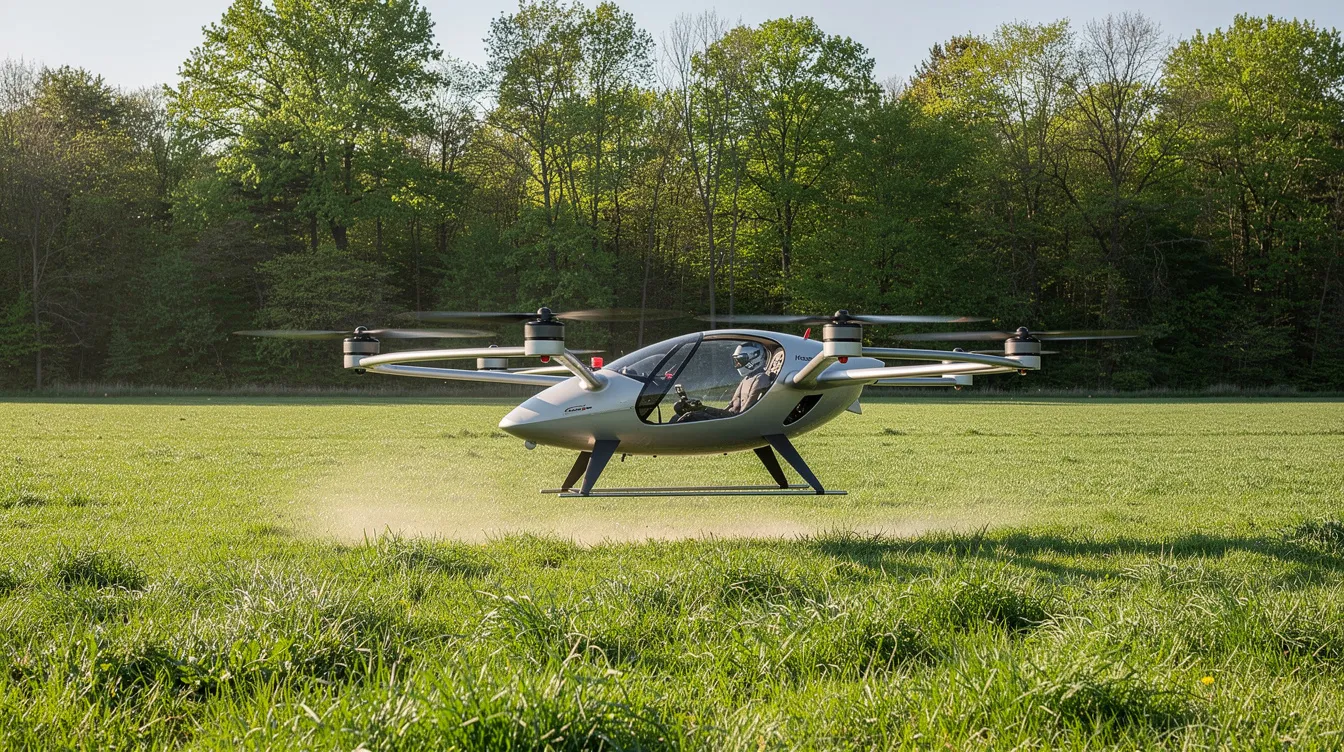
A vtol personal aircraft takes off and lands vertically, without a runway, using spinning rotors that push air downward to generate vertical lift. VTOL stands for Vertical Takeoff and Landing. Unlike a helicopter, most personal VTOLs use electric or hybrid-electric propulsion, multiple small motors instead of a single main rotor, and software-based flight control rather than mechanical linkages. The result: fewer moving parts, lower maintenance, and quieter operation.
These electric aircraft sit within a broader air mobility ecosystem that includes private jets, commercial airlines, and helicopters. As eVTOL aircraft move from prototypes toward early deliveries, they create a new category of personal aviation, one that fills the gap between ground transportation and longer-range private jet flights.
This article examines concrete models available or in pre-order between 2024 and 2030, including Jetson ONE, AIR ONE, Pivotal Helix, RYSE Recon, and Zapata AirScooter. Each comes with specific performance numbers, prices, and certification timelines. Jettly, a digital private jet charter platform, expects VTOL personal aircraft to become first/last-mile connectors for its customers as the technology and regulatory framework mature over the next several years.
The sections below cover definitions, technology, safety systems, regulation, real-world use cases, sustainability, and how personal VTOLs will plug into private jet charter operations.
VTOL means vertical takeoff and landing. Add an "e" for electric propulsion, and the category becomes eVTOL. A personal aircraft in this segment is typically a one- or two-seat vehicle designed for short hops, not cross-country flights. Most operate at low altitude, within a short range of the departure point.
Compared to helicopters, these aircraft differ in three structural ways. First, they distribute thrust across multiple motors (often six to eighteen) rather than relying on a single main rotor and tail rotor. Second, they replace mechanical transmissions and hydraulic controls with software-stabilized flight control systems. Third, some VTOL designs use wings to generate lift in forward flight, which reduces power draw once the aircraft transitions from hover to cruise.
Current examples span a range of configurations. Jetson ONE is a single-seat, open-frame electric aircraft with eight motors. AIR ONE is a two-seat platform with fixed wings and foldable arms, closer to a flying car concept. Pivotal Helix, evolved from the original BlackFly, pairs tandem wings with eight propellers. RYSE Recon targets agricultural and rural users. Zapata AirScooter uses a hybrid-electric powertrain in an enclosed cockpit.
Many of these designs emphasize simplified flight controls so that non-career pilots can operate them. RYSE, for example, claims its training takes an afternoon. VTOL aircraft may use multiple electric motors and propellers or rotors for flight control, but the pilot typically interacts with a single joystick and a few buttons.
Current eVTOL designs balance vertical lift with efficient forward flight, and the design includes multirotors, wings, and advanced software. The typical configuration includes a carbon fiber or composite frame, multiple electric motors mounted on fixed arms or wings, battery packs integrated into the floor or wing structure, and centralized computers managing thrust distribution and stability.
Carbon fiber and composites enhance durability and reduce weight, which directly determines how long the aircraft can stay airborne. Lightweight materials reduce drag and increase efficiency in personal aircraft by lowering the power needed to hover and cruise. Fly-by-wire systems handle stability automatically: the pilot inputs a direction, and the computer adjusts individual motor speeds dozens of times per second.
Personal VTOL development moved from early prototypes in the 2010s to low-volume production and preorders in the 2024 to 2028 window. Many personal aircraft will enter low-volume production by 2028. Jetson ONE currently accepts orders for delivery by 2027 to 2028. AIR ONE is pursuing Light Sport Aircraft certification with deliveries in the second half of this decade.
Most current aircraft optimize for low-altitude, short-range air mobility rather than high-altitude cruise. Jetson ONE's service ceiling is 1,500 feet AGL (up to 10,000 feet MSL). Design priorities center on safety and design objectives like redundancy, quiet operation, and portability. Some concepts include folding arms (similar to the Rictor X4-style approach) so they can land vertically and store more easily for ground transport.
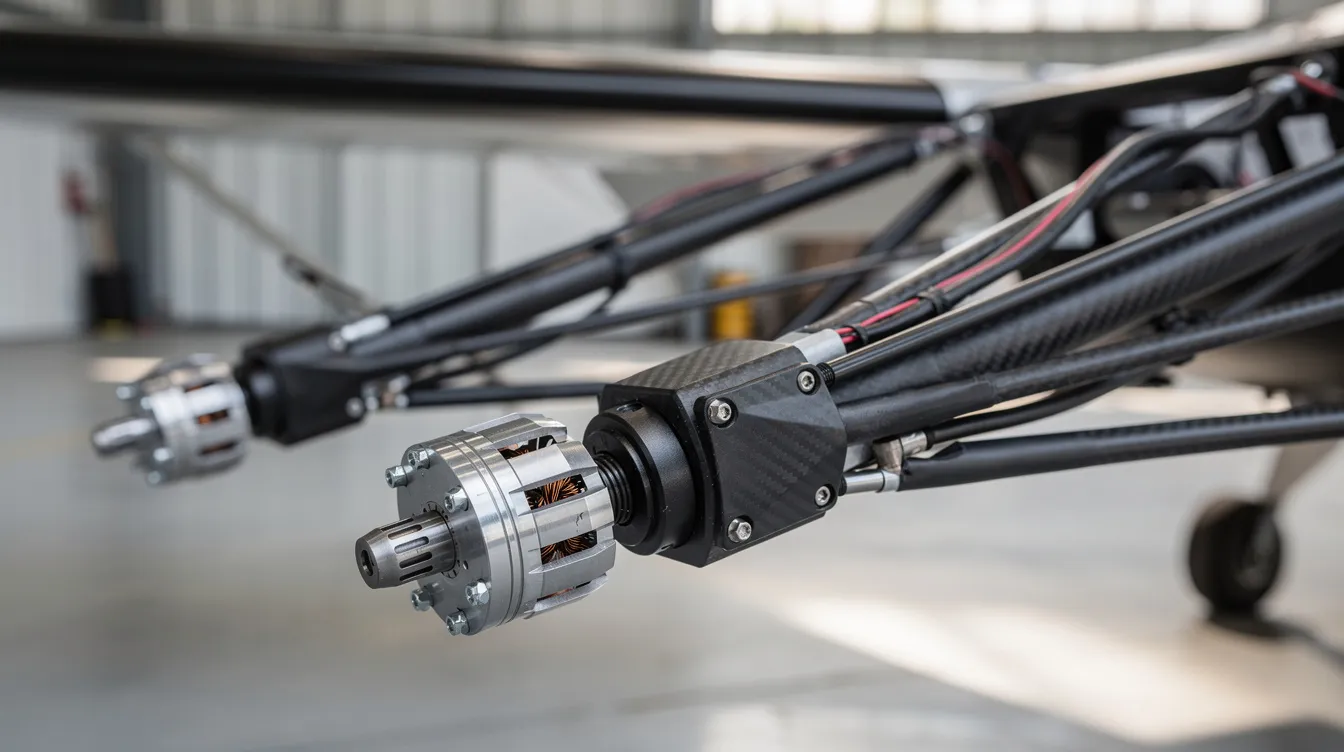
Most VTOL personal aircraft use aluminium, carbon fiber, and composites to keep empty weight under regulatory thresholds. Under FAA Part 103, powered ultralight vehicles must have an empty weight below 254 pounds (about 115 kg). Ultralight aircraft must meet specific weight and speed limits, including a maximum level-flight speed of 55 knots (roughly 63 mph).
Jetson ONE's airframe, without batteries, weighs about 55 kg (121 lb). With batteries, total mass reaches roughly 115 kg (253 lb), landing right at the Part 103 boundary. Pivotal Helix uses lightweight composite wings and a panoramic canopy, with an empty weight of about 348 lb (158 kg) according to AOPA data.
Distributed electric motors, typically six to eighteen across the airframe, provide redundancy and fine-grained control. If one motor fails on an eight-motor craft, the remaining seven can compensate. Electric propulsion reduces greenhouse gas emissions and eliminates the complex mechanical transmissions found in helicopters.
Here is a comparison of weight, speed, and flight time for four leading models:
Jetson ONE: ~121 lb empty (253 lb with batteries), top speed ~63 mph, ~20-minute flight time
Pivotal Helix: ~348 lb empty, cruise ~62 mph, ~20-minute endurance, ~20-mile range
AIR ONE: ~2,140 lb empty (MTOW ~2,690 lb), fast cruise ~115 knots (~132 mph), ~1-hour flight time
RYSE Recon: ~255 lb gross weight, top speed ~63 mph, ~25-minute flight time, ~25-mile range
Battery technology limits the range and payload capacity of electric VTOLs. Current lithium-ion batteries have limitations affecting the operational range of VTOL aircraft, with energy densities around 200 to 300 Wh/kg depending on chemistry. Adding more cells extends flight time but also adds weight, which eats into payload and, for ultralight vehicles, can push the airframe past regulatory limits.
The Jetson ONE has a flight time of approximately 20 minutes. In testing, it covered about 11 miles under standard conditions. RYSE Recon reaches roughly 25 minutes and 25 miles. AIR ONE targets about one hour and 60 to 100 miles, thanks to a 60 kWh battery pack and winged design that enables efficient forward flight. AIR ONE has a maximum operating altitude of 10,000 ft, and the AIR ONE can cruise at speeds of 100 to 120 mph. Zapata AirScooter's hybrid system, combining electric motors with a thermal engine, aims for up to roughly two hours and 99 miles of range.
Realistic operating envelopes for early personal eVTOLs are low altitude, within a 10 to 40 mile radius, and in good weather. Wind, rain, and temperature extremes reduce performance and safe margins.
Future solid-state batteries, with higher energy density per kilogram, could push single-seat flight time past 30 minutes. Hybrid designs extend endurance sooner but add fuel logistics. Either path moves personal air travel closer to distances that complement regional private jet trips: a 30-mile VTOL hop to a regional airport, then a Jettly-arranged jet for the longer leg.
Personal eVTOLs use a layered approach to safety. Modern eVTOLs feature redundant motors for safety, and redundancy plays an important role in maintaining safety and operational reliability: Jetson ONE has eight motors, RYSE Recon has six, and Pivotal Helix uses eight rotors across two wings. If one motor fails, the remaining units adjust thrust to maintain stable flight. Redundant flight control systems provide backup in case of failure, with independent computers cross-checking each other.
Ballistic parachute systems are common in personal eVTOLs. A ballistic parachute is a rocket-deployed canopy stored in the aircraft frame. When activated, it fires upward and inflates within seconds, slowing the entire aircraft's descent to a survivable speed. Jetson ONE, AIR ONE, and Pivotal Helix all include this system. The Rictor X4 features a dual battery redundancy system for safety, one example of the backup architecture used in these aircraft, ensuring power remains available even if one pack fails.
Auto-landing capabilities enhance safety during low battery situations. If charge drops below a set threshold, the aircraft can initiate an autonomous descent to the nearest safe landing zone. Stability assistance systems help prevent loss of control by limiting speed, bank angle, and altitude to safe envelopes, protecting novice pilots from exceeding the aircraft's mission profile.
Software safeguards add another layer: geo-fencing prevents flights into restricted airspace, and return-to-home modes activate when signal or battery issues arise. Robust training, disciplined maintenance, and preflight system health checks remain essential, similar in principle to the safety culture behind private jet operations.
The personal eVTOL market is consolidating, reducing speculative firms and leaving a smaller group of companies with funded production plans and tested prototypes. Beta Technologies is another prominent name in the broader development and certification landscape, even as this list stays focused on personal aircraft. Future eVTOL models will feature longer ranges and improved safety as battery and motor technology matures. Here are the leading platforms with concrete specs:
Jetson ONE
Single-seat, open frame, eight electric motors
Top speed: ~63 mph (102 km/h); flight time: ~20 minutes; range: ~11 miles
Empty weight without batteries: ~55 kg (121 lb)
Price: around $128,000; targeted for recreational flying under ultralight rules
Deliveries expected 2027 to 2028
AIR ONE
Two-seat electric vertical take off aircraft with fixed wings and foldable arms
Fast cruise: ~115 knots (~132 mph); flight time: ~1 hour; range: 60 to 100 miles
Battery: ~60 kWh; useful payload: ~550 lb
Light Sport Aircraft classification pending airworthiness certification; price: ~$150,000
Pivotal Helix
Single-seat, evolved from BlackFly; tandem composite wings, eight rotors, panoramic canopy
Cruise: ~62 mph; endurance: ~20 minutes; range: ~20 miles
Level 2 charging in under 90 minutes; price: ~$190,000
Focused on rural property and estate use
RYSE Recon
Single-seat multirotor; six motors with removable batteries
Top speed: ~63 mph; flight time: ~25 minutes; range: ~25 miles; payload: ~250 lb
Designed for outdoor, agricultural, and survey operations; can operate over land or water
Zapata AirScooter
Single-seat hybrid-electric; enclosed cockpit; ~12 electric motors plus thermal engine
Endurance: up to ~120 minutes; range: ~99 miles; cruise: ~50 mph
Price: starting around $250,000; flight centers for public test flights in development
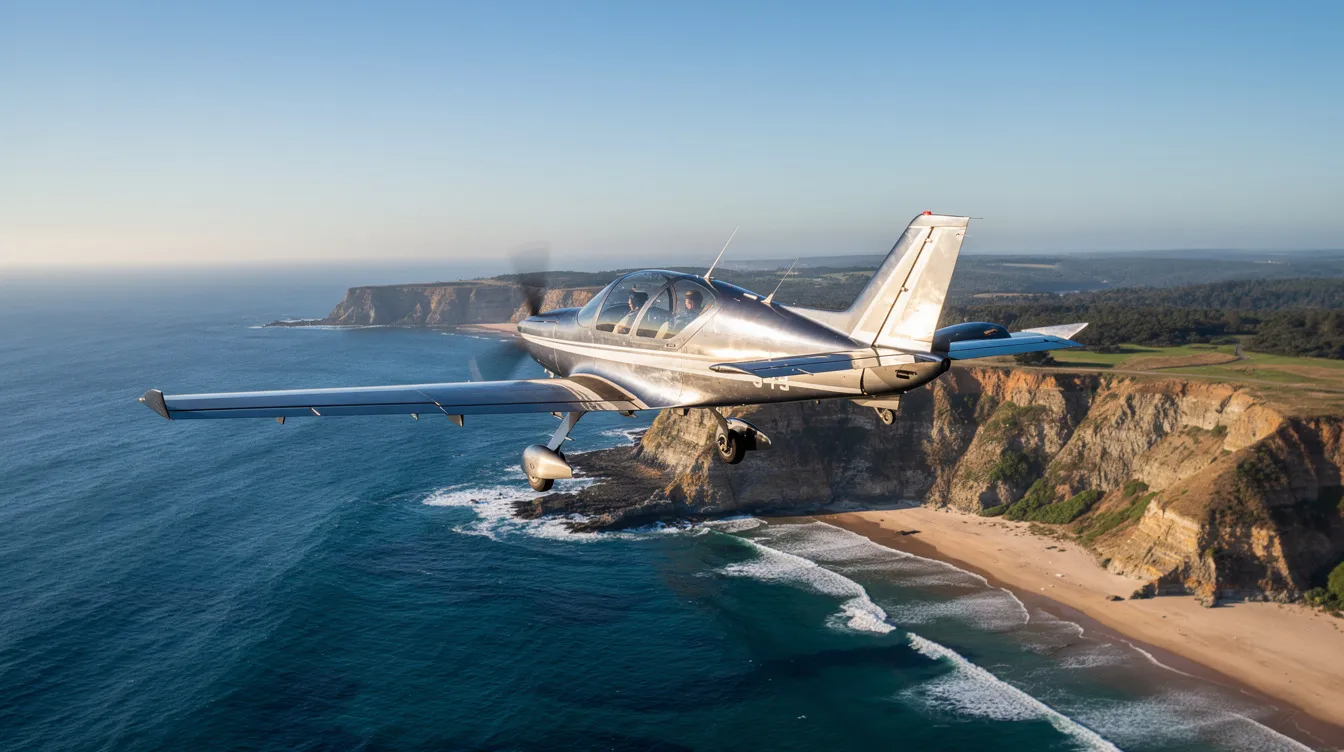
VTOL personal aircraft in the U.S. fall under existing frameworks, primarily FAA Part 103 for ultralight vehicles and Light Sport Aircraft rules for larger designs.
FAA Part 103 allows ultralight vehicles to operate without a license, provided they meet specific criteria: single occupant, empty weight under 254 lb, top speed under 55 knots (63 mph), fuel capacity under 5 gallons, daylight operation only, and no flight over congested areas. No airworthiness certification is required. Many eVTOLs can operate without a pilot's license under FAA Part 103. Some personal VTOLs can be flown without a pilot's license, though manufacturers like Jetson and RYSE still require company-led training programs.
Two-seat aircraft like AIR ONE exceed Part 103 limits and target Light Sport Aircraft certification under the MOSAIC regulatory framework. The FAA requires a Private Pilot License for AIR ONE (or a Sport Pilot certificate under future rules), along with aircraft airworthiness certification.
The FAA is establishing frameworks for eVTOL testing and certification across multiple categories. The FAA finalized SFAR No. 120 for powered-lift vehicle operations, which covers aircraft that take off vertically and transition to forward flight. EASA has its own VTOL certification roadmap, and China approved EHang's EH216-S for passenger operations. Regulatory certification processes for VTOLs are rigorous and time-consuming, often spanning years of testing and documentation.
These evolving rules shape future air taxi applications and urban air mobility services globally. A pilot's license requirement depends on the aircraft category, not the propulsion type.
Different VTOL aircraft types serve different missions. Single-seat electric craft suit recreation and short utility flights. Two-seat models and hybrid designs open up longer missions and passenger transport.
Recreational and sport flying: Personal eVTOLs enable recreational flying and estate inspections. Short hops around private property, lakes, and rural areas represent the earliest personal flight use cases. Many eVTOL concept models target this segment, including racing concepts like the Airspeeder series.
Executive and estate operations: Owners of large properties can inspect remote sections by air, reach cabins, or access a local airstrip that connects to a private jet charter. VTOL concepts often aim to provide transport links to areas poorly served by existing infrastructure.
Urban and regional air mobility: VTOL aircraft can reduce commute times in urban areas by bypassing surface traffic. EVTOLs can serve as air taxis in urban areas, linking business hubs and airports. The Rictor X4 targets short-distance commuting applications specifically.
Emergency medical services and special missions: EVTOLs are used for emergency medical services, enabling rapid deployment of paramedics or critical supplies where road access is slow. Wing's eVTOL drones deliver parcels up to 1.5 kg, demonstrating cargo potential. Hospital-to-hospital flights and defibrillator delivery to remote patients are active areas of development.
Personal VTOLs complement private jet travel rather than replace it. For distances over 200 miles, private jets remain faster and more practical. For the first and last miles of a trip, VTOLs fill a gap that ground transportation handles poorly in congested metro areas.
A typical multi-leg itinerary might look like this: VTOL pickup from a home landing pad or nearby field, a 15-minute hop to a regional airport identified via an airport locator tool, then a Jettly-arranged private jet onward. In cities like New York or Los Angeles, ground journeys to major airports can exceed an hour during peak traffic. A VTOL transfer cuts that to 10 to 15 minutes. VTOL aircraft can reduce commute times in urban areas where surface congestion is worst.
Digital booking platforms like Jettly could eventually integrate VTOL and private jet segments into one door-to-door itinerary, with transparent pricing for each leg calculated through a private jet charter cost estimator. Customers who already book private jet charters through digital interfaces would experience the VTOL leg as a natural extension.
In the near term, through the late 2020s, most VTOL integration will likely involve professional air taxi operators rather than personally owned aircraft. But the personal aircraft segment is the proving ground where technology, safety, and operations mature.
Modern flight control systems make personal VTOLs more approachable than traditional helicopters. Fly-by-wire systems translate simple joystick inputs into complex motor adjustments. The pilot pushes a stick forward; the computer manages power distribution across all motors to produce stable flight in that direction. Altitude hold, heading lock, and envelope protection run continuously.
Manufacturer training typically follows a structured path: online theory modules, desktop or VR simulation, the trainee’s first flight under instructor supervision, and recurrent training at set intervals. RYSE claims its training takes an afternoon. More complex aircraft like AIR ONE will require formal flight instruction aligned with Light Sport or Private Pilot standards.
These training philosophies parallel private jet charter standards: operator vetting, recurrent checks, and structured procedures. Public acceptance remains a challenge for widespread adoption of VTOL aircraft, and visible training and certification programs help build trust with communities and passengers.
As autonomous and semi-autonomous systems mature, the pilot's role may shift from active stick-and-rudder flying to managing automated flight plans and handling contingency decisions. Most personal eVTOLs already operate with substantial automation.
Electric propulsion sits at the core of personal VTOL aircraft. Electric VTOLs produce zero direct exhaust emissions during flight. No combustion, no exhaust plume, no carbon dioxide from the aircraft itself. The energy efficiency gains from electric motors (typically above 90% efficiency) outperform internal combustion engines (25 to 35% efficiency) by a wide margin.
Hybrid designs like Zapata AirScooter extend flight time while still reducing fuel burn relative to conventional helicopters. The trade-off: hybrid systems still produce some emissions and require fuel logistics.
In the context of premium travel, a combined approach works best: VTOL for short hops with zero direct emissions, private jets for longer segments using sustainable aviation fuel, plus carbon offsetting programs and smarter planning that reduces private jet emissions and inequality impacts. Jettly's sustainability initiatives already address the jet leg of this equation.
Noise generated by VTOL operations is a concern for community acceptance. Distributed rotors at lower tip speeds produce less noise than a helicopter's single large rotor, but hovering still generates detectable sound. Acoustic optimization through rotor blade design and careful speed management helps, but noise levels near residential areas remain a factor in zoning and permitting decisions.
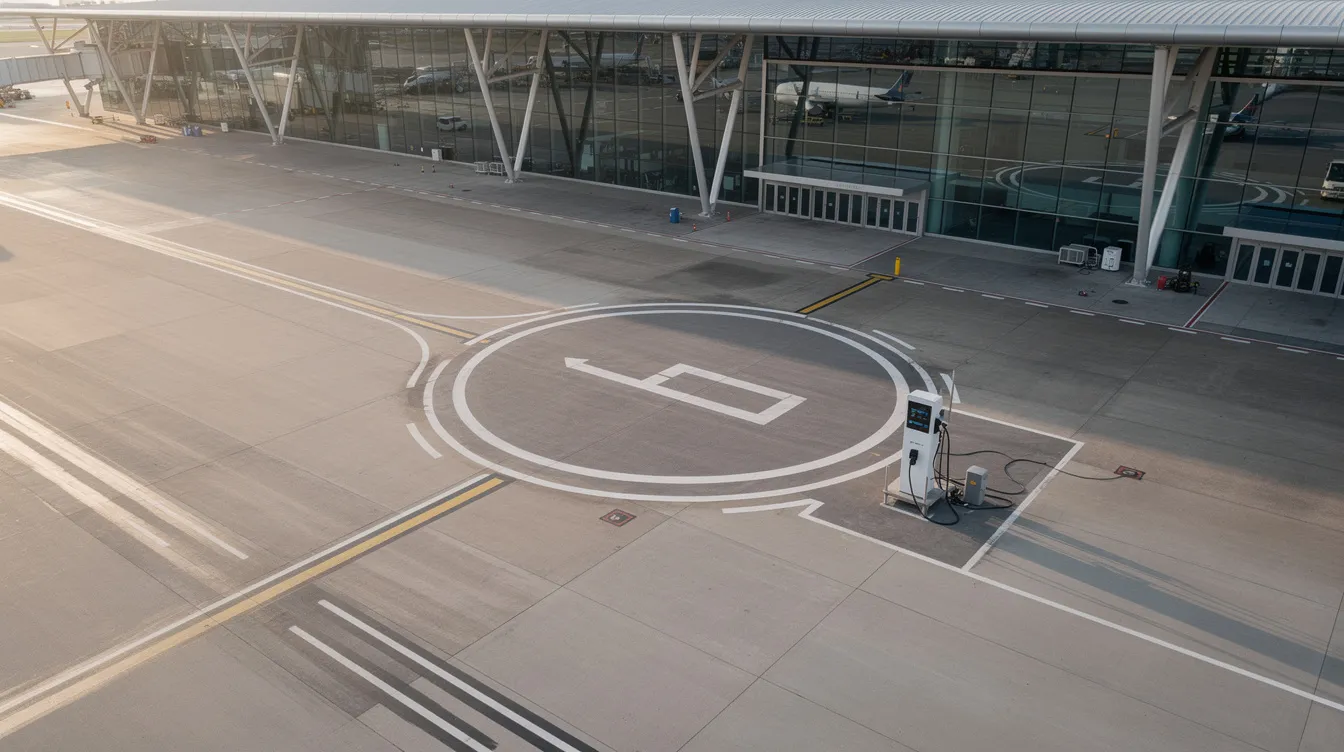
For private owners, the ground infrastructure is simple: a flat landing pad, a Level 2 charger, and enough clearance for approach and departure. For commercial operations, full-service vertiports with charging stations, maintenance bays, and passenger facilities are needed.
Urban air mobility infrastructure is being prepared for personal aircraft near major hubs. VTOL aircraft can use dedicated vertiports for takeoff and landing, positioned near airports to serve as transfer points between VTOLs and private jets. Cities like New York, Los Angeles, London, and Dubai are examining corridor design and vertiport siting.
Integrating thousands of VTOLs into airspace requires advanced traffic management systems. Current ATC infrastructure was not designed for high volumes of low-altitude traffic. Unmanned traffic management (UTM) systems, geo-fencing, and digital flight corridors are in development to handle this.
Early personal aircraft owners will operate from private land, small airfields, and rural properties before dense urban vertiport networks are built. A sample trip flow: home vertiport, regional airport, Jettly private jet, destination vertiport.
Full ownership of a personal eVTOL costs between $128,000 (Jetson ONE) and $250,000 (Zapata AirScooter), plus batteries, maintenance, insurance, and training. Operating costs add up. Not every traveler wants that commitment.
Access models similar to private jet charter offer alternatives for travelers who might still prefer a conventional aircraft today and use VTOLs later; guides to choosing the best personal plane help frame where eVTOLs fit alongside legacy designs. Rental experiences (like LIFT Hexa-style flights at $200 to $300 per session) introduce people to VTOL without ownership, while crowdsourced private jet flights and shared empty seats reduce costs on longer legs. Fractional ownership and membership programs could follow the same trajectory as private jet fractional programs, including structured jet card programs with fixed hourly rates and guaranteed access.
Future on-demand eVTOL services could integrate into digital platforms like Jettly, enabling customers to search for private jets and feeder VTOL flights in one interface, similar to how buyers compare the best private airplanes when planning longer-range travel. The same traveler who books an on-demand charter today could add a VTOL pickup leg tomorrow.
Widespread adoption of VTOLs could raise questions about urban equity and access; if vertiport networks concentrate in wealthy areas, the benefits may not distribute evenly. Customers increasingly favor flexible access over ownership, mirroring the trend Jettly already sees with private jet users choosing private jet memberships and on-demand charter over fractional programs.
Common questions about VTOL personal aircraft, answered directly.
Do I need a pilot's license to fly a VTOL personal aircraft? It depends on the aircraft. Under FAA Part 103, single-seat ultralight vehicles under 254 lb empty weight and 55 knots top speed can be flown without a pilot's license. Larger or two-seat aircraft like AIR ONE require a Private Pilot License or Sport Pilot certificate. Regulations are evolving; check current requirements before purchasing or flying.
How long can VTOL personal aircraft fly on one charge? Single-seat electric aircraft like Jetson ONE and Pivotal Helix offer about 20 minutes. RYSE Recon reaches roughly 25 minutes. AIR ONE targets about one hour. Hybrid designs like Zapata AirScooter push toward two hours by combining electric motors with a thermal engine.
Are VTOL personal aircraft safe? Current designs use redundant safety systems: multiple independent motors, backup battery packs, redundant flight control computers, ballistic parachute systems, and auto-landing modes. Manufacturers require training, and preflight inspections follow a structured checklist. The safety philosophy parallels business jet operations, where redundancy and procedure reduce risk.
Can VTOL personal aircraft be used for emergency medical services? Yes. Smaller VTOLs can deliver defibrillators, blood supplies, or medication to hard-to-reach patients. Larger eVTOL designs under development aim to carry a patient and paramedic for hospital-to-hospital transfers. Several programs are testing medical flight applications.
How will VTOLs work with private jets? VTOLs serve as first/last-mile connectors. A traveler takes a VTOL from home or office to a regional airport, boards a private jet for the long-haul leg, and takes another VTOL at the destination. Digital platforms like Jettly could coordinate both segments, offering transparent pricing and scheduling for the full door-to-door trip.
VTOL personal aircraft are real machines with published specs, funded production lines, and defined certification paths. They fly today in test programs and limited deliveries. Their current limits (20 to 60 minutes of flight time, 10 to 100 miles of range, low-altitude operations in good weather) make them short-range tools, not private jet replacements.
That is exactly the point. As electric aircraft become quieter, safer, and longer-ranged between 2024 and 2030, they fill the gap between a traveler's front door and the airport gate. Combined with private jets for the sky between cities, the result is a door-to-door air mobility chain.
Travelers who already use private jet charter, especially through digital platforms with instant pricing and global aircraft access to the global fleet of private jets, will be among the first to benefit from VTOL connections. The infrastructure, regulation, and technology are converging.
Ready to plan the jet leg of your next trip while the VTOL segment catches up? Explore flight options or request a quote at https://www.jettly.com.
Share this post:
Jeff Ryan Serevilla
Sep 20, 2026
|
5
min read
Discover tips and trends in the industry.
5
min read
Cheap Private Jet Price: How to Fly Private for Less in 2026
In 2026, flying private can be more affordable than expected, with various options available for different budgets. This guide explores pricing by aircraft size, route, and trip type, helping travelers find the best value for private jet travel. Discover how to navigate the charter market and access cost-effective private aviation solutions.
Read More
5
min read
Do Flight Prices Go Down After Thanksgiving? (2026 Guide for Commercial & Private Travel)
Flight prices generally decrease after Thanksgiving, especially for leisure routes, as demand drops. This guide details when to find the best deals and how to navigate the holiday pricing landscape for both commercial and private travel.
Read MoreStay updated with our latest insights and tips to elevate your journey with us.
MEMBERSHIPS AND ASSOCIATIONS



Disclaimer: Jettly operates as a charter broker, offering access to a global digital jet charter marketplace. Jettly is not a direct air carrier and does not own or operate aircraft. All advertised flights are conducted by third-party air carriers that are fully licensed and hold the appropriate Part 135 or Part 121 certifications issued by the Federal Aviation Administration (FAA) or equivalent regulatory authorities under U.S. or foreign law. Jettly complies fully with the U.S. Department of Transportation's Part 295 and Part 298 Charter Broker regulations. Jettly does not carry additional liability insurance. Passengers are covered by aircraft operator insurance. TICO: 50023770


