


Login
Get Instant Pricing On 23,000+ Aircraft

>

The market for very light jets for sale is growing fast, and for good reason. These compact light jets offer a compelling entry point into business aviation, combining jet speed with surprisingly low operating costs. But buying a very light jet is not the only path to flying one.
This guide is designed for business travelers, private aviation buyers, and anyone considering chartering or purchasing a very light jet, helping you make informed decisions in a rapidly evolving market. Understanding the purchase and charter options for VLJs is crucial for optimizing travel efficiency, managing costs, and ensuring the right fit for your unique travel needs.
This guide breaks down the models, costs, and mission profiles that matter in 2026, along with smarter alternatives like on-demand charter through Jettly.
A very light jet is a small jet aircraft certified for single-pilot operations, typically seating two to five passengers comfortably in an executive cabin layout. Most models in the very light jet category cruise at speeds between 300 and 421 knots, with an average range of around 1,000 to 1,500 nautical miles under standard reserves. Their maximum takeoff weight falls between 10,000 and 12,500 pounds, placing them firmly between high-performance turboprop aircraft and traditional light jets in the broader business jets hierarchy.
The demand for very light jets is growing exponentially, driven by travelers who want to eliminate commercial airline bottlenecks and significantly cut regional travel times. Modern VLJs emphasize compact cabin comfort while maximizing space utilization, and they are engineered to have short-field performance capabilities that let them access smaller airports, including roughly ten times more airports than commercial airlines serve—many of which you can identify using Jettly's airport locator tool.
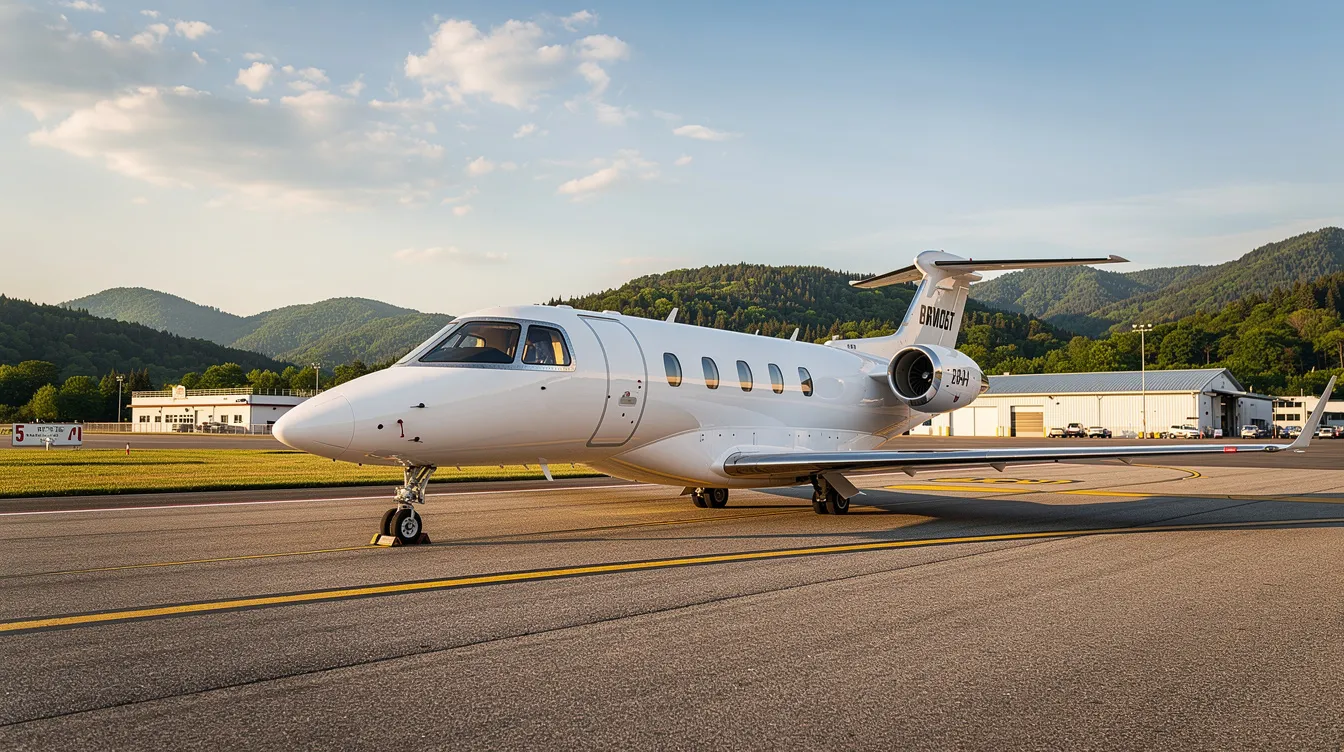
Here are the core characteristics that define this segment:
Single-pilot certified. VLJs are designed for single-pilot operations or small flight crews, reducing crew costs compared to larger business jets.
Fuel efficiency. The design of many VLJs allows for significant fuel efficiency compared to large jets, with fuel costs typically ranging from $300 to $700 per hour.
Cabin comfort. Many VLJ models can comfortably accommodate up to six passengers in a club-seating layout, with ergonomic furniture and modern amenities.
Advanced avionics. Modern VLJs feature advanced avionics, including pilot-friendly touchscreen systems like Garmin Perspective Touch+ suites.
Airport access. VLJs can operate from short runways, providing access to many regional airports and bypassing congested hub airports in favor of regional strips, maximizing travel efficiency.
Quiet ride. Typically, VLJs provide a quiet and comfortable travel environment for passengers, even on longer legs.
Instead of purchasing a VLJ outright, many travelers now use on-demand charter platforms like Jettly for occasional trips, accessing these same aircraft without the burdens of private ownership.
Before diving into specific models and prices, it is worth answering the question most readers are really asking: should you search for very light jets for sale, or is chartering a better fit?
The answer depends almost entirely on annual flight hours. Here is how the main access structures compare:
Full ownership (250+ hours/year). Buying and operating a personal jet makes financial sense only when fixed costs like hangar, crew, insurance, and training are spread across significant usage. Ownership costs can exceed $800,000 annually for midsize jets, and even smaller jets carry substantial fixed overhead.
Fractional ownership (150–250 hours/year). Purchasing a share of an aircraft reduces capital outlay but still involves long-term commitments and depreciation risk.
Jet cards (100–200 hours/year). Prepaid flight hours offer rate guarantees but require significant upfront capital and often restrict aircraft or route flexibility; tools like a jet card flight cost estimator help clarify the true economics for specific routes.
On-demand charter (under 150 hours/year). Pay per trip with no equity, no crew management, and total flexibility. Chartering eliminates upfront purchase costs for private jets and avoids maintenance and crew management responsibilities entirely, and platforms that focus on affordable private jet charter can make this access surprisingly cost-effective.
Scenario 1: A small consulting firm flying New York to Chicago twice per month (roughly 100 flight hours per year) would pay far less chartering VLJs through a digital platform than covering the fixed costs of ownership.
Scenario 2: A family taking six to eight leisure trips per year, each around 800 nautical miles, totaling perhaps 60–80 flight hours. Chartering offers access to a variety of aircraft types and provides flexible scheduling and destinations without locking capital into a depreciating asset.
Jettly offers access to VLJs and other private jets without long-term commitment, unlike jet cards or fractional programs.
For buyers still focused on jets for sale, here is what to expect financially.
Acquisition price. Very light jets cost between $1.5 million and $3.5 million for most pre-owned models in decent condition. Pre-owned very light jets can cost as low as $700,000 for older airframes like the Eclipse 500 series. New production models push higher: the average price of private jets listed across all categories is $6,341,176, but entry level jet pricing sits well below that. For context, private small jet prices have shifted meaningfully in the past two years.
Fixed annual costs break down roughly as follows:
Hangar fees: $1,000 to $3,000 per month, depending on region
Crew salaries or contract pilot fees
Insurance, training, and management overhead
Total fixed costs: approximately $450,000 to $700,000 per year for a typical VLJ
Variable costs per flight hour:
Operating costs for very light jets range from $1,000 to $1,500 per hour for many models
Fuel costs for jets typically range from $300 to $700 per hour
Annual maintenance costs can reach $50,000 to $200,000
Engine program reserves add several hundred dollars per hour but smooth out overhaul risk
Factors that shift the purchase price and total cost:
Year of manufacture and total airframe hours
Whether engines are enrolled on programs like ESP Gold or JSSI
Avionics generation (Garmin G1000 NXi vs older suites)
Interior refurbishment dates and damage history
Concrete example: A 2013 Embraer Phenom 100 enrolled on ESP Gold with fresh inspections and updated avionics might trade at $2.5–$3 million. A similar-vintage Phenom off program, with higher hours and older interior, could see the plane sell for $500,000–$800,000 less but carry significantly more maintenance risk. Understanding private jet operating costs in detail is essential before making any purchase decision.
Whether you are browsing very light jets for sale or requesting a charter quote, knowing the key models helps match aircraft to mission. Here is a quick guide to the most common VLJs on the market today:
Cirrus Vision SF50. A single-engine VLJ from Cirrus Aircraft aimed at owner-operators upgrading from pistons. Maximum range of 1,200 nautical miles. Often the cheapest private jet in the jet aircraft segment, with pre-owned units from roughly $2–$3 million. The Cirrus Vision Jet is one of the cheapest private jets available.
Embraer Phenom 100/100E/100EV. Twin-engine, charter-fleet favorite with a range of 1,178 nautical miles. Strong OEM support, modern cabin volume, and good residual values.
Cessna Citation Mustang. A twin-engine entry point in the light jet category with a maximum range of approximately 1,150 nautical miles. The Cessna Citation Mustang sold 479 units from 2006 to 2017.
HondaJet HA-420/Elite series. Top of the VLJ segment. A distinctive feature in some VLJ designs is the over-the-wing engine mount configuration, which the Honda Aircraft Company pioneered on this model. The HondaJet is priced between $2.5 million and $3.5 million. Typical cruising speeds for VLJs in this class reach up to 421 knots.
Eclipse 500/550. Among the lowest purchase price options; pre-owned VLJs can often be acquired for under $1 million, depending on condition. Older avionics and support networks require due diligence.
Pilatus PC-24. Straddles the VLJ and light jet categories with longer range and a cargo door, but at higher acquisition and operating costs.
For a deeper look at smaller jets suited to groups of four passengers, see Jettly's 4 passenger private jet guide. Those interested in speed comparisons can explore the fastest VLJ breakdown.
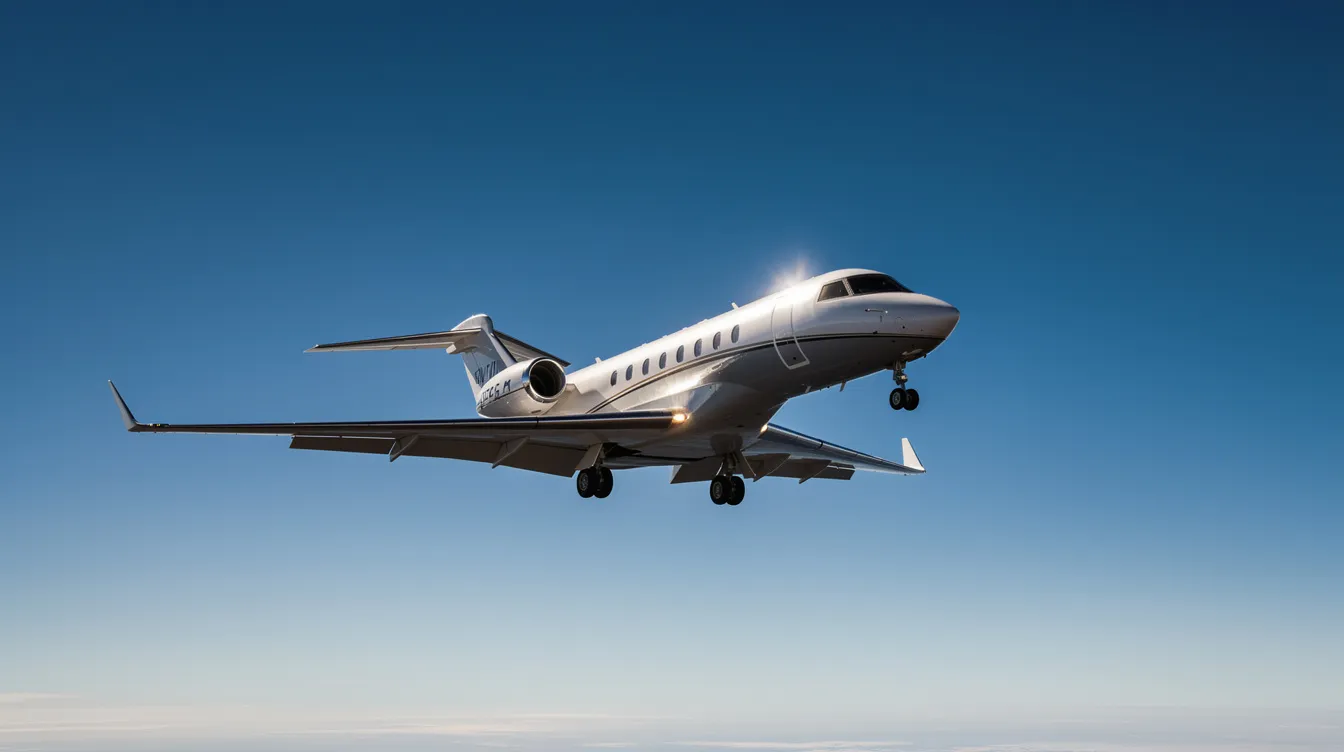
A mission profile is the combination of distance, passenger count, baggage, runway requirements, and weather that determines which aircraft fits best. VLJs excel at a specific slice of travel, and understanding that slice prevents expensive mismatches.
Where VLJs shine: Travelers can match these missions to a wide variety of private charter aircraft types, from compact VLJs to larger cabins, when booking through on-demand platforms.
Regional hops of 300 to 900 nautical miles with two to five passengers and light bags
Same-day out-and-back business travel where speed and airport flexibility matter
Very light jets are ideal for short distances up to 1,610 nautical miles, covering most domestic routes
VLJs necessitate less infrastructure for operations than larger business jets, making them practical for smaller airports
Route examples that fit VLJ performance:
New York to Nashville (~800 nm), round trip in a single day
Los Angeles to Aspen (~700 nm), requiring good field performance at altitude
Toronto to Halifax or London to Berlin for frequent regional business travel
Where VLJs hit their limits:
Nonstops beyond 1,300–1,400 nm require light payloads and favorable winds
Cabin space is limited: smaller baggage holds, no walk-around galley, minimal or no lavatory privacy
Groups larger than five or six, or heavy luggage trips (golf gear, ski equipment for eight), need midsize or large jets like certain Dassault Falcon models

The Cessna Citation Mustang remains one of the most recognizable names in the VLJ segment. As an entry-level jet within the broader Cessna Citation family, it offers a proven path for pilots and buyers stepping up from turboprop aircraft or piston twins.
Seating and cabin. Typically four passengers in the cabin, with a possible fifth in the cockpit seat during single-pilot operations. Cabin size is compact: roughly 4.5 feet tall, 4.6 feet wide.
Performance. Cruise speed around 340 knots; range approximately 1,150 nautical miles; service ceiling 41,000 feet. Takeoff field length around 3,110 feet.
Operating costs. Among the lower operating costs for any twin-engine jet aircraft, making it attractive for owner-operators and small charter fleets and often highlighted in rundowns of the cheapest private aircraft options.
Market position. Citation Mustang production ran from 2006 to 2017, and the pre-owned market remains active. Low-hour examples with updated avionics command premiums.
Real-world use cases: Small law firms in the northeastern United States, consulting practices commuting between Dallas and Austin, and owner-operators flying frequent short hops. These same missions can be flown via Jettly charter without purchasing, often at lower total cost for travelers under 150 annual hours.
The step up from the Citation Mustang leads into the CJ series (CJ2, CJ3, CJ4) and the Citation M2, which offer more cabin volume, faster cruise, and longer range within the light jet category, reflecting Textron’s role among the best private plane manufacturers for business travelers.
The Embraer Phenom 100 is one of the most widely recognized VLJs in both the pre-owned market and active charter fleets. The Embraer Phenom 100 is designed for short- to medium-range operations, and later variants have only strengthened its position.
Variants. The original Phenom 100, followed by the 100E and 100EV, each adding improved takeoff performance, avionics updates, and cabin refinements.
Specs. Typical seating for four to six passengers. The Embraer Phenom 100 has a range of 1,178 nautical miles. Cruise speeds are competitive with other light jets at roughly 390 knots. Cabin height sits around 4.9 feet with a width of 5.1 feet, offering more cabin space than several competitors.
Charter appeal. Professional crews and charter operators favor the Phenom for its robust support network, reliable systems, and good residual values. Buyers in the resale market for used VLJs find strong demand for well-maintained Phenom 100s, and many reference broad guides on how much a private jet costs when evaluating Phenom pricing versus alternatives.
Customers can often request a Phenom 100 or step up to larger Embraer models like the Phenom 300E when booking regional business travel through Jettly.
The Cirrus Vision SF50, commonly called the Vision Jet, is a single-engine very light jet built by Cirrus Aircraft and aimed squarely at owner-pilots moving up from high-performance pistons or turboprop aircraft. It occupies a unique position in the aviation industry as the first private jet many pilots will ever fly.
Range and performance. The Cirrus Vision Jet has a maximum range of 1,200 nautical miles. Most models cruise at speeds around 300 to 345 knots.
Cabin layout. Seating for up to five adults in a flexible, family-oriented layout with large windows and a modern aesthetic. A facing seat configuration is available in some variants.
Safety features. The whole-aircraft parachute system (CAPS) is a standout, appealing to safety-conscious buyers. Modern Garmin Perspective Touch+ avionics round out the cockpit with innovative technology.
Cost advantage. Single-engine VLJs generally operate at lower operating costs than twin-engine models, making the Vision Jet attractive for personal use. Pre-owned units appear in listings from roughly $2 to $3 million depending on year and options and are frequently cited among the best cheapest single-pilot jets for budget-conscious buyers.
Some charter operators include the Cirrus Vision SF50 for short point-to-point trips, which can sometimes be accessed through platforms like Jettly. For buyers weighing the cost of purchasing a private jet, the Vision Jet often represents the most affordable path into jet ownership.
There are several ways to access very light jets beyond writing a check for the full purchase price. VLJs offer lower acquisition and operating costs compared to larger jets, but even at the entry level, the financial structures matter.
Outright purchase or financing. Buyers pay cash or finance through aviation lenders. Financing typically requires 15–20% down. Tax benefits like bonus depreciation may apply for business use in the U.S., and some buyers compare this with private jet lease cost structures before committing capital.
Fractional ownership. Buying a share (commonly 1/16th or 1/8th) of an aircraft through programs from providers in the market. Owners receive guaranteed hours but pay ongoing management fees, share of fixed costs, and face depreciation risk on their equity; tradeoffs explored in depth in guides to fractional jet ownership pros and cons.
Jet cards. Prepaid flight hours at fixed or capped rates. These require significant upfront deposits (often $100,000+), long-term commitments, and may restrict route or aircraft flexibility, though structured jet card programs can still be attractive for predictable, repeatable flying.
On-demand charter. Platforms like Jettly allow clients to pay per trip with instant pricing, matching aircraft to route and passenger count. No equity, no long-term contracts, no crew management, and the option to enhance flexibility through private jet memberships.
Which profile fits which structure:
High-frequency flyers (200+ hours/year) with stable routes: ownership or fractional
Seasonal or unpredictable usage: on-demand charter
Corporate fleets needing guaranteed availability: jet cards or fractional
Occasional leisure travelers or those exploring their first private jet experience: charter through Jettly
Rather than spending months searching listings of very light jets for sale, travelers can access the same aircraft on demand through Jettly's digital marketplace.
Here is how the booking process works at a high level:
Enter the route, dates, and passenger count
Compare instant pricing across aircraft categories, from compact light jets to large-cabin jets
Select a VLJ or alternative that fits the mission profile
Confirm and pay securely through the platform
Key advantages:
Access to over 20,000 aircraft worldwide, including popular VLJ models
Transparent pricing with no opaque jet card structures
Ability to choose from smaller jets up to large jets like Dassault Falcon models based on the trip
Coordination of ground transportation, catering, and access to smaller airports closer to origin and destination
For anyone considering ownership, Jettly offers a practical way to test-drive typical mission profiles through VLJ charter flights first. Fly your most common routes two or three times, track the real costs, and then decide whether the numbers justify buying. Use the charter cost estimator to benchmark specific itineraries.
Whether buying or chartering, safety and maintenance directly affect aircraft value and reliability. The market for VLJs includes both new and pre-owned aircraft, and program enrollment status is one of the biggest differentiators.
Engine and airframe programs. Enrollment in programs like ESP Gold, JSSI, or Embraer Executive Care spreads overhaul costs across flight hours. Aircraft with engines enrolled in these programs sell faster and at higher prices.
ADS-B compliance. All VLJs operating in controlled airspace must have ADS-B Out equipment. Buyers should verify compliance before making offers.
Logbook review. Check airframe hours, cycles, engine time since overhaul, recent major inspections (10-year, landing gear), and avionics certifications. One-owner aircraft with complete logs command premiums.
Residual values. The resale market for used VLJs remains strong, often with high demand for popular models. Jets on strong OEM-backed programs with current inspections trade at higher prices but carry less risk.
Recent market patterns: Certain 2013–2016 Embraer Phenom 100s on full programs with fresh inspections are trading faster than off-program aircraft of similar vintage. Citation Mustangs with low hours, G1000 NXi upgrades, and intact interiors also command premiums in the pre-owned market.
Jettly works only with operators meeting strict safety and regulatory standards, giving charter customers peace of mind without managing maintenance directly.
A Very Light Jet is a small private jet certified for single-pilot operations, typically seating 2 to 5 passengers. VLJs are designed for short to medium-range flights, usually up to around 1,500 nautical miles.
Pre-owned VLJs can range from as low as $700,000 to $3.5 million depending on model, age, and condition. Newer models generally cost between $1.5 million and $3.5 million.
Operating costs for very light jets generally range from $1,000 to $1,500 per flight hour, including fuel, maintenance, and other variable expenses.
Most VLJs comfortably seat between 2 and 6 passengers, often configured in club seating layouts.
Yes, VLJs are certified for single-pilot operation, which helps reduce crew costs and makes them ideal for owner-operators.
Chartering eliminates upfront purchase costs, maintenance responsibilities, and crew management. It offers flexibility and access to a wide range of aircraft without long-term commitments.
Popular models include the Cirrus Vision SF50, Embraer Phenom 100 series, Cessna Citation Mustang, and HondaJet HA-420.
VLJs typically have ranges between 1,000 and 1,500 nautical miles, suitable for regional trips and many domestic routes.
Yes, VLJs are ideal for short business trips, regional hops, and family leisure travel, offering time savings and access to smaller airports.
Jettly offers on-demand charter access to VLJs and other private jets through its digital platform, allowing travelers to book flights instantly without ownership commitments.
The journey from curiosity to action follows a clear path:
Define your missions. List your most common routes, typical passenger counts, and estimated annual flight hours. Determine whether compact light jets genuinely fit these needs or whether you require something in the light jet category or above.
Benchmark charter costs. Use Jettly to price a few example itineraries—monthly business shuttles, quarterly family getaways—and compare those real-world charter costs against the total cost of owning a VLJ. For the latest insights on pricing, explore the private airplane rental cost guide.
Fly before you buy. Run trial flights via charter to validate comfort, timing, and airport access before making any long-term financial commitment.
If ownership still makes sense, work with specialist brokers and aviation attorneys once you are confident that your flight hours justify the investment. Focus on aircraft with strong maintenance histories, current programs, and production models with active OEM support.
The smartest entry into private aviation is not a purchase agreement. It is a single flight that proves the concept.
Ready to explore private flight options, including very light jets, or request a charter quote? Visit https://www.jettly.com to get started.
Share this post:
Jeff Ryan Serevilla
Sep 20, 2026
|
5
min read
Discover tips and trends in the industry.

5
min read
Cheap Private Jet Price: How to Fly Private for Less in 2026
In 2026, flying private can be more affordable than expected, with various options available for different budgets. This guide explores pricing by aircraft size, route, and trip type, helping travelers find the best value for private jet travel. Discover how to navigate the charter market and access cost-effective private aviation solutions.
Read More
5
min read
Do Flight Prices Go Down After Thanksgiving? (2026 Guide for Commercial & Private Travel)
Flight prices generally decrease after Thanksgiving, especially for leisure routes, as demand drops. This guide details when to find the best deals and how to navigate the holiday pricing landscape for both commercial and private travel.
Read MoreStay updated with our latest insights and tips to elevate your journey with us.
MEMBERSHIPS AND ASSOCIATIONS



Disclaimer: Jettly operates as a charter broker, offering access to a global digital jet charter marketplace. Jettly is not a direct air carrier and does not own or operate aircraft. All advertised flights are conducted by third-party air carriers that are fully licensed and hold the appropriate Part 135 or Part 121 certifications issued by the Federal Aviation Administration (FAA) or equivalent regulatory authorities under U.S. or foreign law. Jettly complies fully with the U.S. Department of Transportation's Part 295 and Part 298 Charter Broker regulations. Jettly does not carry additional liability insurance. Passengers are covered by aircraft operator insurance. TICO: 50023770


