



Login
Get Instant Pricing On 23,000+ Aircraft

>
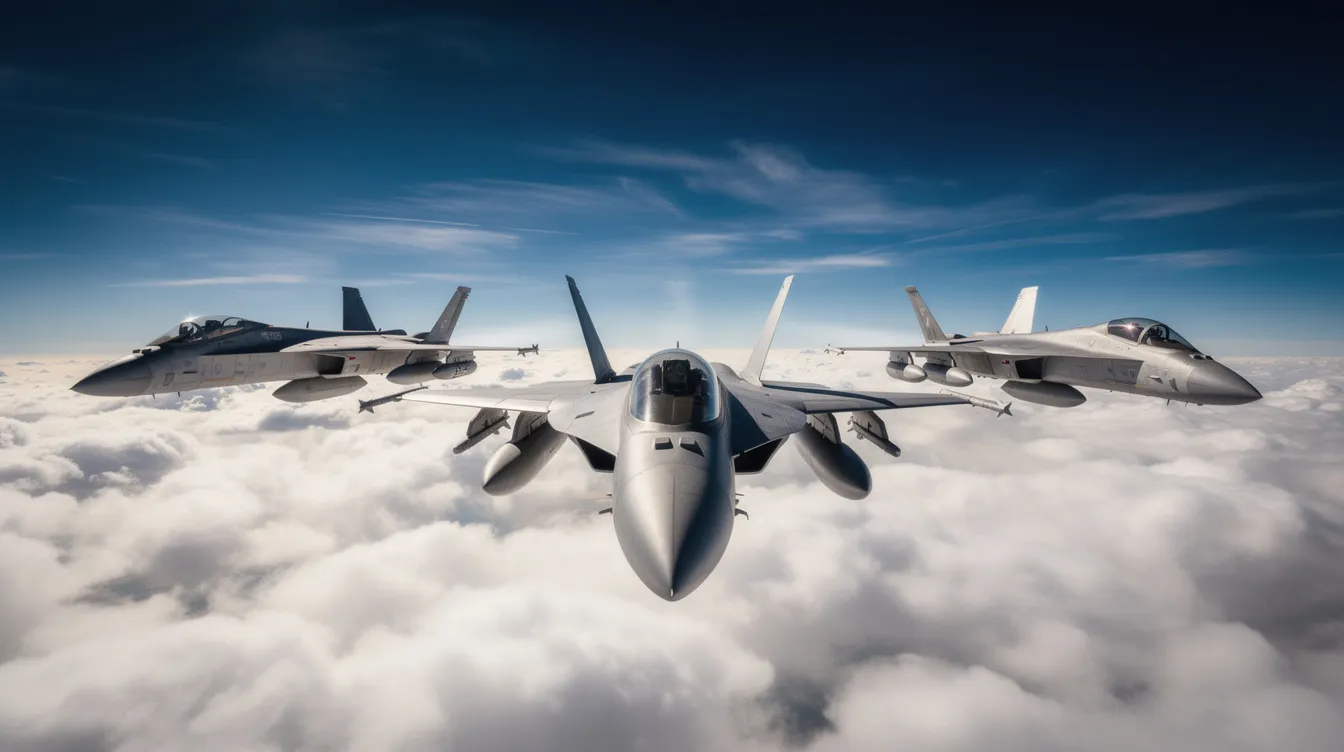
The US military plane has shaped global defense strategy for more than a century. From early biplanes to fifth-generation stealth fighters, these aircraft remain central to how the United States projects power, protects allies, and responds to crises around the world. But military aviation does not exist in a vacuum. The technologies developed for combat, transport, and reconnaissance aircraft regularly find their way into civilian and private aviation, making every flight safer and more capable.
A US military plane is any aircraft operated by the armed forces for combat, support, training, transport, reconnaissance, or other defense missions. Military aircraft categories include fighter, bomber, attack, transport, and reconnaissance platforms, each built for a specific purpose.
The US military organizes its aircraft into distinct operational categories based on missions such as air superiority, global strike, close air support, aerial refueling, intelligence gathering, and electronic warfare.
Major commands like Air Combat Command and Air Mobility Command control how these planes are deployed, maintained, and readied across the world.
Advances driven by defense contractors like Lockheed Martin and Boeing often filter into civilian and private aviation, improving safety, range, engine efficiency, and cockpit technology.
Jettly is a private jet charter broker, not a military operator. However, many charter aircraft benefit from engines, avionics, composite materials, and safety standards originally proven on US military planes.
US military aircraft underpin American airpower. Since World War II, control of the air has been a prerequisite for successful ground and naval operations. Today, across all branches, the United States operates approximately 12,800 military aircraft spanning nearly 100 types. The USAF's mission is to fly, fight, and win airpower, a directive that drives every acquisition and training decision.
Fighter aircraft are designed primarily for air-to-air combat and establishing air superiority. Bombers are engineered to penetrate enemy territory and drop significant payloads. Transport planes move troops and cargo. Tankers extend range through aerial refueling. Specialized aircraft are used for varied support roles, including training and anti-submarine missions. Each category serves a distinct function within a larger operational picture.
Five services operate aircraft:
United States Air Force - air superiority, strategic bombing, airlift, ISR, training
Navy - carrier-based fighters, maritime patrol, electronic warfare
Marines - expeditionary aviation, close air support, amphibious operations
Army - attack and transport helicopters, fixed-wing reconnaissance, unmanned systems
United States Coast Guard - search and rescue, maritime patrol, interdiction
Air superiority remains the foundation. Without control of the air, ground troops face bombardment, resupply lines are cut, and naval forces operate under constant threat. Private aviation and charter platforms like Jettly operate in a completely different environment-focused on passengers, schedule control, and civilian regulations rather than combat.
The history of US military aviation stretches from a single biplane to fleets of stealth fighters capable of operating in contested airspace across the globe.
The U.S. Army Signal Corps established an Aeronautical Division in 1907. By 1909, the Army accepted the Wright Military Flyer-its first heavier-than-air aircraft. Early planes saw limited use in World War I, primarily for reconnaissance.
The Army Air Corps was established in 1926, and the Army Air Forces followed in 1941. Doctrine matured around strategic bombing and fighter escort. Key World War II aircraft included the P-51 Mustang (long-range fighter escort), B-17 Flying Fortress and B-24 Liberator (strategic bombers), and C-47 Skytrain (transport). Over 2.4 million personnel served in the Army Air Forces during WWII, making it one of the largest aviation forces in history. The B-29 dropped atomic bombs on Hiroshima and Nagasaki in 1945, ending the Pacific war. For a deeper look at how these platforms evolved, see Jettly's guide on military airplane evolution and roles.
The U.S. Air Force became an independent service on September 18, 1947, under the National Security Act. Jets like the F-86 Sabre and B-47 Stratojet replaced propeller aircraft rapidly. The Gulf War featured a 38-day air campaign in 1991-Operation Desert Storm-where the F-117 Nighthawk was used for stealth missions, proving that low-observable technology could reshape warfare. The USAF has continuously operated in combat since September 11, 2001.
Advances in range, pressurization, avionics, and reliability since the mid-twentieth century laid the groundwork for modern long-range business jets used in private charter today.
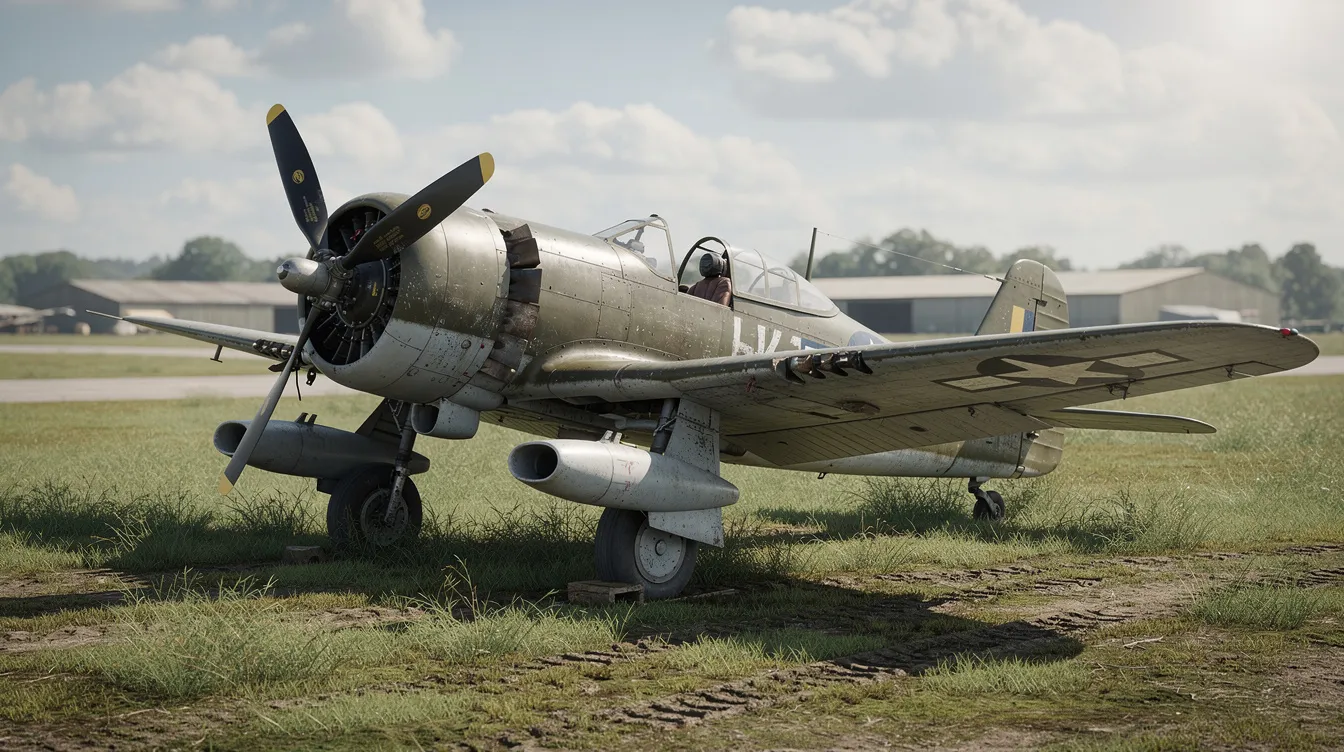
Major commands are the primary subdivisions of the United States Air Force. They determine how military planes are organized, trained, equipped, and deployed.
Air Combat Command (ACC) - headquartered at Joint Base Langley-Eustis, Virginia. ACC manages fighter, bomber, ISR, command and control aircraft, and electronic warfare assets. Its focus is air superiority and strike.
Air Mobility Command (AMC) - based at Scott Air Force Base, Illinois. AMC handles global airlift and tanker operations, operating fleets like the C-17 Globemaster III, C-5M Super Galaxy, KC-135 Stratotanker, and KC-46 Pegasus.
Air Education and Training Command (AETC) - headquartered at Joint Base San Antonio-Randolph, Texas. AETC runs the pilot training pipeline, simulators, and curricula for every USAF specialty.
Other key commands include Air Force Global Strike Command (bombers and ICBMs), Pacific Air Forces (PACAF), and US Air Forces in Europe – Air Forces Africa (USAFE-AFAFRICA), each managing regional or mission-specific forces.
Training, safety culture, and standardized procedures established within these major commands have influenced standards later mirrored in civilian charter operations and FAA regulations.
Combat aircraft achieve air superiority, strike ground and sea targets, and deter adversaries. The designation system used by the US military assigns letters and numbers to identify each platform's role and variant.
|
Aircraft |
Role |
Generation |
Key Feature |
|---|---|---|---|
|
F-22 Raptor |
Air superiority |
5th |
Stealth, supercruise |
|
F-35 Lightning II |
Multirole |
5th |
Sensor fusion, three variants |
|
F-15 Eagle / F-15EX |
Air superiority/strike |
4th+ |
Heavy payload, new orders in 2024 |
|
F-16 Fighting Falcon |
Multirole |
4th |
Workhorse, hundreds in active service |
|
F/A-18E/F Super Hornet |
Carrier multirole (Navy) |
4th+ |
Also EA-18G Growler EW variant |
For a detailed breakdown of these platforms, see the Jettly resource on types of military jets.
The A-10C Thunderbolt II is designed for close air support, built around its massive GAU-8/A Avenger cannon capable of destroying tanks. AC-130U gunships conduct close air support missions at night, while the AC-130W Stinger II performs close air support and air interdiction. The AGM-65 Maverick missile is used for close air support engagements. Close air support includes troops in contact and convoy escort scenarios. Attack helicopters provide low-level close air support for ground troops, working alongside fixed-wing assets.
B-52H Stratofortress - in service since the mid-1950s, approximately 75 aircraft remain active, with modernization planned through the 2050s.
B-1B Lancer - supersonic heavy bomber, roughly 45 in the fleet.
B-2 Spirit - stealth bomber, fleet of 19.
B-21 Raider - new-generation stealth bomber; first flight occurred in November 2023 and is under development to replace aging platforms.
Missile systems like the AIM-120 AMRAAM (air-to-air), AIM-9 Sidewinder, AGM-65 Maverick, and AGM-88 HARM extend the reach and precision of these planes. Although private jets do not carry weapons, high-performance aerodynamics and advanced avionics in business jets were often validated first in the fighter and bomber community.
Air mobility-airlift and aerial refueling-lets the US military project power and deliver humanitarian aid globally within hours. Cargo aircraft are used for rapid global deployment of troops and equipment. Transport aircraft are vital for moving troops, equipment, and humanitarian assistance during operations.
C-5 Galaxy - the largest U.S. transport aircraft, able to carry tanks and helicopters across continents. The U.S. operates approximately 50 C-5 Galaxy aircraft.
C-17 Globemaster III - the fleet consists of 220 aircraft, combining strategic range with tactical capability, including the ability to land on short or semi-prepared runways.
The C-130 Hercules family has been operating since the 1950s, with the C-130J still in production. The C-130 Hercules can carry 20 tons of cargo and use unpaved runways. Variants serve as gunships, tankers, and special operations platforms. Tiltrotor aircraft like the V-22 Osprey combine helicopter VTOL capability with the speed of fixed-wing aircraft, serving the Marines and Navy for ship resupply and special operations insertion.
Tankers are dedicated to aerial refueling to extend the range of combat aircraft. The KC-135 Stratotanker has been in service since the 1950s, forming the backbone of the refueling fleet for decades. The KC-46 Pegasus is replacing the aging KC-135 fleet, built on the Boeing 767 airframe with improved fuel offload and cargo capability. Marine KC-130 tankers serve a similar role within expeditionary operations.
Private charter aircraft share design heritage with military transports-pressurized cabins, long-range fuel efficiency, reliable turbofan engines-but are outfitted for passengers and comfort rather than combat. Jettly connects travelers with these charter aircraft across a global inventory.
Beyond fighters and transports, many US military planes perform niche missions like airborne warning, electronic warfare, and surveillance.
E-3 Sentry AWACS - based on the Boeing 707, this control aircraft manages large air battles with its rotating radar dome.
E-2D Advanced Hawkeye - carrier-based early warning platform for the Navy.
EA-18G Growler - the Navy's electronic warfare fighter, capable of jamming enemy communications and radar.
RC-135 Rivet Joint - intelligence collection aircraft for signals intelligence.
Reconnaissance aircraft are tasked with intelligence gathering and surveillance. The U-2S Dragon Lady and RQ-4 Global Hawk handle high-altitude ISR, while unmanned aerial vehicles like the MQ-9 Reaper are utilized for persistent surveillance and precision strikes. Electronic warfare aircraft are equipped to disrupt enemy radar and communications.
Developments in sensors, secure communications, and data links in these aircraft later support safer, more connected cockpits in the civilian and private jet world. Jettly customers sometimes fly on charter aircraft with advanced weather radar, satellite communications, and Wi-Fi capabilities whose roots trace back to military avionics programs.
Rigorous training and standardized syllabi are non-negotiable before any pilot flies front-line US military planes.
Air Education and Training Command (AETC) is the primary training command, tracing its roots to the early 1940s. It oversees basic and advanced flight training, simulator programs, and all curricula across Air Force specialties.
The training pipeline looks like this:
T-6A Texan II - turboprop primary trainer for initial flight training, starting with classroom and simulator work before moving to the aircraft.
T-38C Talon - supersonic jet trainer used for two decades as the advanced platform preparing pilots for fighter and bomber assignments.
T-7A Red Hawk - the new-generation replacement program designed to prepare pilots for 4th- and 5th-generation fighters, featuring digital fly-by-wire controls and advanced cockpit displays.
Specialized training for mobility and special operations pilots uses variants of the C-17, C-130, and rotary-wing aircraft, combined with intensive simulator work.
This training culture carries over to civilian charter. Operators in Jettly's network must meet stringent regulatory standards such as FAA Part 135 charter requirements, and many charter pilots are former military aviators with extensive flight backgrounds. Explore Jettly's membership options, including jet card programs with fixed hourly rates, to access these experienced crews.
US aerospace companies design and build military aircraft, but their innovations often end up in the civilian jets that travelers fly every day.
Lockheed Martin is responsible for the F-22, F-35, and the C-130 line. Its work in stealth and sensor fusion has pushed the boundaries of what aircraft can achieve in contested airspace.
Boeing (with McDonnell Douglas heritage) builds or supports the F-15, F/A-18, KC-46, C-17, and the E-3 Sentry. Airbus competes globally, but Boeing remains central to US defense aviation.
Northrop Grumman developed the B-2 Spirit and the B-21 Raider, plus the E-2D Hawkeye. General Dynamics heritage (F-16) also contributed decades of innovation in lightweight fighter design.
Key technologies that moved from military to civil and private use include GPS navigation, fly-by-wire flight control, composite materials, advanced turbofan engines, and satellite communications. Many aircraft available on the Jettly platform- Gulfstream jets, Bombardier Challengers, Embraer jets- benefit from engines, materials, and avionics technologies originally refined for US military programs. Understanding this aircraft classification and the landscape of leading private plane manufacturers helps travelers appreciate what goes into the planes they charter.
This section is a practical comparison: mission, regulation, cost, and passenger experience, including how tools like Jettly's airport locator platform support flexible private operations.
|
Factor |
US Military Planes |
Private Jet Charter |
|---|---|---|
|
Mission |
Combat, defense, national security |
Safe, comfortable passenger transport |
|
Regulation |
DoD and service-specific rules |
FAA, EASA, civil aviation authorities |
|
Interior |
Sensors, weapons bays, cargo pallets |
Cabin comfort, soundproofing, seating |
|
Cost per hour |
Tens of thousands (fighters/bombers) |
Varies by class; transparent via platforms |
|
Booking |
Government/military orders |
On-demand, instant pricing |
Jettly works as a charter broker connecting customers to a global inventory of over 20,000 aircraft, offering on-demand access, instant pricing, and flexible membership options without ownership commitments and positioning itself among top private jet charter companies. For travelers interested in aircraft performance, range, and runway requirements, Jettly's tools help match trip profiles to suitable private aircraft. Learn more about what air charter involves.
Military global mobility and private travel share one principle: match the aircraft to the mission, whether you're evaluating options through an affordable aeroplane rental guide or booking on-demand charter.
Military examples - C-17s rapidly deploying troops to Europe or the Middle East; C-130s delivering aid after hurricanes; aerial refueling enabling continuous bomber patrols across the Pacific.
Civilian parallels - humanitarian flights, medical evacuations, and government transport on modified airliners or business jets, sometimes leveraging platforms that crowdsource private jet flights and share empty seats.
Private charter scenarios - New York–Miami weekend trips on light or midsize jets, Los Angeles–Las Vegas hops, Toronto–Vancouver business flights, or transatlantic missions on long-range heavy jets, sometimes accessed by buying a seat on a private jet rather than chartering the whole aircraft.
Military flights optimize for mission success under threat. Private charter flights optimize for schedule control, airport access (including smaller fields), and passenger convenience, whether through on-demand brokers or fractional ownership leaders like those profiled in this guide to NetJets and industry leaders. Readers fascinated by aircraft capabilities can translate that interest into smarter charter decisions-choosing aircraft types through Jettly based on distance, baggage, group size, and budget. Estimate costs quickly with Jettly's private jet cost calculator and complementary jet card flight cost estimator.
US military aviation is heading toward more stealth, autonomy, and networked operations.
Next-generation platforms - The B-21 Raider is a next-generation stealth bomber under development by the U.S. Air Force, entering service in the mid-2020s. Sixth-generation combat systems are central to the future of U.S. military aviation, with the NGAD program pursuing new fighter concepts.
Unmanned and autonomous systems - Collaborative Combat Aircraft are designed to operate alongside crewed fighter jets for reconnaissance, electronic warfare, and strike. Artificial intelligence is being integrated across multiple domains in military operations.
Advanced technology - Modern military aircraft increasingly integrate advanced propulsion technologies for enhanced performance. Next-generation aerospace technology emphasizes modular engineering and rapid software upgrades. Combat aircraft advancements focus on improving survivability, networking, and integrated operations.
Environmental and efficiency trends include more efficient engines, sustainable aviation fuel initiatives, and hybrid-electric propulsion research. Military R&D can speed civilian adoption.
Travelers booking through Jettly may gradually see more efficient, more connected, and more environmentally responsible aircraft as these technologies mature and reach private fleets, while platforms that offer affordable private jet charter help make this access more attainable, including options for private jet charter in New Delhi.
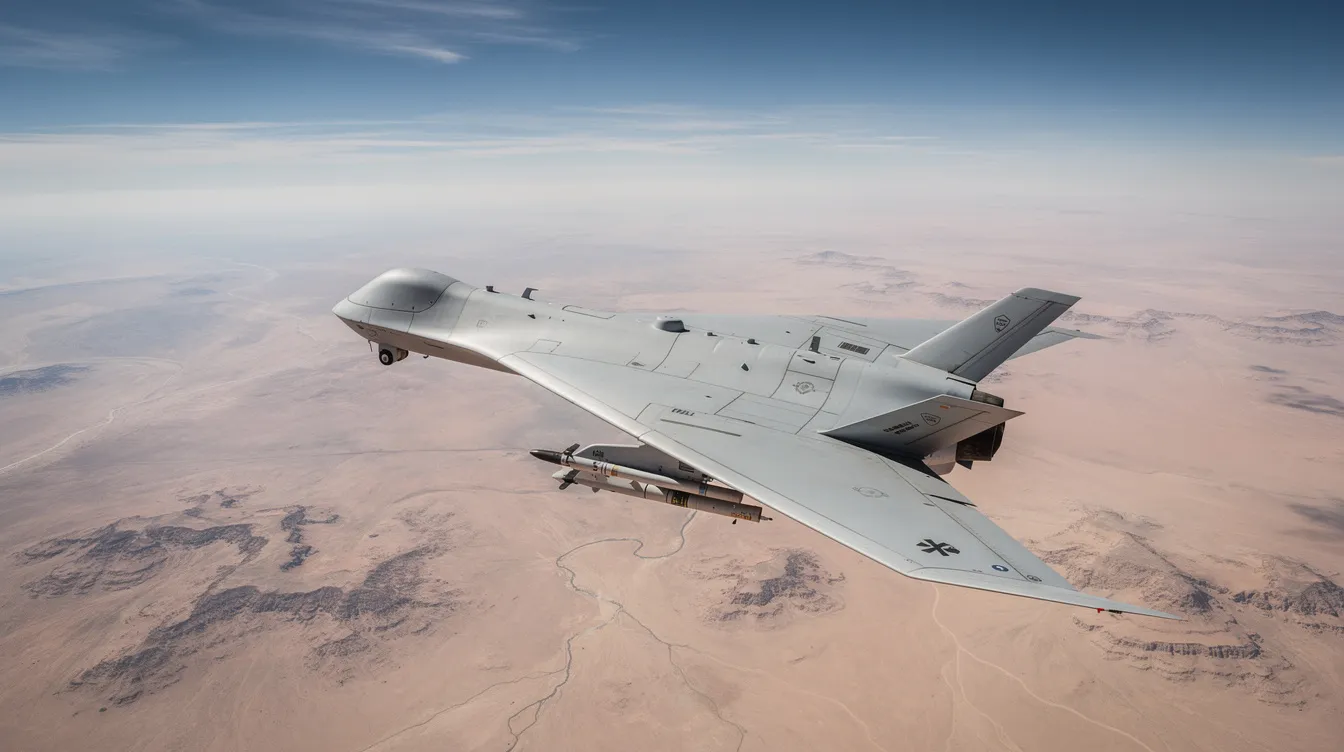
Enthusiasts who admire US military planes can still apply performance-driven thinking when booking private charters.
Short-runway, tactical access - light jets and turboprops mirror the tactical flexibility of a C-130.
Regional mobility - midsize jets cover medium-range missions efficiently.
Strategic, intercontinental range - heavy jets deliver the global reach of a military strategic airlifter, but for passengers.
Consider concrete factors: runway length, passenger count, baggage needs (ski gear, golf clubs), non-stop range, in-flight Wi-Fi or conferencing, and even bespoke services like in-flight catering for private jets. Use Jettly's instant-quote tools and advisory support to compare aircraft classes side by side-similar to how the military selects a platform based on mission profile.
Ready to explore private travel on your terms? Browse flight options or request a quote at https://www.jettly.com, where a comprehensive guide to charter airlines can further inform your choices.
Below are answers to common questions that go beyond the main article, covering legal access, safety, costs, and charter decisions.
Routine civilian travel on US military aircraft is very limited. Access is generally restricted to official duties, military families, or special Space-Available programs for eligible passengers such as retirees and dependents. Tourists and private travelers cannot charter US military planes. Instead, they use commercial airlines or private charter services like Jettly, which positions itself as a flexible NetJets alternative.
US military planes are engineered for combat resilience and extreme conditions, but they also fly higher-risk profiles-low-level flight, combat zones, and austere environments. Civilian and private charter aircraft are built and regulated specifically for passenger safety and comfort, with strict maintenance schedules and crew-rest regulations. For non-combat travel, private charter remains very safe, with multiple options for easily securing a seat on a private jet.
There is significant overlap. Turbofan engines, composite materials, fly-by-wire systems, and GPS-based avionics in modern business jets often trace their roots to military R&D. However, civilian versions are optimized for efficiency, noise reduction, and passenger comfort rather than combat survivability.
Military operating costs for fighters and bombers can run into tens of thousands of dollars per flight hour due to fuel burn, specialized maintenance, and trained crews. Private jet charter costs vary by aircraft class and route but are far more accessible. Platforms like Jettly provide instant pricing for on-demand flights-check current rates with the private jet charter cost guide or explore opportunities through Jettly's high-ticket affiliate program.
Focus on measurable criteria: range, cruise speed, runway requirements, and cabin size. Match these to your trip profile, just as the military matches aircraft to missions. Jettly's tools and support team help compare aircraft side by side so travelers can find the right fit for their distance, group size, and budget, supported by insights into private jet operating costs.
US military planes serve distinct missions, from air superiority and close air support to global transport, refueling, and reconnaissance. Their history also shows how testing, competition, and new technology can shape aircraft design over time.
Some military platforms are eventually retired, while lessons from their development continue to influence civilian aviation. For more background, explore Jettly’s guides to military airplane evolution and roles and types of military jets.
For private travelers, the practical takeaway is to choose an aircraft around the mission: route length, passenger count, baggage, runway access, and onboard needs. Compare private aircraft options and estimate pricing with Jettly’s private jet cost calculator.
Jettly is a charter broker that helps travelers compare aircraft and request instant quotes through a broad marketplace; flights are operated by properly certified third-party carriers. Explore charter options or request a quote at https://www.jettly.com.
Share this post:
Jay Franco Serevilla
Nov 8, 2026
|
5
min read
Discover tips and trends in the industry.
5
min read
What Happens When a Plane Crashes? (And What It Really Means for Flight Safety)
Understanding what happens during a plane crash can alleviate fears about flying. While the odds of experiencing a crash are extremely low, knowing the causes, survival strategies, and the importance of passenger actions can enhance safety. This article provides insights into aviation safety, the factors contributing to crashes, and what passengers can do to prepare.
Read More
5
min read
Airbus Crash: Major Incidents, Safety Lessons, and What They Mean for Modern Aviation
Airbus crashes, though rare, have significant implications for aviation safety. This article reviews major incidents since 2000, highlighting key findings and lessons learned that have shaped safety reforms in the industry. Understanding these events helps travelers make informed choices about air travel and charter services.
Read MoreStay updated with our latest insights and tips to elevate your journey with us.
MEMBERSHIPS AND ASSOCIATIONS



© 2026 Jettly Inc. All rights reserved.
Disclaimer: Jettly operates as a charter broker, offering access to a global digital jet charter marketplace. Jettly is not a direct air carrier and does not own or operate aircraft. All advertised flights are conducted by third-party air carriers that are fully licensed and hold the appropriate Part 135 or Part 121 certifications issued by the Federal Aviation Administration (FAA) or equivalent regulatory authorities under U.S. or foreign law. Jettly complies fully with the U.S. Department of Transportation's Part 295 and Part 298 Charter Broker regulations. Jettly does not carry additional liability insurance. Passengers are covered by aircraft operator insurance. TICO: 50023770


