


Login
Get Instant Pricing On 23,000+ Aircraft

>
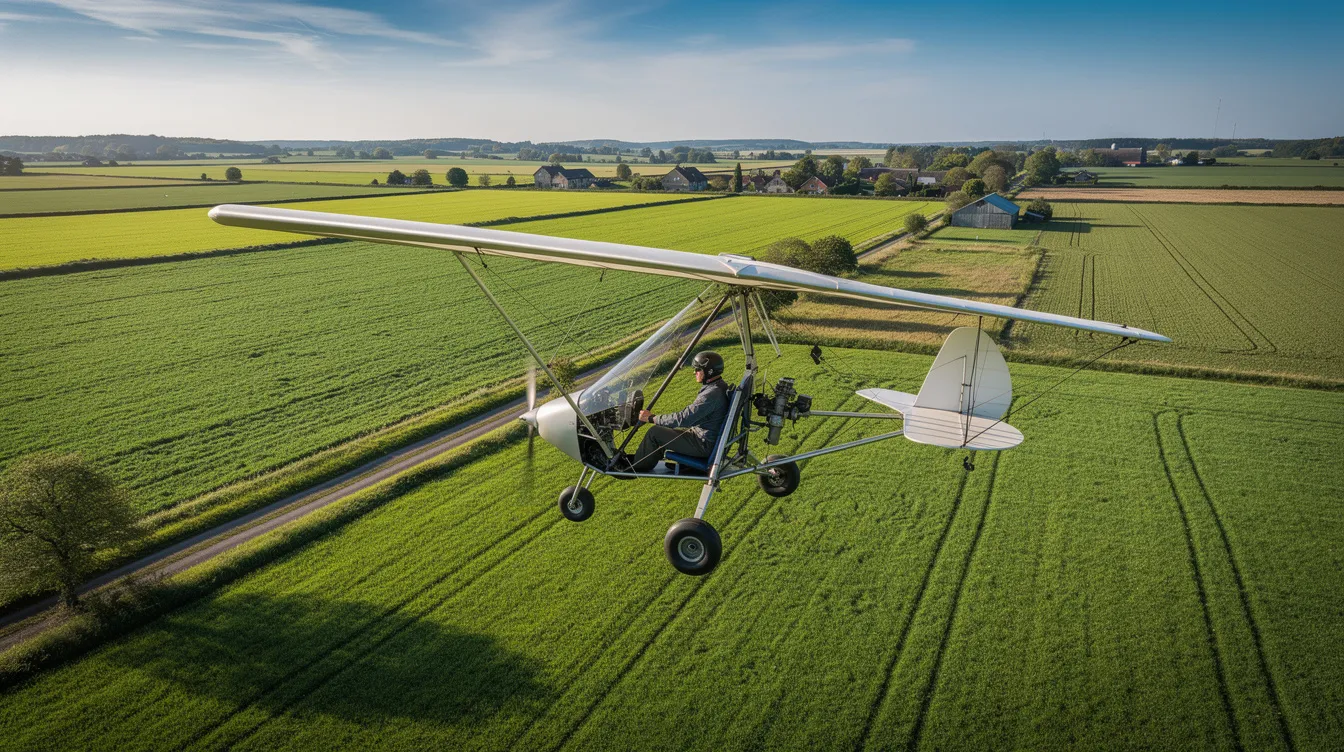
Ultralight planes for sale are a top choice for aviation enthusiasts, recreational pilots, and first-time buyers seeking an affordable and accessible entry into personal flying. This guide covers everything you need to know about ultralight planes for sale in 2026—including prices, regulations, licensing, inspection tips, and how platforms like Jettly can complement your flying plans. Understanding the distinctions between true ultralights, light sport aircraft, and experimental builds is crucial in 2026, as the market features a wide range of aircraft types, each with unique rules, costs, and capabilities. Whether you’re looking to buy your first aircraft, upgrade, or simply explore your options, this article will help you navigate the process with confidence.
Core Requirements:
Must weigh under 254 pounds empty
Maximum fuel capacity: 5 gallons
Top speed: 63 mph (55 knots)
Maximum power-off stall speed: 24 knots
Single occupant only
No pilot license required for single-seat ultralights
Limited to daytime, visual flight only
Use restricted to sport or recreational purposes
Ultralight:
An aircraft that weighs under 254 pounds, has a maximum fuel capacity of 5 gallons, a top speed of 63 mph (55 knots), a maximum power-off stall speed of 24 knots, and accommodates only one occupant. No pilot license is required for single-seat ultralights. (Sources: FAA regulation 14 CFR Part 103)
Light Sport Aircraft (LSA):
A category of aircraft that allows two seats, a maximum gross takeoff weight of 1,320 lb for landplanes (1,430 lb for seaplanes), and higher speed and performance than ultralights. Requires N-number registration and at least a sport pilot certificate.
Experimental Aircraft:
Aircraft that exceed ultralight or LSA limits, often homebuilt or kit-built, and require registration, airworthiness certification, and at least a sport or private pilot certificate to operate.
Listings for "ultralight planes for sale" may include true Part 103 ultralights, light sport aircraft, or experimental aircraft—each with different regulatory and licensing requirements.
A true FAA Part 103 ultralight must weigh under 254 pounds empty, hold no more than 5 gallons of fuel, stay below 63 mph top speed, and seat a single occupant. No pilot license, registration, or medical certificate is required in the U.S.
Price ranges in 2026: $6,000–$20,000 for used single-seat ultralights, $20,000–$40,000 for new kits, and $150,000–$350,000+ for factory-built light sport aircraft.
Operating costs for basic ultralights run approximately $1,000 to $2,000 annually, covering fuel, routine maintenance, and storage.
Jettly does not sell ultralight aircraft. Instead, it complements ownership by offering on-demand private jet and turboprop charter for longer, multi-passenger, or business trips that ultralights cannot handle.
Online listings often mix ultralights with light-sport aircraft and experimental builds under one label. Before spending a dollar, buyers need to understand which category an aircraft actually belongs to. The differences affect price, licensing, insurance, and how you can legally operate.
True FAA Part 103 ultralight aircraft:
Under 14 CFR Part 103, an ultralight must have a maximum empty weight of 254 pounds (excluding floats and safety devices), a fuel capacity of no more than 5 gallons, a top speed not exceeding 63 mph (55 knots) at full power, and a maximum power-off stall speed of 24 knots. It is single-seat only. No FAA registration, airworthiness certificate, or pilot license is required.
Light sport aircraft (LSA):
LSAs allow two seats, a max gross takeoff weight of 1,320 lb for landplanes (1,430 lb for seaplanes), and a greater speed range—cruise speeds often reach 100–120 knots. They require N-number registration, annual condition inspections, and at least a sport pilot certificate to fly.
Experimental and homebuilt aircraft:
These visually resemble ultralights or LSAs but exceed Part 103 limits. Powered by engines like the Rotax 912 or 915, they fall under Experimental Amateur-Built or Experimental Light-Sport categories. Pilots need a Private or Sport Pilot certificate, and the aircraft must be registered.
Imported microlights:
Foreign categories such as the EASA microlight (up to 600 kg gross weight) or Canadian basic/advanced ultralight carry different rules. Many imports will be classified as LSA or Experimental by the FAA, triggering additional costs and licensing.
Always confirm the FAA part or certification basis listed by the seller. If a listing simply says "ultralight," verify whether the aircraft can genuinely meet FAA Part 103 specs before assuming a license-free purchase.
Transition: Now that you know the differences between aircraft categories, let’s look at the regulations and operating limits that apply to ultralight planes in the U.S.
Ultralight aircraft can only be used for sport or recreational purposes. No compensation, no passengers (single occupant only), and no commercial work—though narrow exemptions exist for two-seat training vehicles under specific FAA letters of authorization.
Ultralights are limited to daytime flying only. Night flying is permitted only if the aircraft is equipped with anti-collision and position lights. Operators must maintain visual reference to the surface at all times.
Operations over congested areas are prohibited without prior authorization. Proximity restrictions near busy airports apply.
Ultralights can operate freely in Class G airspace. Entering Class B, C, D, or controlled Class E surface areas requires permission from air traffic control—difficult for aircraft without radios.
No medical certificate is required under Part 103, but safe practice demands fitness, adequate vision, and alertness. Ultralight aircraft should comply with national regulatory standards for safety and operation.
Sport Pilots face stricter weather minimums, cannot fly at night, and must stay below 10,000 feet MSL unless terrain requires otherwise. Regular inspections and registration add ongoing regulatory overhead compared with true Part 103 flying.
Ultralights are particularly sensitive to wind, turbulence, and thermal activity, so even without formal requirements, conservative weather minimums are essential for any recreational flyer.
Transition: Understanding these regulations is crucial before considering what training or licensing you may need, which we cover next.
No pilot license is required for single-seat ultralights that meet every Part 103 specification (weight, speed, fuel capacity, single seat). No registration or medical certificate is needed either. Even so, it is strongly recommended to seek professional flight instruction for ultralight flying, and joining local flight schools or clubs for dual instruction is a wise investment.
Flying an LSA requires a sport pilot certificate. Flight training typically runs 20–30 hours minimum, with 2026 costs ranging from $8,000 to $12,000, including ground school, flight time, and a checkride. Many pilots begin by taking lessons in a two-seat trainer before transitioning to their own aircraft.
Aircraft exceeding LSA limits may need a Private Pilot certificate or higher—40+ hours of training, broader knowledge testing, and higher total cost. The payoff is access to more capable aircraft, instrument training, and fewer operational restrictions.
Canada, the UK, EU member states, and Australia all require some form of ultralight or microlight license, even for small single-seat aircraft. Never assume U.S.-style Part 103 freedoms apply outside the U.S.
Budget for training as a line item alongside the aircraft price. Include ground school materials, dual instruction hours, and periodic proficiency checks. Many aviation enthusiasts treat recurrent training as an annual expense, not a one-time cost.
Transition: Once you know your training and licensing needs, the next step is understanding the costs involved in buying and operating an ultralight plane in 2026.
Basic used Part 103 ultralights can be found for $6,000 on the low end. Used ultralights can be purchased for prices ranging from $3,000 to $8,000 for older airframes with higher-hour two-stroke engines. More recent builds in good condition with upgrades typically fall in the $12,000–$20,000 range. Used ultralights typically range from $6,000 to $20,000 overall.
New ultralight kits usually cost between $20,000 and $40,000 once you include the engine, basic instruments, covering, and paint. Manufacturers like Mini-Max offer base kits starting around $10,900–$12,500, while the Hummel Ultracruiser runs approximately $49,400 fully assembled. Building ultralight aircraft from kits is a popular option that gives buyers control over customization options and budget.
Factory-built light sport aircraft can exceed $150,000 and reach $350,000+ for premium models with Rotax 912iS or 915iS engines, glass cockpits, autopilot, and ADS-B. Factory-built ultralights are generally the most expensive purchasing option.
For a basic ultralight, expect roughly $1,000–$2,000 per year covering fuel, routine maintenance, hangar or trailer storage, and minor parts. Ultralights typically get 10 to 30 miles per gallon. LSA operating costs climb significantly due to inspections, insurance, and more complex systems.
Readers comparing these ownership costs to occasional travel needs should note that a private charter through Jettly carries no maintenance, storage, or overhaul liabilities. For broader context on overall private aviation expenses, explore how much a private jet costs, or review how much a plane costs to buy versus chartering on demand.
Transition: With a sense of costs, you’ll next want to decide whether to buy new or used, and what trade-offs each option brings.
Deciding between new and used aircraft early in the search saves time and narrows listings quickly. Each path has clear trade-offs that many aviation enthusiasts weigh carefully.
Advantages of new:
Warranty support on airframe and sometimes engine
Modern materials, efficient engines, and up-to-date avionics
Clean build documentation and known specifications
Many ultralight manufacturers offer kits or factory-built options with full service support
Drawbacks of new:
Higher upfront price
Waiting lists or build lead times of several months in 2026
Hidden finishing costs (shipping oversized wing panels, tools, paint)
Advantages of used:
Significantly lower acquisition cost
Faster availability—aircraft may be ready to fly
Potential for upgrades already installed (radios, ballistic parachutes, modern seats)
A seller who says the plane "flies great" and is in perfect condition still warrants verification, but experienced owners often maintain aircraft meticulously
Risks of used:
Incomplete or missing log books
Aging fabric, corroded tubes, or engines approaching TBO
Modifications that push the aircraft out of Part 103 into Experimental territory
Listings advertising an aircraft as "ultralight" when it's actually LSA or Experimental
Decision framework: Start with budget (how much cash is available upfront), then timeline (how soon you want to fly), and finally your willingness to do project work. Aviation enthusiasts considering other categories may also look at cheap plane options for budget-conscious buyers. Kit aircraft allow buyers to assemble parts themselves, usually at a lower cost than factory-built models. DIY ultralight kits are often more affordable than completed aircraft, and basic mechanical skills are required for successful construction. Risk-averse or time-limited buyers should lean toward inspected, ready-to-fly used aircraft or factory-finished models.
Transition: Once you’ve narrowed your search, it’s helpful to know what specific aircraft types you’ll encounter in the market.
The Kolb Firefly is a popular ultralight model for sale, with listings showing examples at around $15,000 equipped with a Rotax 503 engine. Quicksilver models like the MX Sprint remain common. The Quicksilver MX Sprint is known for extremely fast roll response and a faster roll rate, making it popular among pilots who value aerodynamics and agile handling. The GT 400 is one of the finest ultralight-type aircraft designed, offering predictable handling and solid build quality. Many ultralights in this class cruise at 45–55 mph with a range of 60–80 miles on 5 gallons of fuel. Many ultralights utilize lightweight two-stroke engines for their power-to-weight advantage.
Weight-shift trike designs from brands like Air Tech and the Air Creation Twin offer a different flying experience. These are popular introductory two-seaters in the LSA version, though single-seat Part 103 trikes also exist.
High-wing STOL-capable LSAs with Rotax 912 engines, two seats, glass panels, and cruise speeds of 90–110 knots appeal to pilots wanting training capability and weekend trips. These are a great opportunity for recreational flying that goes beyond local pattern work and introduce some of the same considerations you’d weigh when finding the best cross-country plane for longer journeys.
Experimental or LSA designs with tundra tires, reinforced landing gear (often with a spring-loaded nose wheel), and strong climb rates target pilots wanting off-airport access. Used examples in this category often exceed $250,000.
Amphibious ultralights can land on water and land, but floats add weight that can push aircraft out of Part 103 compliance. Most are sold as LSA or Experimental seaplanes with higher price tags and maintenance demands.
Transition: After identifying the right aircraft, a thorough inspection is your next step before purchase.
Pre-purchase inspections are crucial for evaluating used ultralights. A disciplined inspection protects both your safety and resale value. Use this as a starting checklist.
Airframe:
Corrosion on metal tube structures, especially at welds and joints
UV damage or brittleness in fabric coverings; check stitching and patches
Cracks or delamination in composite parts
Misaligned control surfaces or warped wing structures
Evidence of hard landings around landing gear attach points, front limiter tube connections, and wing roots
Check the limiter tube and any structural members for bending, fatigue cracks, or field repairs
Engine and Powerplant:
Total time on engines and time since last overhaul
Manufacturer-recommended TBO (often 1,500–2,000 hours for Rotax 912 series; lower for two-stroke powerplants)
Compression and leak-down test results
Fuel system condition: lines, tank integrity, valves
Signs of overheating, oil leaks, or smoking
Avionics and Electrical:
Basic instruments: airspeed indicator, altimeter, engine gauges
Radio and transponder/ADS-B Out if operating near controlled airspace
Battery health, wiring quality, kill switches
Many ultralights sold as equipped with upgraded avionics should have supporting documentation
Documentation:
Complete log books for airframe and engine
Build photos and documentation for homebuilt or kit aircraft
Weight-and-balance data confirming the aircraft still meets its category limits (maximum empty weight under 254 lb for Part 103)
Operating limitations and pilot operating handbook
For LSA or Experimental: registration, airworthiness certificates, and serial numbers matching the airframe data plate
Hire an independent A&P mechanic familiar with small aircraft categories for a formal pre-buy inspection. The cost is a fraction of what hidden structural or engine problems could run, especially compared with the predictable, short-term commitments you get when renting aircraft affordably instead of buying.
Transition: Once you’re ready to buy, knowing where to search and how to leverage resources like Jettly can make the process smoother.
Where to shop:
Ultralight aircraft can be found on classified listing sites specializing in used aircraft (Trade-A-Plane, Barnstormers, Controller)
Manufacturer resale boards and authorized dealer networks
Type-club forums (e.g., Quicksilver Owners Group, Kolb forums)
Local ultralight and sport aviation associations—joining a local ultralight club can provide valuable pre-purchase guidance
Social media groups organized by model, region, or flying style
Filtering tips:
Prioritize 2010–2026 models for LSAs and recent rebuilds for older ultralights
Check engine hours, accident history, and whether the aircraft is currently flying or in long-term storage
Cross-border purchases introduce ferry flights, trailer transport, customs duties, and potential modification needs
How Jettly fits:
Jettly is a digital private aviation platform—not an aircraft dealer. It gives travelers instant access to a global inventory of 20,000+ private charter aircraft, from turboprops to heavy jets, with transparent on-demand pricing.
An enthusiast might use an ultralight or light sport aircraft for local recreational flying and training, while booking private jet or turboprop flights through Jettly for multi-passenger business trips, family vacations, or time-critical travel. The full service approach covers what ultralights cannot: speed, range, weather capability, and multiple seats. To understand the economics behind that choice, review a complete breakdown of private jet operating costs and compare the costs using Jettly's charter cost estimator.
Transition: Beyond the buying process, it’s important to consider environmental and safety factors when operating ultralight aircraft.
Training matters: Even though Part 103 does not require a pilot license, buyers should budget for initial flight training, transition training for any new type, and periodic proficiency checks. Flight schools and local clubs are the best starting points for any recreational flyer.
Personal safety framework: Set conservative weather minimums, establish personal currency requirements (minimum hours per month), maintain regular inspection routines, and seek mentoring from experienced pilots in local associations.
Fuel efficiency: Single-seat ultralights burn 2–3 gallons per hour on small engines, producing lower CO2 emissions than larger general aviation singles. Responsible fuel handling and storage remain important regardless of consumption level.
Environmentally conscious practices: Choose modern, efficient engines where possible. Plan direct routes. Keep the airframe well maintained for optimal aerodynamics and performance. For higher-consumption travel segments—such as chartered turboprops or jets booked through platforms like Jettly—consider voluntary carbon offsets and understand how ongoing private jet maintenance costs factor into the overall environmental and financial picture.
Industry trends: Private jet operators on networks like Jettly increasingly focus on fuel-efficient routing, newer aircraft types, and optional offset programs as the global fleet of private jets continues to grow. Combining low-impact ultralight flying with responsible charter use represents a balanced approach to personal air travel.
Transition: For many pilots, combining ultralight ownership with private jet charter offers the best of both worlds for different travel needs.
Many aviation enthusiasts use different aircraft for different missions. Ultralight aircraft and private jet charter serve complementary roles rather than competing directly, much like the tradeoffs you’d consider when choosing the best cross-country aircraft for longer trips.
Where ultralights excel:
Short, local flights in good weather
Building pilot skills and enjoying low-and-slow flying
Recreational flying close to home at minimal cost
Operating from grass strips and small fields in uncontrolled airspace
Where ultralights fall short:
Limited range, speed, and seating (single-seat ultralights carry one person only)
No instrument capability, no night flying in most configurations
Impractical for multi-city business trips, family travel with luggage, or time-sensitive schedules
Where Jettly fills the gap:
Multi-passenger business trips covering hundreds of miles in hours
Family holidays requiring luggage capacity and comfortable two-seaters or more
Last-minute travel when airline schedules fall apart, or when you want to lower per-seat costs through crowdsourced and shared private jet flights
Access to distant regions via same-day private jet charter
Jettly's on-demand model lets users request instant pricing through the platform, compare aircraft categories (light jet, midsize, heavy jet, turboprop, helicopter), and book only when needed—no fractional contracts or long-term commitments, or lock in value via structured jet card programs. Its global network of private charter aircraft makes it easy to match the right airframe to each mission. Learn more about how Jettly works.
A "hybrid" flying lifestyle makes sense for pilots who want weekend ultralight adventures and practical long-distance travel through the same love of air and aviation, especially when tools like Jettly’s jet card flight cost estimator make budgeting those longer trips straightforward.
Search for ultralights on classified listing sites and forums such as Trade-A-Plane, Barnstormers, and Controller. Manufacturer resale boards, type-club forums, and local ultralight clubs are also valuable resources. Joining a local ultralight club can provide valuable pre-purchase guidance from experienced pilots and mechanics.
Pre-purchase inspections are crucial for evaluating used ultralights. Check the airframe for corrosion, fabric condition, and structural integrity; inspect the engine for hours, maintenance history, and leaks; verify avionics and electrical systems; and ensure all documentation is complete and accurate. Hiring an independent A&P mechanic familiar with ultralights is highly recommended.
Traditional aviation lenders typically focus on aircraft valued at $100,000 or more, making financing more common for factory-built light sport aircraft than for low-cost Part 103 ultralights. Buyers of sub-$30,000 ultralights often rely on personal loans, savings, or home-equity products. Factor in insurance, hangar costs, and maintenance when deciding whether financing makes sense versus chartering private jet flights with Jettly when you only need occasional long-distance travel.
Building ultralight kits can take 200–400 hours for straightforward Part 103 designs, and 600+ hours for more complex aircraft. First-time builders may need 1–2 years for quality work, spreading sessions across evenings and weekends. Kits often come with detailed assembly instructions, but joining a local EAA chapter or online builder community for mentoring and inspection tips is highly recommended.
While some pilots fly short hops to nearby towns, ultralights are optimized for recreational flying in good weather. Speed, range, single-seat layouts, and daylight-only rules make them impractical for reliable commuting. On-demand private jet or turboprop charter via Jettly is a more practical solution for regular business travel that demands reliability, multi-passenger capacity, and schedule flexibility, whether that’s a regional hop or a dedicated route such as private jet charter in Kolkata, West Bengal.
Many single-seat ultralight aircraft with wingspans in the 25–35 foot range fit in standard T-hangars, shared hangars, or enclosed trailers. Foldable-wing models can be stored at home and towed to the airport. Indoor storage protects fabric and composites from UV damage and weather, preserving resale value. Monthly hangar costs at typical U.S. airports range from $150 to $500 depending on region.
Jettly does not sell, lease, or manage ultralight aircraft, nor does it provide ultralight flight training, maintenance, or hangar services. Instead, it offers private jet memberships that provide instant, on-demand access to a global fleet of charter aircraft for personal and business travel—complementing, not replacing, the ownership and hands-on experience of flying an ultralight or light sport aircraft.
Buying an ultralight in 2026 starts with clarity: what category does the aircraft actually fall into, and does it match your mission? Align your choice with whether you want recreational flying, training, or light cross-country travel. A true Part 103 ultralight—under 254 pounds empty weight, 63 mph top speed, 5-gallon fuel capacity—offers the most accessible, affordable entry into aviation with no license requirement. LSAs and experimental aircraft add capability but also cost and regulatory complexity.
Always verify the certification basis, confirm whether a pilot license is needed, and insist on a thorough pre-buy inspection. Check every log, every airframe joint, every engine hour. Ultralights offer a great opportunity to enter the world of aviation on a budget, while private jet charter through platforms like Jettly covers long-range, multi-passenger travel that planes in this category simply cannot handle. Together, they form a complete personal aviation toolkit.
Ready to extend your reach beyond local airstrips? Explore flight options or request a quote at https://www.jettly.com, or even earn commissions by joining Jettly’s high-ticket affiliate program.
Share this post:
Jay Franco Serevilla
Aug 5, 2026
|
5
min read
Discover tips and trends in the industry.
5
min read
Jet Stream Turbulence: What Private Fliers Need to Know
Jet stream turbulence is a common challenge for private fliers, occurring unexpectedly in clear skies and often causing discomfort. Understanding its causes and effects can help travelers manage their flights more effectively, especially as climate change is projected to increase turbulence severity. This article outlines practical strategies for navigating jet stream turbulence, including flexible routing and aircraft selection.
Read More
5
min read
Turbulence in Planes: What It Is, How Pilots Handle It, and Why Private Jets Feel Different
Turbulence is a common concern for air travelers, often misunderstood but generally not dangerous. This guide explains the science behind turbulence, how pilots manage it, and why private jets can offer a smoother experience. Understanding turbulence can help alleviate anxiety and enhance confidence during flights.
Read MoreStay updated with our latest insights and tips to elevate your journey with us.
MEMBERSHIPS AND ASSOCIATIONS



Disclaimer: Jettly operates as a charter broker, offering access to a global digital jet charter marketplace. Jettly is not a direct air carrier and does not own or operate aircraft. All advertised flights are conducted by third-party air carriers that are fully licensed and hold the appropriate Part 135 or Part 121 certifications issued by the Federal Aviation Administration (FAA) or equivalent regulatory authorities under U.S. or foreign law. Jettly complies fully with the U.S. Department of Transportation's Part 295 and Part 298 Charter Broker regulations. Jettly does not carry additional liability insurance. Passengers are covered by aircraft operator insurance. TICO: 50023770


