



Login
Get Instant Pricing On 23,000+ Aircraft

>
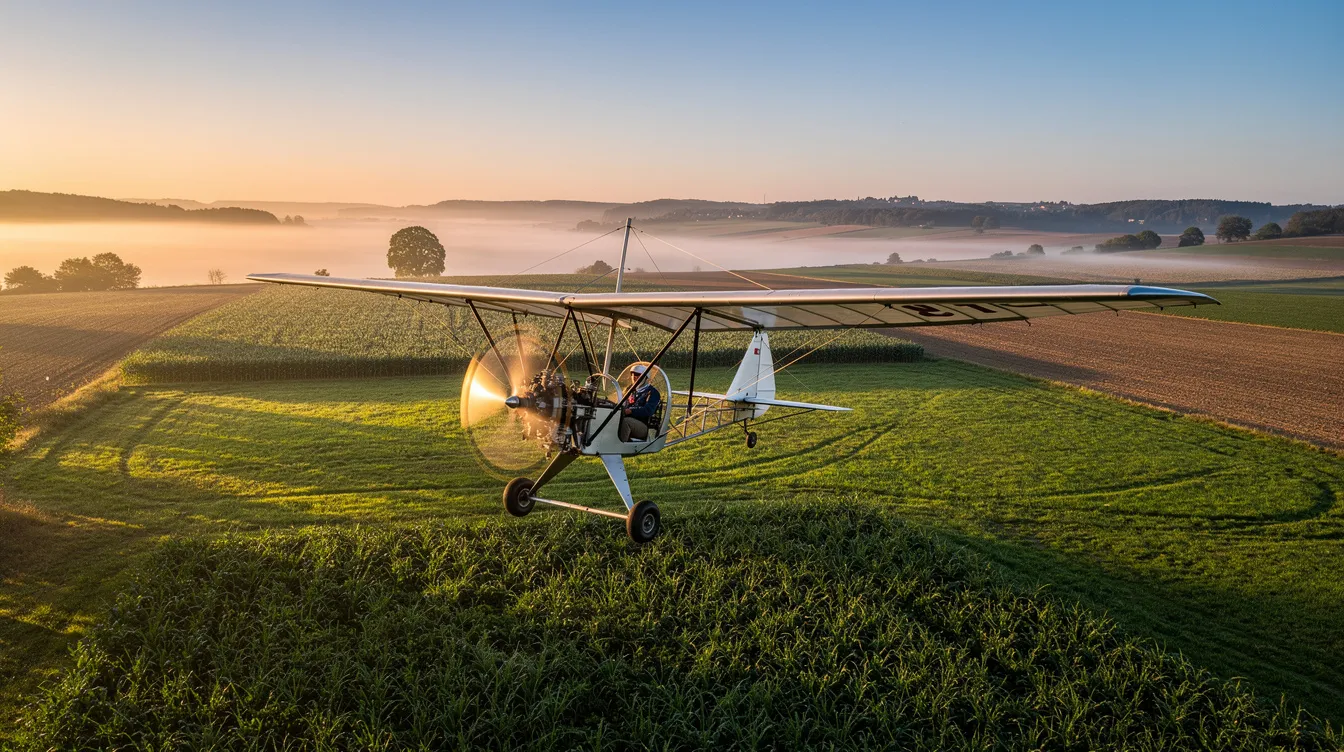
Ultra-light flights represent one of aviation's most accessible entry points - small, lightweight aircraft that let a single pilot experience the sky with minimal barriers. Whether you're drawn to the adventure of ultralight flying or simply curious about how it compares to chartering a private jet, this guide covers the full spectrum.
Ultralight flights typically refer to ultralight aviation under FAA Part 103, where pilots fly very small, single-seat aircraft for recreation. Jettly is a private jet charter platform, but recognizes ultralights as the grassroots foundation of powered flight.
An ultralight aircraft is a powered flying machine with an empty weight under 254 pounds, a fuel capacity of 5 gallons or less, and a top speed capped at 55 knots.
Many ultralight pilots fly without a pilot's license or medical exam, since Part 103 does not require either for aircraft that meet its strict limits.
Typical ultralight flights last 30–60 minutes at cruise speeds of 45–65 mph, staying within a few dozen miles of the departure point.
Light sport aircraft and private jets serve different missions - more speed, range, passenger capacity, and weather capability - making them complementary rather than competing options.
Ultralight flying is ideal for local fun and flight training fundamentals, while private jets through Jettly handle business, family, and long-range travel.
Ultra light flights involve very small and lightweight aircraft for recreational use. These are typically single-seat machines flown close to home, at low altitudes, under visual flight rules. Think of them as the personal watercraft of the sky - simple, fun, and designed for individual enjoyment rather than transporting groups.
Most ultralight flights last 30–60 minutes.
They stay within 20–50 miles of the departure field.
Flights are heavily weather-dependent, with calm mornings and evenings with clear visibility being ideal.
Ultralight aviation is about open-air, low-speed freedom, not cross-country business travel. They emphasize simplicity and efficiency in design, and experiencing them provides a strong connection with nature during flight.
This stands in sharp contrast to typical private jet charter missions - routes like New York to Miami, Toronto to Vancouver, or Los Angeles to Las Vegas - where speed, range, and schedule control are the priorities.
Ultralight aircraft are very light, usually single-seat flying machines; a Part 103-compliant machine is a true ultralight regulated in the U.S. by federal aviation regulation Part 103 rather than normal aircraft certification rules. Ultralights are the least regulated aircraft category in America, differing fundamentally from traditional certified aircraft in design and regulations.
Under 14 CFR Part 103, a powered ultralight must meet these specific requirements:
|
Parameter |
Part 103 Limit |
|---|---|
|
Max empty weight |
254 lb (115 kg) for landplanes |
|
Fuel capacity |
5 U.S. gallons (19 L) |
|
Full power level flight speed |
≤ 55 knots (63 mph / 102 km/h) |
|
Power-off stall speed |
≤ 24 knots (28 mph / 45 km/h) |
|
Occupancy |
Single seat only |
An additional 60 lbs allowance is permitted for safety devices such as floats and ballistic parachute systems.
If an aircraft meets all Part 103 limits, no registration or airworthiness certificate is needed. There is no N-number, no FAA paperwork, and no standard certification process. True ultralights do not require registration.
Most true ultralights cannot carry passengers or haul for-hire cargo.
They cannot operate in controlled airspace without special authorization.
Microlight aviation in Europe follows different rules, often requiring registration, licensing, and medical checks.
Resemble small planes with a tube-and-fabric airframe, high wings, and traditional controls including rudder pedals, ailerons, and elevator.
Cruise at 45–65 mph and offer short takeoff and landing performance on grass strips.
Use a delta wing design for control.
The pilot steers by shifting a control bar relative to the wing - no rudder pedals or ailerons.
Deliver an open, motorcycle-in-the-sky experience but are more wind-sensitive.
Feature a large canopy overhead and very low speeds (25–35 mph).
Ideal for calm-weather sightseeing, with forgiving handling but poor tolerance for gusty conditions.
Feature an unpowered rotor that autorotates for lift, paired with a pusher propeller for thrust.
Have an unpowered rotor for short takeoff performance, but are more complex and often push beyond Part 103's max empty weight limit.
Can land on water and land.
Adding floats and safety gear often pushes extra weight past the 254-lb ceiling, making strict Part 103 compliance difficult.

Under U.S. federal aviation regulations, Part 103 imposes:
No formal minimum age
No pilot's license
No medical exam
No written test
No pilot license is required to fly ultralights in the US. But training is essential for all ultralight pilots - the regulatory freedom does not mean skill is optional.
Most new ultralight pilots start with introductory or "discovery" flights arranged through local EAA chapters or ultralight schools. These first flight experiences typically use two-seaters or light sport aircraft trainers rather than true single-seat Part 103 machines.
A typical pilot training progression includes:
Basic aircraft controls (stick, rudder, throttle)
Takeoff and landing technique
Traffic pattern work
Emergency procedures (engine-out landings)
Weather judgment and airspace awareness
Supervised first solo in a single-seat ultralight
Training hours are relatively low - often 10–25 hours depending on aircraft type and aptitude.
Ultralight pilots should seek local instructors for training.
Training in ultralights helps build fundamental flying skills that transfer across all of aviation.
In the United States, true Part 103 rules let ultralight aircraft fly with:
No pilot's license
No medical certificate
No FAA written test
This makes ultralight flying remarkably affordable and accessible as a starting point.
If an aircraft exceeds Part 103 specs (heavier empty weight, a second seat, or more fuel), it falls into experimental amateur-built or light sport aircraft categories.
That shift triggers real requirements: at minimum a sport pilot certificate, aircraft registration, and a current U.S. driver's license in lieu of a traditional medical exam.
While there is no formal written test for Part 103, smart pilots still study aerodynamics, regulations, weather patterns, and safety materials similar to those used for Sport Pilot or private pilot license training.
Proper training and self-study are what separate safe pilots from risky ones.
Some countries treat ultralights like small certified planes, with mandatory licenses and medical checks.
Readers outside the U.S. should consult their own civil aviation authority for local rules.
Ultralight flights attract many pilots because ultralight flying is one of the most affordable aviation options available. For those comparing other access models, guides to affordable aeroplane rental costs and options can help frame ultralight ownership against flying clubs, charter, or fractional programs.
|
Cost Category |
Ultralight (Part 103) |
Light Sport Aircraft |
Private Jet Charter |
|---|---|---|---|
|
Purchase price (used) |
$6,000–$20,000 |
$80,000–$200,000 |
N/A (pay per trip) |
|
Purchase price (new/kit) |
$20,000–$40,000 |
$150,000–$200,000+ |
N/A |
|
Fuel burn |
2–3 gallons/hour |
5–8 gallons/hour |
50–300+ gallons/hour |
|
Hangar/tie-down |
$200–$500/month |
$300–$800/month |
Not applicable |
|
Insurance |
Optional, low cost |
Required, moderate |
Included in charter |
Used ultralights cost between $6,000 and $20,000.
Kit-built ultralights range from $20,000 to $40,000.
Factory-built Light Sport Aircraft cost $150,000 to $200,000.
Operating costs include fuel at 2–3 gallons per hour, and hangar fees for ultralights range from $200 to $500 per month.
Private jet charter through a platform like Jettly works differently:
On-demand pricing per leg
Access to over 20,000 aircraft without ownership
No need to pay for hangars, crews, or proper maintenance between trips
For a detailed breakdown, see Jettly's private jet charter costs guide and this overview of hourly private jet rental pricing.
Some individuals choose a mix:
Ultralight ownership for local fun
On-demand charter or a cross-country aircraft optimized for longer trips for business routes
This provides affordable access to the sky on weekends and efficient longer-range travel when the mission demands it.
The best ultralight aircraft depends on the mission:
Local sightseeing
Short grass-strip operations
Amphibious lake flying
Minimalist foot-launch adventure
There is no single answer.
Empty weight relative to the 254 lb limit: Less airframe weight means more useful load for the pilot and fuel.
Useful load: After accounting for fuel (roughly 30–35 lb for 5 gallons), how much room is left for the pilot and gear?
Cruise speed and stall speed: A fixed-wing design with a cruise near 60 mph offers more range per hour than a powered parachute at 30 mph.
Typical range: Most Part 103 aircraft cover 60–120 miles on 5 gallons.
Consider training infrastructure. Are there instructors nearby who teach on that aircraft type?
Active owner groups and factory support for parts can make or break the ownership experience.
Proven designs with long production histories tend to be safer bets than one-off or unsupported prototypes.
Some buyers prioritize quick-build kits and folding wings for trailerability, while others prefer factory-assembled and test-flown ultralights.
Prospective owners should attend fly-ins, EAA AirVenture at Oshkosh, and local ultralight gatherings to compare planes in person and speak with experienced ultralight pilots before committing.
Those who want more capability than a Part 103 machine, but don’t want to buy outright, can also explore renting an airplane for personal or business travel.
Ultralight aircraft can be operated responsibly, but their low weight and modest power make them more sensitive to weather and pilot decisions than heavier planes or jets. Safety relies on disciplined training and thorough pre-flight checks.
Pre-flight inspections are crucial for ultralight safety. Before every flight, pilots should check:
Control linkages and cable tension
Fabric or wing surfaces for tears or damage
Fuel system integrity and fuel quantity
Engine mounts and propeller condition
Overall airframe fasteners and structural joints
Ultralights must be flown during daylight hours only and over uncongested areas.
Pilots should avoid congested areas, convective weather, strong gusts, and marginal visibility.
These aircraft lack de-icing, pressurization, and sophisticated instruments.

The value of recurrent flight training and mentorship from experienced ultralight pilots cannot be overstated.
Practicing engine-out landings, short-field technique, and go/no-go decision-making keeps skills sharp.
NTSB data shows that roughly 32% of fatal ultralight accidents involve airframe failure - far higher than the approximately 5% rate for general aviation - making proper maintenance and pre-flight discipline non-negotiable.
Commercial charter and private jet operators must meet strict regulatory oversight, certified maintenance schedules, and crew training standards under FAR Part 135 or equivalent international rules.
The broader private and charter airline landscape includes on-demand brokers, jet card providers, and modern platforms that streamline access to these operators.
|
Feature |
Ultralight (Part 103) |
Light Sport Aircraft |
Certified GA (e.g., Cessna 172) |
Private Jet |
|---|---|---|---|---|
|
Seats |
1 |
2 |
4+ |
4–19+ |
|
Max weight |
254 lb empty |
~1,320 lb MTOW |
2,300+ lb MTOW |
10,000–100,000+ lb |
|
Typical speed |
45–65 mph |
100–120 knots |
110–180 knots |
400–500+ knots |
|
Can carry passengers? |
No |
Yes (1) |
Yes |
Yes |
|
License required? |
No |
Sport Pilot Certificate |
Private Pilot License |
ATP (crew) |
|
IFR capable? |
No |
Limited |
Yes |
Yes |
Light sport aircraft allow two seats, higher takeoff weight, and more range, but require a sport pilot certificate, a medical exam (or valid driver's license), and aircraft registration.
Certified piston planes like the Cirrus SR22 are IFR-capable and carry families on longer journey legs.
Private jets extend this ladder further: pressurized cabins, speeds of 400–500 knots, ranges up to 6,000+ nautical miles, and the ability to operate in most weather with professional crews.
A Sunday morning ultralight hop over local fields and a same-day private charter aircraft trip from Toronto to New York for meetings represent two ends of the same pilot's aviation life.
Many enthusiasts who enjoy ultralight aviation for recreation turn to private jet charter when they need speed, range, and multi-passenger capacity. The two forms of flight serve different purposes but often appeal to the same person.
An ultralight pilot who spends weekends flying a single-seat Part 103 aircraft locally but books a chartered light jet for a 500–800-mile business trip.
A family vacation where airline schedules and layovers waste an entire day.
Understanding how much it costs to rent a private jet helps these pilots decide when charter makes sense versus flying commercial.
On-demand search, instant pricing, and access to a global fleet so a pilot does not need to own or manage larger aircraft.
Using smaller airports closer to home, avoiding layovers, saving several hours per trip, and departing on flexible schedules - even same-day when needed.
Tools like an airport locator for private charter flights make it easier to identify convenient departure and arrival fields that airlines don’t serve.
Ultralight skills - situational awareness, weather judgment, checklist discipline - often make owners more informed consumers when evaluating aircraft types and safety standards for charter providers.
Ultralight aircraft are naturally fuel-efficient: small piston engines, low fuel burns (often 2–3 gallons per hour), and short local flights keep per-flight emissions relatively low.
Emerging electric ultralights are pushing further. The ElectraFlyer-ULS, for example, complies with Part 103 and offers up to two hours of flight on dual battery packs in motor-glider mode.
Private jets burn substantially more fuel per hour, but they often replace multiple commercial itineraries and optimize routing.
Travelers who only need one seat can further improve efficiency by buying an individual seat on a private jet instead of chartering the entire aircraft.
A platform like Jettly supports more efficient operations by enabling right-sizing of aircraft and by connecting travelers with operators offering carbon offset programs or sustainable aviation fuel where available.
Both ends of the spectrum are moving toward lower-impact operations, and pilots who fly ultralights tend to bring that environmental awareness with them when they step into larger aircraft.
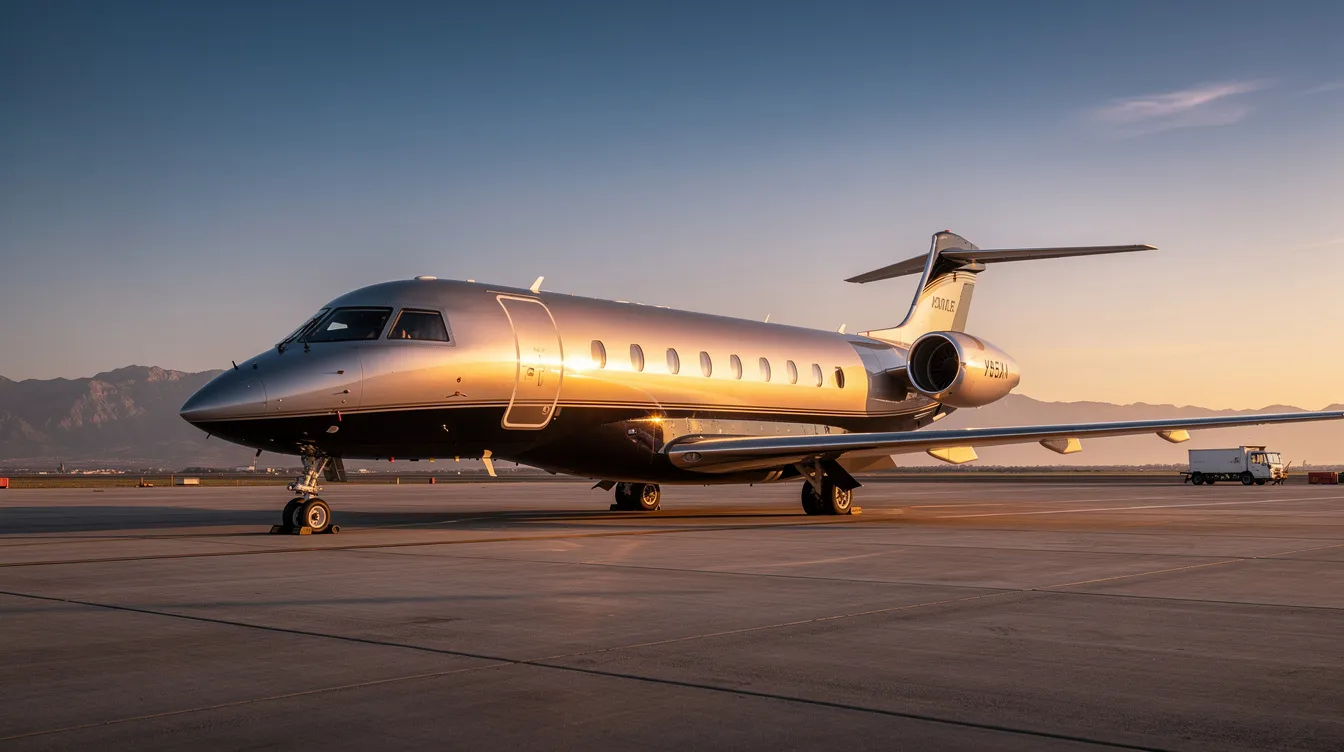
While some pilots occasionally commute short distances in ultralights, they are not designed for reliable daily transport. Weather sensitivity, limited range, the single-seat restriction, and the requirement to fly only during daylight hours and over uncongested areas all make daily commuting impractical. An unexpected crosswind or cloud layer can ground an ultralight for the entire day.
For frequent, time-critical commutes over 100–200 miles, private jet charter or a light aircraft operated under proper certification is far more practical and predictable. Modern platforms make it easier to get a seat on a private jet through memberships, empty legs, and flight-sharing—without needing to own the aircraft yourself. In these cases, knowing the cost drivers behind a single private jet flight can clarify whether charter, membership, or other options fit your budget.
FAR Part 103 does not specify pilot weight or height limits. However, each ultralight design has a maximum takeoff weight and cockpit size. Very tall or heavy pilots must verify fit and performance margins before committing to a particular model - extra weight from a larger pilot directly reduces fuel capacity and safety margins.
Prospective pilots should test-sit specific models, check manufacturer guidance on maximum pilot weight, and account for clothing, helmet, and gear weight to stay within safe operating limits.
Ultralight rentals are less common than traditional aircraft rentals. Many ultralights are homebuilt and insured differently, making commercial rental arrangements uncommon. However, some schools and clubs do offer rental or shared-use arrangements for Part 103 aircraft.
Contact local EAA chapters, ultralight schools, or airparks to ask about club-owned ultralights, cost-sharing groups, or trial memberships. This can be a smart way to log hours and try different aircraft types before purchasing.
An ultralight flight may cost only fuel and maintenance - often just tens of dollars per hour - but it is limited to local hops, daytime VFR conditions, and single-seat operations. That makes it unsuitable for most business or family trips.
Private jet charter carries significantly higher hourly rates but allows multi-passenger, weather-capable flights covering hundreds to thousands of miles in a single day, and comprehensive guides to how much a private jet really costs can help compare these options logically with ultralight ownership. A cross-country charter can save hotel nights and entire workdays. For cost estimates, Jettly's charter cost estimator and dedicated jet card flight cost calculator provide instant pricing based on route and aircraft type.
A typical progression moves from Part 103 to earning a sport pilot certificate or private pilot license, building hours in certified aircraft, then pursuing Commercial Pilot and possibly Airline Transport Pilot ratings. Each step requires additional flight training, medical certification, and written exams, and some pilots bridge the gap using affordable aircraft rental options rather than immediate ownership.
Ultralight time does not always log directly toward commercial requirements, but it provides valuable stick-and-rudder skills, helicopter-to-fixed-wing adaptability, and genuine motivation. Speak with a local flight school or career counselor for a tailored plan that accounts for your existing experience in the air.
Ultralight aircraft offer one of the most accessible, low-barrier entry points into powered flight. The freedom, simplicity, and hands-on flying they deliver are hard to match anywhere else in aviation.
Under FAR Part 103, many ultralight pilots fly without a pilot's license or medical exam - but responsible, proper training, safety discipline, and community mentorship remain essential. Ultralight flying, light sport aircraft, general aviation, and private jets each serve different missions, from local sunrise flights to transcontinental business travel.
Ultralight flights are where many aviation enthusiasts begin their journey in the sky. For those ready to complement that passion with efficient, longer-range private travel, Jettly makes it simple to explore charter options across a global fleet of over 20,000 aircraft.
Ready to experience private travel on your terms? Explore flight options or request a quote at https://www.jettly.com, compare private jet membership plans with wholesale pricing, evaluate structured jet card programs for frequent flyers, or consider Jettly as a flexible alternative to NetJets-style fractional ownership. Those weighing long-term commitment can dig into private jet lease costs, while content creators and flight schools may even join Jettly’s high-ticket affiliate program to earn by referring new members.
Share this post:
Jay Franco Serevilla
Jul 15, 2026
|
5
min read
Discover tips and trends in the industry.

5
min read
KLBO – Floyd W. Jones Lebanon Airport Private Jet Charter Guide
Floyd W. Jones Lebanon Airport (KLBO) is a premier general aviation airport in Lebanon, Missouri, catering to private jet travelers. With a 5,000-foot runway and dedicated FBO services, it offers a convenient alternative to larger airports, ensuring faster turnarounds and less congestion for corporate and leisure travelers alike.
Read More
5
min read
Flight Tracker FlightAware: How It Works, What It Shows, and When to Use Jettly Instead
FlightAware is a leading flight tracking platform that provides real-time data on commercial and general aviation flights. It offers features like live maps, flight status updates, and historical data, making it ideal for travelers and aviation enthusiasts. However, for those needing to book private flights, Jettly serves as a complementary service, offering access to a vast inventory of aircraft and transparent pricing.
Read MoreStay updated with our latest insights and tips to elevate your journey with us.
MEMBERSHIPS AND ASSOCIATIONS



Disclaimer: Jettly operates as a charter broker, offering access to a global digital jet charter marketplace. Jettly is not a direct air carrier and does not own or operate aircraft. All advertised flights are conducted by third-party air carriers that are fully licensed and hold the appropriate Part 135 or Part 121 certifications issued by the Federal Aviation Administration (FAA) or equivalent regulatory authorities under U.S. or foreign law. Jettly complies fully with the U.S. Department of Transportation's Part 295 and Part 298 Charter Broker regulations. Jettly does not carry additional liability insurance. Passengers are covered by aircraft operator insurance. TICO: 50023770


