



Login
Get Instant Pricing On 23,000+ Aircraft

>
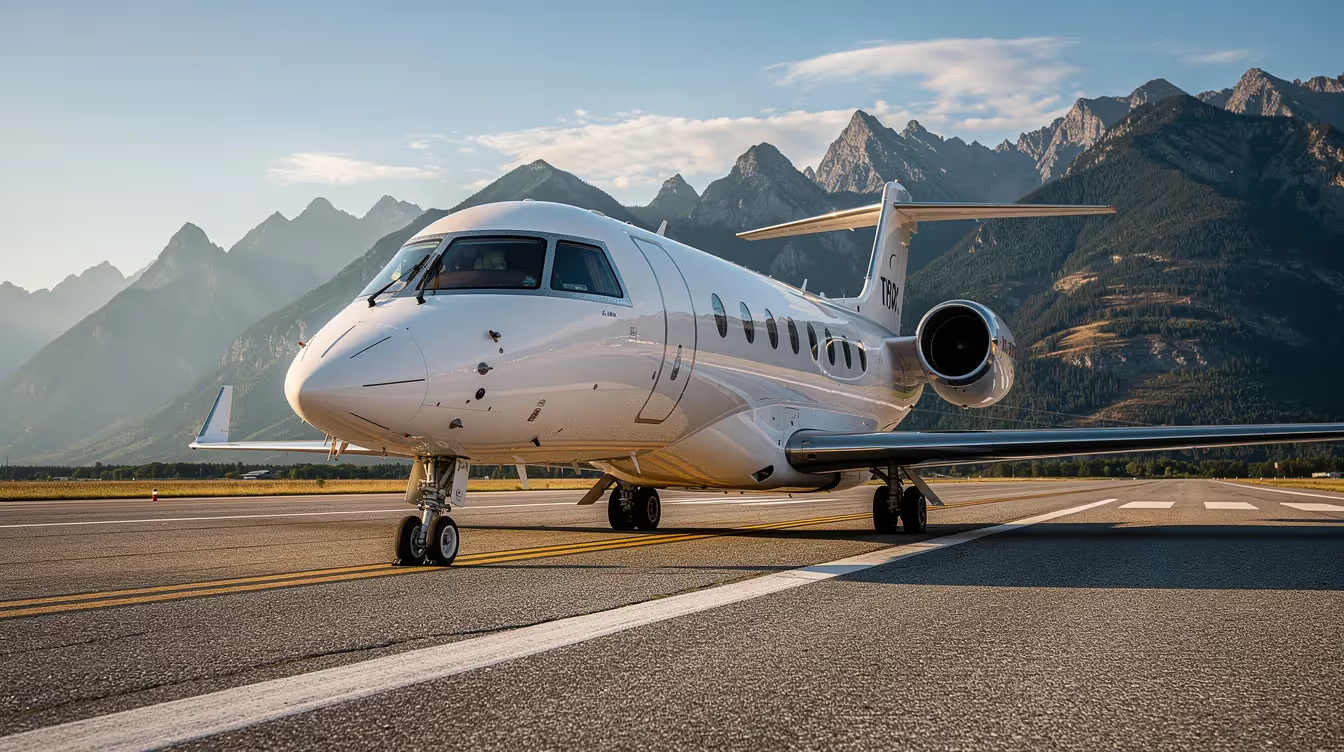
When booking a private jet or exploring the world of aviation, understanding the different types of jet engines is essential for making informed choices about aircraft selection and travel experience. This guide covers all major jet engine types—turbojet, turbofan, turboprop, turboshaft, ramjet, scramjet, and rocket—explaining how each works, where they are used, and what matters most for private jet travelers and aviation enthusiasts.
There are several main types of jet engines, each optimized for specific aviation needs and performance profiles. Understanding these differences helps private jet travelers and aviation enthusiasts make informed choices when selecting aircraft for charter or purchase.
– Turbojet engines are compact and suited for high-speed military applications but are less efficient and noisier than modern alternatives.
– Turbofan engines dominate business and commercial jets due to their balance of speed, fuel efficiency, and cabin quietness.
– Turboprop engines are ideal for short regional routes, offering excellent fuel efficiency and runway flexibility.
– Turboshaft engines power helicopters, providing the shaft power required for vertical flight and specialized operations.
– Ramjets, scramjets, and rockets are reserved for experimental, military, or space applications, not private travel.
The core air-breathing engine types are turbojet, turbofan, turboprop, turboshaft, and ramjet, with scramjets as a hypersonic variant and rockets representing a non-air-breathing comparison. By understanding these distinctions, private jet travelers can better evaluate aircraft options, balance speed and comfort, and optimize their travel experience.
Whether you’re a frequent flyer, a first-time charter customer, or simply passionate about aviation technology, knowing the basics of jet engine types will help you interpret aircraft specifications, compare charter options, and appreciate the engineering behind your next flight.
Understanding the types of jet engines helps travelers make informed decisions when booking private aircraft. Most modern private jets rely on high-bypass turbofan engines because they deliver the best balance of fuel efficiency, range, and cabin comfort for business and leisure travel.
Each engine type serves different missions: commercial airliners and business jets favor turbofans, regional aircraft use turboprops, helicopters run on turboshafts, and military applications may use turbojets, ramjets, or scramjets.
Private jet charter platforms like Jettly primarily connect travelers with turbofan and turboprop aircraft rather than with exotic engines such as ramjets, scramjets, or rockets.
When choosing a private aircraft, understanding engine types helps balance speed, range, runway requirements, and operating cost for the specific trip profile.
A jet engine is an internal-combustion engine that produces thrust by accelerating a mass of air rearward, following Newton’s third law: for every action, there is an equal and opposite reaction. Most jet engines are air-breathing, drawing incoming air from the atmosphere rather than carrying their own oxidizer, as rockets do.
All gas turbine engines share several core components:
Air intake
Compressor stages to compress incoming air
A combustion chamber where fuel mixes with high-pressure air and ignites
Turbine stages that extract energy from hot gases
Exhaust nozzle that directs high-speed exhaust gases to generate thrust
The operational sequence for jet engines includes:
Intake
Compression
Combustion
Turbine rotation
Exhaust
This process is often described as “suck, squeeze, burn, blow,” and it operates smoothly and continuously, unlike the intermittent cycles of piston engines.
The efficiency of a jet engine at flight speed depends significantly on how well the intake compresses the air before it is handed over to the engine compressors. The intake compression ratio is added to the engine compressor's pressure ratio to give the overall pressure ratio, which is critical for the engine's thermodynamic efficiency and thrust output.
Combustion efficiency in most aircraft gas turbine engines is nearly 100% at sea level takeoff conditions, decreasing slightly at cruise altitudes. Air-fuel ratios range widely from 50:1 to 130:1 to optimize performance and emissions.
The development of the first jet engine accelerated in the 1930s. Frank Whittle in the UK patented the turbojet engine concept in 1930, while Hans von Ohain in Germany achieved the first jet flight with the Heinkel He 178 on August 27, 1939. Mainstream airline use followed in the 1950s with early jet aircraft like the de Havilland Comet, and today’s ecosystem even includes revenue streams such as Jettly’s ULTRA high ticket affiliate program for partners who refer modern private jet travelers.
For private aviation, Jettly’s global charter inventory includes turbofan-powered light, midsize, and heavy jets, plus turboprops, with options ranging from local hops to international routes, including private jet charter services in Kolkata, West Bengal. Each aircraft category is optimized by engine type for different trip profiles, from short regional hops to transatlantic flights. In helicopters, the turboshaft engine is a crucial component that delivers efficient power to the rotor blades, optimizing performance and reliability during demanding operations.
Jet engines power a broad range of vehicles beyond passenger aircraft, including cruise missiles and unmanned aerial vehicles, highlighting their versatility across military and civilian applications.
Jet engines are marvels of engineering, made up of several critical components that work in harmony to generate thrust and power modern aircraft. Whether you’re looking at a turbojet engine, a high-bypass turbofan engine, or even a turboshaft engine in a helicopter, the core engine architecture shares some fundamental elements—each playing a vital role in efficient performance and reliable operation.
The main types of jet engines are:
Turbojet: A pure jet engine where nearly all air passes through the core, producing thrust via high-velocity exhaust.
Turbofan: Features a large front fan that moves both core and bypass air, generating thrust more efficiently, especially at subsonic speeds.
Turboprop: Couples a gas turbine core to a propeller, extracting most power as shaft work to drive the propeller.
Turboshaft: Similar to a turboprop but optimized to provide shaft power for helicopter rotors or other machinery.
Ramjet: An airbreathing engine with no major moving parts, relying on high forward speed to compress incoming air before combustion.
Scramjet: A variant of the ramjet designed for hypersonic flight, maintaining supersonic airflow throughout the engine.
All these turbine engines use the same gas turbine core but extract and apply energy differently—either as direct jet thrust, via bypass air, as shaft power to propellers or rotors, or through ram compression without moving parts.
Jet engines are categorized based on how they process air and produce thrust, with each type optimized for specific speed and altitude envelopes. The primary differences between these engine types lie in how much energy is converted into jet exhaust versus shaft power, and at what speed and altitude each engine delivers efficient performance.
Low exhaust velocity with high mass flow (as in turbofans) excels at subsonic speeds.
High-velocity exhaust suits supersonic speeds.
The following sections cover each type, including working principles, advantages, limitations, and real-world examples from military, airline, and business aviation.
|
Engine Type |
Typical Use |
Efficiency (SFC) |
Speed Range |
Key Attributes |
|---|---|---|---|---|
|
Turbojet |
Military jets, early airliners |
0.8-1.2 lb/lbf-hr |
Mach 0.9–2+ |
High speed, compact, noisy, and less efficient at subsonic speeds |
|
Turbofan |
Airliners, business jets |
0.35-0.5 lb/lbf-hr |
Mach 0.7–0.9 |
Quiet, fuel-efficient, high bypass ratio, dominant in modern aviation |
|
Turboprop |
Regional airliners, private props |
0.5-0.6 (shp) |
250–400 knots |
Efficient at low speeds, short runways, and propeller-driven |
|
Turboshaft |
Helicopters, marine, APU |
Similar to turboprop |
N/A (hover capable) |
Provides shaft power, used in helicopters and support roles |
|
Ramjet |
Missiles, experimental aircraft |
2–4 lb/lbf-hr |
Mach 2–5 |
No moving parts, efficient at supersonic speeds, and needs a high initial speed |
|
Scramjet |
Hypersonic research |
N/A (experimental) |
Mach 5+ |
Supersonic combustion, hypersonic speeds, experimental |
|
Rocket |
Spacecraft, missiles |
10+ equivalent |
Unlimited |
Non-airbreathing, carries its own oxidizer, very high thrust, not fuel efficient |
A turbojet engine is the simplest pure jet design. Nearly all the air flowing through a turbojet passes through the engine core, is compressed, burns with fuel, and exits as a high-velocity exhaust jet, producing thrust. Turbojets produce a high-speed jet of exhaust gases, which is essential for achieving supersonic speeds.
Historically important examples include the Rolls-Royce Avon in the de Havilland Comet (entering service in 1951) and military jets like the MiG-21 and F-104 Starfighter. These aircraft shaped early jet age development and supersonic research.
Turbojets dominated early jet aircraft but have been largely replaced by turbofans in civil aviation due to higher fuel consumption and significant noise at takeoff. Modern uses are mostly limited to military aircraft, target drones, cruise missiles, and high-speed applications where compact size matters more than fuel efficiency.
Air flows into the turbojet through the air inlet.
Axial or centrifugal compressor blades compress this intake air to pressure ratios of 10:1 to 20:1.
The compressed air enters the combustion chamber, where fuel is injected and ignited at temperatures between 1,500°C and 2,000°C.
The hot gases expand through turbine blades that drive the compressor—typically extracting 50-60% of exhaust energy for this purpose.
The remaining energy accelerates the exhaust gases through the exhaust nozzle. For supersonic speeds, turbojets often use convergent-divergent nozzles to achieve very high exhaust velocities.
Engine thrust increases with forward speed up to around Mach 0.9 to Mach 2+. However, turbojets exhibit lower fuel efficiency at low speeds because their exhaust velocity does not match the flight speed—a key factor in propulsion efficiency.
Advantages:
High specific thrust (thrust per frontal area), making them compact for high-speed aircraft
Relatively simple flow path with fewer components than turbofans
Excellent high-speed performance for military aircraft and air combat applications
Strong thrust-to-weight ratios (6-10:1)
Limitations:
Poor fuel efficiency at typical airline cruise speeds (SFC around 1.0-1.2 lb/lbf-hr)
High noise levels (120-140 dB at takeoff)
Higher emissions per passenger-kilometer compared with high bypass engines
Rarely used in private aviation due to operating cost and FAR Part 36 noise limits
Turbojets shaped the early jet era, but they remain a niche technology outside specialized military roles today. No current charter jets employ them.
A turbofan engine adds a large front fan to the gas turbine core. This fan moves a significant mass of air; some passes through the core engine, while the rest bypasses it as cold air around the outside. This bypass air generates additional thrust more efficiently than a pure turbojet. The efficiency and thrust produced depend on the ratio of air passing through the engine core to bypass air, making the bypass ratio a critical factor.
The bypass ratio—the mass of bypass air divided by core flow—defines engine subtypes. Low-bypass engines (ratio: 0.3-1.0) power military aircraft such as the F-15. High-bypass engines (with a ratio of 5-12+) dominate modern commercial and business aviation. The shift to high-bypass turbofans from the 1970s onward transformed air and gas pressure management for efficient operation.
Turbofan engines are the most fuel-efficient jet engines, thanks to their high bypass ratios and technological advancements such as geared turbofan and open fan designs. They are widely used in commercial aviation due to their fuel efficiency and lower noise levels, making them especially suitable for long-haul flights.
Well-known turbofan examples include the GE CF6 (introduced in 1971, powering Boeing 747s), the CFM56 (late 1970s, over 30,000 units built for 737s and A320S), and the Pratt & Whitney PW1000G geared turbofan (mid-2010s, offering 25% fuel savings). For business jets, engines like the Honeywell HTF7000 and Rolls-Royce BR725 power aircraft, including the Citation X and Gulfstream G650.
Most light, midsize, super-midsize, and heavy jets available through Jettly—such as Cessna Citation, Bombardier Challenger, and Gulfstream models—are powered by turbofan engines for range and cabin comfort.
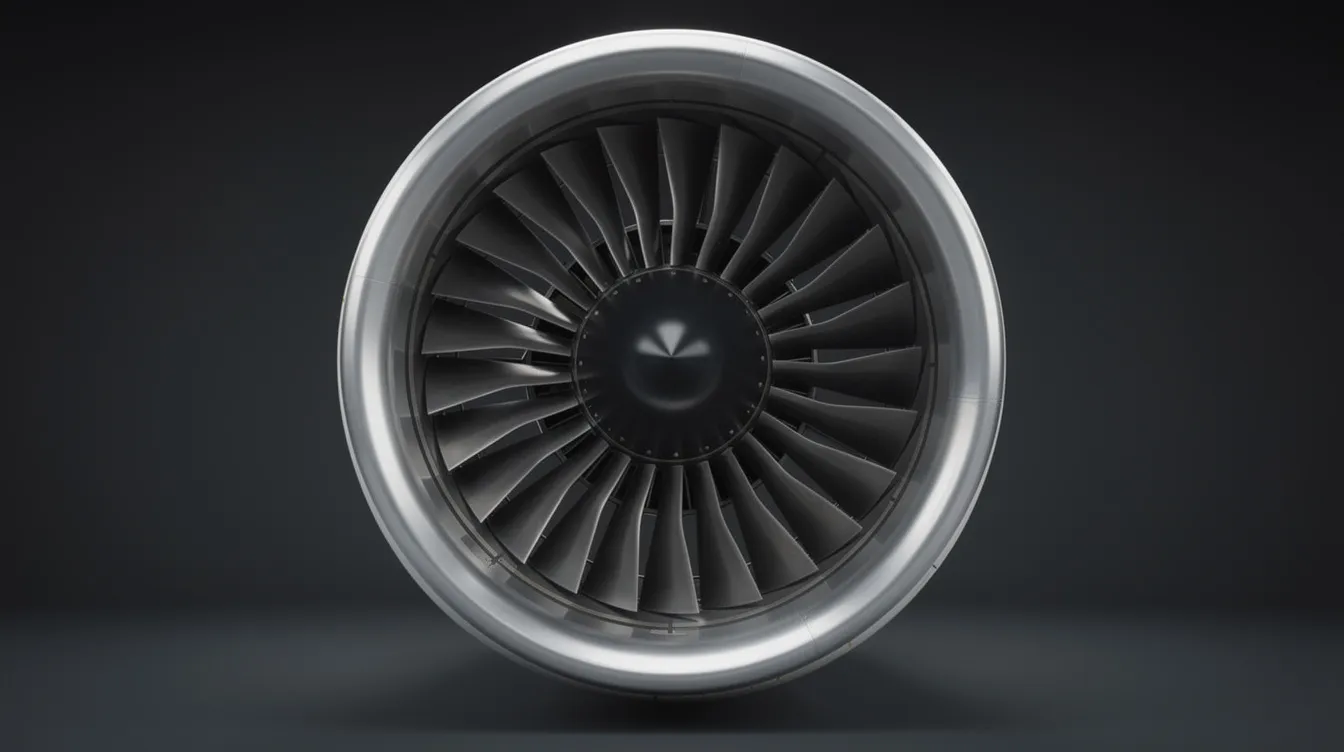
A turbofan engine consists of several main sections:
Fan: The large front fan accelerates bypass air around the core
Low-pressure compressor (LPC) and high-pressure compressor (HPC): Compress core air to overall pressure ratios of 30-50:1
Combustor: Where fuel flow meets high-temperature air and ignites
High-pressure turbine (HPT) and low-pressure turbine (LPT): Extract energy to drive compressors and fan
Exhaust nozzle: Directs remaining exhaust gases for additional thrust
The bypass ratio directly affects aircraft performance. Older military jets with ratios of 0.3-1.0 prioritize high-speed exhaust gases for supersonic capability. Large commercial airliners with a 5-12 ratio prioritize fuel efficiency at subsonic speeds.
Newer technologies, such as geared turbofans (which use a planetary gearbox to optimize fan and turbine speeds) and open-fan concepts, continue to improve fuel burn and emissions. These innovations will likely appear in future business and charter aircraft.
For travelers, turbofan engines deliver practical advantages:
Quieter cabins: High-bypass designs produce lower noise (under 80 dB inside), supporting productive work and rest on board
Smooth ride: Reduced vibration compared with older turbojets or turboprops
Strong performance: Typical cruise speeds around Mach 0.78-0.90, climb to FL450 in 20-30 minutes
Impressive range: From 1,000+ nautical miles for light jets to 7,500+ nautical miles for ultra-long-range jets like the Gulfstream G650
Better economics: Fuel efficiency (SFC 0.35-0.5 lb/lbf-hr) cuts CO₂ emissions 20-30% versus turbojets, supporting more sustainable private travel
When customers use Jettly to compare aircraft, they are usually comparing different turbofan-powered categories (light vs. midsize vs. heavy), each optimized for specific mission lengths by engine size and bypass ratio. Learn more about Jettly’s charter options at https://www.jettly.com.
A turboprop engine couples a gas generator core to a propeller through a reduction gearbox. Unlike turbofans that produce most thrust from jet exhaust, turboprops extract 80-90% of turbine power as shaft work to drive the propeller, with only 10-20% remaining as residual jet thrust.
This design excels at low speeds (roughly 200-350 knots) and altitudes below about 25,000 feet. Turboprops accelerate a very large mass of air at relatively low velocity, achieving propulsive efficiency above 85% in their optimal speed range.
Famous turboprop engines include the Pratt & Whitney Canada PT6A (introduced 1963, over 50,000 units produced), the AE 2100 powering ATR 72s, and the PW150A in Dash 8 aircraft. Popular private turboprops include the Pilatus PC-12 and Beechcraft King Air 350.
Many charter flights under 500-700 nautical miles can be cost-effective on turboprop aircraft offered via Jettly, especially when accessing smaller airports with shorter runways that jets may not use as easily—something you can evaluate quickly using Jettly’s airport locator tool and by applying tips for booking the cheapest private jet flights.
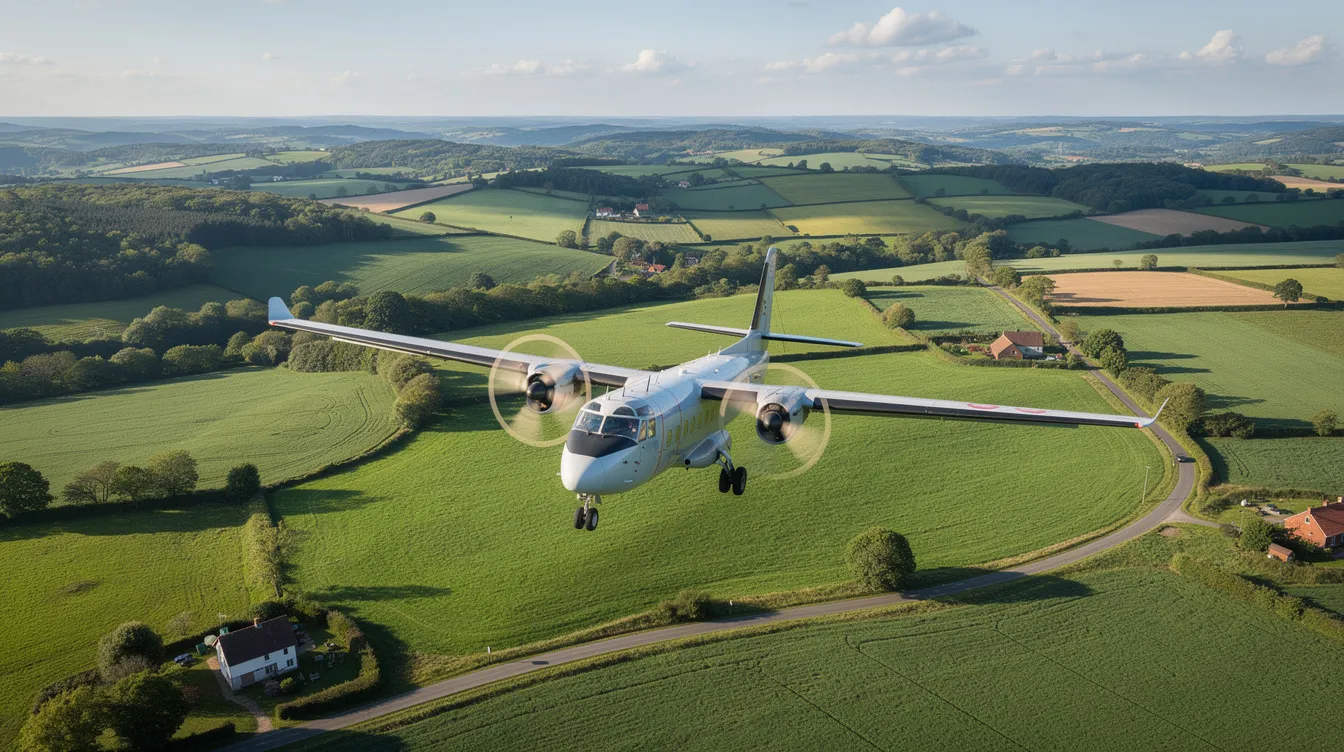
Air flows through the turboprop’s core engine similarly to a turbojet—through the air intake, compressor, combustion chamber, and turbines.
Turbines extract most of the exhaust energy and transmit it mechanically to the propeller via a power shaft and gearbox (a 10-20:1 reduction, reducing turbine speed to 1,200-2,000 rpm for the propeller).
Constant-speed propellers with variable pitch optimize thrust for takeoff, climb, cruise, and descent.
Modern FADEC (Full Authority Digital Engine Control) systems automatically adjust fuel flow and pitch for efficient operation across all flight phases.
Typical performance for charter turboprops: a King Air 350 cruises near 300-312 knots with a range of approximately 1,806 nautical miles and can climb at 3,300 feet per minute. Modern composite propellers and swept designs have significantly reduced noise, making recent turboprops quieter than many travelers expect.
Advantages:
Excellent short-field performance (takeoff from 1,500-3,000 feet of runway)
Access to smaller regional airports with limited infrastructure, including unpaved runways
Strong climb performance even from high-altitude airports
Lower hourly operating costs ($1,800-2,500/hr vs. $4,000+ for jets)
Fuel consumption is 20-30% lower per passenger-kilometer than comparable jets
Ideal missions:
Short-haul business hops (Los Angeles to Napa, London to regional European cities)
Access to remote areas with unpaved or short runways
Routes under 500 nautical miles where the time difference versus a jet is minimal
Premium turboprop cabins on models like the King Air 350 or the PC-12 can match small-jet comfort, making them a smart choice rather than a compromise. For travelers booking through Jettly, selecting a modern turboprop often lowers total trip cost by 20-40% while maintaining reliability and comfort, a difference you can quantify with Jettly’s private jet charter cost estimator.
Turboshaft engines are gas turbines optimized to provide shaft power rather than jet thrust. While they share many components with turboprops, their output is tuned to drive helicopter rotors, marine drives, or generators rather than propellers.
Turboshaft engines are primarily used in helicopters and are designed to turn a shaft that powers rotors rather than producing thrust directly. This design allows helicopters to perform vertical takeoff, hover, and maneuvering capabilities not possible with fixed-wing aircraft.
Common turboshaft examples include the Rolls-Royce M250 (400-700 shp) in light helicopters, the General Electric T700/CT7 (1,800-5,000 shp) powering the Sikorsky UH-60 Black Hawk, and the Rolls-Royce AE 1107C (6,150 shp) in the V-22 Osprey tiltrotor.
Turboshaft-powered helicopters are an important part of private aviation, offering point-to-point city access, resort transfers, and remote site access that complement fixed-wing jets in some travel itineraries, just as Jettly’s private charter aircraft lineup does across its global fixed-wing fleet.
Air flows through the compressor, combustion chamber, and turbine stages, as in other gas turbine engines.
The key difference is the free power turbine concept: a separate turbine stage drives the output shaft independently of the gas generator core.
This separation allows stable rotor speed across a wide range of power settings.
Helicopter pilots can adjust power while maintaining a consistent rotor RPM—crucial for smooth hovering, climbing, and maneuvering.
The gas generator can run at variable speed while the free power turbine maintains the rotor’s required speed.
Turboshafts typically offer high power-to-weight ratios (5-8 hp/lb) compared with piston engines, enabling vertical takeoff, sustained hover, and heavy-lift capability that fixed-wing aircraft cannot match.
Primary roles for turboshaft-powered aircraft:
VIP helicopter transport between city centers and airports
Emergency medical services
Offshore oil and gas platform support
Search and rescue operations
For private travel, turboshaft-powered helicopters connect city centers to airports or remote properties—frequently in combination with turbofan-powered jets for the main flight segment. A common scenario: helicopter from Manhattan to Teterboro Airport, then a Gulfstream to Miami—illustrating just one of many flexible options for getting a seat on a private jet easily.
Some larger fixed-wing jets also use small turboshaft-type auxiliary power units (APUs) in the tail to provide electrical power and air conditioning on the ground, improving passenger comfort and independence from airport systems.
While Jettly’s core booking focus is fixed-wing jets and turboprops, understanding turboshafts rounds out the picture of turbine power in modern aviation.
A ramjet engine is an airbreathing engine with no major moving parts. Instead of mechanical compressors, ramjets rely on the vehicle’s high forward speed to compress incoming air before combustion—this is called the ram effect.
Ramjets become efficient only at supersonic speeds (typically above Mach 2-3). They cannot self-start from rest and require rocket or turbojet assistance to reach operating speed. Once at speed, air pressure from forward motion compresses intake air, fuel ignites, and high-speed exhaust gases exit the nozzle to produce thrust.
Primary uses include high-speed missiles (like the BrahMos cruise missile at Mach 3), experimental aircraft, and hypersonic research programs. Ramjets are not used in commercial or private transport aircraft due to speed, range, and infrastructure constraints.
Scramjets (supersonic combustion ramjets) are a variant designed for hypersonic flight, maintaining supersonic airflow throughout the engine. They operate efficiently at speeds above Mach 5, with experimental vehicles like NASA’s X-43A reaching Mach 9.6. Scramjets remain experimental and are far outside practical aviation.
Inside a ramjet, the inlet slows supersonic air to subsonic speeds while compressing it.
Fuel is injected and burned in this subsonic combustion region, after which the exhaust gases re-accelerate through the nozzle.
No turbine or compressor blades are needed—the air pressure generated by vehicle speed does the work.
Ramjets operate most efficiently between Mach 3 and 5. Above these speeds, severe thermal challenges emerge (inlet temperatures exceeding 1,500°C) that require exotic materials and cooling systems.
Scramjets avoid slowing the air to subsonic speeds, allowing combustion to occur in supersonic airflow, which improves efficiency at hypersonic velocities.
For private jet charter through platforms like Jettly, ramjets and scramjets have no role. They are technologically fascinating but impractical for routine passenger transport.
Rocket engines carry both fuel and oxidizer, operating independently of atmospheric oxygen. This makes them usable in space and at very high altitudes where air-breathing engines cannot function.
Rockets predate turbojets, with Robert Goddard’s early liquid-fuel designs in the 1920s and major wartime developments such as the V-2 in 1944. The Saturn V, generating 7.5 million pounds of thrust, launched Apollo missions in the 1960s.
Rockets have extremely high thrust-to-weight ratios (50-100:1) and exhaust velocities (2,500-4,500 m/s). However, they consume propellant rapidly—specific fuel consumption is 10-100x worse than that of jet engines. This makes rockets impractical for routine atmospheric transport.
Key roles for rocket engines:
Orbital launch of satellites and cargo
Crewed spacecraft (Space Shuttle, SpaceX Crew Dragon)
Deep-space probes
Experimental high-speed vehicles
Unlike turbofans or turboprops, rockets do not scale well for cost-effective point-to-point travel within Earth’s atmosphere. Propellant needs, safety infrastructure, and cost ($10M+ per flight for concepts like SpaceX point-to-point) place them far outside charter options.
Research continues into high-speed point-to-point concepts using rocket or hybrid engines. A 30-minute transatlantic flight sounds appealing, but these remain speculative. For today’s travelers, turbofan and turboprop engines are the practical, available technologies for efficient private flights, particularly when booked through flexible providers that position themselves as a NetJets alternative for flying private and feature prominently in an overview of leading charter airlines and private aviation platforms.
Performance metrics such as fuel efficiency, thrust-to-weight ratio, and noise matter to both operators and passengers. These numbers translate directly into operating costs, range capability, cabin comfort, and environmental impact.
|
Engine Type |
SFC (lb/lbf-hr) |
Thrust-to-Weight |
Typical Speed Range |
|---|---|---|---|
|
Turbojet |
0.8-1.2 |
6-8:1 |
Mach 0.9-2+ |
|
High-bypass Turbofan |
0.35-0.5 |
5-7:1 |
Mach 0.7-0.9 |
|
Turboprop |
0.5-0.6 (shp) |
4-6:1 |
250-400 knots |
|
Turboshaft |
Similar to turboprop |
6-10:1 |
N/A (hover capable) |
|
Ramjet |
2-4 |
N/A |
Mach 2-5 |
|
Rocket |
10+ equivalent |
50-100:1 |
Unlimited |
|
High-bypass turbofans and modern turboprops deliver the best fuel efficiency for subsonic transport. This explains their dominance in airline and business aviation fleets. Rockets and ramjets may be more efficient at extreme speeds, but cost, infrastructure, and mission constraints make them unsuitable for passenger travel. |
A practical comparison: on a 400-nautical-mile route, a King Air turboprop costs approximately $2,000 and takes 1.3 hours. A Citation jet costs around $4,000 and takes 1 hour. The turboprop wins on cost, while the time difference is minimal when including ground transportation—tradeoffs that become clearer when you run routes through a jet card flight cost estimator or consult a detailed comparison of the best jet card programs today.
Engine choice shows up in practice through aircraft selection:
Turbofans for higher speed and longer range (New York-Miami on a super-midsize jet)
Turboprops for cost-effective shorter legs (Toronto-Ottawa)
Helicopters (turboshafts) for last-mile access (airport to remote resort)
On Jettly’s digital platform, customers can filter aircraft by type and size, indirectly choosing the engine technology that best fits their schedule, budget, and airport options, especially when paired with flexible private jet memberships or jet card solutions that explain what a jet card is and how it works, matching different flying patterns. While the engineering is complex, the practical decision for travelers comes down to time saved, runway access, comfort, and total trip cost.
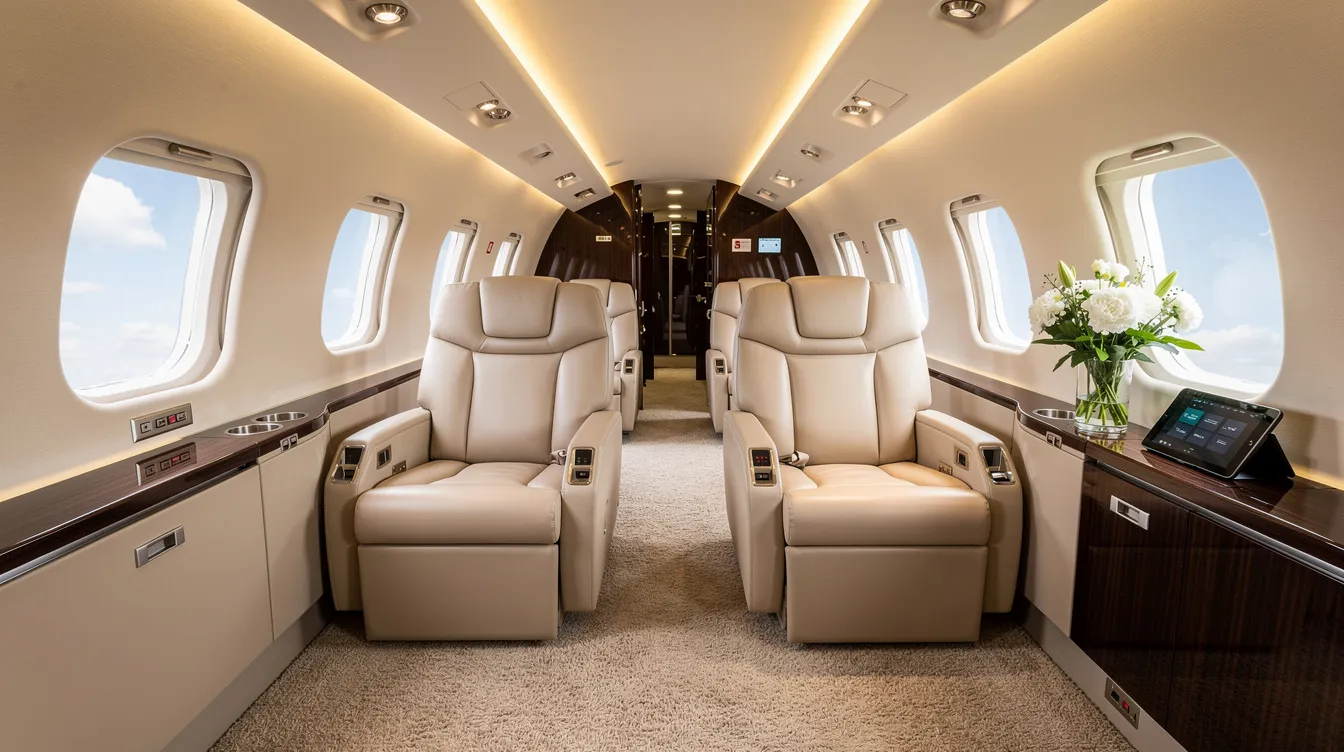
Turbojet — Military jets and early airliners use turbojets for high speed and compact design, but they are noisy and less efficient at subsonic speeds.
Turbofan — Airliners and business jets favor turbofans because they are quiet, fuel-efficient, and have a high bypass ratio, making them dominant in modern aviation.
Turboprop — Regional airliners and private propeller aircraft use turboprops for efficient performance at low speeds, short runways, and propeller-driven thrust.
Turboshaft — Helicopters, marine applications, and auxiliary power units rely on turboshaft engines for shaft power rather than jet thrust.
Ramjet — Missiles and experimental aircraft use ramjets, which have no moving parts, operate efficiently at supersonic speeds, but require a high initial speed.
Scramjet — Hypersonic research vehicles use scramjets for supersonic combustion and speeds above Mach 5; these are experimental and not for regular aviation.
Rocket — Spacecraft and missiles use rocket engines, which are non-airbreathing, carry their own oxidizer, deliver very high thrust, but are not fuel efficient.
Modern private jets—light, midsize, and large-cabin—are overwhelmingly powered by high-bypass or medium-bypass turbofan engines. Manufacturers like Honeywell, Rolls-Royce, Pratt & Whitney Canada, and Williams International supply most business jet powerplants.
Turbofans provide the best combination of speed (around 450-520 knots), range, and cabin quietness for business travel. When customers book a Citation, Challenger, Gulfstream, or similar aircraft through Jettly, they are almost always flying with turbofan engines—and their total trip budget reflects familiar drivers, as explained in Jettly’s guide to affordable private jet charter.
Turboprops are ideal for shorter flights (roughly 150-500 nautical miles), trips to smaller airports with shorter runways, and routes where cost efficiency matters more than arriving 15-30 minutes faster.
Real-world examples include regional hops like Dallas-Austin, Milan-Nice, or Sydney-Canberra. On these routes, cruise speed differences are small relative to the time saved at secondary airports closer to final destinations. Travelers on Jettly’s platform often lower total trip cost by selecting a modern turboprop while maintaining a high level of onboard comfort, and some further reduce expenses by using shared-flight options and crowdsourced private jet seats, all while tailoring the onboard experience with services like Jettly Eats in-flight catering for private jets.
High-bypass turbofan engines on modern business jets are generally the quietest from a cabin perspective. Slower exhaust velocities and advanced noise-reduction engineering result in cabin noise levels under 75-80 dB on many models.
Newer turboprops with advanced composite propellers can also be relatively quiet inside, especially in premium configurations. However, cabin noise and vibration are typically higher than on a comparable jet. Travelers who prioritize a quiet working environment usually prefer a turbofan-powered jet, particularly on longer flights.
In certified operations, safety is driven more by maintenance standards, regulatory oversight, crew training, and operator quality than by engine type itself. Modern turbofan, turboprop, and turboshaft engines used in charter aircraft have strong reliability records with mean time between failures exceeding 10,000 hours.
All these engines must meet stringent airworthiness requirements set by authorities such as the FAA, EASA, or Transport Canada. Platforms like Jettly work only with licensed operators meeting these standards, so travelers can focus on mission fit and comfort rather than basic engine safety concerns.
Ongoing research into geared turbofans, hybrid-electric propulsion, sustainable aviation fuels (SAF), and open-fan designs aims to cut fuel burn and emissions over the next decade. Some newer turbofans already achieve 16-25% fuel savings over previous generations.
Early changes will be incremental—more efficient versions of today’s turbofans and turboprops rather than radical new engine types like ramjets or scramjets for everyday charter, but travelers can already access more flexible options like buying a single seat on a private jet instead of chartering an entire aircraft or exploring jet card costs and pricing structures in depth. Travelers can increasingly opt for aircraft compatible with SAF blends (up to 50% tested on many engines) when comparing charter options through tech-driven platforms like Jettly.
What is the primary advantage of turbofan engines for private jets?
Turbofan engines offer an optimal mix of fuel efficiency, speed, and reduced cabin noise, making them the preferred choice for most private jets and commercial airliners.
Why are turboprop engines chosen for some private flights?
Turboprop engines excel on shorter routes and at smaller airports, providing lower operating costs and the ability to operate from shorter or even unpaved runways.
Can private jets use ramjet or scramjet engines?
No, ramjet and scramjet engines are reserved for specialized military and research applications due to their operational requirements and limitations at low speeds.
How do turboshaft engines differ from turboprops?
Turboshaft engines are optimized to deliver shaft power primarily for helicopters and auxiliary power units, while turboprops are designed to drive propellers for fixed-wing aircraft.
Are rocket engines ever used in private aviation?
No, rocket engines are not used in private or commercial aviation as they are designed for spaceflight and have extremely high fuel consumption and unique operational needs.
Does the type of jet engine affect passenger comfort?
Yes, high-bypass turbofan engines provide quieter and smoother cabins compared to turbojets or older turboprops, enhancing passenger comfort on private flights.
What are the main criteria for choosing an engine type when booking a private flight?
Key factors include route length, airport infrastructure, speed requirements, operating cost, and cabin comfort—all of which are influenced by the chosen engine type.
Will new engine technologies change private jet travel soon?
Advances such as geared turbofans, sustainable aviation fuels, and hybrid-electric propulsion are expected to improve efficiency and reduce emissions, but widespread adoption will be gradual.
The main types of jet engines—turbojet, turbofan, turboprop, turboshaft, ramjet, scramjet, and rocket—were developed for different speed ranges and missions. Modern private aviation depends chiefly on turbofan and turboprop technology, with turboshaft engines powering helicopters for specialized roles.
High-bypass turbofans power most business jets and airliners, delivering long-range, fast, and quiet travel. Turboprops cover shorter regional routes with excellent runway flexibility and lower costs. Understanding these distinctions helps travelers interpret aircraft specifications—cruise speed, range, runway requirements, and hourly rate—when browsing charter options.
For travelers ready to match the right aircraft to their next trip, Jettly offers a straightforward platform to explore categories, compare options, and request instant quotes, including structured solutions such as its Jet Card programs, as well as insights from a guide to the best private jet charter companies.
Ready to experience private travel on your terms? Explore flight options or request a quote at https://www.jettly.com.
Share this post:
Jay Franco Serevilla
Apr 13, 2026
|
5
min read
Discover tips and trends in the industry.
5
min read
Boeing 777-200: Cabin Layout, Seat Maps, and How It Compares to Private Charter
The Boeing 777-200 is a long-haul, wide-body aircraft known for its efficiency and passenger capacity, serving major airlines worldwide. This guide compares the commercial flying experience on the 777-200 with private charter options, highlighting cabin layouts, seat maps, and the benefits of choosing private travel for flexibility and comfort.
Read More
5
min read
Cleveland Hopkins International Airport (CLE) Guide
Cleveland Hopkins International Airport (CLE) is the primary airport for Northeast Ohio, located just nine miles from downtown Cleveland. With ongoing modernization efforts and a variety of airlines, CLE serves millions of passengers annually, offering both commercial and private jet charter options. This guide provides essential information on terminals, parking, security, and transportation to enhance your travel experience.
Read MoreStay updated with our latest insights and tips to elevate your journey with us.
MEMBERSHIPS AND ASSOCIATIONS



Disclaimer: Jettly operates as a charter broker, offering access to a global digital jet charter marketplace. Jettly is not a direct air carrier and does not own or operate aircraft. All advertised flights are conducted by third-party air carriers that are fully licensed and hold the appropriate Part 135 or Part 121 certifications issued by the Federal Aviation Administration (FAA) or equivalent regulatory authorities under U.S. or foreign law. Jettly complies fully with the U.S. Department of Transportation's Part 295 and Part 298 Charter Broker regulations. Jettly does not carry additional liability insurance. Passengers are covered by aircraft operator insurance. TICO: 50023770


