


Login
Get Instant Pricing On 23,000+ Aircraft

>
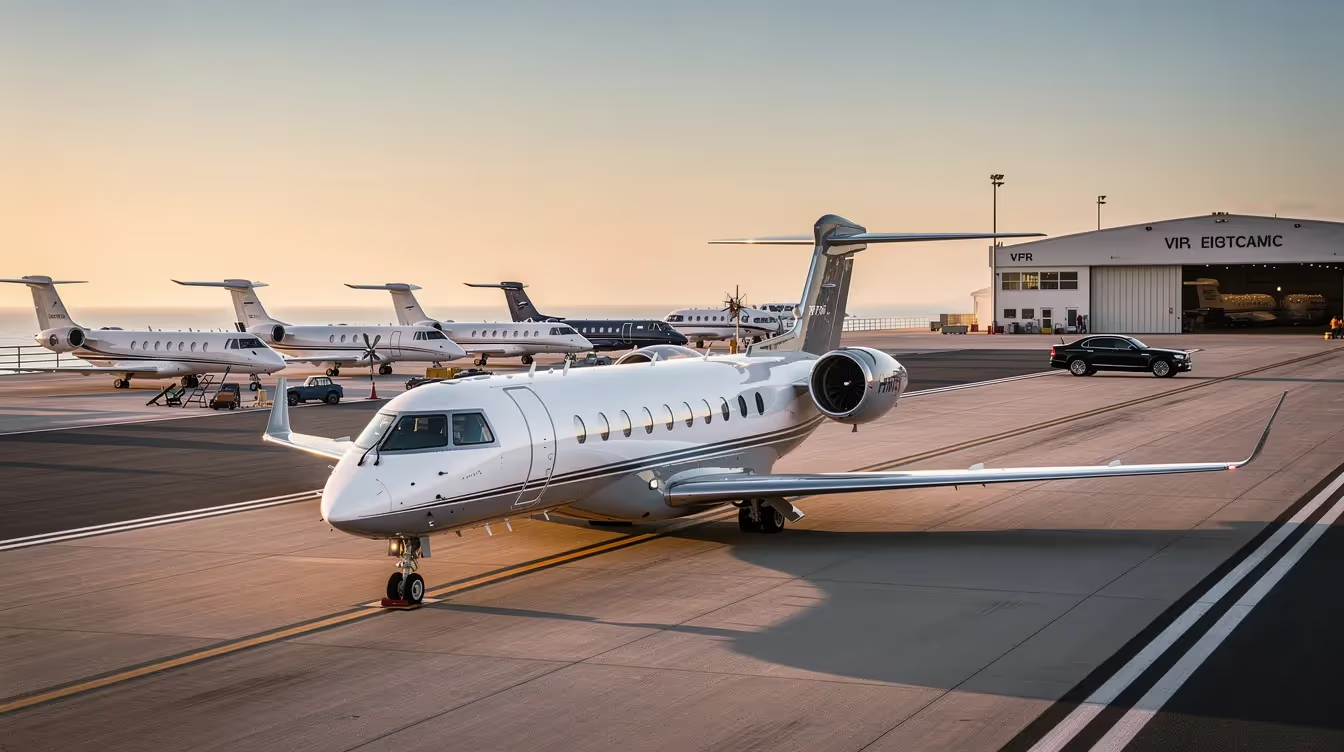
A military airplane is any aircraft specifically designed, modified, or operated for military use by armed forces. This comprehensive article explores the historical evolution of military airplanes, their primary roles in modern warfare, the technological advancements that drive their capabilities, and their far-reaching impact on both military strategy and civilian aviation. The scope includes a detailed look at how military airplanes have developed from early observation platforms to today’s advanced jets and unmanned systems, the main categories and roles these aircraft fulfill, the technology that powers them, and their influence on both military and civilian sectors.
Military airplanes are specialized aircraft designed for armed forces, playing vital roles in defense, intelligence, and logistics while driving advancements that shape both military and civilian aviation. Their evolution from early reconnaissance platforms to today’s high-tech jets and drones has made air power a decisive factor in modern conflicts and technological innovation.
– Military airplanes fulfill roles such as air superiority, reconnaissance, close air support, and logistical transport
– They are categorized into types like fighters, bombers, attack aircraft, transports, helicopters, and UAVs
– Modern designs feature advanced stealth, avionics, and weapon integration for precision and survivability
– Their influence extends to civilian aviation through shared technology and coordinated airspace operations
– The future of military aviation includes unmanned systems, AI integration, and sustainable technologies
This article is intended for aviation enthusiasts, students, and general readers interested in understanding how military airplanes have shaped both military strategy and technological progress. Understanding military airplanes matters because they have fundamentally transformed the nature of warfare—enabling rapid global response, advanced reconnaissance, and precision strikes—and have driven innovations that influence civilian aviation and technology.
– Military airplanes are essential for air superiority, intelligence, and rapid response in defense operations
– Their evolution has driven major technological advances, many of which benefit civilian and private aviation
– Key categories include fighters, bombers, attack aircraft, transports, helicopters, and UAVs, each with specialized roles
– Military and civil aviation share airspace, requiring coordination for safety and mission success
– The future of military aviation emphasizes unmanned technology, AI integration, and sustainability
Military airplanes play essential roles in modern warfare, including:
Air superiority: Gaining and maintaining control of the skies to protect friendly forces and deny enemy aircraft operational freedom.
Reconnaissance: Gathering intelligence and surveillance data to inform military decisions.
Close air support: Providing direct support to ground forces during combat operations.
Logistical support: Transporting troops, equipment, and supplies to ensure operational effectiveness.
These roles are carried out by a diverse range of aircraft types—fighters, bombers, attack aircraft, transport planes, helicopters, and unmanned aerial vehicles (UAVs)—each tailored to specific missions. The evolution of military airplanes has transformed warfare from localized, ground-based battles into multi-domain, global conflicts, making air power a decisive factor in military strategy and outcomes. Their ability to control the skies, gather intelligence, support ground forces, and deliver supplies ensures that modern armed forces can operate effectively across the globe.
Military aviation began with simple observation platforms before evolving into the complex multi-role systems flown today.
Early Observation (1794–1900s): The French deployed hot air balloons for reconnaissance at the Battle of Fleurus in June 1794, marking the first combat use of aerial observation. Union forces later used tethered balloons during the American Civil War to spot enemy aircraft and artillery positions.
Powered Flight and World War I: The Wright brothers achieved the first powered flight in December 1903, a milestone that paved the way for military aviation. Key subsequent milestones occurred in February, such as the first military contracts and demonstration flights in 1908 and 1909. The Wright brothers sold the first practical aircraft to the U.S. Army Signal Corps in 1909 for $30,000. During World War I, air combat became a significant aspect of warfare, leading to the development of fighter aircraft designed primarily for air-to-air combat and ground attack missions, as well as the introduction of strategic bombing. Biplanes such as the British Sopwith Camel and the German Fokker Dr I transformed reconnaissance into aerial combat, with pilots destroying enemy aircraft in dogfights over Europe.
World War II Expansion: Military aircraft evolved significantly during the war, with the introduction of jet aircraft, the expansion of strategic bombing campaigns, and the deployment of nuclear weapons from aircraft. Aircraft played a crucial role in the delivery of weapons and payloads, including the precise delivery of nuclear bombs during the war. Iconic military aircraft like the Spitfire defended England during the Battle of Britain, while bombers such as the B-17 and Lancaster carried large payloads of bombs against ground targets. This era also saw the rise of bombers as larger, less manoeuvrable aircraft designed for ground attack, in contrast to agile fighter planes.
Jet Age and Beyond: The Cold War introduced jet engines, which allowed supersonic speeds and higher altitudes, leading to the development of modern combat aircraft. Jets like the MiG-15 and F-86 Saber clashed over Korea, while the B-52 Stratofortress entered service as a strategic bomber capable of carrying nuclear payloads. Fourth-generation fighters like the F-15 and F-16 evolved into 5th-generation stealth jets. Unmanned combat aerial vehicles (UCAVs), remotely controlled or autonomously guided, emerged in the 1990s for precision strikes and surveillance.
With this historical foundation in place, we can now examine the primary roles and types of military airplanes in modern forces.
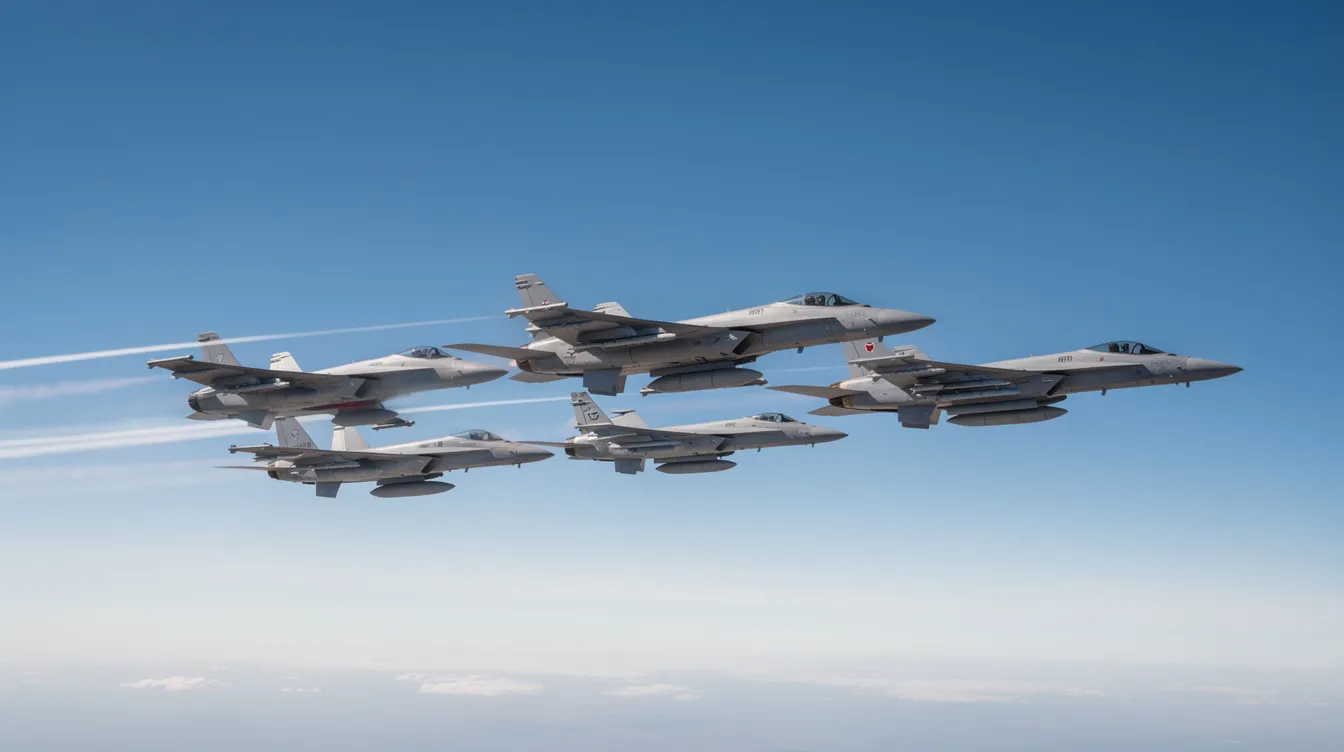
Military airplanes are broadly categorized into several main types, each serving essential roles in modern warfare. The primary categories include:
Fighters: Designed for air-to-air combat and air superiority missions.
Bombers: Built to deliver large payloads of bombs or missiles against ground targets.
Attack Aircraft: Specialized for close air support and ground attack missions.
Transport Aircraft: Used to move troops, equipment, and supplies efficiently.
Helicopters: Provide vertical lift for transport, attack, search and rescue, and reconnaissance.
Unmanned Aerial Vehicles (UAVs): Remotely piloted or autonomous aircraft for surveillance, reconnaissance, and precision strikes.
These categories are further divided into two broad groups:
Combat Aircraft: Fighters, bombers, and attack aircraft designed for offensive and defensive operations.
Non-Combat Aircraft: Transport planes, tankers, trainers, reconnaissance platforms, helicopters, and UAVs that provide logistical, intelligence, and support functions.
Modern air force and navy operations rely on specialized and multirole aircraft covering distinct mission categories, each essential for achieving air superiority, gathering intelligence, supporting ground forces, and ensuring logistical efficiency.
Air superiority fighters: Tasked with destroying enemy aircraft in air-to-air combat and sometimes performing ground attack missions. Examples: F-22, Su-35, J-20.
Multirole fighters: Capable of switching between air-to-air and ground-attack missions, carrying various weapon configurations. Examples: F-35, F/A-18E/F, Rafale, Gripen.
Air superiority missions involve gaining control of the skies to protect friendly troops and ships while denying enemy aircraft the ability to operate. The F-22 can achieve Mach 2.25, with sensors enabling beyond-visual-range combat using missiles like the AIM-120 AMRAAM. Multirole fighters like the F-16 Fighting Falcon (over 4,600 produced) and the Dassault Rafale operate in NATO air policing and Pacific patrols.
Strategic bombers: Larger, less maneuverable aircraft designed to carry and deliver large payloads of bombs or missiles against ground targets. Examples: B-52, B-1B Lancer, B-2 Spirit.
Strike aircraft: Conduct low-level penetration with precision-guided bombs. Example: F-15E.
Close air support aircraft: Provide direct support to ground forces, often heavily armored and equipped with powerful cannons. Examples: A-10 Thunderbolt II, Su-25.
Strategic bombers deliver long-range strikes and serve nuclear deterrence. The B-52 entered service in 1955 with a 70,000+ lb payload and global range via aerial refueling—notably still under upgrade through the 2030s. For close air support, the A-10 Thunderbolt II carries a GAU-8 30mm cannon and survives hits that would destroy other planes, providing protection for ground forces.
Transport aircraft: Move troops and supplies efficiently, often equipped with cargo handling systems and aerial refueling capabilities. Examples: C-17, C-130 Hercules, A400M.
Tankers: Provide in-flight refueling to extend the range and endurance of combat and support aircraft. Examples: KC-135, KC-46 Pegasus.
Support aircraft: Include trainers and specialized platforms for electronic warfare, search-and-rescue, and other support roles.
Military logistics depend on airlift. The C-17 Globemaster III moves 170,900 lbs of cargo and lands on short runways. During the 2010 Haiti earthquake, C-17s airlifted over 4,000 personnel to deliver humanitarian supplies. Tankers like the KC-135 extend fighter range by 300%, enabling extended combat missions.
Reconnaissance/ISR aircraft: Gather intelligence and conduct surveillance over enemy territory. Examples: RQ-4 Global Hawk, U-2.
AEW&C (Airborne Early Warning and Control): Act as flying command centers, tracking targets and directing friendly aircraft. Examples: E-3 Sentry AWACS, E-2D Hawkeye.
Intelligence-gathering aircraft include historic platforms like the SR-71 Blackbird (Mach 3.3, flown at 85,000 feet) and modern systems like the RQ-4 Global Hawk, which can fly 60-hour surveillance missions. The E-3 AWACS operates as a flying command center, its rotating radar dome tracking 400+ targets and directing fighters—essentially providing battlespace control beyond the horizon.
Modern military aircraft are increasingly integrated with space-based assets to conduct network-centric warfare, enhancing situational awareness and coordinated operations.
Modern military airplanes combine stealth, advanced materials, and digital systems. The F-117 Nighthawk pioneered stealth design in 1983, while the F-35 integrates sensor fusion across radar, infrared, and electro-optical data.
Avionics feature fly-by-wire control, glass cockpits, and Link 16 datalinks for networked warfare. Propulsion includes afterburning turbofans like the F119 engine. In many modern designs, certain critical components—such as redundant flight control systems and hardened avionics—have been retained from earlier generations to ensure reliability and mission success.
Weapons integration enables precision-guided munitions (PGMs), which have replaced large, inaccurate bombing methods. This allows for decisive effects with fewer strikes and reduced collateral damage compared to World War II area bombing.
Emerging trends include next-generation air-dominance programs that focus on autonomous drones operating alongside manned jets, enhancing combat effectiveness and survivability.
With these technological advancements, military airplanes continue to set the standard for innovation in aviation and defense.
The evolution of military aircraft has fundamentally reshaped the landscape of modern warfare, making air superiority a decisive factor in the outcome of conflicts around the world. From the earliest days of military aviation in World War I, when practical aircraft were first deployed for reconnaissance and observation, to the high-tech combat aircraft of today, the ability to control the skies has become central to military strategy.
During World War II, the rapid development of fighter aircraft and bombers enabled armed forces to destroy enemy aircraft and strike ground targets with unprecedented precision. The introduction of new weapons, such as advanced bombs and missiles, enabled military aircraft to perform a wider range of missions, from strategic bombing to close air support.
Aircraft produced by leading manufacturers like Lockheed Martin, Boeing, and McDonnell Douglas became synonymous with technological innovation and combat effectiveness, helping to define the capabilities of air forces worldwide.
The impact of military aviation extends beyond direct combat. Surveillance and observation aircraft, including those developed by the British and the United States Coast Guard, have played vital roles in gathering intelligence and monitoring enemy movements. The use of hot air balloons for reconnaissance in earlier conflicts laid the groundwork for the sophisticated sensors and intelligence-gathering platforms that are now standard in modern military operations.
In recent decades, the development of unmanned aerial vehicles (UAVs) and advanced sensor technology has further expanded the reach and effectiveness of military aircraft. UAVs, operated by branches such as the United States Navy, allow for persistent surveillance and precision strikes without risking pilot lives. Modern sensors enable aircraft to operate in challenging conditions—at night, in adverse weather, or in contested airspace—ensuring that armed forces maintain a technological edge.
The versatility of military aircraft is evident in their ability to perform a wide range of military duties, from transporting troops and supplies over vast distances to delivering new weapons with pinpoint accuracy, a stark contrast to the luxury-focused cabins highlighted in celebrity private jet and VIP travel overviews. In conflicts such as the Gulf War and the war in Afghanistan, air superiority, rapid deployment, and real-time intelligence provided by advanced aviation technology proved critical to mission success.
As aviation technology continues to advance, the role of military aircraft in warfare only grows more significant. The integration of new capabilities—such as networked sensors, stealth, and autonomous systems—ensures that air power remains at the forefront of military strategy. The history and ongoing development of military aviation underscore its enduring impact on the conduct of war, shaping the way armed forces operate and adapt to new challenges across the globe.
With a clear understanding of their impact, we can now explore how military aircraft interact with civil and private aviation, including how travelers use tools such as an airport locator and an on-demand private jet booking platform to plan routes that share airspace with military operations.
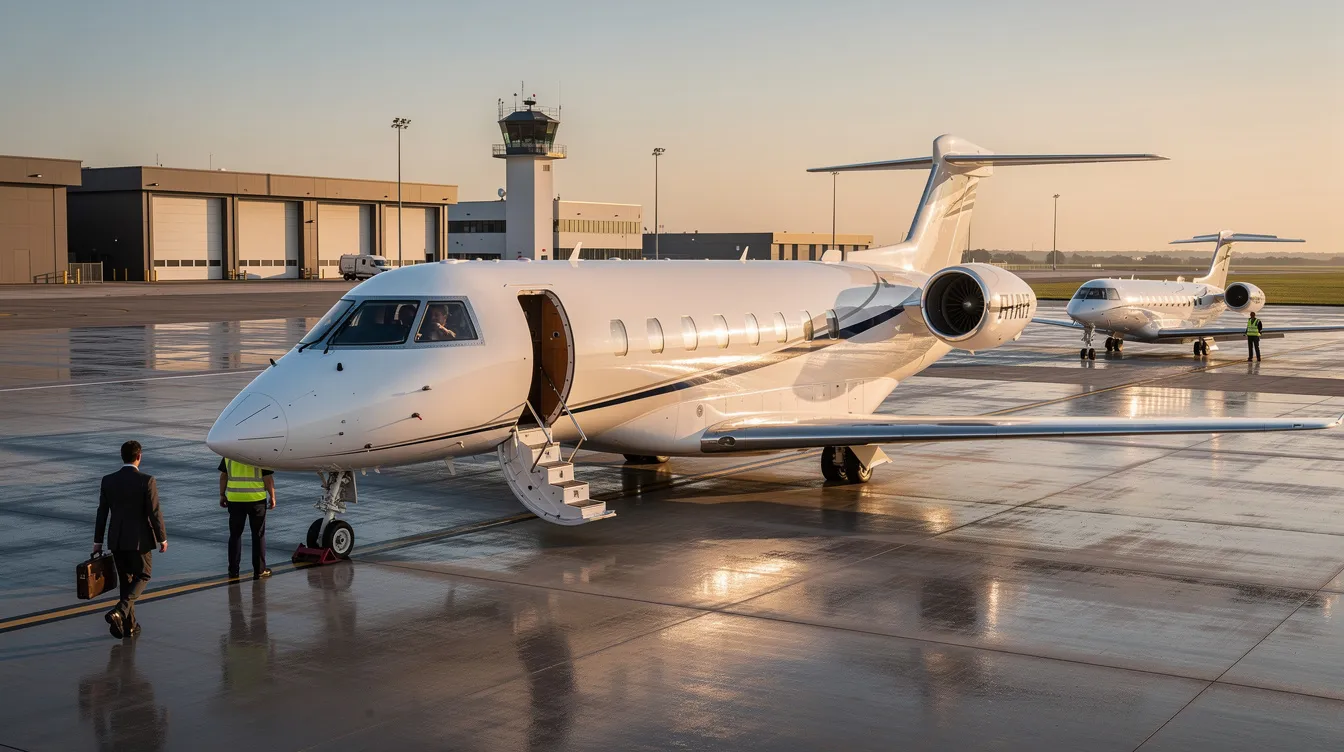
Military and civil aviation share global airspace under coordinated air traffic control. Military operations use restricted zones and training areas, while technologies like GPS—developed from the 1970s NAVSTAR—now serve civilian navigation.
While military aircraft prioritize survivability and combat capabilities, private jets focus on passenger comfort and operating efficiency, reflecting the growth of the global private jet fleet, industry trends, and the emergence of comprehensive guides to the best private airplanes in 2025 alongside rankings of the top 10 best private jets in the world. Jettly connects travelers to over 10,000 private charter aircraft globally, many of which are produced by manufacturers like Gulfstream and other leading private plane manufacturers that also produce special mission variants.
Both military airplanes and private jets use advanced engineering, but priorities differ fundamentally, especially in areas like mission profile, onboard systems, and even in-flight services such as specialized private jet catering solutions like Jettly Eats:
Mission: Military airplanes are built for combat and reconnaissance, while private jets (such as those available via Jettly) are designed for business and leisure travel.
Interior: Military aircraft have functional, sparse interiors focused on mission needs; private jets offer club seating, catering, and WiFi for passenger comfort.
Operations: Military airplanes operate on classified routes for national defense, whereas private jets follow customer itineraries and offer flexible schedules.
Access: Military aircraft are government-funded; private jets offer instant booking, transparent pricing estimates, and affordable charter options through services like Jettly.
Example: Military airplanes are used for troop transport and combat missions, while private jets provide comfortable cabins and FBO access for short flights or tailored trips.
Sixth-generation programs like the U.S. NGAD and Europe’s FCAS emphasize manned-unmanned teaming, AI integration, and enhanced stealth. The army and air force continue developing autonomous systems for reconnaissance and strike.
Sustainability gains attention: the B-52 tested 50% sustainable aviation fuel in 2023. Innovations in materials and avionics will eventually benefit commercial and private aviation, indirectly improving the experience for travelers using platforms like Jettly and expanding access to the cheapest private aircraft options for different budgets, budget-friendly planes for aviation enthusiasts, and updated cheap plane options for budget-conscious buyers in 2025, as well as broader guides to affordable aircraft choices and ownership and resources on choosing the best personal plane.
Front-line fighters like the F-22 exceed Mach 2 (over 1,500 mph), while commercial airliners cruise around Mach 0.8–0.85. Military transports fly at similar speeds to airliners for fuel efficiency. High speed consumes significant fuel, which is why private jets rarely approach fighter speeds, especially on cross-country plane trips where range, fuel efficiency, and comfort must be balanced.
Some airframes—particularly transports like the C-130—have been converted for firefighting or cargo. Combat aircraft conversions are rare due to noise, maintenance costs (A-10: $17,716/hour), and regulatory challenges. Private jets on Jettly are purpose-built for passenger comfort, and travelers can reference comprehensive guides on how much a private jet costs, as well as an additional guide to affordable airplane rental costs and options, to understand how trip distance, aircraft size, and operating expenses shape pricing.
National air traffic control agencies manage both through designated training areas, restricted zones, and flight plans. Military aircraft use standard transponders during routine operations. In emergencies, military flights receive priority while civil traffic is rerouted.
Different definitions apply: military aircraft survive combat and extreme maneuvers, while private jets meet FAA/EASA certification for system redundancy and predictable performance, with many travelers prioritizing the safest private jets in the world and their advanced safety features. Jettly operators comply with strict maintenance oversight and safety audits, and frequent flyers often leverage Jettly private jet memberships, corporate jet card programs, and dedicated guides to private jet card costs and pricing structures, along with broader explanations of what a jet card is and how it works and a comparison of the best jet card programs available today for consistent safety standards and predictable access.
Jettly focuses on civilian-registered private jets, turboprops, and helicopters for business and leisure, including rotary-wing options where travelers may want to understand typical helicopter rental costs and pricing factors. Some aircraft may have military heritage, but interiors and operations are adapted for civil use. Explore options at https://www.jettly.com.
What are the main categories of military airplanes?
The main categories include fighters, bombers, attack aircraft, transport planes, helicopters, and unmanned aerial vehicles (UAVs), each serving distinct roles in military operations.
How do military airplanes contribute to modern warfare?
They provide air superiority, intelligence gathering, close air support, and logistical support, fundamentally transforming the conduct and strategy of warfare worldwide.
What technological advancements distinguish modern military airplanes?
Modern military airplanes use stealth technology, advanced avionics, networked communication, precision-guided weapons, and sometimes AI-powered autonomous systems.
How do military aircraft and private jets differ?
Military aircraft prioritize combat performance, survivability, and mission flexibility, while private jets focus on passenger comfort, operational efficiency, and luxury services.
Can military airplanes operate in the same airspace as civilian aircraft?
Yes, military and civilian aircraft share airspace under coordinated air traffic control, with military operations often using restricted zones and adhering to special procedures.
Are there any military airplanes adapted for civilian use?
Some military transport aircraft have been adapted for firefighting and cargo roles, but most combat aircraft are not converted due to operational and regulatory challenges.
What impact have military airplanes had on civilian aviation technology?
Innovations such as jet engines, GPS, and advanced materials were developed for military use and later adopted in commercial and private aviation, enhancing safety and efficiency.
What does the future hold for military airplane technology?
The future includes further integration of unmanned systems, artificial intelligence, sustainable fuels, and enhanced stealth and sensor capabilities.
In conclusion, military airplanes serve critical defense and strategic roles, with specialized capabilities including air superiority, reconnaissance, close air support, and logistics support. Platforms like Jettly provide travelers with convenient access to private aviation tailored for comfort, flexibility, and efficiency, and they can compare top private jet charter companies when evaluating their options or review an in-depth overview of NetJets, a private aviation leader, along with detailed NetJets jet card cost breakdowns. The evolution of military aviation continues to influence aircraft technology, indirectly benefiting private jet design and operations. For those seeking a seamless private travel experience, including family-friendly private jet options and guidance on whether private jets can fly internationally, Jettly offers instant booking, transparent pricing, and a vast global fleet to meet diverse travel needs, supported by tools like a jet card flight cost estimator for one-way routes, insights into private jet lease costs and structures, and positioning it as a compelling NetJets alternative for flexible private flying.
Ready to experience private travel on your terms? Travelers can reduce per-seat costs through Jettly’s crowdsourced and shared private jet flights, apply tips for booking the cheapest private jet flights, or consult a complete guide on how much it costs to rent a private jet and broader explanations of how renting a plane works in practice. They can also explore a comprehensive guide to charter airlines and private flights, understand one-flight private jet cost factors before renting, dive into a complete breakdown of private jet operating costs and ownership economics, and even review city-specific options such as private jet charter in Kolkata, West Bengal or private jet charter in New Delhi, Delhi, or follow practical guides on how to buy a seat on a private jet and strategies to get a private jet seat easily and affordably, including insights on weekend plane rental costs and considerations. Explore flight options or request a quote at https://www.jettly.com, including dedicated operator pages such as Dexter Air Taxi private jet services and Zenflight instant-book private jet charters.
Share this post:
Jay Franco Serevilla
Apr 13, 2026
|
5
min read
Discover tips and trends in the industry.

5
min read
Flights to Florida: Private Jet Options, Top Cities, and How to Find Smart Deals
Florida is a top travel destination, offering a variety of flight options including commercial and private jet charters. This guide provides insights on popular cities, seasonal pricing, and tips for finding the best deals. Whether for business or leisure, choosing the right flight can enhance your travel experience significantly.
Read More5
min read
Flights to Florida: Private Jet Options, Top Cities, and How to Find Smart Deals
Florida is a top travel destination, offering a variety of flight options including commercial and private jet charters. This guide provides insights on popular cities, seasonal pricing, and tips for finding the best deals. Whether for business or leisure, choosing the right flight can enhance your travel experience significantly.
Read MoreStay updated with our latest insights and tips to elevate your journey with us.
MEMBERSHIPS AND ASSOCIATIONS



Disclaimer: Jettly operates as a charter broker, offering access to a global digital jet charter marketplace. Jettly is not a direct air carrier and does not own or operate aircraft. All advertised flights are conducted by third-party air carriers that are fully licensed and hold the appropriate Part 135 or Part 121 certifications issued by the Federal Aviation Administration (FAA) or equivalent regulatory authorities under U.S. or foreign law. Jettly complies fully with the U.S. Department of Transportation's Part 295 and Part 298 Charter Broker regulations. Jettly does not carry additional liability insurance. Passengers are covered by aircraft operator insurance. TICO: 50023770


