


Login
Get Instant Pricing On 23,000+ Aircraft

>
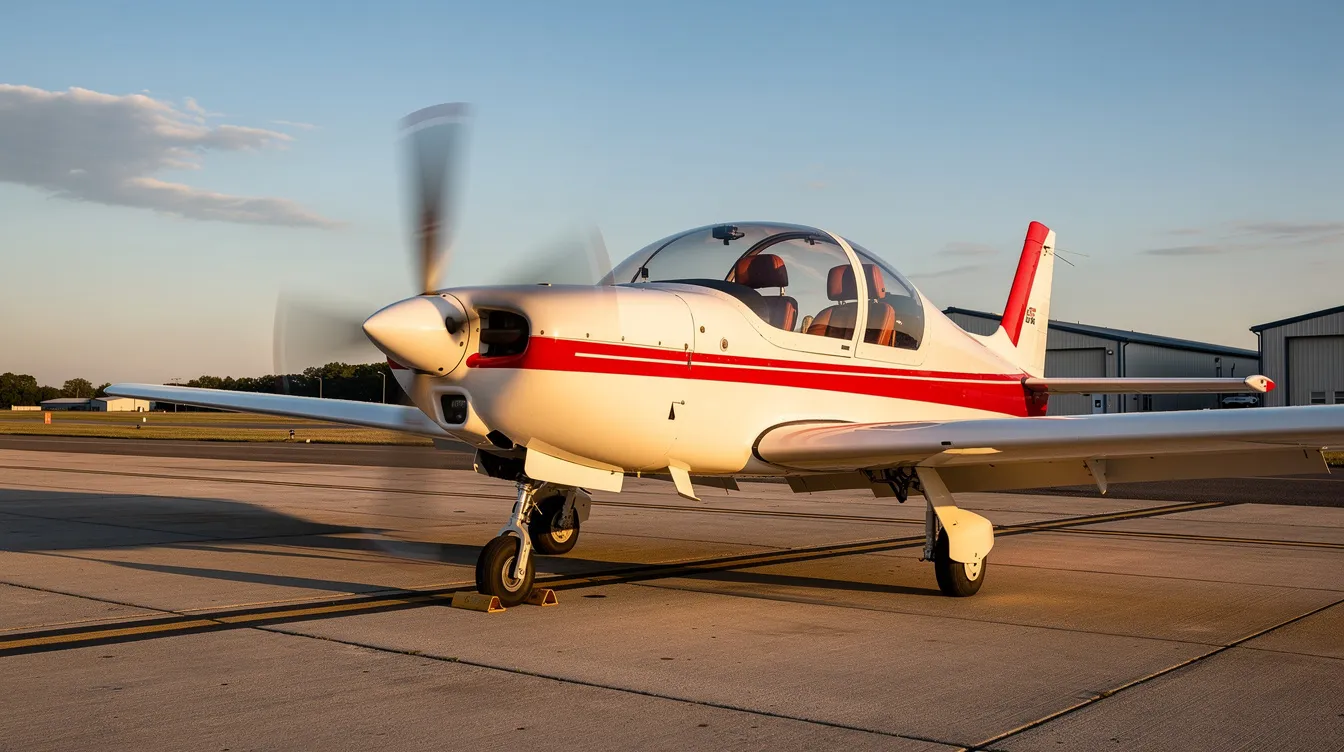
A two-seater plane is the most accessible entry point into personal aviation. Whether the goal is earning a pilot license, flying for fun on weekends, or touring the countryside with a passenger, these compact aircraft deliver a flying experience that larger machines simply cannot replicate. But owning one is not the only way to enjoy private air travel.
This guide covers everything from performance metrics and real-world models to ownership costs and how chartering through a platform like Jettly compares when the mission outgrows two seats.
A two-seater plane is a light aircraft with two seats used primarily for flight training, sport flying, aerobatics, and short touring trips. Typical takeoff weights fall between 450 and 1,000 kg, with engine power ranging from 65 to 180 hp.
Cruise speed varies widely by model. Basic trainers fly at 90–120 kt, while faster designs like the Vans Aircraft RV-7 reach 140–175 kt. Range commonly falls between 400 and 800 nm.
Ownership costs start as low as $20,000 for a used legacy airframe and can exceed $200,000 for a new composite LSA. Annual fixed expenses (insurance, hangar, maintenance) often run $20,000–$35,000 regardless of how much the plane flies.
Jettly offers a flexible charter alternative for travelers who want private flying benefits—speed, comfort, larger cabins—without owning or operating a small aircraft. Its platform connects users to over 20,000 aircraft worldwide with instant pricing.
A two-seater plane is a light fixed-wing airplane with exactly two seats, arranged either side by side or in tandem. These aircraft are typically unpressurized, powered by a single reciprocating engine, and designed for pilot training, recreational flying, aerobatics, or short regional tours.
Two-seater planes are categorized as Light Sport Aircraft (LSA) or certified trainers. Under FAA rules, Light Sport Aircraft can have a maximum gross weight of 1,320 lbs, a max cruise speed of about 120 knots, and a stall speed no higher than 45 knots. LSAs must meet specific industry standards for certification before they can be sold and operated. Many two-seat aircraft are built using lightweight materials—carbon fiber, fiberglass composites, aluminum alloys—for better performance and fuel efficiency.
Approximate takeoff weight ranges for the broader category run between 450 and 1,000 kg (roughly 1,000–2,200 lb), with engine power bands from 65 to 180 hp. That places them well below four-seat touring aircraft in terms of speed, baggage capacity, comfort, and weather capability. There is no pressurization, usually no de-icing, and cabin space is tight.
Modern two-seat aircraft often feature glass cockpits for improved navigation, closing the avionics gap with larger planes. Still, many owners who love piloting their own two-seater also use charter services like Jettly for longer or multi-passenger trips where speed and cabin comfort matter more.
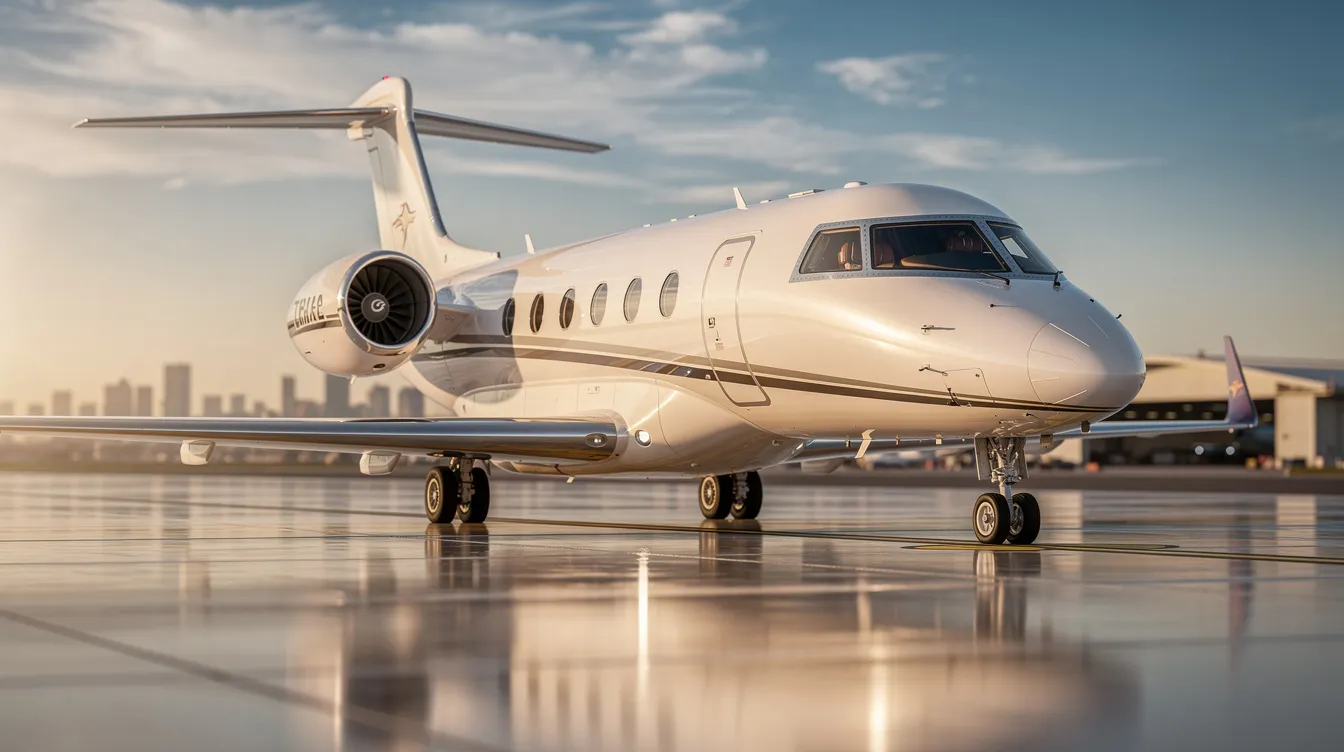
Two-seaters form the backbone of flight training and recreational aviation around the world. They are the aircraft most student pilots sit in first, and the ones many experienced aviators return to for pure flying enjoyment.
Flight training. Two-seater planes are ideal for training and building flight hours. Models like the Cessna 152, Piper PA-38 Tomahawk, and Diamond DA20 serve as primary trainers for PPL and LAPL courses. Their forgiving handling, low hourly running costs, and simple systems make them the standard at flying schools globally.
Recreational and sport flying. Two-seater planes are suitable for local flights and recreational flying. Weekend trips, local sightseeing, flying club events, and grass-strip landings are common activities. Operating from smaller airports is often possible with two-seater planes, opening up destinations that jets and turboprops cannot reach.
Aerobatics and performance flying. Specialized designs like the Extra 200/300L and Pitts S-2 serve advanced training and airshow practice, with structural ratings of +6/−3 G and tandem seating for instructor and student.
Short-range touring. Many two-seaters comfortably cover 300–600 nm legs for regional travel. However, for multi-passenger business trips, a chartered turboprop or light jet through Jettly delivers far more speed and cabin space.
Buyers compare two-seater planes mainly on cruise speed, range, and climb performance. These numbers dictate how practical the airplane is for a given mission and how much safety margin exists.
Cruise speed. Basic trainers like the Cessna 150 cruise at roughly 90–105 kt (around 170–195 km/h). Faster models push well beyond that. The Vans Aircraft RV-7, for example, achieves 140–175 kt at 75% power depending on altitude and engine choice. High-performance experimentals with retractable gear can exceed 170 kt. True airspeed increases with altitude, so performance specs measured at 8,000 ft will differ from sea-level numbers.
Range and endurance. Realistic ranges for modern fuel-efficient two-seaters fall between 400 and 800 nm. A BRM Aero Bristell with 120-liter tanks can stay airborne for 5–8 hours in favorable conditions, while reserve fuel requirements and headwinds typically reduce usable range by 10–20%.
Climb rate. Training aircraft commonly climb at 600–1,200 ft/min. Some performance-oriented two-seaters exceed 1,500 ft/min—the Bristell RG, for instance, posts climb rates near 1,950 fpm with a higher-powered powerplant. Strong climb improves obstacle clearance and reduces time to cruise altitude.
Travelers who value cruise speeds above 300 kt and pressurized comfort typically move to chartering light jets or turboprops. Jettly's private jet charter cost estimator can show what those faster options cost per route.
Every two-seater has a data plate or flight manual listing its empty weight, maximum takeoff weight (MTOW), and the resulting useful load—the weight available for people, fuel, and baggage.
The BRM Aero Bristell RG carries an empty weight of roughly 335–365 kg and an MTOW of 600 kg, leaving a useful load of about 235–265 kg depending on installed options. That sounds generous until you run the numbers:
Two adults at 85 kg each = 170 kg
Full fuel (120 litres at ~0.72 kg/L) = ~86 kg
Remaining for baggage = roughly 9–20 kg
That leaves almost nothing for luggage, and the airplane is operating near its max weight. The Vans RV-7A tells a similar story: empty weight around 530 kg, MTOW ~817 kg, useful load ~287 kg. Two 80 kg occupants, 100 liters of fuel, and 20 kg of bags consume nearly all of it.
Avionics upgrades, fresh paint, and heavier interiors raise empty weight further, squeezing the margin. Wing loading also increases, which affects stall speed and handling characteristics.
When booking through Jettly, passengers simply state their headcount and baggage. The operator handles all weight-and-balance calculations, fuel planning, and airport selection and routing—one less thing for the traveler to manage.
The two-seater market spans vintage trainers, modern LSAs, experimental kit-builds, and specialist aerobatic designs produced across North America and Europe. Two-seater aircraft can be found in multiple regions worldwide, with active production and resale markets on every continent.
Legacy certified trainers. The Cessna 150 is a popular choice for first-time flyers and remains one of the most recognized training aircraft ever built. The Cessna 152, Piper PA-38 Tomahawk, and Beechcraft Skipper saw heavy production from the 1960s through the 1980s and continue to serve flying schools today.
Vans Aircraft. The RV-7, RV-9A, RV-12, and other two-seater RV series models are among the most popular homebuilt aircraft in the world. Vans kits are known for high cruise speed, responsive handling, and a large community of builders.
BRM Aero. The Bristell series from the Czech Republic emphasizes modern composite construction, comfortable cabins, and efficient Rotax-powered engines popular in European LSA markets. The Bristell Classic lists at approximately $159,700 new with a 100 hp Rotax engine.
Other notable brands. The broader market includes Diamond Aircraft (DA20 Katana), Tecnam (P2002 Sierra), Aviat Aircraft (Husky), Sonaca Aircraft (S201), Bearhawk Aircraft (Patrol), Elixir Aircraft (Elixir), Pacific Aerospace (CT/4), Arion Aircraft (Lightning), Blackshape Aircraft (Prime), Promecc Aerospace (Pegasus), Super Petrel USA (amphibian LSA), Just Aircraft (SuperSTOL), and Progressive Aerodyne (Searey). Recreational two-seater planes fall into categories like experimental, certified, and aerobatic, giving buyers a wide range of choices to match their flying needs.
Two-seater cockpits come in two main configurations: side-by-side and tandem. The choice affects communication, aerodynamics, and day-to-day comfort.
Side-by-side advantages. Instructor and student—or pilot and passenger—share a view of the instrument panel. Communication is easier, and the layout feels more sociable for couples or friends. Common examples include the Cessna 152 and Vans RV-9A.
Tandem advantages. The front pilot gets unobstructed forward visibility, and the narrower fuselage produces lower drag. Tandem seating is common in aerobatic and glider aircraft, including the Pitts S-2, Extra 200, and some Vans RV-8 builds.
Comfort considerations. Legroom, shoulder room, seat adjustability, and cabin ventilation vary widely. Taller pilots often prefer aircraft with bubble canopies and deeper seats. Still, even the roomiest two-seater cabin offers limited space compared with the stand-up cabins and reclining seats on light jets and turboprops available through Jettly's charter platform. For longer business or family trips, that difference in comfort becomes significant.
Most two-seater planes run on either traditional avgas piston engines (Lycoming, Continental) or modern Rotax-series engines. The choice shapes running costs, weight, and fuel options.
Engine examples. The Lycoming O-235 powers many Cessna 152 trainers at around 110 hp. The Rotax 912 ULS (100 hp) and turbocharged 915 iS (141 hp) dominate the LSA and experimental segment. A Rotax 912 is significantly lighter than a comparable Lycoming—roughly 122–135 lb dry versus 240–285 lb installed—freeing up useful load.
Fuel types. Traditional engines require 100LL avgas. Rotax-powered aircraft can often run on automotive gasoline (mogas) where approved, cutting fuel cost per hour substantially. Avgas availability at smaller airports can also be a factor in trip planning.
Operating cost factors. Two-seater planes typically have fixed landing gear and simpler engines, reducing maintenance costs. Operating costs for two-seaters are generally lower than for larger aircraft. Key expenses include:
|
Expense |
Typical Annual Range |
|---|---|
|
Insurance |
$1,500–$4,000 |
|
Hangar or tie-down |
$2,400–$12,000 |
|
Annual inspection |
$1,000–$3,000 |
|
Engine overhaul reserve |
$2,000–$5,000 |
|
Fuel (50 hrs @ 5 gph) |
$2,500–$4,000 |
Maintenance is generally simpler for two-seat aircraft due to fewer complex systems. By contrast, Jettly customers pay per flight with no ongoing engine, storage, or insurance expenses—an advantage for anyone who flies privately only a few times per year and wants tools like a jet card flight cost estimator to predict expenses.
Choosing between new and used involves a trade-off between upfront cost, ongoing maintenance, and the avionics and safety features included.
New aircraft. Factory-new two-seater LSAs and trainers in 2026 typically fall between $150,000 and $300,000 depending on engine, avionics (glass cockpit vs analog), and certification. Benefits include modern safety features, warranty coverage, and lower initial maintenance needs. Owning a two-seater plane offers economical access to personal aviation, particularly for pilots who fly regularly.
Used aircraft. The used market offers much lower entry points. AvPay lists new and used two-seater aircraft for sale, and platforms like Trade-A-Plane and Controller carry hundreds of listings, allowing buyers to contact sellers or brokers directly to ask about condition, logs, and availability. Buyers comparing ownership to occasionally buying a seat on a private jet will find very different cost and convenience profiles. Here is a snapshot of affordable used models in 2026:
|
Model |
Approximate Price (2026) |
|---|---|
|
ERCO Ercoupe |
Under $20,000 |
|
Grumman American AA-1 |
Under $25,000 |
|
Aeronca Champion |
Around $25,000 |
|
Cessna 140 |
Under $30,000 (flyable) |
|
Taylorcraft BC-12D |
Around $29,000 |
|
Piper J-3 Cub |
$40,000–$64,000 |
The ERCO Ercoupe is the cheapest plane under $20,000 in 2026, while the Grumman American AA-1 is priced under $25,000. The Cessna 140 can be found under $30,000 for flyable models, and the Taylorcraft BC-12D can be found for $29,000. The Piper J-3 Cub ranges from $40,000 to $64,000 depending on condition and engine time.
Due diligence. Pre-purchase inspections, logbook reviews, Airworthiness Directive (AD) compliance checks, and test flights are essential. An independent mechanic or instructor should guide the process.
Some travelers skip ownership entirely and rely on private jet charter for occasional trips, avoiding the capital investment and maintenance planning altogether and instead leveraging structured jet card programs for predictable private flying, recurring private jet memberships, or even joining Jettly's high-ticket affiliate program to offset some travel costs.
Flying any two-seater plane requires proper licensing, recurrent training, and strict adherence to safety regulations. There are no shortcuts.
Pilot licenses. Typical pathways include the Private Pilot License (PPL), the Light Aircraft Pilot License (LAPL) in Europe, and the Sport Pilot license for certain LSA aircraft in the US. Each has different privileges, medical requirements, and course structures.
Type familiarisation. Transitioning between nosewheel and tailwheel aircraft, or from analog gauges to a glass cockpit, requires checkouts with a qualified instructor. Even experienced pilots should complete dual flights before solo operations in an unfamiliar type.
Weather and IFR limitations. Most two-seater planes used for recreation operate VFR only. There is typically no de-icing, no pressurization, and limited instrument capability. Flight planning and go/no-go decisions are critical safety skills.
Modern avionics and surveillance. Increasingly, two-seaters are fitted with ADS-B transponders (both in and out), improving air traffic surveillance and situational awareness. These systems help pilots see and be seen, even in busy airspace around a crowded airport.
Charter operators available through Jettly use professional crews, operate under commercial regulations, and fly private charter aircraft with advanced navigation and safety systems—factors worth considering when comparing self-flown travel to professionally operated charter flights, whether you're booking a regional hop, private jet charter in Kolkata, West Bengal, private jet charter in New Delhi, or flights operated by partners such as Dexter Air Taxi and Zenflight.
This section serves as a decision guide: personal ownership and flying of a two-seater plane versus booking private charter flights via Jettly's digital platform.
Ownership advantages. Pilots who own their airplane enjoy the freedom to fly on impulse, the satisfaction of piloting, and lower direct costs per hour once fixed expenses are sunk. For local recreational flights—weekend trips, practice landings, and just having fun in the air—ownership is hard to beat.
Ownership limitations. Only two seats means only one passenger. Cruise speeds top out well below 200 kt in most models. Weather constraints ground VFR-only aircraft regularly, and the time commitment for maintenance, planning, and currency is real. You need a budget for inspections, money for fuel, and enough discipline to stay current.
Charter advantages. Jettly connects travelers to a global fleet of turboprops, light jets, and larger aircraft. These carry families or business teams at 300–500 kt cruise speeds, with onboard catering and tailored in-flight dining, generous baggage space, and pressurized cabins. The control over scheduling remains—you pick the time—but a professional crew handles the rest, and tools like Jettly's private jet charter cost estimator help forecast pricing.
Real-world example. A pilot might keep a small two-seater for weekend flying at a local grass strip but use Jettly to charter a light jet from New York to Miami or Toronto to Vancouver when time-critical business travel demands speed and extra seats.
The true cost of flying incorporates both money and time. Two-seater ownership and private charter serve fundamentally different needs.
Two-seater ownership costs. Annual fixed expenses for a typical 100–150 hp piston trainer easily reach $20,000–$35,000 per year even with minimal flight hours. Variable costs add fuel (4–8 gph at $5–$7/gal for avgas), oil, and engine overhaul reserves. A pilot flying 50 hours per year might spend $400–$700 per hour all-in once fixed costs are amortized.
Charter pricing. Private charters are priced per hour or per route. Light jet hourly rates through operators on Jettly's network typically fall between $3,500 and $7,000 per hour. Turboprops run $1,000–$3,000 per hour for shorter regional hops. Empty leg flights can reduce costs significantly on repositioning routes.
Usage pattern comparison. Travelers focused purely on point-to-point efficiency can also look at Jettly's guidance on affordable private jet charter costs when weighing charter against ownership.
|
Scenario |
Two Seater Ownership |
Jettly Charter |
|---|---|---|
|
50 hrs/yr recreational flying |
~ $30,000–$40,000/yr all-in |
Not typical for recreation |
|
3–4 business trips/yr (500+ nm) |
Slow, VFR-only, 1 passenger |
~ $8,000–$18,000 per trip, 4–8 pax |
|
Family holiday travel |
Limited to 1 passenger |
Full family + luggage in one cabin |
For anyone whose primary goal is efficient point-to-point travel rather than the act of piloting, Jettly's instant pricing tools and private jet memberships offer a transparent view of charter costs without the overhead of ownership.
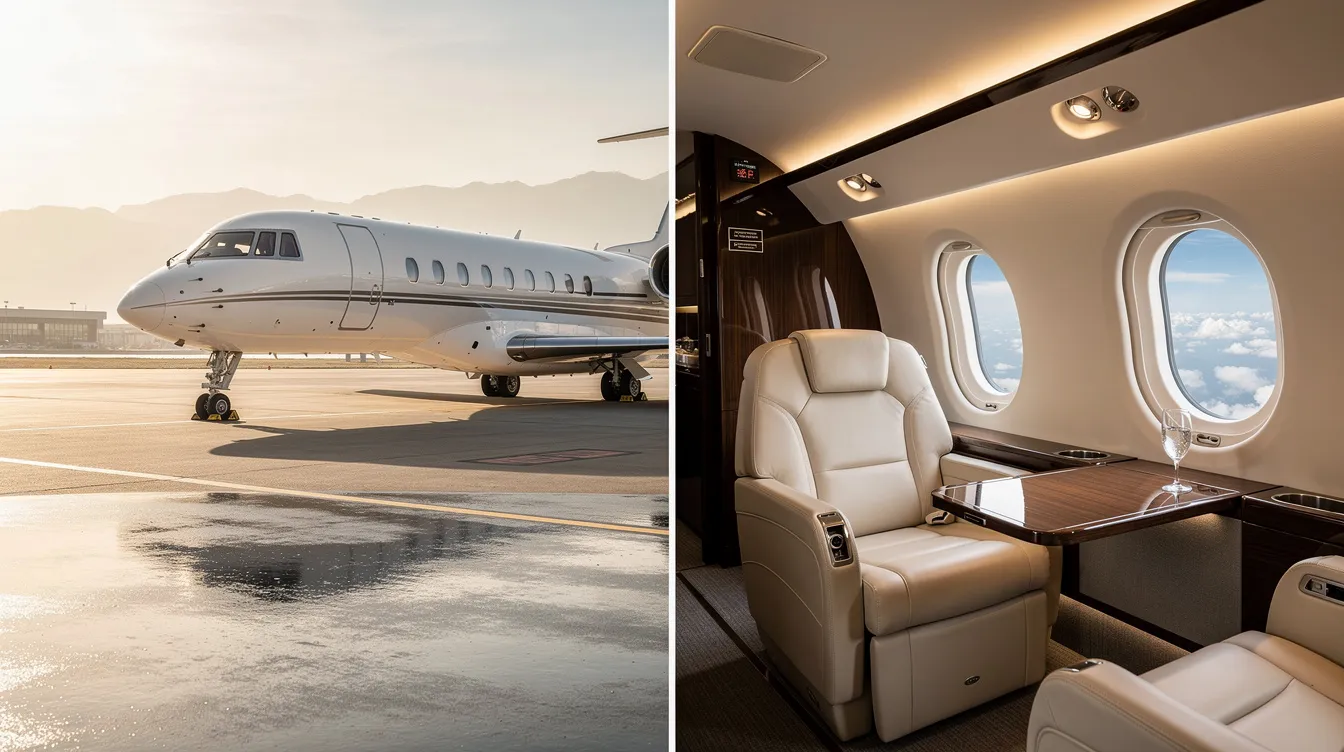
Aircraft size, engine technology, and utilization all influence the environmental footprint of a flight—whether in a small two-seater or a larger private jet.
Two-seater efficiency. Two-seater aircraft typically use less fuel than larger planes. Many modern two-seaters with Rotax or similar engines burn just 15–25 liters per hour, making them more efficient per passenger on short hops than older, heavier aircraft. Even compared with Boeing narrowbodies on a per-seat basis, a full two-seater burning 20 L/hr on a 200 nm hop can be surprisingly competitive.
Emissions per passenger. Filling both seats cuts per-person fuel burn roughly in half. Solo flights in any aircraft—even a light two-seater—double the emissions per traveler.
Charter considerations. Jettly can help match aircraft size to trip requirements. Booking a turboprop for four passengers rather than a heavy jet for the same group improves load factors and reduces emissions per passenger. The platform's fleet variety gives customers the ability to right-size their aircraft for each trip.
Sustainable aviation fuel (SAF) adoption is accelerating in larger charter fleets, and offset programs are becoming standard. On the experimental side, companies like Elektra Solar are developing electric and hybrid-electric two-seater prototypes, though commercial viability remains several years away. Broader overviews of charter airlines and private aviation trends show how the industry as a whole is moving, slowly, toward cleaner skies.
Jettly does not focus on renting tiny two-seater trainers. The platform serves many of the same customers, though, when they need longer-range, multi-passenger private flights that a small piston plane simply cannot deliver.
As a digital private jet charter marketplace, Jettly connects users to over 20,000 aircraft worldwide. Travelers get instant pricing, on-demand booking, and options ranging from turboprops to long-range jets—all without membership commitments or opaque fee structures.
Two-seater planes remain an ideal personal solution for hobby flying and flight training. Jettly is the logical next step for business travel, family holidays, and trips where comfort, speed, and capacity are essential, especially for travelers considering a NetJets alternative for flexible private flying. The two are not competitors; they are complementary tools for different missions.
For pilots who love the air—whether from behind the yoke of an RV-7 or looking out the window of a chartered Citation—the common thread is a passion for flight. Those looking to lower costs can also explore Jettly's crowdsourced shared private jet flights. Learn more about Jettly's charter options at https://www.jettly.com.
Below are answers to common questions not fully covered in the sections above.
Non-pilots cannot legally act as pilot-in-command. However, they can book introductory experience flights or scenic tours with a licensed instructor or commercial pilot in the left seat. These flights are typically arranged through local flying schools or aero clubs. Jettly specializes in chartering larger, professionally operated aircraft rather than basic two-seaters, but the same principle applies: a professional crew handles the flying while the passenger enjoys the ride, similar to the leading private jet charter companies highlighted in industry guides.
True commercial charter operations rarely use two-seater aircraft. Regulations, economics, and passenger comfort expectations push operators toward at least four seats, and more commonly toward turboprops or jets. Two-seaters are far more common in flight training or cost-sharing clubs. Jettly connects travelers to certified charter operators with multi-seat aircraft suited to business or family trips, which is where most charter demand sits in the market, whether through shared charter flights or full aircraft charters.
It depends on distance, passenger count, baggage, and time sensitivity. For flights over a few hundred nautical miles, or with more than two passengers, jets and turboprops start to make considerably more sense. A two-seater covers a 200 nm weekend trip well, but a 1,000 nm business trip with three colleagues is a different mission entirely. Use Jettly's platform and its advice on getting a seat on a private jet easily to compare aircraft categories and routing options so you can decide whether a larger charter aircraft offers better value and convenience for a given journey.
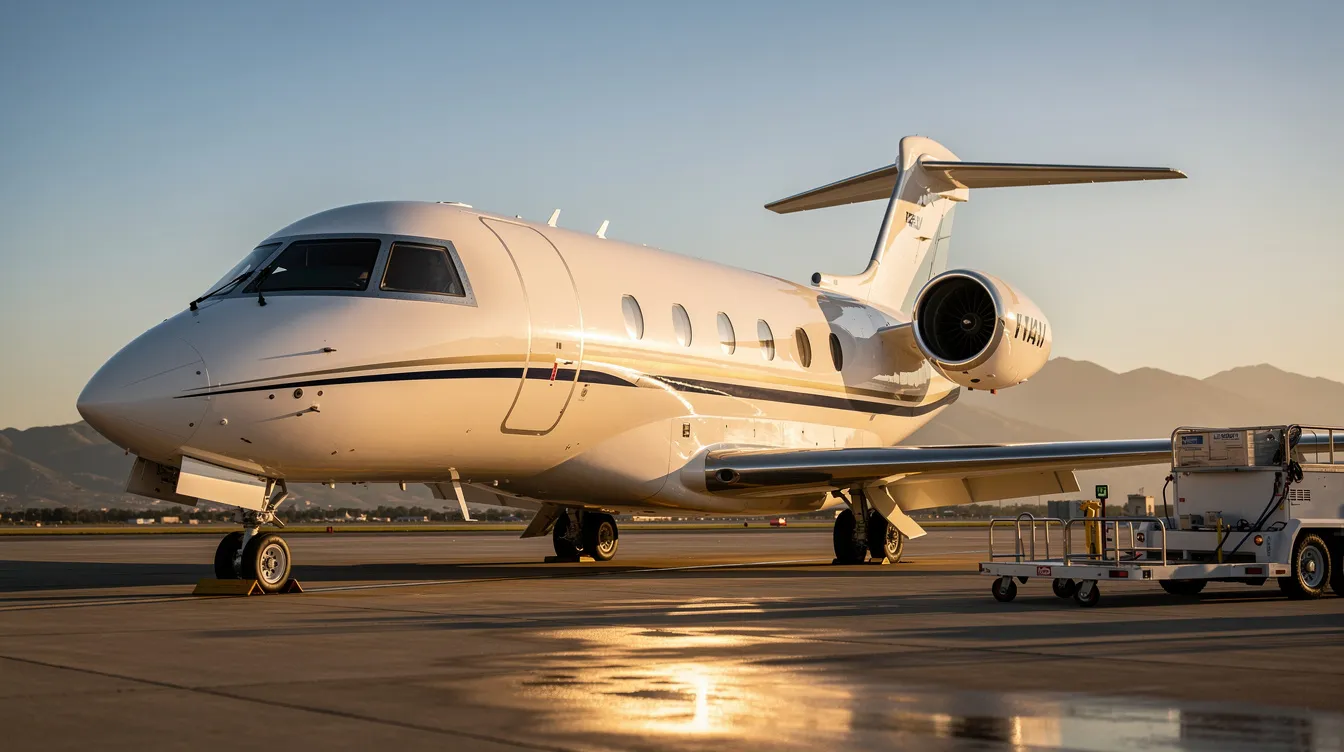
A two-seater plane offers something no other aircraft category can: an affordable, hands-on introduction to aviation. Typical cruise speed ranges from 90 kt in a legacy trainer to 175 kt in a high-performance experimental. Empty weight figures between 300 and 550 kg define what remains for fuel, passengers, and bags. And the sheer fun of piloting a responsive, lightweight airplane is difficult to replicate in any other setting.
But personal flying has limits. When the mission calls for more than two seats, faster transit, pressurized comfort, or a professional crew, platforms like Jettly fill the gap. Chartering through Jettly means accessing the right aircraft for each specific trip—no hangar fees, no annual inspections, no engine overhaul reserves.
The best approach for many aviation enthusiasts is a combination: own a two-seater for the joy of flying, and charter when the journey demands more.
Ready to experience private travel on your terms? Explore flight options or request a quote at https://www.jettly.com.
Share this post:
Jay Franco Serevilla
Aug 2, 2026
|
5
min read
Discover tips and trends in the industry.
5
min read
Green Private Jet: How Eco-Conscious Travelers Can Fly Private with a Smaller Footprint
Green private jets offer eco-conscious travelers a practical way to fly with a reduced environmental impact. By utilizing fuel-efficient aircraft, sustainable aviation fuels, and carbon offsets, travelers can significantly lower their carbon footprint while enjoying the convenience of private aviation. Platforms like Jettly make it easy to compare options and book flights quickly.
Read More
5
min read
Private Jet Vancouver: Charter Guide, Airports, Costs & Empty Leg Deals
Flying a private jet to Vancouver offers travelers quick access to stunning destinations like Stanley Park and Whistler. This comprehensive guide covers airport options, aircraft types, pricing, and the benefits of empty leg deals, making private travel more accessible and efficient.
Read MoreStay updated with our latest insights and tips to elevate your journey with us.
MEMBERSHIPS AND ASSOCIATIONS



Disclaimer: Jettly operates as a charter broker, offering access to a global digital jet charter marketplace. Jettly is not a direct air carrier and does not own or operate aircraft. All advertised flights are conducted by third-party air carriers that are fully licensed and hold the appropriate Part 135 or Part 121 certifications issued by the Federal Aviation Administration (FAA) or equivalent regulatory authorities under U.S. or foreign law. Jettly complies fully with the U.S. Department of Transportation's Part 295 and Part 298 Charter Broker regulations. Jettly does not carry additional liability insurance. Passengers are covered by aircraft operator insurance. TICO: 50023770


