


Login
Get Instant Pricing On 23,000+ Aircraft

>
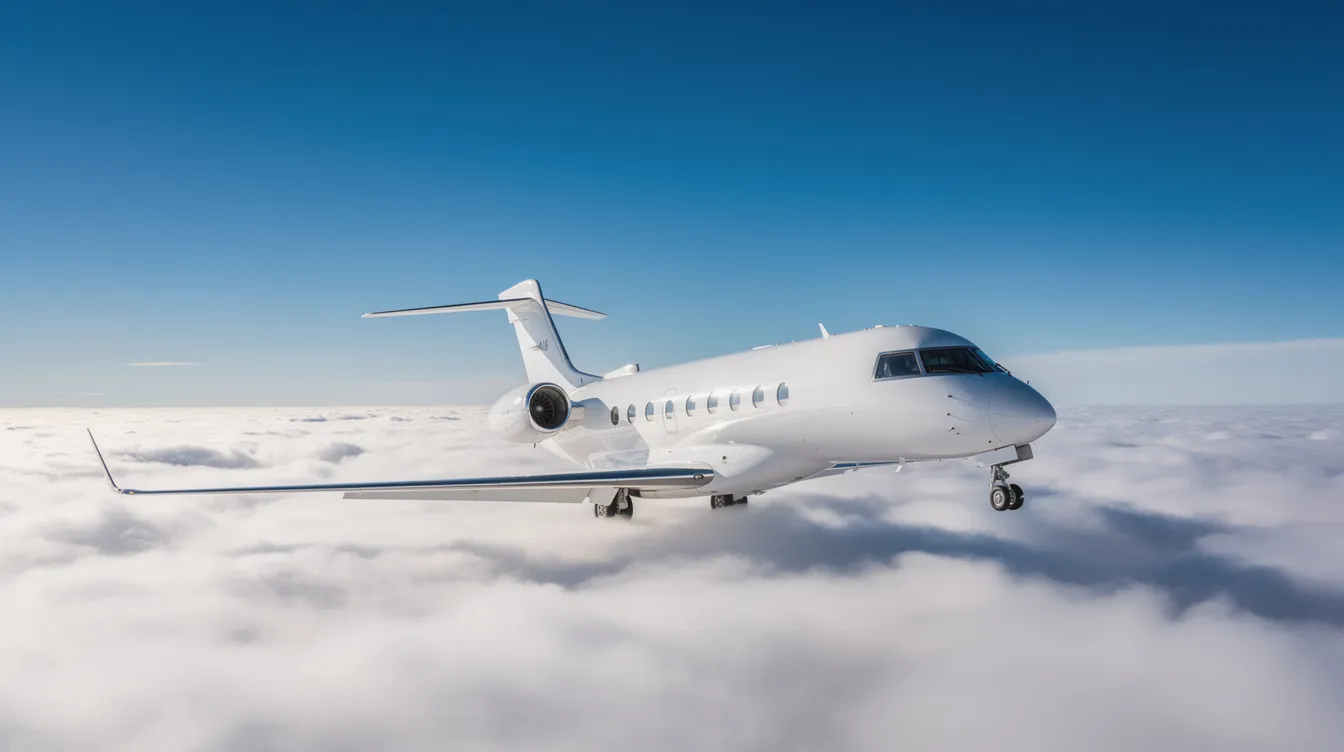
Turbulence is one of the most common concerns among air travelers, yet it remains widely misunderstood. Whether you fly commercial or charter a private jet, understanding what happens when a plane runs into rough air can turn anxiety into confidence. This guide breaks down the science behind turbulence in planes, explains how pilots and technology keep you safe, and shows why flexible private aviation through platforms like Jettly can make the ride smoother.
Air turbulence - including clear air turbulence - is a normal part of flying. It is almost always uncomfortable rather than dangerous, and modern aircraft are engineered to handle forces far beyond what even severe turbulence produces.
Most turbulence-related injuries happen when passengers or crew members are not wearing a seat belt. Keeping your seatbelt fastened is the single most effective safety measure.
Pilots avoid turbulence whenever possible by reviewing weather briefings, coordinating with air traffic controllers, and adjusting altitude or course based on real-time reports. Clear air turbulence, however, can still catch crews off guard because it gives no visible warning.
Climate change has driven a measurable rise in severe clear air turbulence — up 55% since 1979 over the North Atlantic — and models that predict climate change impacts suggest encounters could double or triple in the coming decades.
Private jet charter through Jettly can reduce exposure to the bumpiest air by offering flexible departure times, wider routing options, and access to aircraft that cruise at smoother altitudes outside peak air traffic.
When passengers feel sudden bumps and jolts mid-flight, they are experiencing in-flight turbulence — essentially unstable air that the aircraft is passing through. Think of it like driving over a stretch of unpaved road or boating across choppy water. The ride gets rough, but the vehicle is designed for it.
Turbulence is chaotic movement in the air. More precisely, it is irregular air motion characterized by rapid fluctuations in wind speed and direction. These fluctuations can cause temporary vertical displacement, with sudden drops or lifts in altitude that feel dramatic but are usually measured in tens of feet, not hundreds.
Intensity ranges from light (minor bumps, drinks barely ripple) to moderate (unsecured items shift, passengers feel strain against belts) to severe turbulence (abrupt altitude changes, unsecured objects thrown) and, very rarely, extreme. Experts stress that turbulence is a normal part of flying and not dangerous to the aircraft itself. Modern planes are built to withstand significant aerodynamic forces, and commercial airplanes are rigorously tested to withstand forces far exceeding the most severe turbulence under certification standards set by the FAA and EASA.
Wind shear causes turbulence when huge air masses close together move at different speeds and directions. That's the underlying mechanism - and it shows up in several distinct forms.
Pilots and meteorologists group turbulence into several categories based on cause and location:
|
Type |
Cause |
Typical Location/Altitude |
Characteristics/Notes |
|---|---|---|---|
|
Clear air turbulence (CAT) |
Shear between layers of air at different speeds near jet streams |
High altitudes (25,000-40,000 feet) |
Invisible, no visual warning, hardest to predict |
|
Convective turbulence |
Thermal currents causing warm air to rise and cool air to sink |
Near thunderstorms, cumulonimbus clouds |
Often linked to storm activity, common in summer afternoons |
|
Frontal turbulence |
Chaotic mixing along weather fronts when cold air pushes into warm air |
Weather fronts at various altitudes |
Associated with fronts, can cause sudden bumps |
|
Mechanical turbulence |
Winds hitting physical barriers like mountains or buildings |
Near terrain during takeoff/landing phases |
Caused by terrain, can be severe near mountain ranges |
|
Wake turbulence |
Trailing vortices generated by aircraft wings producing lift |
Behind aircraft during takeoff/landing |
Managed by air traffic control minimum separation standards |
Turbulence can occur due to convective currents and atmospheric fronts at any altitude. Understanding the type helps explain why some bumpy air seems to come out of nowhere while other rough patches are tied to obvious storm activity.
Turbulence encounters are frequent. Light bumps happen on many flights. Yet serious outcomes remain rare. The structural integrity of a certified aircraft is almost never at risk.
National data from the FAA shows that between 2009 and 2022, 163 people required hospital treatment due to turbulence in U.S. commercial operations - the majority being flight attendants caught off guard while moving through cabin areas. Injuries from turbulence are rare but can include broken bones and other minor injuries like bruises that still require hospital treatment. More than one-third of airline incidents in the U.S. from 2009 to 2018 were turbulence-related, according to the National Transportation Safety Board, though most involved injury rather than aircraft damage.
Turbulence-related fatalities remain extraordinarily uncommon. The last clear-air turbulence-related death from a major carrier was in 1997. The 2024 Singapore Airlines incident — involving severe turbulence, one fatality, and dozens of serious injuries - made national news and was widely reported by the Associated Press, but it underscored how unusual such events are.
The primary risk is to unbelted passengers and crew members, not the airframe. Items in overhead bins may shift, and cabin furnishings can suffer cosmetic damage. But the aircraft's structural integrity stays intact. Keeping seatbelts fastened is the main safety measure during turbulence to prevent injury. Aviation analysts note that regulated charter operators follow equally strict safety and training protocols as major airlines.
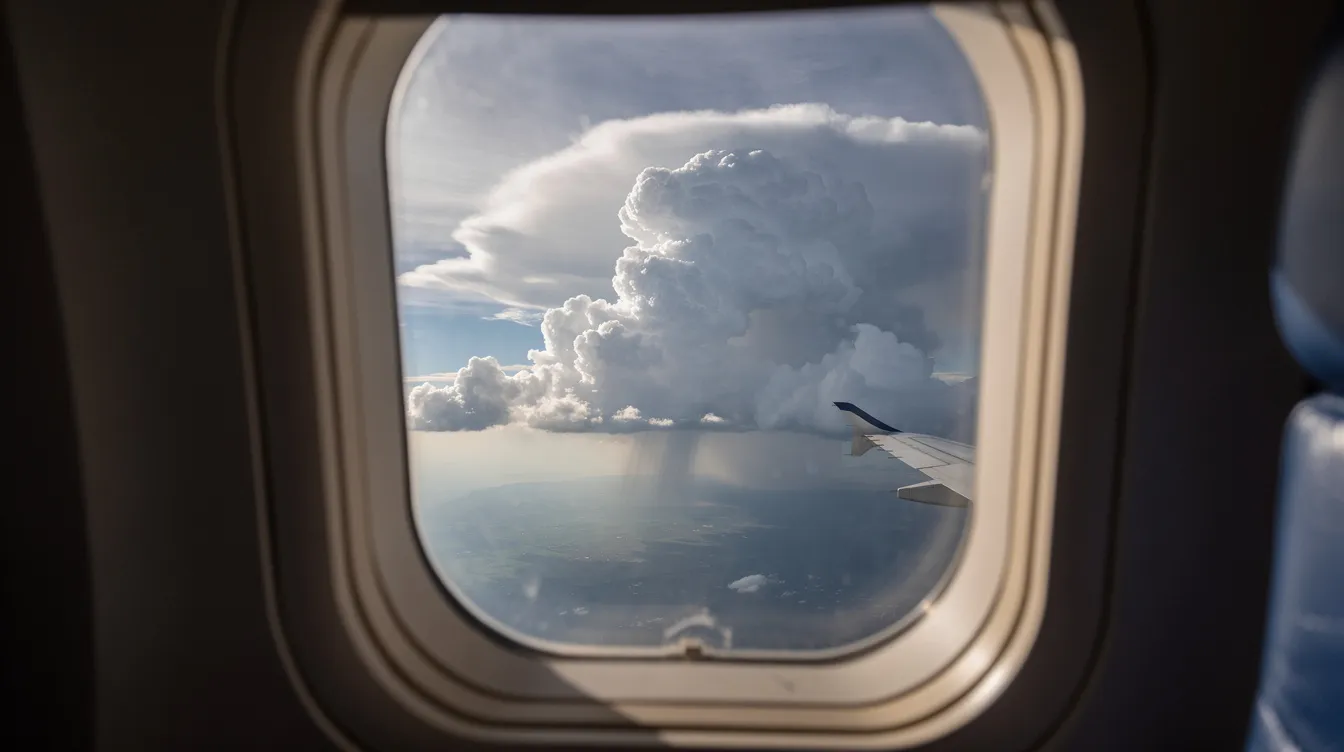
Pilots avoid turbulence whenever practical through a combination of preparation, technology, and teamwork. Every airline pilot and private jet captain reviews weather briefings before every flight, studying wind charts, jet stream position, and turbulence probability maps for their route.
In the cockpit, crews rely on several tools:
Onboard weather radar to detect heavy storms and convective cells on the weather radar display
Real-time pilot reports (PIREPs) shared along common flight tracks — pilots rely on reports from other aircraft to avoid turbulence
Turbulence detection systems in some modern aircraft that measure eddy dissipation rates
Air traffic controllers warn pilots about potential turbulence zones reported by preceding flights and can reroute aircraft around storm systems or mountain wave hotspots. Pilots manage turbulence by adjusting flight altitude or course when necessary, often climbing or descending 2,000 to 4,000 feet to find smoother air. Many pilots report that even small altitude changes can make a significant difference.
Clear air turbulence remains the most challenging threat because it lacks visual cues. When flying along strong jet streams, pilots may slow to turbulence penetration speed and keep the seatbelt sign illuminated. On private jet flights chartered through Jettly, pilots can often adjust departure times and cruising altitudes more flexibly than on tightly scheduled commercial routes, improving chances of avoiding the worst bumpy air.
Scientists note that climate change is altering jet streams, increasing wind shear at cruising altitudes and producing more frequent turbulent patterns across major flight corridors. Researchers in atmospheric science have documented the trend clearly.
A research team led by Prosser et al. published findings in 2023 showing that severe clear air turbulence over the North Atlantic increased by 55% between 1979 and 2020. The mechanism is straightforward: as greenhouse gases heat different layers of the atmosphere unevenly, wind speed differences at jet stream level - those high-altitude rivers of air — become sharper. This intensifies shear and generates more rough air at cruising altitude.
Atmospheric research confirms that climate change may double or triple turbulence in the coming decades on some routes if emissions continue at current levels. Reports of turbulence encounters are rising due to climate impacts, and turbulence is also becoming more frequent due to crowded skies. Growth in overall air traffic means more aircraft flying through turbulent regions, which can increase turbulence encounters both in reality and in reporting.
Changing global conditions raise the value of flexible routing and departure windows. Aviation analysts and at least one safety consultant have noted that private aviation platforms like Jettly can help travelers minimize exposure by offering schedule flexibility. Many operators are also exploring fuel-efficient routing and voluntary carbon offsetting to limit their climate impact. Experts at institutions such as Embry-Riddle Aeronautical University continue to study how evolving flying conditions will shape operations in the decades ahead.
Passengers can meaningfully reduce risk during turbulence with a few straightforward habits:
Seat belt use: Keep your seatbelt fastened whenever seated, even when the seatbelt sign is off. Severe turbulence can injure unbelted passengers or crew, and most serious injuries involve people who were not buckled in.
Secure loose items: Store heavy belongings in overhead bins or under seats. Avoid placing laptops or glass objects on your lap during the cruise.
Follow crew guidance: Flight attendants will instruct passengers to remain seated during rough patches. Stay out of aisles and galley areas when the captain turns on the seatbelt sign.
Manage anxiety: Focus on steady breathing. Remember that many pilots experience turbulence on nearly every flight and that violent turbulence is exceedingly rare. Turbulence rarely affects the overall safety of the flight.
Children: Certified child restraint systems are safer than lap-holding infants during strong turbulence. Many safety experts support dedicated seats for young children.
Jettly clients can discuss comfort preferences in advance — smoother time-of-day departures, preferred cruising altitudes, and quieter aircraft types — to help reduce turbulence discomfort on any given route.
The physics of turbulence are identical for every aircraft. A pocket of unstable air doesn't care whether a plane is carrying six passengers or three hundred. But the experience can differ noticeably.
Smaller private jets have less mass and stiffer wings, so the same disturbance produces more perceptible motion — a slightly more "bouncy" feel. They remain well within certified safety limits, but passengers may notice sharper vertical accelerations. Large widebody aircraft, by contrast, damp out smaller fluctuations through sheer mass, though they still jolt in severe turbulence.
Private jet pilots, flying fewer passengers and under less rigid schedules, often have more flexibility to adjust routes or altitudes. Flying the same route as a commercial airliner, a charter crew might shift departure by an hour to avoid afternoon convection, or request an altitude that sits above the roughest layer. Jettly's model - instant access to thousands of aircraft types — lets travelers choose larger midsize or heavy jets for long-haul routes where turbulence is forecast to be strong.
Private jet cabins also keep passengers closer to their seats with easy belt access, reducing the chance of being caught off guard. Fast boarding at private terminals, access to a wide range of private charter aircraft, and reduced time taxiing in congested air traffic further lessen exposure to turbulent layers around busy hubs.
Jettly connects travelers to a global inventory of over 20,000 aircraft and an airport locator tool, giving access to different sizes and performance profiles that can cruise above or below the most crowded, turbulence-prone levels. Instant pricing and on-demand booking allow travelers to adjust departure times to avoid peak afternoon storm activity on certain routes.
Jettly works only with licensed, safety-vetted operators whose pilots are trained in turbulence management, weather avoidance, and coordination with regional air traffic controllers. Its range of private jet memberships supports use cases including executives scheduling early-morning flights to miss afternoon thunderstorms, families choosing direct point-to-point routes that bypass congestion near large hubs, or travelers booking turboprops for low-altitude regional hops when jet stream turbulence is forecast.
Private terminals, shorter boarding times, and flexible re-routing options—plus modern tools that make it easy to get a seat on a private jet—help turbulence-sensitive travelers stay in control of when and how they fly.
Ready to fly on your terms? Explore flight options, compare top private jet charter companies, or request a quote at https://www.jettly.com.
Modern, certified aircraft are designed and tested to withstand forces far beyond routine and even severe turbulence. Turbulence-related crashes are extraordinarily rare. Pilots slow to turbulence penetration speed and avoid the most dangerous storm cells. Most incidents involve temporary discomfort and, at worst, minor cabin damage rather than any threat to the airframe.
Turbulence can occur at any phase, but certain patterns are more common. Convective bumps peak on hot afternoons. Mechanical turbulence appears during climb-out or approach near mountains. Clear air turbulence typically shows up at cruise along jet streams. Long-haul night flights over busy corridors like the North Atlantic can encounter turbulence even when skies look calm. Choosing earlier or later departures can sometimes reduce storm-related bumps — easier to arrange with private jet charter.
They fly in the same atmosphere and encounter the same turbulence types. However, routes, altitudes, and schedules can be more flexible. Some larger private jets cruise higher than many airliners, potentially above the roughest layers. Flights arranged through Jettly can be tailored around weather windows and preferred aircraft types to improve ride quality.
Share concerns with the charter broker or operator in advance so the crew can explain the forecast and planned mitigation. On private flights, passengers can ask the captain for a short pre-flight briefing about expected air conditions. Platforms like Jettly can relay preferences — smoother departure times, aircraft size — to the operator during booking.
Research shows a measurable rise in clear air turbulence, particularly over the North Atlantic since the late 20th century, linked to shifts in jet streams as the climate warms. This does not mean flying is unsafe, but pilots and airlines may need to plan more carefully and accept more rerouting or altitude changes. Technological improvements in forecasting and aircraft design, combined with flexible routing through private charter, will continue to keep flights safe.
Turbulence in planes is a normal and manageable part of air travel. While it can be uncomfortable, modern aircraft are engineered to withstand even severe turbulence, making it extremely unlikely to pose a danger to the flight itself. The primary safety measure for passengers is to keep their seat belt fastened whenever seated, as most turbulence-related injuries occur when passengers or crew are unbelted. Pilots and air traffic controllers work closely using weather data, real-time reports, and flexible routing to minimize turbulence exposure.
Climate change is increasing the frequency of clear air turbulence, but advancements in technology and private jet flexibility through platforms like Jettly help travelers avoid the bumpiest air. For those seeking a smoother and more controlled flying experience, private jet charter offers greater options to tailor flights around turbulence risks.
Ready to experience private travel on your terms? Explore flight options or request a quote at https://www.jettly.com.
Share this post:
Jay Franco Serevilla
Oct 1, 2026
|
5
min read
Discover tips and trends in the industry.
5
min read
Best Time to Buy a Domestic Flight: Data-Backed Timing Tips for Cheap Flights
Knowing the best time to buy a domestic flight can save you hundreds of dollars. Booking 21-60 days in advance, flying midweek, and traveling during off-peak months are key strategies for securing the best fares. This guide provides data-backed tips for U.S. travelers looking to optimize their airfare.
Read More
5
min read
Lease a Cessna: How to Access Cessna Aircraft Without Buying
Leasing a Cessna aircraft provides an affordable alternative to ownership, allowing pilots, flight schools, and businesses to access various models without significant upfront costs. With options like dry and wet leases, operators can tailor agreements to their specific needs while enjoying predictable budgeting. For those seeking flexibility, platforms like Jettly offer on-demand charter services as a viable alternative.
Read MoreStay updated with our latest insights and tips to elevate your journey with us.
MEMBERSHIPS AND ASSOCIATIONS



Disclaimer: Jettly operates as a charter broker, offering access to a global digital jet charter marketplace. Jettly is not a direct air carrier and does not own or operate aircraft. All advertised flights are conducted by third-party air carriers that are fully licensed and hold the appropriate Part 135 or Part 121 certifications issued by the Federal Aviation Administration (FAA) or equivalent regulatory authorities under U.S. or foreign law. Jettly complies fully with the U.S. Department of Transportation's Part 295 and Part 298 Charter Broker regulations. Jettly does not carry additional liability insurance. Passengers are covered by aircraft operator insurance. TICO: 50023770


