


Login
Get Instant Pricing On 23,000+ Aircraft

>
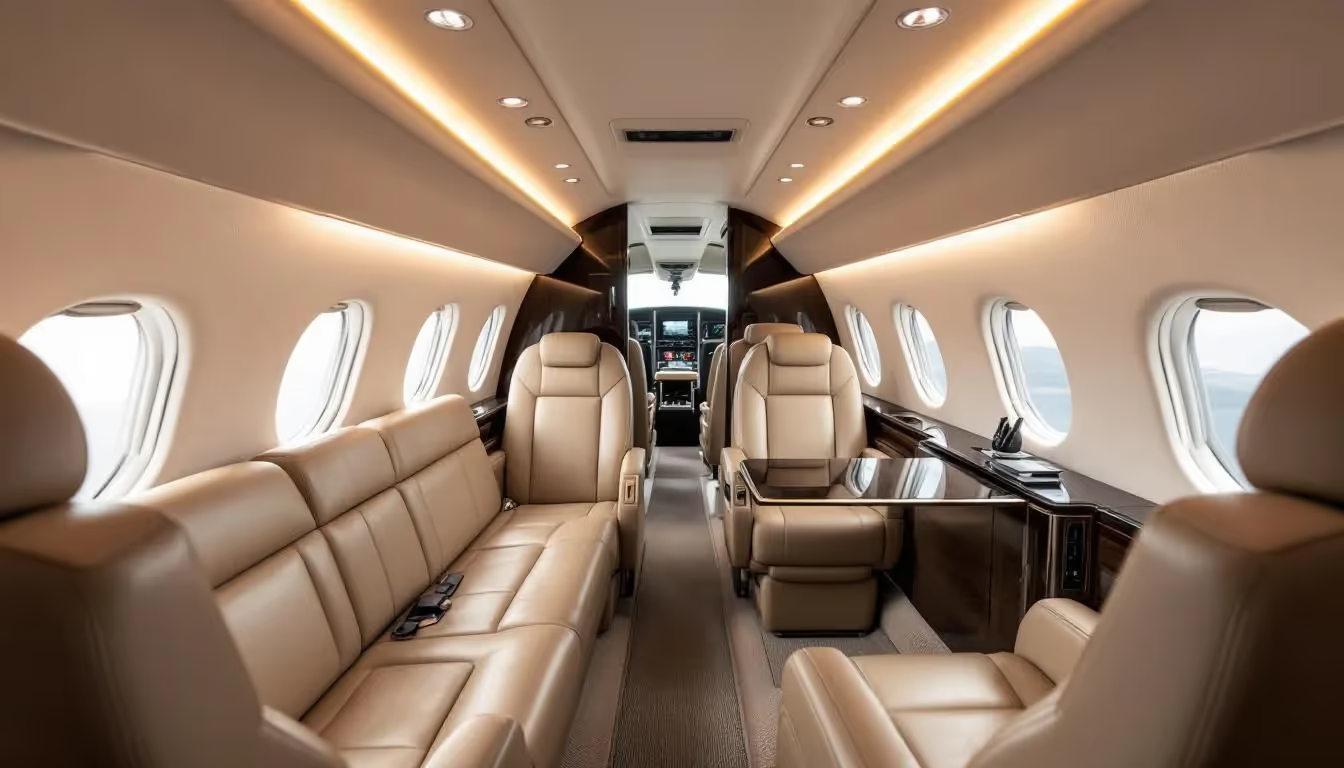
When it comes to private aviation, many travelers automatically think of sleek jet aircraft soaring across continents. But for shorter regional flights, there's another highly capable option worth considering: the turboprop private plane.
Turboprop aircraft, such as the renowned Beechcraft King Air or Cessna Caravan, use a turbine engine to power a propeller. This design blends fuel efficiency, performance, and versatility, making it a cost-effective and flexible alternative to light jets. Turboprop aircraft are generally larger than piston aircraft and can carry more passengers and cargo, further enhancing their utility for private aviation.
Whether you're traveling for business or leisure, turboprop private planes offer exceptional benefits for short to medium-haul journeys. Turboprop aircraft are often preferred for regional travel due to their operating costs and ability to access smaller airports. In this article, we’ll dive into the technical features, cost benefits, safety advantages, and why chartering a turboprop might be the right choice for your next trip with Jettly.
Turboprop aircraft are a distinctive type of plane that harnesses the power of a turboprop engine, a turbine-driven system that turns a propeller to generate thrust. This innovative design delivers an impressive blend of efficiency and power, making turboprop planes a great choice for a wide range of private aviation needs.
Ideal for regional flights and chartering, turboprop planes are especially well-suited for routes where jets might not be the most economical option. Thanks to their ability to operate from shorter runways, these aircraft can access smaller airports and remote destinations that are often out of reach for other types of business jets. With spacious cabins designed to comfortably carry six and eight passengers, turboprop aircraft offer a practical and efficient solution for both business and leisure travelers.
In comparison to jets, turboprop planes stand out for their fuel efficiency and lower operating costs, making them an attractive option for those seeking value without sacrificing comfort or performance. Turboprop engines are most efficient at speeds between 250 and 400 mph, which makes them ideal for short to medium-haul flights. Whether you’re planning a quick business trip or a family getaway, the versatility and reliability of turboprop aircraft make them a top contender in the world of private aviation.
At the core of a turboprop aircraft lies its turbine engine, which drives a propeller through a reduction gearbox. Turbine engines power the propeller by converting gas turbine energy into rotational force, offering advantages such as cost efficiency, the ability to operate from short runways, and suitability for regional flights. Unlike jet engines that produce thrust through high-speed exhaust, turboprops generate forward motion by spinning their propellers efficiently, particularly at lower speeds. In contrast, jets require a jet engine to achieve higher speeds and altitudes.
Key technical characteristics include:
Power Source: Turbine engine connected to propeller
Cruising Altitude: Up to 35,000 feet (though most turboprops generally operate at altitudes of up to 30,000 feet)
Range: Typically around 1,000 miles
Passenger Capacity: 6–8 passengers
Runway Requirements: Can land on short or unimproved runways
While turboprops can reach cruising altitudes up to 35,000 feet, jets typically operate at higher cruising altitudes, between 31,000 and 42,000 feet, allowing them to fly above most weather systems and optimize fuel efficiency on long-distance flights. Many King Air turboprops, in particular, are capable of achieving a cruising altitude of 35,000 feet, showcasing their advanced performance capabilities.
This makes turboprops ideal for accessing regional airports and hard-to-reach destinations.
Turboprop planes are often compared to light jets, but each type has its own strengths. Here’s how they stack up:
2.1 Operating Costs
Turboprops are generally more fuel-efficient and cost-effective for short flights. However, jets are better suited for longer distances, while turboprops excel at short to medium distances.
2.2 Speed
Light jets are faster than turboprops, making them ideal for time-sensitive trips.
2.3 In-Flight Comfort
Jets typically offer a quieter and smoother ride at higher speeds. They can achieve these higher speeds without disturbing passengers, while turboprops maintain a smooth ride at lower speeds.
2.4 Performance on Short Routes
Turboprops can take off and land on shorter runways, making them ideal for smaller airports. However, most jets perform better and are considered safer at higher cruising altitudes, as they are less affected by weather-related issues.
At a certain point, such as when flight duration or distance increases, a jet becomes more efficient and advantageous than a turboprop. Jets are preferred for long-distance flights due to their higher cruising speeds, which allow them to cover greater distances in less time.
Turboprops are generally less expensive to operate and maintain than light jets. Charter rates for turboprop private planes are typically lower than those for jets, making them a cost-effective choice for short flights. This is due to their more efficient fuel consumption and simpler engine mechanics. Turboprop charter planes are the most economical option in private aviation, with charter rates starting around $2,000 per hour. If you’re flying under 600 miles, a turboprop can reduce your overall travel budget significantly.
Thanks to their short takeoff and landing (STOL) capabilities, turboprops are specifically designed to operate from short runways, making them ideal for airports with limited runway length. Most turboprops fly at a service ceiling of about 25,000 to 30,000 feet, which allows them to efficiently handle regional routes. This gives you access to thousands more airports, closer to your destination and free from the congestion of major hubs.
Modern turboprops offer pressurized cabins, noise insulation, and comfortable seating similar to light jets. Many turboprop models offer spacious interiors designed for passenger comfort, ensuring a pleasant travel experience. While they may cruise at slightly lower altitudes and speeds, the in-flight experience is still smooth and quiet.
For regional routes, turboprops are often faster door-to-door than jets, especially when you factor in their ability to land closer to your final destination.
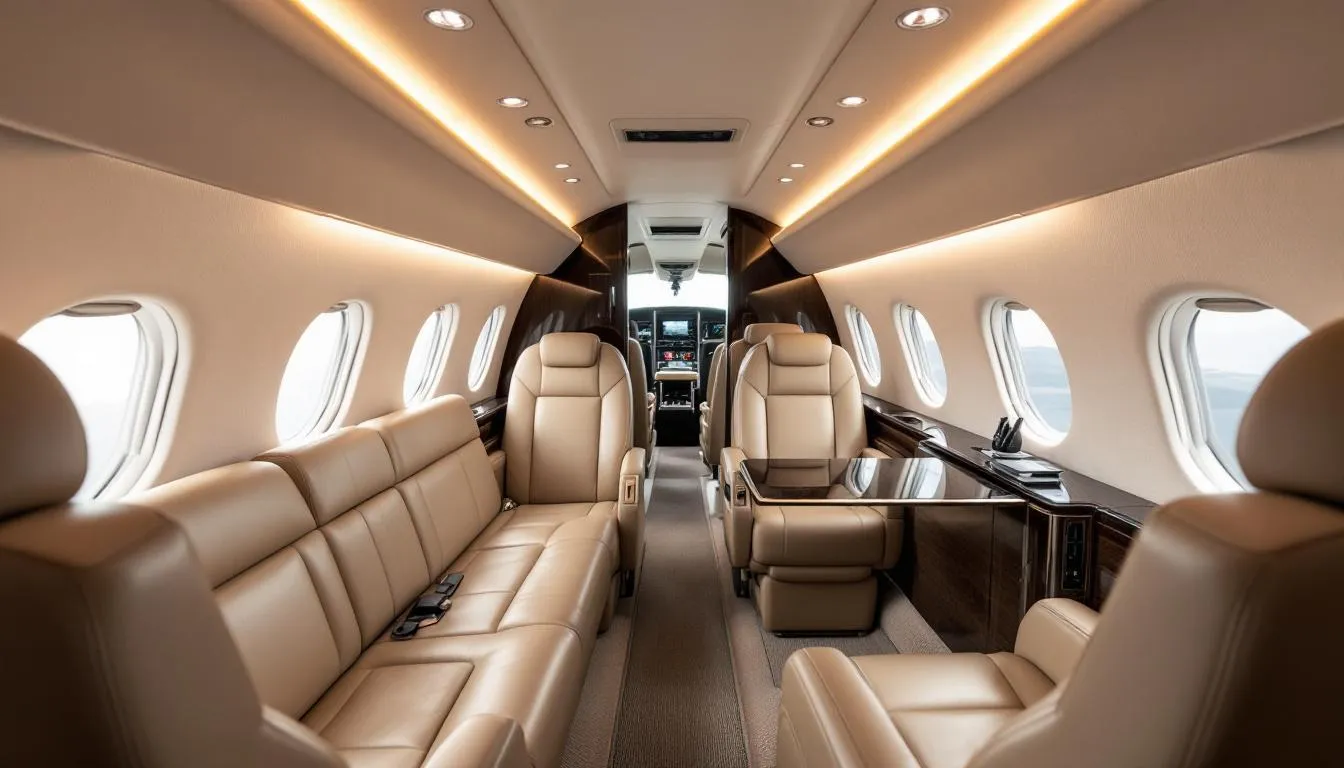
Chartering a turboprop private plane gives you the same freedom and flexibility as any private flight experience:
Custom departure times
No long airport lines or TSA screening
Direct-to-destination routing
Minimal downtime between legs
Customizable aircraft and onboard catering to suit your requirements
Onboard, passengers enjoy:
Comfortable leather seating
Fold-out work tables
Climate control
Ample baggage space
Whether you’re heading to a business meeting or weekend getaway, a turboprop aircraft gives you the convenience of luxury travel without the hefty price tag. Our dedicated team ensures a personalized service throughout the booking and flight process, serving the unique needs and preferences of every private aviation client.
Turboprop aircraft are trusted globally by both private and commercial operators. Their safety record is strong, thanks to:
Reliable engine design that has evolved over decades
Experienced pilots trained specifically on turboprop systems
Advanced avionics, including weather radar, autopilot, and terrain awareness systems
Stringent maintenance schedules enforced by aviation authorities
While no form of travel is without risk, turboprops have earned a reputation for safe, stable, and consistent performance. Although single pilots may fly some turboprops, reputable operators ensure that only highly trained professionals are at the controls, maintaining high safety standards, particularly in regional aviation. Many turboprops are flown by a single pilot, which can increase risk compared to jets that typically require two pilots. According to the IATA Annual Safety Report 2022, there was one major accident for every 560,000 turboprop flights, highlighting their strong safety record. Turboprop private planes are just as safe as their jet counterparts, offering passengers peace of mind during their travels.
One of the standout benefits of a turboprop private plane is its fuel efficiency. The turbine engine and propeller combo makes the aircraft ideal for low- to mid-speed flights (typically under 450 mph), which consume significantly less fuel compared to jet engines.
This translates into:
Lower cost per mile
Reduced carbon emissions
Less frequent refueling
For example, on a short regional route such as Los Angeles to San Francisco, a turboprop private plane can offer substantial fuel savings compared to a jet, making it a cost-effective choice for travelers.
Some turboprops are even capable of running on alternative aviation fuels, aligning with sustainability goals and eco-conscious travel preferences.
Turboprop planes shine when it comes to flexibility and reach. Their ability to land on short or unimproved runways opens up travel to remote locations like:
Mountain lodges
Island resorts
Small regional airports
Rural business hubs
A turboprop plane is especially well-suited for serving remote or rural destinations that jets cannot easily access.
Here are examples of routes where turboprops are often the better option:
Examples of routes where turboprops are often the better option include:
New York City to Martha’s Vineyard (200 miles)
Los Angeles to Lake Tahoe (390 miles)
Dallas to Houston (240 miles)
Toronto to Montreal (310 miles)
While turboprops excel on these shorter routes, jets are often seen as safer due to lower accident rates and more rigorous operational standards, making them a preferred choice for longer or more complex flights. The safety record for jets is significantly better, with one major accident for every 7.7 million jet flights, underscoring their reliability for long-distance travel.
New York City to Martha’s Vineyard (200 miles)
Los Angeles to Lake Tahoe (390 miles)
Dallas to Houston (240 miles)
Toronto to Montreal (310 miles)
Each model of turboprop plane is optimized for different types of routes and passenger needs, offering a range of specifications and amenities.
For longer flights (over 1,200 miles), a jet might offer better speed. But for anything under that, the turboprop is hard to beat in terms of value and convenience.

At Jettly, we make it easy to charter a turboprop private plane that fits your schedule, route, and budget. For most travelers, chartering offers flexibility and cost savings without the long-term commitment and responsibilities associated with aircraft ownership. A dedicated charter advisor assists you throughout the booking process to ensure a smooth experience.
To get started, request a personalized quote or more information about chartering a turboprop private plane today.
Beechcraft King Air 350 – One of the most popular turboprops in the world, offering pressurized comfort, a 1,500-mile range, and seating for 8.
Pilatus PC-12 – A versatile, high-performance aircraft that’s equally suited for executive travel and rugged destinations.
Cessna Caravan – Great for short hops with light cargo, ideal for leisure travel or utility use.
Transparent pricing and fast quotes
Access to over 20,000 aircraft worldwide
Round-the-clock customer support
Concierge services and in-flight amenities
Charter flights are available 24 hours a day, 7 days a week, throughout the year
Chartering a turboprop through Jettly ensures maximum flexibility with minimal hassle.
The safety and reliability of turboprop aircraft depend not only on advanced engineering but also on the expertise of the pilots and the rigorous maintenance routines that keep these planes in top condition. When you choose a turboprop for your private flight, you’re benefiting from a system built on thorough training, strict certification, and meticulous care.
Turboprop pilots must:
Hold a commercial pilot’s license
Receive type-specific training
Undergo recurrent training and simulator checks
Log sufficient hours in turboprop aircraft
Pilots who operate turboprop planes undergo comprehensive training and certification to ensure they meet the highest professional standards. This process includes in-depth instruction on the unique features of turboprop aircraft, such as the operation of the turboprop engine and propeller systems. Pilots must demonstrate their ability to handle the specific dynamics of these aircraft through a series of evaluations and practical tests. By maintaining strict certification requirements, the industry ensures that only highly qualified pilots are entrusted with the safety and reliability of turboprop flights, giving passengers peace of mind every time they fly.
Operators are required to perform:
Pre-flight inspections
100-hour and annual inspections
Engine and propeller overhauls
Avionics and system testing
When you book a flight through Jettly, you can rest assured that your aircraft meets the highest safety and airworthiness standards.
Regular inspection and maintenance are at the heart of turboprop aircraft safety. Each plane undergoes scheduled checks of its turboprop engine, propeller, and all critical systems to ensure everything is functioning flawlessly. These proactive measures help identify and resolve potential issues before they can impact the safety or reliability of your flight. For private aviation and chartering, this commitment to maintenance means you can expect a smooth, comfortable, and secure travel experience every time you board a turboprop. With their focus on reliability and safety, turboprop aircraft continue to be a great choice for travelers who value both efficiency and peace of mind.
If your goal is to maximize time efficiency, few options compare to a private turboprop:
No check-in lines or security queues
Arrive 15 minutes before departure
Land closer to your destination
Fly when you want, not when the airlines say
This level of control is invaluable whether you're a CEO flying to a client meeting or a family heading to a quiet weekend retreat.
If you’re looking for:
A cost-effective alternative to light jets
Access to smaller or remote airports
Reliable and efficient performance for regional flights
Comfort and flexibility without the extra cost
…then a turboprop private plane is a smart choice for your travels. While private jets offer higher speeds, greater range, and luxurious cabin amenities ideal for longer flights or business travel, turboprops provide excellent value and versatility for shorter trips and smaller groups.
Jettly can connect you to the perfect aircraft for your next journey, backed by expert support and a seamless booking experience.
Turboprop aircraft offer an ideal blend of comfort, performance, and affordability. For regional travel, they’re simply one of the best options available.
Ready to experience the convenience and efficiency of private turboprop travel?
Book your turboprop flight now at Jettly.com
Take the next step toward booking your private turboprop flight today. If you need assistance or more information, contact our Jettly team. We’re here to help you every step of the way.
Let us help you take the stress out of travel and put the power of private aviation at your fingertips.
Share this post:
Jay Franco Serevilla
Aug 21, 2025
|
5
min read
Discover tips and trends in the industry.

5
min read
Best Time to Book Flight for December: How to Lock In Christmas Flights at the Best Prices
Booking flights for December, especially around Christmas, requires strategic planning to secure the best prices. The ideal booking window typically falls between 33 and 67 days before departure, with early September being the time to start tracking fares. Flexibility with travel dates and routes can lead to significant savings, making it crucial to understand fare patterns and dynamics during this peak travel season.
Read More
5
min read
Jet Market Outlook: Private Jet Demand, Regional Growth, and Charter Opportunities
The private jet market is experiencing significant growth, projected to rise from USD 25.5 billion in 2024 to USD 38.25 billion by 2033. Key drivers include increasing demand from high-net-worth individuals, technological advancements, and a shift towards charter services over ownership. Jettly offers a flexible platform for travelers to access a vast network of private jets, catering to the evolving needs of business and leisure travelers.
Read MoreStay updated with our latest insights and tips to elevate your journey with us.
MEMBERSHIPS AND ASSOCIATIONS



Disclaimer: Jettly operates as a charter broker, offering access to a global digital jet charter marketplace. Jettly is not a direct air carrier and does not own or operate aircraft. All advertised flights are conducted by third-party air carriers that are fully licensed and hold the appropriate Part 135 or Part 121 certifications issued by the Federal Aviation Administration (FAA) or equivalent regulatory authorities under U.S. or foreign law. Jettly complies fully with the U.S. Department of Transportation's Part 295 and Part 298 Charter Broker regulations. Jettly does not carry additional liability insurance. Passengers are covered by aircraft operator insurance. TICO: 50023770


