


Login
Get Instant Pricing On 23,000+ Aircraft

>
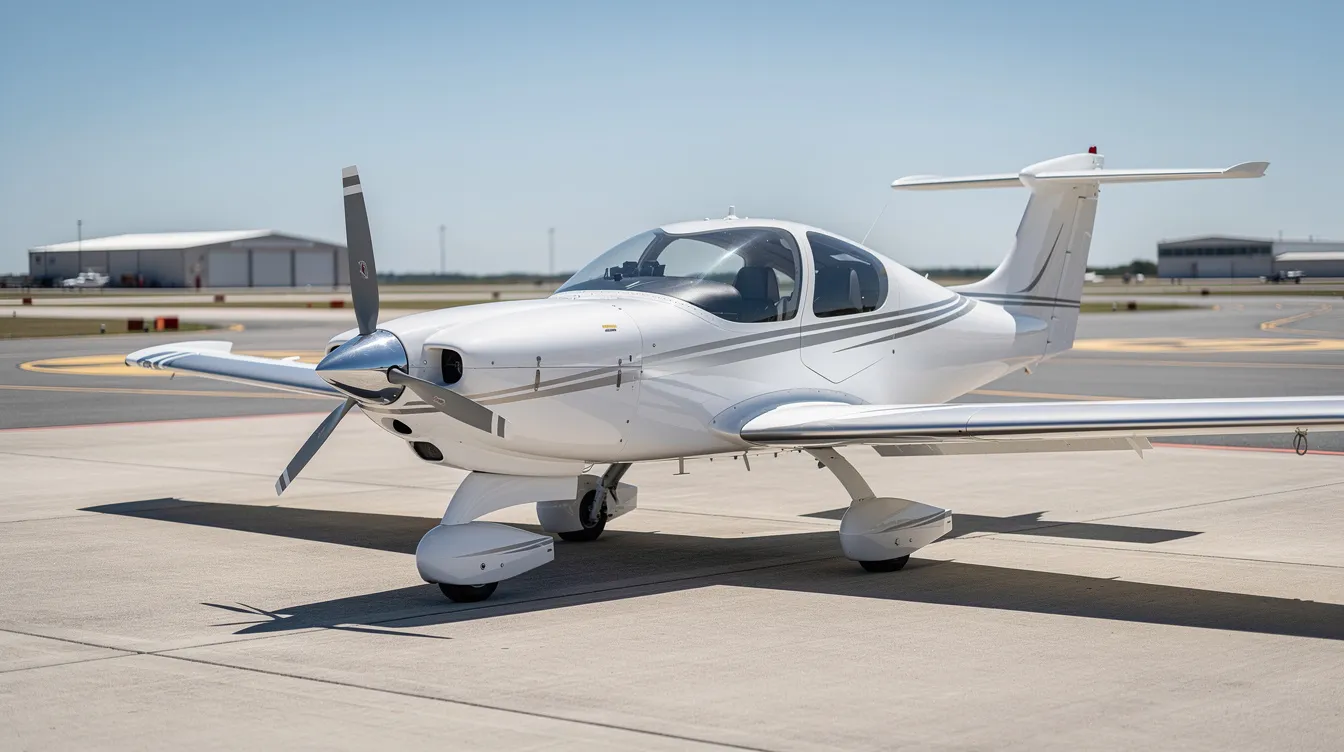
The Cessna TTx—also sold as the Model T240 and Cessna Corvalis TTx—is a high-performance, composite, fixed-gear single-engine piston aircraft built for speed, pairing a turbocharged Continental TSIO-550-C 310 hp engine with cruise speeds near 235 KTAS and Garmin G2000 avionics. It carved out a distinct place in modern piston private travel before production ended in 2018, so today the TTx is only available on the pre-owned market.
For experienced pilots, prospective buyers, aviation enthusiasts, and private travelers weighing fast personal or business transportation—including those exploring tips for booking the cheapest private jet flights—the TTx stands out as an aircraft worth careful evaluation. This guide breaks down its performance, design and airframe, avionics, icing certification, market pricing, ownership costs, and how it compares with alternatives such as the Cirrus SR22T—while also showing where chartering through platforms like Jettly, which offers affordable private jet charter, can complement or replace ownership for travelers who want flexibility without the full cost and responsibility of buying.
The Cessna TTx (also designated Model T240 or Cessna Corvalis TTx) is a high-performance, composite construction, single-engine piston aircraft derived from the Columbia Aircraft Columbia 400 line, offering exceptional capability for cross-country missions.
Powered by a turbocharged Continental TSIO-550-C engine producing 310 hp, the TTx cruises near 235 KTAS at higher altitudes and is often equipped for flight into known icing (FIKI) and advanced IFR operations with the Garmin G2000 avionics suite.
Used-market average price ranges from approximately USD $469,000 to $694,900 as of 2024–2026, with low airframe time, FIKI certification, recent engine work, and upgraded avionics driving values toward the top of that range.
Compared to its main competitor, the Cirrus SR22T, the TTx lacks a whole airplane parachute but delivers faster cruise speeds, competitive useful load, and a more direct, sporty handling feel through its side stick controls.
While Jettly focuses on chartering jets and turboprops rather than selling piston singles, many charter customers are upgrading from or comparing against owner-flown aircraft like the Cessna TTx when evaluating their private travel options.
The Cessna Corvalis TTx, officially designated the Model T240, was Textron Aviation's top-of-the-line fixed gear airplane in the single-engine piston category. Built from 2013 through 2018, this great airplane combined composite construction, a turbocharged model powerplant, and a full glass cockpit into one of the fastest single-engine planes of its era.
The Cessna TTx is a high-performance four-seat single-engine piston aircraft positioned as a fast cross-country personal transportation airplane, known for its exceptional speed and advanced glass cockpit. Core specs include:
Seats: 4 (pilot + three passengers)
Engine: Continental TSIO 550 C, twin-turbocharged, 310 hp
Max cruise speed: ~235 KTAS at FL250
Range: ~1,000–1,250 nm with reserves
Certification: FAA utility category with a maximum load factor of 4.4 Gs
The TTx sits at the top of the Cessna piston single family, well above models like the Cessna 182 and 206. It occupies the space between traditional pistons and pressurized turboprop or light jet aircraft—a step toward speed and sophistication without jumping to turbine power.
The "Cessna TTx" branding came under Textron Aviation, but the legacy Cessna name remained front and center, much like how the Cessna 172 continues to carry the brand. The Corvalis TTx designation bridged the gap between the earlier Corvalis line and the refreshed T240 generation.
|
Feature |
Cessna TTx |
Cirrus SR22T |
Beechcraft G36 Bonanza |
|---|---|---|---|
|
Cruise Speed |
~235 KTAS |
~213 KTAS |
~175–200 KTAS |
|
Engine |
TSIO-550-C, 310 hp twin-turbo |
Continental turbo, ~315 hp |
IO-550, ~300 hp |
|
Avionics |
Garmin G2000 |
Garmin Perspective+ |
Varies (G1000 upgrades available) |
|
Icing Capability |
Certified FIKI (post-2014) |
Optional FIKI |
TKS/inadvertent only |
|
Parachute |
No |
Yes (whole airplane chute) |
No |
The TTx's lineage traces back to Columbia Aircraft, whose Columbia 300 and 400 designs pioneered all-composite, high-performance singles in the early 2000s. Cessna acquired the design of the TTx during Columbia Aircraft's bankruptcy in 2007, absorbing both the aircraft line and the composite manufacturing expertise that came with it.
Key milestones in the aircraft's evolution:
Early 2000s: Columbia 400 certified; first flight of the all-composite speed single concept
2007: Cessna acquires Columbia Aircraft; production continues in Bend, Oregon as the Cessna 350/400 Corvalis line
2009: Production moves to Chihuahua, Mexico; early quality-control concerns surface, including a 2010 Emergency Airworthiness Directive related to wing spar delamination
2013: Formal launch of the new airplane designation—Model T240 "Cessna TTx"—with the Garmin G2000 cockpit, refreshed interior, and renewed emphasis on reliability
June 2014: FAA certifies the FIKI system for the TTx
~January 2018: End of production; all TTx aircraft are now pre-owned
The name evolved from Cessna 400 Corvalis TT to Cessna Corvalis, and finally to the Cessna TTx T240—the "TT" referencing twin turbocharging and the "x" signifying a performance edge.
The TTx's low-wing composite design and fixed gear configuration are central to its sleek performance profile. Rather than adding the weight, cost, and maintenance burden of retractable gear, the airframe uses aerodynamic fairings and careful shaping to achieve cruise speeds that rival retractable-gear competitors.
Materials: The TTx features an all-composite airframe made from lightweight fiberglass and carbon fiber, with Nomex honeycomb core panels and full-span carbon fiber wing spars. This composite construction saves weight while delivering strength and stiffness without riveted metal skin.
Certification and fuel: Certified in the FAA utility category with a maximum load factor of 4.4 Gs, the airframe carries 102 gallons of usable fuel capacity, a figure carried over from the Columbia/Corvalis heritage.
Cabin and entry: The 4-seat cabin measures 4 ft 1 in high and 4 ft wide, using gullwing doors for easy ingress and egress, adjustable seats, and an automotive-style interior focused on comfort.
Controls: The side stick control setup—a true joystick-style input rather than a traditional yoke—connects through direct push-pull rod flight controls. This gives pilots a solid, responsive feel and superior handling compared to competitors like the Cirrus SR22T. A rudder limiter prevents overcontrol at speed.
Landing gear: The TTx uses fixed tricycle landing gear to optimize performance and reduce maintenance, eliminating the mechanical complexity of retractable systems.
The Cessna TTx earned its reputation as one of the fastest non-pressurized piston singles of its generation. Its turbocharged engine maintains power well into the flight levels, and the numbers back up the hype.
Power and speed: The Continental TSIO-550-C engine produces 310 hp, driving the TTx to a maximum speed of 235 knots at FL250. Economy cruise at 55–65% power delivers around 208 KTAS.
Climb and ceiling: The TTx climbs at a maximum rate of 1,400 feet per minute and has a service ceiling of 25,000 feet. It includes a built-in oxygen system for high-altitude operations above 12,500 feet.
Runway performance and descent: Takeoff ground roll is approximately 1,280 feet at sea level; landing distance over a 50-foot obstacle is about 2,640 feet. Speed brakes aid descent planning and approach control.
Fuel and range: Burning 18–22 gallons per hour at high power, full fuel range is around 1,100–1,250 nm at economy cruise.
Handling: The TTx features conventional power controls requiring more pilot input than some competitors, rewarding experienced pilots with precise, connected control feedback and superior handling compared to the Cirrus SR22T. However, the SR22 offers better forward visibility.
Glide ratio: The TTx has a favorable glide ratio of approximately 13:1 due to its aerodynamic design.
For trips exceeding 800–900 nm or involving multiple legs in a single day, a light jet charter through Jettly supported by its private jet charter cost estimator starts to make more sense than pushing a piston single to its limits.
The Garmin G2000 Intrinzic flight deck was a major differentiator when the TTx launched in 2013, replacing the G1000 found in earlier Corvalis models with dual 14-inch high-definition displays and a dedicated Garmin Touchscreen Controller (GTC).
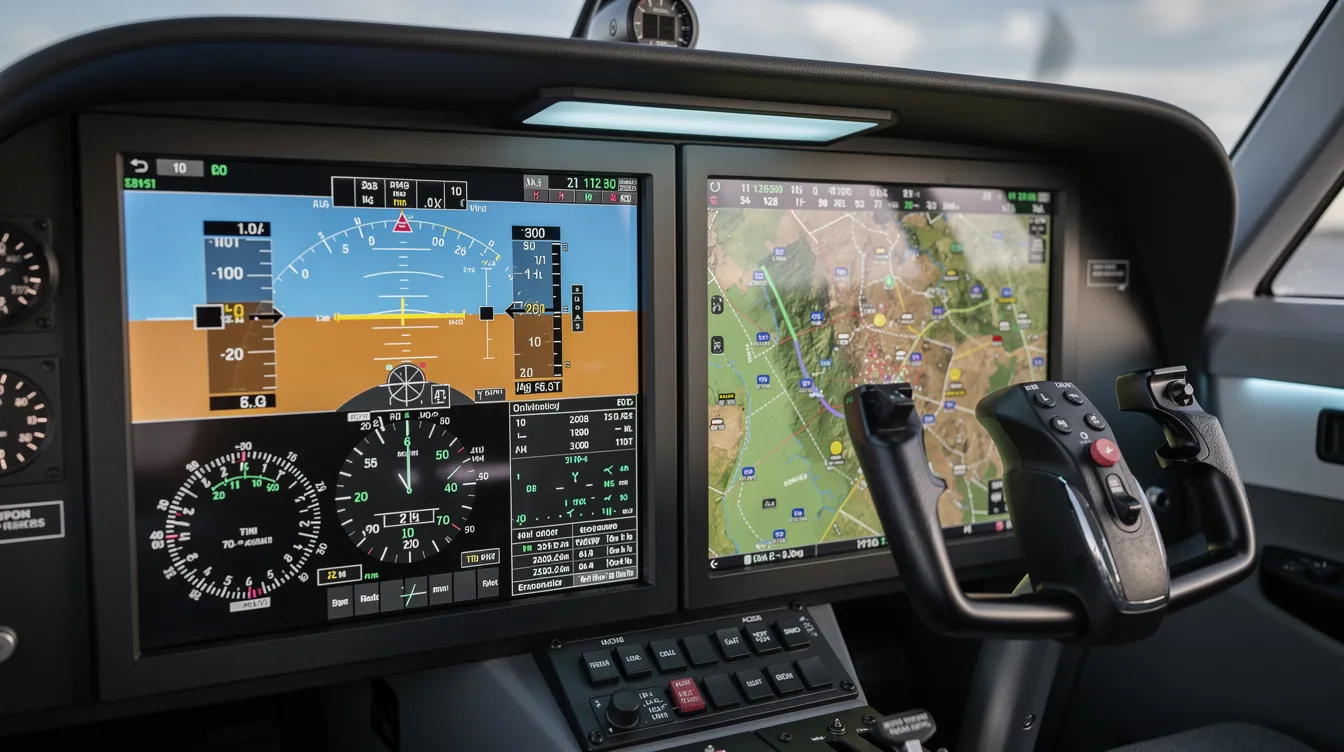
Displays and vision: The dual widescreen multi-function displays offer synthetic vision technology (SVT), split-screen map and engine monitoring, and an intuitive interface that enhances situational awareness.
Autopilot and protection: The integrated GFC 700 autopilot includes electronic stability protection (ESP), rudder hold for coordinated flight, and coupled go-arounds, features that smooth out IFR flight and reduce single-pilot workload.
Situational awareness options: Later TTx aircraft commonly include TAS, TAWS-B terrain awareness, active traffic advisory systems, ADS-B Out compliance, XM weather data link, and SafeTaxi/FliteCharts.
Icing capability is a headline feature for later Cessna TTx models and a critical consideration for buyers flying IFR in colder climates.
Post-2014, the TTx gained full flight into known icing (FIKI) certification, significantly widening dispatch capability for all-weather operations using a TKS fluid-based anti-icing system.
The system delivers glycol-based fluid through micro-drilled panels on wing and tail leading edges, a prop slinger, and the windshield, with an endurance of about 2.5 hours.
While FIKI certification expands the TTx's envelope, it doesn't match the multi-engine redundancy, higher ceilings, and more robust de-icing systems available on turboprops and jets.
The primary competitors of the Cessna TTx include the Cirrus SR22T among others. Many prospective buyers directly compare these two aircraft, each with distinct strengths.
The Cirrus SR22 includes a whole airplane parachute (CAPS), a unique safety feature with no TTx equivalent.
The TTx compensates with a clear speed advantage (roughly 20+ KTAS faster at altitude) and competitive useful load capacity.
The TTx features Garmin G2000 avionics with larger HD screens and touchscreen control versus the SR22T's Garmin Perspective+.
Handling-wise, the TTx has superior handling with direct push-pull rod linkage through the side stick, delivering precise control feedback, while the SR22 uses a side yoke with more automation.
The SR22 has better forward visibility than the TTx due to its cowl design.
|
Aircraft |
Cruise (KTAS) |
Engine |
Useful Load |
FIKI |
Parachute |
|---|---|---|---|---|---|
|
Cessna TTx |
~235 |
TSIO-550-C, 310 hp |
~1,000–1,100 lb |
Certified (post-2014) |
No |
|
Cirrus SR22T |
~213 |
Continental turbo, ~315 hp |
~900–1,000 lb |
Optional |
Yes (CAPS) |
|
Beechcraft G36 |
~176 |
IO-550, ~300 hp |
~1,000 lb |
TKS only |
No |
The TTx is best understood as a personal transport airplane optimized for 2–4 people on fast regional and cross-country trips.
The cabin measures 4 ft 1 in high and 4 ft wide.
Interior quality includes Citation-style leather upholstery, improved ergonomics, enhanced soundproofing, and optional factory air conditioning.
Typical missions include business hops of 400–800 nm, family trips, and personal IFR travel where speed and altitude capability translate into real time savings.
For missions involving larger groups, longer distances, or same-day multi-leg meetings, chartering a jet or turboprop through Jettly and using its airport locator tool and booking platform offers cabin-class comfort and removes single-pilot workload.
All Cessna TTx aircraft on the market are pre-owned. Limited production numbers keep inventory relatively tight, and only 5 Cessna TTx sales were documented in the last 12 months.
Price range: The average price sits around $607,500, with listings ranging from $469,000 to $694,900 depending on year, time, and equipment.
Price drivers: Airframe and engine total time, presence of FIKI certification, recent engine or prop overhaul, avionics completeness, damage history, and logbook documentation.
Market dynamics: Typical total time for Cessna TTx listings is about 1,034 hours. Listings generally stay active for about 107 days.
|
Year |
Total Time |
FIKI |
Equipment |
Asking Price |
|---|---|---|---|---|
|
2016 |
~410 hrs |
Yes |
Full G2000, AC, low engine |
~$695,000 |
|
2015 |
~1,000 hrs |
Yes |
Standard equipment, good interior |
~$600,000 |
|
2014 |
~1,200 hrs |
Yes |
Average interior, needs minor refurb |
~$550,000 |
|
2013 |
~1,800 hrs |
No |
Higher time, older interior |
~$470,000 |
The typical TTx owner is an experienced pilot, often a business owner or high-net-worth individual stepping up from a slower single to gain speed and altitude capability.
Major cost buckets include fuel, maintenance, insurance, and fixed costs, with direct operating costs around $195/hour and all-in costs $350–$500 per hour.
Beyond dollars, non-financial costs include maintaining IFR currency, managing turbo systems proficiency, and scheduling maintenance.
For travelers who fly less frequently or need complex itineraries, chartering via Jettly’s extensive private charter aircraft network can deliver better overall value and time savings than owning a plane.
Many Jettly users are pilots or former aircraft owners familiar with models like the Cessna TTx and Cirrus SR22. They understand what ownership delivers—and where it falls short, often seeking a NetJets alternative in Jettly’s flexible model.
Owners of aircraft like the Cessna Corvalis and Cessna TTx often turn to on-demand charter for longer flights, international private jet trips, or missions requiring more seats and cabin comfort.
A TTx handles 2–4 passengers over 400–800 nm beautifully, but for missions growing beyond that, using a jet card flight cost estimator to plan charter can remove single-pilot workload and fatigue risk.
Jettly offers instant digital pricing, access to over 20,000 aircraft beyond piston singles through its various private jet membership plans, no long-term ownership commitments, and flexibility to choose between light jets, midsize jets, turboprops, and helicopters.
Learn more about Jettly's charter options and its jet card programs for frequent flyers at https://www.jettly.com.
These FAQs address common questions not fully covered above, each answered in concise detail.
No. Production of the Cessna TTx ended around January 2018 under Textron Aviation. All TTx aircraft are now available only on the used market. Inventory remains relatively tight.
Yes, but only for models post-2014 with the certified FIKI package using TKS fluid-based ice protection. Earlier models may have only inadvertent TKS systems.
The average price for a used TTx is approximately $607,500, plus ongoing operating costs of $350–$500 per flight hour; these figures are in line with broader analyses of how much a private jet costs to own and operate. Chartering equivalent-distance trips through Jettly avoids acquisition and maintenance overhead, often making charter more cost-effective for occasional travelers.
Insurance companies typically require an instrument rating, high-performance endorsement, and significant experience in turbocharged or complex aircraft. Transition training and proficiency in high-altitude IFR operations are essential.
The TTx's combination of fixed gear simplicity, all-composite carbon fiber airframe, twin-turbocharged Continental TSIO-550-C engine, and Garmin G2000 cockpit creates a profile no other production airplane exactly replicates. Its 235-knot cruise with fixed gear is essentially unmatched.
The Cessna TTx remains one of the fastest fixed gear piston singles ever built—a legendary blend of composite construction, Garmin G2000 avionics, FIKI options, and cruise performance near 235 KTAS that few competitors can match.
Consider your mission profile carefully: how often you fly, typical distances, weather patterns, and your willingness to invest in ongoing pilot training and proficiency.
Committed owner-pilots who value hands-on flying and regularly cover 400–800 nm legs will find the TTx hard to beat.
Travelers, executives, or families who prioritize flexibility, schedule reliability, or prefer not to manage maintenance and currency may find on-demand charter through Jettly a smarter fit.
Whether the Cessna TTx is your next airplane or charter is your preferred path, the goal is the same: getting where you need to be, faster and on your terms.
Ready to experience private travel on your terms? Explore flight options or request a quote at https://www.jettly.com.
Share this post:
Jay Franco Serevilla
Aug 13, 2026
|
5
min read
Discover tips and trends in the industry.
5
min read
Citation 7 Jet: Performance, Costs, and Charter Insights
The Cessna Citation VII is a high-performance midsize business jet that offers a comfortable cabin for up to 7 passengers and impressive cruise capabilities. Despite its production ending in 2000, it remains a popular choice for charter services due to its reliability and cost-effectiveness. With a maximum range of 2,220 nautical miles and the ability to fly at altitudes up to 51,000 feet, it provides excellent performance for various travel needs.
Read More
5
min read
Who Owns a Gulfstream G700? Inside the World of the Newest Flagship Business Jet
The Gulfstream G700 is the largest and most advanced private jet, appealing to ultra-high-net-worth individuals, corporations, and charter operators. With a price tag of around $75 million, ownership is often discreet, utilizing LLCs for privacy. This article explores who owns the G700, including notable figures like Elon Musk, and how travelers can access this elite aircraft through charter services.
Read MoreStay updated with our latest insights and tips to elevate your journey with us.
MEMBERSHIPS AND ASSOCIATIONS



Disclaimer: Jettly operates as a charter broker, offering access to a global digital jet charter marketplace. Jettly is not a direct air carrier and does not own or operate aircraft. All advertised flights are conducted by third-party air carriers that are fully licensed and hold the appropriate Part 135 or Part 121 certifications issued by the Federal Aviation Administration (FAA) or equivalent regulatory authorities under U.S. or foreign law. Jettly complies fully with the U.S. Department of Transportation's Part 295 and Part 298 Charter Broker regulations. Jettly does not carry additional liability insurance. Passengers are covered by aircraft operator insurance. TICO: 50023770


