


Login
Get Instant Pricing On 23,000+ Aircraft

>
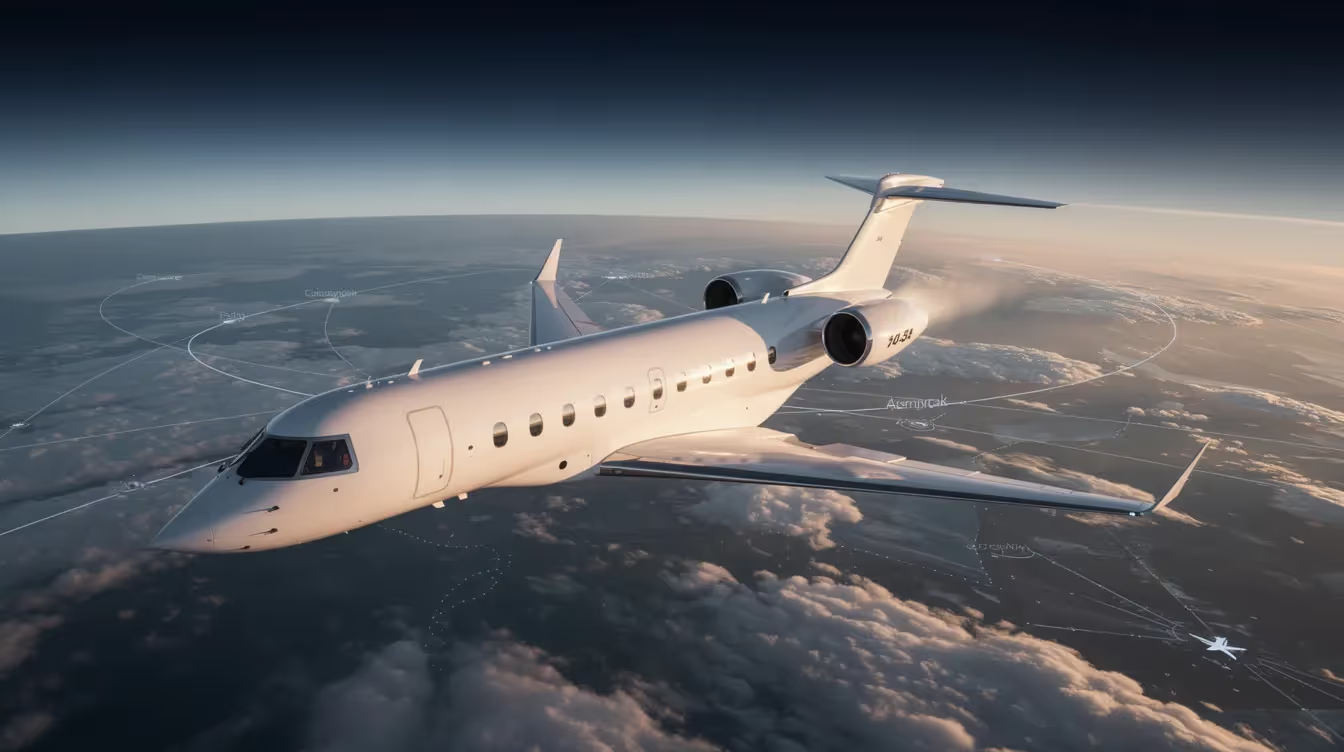
Transcontinental private jet travel offers a unique combination of speed, convenience, and comfort for passengers crossing vast distances without stops. Whether for business or leisure, flying on a long-range private jet eliminates many of the hassles of commercial air travel, such as long security lines, fixed schedules, and limited airport options. With cutting-edge technology and an impressive range, these aircraft enable nonstop flights across continents and oceans, providing travelers with unmatched flexibility and time savings compared to commercial airlines. This guide explores the key aspects of transcontinental private jet travel, including popular routes, aircraft types, costs, and how Jettly’s platform simplifies booking and access to a global fleet of private jets.
A transcontinental private jet can support long-haul flights such as New York–London, Miami–São Paulo, or Los Angeles–Tokyo, often as nonstop flights on heavy or ultra-long-range aircraft.
Aircraft such as the Bombardier Global family, Gulfstream G650ER/G700, and Boeing Business Jet are among the best aircraft types for intercontinental missions.
Flight time is usually 6–8 hours across the Atlantic Ocean and 11–14 hours on longer Pacific routes, with charter flights often priced from tens of thousands to well over $150,000 one-way.
Jettly helps business and leisure travelers compare aircraft types, review instant pricing, and book a private jet charter without ownership or traditional jet card commitments.
This guide covers routes, aircraft, range, costs, permits, expedited customs, comfort, and how to choose the right private jet.
A transcontinental private jet gives travelers control over schedule, routing, privacy, and onboard experience. For business executives, families, leisure travelers, and high-net-worth individuals, the value is not only comfort. It is time saved, direct airport access, and the ability to work or rest en route.
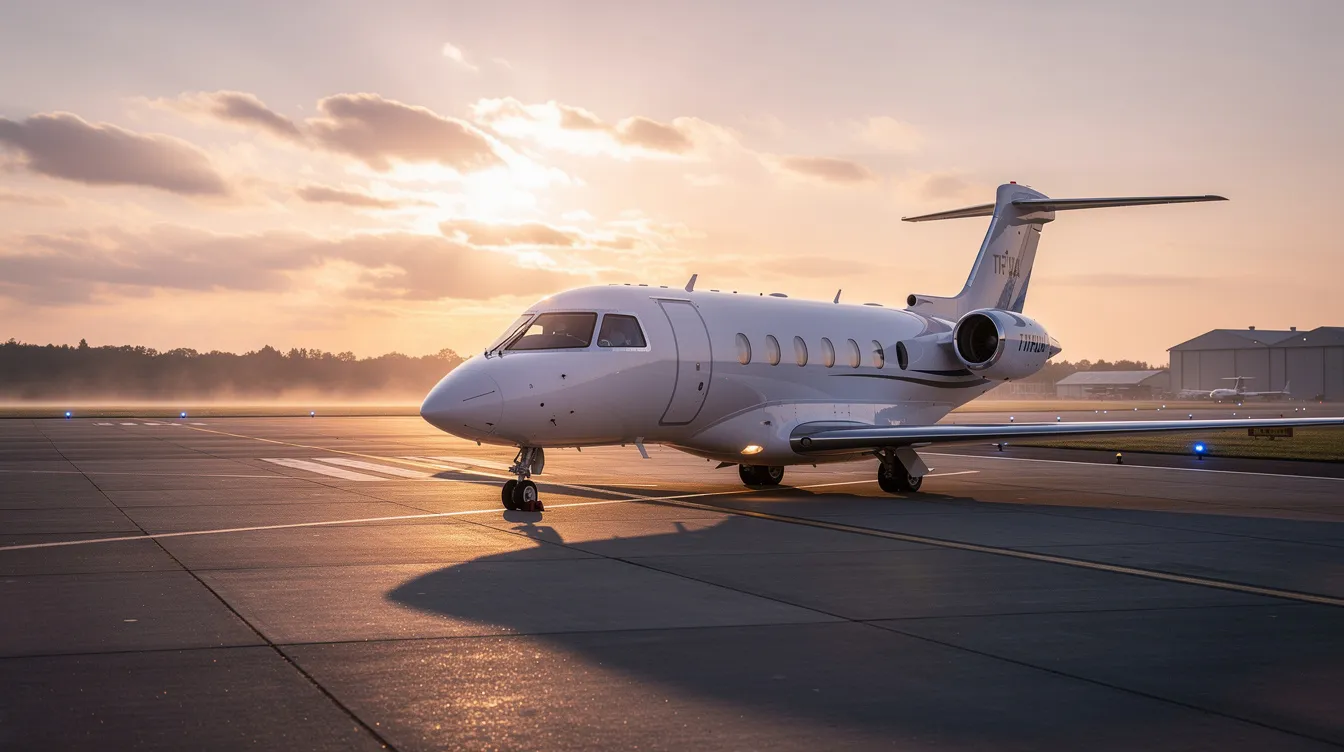
A transcontinental private jet is designed to travel across an entire continent nonstop and typically falls into the super midsize or heavy jet categories. In private aviation, the term can also describe intercontinental or transoceanic travel, such as a transatlantic private jet flight from New York to London.
Technically, “transcontinental” may mean New York–Los Angeles, while “intercontinental” means Toronto–Rome or Los Angeles–Tokyo. In practice, many travelers use the terms interchangeably when discussing a long-range private jet mission over long distances.
Examples include New York–London, Los Angeles–Tokyo, Miami–São Paulo, Dubai–Singapore, and Sydney–Singapore. These trips usually require a long-range jet such as a Bombardier Global, Gulfstream G650ER, or Boeing Business Jet rather than light jets or short-range jets.
Jettly’s marketplace includes access to thousands of long-range aircraft, with range, cabin, passenger capacity, and luggage space details available during search, along with an airport locator tool for identifying suitable departure and arrival airports and other tools for tracking private jets efficiently and accurately. Learn more about Jettly’s charter options at https://www.jettly.com.
Flight time depends on route length, aircraft type, cruising speed, wind speed, and weather conditions. Private jets often fly more direct tracks than commercial flights and can cruise at altitudes of 40,000+ feet, resulting in smoother and faster flights.
|
Route |
Typical aircraft |
Average flight time |
|---|---|---|
|
New York–London |
Gulfstream G550 |
6–7 hours |
|
Miami–Paris |
Bombardier Global Express |
8–9 hours |
|
Los Angeles–Tokyo |
Global 7500 |
11–12 hours |
|
Toronto–Dubai |
Gulfstream G650ER |
12–13 hours |
|
Miami–São Paulo |
Dassault Falcon 8X |
8–9 hours |
Popular transatlantic routes include flights from New York to London, Miami to Paris, and Los Angeles to Rome, offering access to exclusive airports. The most common private jet routes across the Atlantic include flights from London to New York and Los Angeles to Geneva, among others.
Flight times for popular transatlantic routes typically range from 6 to 8 hours, depending on the departure city and destination. Pure oceanic segments can be shorter, such as Shannon–Gander at about 3.5 hours, but full city pairs take longer due to airport positioning.
Weather patterns across the Atlantic Ocean influence routing and flight times throughout the year. During winter months, flights may need to take more southern routes to avoid severe weather systems, which can add 30–60 minutes to the overall flight duration. Pilots continuously monitor weather forecasts during transatlantic flights because arrival weather can change considerably, especially in winter.
Jettly displays estimated flight time and pricing after users enter origin, destination, and date, and frequent flyers can also use a dedicated jet card flight cost estimator to understand route pricing under membership programs.
Heavy and ultra-long-range business jet models dominate transcontinental private jet travel. They combine flight range, speed, onboard amenities, and cabin comfort for long flights.
Range, measured in nautical miles, determines whether an aircraft can fly nonstop or needs a fuel stop. Passenger count, baggage, maximum fuel capacity, weather, and airport runway length also matter. Key factors to evaluate for transcontinental journeys include range, cabin comfort, passenger capacity, and connectivity.
Jettly helps travelers compare private charter aircraft across multiple categories that represent different trade-offs: lower operating costs, faster maximum speed, more distinct zones, or a spacious cabin for sleep and work, which is especially useful when evaluating private jets that can fly to Europe on longer transatlantic missions.
The Bombardier Global family is built for long-haul flights, including New York–Hong Kong, Los Angeles–London, and Dubai–Sydney.
Key features and amenities:
Range of 6,000–8,000 nautical miles depending on model (Global Express, Global 6000, Global 7500, Global 8000)
Up to 16–17 hours of flight time in favorable conditions (Global 7500)
Maximum speed near Mach 0.94 (Global 8000)
Stand-up cabins
Full galleys
Lie-flat beds for overnight travel
Four-zone cabin (Global 7500)
Private stateroom
Advanced lighting
High-speed Wi-Fi
Jettly frequently sources Bombardier Global aircraft for clients who need to fly nonstop between financial centers on tight schedules.
Gulfstream is a benchmark for transatlantic private jet travel because its aircraft combine range, engine power, speed, and quiet cabin design.
Key features and amenities:
Range of 6,750–8,000 nautical miles (G550, G650, G650ER, G700, G800)
Capable of nonstop flights such as Los Angeles–Paris or Dallas–Tokyo
Cruise speeds up to Mach 0.925
Advanced avionics and technology
Low cabin altitude
Quiet cabin design
Strong connectivity for business meetings or productivity
Spacious, comfortable interiors
A Boeing business jet and other VIP airliners work well for large delegations, corporate roadshows, or heads-of-state travel.
Key features and amenities:
Range of 5,000–6,000 nautical miles (BBJ 737 platform)
BBJ 787 can approach 9,000–10,000 nautical miles
Cabins with lounges, offices, conference rooms, bedrooms, and full galleys
Customizable interiors
Capacity for 20–50 passengers in VIP layouts
These highly versatile aircraft are ideal when group size matters more than lower operating costs, and travelers can review detailed guidance on how many passengers different private jet sizes can carry when planning larger group itineraries.
Transcontinental jets offer a range of approximately 3,000 to 4,500 nautical miles, connecting distant city pairs without refueling.
Key features and amenities:
Suitable for New York–Los Angeles, North America–Caribbean, and some shorter international sectors
May require one fuel stop on longer Europe or Asia routes
Lower operating costs for smaller groups
Comfortable cabins with business amenities
Jettly search filters let users compare super-midsize, heavy, and ultra-long-range aircraft by total trip price, fuel stops, and cabin features, drawing on insights from the best private airplanes and luxury jet categories in 2025 and broader rankings of the top 10 private planes and the world’s most luxurious aircraft.
The core question is simple: can the aircraft fly nonstop with safe reserves? The published range is not the same as the real-world range. Actual performance changes with several factors:
Number of passengers
Amount of baggage
Routing and alternates
Headwinds and tailwinds
Maximum fuel capacity
Weather conditions
Airport runway length
Private jets require a minimum range of approximately 3,500 nautical miles to reach Europe nonstop from the US East Coast, though aviation experts typically recommend aircraft with ranges exceeding 4,000 nautical miles for added flexibility, especially when evaluating top long-range private jets for global travel. For longer routes such as New York–Tokyo or Dubai–Los Angeles, 6,000+ nautical miles is often preferred.
Weather conditions can significantly affect flight times, with diversions, tailwinds, and headwinds potentially making a difference of an hour or more for some flight routes. Westbound legs often take 30–60 minutes longer than eastbound legs because of jet stream patterns.
Jettly’s private jet charter cost estimator and quoting engine help show whether a private jet flight can fly nonstop or whether a fuel stop is likely, complementing broader insights into how much a private jet costs, including ownership and charter options.
A private jet charter cost depends on hourly rate, flight time, aircraft size, route fees, and aircraft availability. Hourly rates for private jets typically range from about $3,000 for smaller models to over $15,000 for larger, long-range aircraft, depending on the specific type and availability.
Typical hourly rates include:
|
Aircraft category |
Approximate hourly rate |
|---|---|
|
Super-midsize jets |
$4,000–$7,000+ |
|
Heavy jets |
$8,000–$10,000+ |
|
Ultra-long-range / airliner-class jets |
$10,000–$18,000+ |
Hourly rates for heavy jets capable of transatlantic flights typically range from $8,000 to $10,000 per flight hour, with total trip costs for a one-way flight from Los Angeles to Paris ranging from $120,000 to $170,000.
Example trip costs:
New York–London in a Global Express: about $70,000–$90,000 one-way
Miami–São Paulo in a Falcon 8X: around $90,000–$130,000 one-way
Los Angeles to Paris in a heavy jet: $120,000–$170,000 one-way
Total trip costs for transcontinental journeys depend on numerous factors beyond basic hourly rates, including crew expenses, fuel surcharges, and various operational fees associated with international travel, as outlined in our complete guide to private jet rental costs, broader overviews of what determines a single private jet flight cost, in-depth explainers on private jet lease cost and long-term leasing options, and additional strategies for booking the cheapest private jet flights through smart choices and timing. Other fees include crew overnights, de-icing, landing and handling, permits, and repositioning, with private jet fuel costs and pricing variables also playing a significant role in the final charter price.
Jettly provides transparent pricing and may surface discounted empty leg flights for repositioning segments when schedules are flexible, and travelers can further reduce costs by using the platform to crowdsource private jet flights and share empty seats, lock in predictable rates through the best jet card programs compared for today’s flyers, or explore additional options for buying a seat on a private jet through shared and semi-private services.
International private jet operations and their ability to fly globally require meticulous attention to regulatory compliance and advance planning due to the complexity of crossing multiple national airspaces and landing in foreign countries.
Overflight permits are essential for transatlantic flights, as each country whose airspace the aircraft crosses requires specific authorization that must be obtained well in advance. Compliance with aviation authorities varies widely across European countries, each enforcing distinct requirements for aircraft registration, crew qualifications, and operational procedures, often under the oversight of the European Aviation Safety Agency (EASA).
Crew qualification requirements for international flights exceed domestic standards, with pilots needing appropriate ratings for both the aircraft type and international operations, including specific training for oceanic procedures and emergency protocols.
Long-haul flights may require ETOPS or EDTO planning, satellite communication, advanced navigation systems, survival equipment, and fatigue management, all of which are supported by a large global fleet of private jets and operators, including partners such as Dexter Air Taxi and similar private jet operators. Jettly partners with certified operators that meet standards such as FAA Part 135 or EASA equivalents, while operators coordinate flight planning and permits.
Transcontinental private jet passengers still clear customs and immigration, but the process is usually faster than at commercial terminals. Travelers can typically arrive at a private terminal just 10–20 minutes before departure, avoiding long security lines and crowded areas.
Customs and immigration procedures for international private jet travel to Europe are streamlined, requiring passengers and crew to present valid passports and appropriate visa documentation for their intended destinations. Upon arrival, officers may meet the aircraft or process passengers in a private lounge, often in under 30 minutes.
Private jets offer direct access to more than 984 airports throughout Europe, including numerous smaller airports that commercial airlines cannot serve, significantly increasing travel flexibility and convenience. Transcontinental jets can land at over 5,000 U.S. airports, which is significantly more than commercial airlines.
Traveling by private jet can save 3-4 hours of total travel time on transatlantic journeys compared to commercial airlines, as it eliminates inefficiencies such as early airport arrival and lengthy security screening, especially for travelers who understand how renting a private plane works from inquiry to touchdown.
Jettly’s partner operators coordinate FBO handling, in-flight catering services through Jettly Eats, and ground transportation, including tailored support for regional markets such as private jet charter in Kolkata, West Bengal.

One reason discerning travelers choose transcontinental private jet travel is control over comfort. Pets usually travel in the cabin with owners, subject to veterinary documents and destination rules. Long-range aircraft such as the Bombardier Global and Boeing Business Jet offer significant luggage space for checked bags, sports gear, and business equipment, which can be a key factor when reviewing affordable airplane rental options and cost drivers or assessing the best private planes for families prioritizing comfort and care.
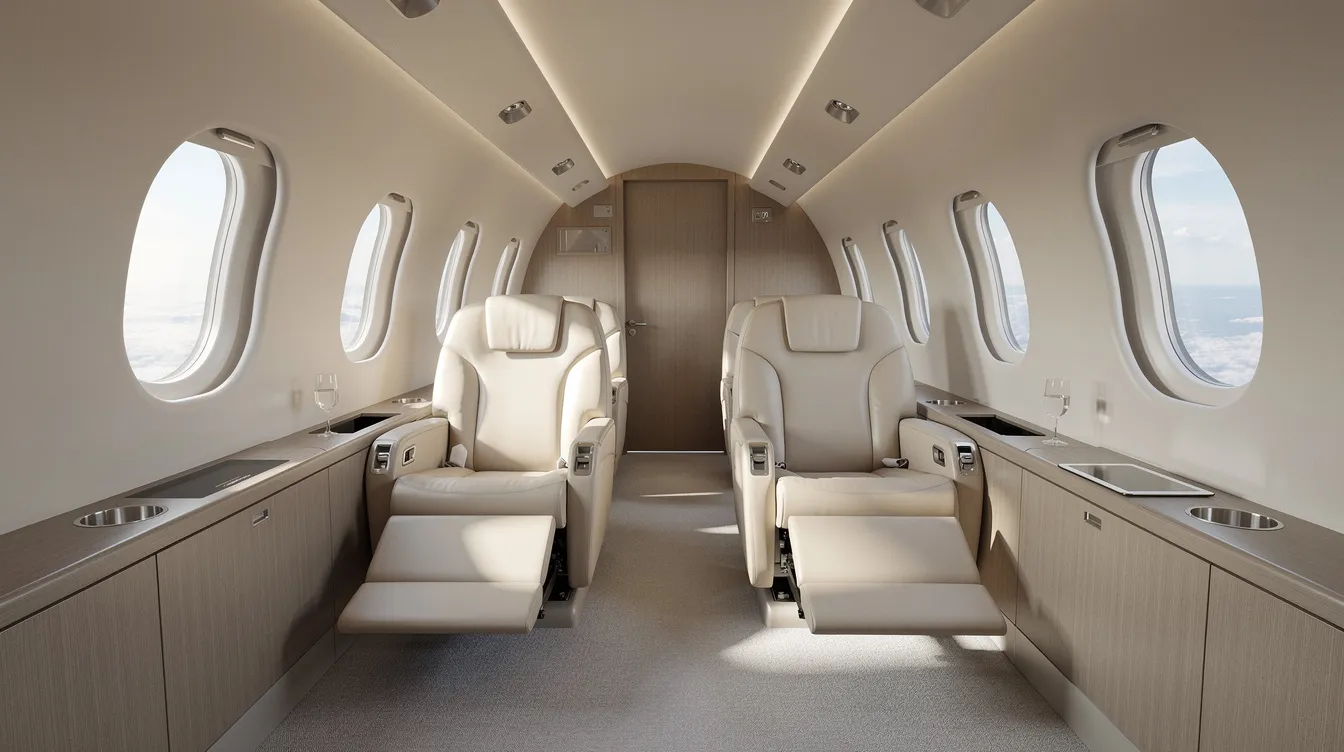
Private jets offer a distinctive combination of comfort, luxury, and personalized service, making every flight a memorable experience for both business and leisure travelers.
Private bedrooms for restful sleep, allowing passengers to arrive at their destination refreshed after long flights
Gourmet cuisine and personalized catering services, with travelers able to pre-select meals tailored to their preferences and dietary requirements, similar to how owners choosing the best personal plane for their lifestyle and mission profile weigh onboard comfort and customization
High-speed Wi-Fi, enabling passengers to stay connected, work, or unwind during their journey
Advanced cabin management systems that allow passengers to control lighting, temperature, and entertainment directly from their devices
Very light jets and light jets are excellent for regional trips, but they are not ideal for a transcontinental private jet mission across oceans, making models like the Cessna 340 with its regional range and capacity better suited to shorter business or leisure hops. Travelers interested in ownership or shorter hops may find value in exploring the cheapest private aircraft options across light jets and turboprops. Smaller aircraft may technically cross with multiple stops through Greenland or the Azores, but this adds time, weather exposure, and operational complexity, and is generally better suited to robust mid-size airliners like the Boeing 737-800 with its charter-ready range and capacity.
For North America–Europe or North America–Asia, travelers should focus on super-midsize, heavy, or ultra-long-range aircraft. Those planning domestic or regional journeys can draw on guidance for finding the best cross-country plane for their travel needs while also considering long-term private jet operating costs and budgeting. Light jets still make sense for New York–Chicago, London–Geneva, or feeder legs before a larger aircraft handles the ocean crossing.
Jettly can help combine aircraft types within one itinerary and advise whether shared charter flights or full charters are better suited to each leg, while separate resources outline affordable planes and budget-friendly aircraft choices for ownership-minded travelers.
Jettly is a global digital private jet charter marketplace with access to over 20,000 unique aircraft and is frequently ranked among the best private jet charter companies for luxury and flexibility, reflecting broader trends in the worldwide private jet fleet and market growth. Similar to partners like Zenflight, an instant-book private jet charter service, it is designed for complex travel where aircraft availability, range, cost, and scheduling all matter.
Users can enter origin, destination, and date to compare aircraft types in real time. This helps clients weigh a faster aircraft against a larger cabin, or nonstop service against a lower-cost one-stop option, similar to how broader charter airline comparison guides and explainers on what drives the cost of a single private jet flight help travelers understand the full range of private aviation choices.
The platform supports on-demand charter and private jet membership options with wholesale-style pricing, including comprehensive jet card programs with fixed hourly rates and premium benefits that complement broader explanations of what a jet card is and how these programs work, as well as comparisons with private jet lease cost and long-term leasing strategies. Frequent flyers can ask about predictable pricing, availability rules, and whether guaranteed availability applies to a specific program, and should also review jet card costs and pricing structures in detail, independent analyses of NetJets card costs and pricing tiers, and broader comparisons of the best jet card programs and providers today to ensure the right fit for their flying profile.
Private jet travel allows for a tailored experience, enabling passengers to customize their flight schedule, onboard services, and even meal preferences, which is not possible with commercial airlines. Transcontinental jet passengers can set departure times based on their itinerary, allowing for flexible scheduling.
Learn more or request a quote at https://www.jettly.com.
This section answers common questions about booking timelines, jet lag, environmental options, empty legs, and disruption planning, while also touching on the same privacy, comfort, and status considerations explored in guides to the best celebrity private jets and luxurious air travel.
For routine routes like New York–London, 2–4 weeks is ideal. For complex multi-stop itineraries, unusual destinations, or holiday periods, 1–3 months is safer.
Jettly can often arrange urgent flights in 24–48 hours, but last-minute requests may reduce aircraft choices and increase costs because of permits, crew duty limits, and repositioning.
Jet lag cannot be eliminated, but modern cabins help passengers combat jet lag with lower cabin altitude, better humidity, a quiet cabin, lie-flat beds, and lighting systems aligned to destination time.
It also helps to adjust sleep before departure, hydrate, limit alcohol, and use the bed during the correct sleep window, while leveraging flexible booking tools that make it easier to secure a seat on a private jet through memberships, empty legs, or group bookings, and additional guidance on how to buy a seat on a private jet at the best value.
Yes. Newer aircraft such as the Gulfstream G700, Bombardier Global 7500, and Embraer Praetor series use efficient engines and aerodynamics to reduce fuel burn per mile.
Some operators also offer carbon offsets or sustainable aviation fuel where available. Travelers using Jettly can ask about aircraft age, fuel efficiency, and offset options, and they can also review detailed guidance on affordable private jet charter pricing and cost-saving strategies alongside broader resources on affordable airplane rental options and budget planning.
Empty legs happen when an aircraft must reposition without passengers. Long-range empty leg opportunities can offer meaningful discounts, but they are usually one-way, time-specific, and less flexible, and should be evaluated in the context of the overall one-flight private jet cost structure and savings potential.
They work best for travelers with adaptable schedules.
Operators monitor weather, oceanic tracks, and airspace restrictions before and during the flight. If needed, crews may adjust altitude, routing, departure time, or add a fuel stop.
Jettly and its partner operators coordinate revised ground handling, catering, and onward connections when plans change, whether the itinerary involves major hubs like New Delhi in India, regional gateways such as private jet charter services in Abuja, Nigeria, or smaller regional airports.
Transcontinental private jet travel provides unmatched speed, productivity, and luxury in private aviation. The right aircraft can connect continents nonstop or near-nonstop, with leading private plane manufacturers like Bombardier, Gulfstream, and Dassault offering models such as the Bombardier Global, Gulfstream G650ER/G700, and Boeing Business Jet that deliver the range and passenger comfort needed for long-haul flights, whether flying with fractional providers like NetJets or a flexible NetJets alternative such as Jettly.
Choosing the right private jet means balancing flight range, cabin size, passenger capacity, connectivity, flight time, and budget, whether you are comparing on-demand charter with industry leaders like NetJets and their fractional ownership model. Jettly makes those comparisons faster with instant pricing, broad aircraft access, and transparent charter options.
Discover the freedom of private travel tailored to your schedule. Browse available flights or get a personalized quote for your upcoming transcontinental private jet trip at https://www.jettly.com.
Share this post:
Jay Franco Serevilla
May 18, 2026
|
5
min read
Discover tips and trends in the industry.

5
min read
Costco Travel: How Vacation Packages Work (and When Private Jets Make Sense)
Costco Travel offers exclusive vacation packages for members, bundling hotels, cruises, and rental cars at competitive prices. While it simplifies trip planning, it lacks stand-alone flight options, making private jet charters a viable alternative for those seeking flexibility and time savings. This article explores how to effectively combine Costco Travel packages with private jet services for an optimized travel experience.
Read More
5
min read
Safest Passenger Planes in 2026: Models, Statistics, and How They Impact Your Flight
In 2026, the safest passenger planes include models like the Embraer ERJ family, Boeing 717, Airbus A340, and Airbus A380, all boasting zero fatal accidents. Understanding aircraft safety data helps travelers make informed decisions, as modern jets like the Airbus A350 and Boeing 787 also maintain exceptional safety records. With rigorous engineering and advanced technology, commercial aviation remains the safest mode of transportation.
Read MoreStay updated with our latest insights and tips to elevate your journey with us.
MEMBERSHIPS AND ASSOCIATIONS



Disclaimer: Jettly operates as a charter broker, offering access to a global digital jet charter marketplace. Jettly is not a direct air carrier and does not own or operate aircraft. All advertised flights are conducted by third-party air carriers that are fully licensed and hold the appropriate Part 135 or Part 121 certifications issued by the Federal Aviation Administration (FAA) or equivalent regulatory authorities under U.S. or foreign law. Jettly complies fully with the U.S. Department of Transportation's Part 295 and Part 298 Charter Broker regulations. Jettly does not carry additional liability insurance. Passengers are covered by aircraft operator insurance. TICO: 50023770


