


Login
Get Instant Pricing On 23,000+ Aircraft

>

Private jets have long symbolized luxury and convenience, offering a tailored and efficient alternative to commercial air travel. Unlike airlines, which provide detailed information and real-time tracking for scheduled flights and airline-specific data, private jets often use different tracking systems that emphasize privacy and flexibility. With privacy, flexibility, and time savings as key advantages, private aviation continues to grow among business executives, celebrities, and high-net-worth individuals. However, private flight travel accounts for approximately four percent of global aviation carbon emissions, raising concerns about its environmental impact. Just four hours on a private jet emits as much greenhouse gas as a single European citizen does over an entire year.
As private jet usage expands, so does the demand for accurate and efficient tracking of private jets. From operators coordinating schedules to aviation enthusiasts monitoring high-profile flights, flight tracking tools and technologies have become essential. Popular tracking services for private jets include FlightAware, Flightradar24, FlightStats, and FlightView, which cater to a variety of user needs.
Advanced flight tracking platforms now offer real-time data powered by a network of ground-based and satellite receivers. These technologies allow users to monitor not only private jets but also other types of airplanes, using systems like ADS-B Out and tail number identification, from takeoff to landing with increasing accuracy, transforming how the world views and manages private aviation. ADS-B-equipped airplanes send out a unique code every second containing current flight information, such as altitude and GPS location. Most aircraft are equipped with ADS-B Out technology to transmit their location. Users can access these tracking tools via dedicated websites and mobile apps.
Tracking private planes has become an essential part of modern aviation, thanks to the rise of advanced flight tracking services like FlightAware and Flightradar24. These platforms leverage a worldwide network of ADS-B receivers to collect and share real-time flight data, including the location, altitude, and speed of private jets. By utilizing ADS-B data, users can access detailed information about private flights, such as call signs, flight numbers, and tail numbers, making it easier than ever to monitor private jet activity across the globe.
However, not all private jet owners are eager to have their flights tracked. Some, including high-profile individuals like Taylor Swift and Bill Gates, have taken steps to block public tracking of their aircraft by requesting the removal of their tail numbers from public databases. The new FAA law allows private jet owners to censor identifiable information by attesting to a safety or security need. Others turn to platforms like ADS-B Exchange, which provides unfiltered ADS-B data and can reveal flights that might otherwise be hidden from public view. This ongoing tug-of-war between privacy and transparency is exemplified by figures like Jack Sweeney, who has gained attention for tracking celebrity private jets using publicly available flight data. For instance, Elon Musk traveled around 8,600 miles by private jet in a recent year, highlighting the extensive use of private aviation among high-profile individuals. Taylor Swift emitted an estimated 1,200 tons of CO2 during her private flights in 2023, which is 83 times the average American's emissions.
The demand for accurate and accessible private flight tracking continues to grow, driven by clients who need up-to-date information about private planes, flight status, and estimated arrival times. This demand has spurred the development of specialized private flight trackers and global flight tracking platforms, which cater to the needs of operators, airport authorities, and government agencies. These stakeholders rely on flight tracking data to manage air traffic, ensure safety, and respond to delays or cancellations efficiently.
In addition to operational benefits, private flight tracking is playing a growing role in promoting transparency and accountability within the private aviation industry. Researchers and environmental advocates are increasingly interested in tracking private jets to better understand their impact on global aviation emissions. The richest private jet users are responsible for around 90 percent of carbon emissions generated by private air travel. By providing access to detailed flight data, including routes, altitudes, and dates, tracking services support efforts to make private air travel more sustainable and responsible.
Ultimately, private flight tracking has become an invaluable tool for a wide range of users, from aviation operators and airport managers to business clients and government agencies. As technology continues to advance, with innovations in ADS-B data collection and machine learning, the ability to track private jets accurately and efficiently will only improve, supporting safer, more transparent, and more sustainable private aviation worldwide.
Tracking private aircraft is not as straightforward as tracking commercial flights. Factors that complicate private jet tracking include:
While these privacy measures and programs make tracking more difficult, it is not impossible to track private jets using advanced methods.
Despite these hurdles, advances in flight tracking methods have significantly improved visibility into private jet movements.
At the heart of global private jet tracking is a combination of technologies and data-sharing networks used to track both private jets and other airplanes:
Together, these tools allow real-time monitoring of private jets and airplanes across continents, even over oceans when satellite-enabled tracking is used, and deliver real-time flight information to users.
Several leading tools are widely used to track private jets. These platforms vary in accessibility, data depth, and user interface but serve a range of aviation professionals and enthusiasts:
⭐ Recommended for Jettly clients and private aviation professionals
Jettly’s Airport Locator Tool provides an edge by offering instant access to thousands of airports worldwide. While not a tracker in itself, it is an essential tool for supporting flight planning and monitoring by enabling:
Pairing flight tracker tools with Jettly’s Airport Locator creates a powerful suite for monitoring, scheduling, and optimizing private jet travel.

Flight tracking methods vary depending on aircraft equipment, airspace, and privacy choices. Here’s an overview:
Tracking private aircraft often involves combining multiple methods to gain a complete picture. While these methods help identify a plane, privacy measures can make it difficult to directly connect a registration number or public flight identifier to the actual owner.
Today’s private jet tracking isn’t limited to location; it includes powerful analytics tools that help optimize every aspect of flight operations:
With big data and AI, these insights are becoming more predictive, transforming reactive tracking into proactive management.
Every aircraft has a unique tail number (like “N123AB”), registered with the relevant aviation authority (e.g., FAA in the U.S.). This tail number is often public information and can be used to figure out the owner of the aircraft, as registration details are sometimes accessible through public records. These identifiers are critical in tracking and identifying private jets.
However, for reasons of privacy and security, many aircraft owners choose to:
It can be difficult to directly link a registration number to an owner, but determined individuals can sometimes figure out ownership by connecting public information and records. Jet buyers should consider preventing public disclosure of their ownership through arrangements like double trusts to maintain anonymity.
Despite these efforts, tools like ADS-B Exchange continue to provide data that is not subject to FAA blocking, enabling a high level of transparency for those seeking to track private planes.
For charter operators and jet owners, scheduling requires more than booking a time slot. Efficient scheduling involves:
This is where flight tracking platforms and planning tools work in tandem. For instance, Jettly’s Airport Locator Tool allows users to instantly locate suitable airports near the departure or destination point, saving time during planning and reducing logistical friction.
These insights are particularly valuable when coordinating with:
Real-time tracking ensures smoother operations and a superior experience.
ADS-B Exchange is widely regarded for its transparency and raw flight data. Unlike other platforms that respect blocking requests, ADS-B Exchange:
While it may not be suitable for sensitive corporate use, ADS-B Exchange provides a deep look into private aviation activity, making it a favorite among aviation geeks, researchers, and even journalists tracking celebrity flights.
Even if new privacy measures are introduced, tracking on platforms like ADS-B Exchange is likely to continue shortly thereafter.
The field of private jet tracking is evolving thanks to advancements in:
In the near future, expect even greater synergy between tracking, logistics, and customer experience platforms, especially within integrated charter solutions like Jettly.
Implementing accurate private jet tracking offers clear benefits for operators, passengers, and aviation professionals:
Whether for business continuity or luxury travel efficiency, tracking tools have become indispensable.
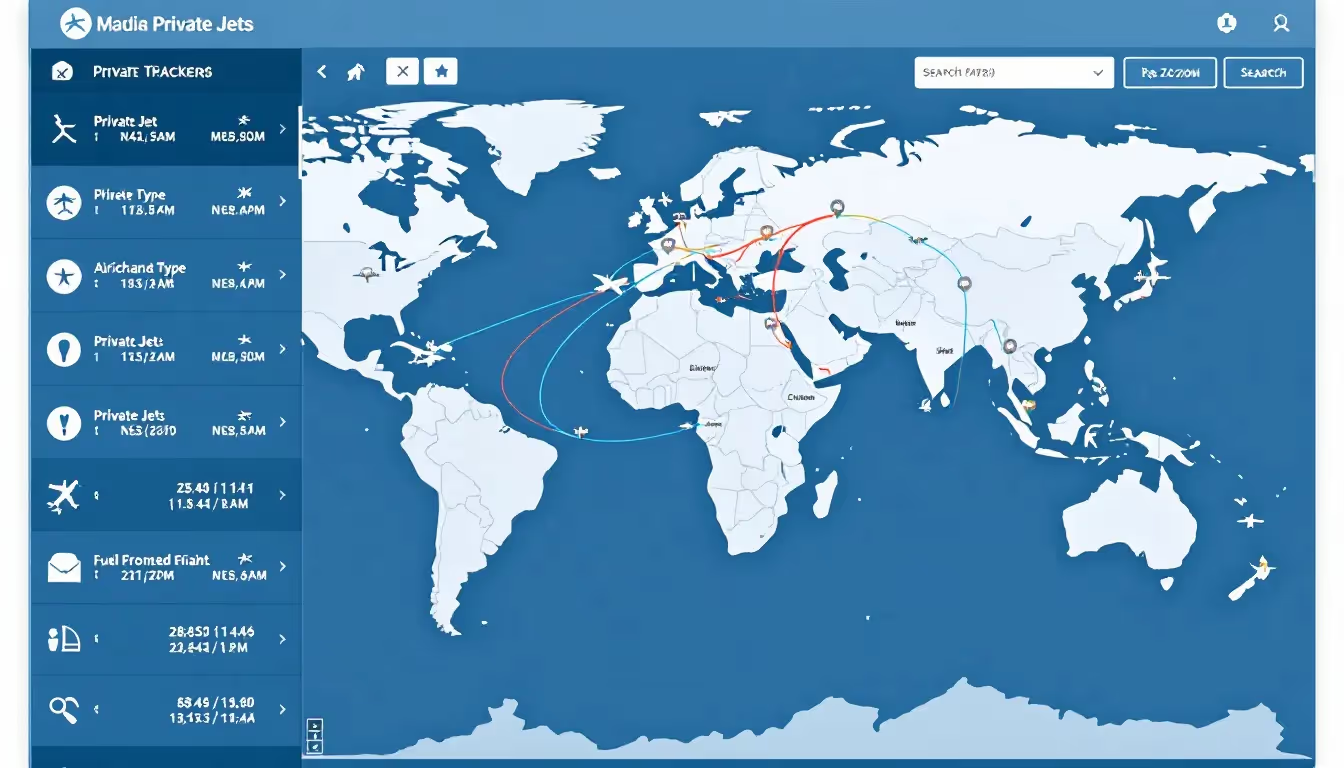
The ability to track private jets efficiently and accurately is no longer a luxury; it's a necessity. As private aviation continues to grow, so will the need for reliable tools and technology. Tracking private planes may be difficult outside of the USA due to a lack of tracking technology.
Platforms like FlightAware, ADS-B Exchange, and Flightradar24 lead the charge in offering robust tracking solutions. Flightradar24 allows users to filter and see only private jets using the 'Business' category. But pairing those with Jettly’s Airport Locator Tool unlocks deeper strategic advantages, streamlining routing, reducing travel friction, and enhancing the experience of private flight.
As technology advances, expect the integration of satellite tracking, AI-driven insights, and greater real-time coordination across platforms. Jettly remains at the forefront of this evolution, empowering travelers, operators, and aviation professionals with tools to stay ahead.
Explore the different aircraft Jettly Airport Locator Tool to simplify your flight planning and experience seamless private jet travel. To book your next charter or learn more about Jettly’s full-service platform, visit Jettly.com today.
Private jet tracking made smarter, with Jettly.
Share this post:
Jay Franco Serevilla
Feb 22, 2026
|
5
min read
Discover tips and trends in the industry.

5
min read
When Are Flight Tickets Cheapest? Timing, Trends, and Smart Alternatives
Knowing when flight tickets are cheapest can lead to significant savings. This guide explores optimal booking windows, travel days, and strategies for both commercial and private flights, emphasizing the importance of tracking prices and flexibility in travel plans.
Read More
5
min read
How to Get Lower Ticket Prices on Private Jet Flights with Jettly
Discover how to lower ticket prices on private jet flights with Jettly's expert strategies. By understanding pricing dynamics and utilizing tools like empty leg flights and flexible bookings, travelers can secure significant savings. This guide empowers both frequent and first-time flyers to make informed decisions for a cost-effective private jet experience.
Read MoreStay updated with our latest insights and tips to elevate your journey with us.
MEMBERSHIPS AND ASSOCIATIONS



Disclaimer: Jettly operates as a charter broker, offering access to a global digital jet charter marketplace. Jettly is not a direct air carrier and does not own or operate aircraft. All advertised flights are conducted by third-party air carriers that are fully licensed and hold the appropriate Part 135 or Part 121 certifications issued by the Federal Aviation Administration (FAA) or equivalent regulatory authorities under U.S. or foreign law. Jettly complies fully with the U.S. Department of Transportation's Part 295 and Part 298 Charter Broker regulations. Jettly does not carry additional liability insurance. Passengers are covered by aircraft operator insurance. TICO: 50023770


