


Login
Get Instant Pricing On 23,000+ Aircraft

>
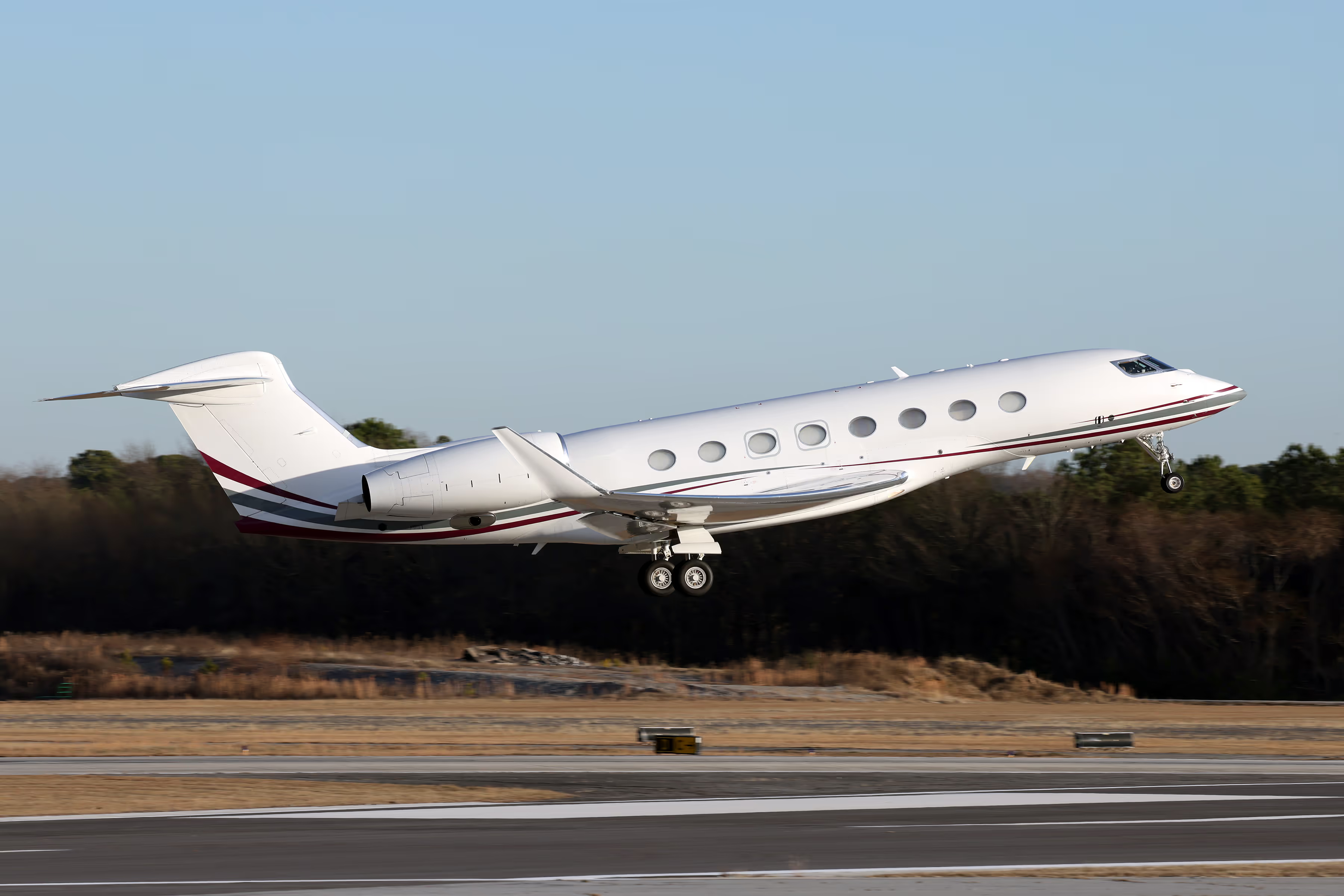
The Super Bowl is the most high-profile sporting event in the United States, drawing around 70,000 spectators each year. At its peak, attendance has surpassed 103,000 people, which is roughly the population of a mid-sized American city.
What sets the event apart is the unique blend of elite sportsmanship and blockbuster entertainment that attracts a who’s who of celebrities. Whether in attendance or as performers, the average Super Bowl attracts a wide range of A-listers, political figures, pop-culture icons, and power players from across business, media, and culture.
An event of this magnitude has a warping effect on the local economy, tourism, and travel sectors. However, private aviation is one of the most affected, as many high-profile individuals prefer to travel by private jet.
Each year, the Super Bowl causes a perceptible spike in private jet travel. Data analysis by private jet rental service Jettly reveals the extent of this impact.
Trying to rent a private jet or secure a seat on a charter flight during Super Bowl weekend is like booking a last-minute commercial flight on Christmas Day: close to impossible and expensive (even for high-net-worth travelers).
That’s because, in recent years, demand for private jets has spiked during the aforementioned weekend.
Here’s what the data says:
These are not just the A-listers on their private planes. Many industry leaders and companies (Apple Music, Pepsi, Bud Light, etc.) use private jet rental services to ferry their biggest clients, contest winners, and brand ambassadors (actors/influencers) to the game.
They prefer larger jets, such as the Gulfstream G650, that can accommodate 14 to 16 passengers, so executive teams and their VIP guests can comfortably reach the event.
This sudden spike in traffic translates into an increase in revenue for private jet operators. But they’re not the only ones to benefit; local airports and related industries (luxury catering, maintenance, ground services, security, etc.) also get a boost.
For Fixed Base Operators (FBOs), the private terminals that service these aircraft, a single Super Bowl weekend can generate revenue equivalent to several months of standard operation. Fuel sales alone skyrocket, as long-haul jets require thousands of gallons for return trips, while hangar fees for secure overnight parking can triple during the high-demand window.
The Super Bowl is not the only major event that spikes the use of private jets. It also happens for the Cannes Film Festival, the Monaco Grand Prix, Burning Man, and the Met Gala. It’s also not just about sports, cultural events, or entertainment.
Big political or industry events, like the World Economic Forum in Davos, also attract quite a bit of private air travel.
For wealthy individuals and corporations, private aviation offers an alternative to commercial first class that provides necessary logistical flexibility. The rise of digital marketplaces has made renting or owning a fraction of a private plane more accessible. While the industry faces scrutiny regarding its carbon footprint, this high-frequency business traffic is often a primary revenue driver for smaller regional airports, keeping local aviation infrastructure economically viable.
Travel by private jet is on the rise. With the US as the leading market and others growing quickly, an increase in offers and private operators should be expected.
The "Super Bowl effect" showcases both the sector's extreme logistical capabilities and its most significant vulnerabilities. For instance, during major events, it’s clear that ground services cannot manage such a steep increase in traffic.
This is why the industry invests heavily in smaller airports, which are getting longer runways and luxury terminals. These upgrades are essential not just for capacity, but for safety. Extending runways allows larger, ultra-long-range jets, which are increasingly popular among international attendees, to land at regional airfields that were previously restricted to smaller, light-jet traffic, relieving pressure on major commercial hubs.
For those who must land at major hubs, real-time booking of landing and takeoff slots is becoming the new standard. Just as one books a restaurant via an app, private pilots now use high-frequency reservation systems to claim 15-minute windows months in advance.
Lastly, if there’s something everybody learned during the most recent Super Bowls, it's that even billionaires can’t always get a parking spot for their own plane. This is fueling a shift away from owning a whole jet toward fractional and on-demand models, with data showing that fractional owners dominated the Super Bowl skies in 2025.
Share this post:
Jay Franco Serevilla
Feb 22, 2026
|
5
min read
Discover tips and trends in the industry.
5
min read
Renting an Airplane for a Week: Costs, Options, and How Jettly Helps
Renting an airplane for a week typically involves chartering a private aircraft with a crew, rather than taking physical possession of the plane, and costs range from $3,000 to over $10,000 depending on the aircraft type and flight hours. Jettly offers a platform for accessing various aircraft options, including private jets and turboprops, with transparent pricing and instant quotes. Rental agreements often include minimum daily flight hours and additional fees for services like pilots and airport costs. To optimize costs and efficiency, travelers should plan itineraries carefully, consider package deals, and book in advance.
Read More
5
min read
Comprehensive Guide to Charter Flights in Alaska: Everything You Need to Know
Charter flights in Alaska provide essential access to over 250 remote communities, making them a practical choice for travelers needing to reach destinations like Anchorage, Fairbanks, and Juneau quickly. Operators such as Grant Aviation and Security Aviation offer customizable itineraries using various aircraft suited for Alaska's challenging terrain. Key benefits include direct access to roadless areas, flexible scheduling, and the ability to transport oversized gear. Jettly simplifies the booking process with transparent pricing and a range of aircraft options, catering to both business and leisure travelers.
Read MoreStay updated with our latest insights and tips to elevate your journey with us.
MEMBERSHIPS AND ASSOCIATIONS



Disclaimer: Jettly operates as a charter broker, offering access to a global digital jet charter marketplace. Jettly is not a direct air carrier and does not own or operate aircraft. All advertised flights are conducted by third-party air carriers that are fully licensed and hold the appropriate Part 135 or Part 121 certifications issued by the Federal Aviation Administration (FAA) or equivalent regulatory authorities under U.S. or foreign law. Jettly complies fully with the U.S. Department of Transportation's Part 295 and Part 298 Charter Broker regulations. Jettly does not carry additional liability insurance. Passengers are covered by aircraft operator insurance. TICO: 50023770


